
Sri Raghavendra College of Pharmacy, Chitradurga, Karnataka, India 577501
Aging of organs is natural process in body; skin as a part of body shows visible sign for aging. Intrinsic aging is true aging; it is primarily due to alterations in the body. Extrinsic aging is caused by UVA and UVB radiations, that lead to gross disorganisation of the skin matrix. purpose of this review to focus on design, develop and physicochemical evaluation of Anti-aging cream. Creams were created for this study is based on plant origin powder known as Triphala. Its Antioxidant and Antiaging properties were identified by referring various research studies. The formulation is water in oil type of emulsion which undergone several tests to evaluate the formulation safety and appearance. The formulation may give young and beautiful skin which considered to be positive influence on people, social behaviour and reproductive status.
Aging
Signs of dermal aging, such wrinkles and skin relaxation, are common in today's big population. There are numerous etiological factors of skin aging but primarily classified into two factors external (exogenous) and internal (endogenous).
Exogenous factors include things like smoking, exposure to harmful chemicals, wind exposure, and UV radiation, whereas endogenous factors are mostly the accumulation of time and physiological characteristics. [1]
Skin, the largest organ, protects the body from radiation, bacteria, toxins, and pollution by acting as the primary barrier between the internal and exterior surroundings. The reduction and eventual
stoppage of keratinocyte and fibroblast cell division within the skin is what causes skin aging. Skin gets drier and less elastic under these circumstances. due to the extracellular matrix becoming denaturated, which causes wrinkles to appear. takes place on skin in both exposed and non-exposed areas of incident UV radiation. [2]
What is meant by "reactive oxygen species" is the outcome of normal cellular metabolism. In mitochondria, ROS are generated when oxygen consumption falls between 1% and 5%. The increased ROS diminish the function of mitochondria that leads elevated DNA damage and mutation or sudden change in gene, the chain reaction leads dermal aging.
In other side air borne pollutants also contributing to skin aging. Ozone, nitrogen dioxide, and sulphur dioxide are known to enhance skin oxidative stress (SOS), It, in turn, alters the skin's protective function and reduces antioxidant activity. [3]
In addition, the skin produces antimicrobial peptides, has a specific microbial ecology, and goes through a number of inflammatory and immunological processes. Additionally, our body's physical barrier shields us against a variety of chemical, physical, and environmental threats. Therefore, the skin itself is crucial in preventing natural skin aging. As people age, their skin's various layers—the dermis, adipose tissue, muscle, and epidermis—change in composition and characteristics. As we age, our skin begins to lose proteins and elastin fibers. They are the fundamental components that give skin its health, fit, brightness, and suppleness. [4]
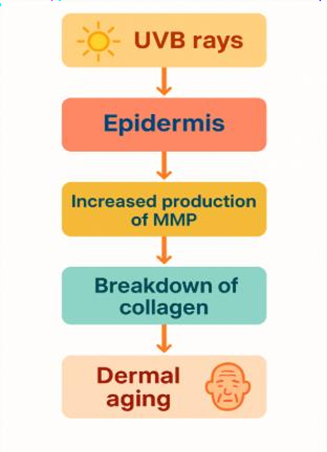
Figure No.1 Mechanism of Photoaging
Numerous in-vitro, in-vivo, and human investigations have demonstrated that triphala can increase antioxidant levels and reduce lipid peroxidation. The inclusion of flavonoids, polyphenols, and vitamin C is associated with the antioxidant properties of our formulation. Triphala's active ingredient lowers ROS levels, which lessens oxidative stress. That could demonstrate the antiaging effects.[5]
Topical delivery medication is the process of applying a drug-containing formulation to the skin in order to directly treat a cutaneous condition or the cutaneous manifestation of a systemic disease. The objective is to limit the pharmacological effects of the medication either within or on the skin's surface. Although foams, although medicated transdermal adhesive systems, powders, sprays, and solutions are commonly employed, semisolid formulation is the most commonly used topical delivery route.
Advantages of using medicine topically:
Creams are topical medications that are administered to the skin's outermost layer. A "viscous liquid or semisolid emulsion of either the oil-in-water or water-in-oil type" mode of administration with variable oil and water contents is referred to as a cream.
Creams are used to protect, cleanse, and enhance the look of the skin. and give therapeutic effect for various skin conditions such as psoriasis, fungal infections, inflammation. These topical preparations are applied to the skin's afflicted regions to provide a local impact.
Every medical system, including allopathic and ayurveda (herbal) medicine, has creams that individuals use for various skin conditions. Following are the types of creams.
Triphala
Triphala is an old ayurvedic powdered mixture used in Indian medicine. Triphala means the three fruits. synonyms of triphala are Sresthatamam, vara, phalatrikam. Triphala is powdered herbal preparation used in many disorders.
The fruits Terminalia chebula Retz. (Haritaki), Terminalia bellerica Roxb. (vibhitaki), and Emmalia officinalis. (amalaki) are combined to make triphala, one of the most popular ayurvedic remedies. Usually, the mixture has the same quantity of the myrobalans listed. Triphala is a common preparation in Ayurveda. In the traditional Indian medical practice, it is referred to as Tridoshik rasayana in Ayurvedic texts and is a therapeutic agent that balances the vata, pitta, and kapha parts of the Ayurvedic constitution. Empress officinalis Gaertn, often known as amalaki, is chilly in nature, whilst Terminalia chebula Retz and Terminalia bellarica Roxb or vibhitaki are warm. Since triphala is a balanced blend of vibhitaki, haritaki, and amalaki, it may be used as an internal cleanser and gut detoxifier. Ancient Ayurvedic scriptures mention triphala as a herbal supplement. The Samhitas of Charaka and Sushruta.[7]
Terminalia chebula (haritaki)
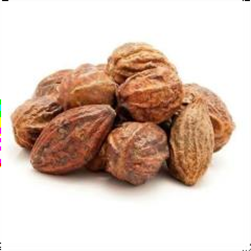
Figure No.2 Terminalia chebula (haritaki)
In Latin, Terminalia chebula Linn. The family Combretaceae includes it. Haimavati, Shiva, Avyatha, Pathya, Abhaya, Haritaki, and Vayastha are some examples of traditional names. English Chebulic Myrobalan. Fruits were used as parts in haritaki.
Habit (Swaroopa): large, intermediate-sized deciduous tree.
Chemical composition: Contains a range of phenolic acids, such as gallic and chebulic acids, an estimated 30% of tannins, and a natural purgative of anthraquinone. It is well known that D. chebula fruits contain phenolic compounds, including flavonoids, phenolic acids, and tannins. Another well-known characteristic of fruits is their high ascorbic acid (vitamin C) concentration. Corilagin, terflavin-A, terchebulic punicalgin, chebulinic acid, and chebulagic acid are the main hydrolyzable tannins. [7]
Terminalia bellerica Roxb (Vibhitaki)
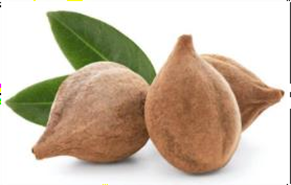
Figure No.3 Terminalia bellerica ( vibhitaki)
Terminalia bellerica Roxb is its Latin name. This member of the Combretaceae family is known by its traditional name, Vibhitaka. In haritaki, or Belleric Myrobalan as it is known in English, fruits were utilized as parts.
Habit of Swaroopa: Large deciduous tree
Chemical composition: Its component compounds include beta-sitosterol, mannitol, glucose, fructose, rhamnose, ellagic acid, gallic acid, lignans, flavone, anolignan B10, tannins, ellargic acid, ethyl gallate, galloyl glucose, chebulaginic acid, and phenyllemblin. The seeds contain greenish yellow oil, while the fruit has 17% tannin, gallotanic acid, and resin. [7]
Indian gooseberry (Amalaki)
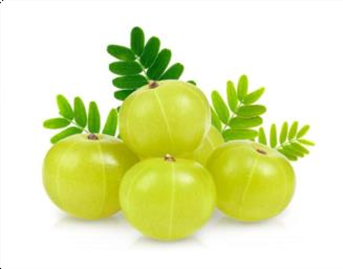
Figure No.4 Indian gooseberry (Amalaki)
Its Latin name is Emblica officinalis Gaertn. Dhatri Amalaki is the traditional name for amla, which belongs to the Euphorbiaceae family. Its English name is Indian gooseberry. In haritaki, fruits were utilized as pieces.
Swaropa's habitat is a large deciduous tree.
Chemical makeup: Seeds include phosphorpeptides, fixed oil, and an essential oil, while in this fruit vitamin C is majorly found antioxidant. Tannins are abundant in fruits, bark, and leaves.[7]
Mechanism of triphala against dermal aging
Polyphenols like gallic acid, ellagic acid, chebulinic acid, and triphala reduce oxidative stress by scavenging free radicals. which is a primary cause of aging. By transforming reactive oxygen free radicals into non-reactive compounds, tannins are produced. [3]
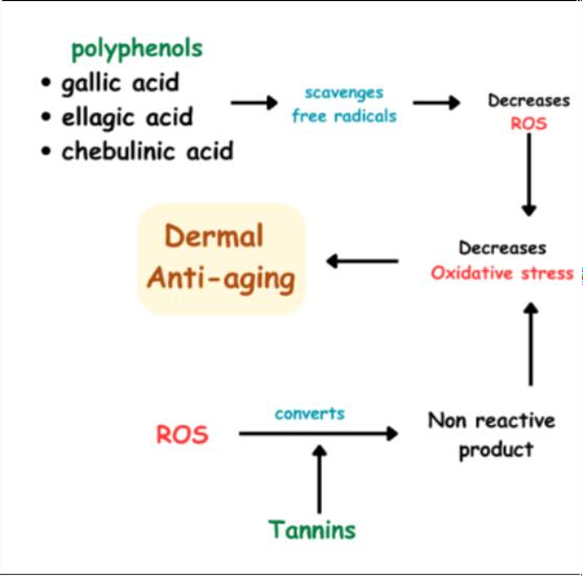
Figure No.5 Mechanism of triphala on aging
Pharmacological and therapeutic effects of Triphala Anticancer activity
Triphala has the ability to kill cancerous cells. Gallic acid, one of its main components, may be the cause of its suppression of cancer cell proliferation. [8]
Antioxidant activity
Triphala is well recognized for preventing Y-ray-induced damage to plasmid pBR322 DNA and microsomal lipids. By transforming reactive oxygen free radicals into nonreactive compounds, Triphala has a high content of tannins and polyphenols. The abundance of polyphenols in triphala is what gives it its radioprotective and antioxidant qualities. [9]
Triphala against stress:
Triphala as an anti-stress supplement has been demonstrated to reduce physiological and behavioural abnormalities associated with stress. [10]
Wound healing Triphala containing ointments shows significant wound healing property. The in-vivo studies on triphala shown the granulation tissue shows boost the collagen, decreases bacterial count, applying triphala to wounds resulted in quicker wound healing and greater water retention. [11]
Anti-microbial activity
Triphala strictly shows anti-microbial activity on microbes including lactobacillus and streptococcus. Ayurvedic preparations like triphala mashi shows anti-microbial activity due phenolic compounds and tannins. [12]
Anti diabetic activity
Both normal and diabetic rats' serum sugar levels were considerably lowered within 4 hours of oral intake or injection of triphala extract, and regular triphala treatment demonstrated anti-diabetic effect or lowered blood sugar levels. [13,14]
Analgesic-ulcerogenic-antipyretic activity
In mice experimental models, triphala's analgesic, ulcerogenic, and antipyretic qualities were compared to those of NSAIDS indomethacin. It was shown that triphala, at both dose levels, had good analgesic and antipyretic effects without posing a risk to the GIT. [15]
Anti-inflammatory activity
Gallic acid has an anti-inflammatory impact by selectively inhibiting COX-2, according to a triphala research. Applying triphala topically helps to avoid uveitis.[16]
Anti-aging activity
Triphala extract has been demonstrated in in vitro experiments to have extremely protective anti- aging properties on human skin cells, including boosting collagen and reducing hyperpigmentation.[17]
MATERIAL AND METHOD
Excipients used in preparation of antiaging cream:
Aloe vera, (Aloe Barbadensis Miller), which associated Asphodelaceae (Liliaceae) family. The succulent perennial herb aloe vera has a shallow root system, a triangular, sessile stem, and leaves that are 10 cm in width and 30 to 50 cm in length. With a pH of 4.5 and 99% water, aloe
Beeswax is a naturally occurring substance that is extracted from worker bees' abdomen wax- producing glands. The composition and colours are varying from the region to region and the diet is also responsible for composition. Also known as White beeswax, yellow beeswax. Bee wax is a refined wax that is extracted from the honeycomb of hive bees, including Apis mellifera Linn and other Apis species that are members of the Apidae family. Beeswax is a compound made of lipids. It comprises hydrocarbons, free fatty acids, unsaturated and saturated monoesters, and other materials that worker bees generate. Beeswax is resistant to numerous acids. These characteristics of beeswax making it ideal for protecting coating and barrier application. [19]
Saturated hydrocarbons derived from petroleum make up liquid paraffin, a colorless, nearly odorless, clear greasy liquid. Petroleum has been utilized as medicinal since 400. Mineral oil, another name for liquid paraffin, is a mixture of petroleum-based liquid with straight-chain, branch-chain, and ring structures. The chain of carbon in liquid paraffin is longer than C14. Liquid paraffin has been used into a number of cosmetic formulae, due to its remarkable skin tolerability. a large range of viscosities, superior skin protection, and cleaning efficacy. [20,21]
Rose water obtained from Damask Rose also known as Oil Rose, Isparta rose or Rosa damascena Miller. It belongs to the family Rosaceae. R.damascena is a perennial bushy shrub with vibrant flowers. Five to seven leaflets make up the complex, imparipinnate leaves. Tunisia, Iraq, Morocco, Syria, Iran, Greece, France, Bosnia and Herzegovina, and Turkey. Anthocyanins, terpenes, flavonoids, and glycosides are all present in R.damascena. Vitamin C, carboxylic acid, myrcene, quercetin, and kaempferol are all present in this plant. According to traditional medicine, R.damascena's main beneficial benefits include reducing inflammation, particularly in the neck area, treating menstrual bleeding, treating stomachaches and chest discomfort, and treating intestinal issues. skin health, wound healing, and some allergies. In Iran, R.damascena produces a lot of rose water, which has between 10% and 15% rose oil in it. Triterpenoids and saponins are the four primary polyphenolic chemicals responsible for rose water's anti-inflammatory and antioxidant properties. Flavonoids in rose water contribute to skin radiance and are used to moisturize the skin. [22,23,24]
Wax and borax are mixed to create a variety of cosmetic goods, including gels, creams, and lotions. It is well-known for being a component in hand soaps that help remove oil or grease from hands. Borax is an ideal ingredient for cleansers and toners because of its basic nature. In cosmetic formulations, borax is also used as a preservative for moisturizing goods to limit microbial development, as well as an emulsifier, buffering ingredient to maintain pH, and scrub, lotion, gel, shampoo, and bath salts. [25]
Preparation of anti-aging cream:
Table No.1 Preparation of anti-aging cream
|
Sr. no |
Ingredients |
Role |
Characteristics |
|
1 |
Triphala |
API |
It is dry powdered herbal preparation obtained from the myrobalans likely haritaki, amalaki, vibhitaki |
|
2 |
Beeswax |
Base |
Naturally occurring waxy secretion of honeybees |
|
3 |
Liquid Paraffin |
Emollient/ skin protective |
An oily, clear liquid with no smell that comes from petroleum, |
|
4 |
Aloe vera |
moisturizer |
99 percent of aloe vera, a triangular succulent perennial plant, is water. |
|
5 |
Rose water |
Toner / Perfuming agent |
It is an abundant product of R.damascena |
|
6 |
Borax |
Emulsifier/ Preservative |
It is a mineral salt of boric acid |
Method:
Procedure for o/w emulsion cream
In single beaker, the oil-soluble components are heated to 75°C in a water bath. In a separate beaker of water, preservatives and various substances that dissolve in water also melt. Once heated. After heating, a mortar and pestle were used to gradually add the external phase to the internal phase and triturate the mixture until a clicking sound was generated. Once the temperature has cooled, preservative and perfume are applied. This recipe will include more water than oil.[6]
Procedure for w/o emulsion creams
In beaker, the emulsifier and the oil-soluble components are heated to 75°C in a water bath. In a separate beaker of water, preservatives and other materials that dissolve in water are melted. After this step, the internal phase is poured in a mortar and pestle, and then the external phase (oil phase) added gradually until a clicking sound is made. After the temperature of the mixture has decreased, the fragrance is added. In such compositions, the dispersed phase would be very little and the continuous phase would be quite large. [26]
EVALUATION TEST FOR CREAMS:
S = m x L/T [31]
CONCLUSION
The cream, formulated with Triphala and other excipients such as Aloe vera gel, Bees wax, liquid paraffin, borax and Rose water, may show versatile effects with Triphala showing distinct significant activities such as Anti-Aging, Antioxidant, Anti-hyper Pigmentation activity, Wound Healing. The consistency and stability of the formulation at room temperature can be evaluate by performing numerous tests for its safe application on the skin. This study focuses on safe and effective formulation of anti-aging cream containing herbal ingredients. which have seen a surge in both cosmetic and topical applications. The current cosmetic trend follows the blend of both natural and synthetic remedies use in formulation in order to accept cosmetics with trust.
REFERENCES

Syed Imran, Geetha Bandi, Laxmi Patil, Mohammed Usman Chikkerur, Prajwal Bhosage, Y V Vijayananditha, A Comprehensive Review of Triphala as an Herbal Ingredient in Skin Care System, Int. J. of Pharm. Sci., 2026, Vol 4, Issue 1, 1458-1467. https://doi.org/10.5281/zenodo.18246062
 10.5281/zenodo.18246062
