

We use cookies to ensure our website works properly and to personalise your experience. Cookies policy
Highlights of Current Issue 2026 | Vol 04 | Issue 06
The present study focuses on the formulation and evaluation of an herbal lip balm using natural ingredients such as rose water, beeswax, vitamin E, and beetroot. These in...
 10.5281/zenodo.20776645
Lymphatic filariasis (LF) is a parasitic disease caused by filarial nematodes — primarily Wuchereria bancrofti, Brugia malayi, and Brugia timori — transmitted to huma...
10.5281/zenodo.20774173 
The poor aqueous solubility of many active pharmaceutical ingredients (APIs) remains a significant challenge in drug development, often leading to low bioavailability and...
10.5281/zenodo.20773297 
Polyalthia cerasoides (Roxb.) Bedd., a medicinal plant belonging to the family Annonaceae, is known for its rich phytochemical composition and diverse pharmacological act...
10.5281/zenodo.20773223 
Herbal products are being preferred due to the advantages in contrast to the synthetic one which has adverse effects on human health because of chemicals. Herbal based ha...
10.5281/zenodo.20773191 
The present study evaluated the hepatoprotective activity of the ethanolic extract of Silybum marianum against carbon tetrachloride (CCl?)-induced liver damage in Wistar ...
10.5281/zenodo.20773099 
The development of low-dose potent pharmaceutical formulations presents significant manufacturing challenges due to the stringent requirements for content uniformity, dos...
10.5281/zenodo.20773049 
Acne vulgaris is one of the most common skin disorders affecting adolescents and young adults. The increasing demand for herbal cosmetics has encouraged the development o...
10.5281/zenodo.20773013 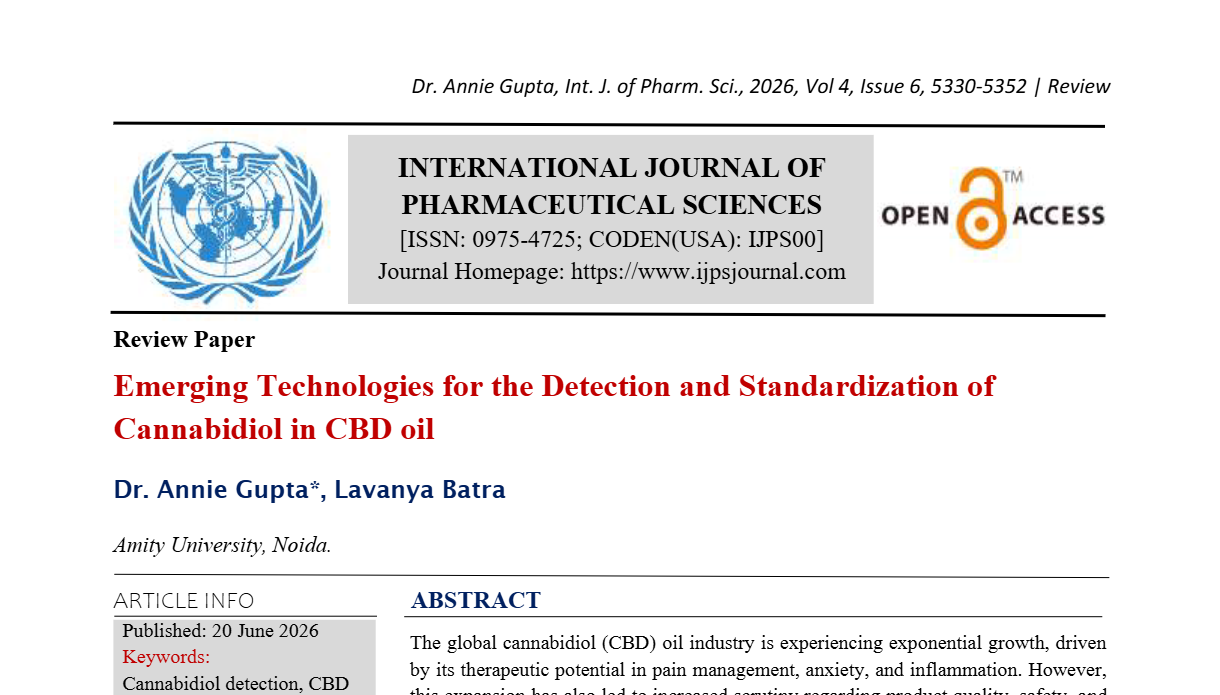
The global cannabidiol (CBD) oil industry is experiencing exponential growth, driven by its therapeutic potential in pain management, anxiety, and inflammation. However, ...
10.5281/zenodo.20772979 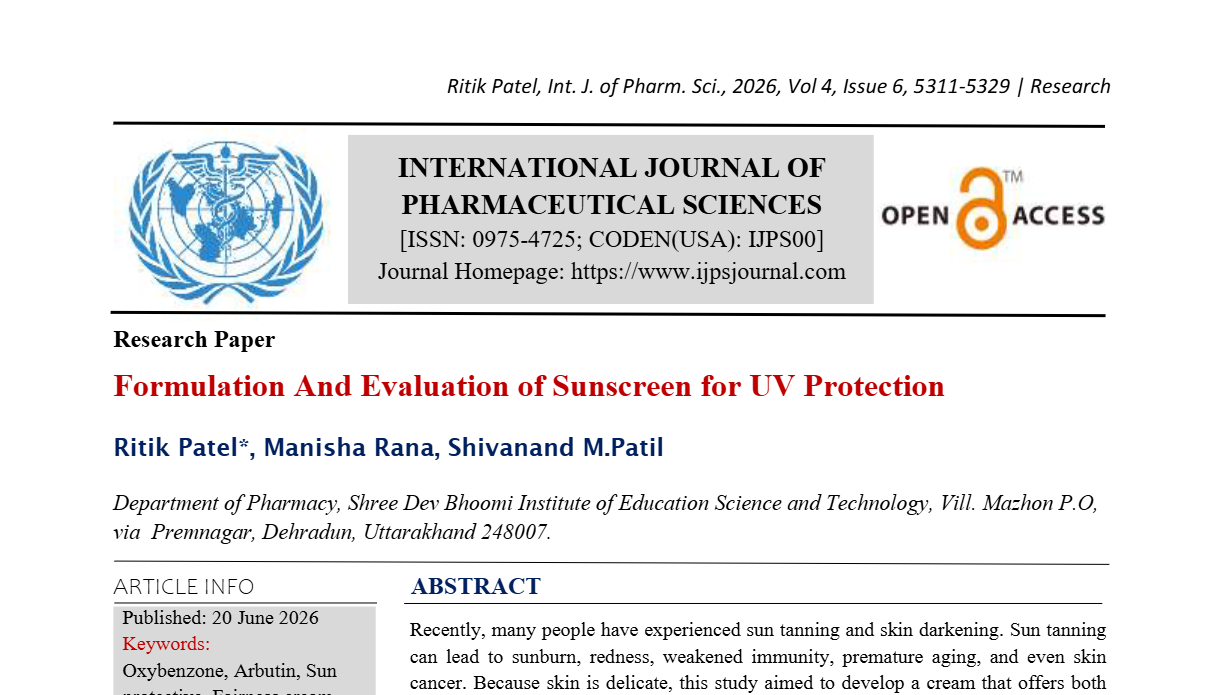
Recently, many people have experienced sun tanning and skin darkening. Sun tanning can lead to sunburn, redness, weakened immunity, premature aging, and even skin cancer....
10.5281/zenodo.20772887
Recently, many people have experienced sun tanning and skin darkening. Sun tanning can lead to sunburn, redness, weakened immunity, premature aging, and even skin cancer....
10.5281/zenodo.20772887 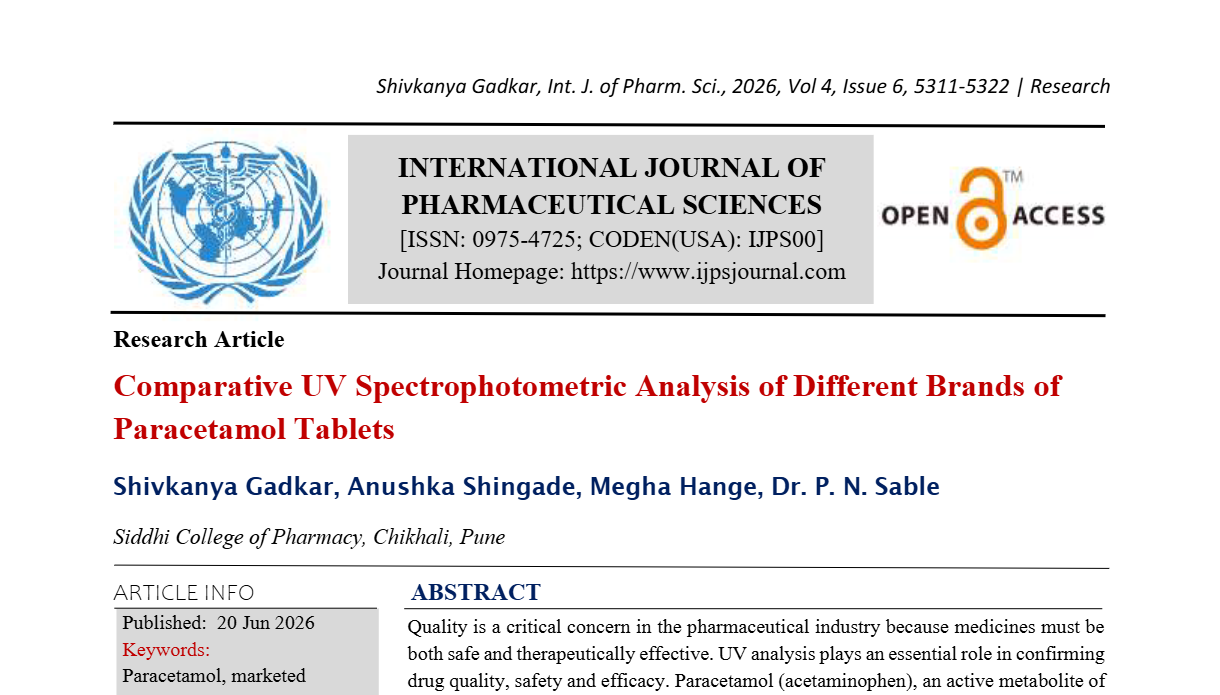
Quality is a critical concern in the pharmaceutical industry because medicines must be both safe and therapeutically effective. UV analysis plays an essential role in con...
10.5281/zenodo.20772868 