View Article

  • Nanosponges: A Comprehensive Review on Preparation and Characterization

  • 1,2,3 Assistant Professor, Awadh Paramedical College & Institute, Gaurabadshahpur, Jaunpur, Uttar Pradesh, 222133
    4Assistant Professor, Raj College of Pharmacy, Odar, Kaimur (Bhabua), Bihar
     

Abstract

In modern drug delivery systems, nanosponges have become a diverse and promising class of nanocarriers because of their special porosity structure and capacity to encapsulate a variety of therapeutic substances. This review offers a thorough overview of nanosponges, covering their benefits, drawbacks, classification, composition, and different kinds, including silicon-based, carbon-based, polymer-based, cyclodextrin-based, and metal–organic framework (MOF)-based nanosponges. The paper also discusses several synthesis approaches, such as emulsion solvent diffusion, ultrasound-assisted synthesis, solvent-based direct cross-linking, and quasi-emulsion solvent diffusion techniques, and emphasizes the materials often utilized in nanosponge creation. In order to comprehend their influence on drug loading and release behavior, important aspects affecting nanosponge formulation are also investigated. Particle size, zeta potential, drug entrapment effectiveness, manufacturing yield, solubility, and technical analytical methods including spectroscopy, thermal analysis, and microscopy are all covered. The overall goal of this study is to present a thorough knowledge of nanosponge systems and their potential to enhance therapeutic outcomes and drug delivery efficiency.

Keywords

Nanosponge, Drug delivery, Solubility, characterization, etc.

Introduction

Drug delivery techniques have been completely transformed by the quick developments in nanotechnology, and nanosponges are showing promise as a way to get around the drawbacks of traditional formulations. [1] These porous, nanostructured carriers have a special three-dimensional network that may encapsulate a variety of therapeutic substances, including as proteins, genetic material, and hydrophobic medications. [2] Because of their biocompatibility and capacity to form inclusion complexes, cyclodextrins have been investigated the most among the cross-linked polymers that make up nanosponges. [3] Nanosponges can accomplish regulated and prolonged drug release by adjusting their porosity and surface characteristics, increasing therapeutic efficacy and reducing side effects. [4]

The low water solubility of many active chemicals limits their bioavailability and therapeutic value, which is one of the main problems in pharmaceutical sciences. [5] By offering a high drug-loading capacity and enhancing dissolution rates, nanosponges solve this problem. [6] Furthermore, surface functionalization is made possible by their adaptable structure, which permits targeted administration to certain tissues like tumors or inflammatory areas. [7] To further improve the accuracy of drug delivery, recent research has also investigated stimuli-responsive nanosponges that release payloads in response to pH, temperature, or enzymatic triggers. [8]

Nanosponges are appropriate for sensitive biologics because they provide protection against drug degradation from light, oxidation, and enzymatic breakdown in addition to improving solubility. [9] Their huge biological potential is demonstrated by their use in neurological diseases, wound healing, antibiotic administration, and cancer treatment. [10] To enable clinical translation, however, issues including large-scale manufacturing, stability, and regulatory obstacles must be resolved. [11]
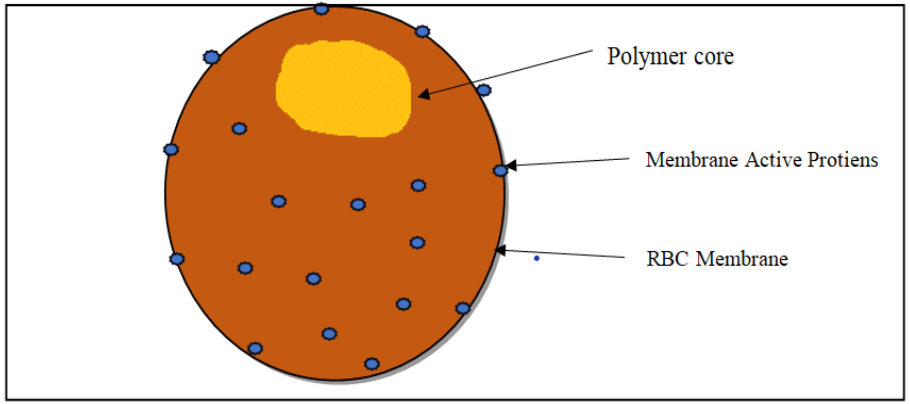
Figure 1: Nanosponge

ADVANTAGES OF NANOSPONGES [12, 13]

  • This invention reduces adverse effects and permits ingredient entrapment.
  • Enhanced stability, more elegance, and greater formulation flexibility.
  • Between pH levels of 1 and 11, their compositions don't change.
  • At temperatures as high as 1300C, their compositions don't change.
  • These formulations are compatible with most substances and vehicles.
  • They are self-sterilizing because bacteria cannot fit through their typical pore size of 0.25 mm.
  • These formulations can be free-flowing and cost-effective.
  • These change the way the drug is released.
  • They increase the solubility of poorly soluble medications.
  • They increase the bioavailability of the medication.

DISADVANTAGES

  • Nanosponges are composed of just small molecules.
  • Only on the loading capacity of the medication molecules.

TYPES OF NANOSPONGE

1. Cyclodextrin-Based Nanosponges

These nanosponges are composed of cyclic oligosaccharides called cyclodextrins, which have the ability to create host-guest inclusion complexes. It created a porous network by cross-linking with either organic or inorganic agents. These nanosponges improve the solubility and controlled release of medications when employed in drug delivery.

Example:  The delivery of anticancer drugs using β-cyclodextrin nanosponges. [14]

2. Polymer-Based Nanosponges

It is made from synthetic or natural polymers like polyethylene glycol (PEG), polylactic acid (PLA), and polyurethane. Some of its characteristics include customizable porosity and good stability. It is employed in tissue engineering, wound healing, and regulated medication release.

Example: PEGylated nanosponges for extended circulation in medication administration are one example. [15]

3. Carbon-Based Nanosponges

These nanosponges are made of carbon-based materials such as carbon nanotubes or graphene oxide. The large surface area and electrical conductivity of these nanosponges are well-known. It is utilized in environmental applications such as water purification and oil spill remediation.

Example: Graphene oxide nanosponges for the adsorption of heavy metals. [16]

4. Silicon-Based Nanosponges

Mesoporous silica or silica nanoparticles are used to create these nanosponges. It offers strong chemical stability and biocompatibility. The very porous silicon nanosponge is used as a carrier material in sensors, fuel cell electrodes, photosensitizers, adsorbents, catalysts, and medicines. It is employed in biosensing and medication administration.

Example: Targeted cancer treatment using silica nanosponges. [17, 18]

5. Metal-Organic Framework (MOF)-Based Nanosponges

This kind of nanosponge is made up of organic linkers and metal ions that form a porous structure. Its characteristics include adjustable pore diameters and a large surface area. It is employed in medicine delivery, catalysis, and gas storage.

Example: Zeolite-based MOF nanosponges for storing hydrogen. [19]

COMPOSITION IN NANOSPONGES

Three essential elements make up nanosponges: polymers, cross-linkers, and active pharmaceutical ingredients (APIs), as well as solvents that aid in their creation. Cyclodextrins (α, β, and γ) are the most often utilized polymers because they create a hydrophobic cavity that can trap drug molecules and improve their solubility and stability. [20] To increase structural integrity and drug-loading effectiveness, additional synthetic and natural polymers such polyvinyl alcohol (PVA), ethyl cellulose, poly (lactic-co-glycolic acid) (PLGA), and polyurethanes are also used. [21]

In order to create the porous, sponge-like structure of nanosponges, cross-linking agents are essential. Diphenyl carbonate (DPC), carbonyl diimidazole (CDI), and pyromellitic anhydride are common crosslinkers that react with hydroxyl groups of cyclodextrins or other polymers to form a stable three-dimensional network. [22] Drug release kinetics are influenced by the degree of cross-linking; larger cross-linking densities provide slower, more prolonged release patterns. [23]

By inclusion complexation (for cyclodextrin-based nanosponges) or physical entrapment (for polymer-based nanosponges), the active pharmaceutical ingredient (API) is contained inside the nanosponge matrix. [24] Nanosponges are adaptable for a range of therapeutic applications because they may combine both hydrophilic and hydrophobic medications. In order to guarantee appropriate polymer dissolution and uniform drug distribution, co-solvents like dimethylformamide (DMF) and dimethyl sulfoxide (DMSO) are frequently utilized during production. [25]

In order to improve site-specific delivery and extend circulation duration, targeted ligands (like folic acid or antibodies) or stealth coatings (like polyethylene glycol or PEG) have recently been added to surface-modified nanosponges. [26] The planned route of administration, biocompatibility, and desirable drug release profile all influence the material selection.

Table 1: Material Used in the Formulation of Nanosponges [27-30]

Polymers

Copolymers

Crosslinking Agents

Solvents

Hypercrosslinked polystyrene

Polyethylene glycol-polylactic acid (PEG-PLA)

Carbonyl diimidazole (CDI)

Ethanol


Methylβ-CD

Polyethylene glycol-polyglycolide (PEG-PLGA)

Diary carbonates

Dimethylacetamide

Hydroxy propyl β-CD

Polylactic acid-polyethylene glycol (PLA-PEG)

Dichloromethane

Dimethylformamide

Poly-valerolacton


Diisocyanate


Eudragit RS100


Glutaraldehyde


Acrylic polymer


METHOD OF PREPARATION

To create a highly porous, cross-linked polymeric structure that may effectively encapsulate drugs, a variety of processes are used in the creation of nanosponges. The most popular techniques are quasi-emulsion solvent diffusion, emulsion solvent diffusion, ultrasound-assisted synthesis, and solvent method. Each of these techniques has unique benefits in terms of scalability, drug loading efficiency, and particle size control.

1) Emulsion Solvent Diffusion Method

Because it is easy to use and repeatable, the emulsion solvent diffusion method is frequently used to create nanosponge. This process involves dissolving the medication and polymer (like cyclodextrin) in a watermiscible organic solvent (like ethanol or acetone). Following mechanical stirring or homogenization, this solution is emulsified in an aqueous phase containing a stabilizer (such as polyvinyl alcohol). Polymer precipitation and the creation of nanosponges result from the organic solvent's diffusion into the aqueous phase. Centrifugation or filtration are used to gather the resultant particles, which are then lyophilized to produce a dry powder. [31]
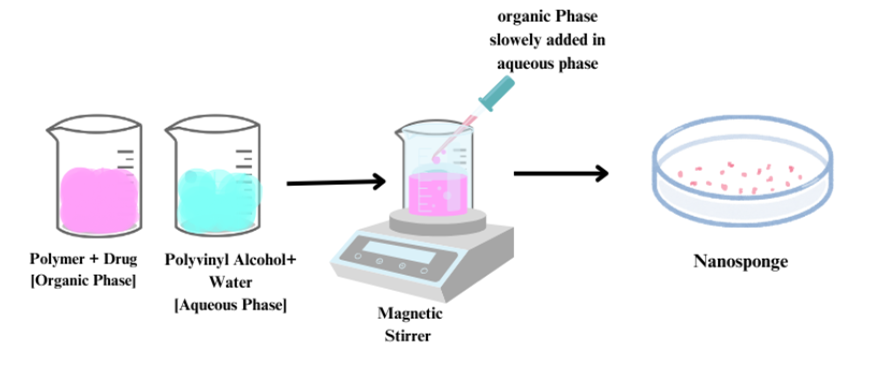
Figure 2: Emulsion-Based Solvent Diffusion Process

2) Ultrasound-Assisted Synthesis

Through cavitation effects, ultrasound-assisted synthesis decreases particle size and improves cross-linking efficiency. This method involves dispersing cyclodextrin and a cross-linker (such as diphenyl carbonate) in a solvent and using ultrasonic vibrations to promote quick and uniform polymerization. Aggregates are broken down by high-energy sonication, producing smaller, more uniform nanosponges with enhanced drug-loading capability. Because it functions at lower temperatures than traditional heating techniques, this technology is especially helpful for thermolabile medicines. [32]
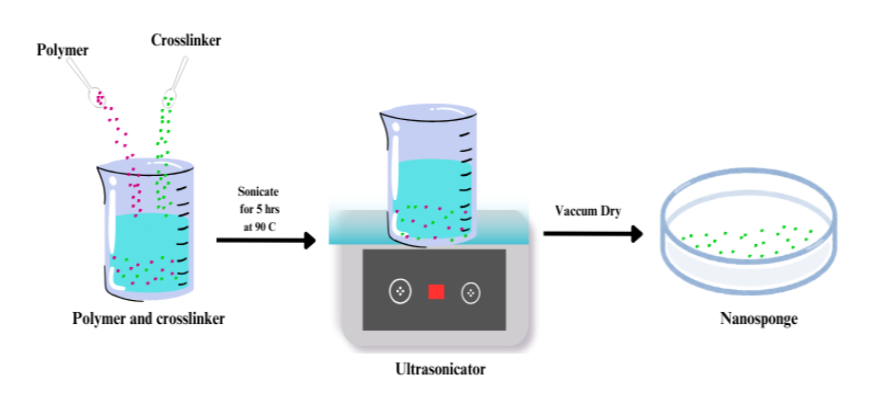
Figure 3: Sonication-Assisted Synthesis

3) Solvent Method (Direct Cross-Linking)

In the solvent technique, cyclodextrins are directly cross-linked with a bifunctional agent (such as pyromellitic anhydride or carbonyl diimidazole) in a regulated solvent solution (such as dimethylformamide or dimethyl sulfoxide). To guarantee consistent cross-linking, the reaction is usually conducted under reflux conditions with constant stirring. After that, unreacted chemicals are eliminated from the resultant nanosponge network by dialysis or repeated washing. Porosity and drug release kinetics may be precisely controlled using this technique. [33]
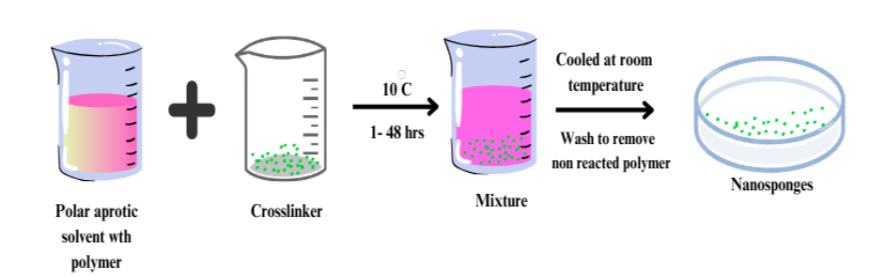
Figure 4: Solvent Method

4) Quasi-Emulsion Solvent Diffusion

This method increases encapsulation efficiency, which is very helpful for hydrophobic medications. A somewhat water-miscible solvent, such as ethyl acetate, is used to dissolve the drug and polymer before being emulsified in an aqueous phase. Nanosponges form when the solvent evaporates, trapping the medication in their matrix. To produce the appropriate particle properties, the process is tuned by varying the temperature, surfactant content, and stirring speed. [34]

FACTORS INFLUENCING FORMULATION OF NANOSPONGES

Nature of polymer:

Both the formation and the pre-formulation of nanosponges can be influenced by the polymer employed in their creation. A drug molecule of a specific size should be able to be trapped in a nanosponge's cavity for complexation. [35]

Drug:

The drug molecules must possess the following particular qualities in order to be compound with nanosponges: • The medicinal molecule should have a molecular weight between 100 and 400 Daltons. • The medication molecule's structure shouldn't have more than five compacted rings. [36]

Temperature:

The complexation of drugs or nanosponges may be impacted by temperature changes. The stability constant of the drug or the nanosponge complex often decreases as the temperature rises. This might be because the interaction forces between the drug and nanosponges, such as hydrophobic and Van der Waal forces, diminish as the temperature rises. [37]

EVALUATION OF NANOSPONGES

Microscopy studies

Scanning electron microscopy (SEM) and transmission electron microscopy (TEM) can be used to investigate the microscopic characteristics of the drug, nanosponges, and the final product (drug/nanosponge complex). The various crystallization phases of the raw materials and the final result as seen under an electron microscope demonstrate the formation of the inclusion complexes. [38,39]

Solubility studies

The most popular approach for researching inclusion complexation is the phase solubility methodology created by Higuchi and Connors, which looks at how a nanosponge affects drug solubility. Phase solubility diagrams illustrate the degree of complexation. [40,41]

Particle Size

In many applications, particularly drug administration, the performance, stability, and efficacy of nanosponges are significantly influenced by particle size. The particle size distribution of nanosponges is analyzed using a variety of methods, such as DLS, which calculates the hydrodynamic diameter of particles in a suspension. Particles larger than 30 m may feel gritty when applied topically, but those between 10 and 25 m may be the best. [42]

Zeta Potential

Using zeta potential analysis, the nanosponges' stability was calculated. The zeta potential is a measure of the effects of electrostatic charges. This is the underlying force that causes nearby particles to repel one another. Ultimately, attraction or repulsion is determined by the intensity of both forces. [43]

Production yield

The production yield (PY) may be calculated by calculating the initial weight of raw materials and the final weight of nanosponges. [42]

Production Yield = Theoretical mass – Practical mass of nanosponges* 100.

Drug Entrapment Efficiency (%)

The percentage of the total medication that is successfully contained or trapped within the nanosponge system is known as entrapment efficiency. Improved formulation performance is indicated by higher EE% readings. Following the appropriate dilution of 10 mg of precisely weighed nanosponges dispersed in 100 mL of phosphate buffer (pH 7.4) and filtered through filter paper, the absorbance of the filtrate at 261 nm was measured using a UV-visible A spectrophotometer. [44]

???????????????????????????????????????? ????????????????????????????????????????(%) = ???????????????????????? ???????????????? ????????????????????????????/????????????????????????????????????? ???????????????? ???????????????????????????? ×100

Thin Layer Chromatography

In thin layer chromatography, a drug molecule's Rf values dramatically drop, making it easier to identify the complex formation between the drug and nanosponge. [43]

Thermo-analytical methods

Thermo-analytical methods can be used to ascertain if the drug substance undergoes any changes before the nanosponge is destroyed by heat. The medication ingredient may undergo a polymorphic transition, melt, evaporate, break down, or oxidize. The modification of the drug substance implies the formation of a complex. The thermogram generated by DTA and DSC can be examined for broadening, shifting, the addition of additional peaks, or the removal of certain peaks. Changes in weight loss can also stimulate the formation of inclusion complexes. [43]

Single crystal X-ray structure analysis

Single crystal X-ray structural analysis is used to identify the exact inclusion structure and interaction mechanism. The exact geometric relationship and interaction between the host and guest molecules may be determined. [42]

Infra-Red Spectroscopy

An essential analytical method for characterizing nanosponges is infrared (IR) spectroscopy, specifically FTIR (Fourier Transform Infrared Analysis). It sheds light on their interactions with encapsulated medications, functional groups, and chemical structure. When a complex forms, the peaks of nanosponges often change just little. The peaks of the nanosponge's spectrum clearly conceal peaks that would be connected to the molecules of the concerned section if fewer than 25% of the visitor molecules were encapsulated in the complex. [45]

CONCLUSION

A major development in the field of nanotechnology-based drug delivery, nanosponges provide better stability, regulated drug release, and increased therapeutic agent bioavailability. They are extremely versatile carriers because of their flexible structure, which enables the inclusion of both hydrophilic and hydrophobic medicines. Despite a number of benefits, issues including the cost of manufacturing, capacity, and possible toxicity must be resolved for clinical translation to be effective. The entire performance of nanosponges is largely dependent on the choice of suitable materials, fabrication techniques, and formulation factors. Furthermore, a comprehensive assessment of analytical and physicochemical methods is necessary to guarantee their effectiveness, safety, and quality. Nanosponges have enormous potential for use in targeted delivery of drugs and other medicinal applications in the future because to continuing research and technical developments.

REFERENCES

  1. Swaminathan S, Vavia PR, Trotta F, Torne S. Formulation of betacyclodextrin based nanosponges of itraconazole. J Incl Phenom Macrocycl Chem. 2007;57(1- 4):89-94.
  2. Trotta F, Zanetti M, Cavalli R. Cyclodextrin-based nanosponges as drug carriers. Beilstein J Org Chem. 2012;8:2091-99.
  3. Sherje AP, Dravyakar BR, Kadam D, Jadhav M. Cyclodextrin-based nanosponges: A critical review. Carbohydr Polym. 2017;173:37-49.
  4. Shende P, Deshmukh K, Trotta F, Caldera F. Novel cyclodextrin nanosponges for delivery of calcium in bone mineralization. Int J Pharm. 2019;565:75-82.
  5. Loftsson T, Brewster ME. Pharmaceutical applications of cyclodextrins: Basic science and product development. J Pharm Pharmacol. 2010;62(11):1607-21.
  6. Ansari KA, Vavia PR, Trotta F, Cavalli R. Cyclodextrin-based nanosponges for delivery of resveratrol: In vitro characterisation, stability, cytotoxicity and permeation study. AAPS PharmSciTech. 2011;12(1):279-86.
  7. Swaminathan S, Pastero L, Serpe L, Trotta F. Cyclodextrin-based nanosponges encapsulating camptothecin: Physicochemical characterization, stability and cytotoxicity. Eur J Pharm Biopharm. 2010;74(2):193-201.
  8. Darandale SS, Vavia PR. Cyclodextrin-based nanosponges of curcumin: Formulation and physicochemical characterization. J Incl Phenom Macrocycl Chem. 2013;75(3-4):315-22.
  9. Lembo D, Swaminathan S, Donalisio M, Cavalli R. Encapsulation of Acyclovir in new carboxylated cyclodextrin-based nanosponges improves the agent’s antiviral efficacy. Int J Pharm. 2013;443(1-2):262-72.
  10. Rao MRP, Chaudhari J, Trotta F, Caldera F. Investigation of cyclodextrin-based nanosponges for solubility and bioavailability enhancement of rilpivirine. Drug Dev Ind Pharm. 2018;44(12):1969-79.
  11. Trotta F, Caldera F, Cavalli R, Mele A. Nanosponges: Synthesis and applications. US Patent. 2016;9,265,742 B2.
  12. Eki S., Lei T., Jingquan L., Zhongfan J., Cyrille B and Thomas PD. (2009) Biodegradable Star Polymers Functionalized With β-Cyclodextrin Inclusion Complexes. Bio macromolecules, 10(9): 2699–270.
  13. Jenny A, Merima P, Alberto F, Francesco T. Role of β-cyclodextrin nanosponges in propylene photooxidation. Carbohydrate Polymers, 2011; 86: 127-135.
  14. Utzeri, G.; Matias, P.M.C.; Murtinho, D.; Valente, A.J.M. Cyclodextrin-Based Nanosponges: Overview and Opportunities. Front. Chem. 2022, 10, 859406.
  15. Moin A, Roohi NKF, Rizvi SMD, Ashraf SA, Siddiqui AJ, Patel M, Ahmed SM, Gowda DV, Adnan M. Design and formulation of polymeric nanosponge tablets with enhanced solubility for combination therapy. RSC Adv.2020;10:34869–84.
  16. Chen W, Liu P. Fluorescent carbon quantum dots-based prodrug nanosponges with outstanding tumor-specific drug delivery and imaging. Adv Powder Technol. 2022;33(11):103816.
  17. Larin A, Nominé A, Ageev E, Ghanbaja J, Kolotova L, Starikov S, Bruyère S, Belmonte T, Makarov S, Zuev D. Plasmonic nanosponges filled by silicon for enhanced white light emission. Nanoscale. 2019;12.
  18. Farrell D., Limaye S. Y., Subramanian S. (2009). U.S. Patent No. 7,569,202. Washington, DC: U.S. Patent and Trademark Office.
  19. Alavi SE, Alavi SF, Koohi M, Raza A, Shahmabadi HE. Nanoparticle-integrated metal–organic frameworks: a revolution in next-generation drug delivery systems. J Pharm Investig. 2024;54:751–783.
  20. Trotta F, Cavalli R, Martina K, Biasizzo M, Vitillo J, Bordiga S, et al. Cyclodextrin nanosponges as effective gas carriers. J Incl Phenom Macrocycl Chem. 2011;71(1-2):189–94.
  21. Swaminathan S, Vavia PR, Trotta F, Torne S. Formulation of betacyclodextrin based nanosponges of itraconazole. J Incl Phenom Macrocycl Chem. 2007;57(1- 4):89–94.
  22. Shende PK, Gaud RS, Bakal R, Patil D. Effect of inclusion complexation of meloxicam with β-cyclodextrin- and β-cyclodextrin-based nanosponges on solubility, in vitro release and stability studies. Colloids Surf B Biointerfaces. 2015;136:105–10.
  23. Sherje AP, Dravyakar BR, Kadam D, Jadhav M. Cyclodextrin-based nanosponges: A critical review. Carbohydr Polym. 2017;173:37–49.
  24. Ansari KA, Vavia PR, Trotta F, Cavalli R. Cyclodextrin-based nanosponges for delivery of resveratrol: In vitro characterisation, stability, cytotoxicity and permeation study. AAPS PharmSciTech. 2011;12(1):279–86.
  25. Lembo D, Swaminathan S, Donalisio M, Civra A, Pastero L, Aquilano D, et al. Encapsulation of Acyclovir in new carboxylated cyclodextrin-based nanosponges improves the agent’s antiviral efficacy. Int J Pharm. 2013;443(1-2):262–72.
  26. Rao MRP, Chaudhari J, Trotta F, Caldera F. Investigation of cyclodextrin-based nanosponges for solubility and bioavailability enhancement of rilpivirine. Drug Dev Ind Pharm. 2018;44(12):1968–76.
  27. Natarajan B, Parthasarathy V, Mahalekshmi V. Recent advancement of nanosponges in pharmaceutical formulation for drug delivery systems. J Appl Pharm Sci. 2023;13(08):84-100.
  28. Kumar, S., Mohapatra, S., & Pandey, S. (2017). Carbon-based nanosponges in drug delivery systems. ACS Nano, 11(7), 6593–6603.
  29. Patel, H. M., Parikh, R. H., & Raval, J. A. (2018). Metal-organic framework-based nanosponges: A novel drug delivery platform. International Journal of Pharmaceutics, 548(1), 63–75.
  30. Ansari, K. A., & Vavia, P. R. (2015). Troglitazone loaded nanosponges with potential for hepatic targeting. Journal of Controlled Release, 213, 45–53.
  31. Trotta F, Cavalli R, Martina K, Biasizzo M. Cyclodextrin-based nanosponges as effective carriers for anticancer drugs. J Incl Phenom Macrocycl Chem. 2011;71(1-2):189-194. doi:10.1007/s10847-011-9975-9.
  32. Swaminathan S, Vavia PR, Trotta F, Cavalli R. Nanosponges encapsulating dexamethasone for ocular delivery: formulation, characterization, and safety assessment. J Pharm Sci. 2013;102(9):3058-3067. doi:10.1002/jps.23656.
  33. Shende PK, Gaud RS. Nanosponges: a novel approach for targeted drug delivery system. J Drug Deliv Sci Technol. 2019;52:45-53. doi:10.1016/j.jddst.2019.04.025.
  34. Caldera F, Tannous M, Cavalli R, Zanetti M, Trotta F. Evolution of cyclodextrin nanosponges. Int J Pharm. 2017;531(2):470-479. doi:10.1016/j.ijpharm.2017.06.072.
  35. Jagtap SR, Bhusnure OG, Mujewar IN, Gholve SB, Panchabai VB. Nanosponges: A novel trend for targeted drug delivery. J Drug Deliv Ther. 2019;9(3-s):931-938.
  36. Sinha VR, Anitha R, Ghosh S, Nanda A, Kumria R. (2005).Complexation of celecoxib with beta cyclodextrin: charecterization of the interaction in solution and in solid state. Journal of Pharmaceutical Sciences, 94(3), 676- 687.
  37. Amber V, Shailendra S, Swarnalatha S. (2008). cyclodextrin based novel drug delivery systems. Journal of Inclusion phenomena and macrocyclic chemistry, 62, 23-42.
  38. Lala R, Thorat A, Gargote C. Current trends in β- cyclodextrin based drug delivery systems. Int J Res Ayur Pharm, 2011; 2(5): 1520-1526.
  39. Amber V, Shailendra S, Swarnalatha S, J Incl Phenom Macrocycl Chem, 2008; 62: 23-42.
  40. Embil K, Nacht S, The microsponge delivery system a topical delivery system with reduced irritancy incorporating multiple triggering mechanisms for the release of actives. J Microencapsule, 1996; 13: 575–88.
  41. Krishnamoorthy K, Rajappan M. Nanosponges: a novel class of drug delivery systemreview. J Pharm Pharm Sci, 2012; 15(1): 103-11.
  42. Rao M, Chaudhary K, Biswas N, Verma N. Development and characterization of Paclitaxel-loaded nanosponge hydrogel for sustained drug delivery. Int J Pharm Sci Res. 2023;14(2):243-51.
  43. Pushpalatha D, Khan AW, Manjunath K, Brunda S. Formulation and evaluation of lovastatin loaded nanosponges. World J Adv Res Rev. 2021;11(3):41–56.
  44. Aggarwal G, Nagpal M, Kaur G. Development and comparison of nanosponge and niosome-based gel for the topical delivery of tazarotene. Pharm Nanotechnol. 2016;4(3):213-28.
  45. Caldera F. Evolution of cyclodextrin nanosponges. Int J Pharm, 2017; 531(2):470–79

Reference

  1. Swaminathan S, Vavia PR, Trotta F, Torne S. Formulation of betacyclodextrin based nanosponges of itraconazole. J Incl Phenom Macrocycl Chem. 2007;57(1- 4):89-94.
  2. Trotta F, Zanetti M, Cavalli R. Cyclodextrin-based nanosponges as drug carriers. Beilstein J Org Chem. 2012;8:2091-99.
  3. Sherje AP, Dravyakar BR, Kadam D, Jadhav M. Cyclodextrin-based nanosponges: A critical review. Carbohydr Polym. 2017;173:37-49.
  4. Shende P, Deshmukh K, Trotta F, Caldera F. Novel cyclodextrin nanosponges for delivery of calcium in bone mineralization. Int J Pharm. 2019;565:75-82.
  5. Loftsson T, Brewster ME. Pharmaceutical applications of cyclodextrins: Basic science and product development. J Pharm Pharmacol. 2010;62(11):1607-21.
  6. Ansari KA, Vavia PR, Trotta F, Cavalli R. Cyclodextrin-based nanosponges for delivery of resveratrol: In vitro characterisation, stability, cytotoxicity and permeation study. AAPS PharmSciTech. 2011;12(1):279-86.
  7. Swaminathan S, Pastero L, Serpe L, Trotta F. Cyclodextrin-based nanosponges encapsulating camptothecin: Physicochemical characterization, stability and cytotoxicity. Eur J Pharm Biopharm. 2010;74(2):193-201.
  8. Darandale SS, Vavia PR. Cyclodextrin-based nanosponges of curcumin: Formulation and physicochemical characterization. J Incl Phenom Macrocycl Chem. 2013;75(3-4):315-22.
  9. Lembo D, Swaminathan S, Donalisio M, Cavalli R. Encapsulation of Acyclovir in new carboxylated cyclodextrin-based nanosponges improves the agent’s antiviral efficacy. Int J Pharm. 2013;443(1-2):262-72.
  10. Rao MRP, Chaudhari J, Trotta F, Caldera F. Investigation of cyclodextrin-based nanosponges for solubility and bioavailability enhancement of rilpivirine. Drug Dev Ind Pharm. 2018;44(12):1969-79.
  11. Trotta F, Caldera F, Cavalli R, Mele A. Nanosponges: Synthesis and applications. US Patent. 2016;9,265,742 B2.
  12. Eki S., Lei T., Jingquan L., Zhongfan J., Cyrille B and Thomas PD. (2009) Biodegradable Star Polymers Functionalized With β-Cyclodextrin Inclusion Complexes. Bio macromolecules, 10(9): 2699–270.
  13. Jenny A, Merima P, Alberto F, Francesco T. Role of β-cyclodextrin nanosponges in propylene photooxidation. Carbohydrate Polymers, 2011; 86: 127-135.
  14. Utzeri, G.; Matias, P.M.C.; Murtinho, D.; Valente, A.J.M. Cyclodextrin-Based Nanosponges: Overview and Opportunities. Front. Chem. 2022, 10, 859406.
  15. Moin A, Roohi NKF, Rizvi SMD, Ashraf SA, Siddiqui AJ, Patel M, Ahmed SM, Gowda DV, Adnan M. Design and formulation of polymeric nanosponge tablets with enhanced solubility for combination therapy. RSC Adv.2020;10:34869–84.
  16. Chen W, Liu P. Fluorescent carbon quantum dots-based prodrug nanosponges with outstanding tumor-specific drug delivery and imaging. Adv Powder Technol. 2022;33(11):103816.
  17. Larin A, Nominé A, Ageev E, Ghanbaja J, Kolotova L, Starikov S, Bruyère S, Belmonte T, Makarov S, Zuev D. Plasmonic nanosponges filled by silicon for enhanced white light emission. Nanoscale. 2019;12.
  18. Farrell D., Limaye S. Y., Subramanian S. (2009). U.S. Patent No. 7,569,202. Washington, DC: U.S. Patent and Trademark Office.
  19. Alavi SE, Alavi SF, Koohi M, Raza A, Shahmabadi HE. Nanoparticle-integrated metal–organic frameworks: a revolution in next-generation drug delivery systems. J Pharm Investig. 2024;54:751–783.
  20. Trotta F, Cavalli R, Martina K, Biasizzo M, Vitillo J, Bordiga S, et al. Cyclodextrin nanosponges as effective gas carriers. J Incl Phenom Macrocycl Chem. 2011;71(1-2):189–94.
  21. Swaminathan S, Vavia PR, Trotta F, Torne S. Formulation of betacyclodextrin based nanosponges of itraconazole. J Incl Phenom Macrocycl Chem. 2007;57(1- 4):89–94.
  22. Shende PK, Gaud RS, Bakal R, Patil D. Effect of inclusion complexation of meloxicam with β-cyclodextrin- and β-cyclodextrin-based nanosponges on solubility, in vitro release and stability studies. Colloids Surf B Biointerfaces. 2015;136:105–10.
  23. Sherje AP, Dravyakar BR, Kadam D, Jadhav M. Cyclodextrin-based nanosponges: A critical review. Carbohydr Polym. 2017;173:37–49.
  24. Ansari KA, Vavia PR, Trotta F, Cavalli R. Cyclodextrin-based nanosponges for delivery of resveratrol: In vitro characterisation, stability, cytotoxicity and permeation study. AAPS PharmSciTech. 2011;12(1):279–86.
  25. Lembo D, Swaminathan S, Donalisio M, Civra A, Pastero L, Aquilano D, et al. Encapsulation of Acyclovir in new carboxylated cyclodextrin-based nanosponges improves the agent’s antiviral efficacy. Int J Pharm. 2013;443(1-2):262–72.
  26. Rao MRP, Chaudhari J, Trotta F, Caldera F. Investigation of cyclodextrin-based nanosponges for solubility and bioavailability enhancement of rilpivirine. Drug Dev Ind Pharm. 2018;44(12):1968–76.
  27. Natarajan B, Parthasarathy V, Mahalekshmi V. Recent advancement of nanosponges in pharmaceutical formulation for drug delivery systems. J Appl Pharm Sci. 2023;13(08):84-100.
  28. Kumar, S., Mohapatra, S., & Pandey, S. (2017). Carbon-based nanosponges in drug delivery systems. ACS Nano, 11(7), 6593–6603.
  29. Patel, H. M., Parikh, R. H., & Raval, J. A. (2018). Metal-organic framework-based nanosponges: A novel drug delivery platform. International Journal of Pharmaceutics, 548(1), 63–75.
  30. Ansari, K. A., & Vavia, P. R. (2015). Troglitazone loaded nanosponges with potential for hepatic targeting. Journal of Controlled Release, 213, 45–53.
  31. Trotta F, Cavalli R, Martina K, Biasizzo M. Cyclodextrin-based nanosponges as effective carriers for anticancer drugs. J Incl Phenom Macrocycl Chem. 2011;71(1-2):189-194. doi:10.1007/s10847-011-9975-9.
  32. Swaminathan S, Vavia PR, Trotta F, Cavalli R. Nanosponges encapsulating dexamethasone for ocular delivery: formulation, characterization, and safety assessment. J Pharm Sci. 2013;102(9):3058-3067. doi:10.1002/jps.23656.
  33. Shende PK, Gaud RS. Nanosponges: a novel approach for targeted drug delivery system. J Drug Deliv Sci Technol. 2019;52:45-53. doi:10.1016/j.jddst.2019.04.025.
  34. Caldera F, Tannous M, Cavalli R, Zanetti M, Trotta F. Evolution of cyclodextrin nanosponges. Int J Pharm. 2017;531(2):470-479. doi:10.1016/j.ijpharm.2017.06.072.
  35. Jagtap SR, Bhusnure OG, Mujewar IN, Gholve SB, Panchabai VB. Nanosponges: A novel trend for targeted drug delivery. J Drug Deliv Ther. 2019;9(3-s):931-938.
  36. Sinha VR, Anitha R, Ghosh S, Nanda A, Kumria R. (2005).Complexation of celecoxib with beta cyclodextrin: charecterization of the interaction in solution and in solid state. Journal of Pharmaceutical Sciences, 94(3), 676- 687.
  37. Amber V, Shailendra S, Swarnalatha S. (2008). cyclodextrin based novel drug delivery systems. Journal of Inclusion phenomena and macrocyclic chemistry, 62, 23-42.
  38. Lala R, Thorat A, Gargote C. Current trends in β- cyclodextrin based drug delivery systems. Int J Res Ayur Pharm, 2011; 2(5): 1520-1526.
  39. Amber V, Shailendra S, Swarnalatha S, J Incl Phenom Macrocycl Chem, 2008; 62: 23-42.
  40. Embil K, Nacht S, The microsponge delivery system a topical delivery system with reduced irritancy incorporating multiple triggering mechanisms for the release of actives. J Microencapsule, 1996; 13: 575–88.
  41. Krishnamoorthy K, Rajappan M. Nanosponges: a novel class of drug delivery systemreview. J Pharm Pharm Sci, 2012; 15(1): 103-11.
  42. Rao M, Chaudhary K, Biswas N, Verma N. Development and characterization of Paclitaxel-loaded nanosponge hydrogel for sustained drug delivery. Int J Pharm Sci Res. 2023;14(2):243-51.
  43. Pushpalatha D, Khan AW, Manjunath K, Brunda S. Formulation and evaluation of lovastatin loaded nanosponges. World J Adv Res Rev. 2021;11(3):41–56.
  44. Aggarwal G, Nagpal M, Kaur G. Development and comparison of nanosponge and niosome-based gel for the topical delivery of tazarotene. Pharm Nanotechnol. 2016;4(3):213-28.
  45. Caldera F. Evolution of cyclodextrin nanosponges. Int J Pharm, 2017; 531(2):470–79

Photo
Aman Yadav
Corresponding author

Assistant Professor, Awadh Paramedical College & Institute, Gaurabadshahpur, Jaunpur

Photo
Anjali Maurya
Co-author

Assistant Professor, Awadh Paramedical College & Institute, Gaurabadshahpur, Jaunpur

Photo
Priya Chaurasiya
Co-author

Assistant Professor, Awadh Paramedical College & Institute, Gaurabadshahpur, Jaunpur

Photo
Siddharth Kowsik
Co-author

Assistant Professor, Raj College of Pharmacy, Odar, Kaimur (Bhabua), Bihar

Aman Yadav, Anjali Maurya, Priya Chaurasiya, Siddharth Kowsik, Nanosponges: A Comprehensive Review on Preparation and Characterization, Int. J. of Pharm. Sci., 2026, Vol 4, Issue 4, 1068-1077. https://doi.org/10.5281/zenodo.19459696

More related articles
A Review On Medicinal Importance Of Tridax Procumb...
Monali S. Ghuge, Nikita K. Andhale, Sonali S. Ghuge, ...
Development and Evaluation of an Innovative Herbal...
Saurabh Nimesh, Gosiya, Asad Rouman, Nishu Giri, ...
Solubility Enhancement of Tadalafil Drug by Nano-C...
Mahesh Kumar T., Bala Parameshwari M., ...
Perspectives On Cancer Stem Cells: Implications For Future Therapies...
Nidhi Srivastava, Mukesh Ramola, Nidhi Tayal, ...
Synthesis, Characterization and Biological Evaluation of ? ?-Unsaturated Carbony...
Ch. Anusha, J. N. Suresh Kumar , M. Durga Bhavani, Y. Mounika Devi, K. Bhavana, G. Kiran, K. Sowmya,...
Related Articles
Anti- Hypertensive Drug: Formulation And Characterization of Foeniculum Vulgare ...
Umer Yaqoob, Misbah Shaukat, Sidra Rafiq, Misbah Aslam, Ali Raza Ayub, ...
Liposomes: Versatile Nanocarriers in Modern Drug Delivery Systems - A Comprehens...
Kashish Khairnar, Mrunali Kothavade , Shraddha Vaishnav, ...
Hepatocellular carcinoma Diagnosis treatment and management...
Nikita khadke , Priyanka Shelke , Gajanan Sanap, ...
A Review On Medicinal Importance Of Tridax Procumbens Linn ...
Monali S. Ghuge, Nikita K. Andhale, Sonali S. Ghuge, ...
More related articles
A Review On Medicinal Importance Of Tridax Procumbens Linn ...
Monali S. Ghuge, Nikita K. Andhale, Sonali S. Ghuge, ...
Development and Evaluation of an Innovative Herbal Hair Conditioner...
Saurabh Nimesh, Gosiya, Asad Rouman, Nishu Giri, ...