
Mount Zion College of Pharmaceutical Sciences and Research, Adoor
The present study aimed to evaluate the hepatoprotective potential of mangosteen (Garcinia mangostana L.) leaf extract prepared using the maceration method. Mangosteen leaves are known to be rich in bioactive compounds such as xanthones, flavonoids, and phenolic constituents, which exhibit strong antioxidant and cytoprotective properties. The hepatoprotective activity of the extract was assessed using the MTT assay on HepG2 human liver cell lines exposed to a hepatotoxic agent. Various concentrations of the extract were tested to determine their effect on cell viability. The results demonstrated a significant, concentration-dependent increase in cell viability and a marked reduction in toxin-induced cellular damage. These findings indicate that mangosteen leaf extract possesses notable hepatoprotective activity and supports its potential use as a natural therapeutic agent for the management of liver injury
Mangosteen (Garcinia mangostana L.) is a tropical species known for its abundance of biologically active constituents, including xanthones, flavonoids, triterpenoids, tannins, saponins, alkaloids, and benzophenones, which collectively demonstrate potent antioxidant, anti-inflammatory, cytotoxic, and liver-protective effects. The liver is particularly susceptible to injury from toxic agents such as carbon tetrachloride (CCl?), pharmaceuticals, alcohol, and environmental contaminants, resulting in oxidative stress, membrane lipid peroxidation, enzymatic leakage, fibrosis, and progressive loss of hepatic function. Bioactive compounds present in mangosteen leaves exert hepatoprotective effects mainly by strengthening endogenous antioxidant systems, suppressing the generation of reactive oxygen species (ROS), limiting lipid peroxidation, and maintaining the structural integrity of hepatocyte membranes, thereby reducing elevated serum levels of hepatic markers including aspartate aminotransferase (AST), alanine aminotransferase (ALT), alkaline phosphatase(ALP) and bilirubin. Experimental evidence from both in vitro and in vivo models of liver injury induced by CCl?, paracetamol, ethanol, and related hepatotoxins indicates that mangosteen phytochemicals significantly lower malondialdehyde (MDA) concentrations, conserve intracellular antioxidants such as glutathione and tocopherols, and support restoration of normal liver histoarchitecture. Thus, the use of mangosteen leaves represents a promising plant-based strategy for liver protection, combining pharmacological efficacy with sustainable utilization of botanical resources.
MATERIALS AND METHODS
3.1 Plant Material Collection and Authentication
Healthy leaves of Garcinia mangostana L. were collected from local cultivation areas in southern India during the post-monsoon season. The plant was authenticated by a qualified taxonomist, and a reference specimen was preserved for documentation. The collected leaves were rinsed with distilled water to remove surface contaminants and shade-dried at ambient temperature until a constant weight was obtained. The dried material was ground into a coarse powder and stored in airtight containers for further experimental use.
3.2 Preparation of Aqueous Leaf Extract
The dried leaf powder (50 g) was soaked in ethanol (500 mL) and subjected to cold maceration for 72 hours with intermittent agitation to enhance extraction efficiency. The mixture was filtered through muslin cloth followed by Whatman No. 1 filter paper. The resulting filtrate was concentrated using a rotary vacuum evaporator at controlled temperature and further dried to obtain a solid aqueous extract. The extract was preserved at 4 °C until required for analysis.
3.3 Preliminary Phytochemical Analysis
The aqueous extract was qualitatively screened for major secondary metabolites using standard phytochemical procedures. Tests were conducted to identify the presence of phenolic compounds, flavonoids, tannins, alkaloids, saponins, and xanthone derivatives.
3.4 In Vitro Hepatoprotective Activity
3.4.1 Cell Line and Culture Conditions
Human liver carcinoma cells (HepG2) were obtained from a certified cell repository and maintained in Dulbecco’s Modified Eagle Medium supplemented with fetal bovine serum (10%) and antibiotic solution. The cells were cultured in a humidified incubator at 37 °C with 5% carbon dioxide.
3.4.2 Cell Seeding and Induction of Hepatotoxicity
Exponentially growing HepG2 cells were trypsinized and seeded into 96-well plates at a density of 5 × 10³ cells per well. After 24 hours of incubation, hepatotoxicity was induced by treating the cells with acetaminophen (20 µM).
3.4.3 Treatment with Aqueous Leaf Extract
Following toxicity induction, the cells were treated with different concentrations of the aqueous leaf extract and incubated for an additional 24 hours. Untreated cells served as the normal control, while acetaminophen-treated cells served as the toxic control.
3.4.4 MTT Cell Viability Assay
After treatment, the culture medium was removed and MTT reagent (5 mg/mL) was added to each well. The plates were incubated for 4 hours to allow formation of formazan crystals. Dimethyl sulfoxide was then added to dissolve the crystals, and absorbance was measured at 570 nm using a microplate reader.
3.5 Evaluation of Hepatoprotective Activity
Cell viability was calculated and compared between control, toxic, and extract-treated groups. An increase in cell viability in the treated groups compared to the toxic control was considered indicative of hepatoprotective activity.
RESULTAND DISCUSSION
4.1 EXTRACTION
The powdered mangosteen (garcinia mangostana) leaf extract were subjected to maceration extraction using ethanol as solvent. The extract was concentrated to semi solid mass.
|
Parameter |
Observation |
|
Weight of dried leaf powder |
40g |
|
Solvent used |
Ethanol(95%) |
|
Extraction method |
maceration |
|
Temperature |
Room temperature |
|
duration |
72 hours |
|
Extract obtained |
5.5g |
|
Percentage yield |
13.75% |
extraction details
Percentage yield = weight of extract ×100
weight of sample
A 13.75% yield indicates good extraction efficiency. Ethanol, being a polar solvent effectively extracts phenolic compounds, xanthones and flavonoids present in mangosteen leaves. Higher extract yield suggest a higher concentration of bioactive compounds responsible for antioxidant and hepatoprotective activity.
4.2 PHYTOCHEMICAL SCREENING
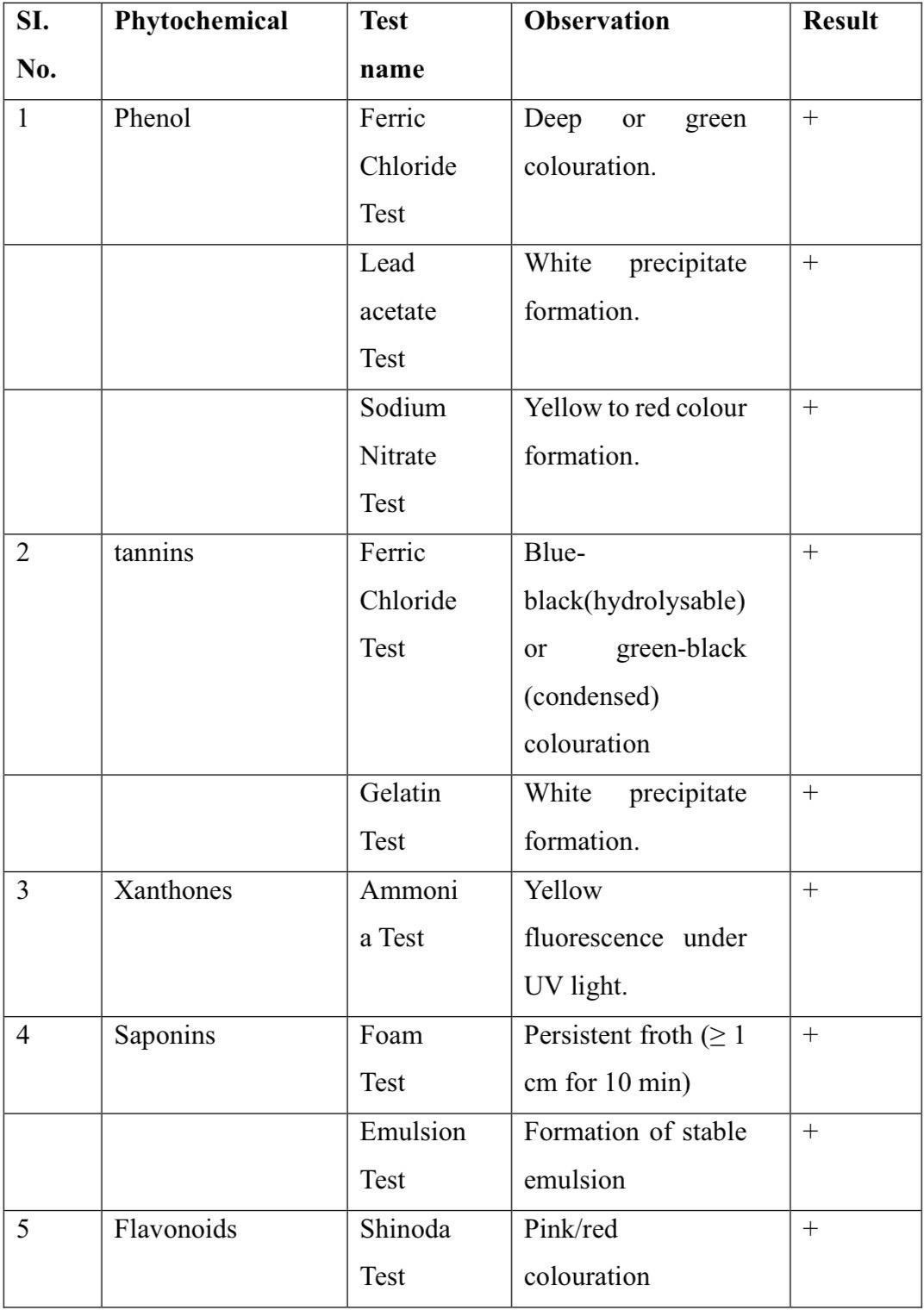
Preliminary phytochemical screening was carried out on the mangosteen leaf to identify the major classes of secondary metabolites present in the leaf. The phytochemical screening clearly show that mangosteen leaf extract contains a wide range of bioactive compounds. The presence of flavonoids, phenols, tannins,xanthones and saponins suggests strong potential for antioxidant, anti-inflammatory, antimicrobial and hepatoprotective activity.
4.3 MTT ASSAY
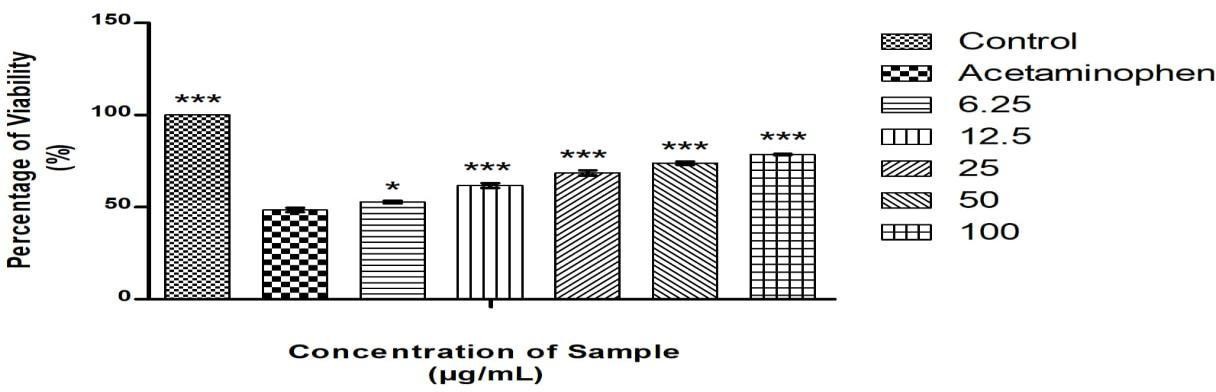
The cytotoxic activity of the extract was evaluated using the MTT assay. The percentage of cell viability decreased with increasing concentrations of the extract ,showing a dosedependent effect.
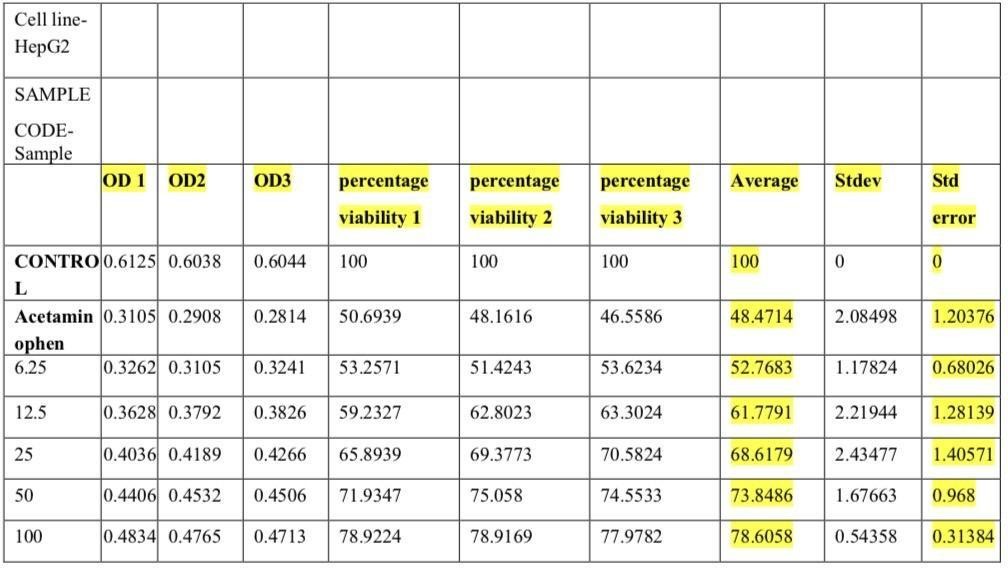
The study showed that acetaminophen greatly reduced the viability of HEPG2 liver cells, confirming its toxic effect. The sample treatment improved cell survival at all tested concentrations. As the dose increased, with the protective effect also increased, with the highest recovery seen at 100 g/mL. This shows that the sample can reduce the harmful impact caused by acetaminophen. Therefore, the sample demonstrates strong potential as a hepatoprotective agent.
CONCLUSION
This study demonstrates that mangosteen (Garcinia mangostana L.) leaf extract prepared through the maceration method. The extract, enriched with xanthones, flavonoids, and phenolic compounds, showed notable antioxidant and cell-protective effects. In HepG2 liver cells exposed to a toxic agent, the extract significantly increased cell viability, indicating its ability to reduce toxin-induced cellular damage. A clear dose-dependent response was observed, where higher concentrations of the extract provided greater protective effects. Overall, these findings highlight the promising role of mangosteen leaf extract as a natural agent for supporting and maintaining liver health.
REFERENCE






Noora Latheef*, Amina Rasheed, Arya A., Shibina S, Archana S. V., Rakhi A. R., Assessment of the hepatoprotective potential of Garcinia mangostana Leaf extract, Int. J. of Pharm. Sci., 2026, Vol 4, Issue 2, 48-54. https://doi.org/10.5281/zenodo.18453685
 10.5281/zenodo.18453685
