
Department of pharmacy practice, Sri Shanmugha college of pharmacy, Sankari, Salem.
Background: College life is a transitional phase marked by increased autonomy, academic challenges, and psychosocial demands, which often contribute to elevated stress levels. Stress may negatively influence academic performance, emotional well-being, and physical health. Understanding stress levels and associated coping strategies is essential to inform targeted interventions. Objective: To assess stress levels and coping strategies among college students. Methods: A cross-sectional, questionnaire-based survey was conducted among 86 undergraduate and postgraduate students selected through convenience sampling. The Perceived Stress Scale (PSS-10) was used to measure stress levels. Sources of stress and coping strategies were evaluated using structured questionnaires. Data were analyzed with descriptive statistics. Results: Most students reported moderate stress, characterized by occasional feelings of overload, lack of control, and nervousness. Academic workload, examination pressure, time management issues, financial concerns, family expectations, and career uncertainty emerged as prominent stressors. Problem-focused coping (e.g., planning, active problem solving) was employed inconsistently, whereas emotion-focused strategies (e.g., social support, hobbies) were common. Avoidance coping (e.g., excessive social media use, distraction) was moderately prevalent. More than half of participants reported negative impacts of stress on academic performance. Conclusion: College students experience moderate levels of stress influenced by academic, financial, social, and personal factors. While adaptive coping strategies are used to some extent, maladaptive coping behaviors are also common. Strategies to enhance adaptive coping and structured stress-management programs are recommended.
1.1 Students' academic, professional, and personal lives are greatly influenced by their college education. Increased autonomy, accountability, and decision-making are characteristics of this time. Students are expected to acquire social skills, emotional maturity, and professional readiness in addition to academic knowledge. This stage has many obstacles that can cause psychological stress, even though it also offers chances for development and self-discovery.Stress among college students has grown to be a significant public health and educational issue in recent years. Heavy workloads, numerous exams, deadlines, competitive learning settings, and pressure to perform well academically are just a few of the stressors that students must deal with. Stress levels are further increased by worries about future work, money problems, peer pressure, family expectations, and adjusting to independent or hostel life.Students' academic performance, emotional health, and physical health can all be adversely affected by excessive stress. Long-term stress has been linked to anxiety, depression, sleep problems, difficulty concentrating, impatience, and decreased motivation, according to studies. These repercussions influence students' social interactions and general quality of life in addition to their academic success. Therefore, fostering a healthy learning environment requires knowledge of stress among college students.
1.2 Concept of Stress
Stress is characterised as a physiological and psychological reaction to demands, either internal or external, that surpass a person's capacity for successful coping. It is a normal reaction to difficult circumstances, but stress can be detrimental if it persists or becomes severe. Academic stress, emotional stress, social stress, and financial stress are all types of stress that college students frequently encounter. Exams, assignments, grading schemes, and peer competition are the main causes of academic stress. Personal concerns, relational troubles, or low self-esteem can all lead to emotional stress. Difficulties adjusting to new surroundings, peer connections, and social expectations are examples of social stress. Living expenses, school costs, and reliance on family support are all associated with financial stress.
1.3 Coping Techniques
The cognitive and behavioural techniques people employ to deal with stress and stressful circumstances are referred to as coping strategies. These techniques are essential in determining how well pupils manage stress. Adaptive (good) and maladaptive (bad) coping mechanisms are the two main categories. Problem-solving, time management, finding social support, optimistic thinking, relaxation methods like yoga and meditation, regular exercise, and engagement in hobbies or leisure activities are examples of adaptive coping strategies. These techniques aid in stress reduction, emotional control, and resilience building.Conversely, avoidance, denial, excessive screen time, substance misuse, and social disengagement are examples of maladaptive coping mechanisms. While these tactics could offer short-term respite, they might exacerbate stress over time and have a detrimental impact on mental health. Therefore, encouraging appropriate stress management techniques requires understanding the coping mechanisms employed by college students.
1.4 The Study's Need
Stress is becoming more common among college students, which emphasises the necessity for comprehensive research in this field. Despite being aware of mental health issues, many students are unable to identify stress-related issues or are reluctant to seek professional assistance. Poor academic performance, mental health issues, and programme dropout can result from unmanaged stress. Educators, counsellors, and medical experts can create successful stress management treatments by having a thorough understanding of college students' stress levels and coping mechanisms. By shedding light on the types of stress that students encounter and the coping strategies they use, this study seeks to close the knowledge gap. The results can help organisations create counselling services, student-friendly policies, and initiatives to promote mental health.
2. AIM & OBJECTIVE
2.1 Aim
To assess the level of stress and the coping strategies used by college students.
2.2 Objectives
To assess the stress levels among college students
To identify major sources of stress
To assess coping strategies used by students
To evaluate the association between stress levels and coping strategies
3. METHODOLOGY
3.1 Study Design
The present study was conducted using a cross-sectional, questionnaire-based survey design to assess stress levels and coping strategies among college students.
3.2 Study Setting
The study was carried out among students studying in various undergraduate and postgraduate programs of a college.
3.3 Study Population
The study population included college students who were willing to participate and provide informed consent.
3.4 Sample Size
A total of 86 students were included in the study based on convenience sampling.
3.5 Sampling Technique
A convenience sampling method was used to select participants for the study.
3.6 Inclusion Criteria
Students aged 18 years and above
Undergraduate and postgraduate students
Students willing to participate and give informed consent
3.7 Exclusion Criteria
Students unwilling to participate
Incomplete or improperly filled questionnaires
3.8 Study Tool
Data were collected using a structured questionnaire, which consisted of four sections:
Section A: Demographic details
Section B: Perceived Stress Scale (PSS-10) to assess stress levels
Section C: Sources of stress
Section D: Coping strategies questionnaire to assess problem-focused, emotion-focused, and avoidance coping strategies
3.9 Data Collection Procedure
After obtaining permission from the concerned authorities, students were informed about the purpose of the study. The questionnaire was distributed either in printed form or online (Google Form). Participants were assured of confidentiality and anonymity.
4. DATA ANALYSIS
4.1 Data Entry and Analysis
The collected data were entered into Microsoft Excel for analysis. Data were checked for completeness and accuracy before analysis.
4.2 Scoring of Stress Levels
Stress levels were assessed using the Perceived Stress Scale (PSS-10).
The total score ranged from 0 to 40 and was interpreted as:
0–13: Low stress
14–26: Moderate stress
27–40: High stress
4.3 Analysis of Coping Strategies
Coping strategies were categorized into:
Problem-focused coping
Emotion-focused coping
Avoidance coping
Responses were scored using a Likert scale, and mean scores were calculated for each coping strategy.
4.4 Statistical Methods
Descriptive statistics such as frequency, percentage, mean, and standard deviation were used to summarize demographic data, stress levels, and coping strategies.
4.5 Presentation of Results
The results were presented in the form of:
Tables
Bar charts and pie charts
Descriptive summaries
4.6 Statistical Analysis
The data was analysed by using MS Excel 2016 version.
RESULT & DISCUSSION:
Demographics details
1.In the present study, the majority of respondents were female (58.3%), indicating higher participation of female students, which is consistent with recent studies reporting greater stress perception among females. Similar findings were reported by Son et al. (2020) and Savitsky et al. (2020), where female college students showed higher stress levels and greater use of emotion-focused coping strategies.

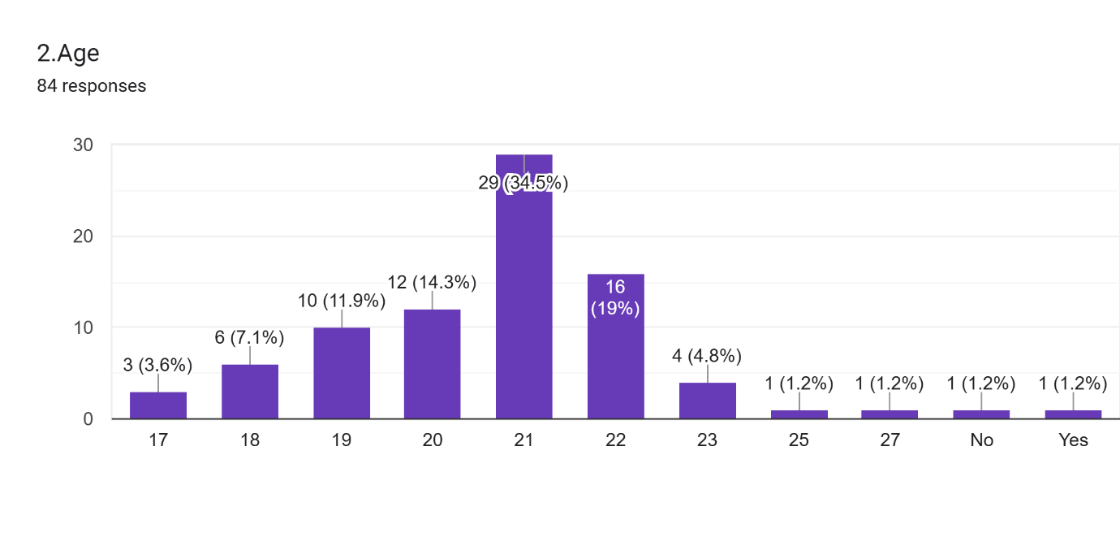
2.The majority of participants belonged to the 21–22 years age group, indicating that students in the early adult academic phase formed the largest proportion of the study population. Similar age-related findings were reported by Beiter et al. (2019) and Son et al. (2020), where students aged 20–22 years experienced higher academic and psychosocial stress.
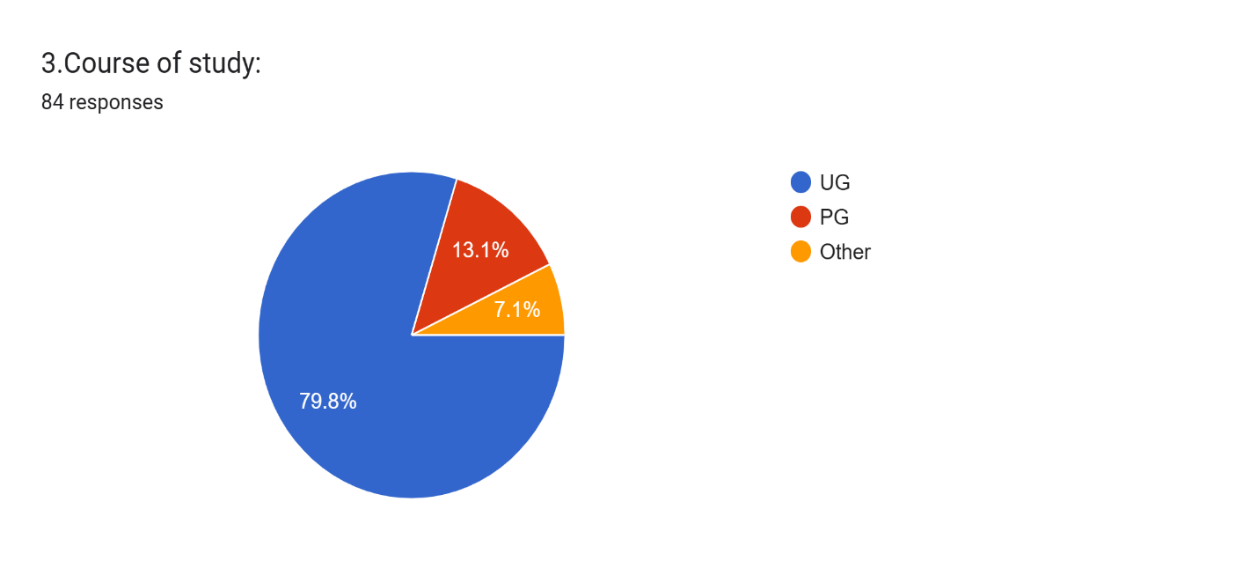
3.The majority of participants were undergraduate students (79.8%), followed by postgraduate (13.1%) and other courses (7.1%), indicating greater representation of UG students in the study. Similar findings were reported by Son et al. (2020) and Aristovnik et al. (2020), where undergraduate students exhibited higher stress levels due to academic workload and examination pressure.
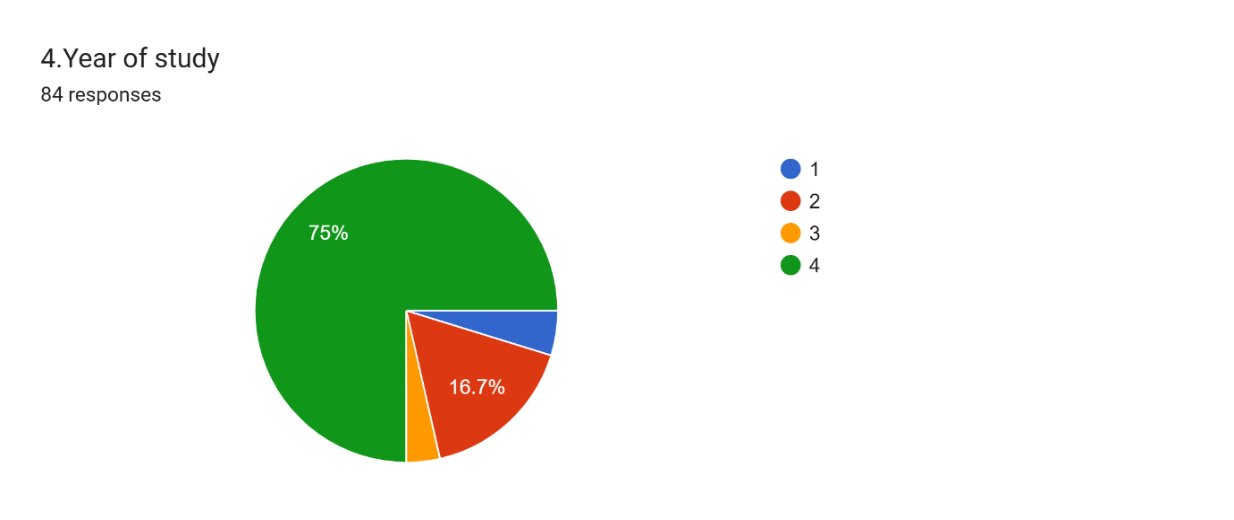
4.The majority of participants were final-year students (75%), followed by second-year students (16.7%), indicating higher participation from students nearing course completion. Similar observations were reported by Beiter et al. (2019) and Aristovnik et al. (2020), where final-year students experienced increased stress due to academic workload and career-related concerns
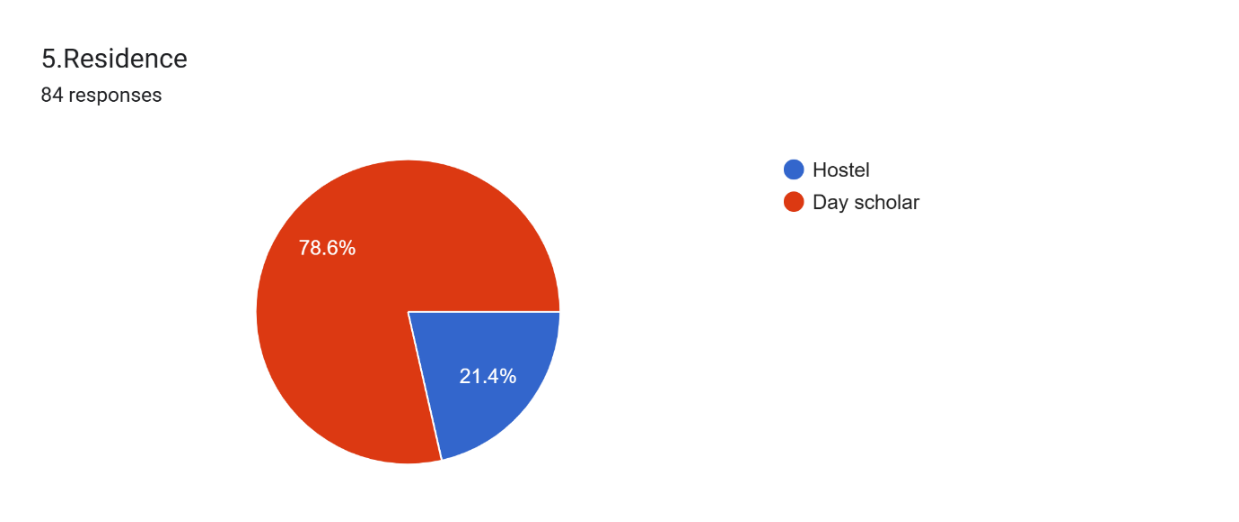
5.The majority of participants were day scholars (78.6%), while hostel residents constituted 21.4% of the study population. Similar findings were reported by Beiter et al. (2019) and Aristovnik et al. (2020), where day scholars reported higher stress due to commuting, family expectations, and time management issues.
PERCEIVED STRESS SCALE
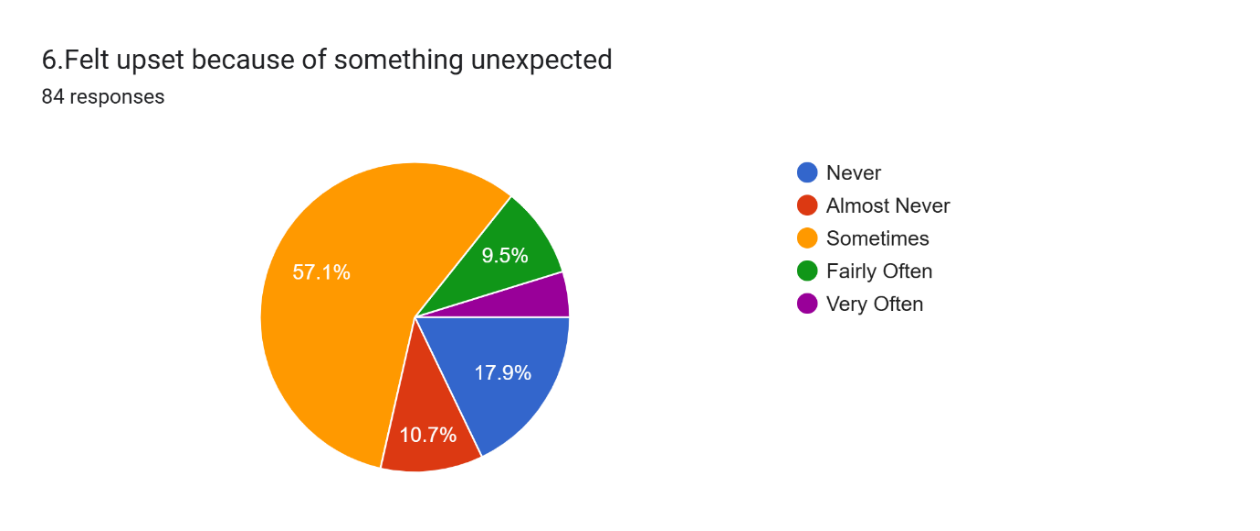
6.More than half of the students reported feeling upset sometimes (57.1%), while a smaller proportion experienced it fairly often or very often, indicating moderate perceived stress due to unexpected events. Similar patterns were observed by Cohen & Williamson (2019) and Son et al. (2020), where students frequently reported occasional distress related to unpredictability in academic and personal life.
.
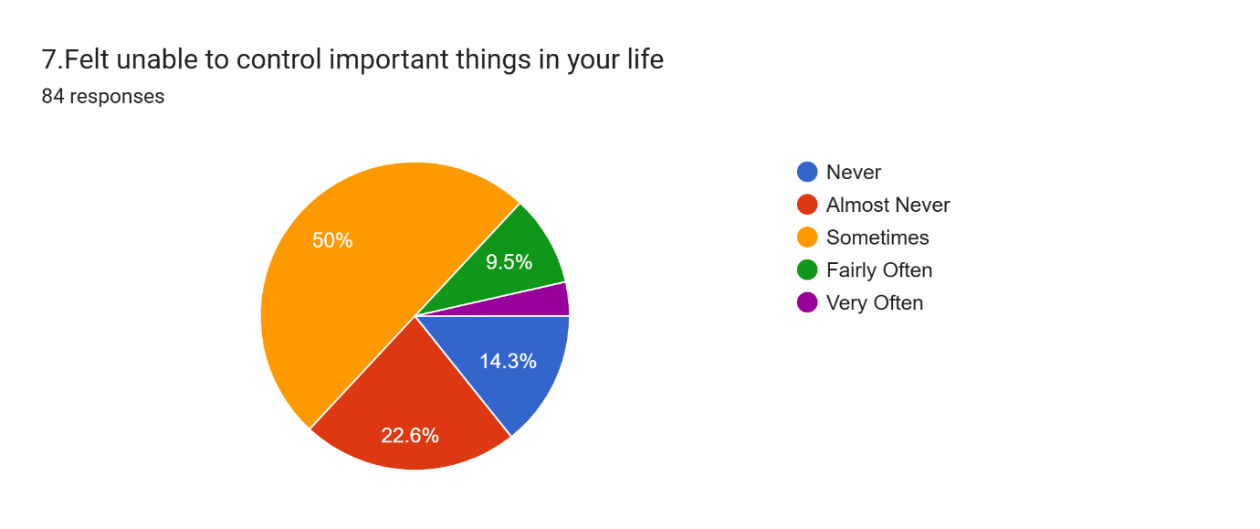
7.Half of the students reported feeling unable to control important aspects of their life sometimes (50%), indicating a moderate level of perceived stress. Similar findings were reported by Son et al. (2020) and Aristovnik et al. (2020), where students frequently experienced feelings of loss of control during academic demands and uncertainty.
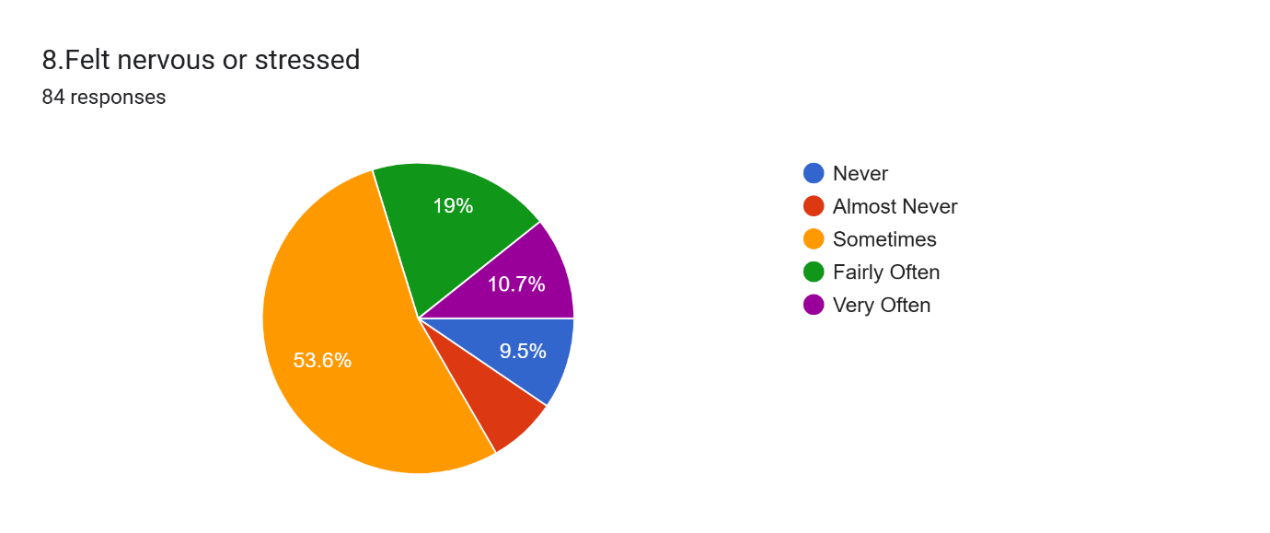
8.The survey found that most respondents experienced nervousness or stress at least occasionally, with many reporting frequent stress, consistent with findings from studies using the Perceived Stress Scale (PSS). Similarly, Perceived stress, sources of stress and coping strategies among medical students reported that a majority of students scored above the stress cut off and felt stressed during their course. Together, these results highlight stress as a common subjective experience linked to everyday academic demands and overall well-being.
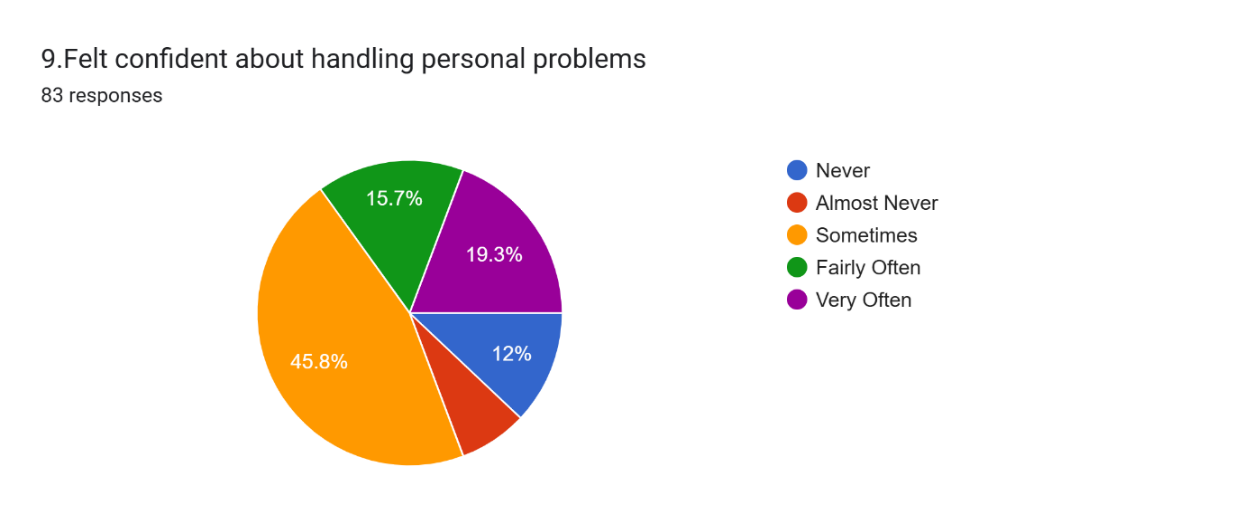
9.Nearly half of respondents reported feeling confident sometimes in handling personal problems, while many felt confident fairly or very often, indicating moderate self-efficacy overall. This aligns with findings from Perceived problem solving, stress, and health among college students, which showed that greater perceived problem-solving ability is significantly associated with lower stress and better health outcomes. Together, these results suggest that confidence in managing personal problems plays an important role in effective stress coping and overall well-being.
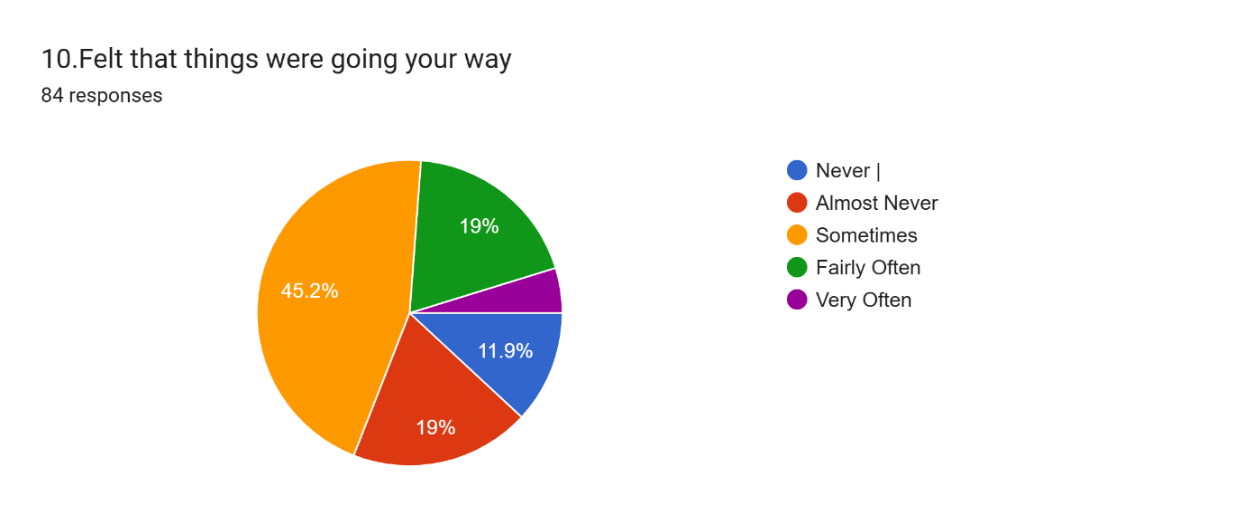
10.Most respondents felt that things were going their way at least sometimes, indicating moderate optimism and perceived control, though fewer experienced this frequently and some reported it rarely. This pattern suggests mixed but generally moderate life satisfaction. Consistent with Cohen et al. (1983), these findings highlight that feeling in control and positive about life direction is associated with lower stress and better psychological well-being.
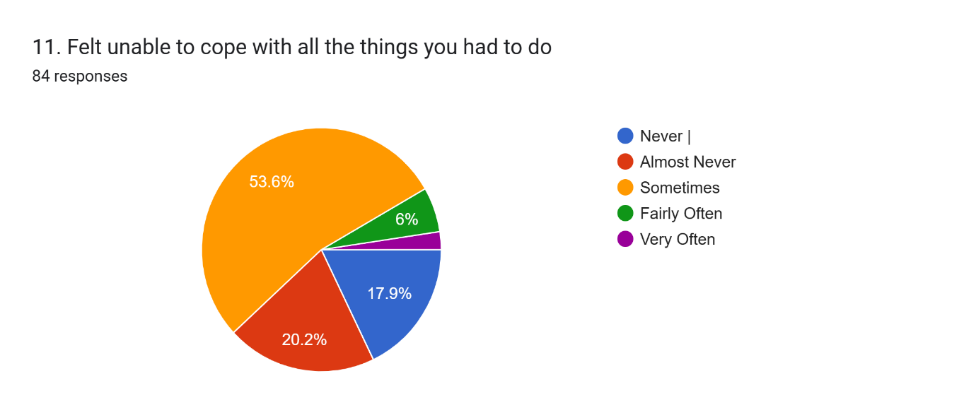
11.More than half of respondents sometimes felt unable to cope with all responsibilities, indicating moderate perceived overload, while only a small proportion experienced this frequently. This suggests occasional strain rather than persistent coping difficulties. Consistent with Cohen, Kamarck, and Mermelstein (1983), these findings show that feelings of being overwhelmed are common but typically experienced intermittently in general populations.
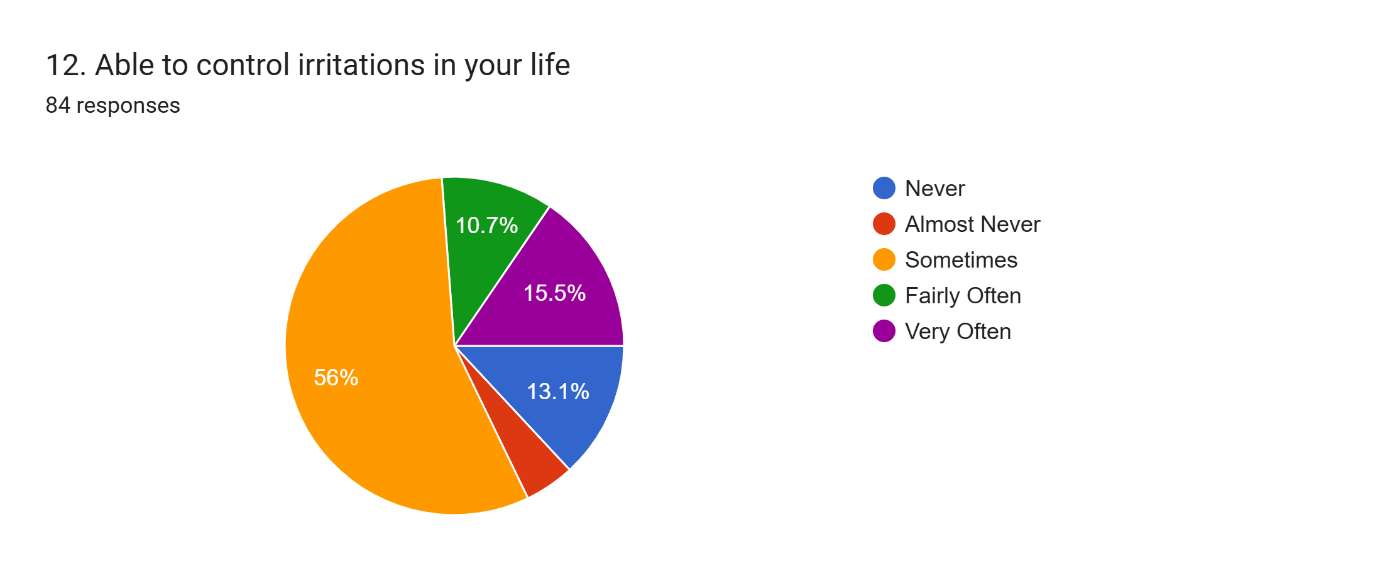
12.Most respondents reported being able to control daily irritations at least sometimes, with many indicating fairly or very often, reflecting generally reasonable emotional regulation, though a small group showed low control. This suggests intermittent difficulty rather than persistent problems in managing stressors. Consistent with Cohen, Kamarck, and Mermelstein (1983), these findings highlight emotional regulation as a key aspect of perceived stress, commonly challenged occasionally in everyday life.
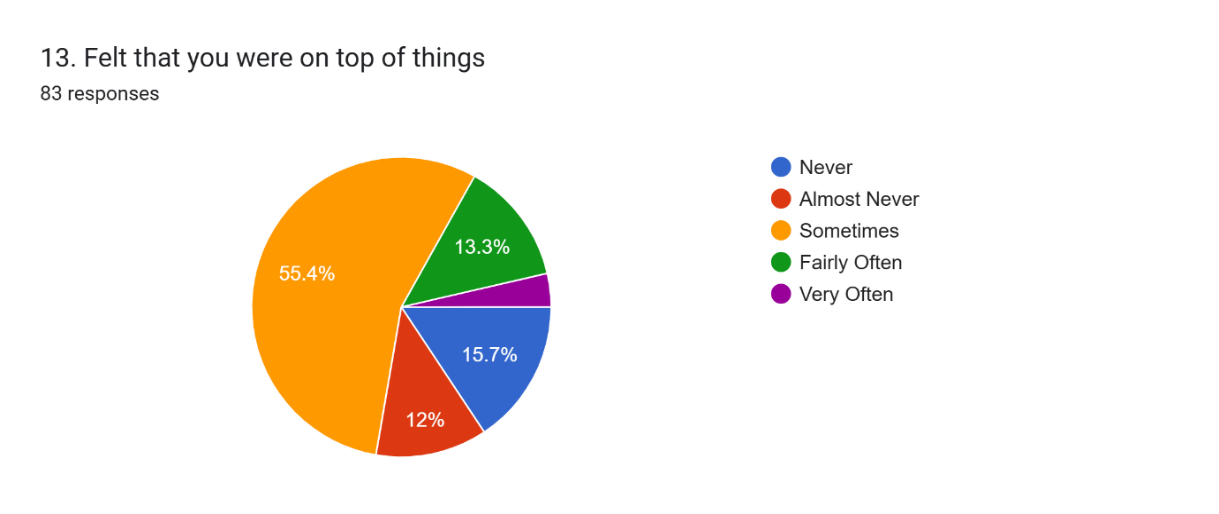
13. Over half of respondents sometimes felt on top of things, indicating moderate perceived control, though fewer experienced this frequently and some rarely did, reflecting variability in daily functioning. Overall, this suggests fluctuating but generally moderate effectiveness in managing life demands. Consistent with Cohen, Kamarck, and Mermelstein (1983), these findings show that feeling in control is inversely related to perceived stress and is commonly experienced intermittently rather than consistently.
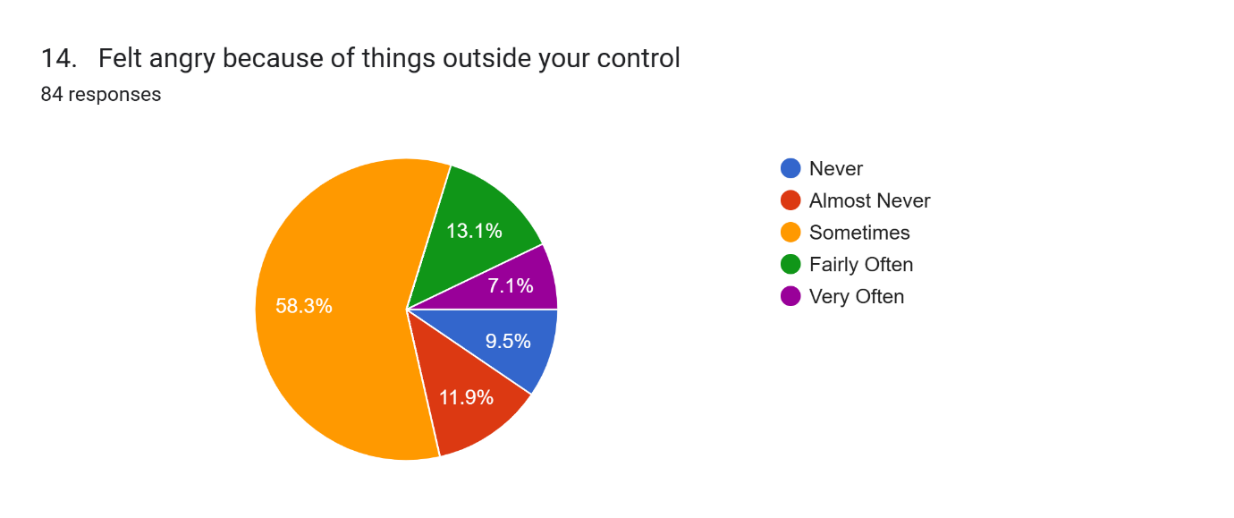
14. Most respondents sometimes felt angry due to circumstances beyond their control, indicating situational emotional responses, while only a small proportion experienced this frequently. This suggests moderate emotional reactivity rather than chronic anger. Consistent with Cohen, Kamarck, and Mermelstein (1983), these findings show that anger and frustration linked to lack of control are common but typically experienced occasionally in general populations.
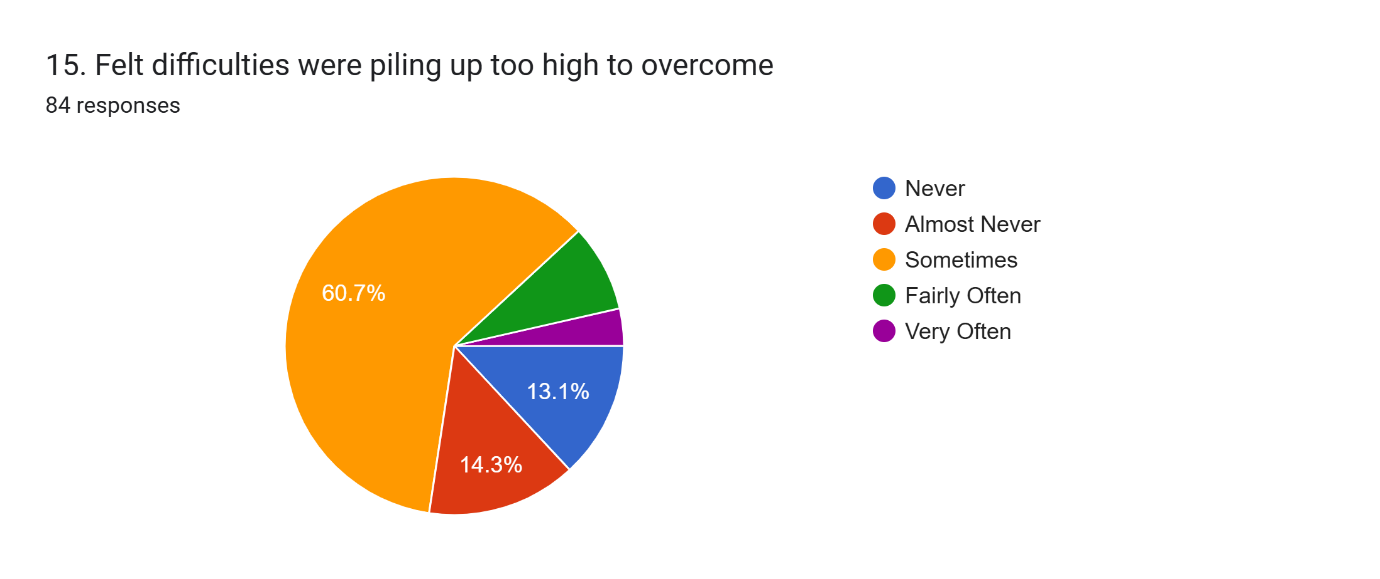
15. Most respondents sometimes felt that difficulties were piling up too high to overcome, indicating intermittent overload rather than persistent helplessness, with only a small proportion experiencing this frequently. This reflects moderate perceived stress overall. Consistent with Cohen, Kamarck, and Mermelstein (1983), these findings show that feelings of being overwhelmed are a core aspect of perceived stress but are usually experienced occasionally rather than chronically in general populations.
SOURCES OF STRESS
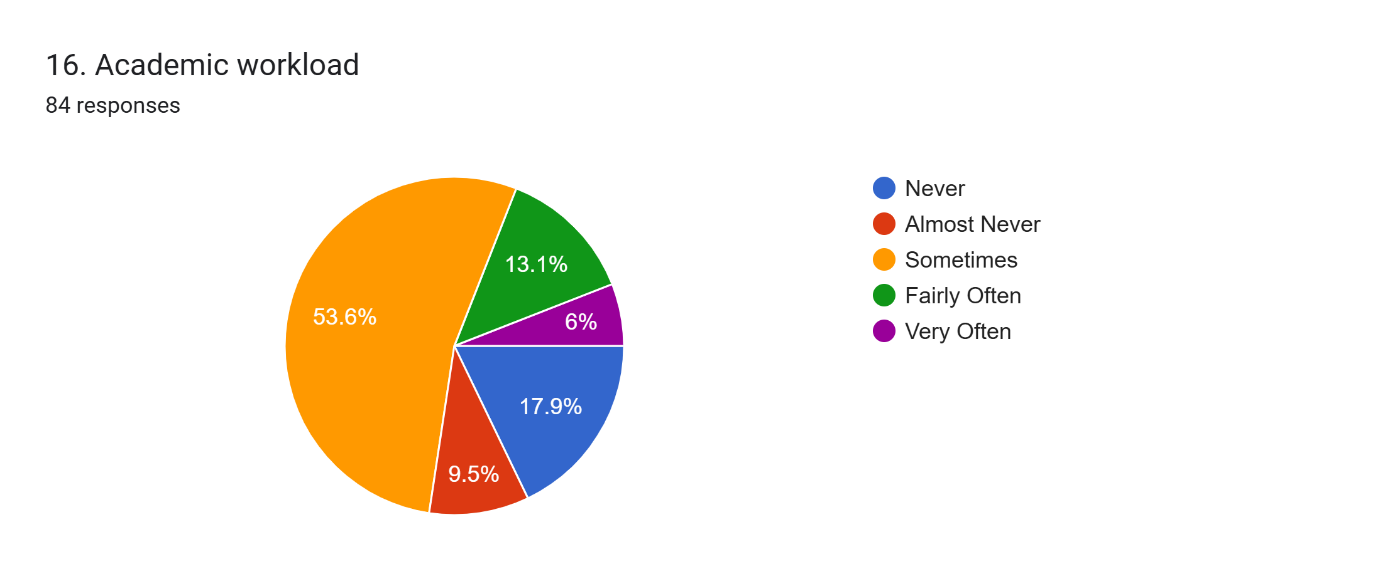
16. The survey shows that most students (53.6%) sometimes experience academic workload, with smaller groups reporting it fairly or very often, indicating moderate but varied perceptions of academic pressure. This aligns with Rubio-Valdehita et al. (2014), who found that higher perceived workload is linked to increased stress, while supportive academic environments help reduce overload. Together, these findings highlight the importance of managing academic demands to promote student well-being and performance.
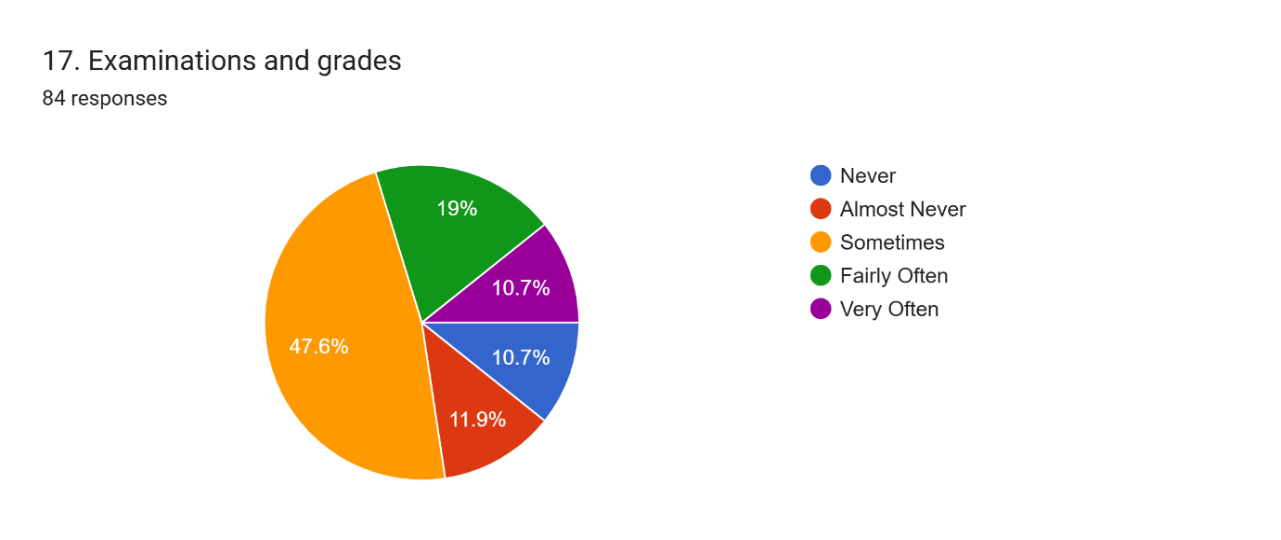
17.Nearly half of students (47.6%) sometimes felt pressure from examinations and grades, with smaller groups experiencing it fairly or very often, indicating varied levels of exam-related stress. This aligns with Putwain (2007), who found that higher test anxiety is linked to increased worry and poorer academic performance. Together, these findings highlight examinations as a common stressor that can influence both student well-being and outcomes.
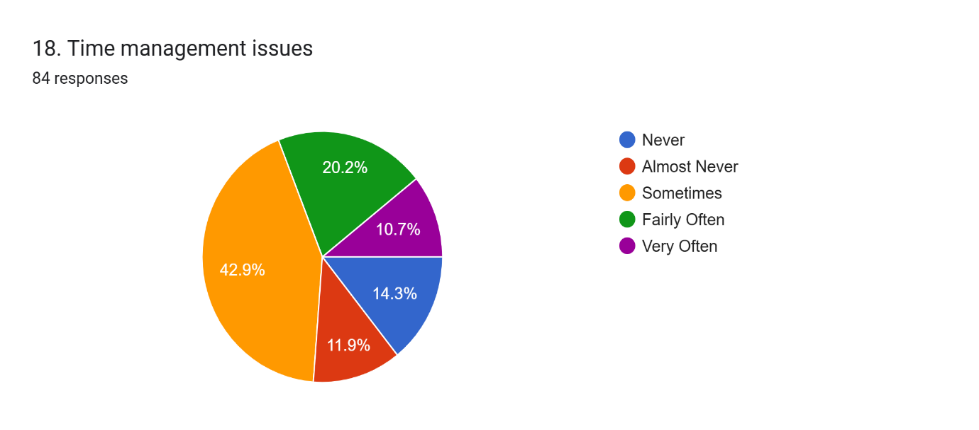
18. The survey shows that many students sometimes (42.9%) struggle with time management, with notable proportions experiencing difficulties fairly or very often, indicating variability in organizational skills. This aligns with Britton and Tesser (1991), who found that effective time management is strongly associated with better academic performance and lower stress. Together, these findings highlight time management as a common student challenge and emphasize the need for targeted skill-building support.
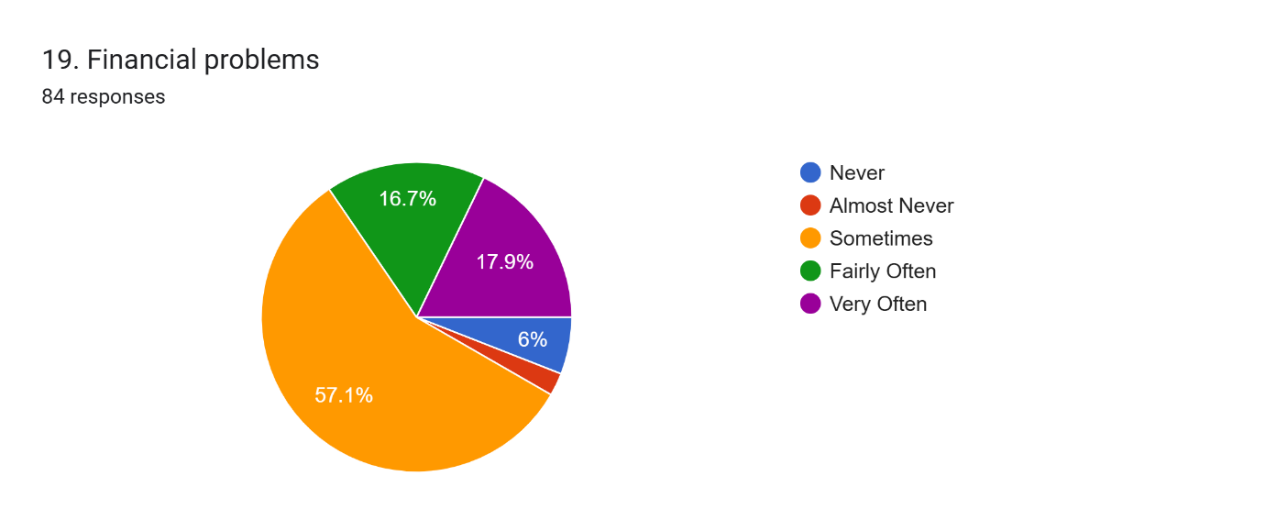
19.The survey shows that most students (57.1%) sometimes face financial problems, with notable proportions experiencing them fairly or very often, indicating that financial stress is a common concern. This aligns with Richardson, Elliott, and Roberts (2017), who found that financial difficulties are significantly associated with higher stress, poorer academic performance, and reduced well-being. Together, these findings highlight financial strain as an important factor influencing student engagement and overall success.
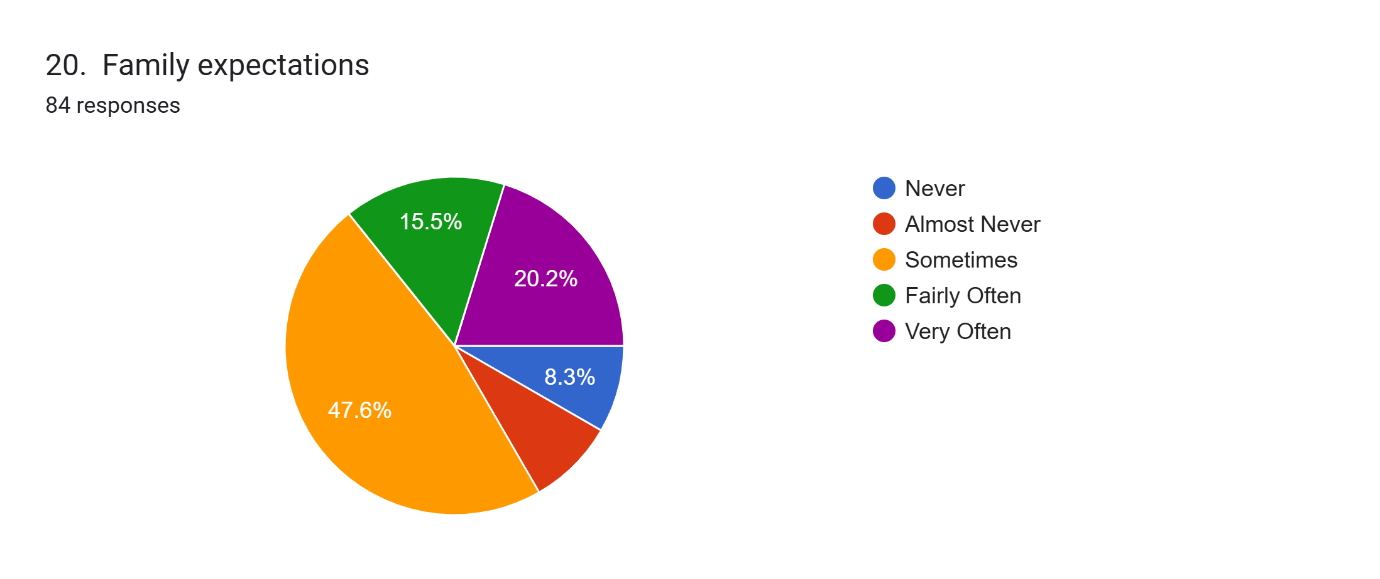
20.Nearly half of students (47.6%) sometimes felt pressure from family expectations, with many experiencing it fairly or very often, indicating that family influence is a notable stressor, though experiences vary. This aligns with research showing that high parental expectations are associated with increased academic stress and reduced well-being. Together, these findings highlight how family expectations can significantly shape students’ emotional experiences and academic pressure.
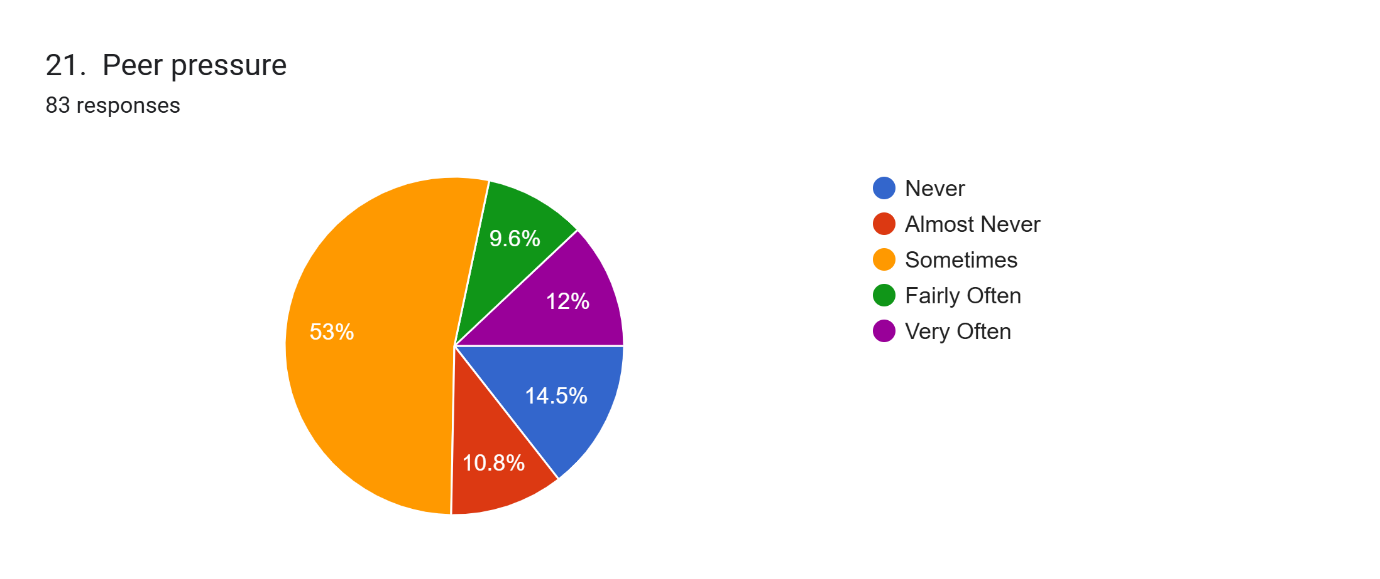
21. The survey shows that most students (53%) sometimes experience peer pressure, with smaller groups feeling it fairly or very often, indicating that peer influence is common but varies in intensity. This aligns with Brown et al. (2008), who reported that higher perceived peer pressure is associated with increased stress and changes in academic and social behavior. Together, these findings highlight peer pressure as an important factor shaping students’ school experiences.
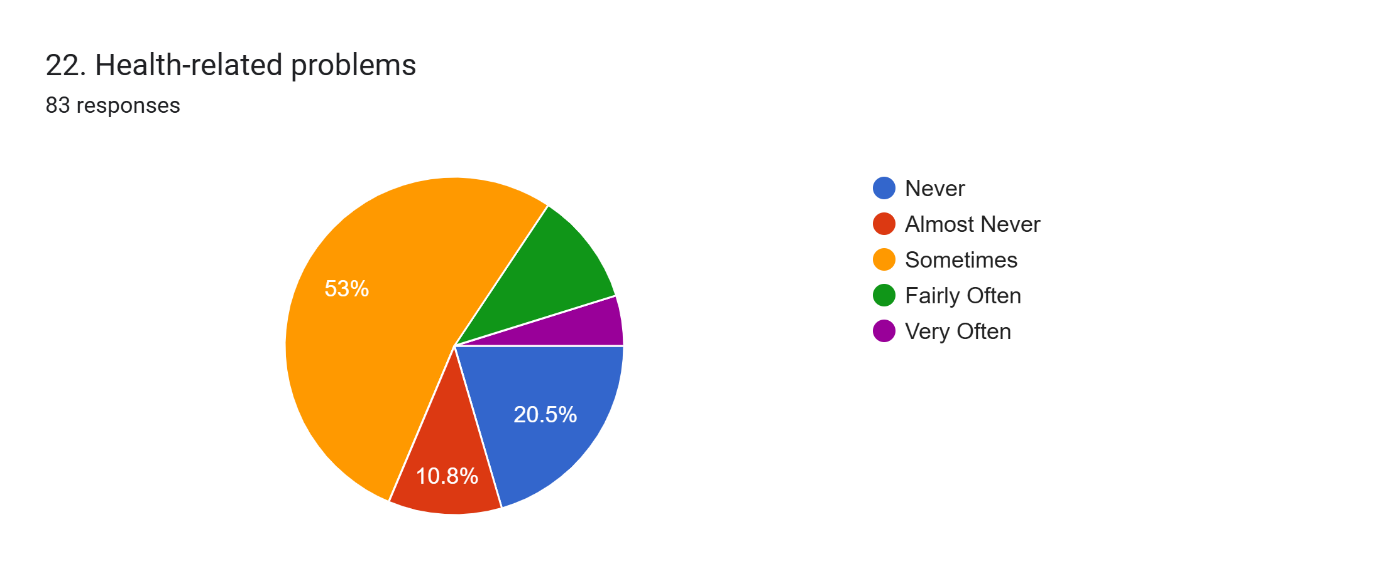
22. The survey indicates that most students (53%) sometimes experience health-related problems, with smaller groups reporting them fairly or very often, while about one-fifth report none, reflecting varied health experiences. This aligns with Stallman (2010), who found high levels of physical and psychological health problems among university students linked to stress and academic performance. Together, these findings suggest that health concerns are moderately common and can affect students’ well-being and academic engagement
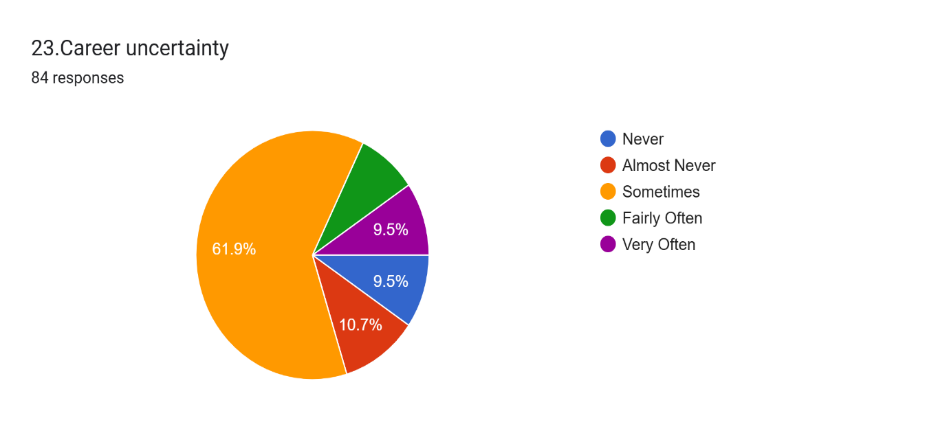
23. The survey shows that most respondents sometimes experience career uncertainty, with fewer reporting strong confidence, indicating that uncertainty about future careers is widespread. This aligns with the 2023 study on Ghanaian students, which found that career uncertainty is driven by anxiety, lack of information, inadequate counselling, and social pressures. Together, these findings highlight the need for better career guidance, self-awareness, and access to information to improve students’ career confidence.
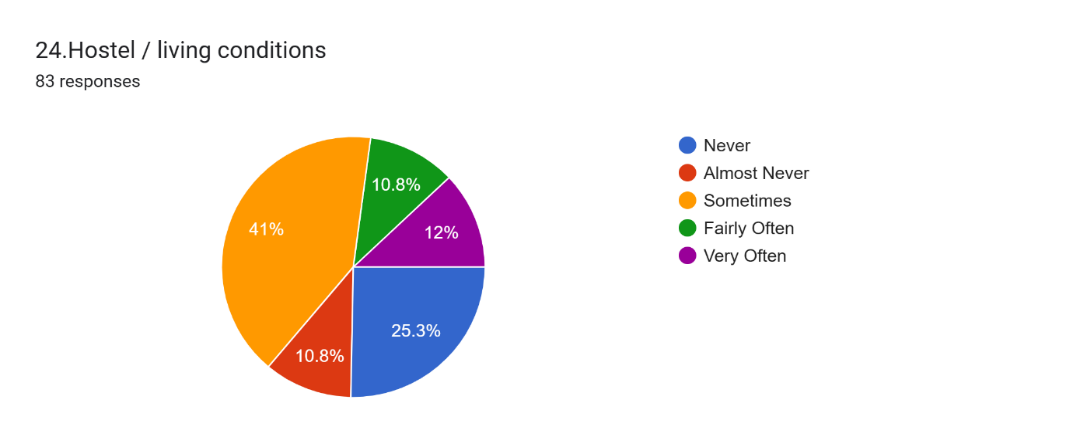
24.The survey indicates that many respondents sometimes experience hostel or living-condition issues, with some reporting regular difficulties, reflecting varied accommodation experiences. This aligns with the study Negative Impact of Living Conditions in a Hostel on Students, which found that poor hostel environments negatively affect psychological well-being, stress, and academic performance. Together, these findings emphasize the importance of improving living conditions and support systems to enhance student well-being and adjustment.
COPING STRATEGIES USED BY STUDENTS
Problem-Focused Coping Untitled Title
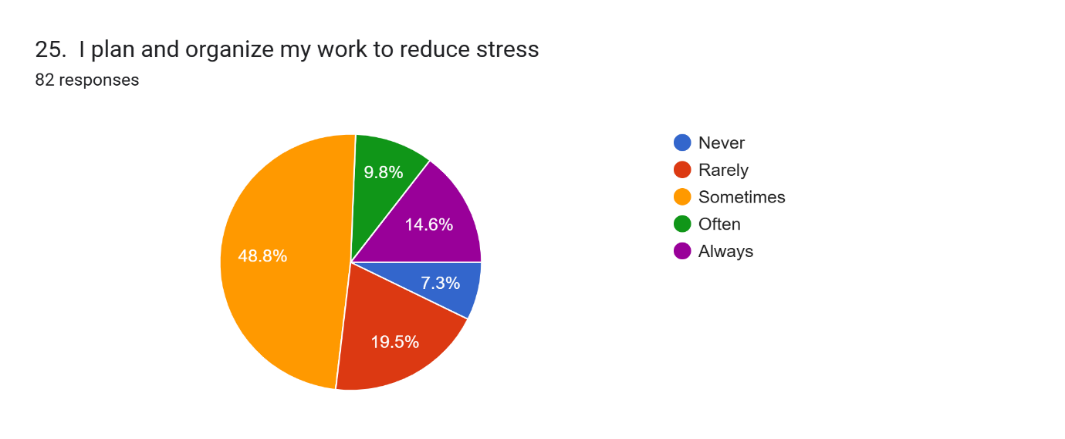
25.Nearly half of respondents sometimes plan and organize their work to reduce stress, while fewer do so often or always, suggesting that structured stress-management habits are inconsistently practiced. This aligns with Time Management and Stress Among College Students: A Review of Literature, which reports that better planning and organizational skills are associated with lower stress and improved coping. Together, these findings highlight the importance of promoting proactive planning and time-management strategies to enhance well-being and performance.
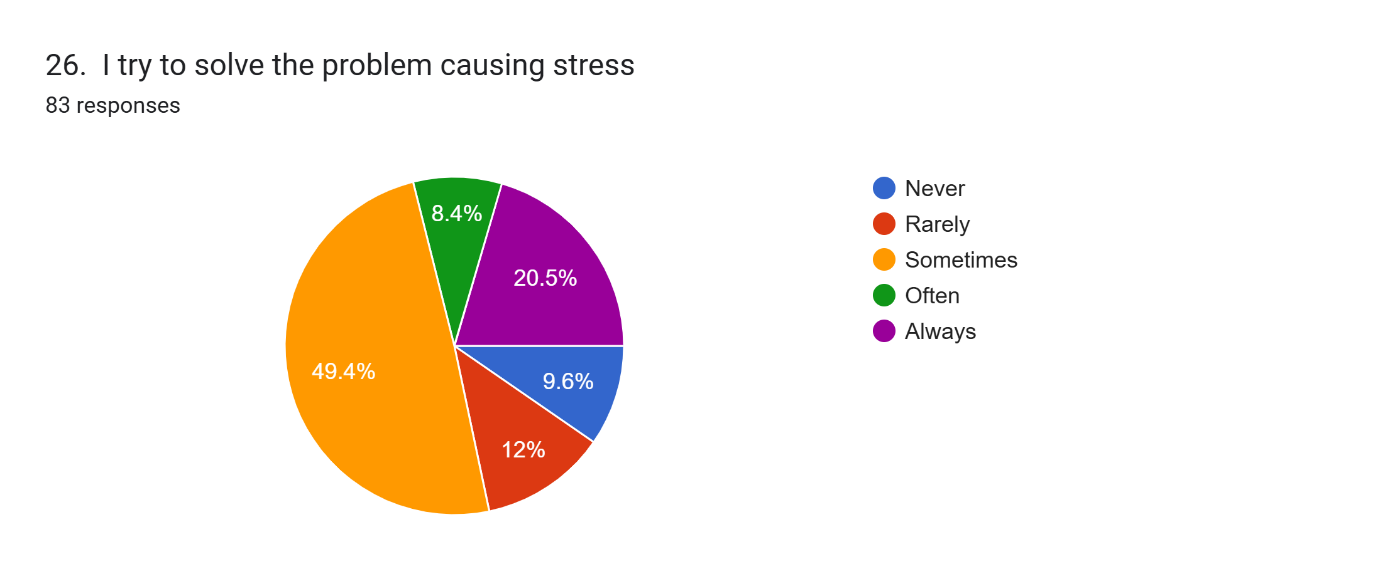
26.Nearly half of respondents sometimes try to actively solve the problems causing their stress, while fewer do so often or always, indicating inconsistent use of problem-focused coping. This aligns with Problem-Focused Coping and Perceived Stress Among College Students, which found that regular problem-solving is associated with lower stress and better academic adjustment. Together, these findings suggest that strengthening problem-solving skills may help improve coping and overall well-being.
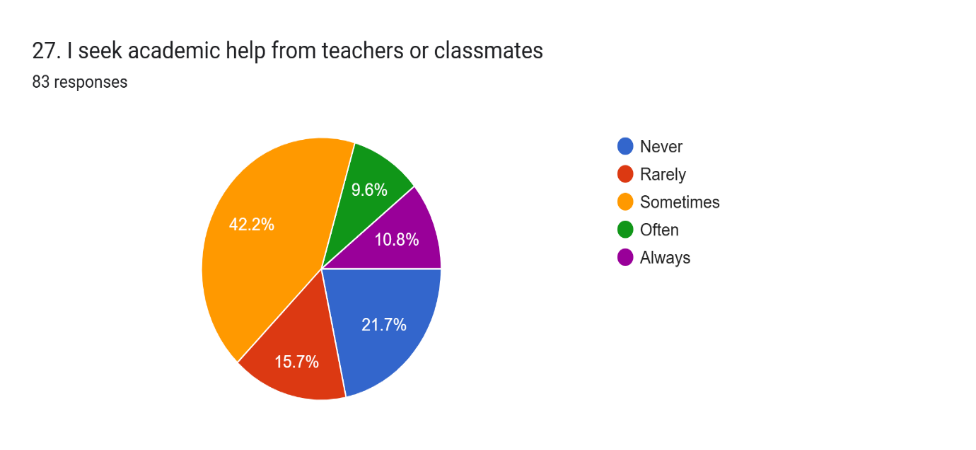
27.The survey shows that many respondents sometimes seek academic help, while fewer do so regularly or not at all, indicating varied help-seeking behaviors. This aligns with The Role of Help-Seeking in Students’ Academic Success, which found that students who actively seek support tend to achieve better academic outcomes and experience lower stress. Together, these findings highlight the importance of fostering supportive learning environments to encourage help-seeking and improve student well-being.
Emotion-Focused Coping
28.The survey indicates that most respondents sometimes talk to friends or family about their stress, with many reporting they always do, highlighting social support as a common coping strategy. This aligns with Social Support and Stress among College Students, which found that sharing concerns with close networks is linked to lower anxiety and better coping. Together, these findings emphasize the value of open communication in reducing psychological distress and improving stress management

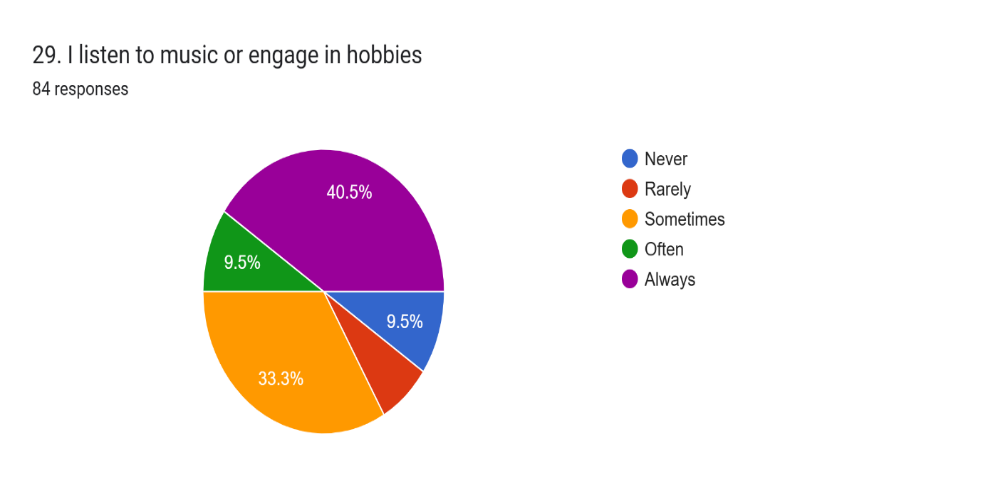
29. Many respondents reported always engaging in music or hobbies, with others doing so sometimes or often, indicating that leisure activities are a common coping strategy for stress. This aligns with The Effect of Music and Leisure Activities on Stress and Mental Health, which found that regular participation in such activities is associated with lower stress and better overall well-being. Together, these findings highlight the role of music and hobbies in supporting emotional health and resilience.
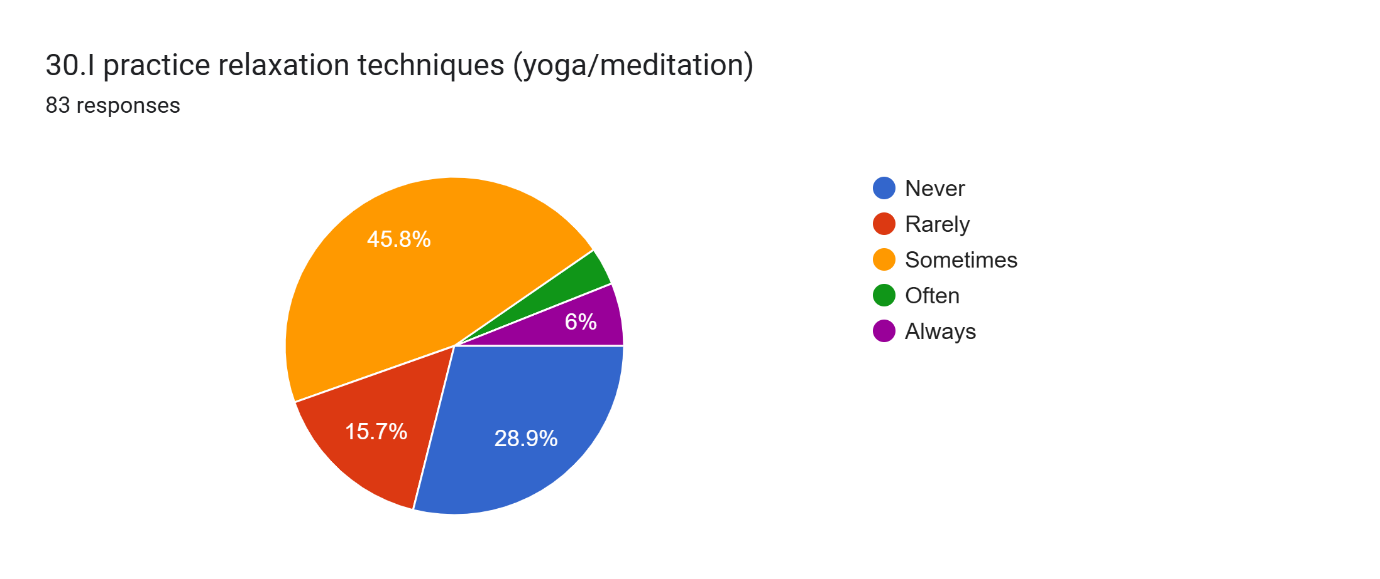
30.Nearly half of respondents sometimes practice relaxation techniques such as yoga or meditation, while many rarely or never do, indicating uneven adoption of formal stress-reduction practices. This aligns with Mindfulness, Yoga, and Stress Reduction in College Students: A Meta-Analysis, which found that regular engagement in these practices is associated with lower stress and better psychological health. Together, these findings highlight the need to promote mindfulness and relaxation strategies to improve overall well-being.
Avoidance / Negative Coping
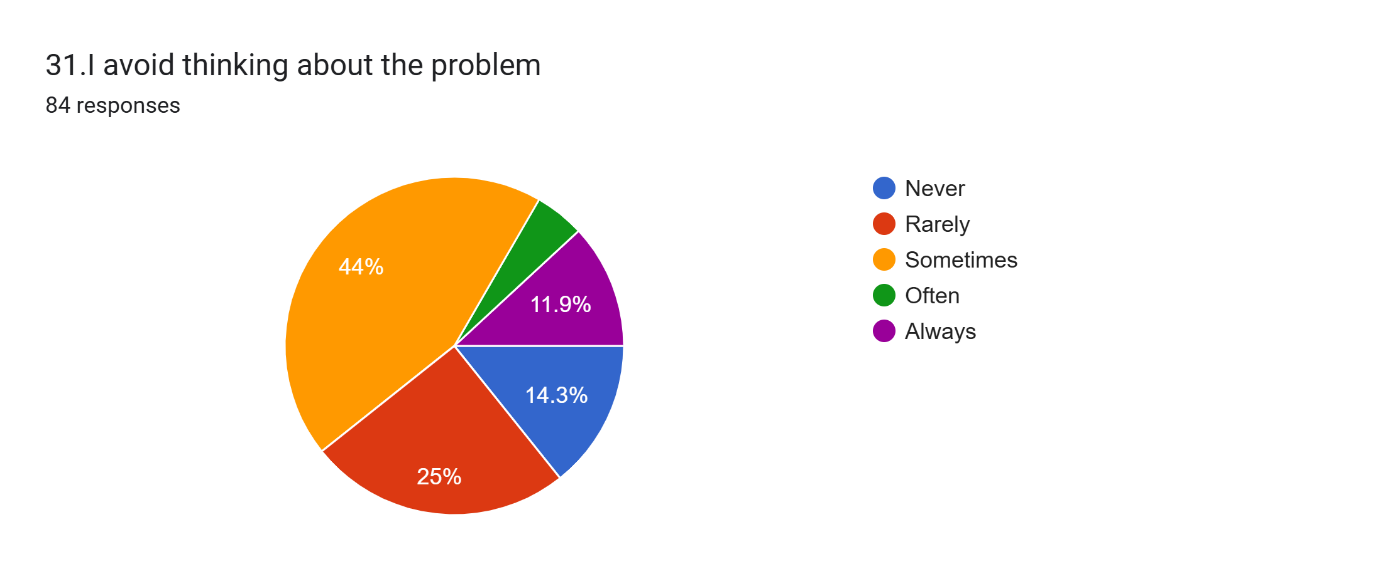
31. Nearly half of respondents sometimes avoid thinking about their problems, indicating that avoidance is a moderately common coping response, though fewer rely on it consistently. This aligns with Avoidance Coping and Psychological Distress: A Meta-Analysis, which found that habitual avoidance is linked to higher stress and anxiety, while active coping leads to better outcomes. Together, these findings highlight the importance of promoting adaptive strategies such as problem-solving to improve psychological well-being
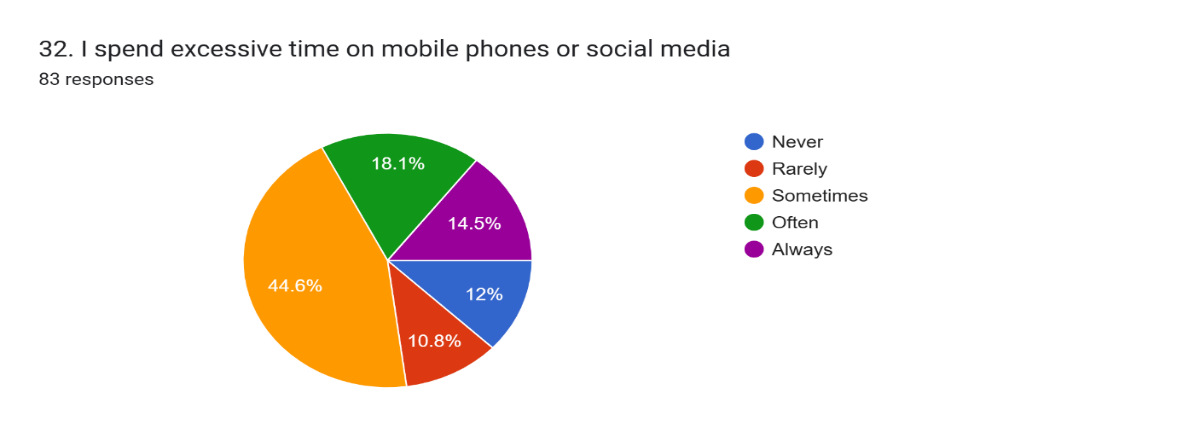
32.The survey shows that many respondents sometimes spend excessive time on mobile phones or social media, with some doing so often or always, indicating that digital engagement is a common behavior. This aligns with Social Media Use and Perceived Stress: A Systematic Review, which found higher social media use associated with increased stress and anxiety among young adults. Together, these findings highlight the need to promote healthy digital habits and time-management strategies to support well-being
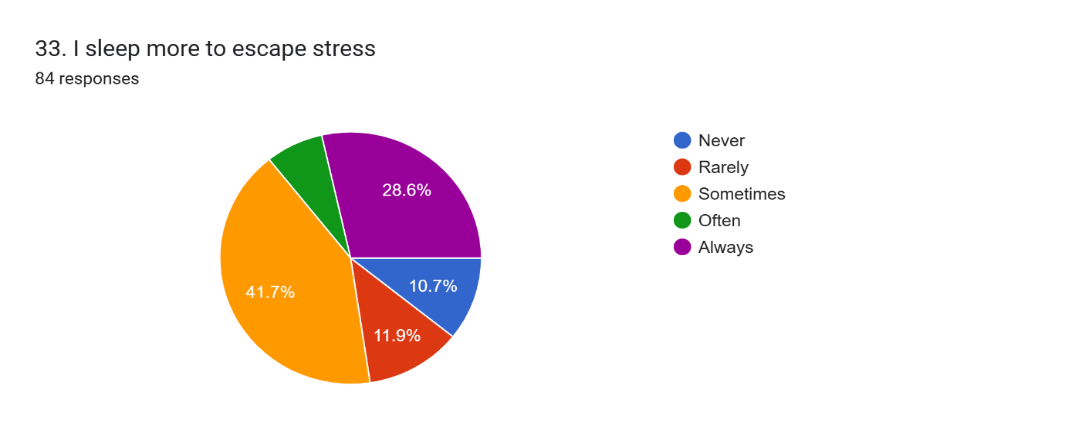
33. Many respondents reported sometimes or always sleeping more to escape stress, indicating that increased sleep is a common coping response. This aligns with Stress and Sleep: A Review of the Literature, which shows that elevated stress is linked to changes in sleep patterns, including increased sleep or disturbances. Together, these findings highlight the close relationship between stress and sleep and emphasize the need for healthier coping strategies to support psychological and sleep well-being.
GENERAL QUESTIONS
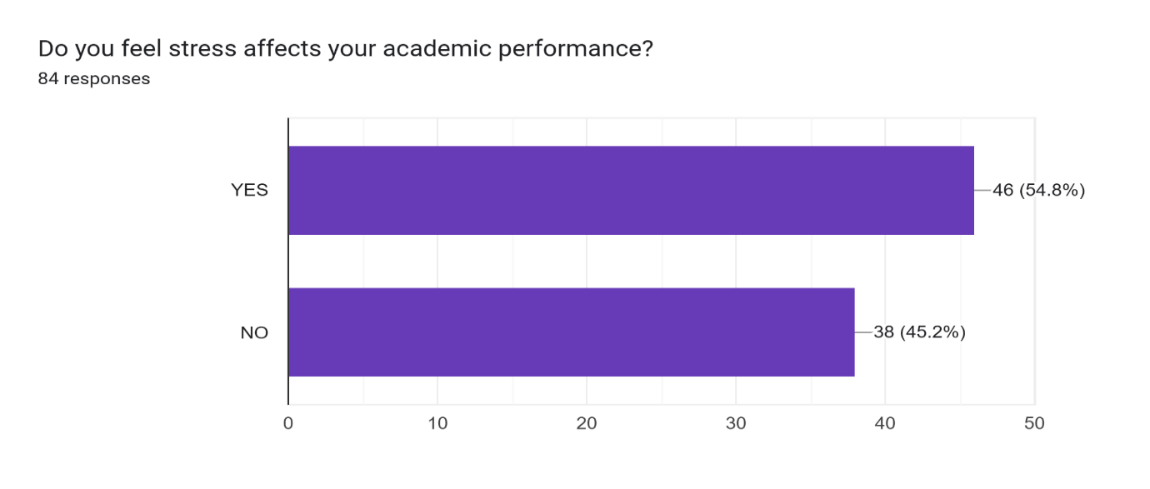
34. Over half of respondents (54.8%) felt that stress negatively affected their academic performance, while others did not, reflecting varied student experiences. This aligns with Academic Stress and Its Impact on Academic Performance, which found that stress significantly distracts students and reduces academic achievement. Together, these findings highlight the importance of strengthening stress-management support to protect learning outcomes and student success.
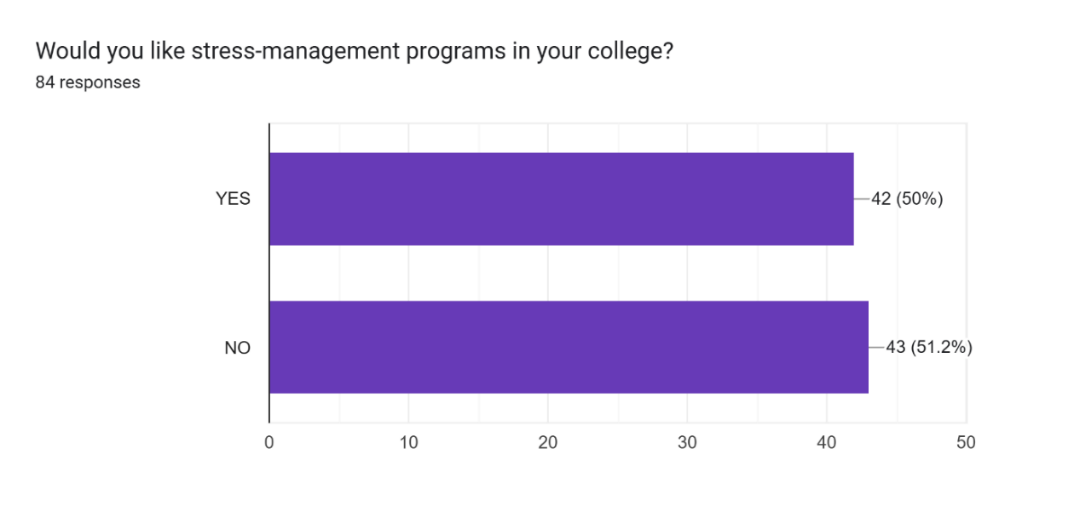
35. Responses were nearly evenly split on the desire for college stress-management programs, indicating mixed perceptions about the value of formal support services. This aligns with Effectiveness of College Stress-Management Programs: A Review, which shows that structured interventions can reduce distress but student engagement varies. Together, these findings highlight the importance of understanding student preferences to design appealing and effective wellness programs.
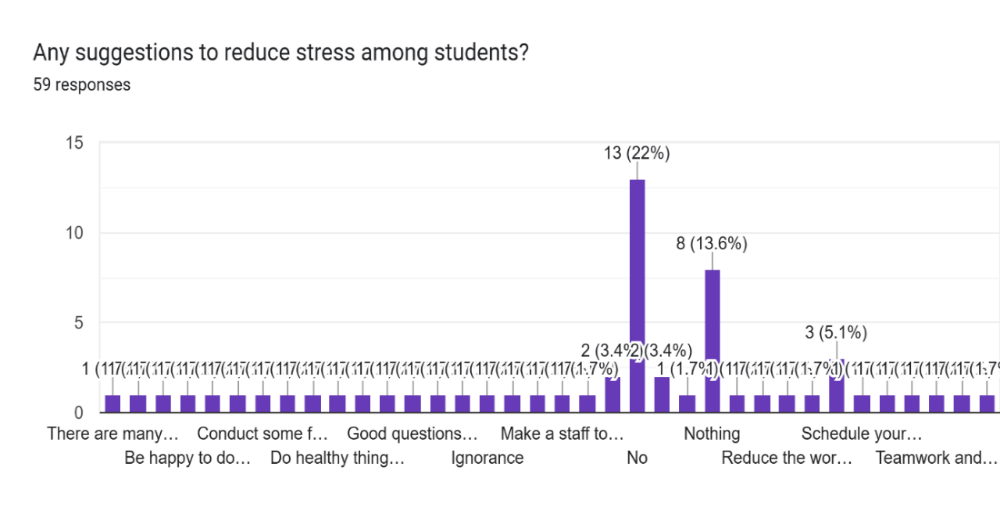
36. Students suggested a range of stress-reduction strategies such as time management, breaks, hobbies, and support systems, showing preference for both behavioral and social coping methods. This aligns with research on stress management among college students, which highlights the effectiveness of multi-faceted approaches including planning, relaxation, social support, and lifestyle changes. Together, these findings suggest that incorporating student-driven strategies into wellness programs may improve relevance and effectiveness.
CONCLUSION
The present study found that college students predominantly experience moderate levels of perceived stress, with academic demands, examinations, time management challenges, financial concerns, and future career uncertainty being key stressors. Students employed a mix of coping strategies: adaptive methods, such as seeking support and engaging in leisure activities, were moderately used; however, inconsistent use of problem-focused coping and reliance on avoidance behavior (e.g., social media, distraction) were observed. The findings indicate that stress negatively affects academic outcomes for many students. There is a need for targeted interventions that promote constructive coping skills, improve time management, and support psychological well-being to enhance academic success and overall quality of life among college students.
7.SIGNIFICANCE OF THE STUDY
Identifies Stress Patterns: The study provides empirical data on the prevalence and degree of perceived stress among college students in academic settings.
Reveals Major Stressors: It highlights key sources of stress—academic workload, exams, financial issues, and future uncertainty—that can inform institutional policies.
Coping Framework: By categorizing coping strategies into problem-focused, emotion-focused, and avoidance styles, the research clarifies how students manage stress.
Guides Interventions: Insights gained can help educators, counsellors, and policymakers design tailored stress-management programs and support services.
Improves Well-Being: Understanding coping mechanisms contributes to enhancing psychological resilience, emotional regulation, and academic performance.
Fills Knowledge Gaps: The study adds to the limited literature on student stress and coping in the specific demographic context of the sampled college population.
Informs Future Research: Provides baseline data for longitudinal or comparative studies on stress and coping across different fields, years of study, and cultural settings.
8.FUTURE SCOPE
Longitudinal Studies: Conduct long-term research to examine changes in stress and coping over the entire college experience.
Interventional Research: Develop and evaluate the effectiveness of stress-management interventions such as workshops, counselling programs, and mindfulness training.
Comparative Analyses: Compare stress levels among students from different disciplines (e.g., sciences vs arts), genders, and socioeconomic backgrounds.
Qualitative Insights: Use qualitative methods (interviews/focus groups) to explore deeper psychological experiences and coping narratives.
Digital Behaviour Studies: Investigate the impact of digital lifestyles, social media usage patterns, and screen time on stress and coping.
Policy Integration: Study the role of institutional policies in reducing stress and promoting academic success.
Wellness Program Design: Use data to create preventive wellness programs focusing on resilience, time management, sleep hygiene, and peer support networks.
Cross-Cultural Research: Expand studies to diverse cultural settings to determine universal and culture-specific stressors and coping practices.
REFERENCES

P. Shobana*, S. Gomathi, P. Priyadharshini, A. Pradeev, D. Dhanusri, A Study on Stress Levels and Coping Strategies Among College Students, Int. J. of Pharm. Sci., 2026, Vol 4, Issue 2, 1761-1783. https://doi.org/10.5281/zenodo.18619173P. Shobana*, S. Gomathi, P. Priyadharshini, A. Pradeev, D. Dhanusri, A Study on Stress Levels and Coping Strategies Among College Students, Int. J. of Pharm. Sci., 2026, Vol 4, Issue 2, 1761-1783. https://doi.org/ 10.5281/zenodo.18619173
 10.5281/zenodo.18619173
