
Yash Institute of Pharmacy, Chhatrapati Sambhaji Nagar, Maharashtra, India
Sunscreens are important for shielding the skin from harmful ultraviolet (UV) radiation, which can result in sunburn, skin aging, skin cancers, among other skin conditions. However, normal sunscreens often have chemical filter components that can be absorbed by the skin leading to health problems. Besides, such filters can age with time and lose their efficacy. Due to these, there has been an increasing demand for the mission of developing better and safer sunscreen formulations. Nanoemulsions- These are colloidal formulations with finely distributed nanoparticles in two immiscible liquids. Because the cosurfactant or surfactant balances out the interfacial tension, they have great kinetic stability. Typically, nanoemulsion droplets range in diameter from 100 to 500 nm.1,2 Similar to the traditional emulsion, their subtypes are either biphasic [oil in water (O/W) or water in oil (W/O)]. or triphasic [Oil in water in oil (O/W/O) and water in oil in water (W/O/W)]. Both the type of surfactant and the amount of aqueous and oily phase will affect the formulation's structure and ability to trap hydrophilic or lipophilic molecules.3 Easy penetration of the stratum corneum, tiny size, controllable administration, transparency or transposition, decreased water loss, skin texture, pleasant sensation, stereochemical stability, and quick absorption are just a few of the benefits of nanoemulsions.4 Additionally, the U.S. FDA considers its components to be generally recognized as safe (GRAS). The compounds that are produced when nanoemulsions degrade are safe, and they are typically soluble and biodegradable. Because of their high solubility of lipophilic compounds, low concentration of surfactants, high viscosity, and capacity to adjust droplet size, nanoemulsions have become increasingly popular in cosmetic applications.
Cosmetics Introduction
Skin beauty is closely linked to one's health, habits, skincare routine, environmental factors, and overall care. Issues like pigmentation, wrinkles, freckles, and other imperfections can occur when the skin loses moisture in the summer and is exposed to sunburn. In the winter, skin damage can manifest as cracked, dry, or infected skin. Skin issues affect people of all ages and can be caused by contact with microbes, chemicals, food toxins, environmental toxins, and malnutrition. The natural content present in plants does not have harmful side effects on the human body. Instead, it helps nourish the body by providing nutrients and minerals. The key is to understand the effects of natural remedies, as seen in Ayurveda patients. Ayurveda uses many herbs and flowers to create skincare products and provide protection against various influences5. Hence, Herbal Cosmetics can be classified depending on the regional, functional, and compositional characteristics as botanical or Herbal extracts do not provoke allergic reactions and do not have any negative side effects, they are easily incorporated with skin and hair. These are more effective than other cosmetics in small quantities. The extract form of the plants decreases the bulk properties of the cosmetics and gives proper pharmacological effects.6
Sunscreen cosmetics are products designed to protect the skin from the harmful effects of ultraviolet (UV) radiation, including sunburn, premature aging, and skin cancer. These products can be classified based on several criteria, such as their formulation, type of UV protection, and application method.7Here is a detailed classification:
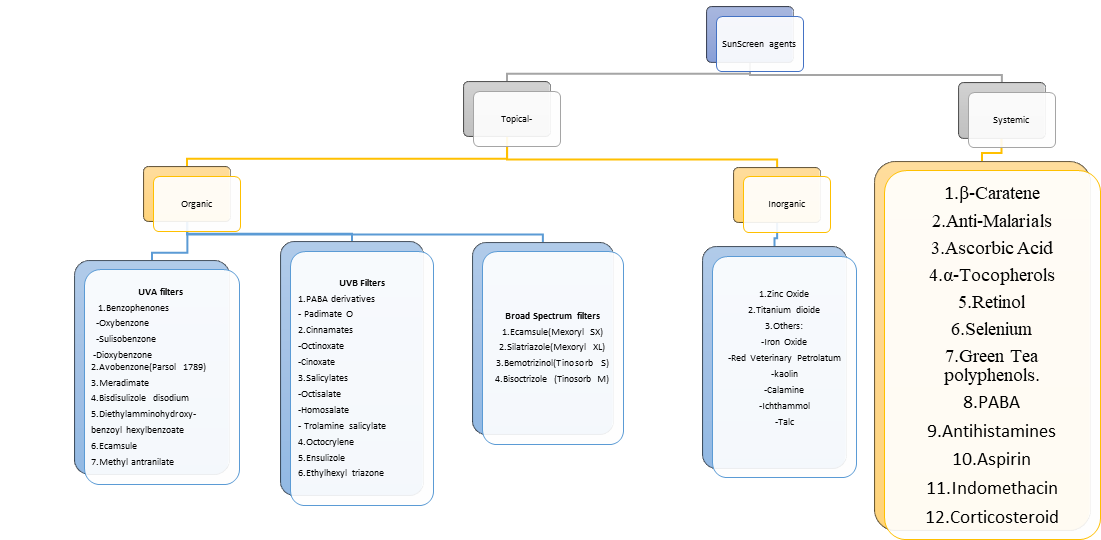
Table 1
1. Based on UV Protection
Broad-Spectrum Sunscreens:
Sunscreens with broad-spectrum protection are vital because they shield the skin from UVA and UVB radiation, which cause various kinds of damage. Primarily affecting the skin's surface, UVB rays raise the risk of skin cancer and cause sunburn. In contrast, UVA rays permeate the skin more deeply, causing drooping and wrinkles as well as accelerated aging. They also significantly contribute to the long-term DNA damage that can lead to melanoma. A broad-spectrum sunscreen lowers the risk of sunburn, photoaging, and skin cancer by protecting against the entire spectrum of UV radiation. The foundation of good skincare and sun safety is broad-spectrum sunscreens because of its all-encompassing protection, which is essential for preserving skin health and halting the cumulative damage brought on by regular sun exposure. A broad-spectrum sunscreen lowers the risk of sunburn, photoaging, and skin cancer by protecting against the entire spectrum of UV radiation. The foundation of good skincare and sun safety is broad-spectrum sunscreens because of its all-encompassing protection, which is essential for preserving skin health and halting the cumulative damage brought on by regular sun exposure.8
UVB-Only Sunscreens:
Sunscreens that are UVB-only are made to protect the skin exclusively from UVB rays, which are the main source of sunburn and a direct cause of several forms of skin cancer. These sunscreens usually contain filters that absorb or block UVB rays in the 290–320 nm range, like octinoxate, homovalvate, or padimate O. UVB-only sunscreens are good at avoiding sunburn and reducing UVB-induced damage right away, but they do not protect the skin from UVA rays (320–400 nm). Deeper skin penetration by UVA rays results in wrinkles, early aging, and long-term DNA damage that raises the risk of melanoma. since of this drawback, UVB-only sunscreens are less effective since they expose the skin to the damaging effects of UVA rays. Broad-spectrum sunscreens are typically advised by dermatologists for the best skin protection. that protect against UVA and UVB rays.8
UVA-Only Sunscreens:
Sunscreens that only contain UVA rays are designed to shield the skin from these harmful rays, which can cause long-term damage like photoaging, hyperpigmentation, and DNA changes associated to melanoma. Ingredients like avobenzone, encapsule (Mexoryl SX), or zinc oxide, which absorb or reflect UVA rays in the 320–400 nm range, are commonly found in these sunscreens. Although they successfully prevent the damaging effects of UVA exposure, such as the deterioration of collagen and elastin, they are ineffective against UVB radiation. The skin is still susceptible to sunburn and the immediate negative consequences of UVB-induced damage if UVB protection is not applied. Therefore, UVA-only sunscreens are rarely used on their own; instead, they are a part of broad-spectrum formulations that offer complete protection from UVA and UVB rays. For efficient sun protection and to reduce the total risk of UV damage and skin cancer, this combination strategy is essential.8
2. Based on Mechanism of Action-
Physical (Mineral) Sunscreens: Physical sunscreens, also known as mineral sunscreens, function by forming a barrier that shields the skin from UV rays by reflecting and dispersing them. Inherently broad-spectrum, the active components, usually zinc oxide and titanium dioxide, function as physical blockers that offer defence against UVA and UVB rays. Physical sunscreens work instantly upon application and are less likely to irritate delicate skin than chemical sunscreens, which absorb UV rays and transform them into heat. Their method of action lowers the chance of skin warming by deflecting UV photons instead of absorbing them. These minerals are frequently micronized or nano-sized in modern formulations to increase spread ability and lessen the white cast that is frequently connected to conventional physical sunscreens. These sunscreens are an eco-friendly option for sun protection since they are more stable in the sun and are frequently regarded as reef-safe.9
Chemical Sunscreens:
Chemical sunscreens shield the skin by absorbing ultraviolet (UV) rays and turning them into heat that is subsequently expelled from the skin. Avobenzone, octinoxate, octisalate, oxybenzone, homosalate, and octocrylene are among the chemical substances they contain that each target particular UVA or UVB radiation wavelengths. These sunscreens create a barrier that blocks UV rays before they can harm skin cells by penetrating the epidermis' outermost layers. Chemical sunscreen formulas tend to have a lighter texture than physical sunscreens, which makes them perfect for everyday use and people who enjoy a non-greasy finish. The active chemicals need time to bind with the skin; thus, they take around 15 to 20 minutes after application to start working. Chemical sunscreens provide good protection, but some of its ingredients—like oxybenzone—can irritate delicate skin or harm coral reefs, which is a worry for the environment. Chemical sunscreens are frequently blended with physical blockers in broad-spectrum formulations to provide complete UV protection.10
Hybrid Sunscreens:
Hybrid sunscreens provide a well-rounded approach to sun protection by combining the advantages of chemical and physical (mineral) UV filters in a single composition. In addition to chemical filters like avobenzone, octinoxate, or octocrylene to absorb and neutralize UV rays, these sunscreens usually contain zinc oxide or titanium dioxide for broad-spectrum physical blocking. While the chemical filters increase overall effectiveness by absorbing radiation across UV wavelengths, the physical filters offer instant protection by reflecting and scattering UV rays. By decreasing the skin irritation occasionally brought on by chemical filters and minimizing the white cast frequently found with mineral sunscreens, hybrid sunscreens are made to overcome the drawbacks of each type of filter. This enhances their aesthetic appeal and makes them appropriate for a greater variety of skin types, especially those with sensitive skin. A popular option for everyday use, hybrid sunscreens combine the best features of both technologies to provide complete, lightweight, and effective sun protection.11
3. Based on Formulation
Creams and Lotions:
Creams and lotions are common sunscreen formulations that offer a flexible and efficient means of protecting against UV rays while accommodating a range of skin types and preferences. In these formulations, both water-soluble and oil-soluble UV filters can be included because they usually consist of an emulsion of water and oil. since of their fuller texture and increased hydration, creams are perfect for dry or aged skin since they provide a barrier that keeps moisture from escaping. On the other hand, lotions are more suited for oily, combination, or normal skin types because of their lighter viscosity and easier distribution. They adhere to the skin better than sprays or gels because of their thicker nature, which guarantees even coverage and long-lasting effectiveness. Furthermore, they frequently contain other substances like moisturizers, antioxidants, or anti-aging agents, which makes them multipurpose solutions that offer skincare advantages along with sun protection.12
Gels:
Gel sunscreens are water-based, lightweight products made for people who like a texture that absorbs quickly and does not get oily. Because they leave a matte finish and do not clog pores, these sunscreens are perfect for oily, acne-prone, or combo skin types. Hydrophilic polymers are used in the formulation of gels to deliver UV filters for efficient protection and a smooth application. Chemical UV filters that blend in flawlessly and do not leave a white cast or residue, like octinoxate, avobenzone, or octocrylene, are frequently used in them. Furthermore, to improve skin comfort and moisture retention, gel sunscreens usually contain calming and moisturizing substances like niacinamide, hyaluronic acid, or aloe vera. Gel sunscreens spread evenly because of their water-like nature, guaranteeing thorough coverage with little effort.13
Sprays:
Gel sunscreens are water-based, lightweight products made for people who like a texture that absorbs quickly and does not get oily. Because they leave a matte finish and do not clog pores, these sunscreens are perfect for oily, acne-prone, or combo skin types. Hydrophilic polymers are used in the formulation of gels to deliver UV filters for efficient protection and a smooth application. Chemical UV filters that blend in flawlessly and do not leave a white cast or residue, like octinoxate, avobenzone, or octocrylene, are frequently used in them. Furthermore, to improve skin comfort and moisture retention, gel sunscreens usually contain calming and moisturizing substances like niacinamide, hyaluronic acid, or aloe vera. Gel sunscreens spread evenly because of their water-like nature, guaranteeing thorough coverage with little effort. Gel sunscreens, on the other hand, might not offer as much water resistance as creams or lotions, necessitating frequent reapplication when swimming or perspiring. Gel sunscreens are the go-to solution for people looking for a refreshing, non-sticky sunscreen because of its lightweight texture, strong sun protection, and skincare advantages.14
Sticks:
A convenient option for on-the-go UV protection, stick sunscreens are solid, portable formulas made for simple, mess-free application. Wax, oils, and UV filters are often combined in these sunscreens to create a compact, solid structure that applies smoothly to the skin. Stick sunscreens work well for focused application on the cheeks, lips, ears, and backs of the hands—areas that are frequently exposed to the sun. For reapplication throughout the day, they are very helpful, especially in places that need to be applied precisely or where liquid sunscreens could drop or smear makeup. The formulation frequently incorporates chemical filters like octinoxate or avobenzone to provide a lightweight feel, together with physical filters like titanium dioxide or zinc oxide for broad-spectrum protection. Stick sunscreens are an excellent option for sports and swimming because they are usually water-resistant and stick to the skin nicely. Additionally, they leave less residue on hands when applied, making them generally less messy than creams or sprays. To protect and nourish the skin, many stick sunscreens contain extra skincare elements like moisturizers or antioxidants. Stick sunscreens are a popular option for anyone looking for convenient and efficient sun protection because of its small size, convenience of application, and accuracy.15
Powdered Sunscreens:
Dry formulations created from finely ground particles with UV filters, powdered sunscreens provide a portable and easy way to protect yourself from the sun. Physical blockers like zinc oxide and titanium dioxide, which offer broad-spectrum protection against UVA and UVB radiation, are commonly used in these sunscreens. Powdered sunscreens, which are meant to be applied with a brush or sponge, are perfect for reapplying sunscreen over makeup since they mattify the skin and minimize shine without affecting the layers underneath. Their texture, which provides sun protection with a smooth, non-greasy finish, makes them especially appropriate for oily and mixed skin types.
Additional skin-beneficial components including silica for oil absorption, iron oxides for subtly tinting and blue light protection, and antioxidants to fight free radicals are frequently found in powdered sunscreens. Because they are spill-proof and adhere to liquid regulations for air travel, they are particularly practical for travel. The main disadvantage of powdered sunscreens is that they are less effective at providing water resistance and may not offer as even or comprehensive coverage as creams or lotions. Instead of being the only sunscreen choice, powdered sunscreens are frequently suggested for quick touch-ups during the day or as an additional layer of protection for optimal outcomes.16
Water-Resistant Sunscreens:
Water-resistant sunscreens are perfect for outdoor activities like swimming, running, or sports since they are specially developed to remain effective when exposed to water or perspiration. According to the label, these sunscreens are made to stay on the skin even when it is wet, providing continuous UV protection for a predetermined amount of time, usually 40 or 80 minutes. Reapplication is required following exposure to water or excessive perspiration since they are not completely waterproof—a word that regulatory bodies forbid. To keep the sunscreen from washing off, water-resistant sunscreens frequently contain film-forming ingredients like silicones (like dimethicone) or polymers (like acrylates) that build a hydrophobic barrier on the skin.
Water-resistant formulations can employ both chemical and physical UV filters, such as avobenzone and zinc oxide, frequently in tandem for broad-spectrum protection. High-intensity activities can benefit from the sweat-resistant qualities of certain water-resistant sunscreens.17
Compared to non-water-resistant formulations, water-resistant sunscreens may feel heavier on the skin, despite their increased durability. Furthermore, they must be thoroughly cleaned to be fully removed because their persistence might cause accumulation if improperly removed. Water-resistant sunscreens should be reapplied as soon as possible after swimming or towel drying for maximum protection.17
4. Based on SPF (Sun Protection Factor) Levels
Low SPF (SPF 15-30):
Usually with SPF ratings between 15 and 30, they offer minimal protection by obstructing roughly 93–97% of UVB rays. People with darker skin tones or those who do not get much sun exposure—for example, during short outdoor activities or on overcast days—can use these sunscreens. Although they aid in preventing sunburn, their lower SPF rating means that they provide less defence against extended exposure to UV rays and are less successful in preventing the cumulative damage that can cause skin cancer and premature aging. Low SPF sunscreens are comfortable for everyday use because they are frequently lightweight and less prone to feel heavy on the skin. But they need to be applied carefully and often, particularly while swimming, perspiring, or spending a lot of time in the sun. To provide complete protection against damaging UVB rays, dermatologists typically advise greater SPF ratings for outdoor activities, fair-skinned people, or prolonged exposure to strong sunlight.18
Moderate SPF (SPF 30-50):
By blocking roughly 97–98% of UVB rays, moderate SPF sunscreens (SPF levels between 30 and 50) offer good protection. These sunscreens provide a good balance between wearability and sun protection, making them ideal for daily usage. For most skin types and conditions, including fair-skinned people and those who spend moderate amounts of time outside, they are perfect. Sunscreens with an SPF of 30 to 50 are very helpful for preventing sunburn and lowering the risk of UVB-induced skin damage, including skin cancer and pigmentation changes. By blocking roughly 97–98% of UVB rays, moderate SPF sunscreens (SPF levels between 30 and 50) offer good protection. These sunscreens provide a good balance between wearability and sun protection, making them ideal for daily usage. Water resistance, light textures, and other skin advantages like hydration or antioxidant protection are just a few of the reasons why moderate SPF sunscreens are frequently developed. When used in conjunction with appropriate reapplication every two hours, they are advised for activities like walking, commuting, or beach time. Even while they provide a lot of protection, sunscreens with a moderate SPF nevertheless let very little UV light into the skin, which can build up over time. For increased safety, an SPF of 50 or higher is recommended for prolonged or strong sun exposure.18
High SPF (SPF 50+):
The strongest defence against UVB rays is provided by high SPF sunscreens, which block at least 98% of UVB rays. SPF 50 and higher. Those who have fair skin, are prone to sunburn, or participate in extended outdoor activities like sports, hiking, or swimming are the best candidates for these sunscreens. Strong protection against both acute sunburn and long-term UVB-induced skin damage, such as skin cancer and premature aging, is offered by high SPF sunscreens.18
Even while they provide a high level of protection, it is crucial to remember that no sunscreen can completely filter UV radiation. Water-resistant formulations are frequently used in high SPF creams to help them stay effective when perspiring or exposed to water. However, high SPF sunscreens should be reapplied every two hours, or more frequently, to guarantee the best possible protection sweating or swimming. These sunscreens are especially helpful in areas with strong sunshine or for prolonged sun exposure.18
5. Based on Target Audience
Baby and Child Sunscreens:
Sunscreens for babies and kids are especially made to protect young, delicate skin from the sun in a safe, gentle, and efficient manner. Physical (mineral) filters like titanium dioxide and zinc oxide, which provide broad-spectrum protection by reflecting and dispersing UV radiation, are commonly used in these sunscreens. Because mineral sunscreens are less prone to irritate skin than chemical filters, they are recommended for infants and kids. Furthermore, they do not need time to soak into the skin; once applied, they offer instant sun protection. Sunscreen for babies and kids are frequently made to be hypoallergenic, fragrance-free, and devoid of harsh chemicals like parabens or oxybenzone that can irritate or damage sensitive skin.11
Adult Sunscreens:
Adult sunscreens are designed to offer efficient sun protection for a variety of skin types and issues, from everyday use to targeted applications like acne or anti-aging. These sunscreens provide broad-spectrum protection against UVA and UVB radiation by combining physical (mineral) and chemical (organic) UV filters. To provide complete protection against sunburn, early aging, and long-term skin damage, the active ingredients may contain zinc oxide, titanium dioxide, avobenzone, octinoxate, and octocrylene. Adult sunscreens come in a variety of formulas to accommodate varied lifestyles, ranging from rich creams for dry or older skin to lightweight lotions and gels for oily skin. Additional skincare advantages including antioxidants (like vitamin C and E), anti-aging substances (like retinol or peptides), and moisturizing chemicals to nurture the skin while shielding it from UV rays are also included in many adult sunscreens. Additionally, certain adult sunscreens are made to withstand water, making them suitable for swimming, sports, and outdoor activities. Fragrance-free and non-comedogenic products are available for people with sensitive skin to reduce the chance of irritation or breakouts. Maintaining adequate sun protection requires frequent reapplication, particularly after extended or intense sun exposure.19
Sports and Outdoor Sunscreens:
Sports and outdoor sunscreens are specially formulated to provide long-lasting, water-resistant protection for individuals who engage in outdoor activities or sports. These sunscreens often contain active ingredients like avobenzone, octocrylene, and titanium dioxide that offer broad-spectrum UV protection. They are designed to adhere well to the skin even when sweating or exposed to water, making them ideal for activities like running, cycling, or playing sports. Many sports sunscreens are lightweight, non-greasy, and fast-absorbing, allowing for comfortable and uninterrupted activity. They are often sweat-resistant and provide prolonged coverage, requiring less frequent reapplication compared to regular sunscreens.20
6. Based on Skin Type
For Oily Skin:
Sunscreens made especially for oily skin are made to offer good protection from the sun without making oil production worse or clogging pores. Usually lightweight and non-comedogenic (meaning they will not clog pores), these sunscreens soak rapidly and leave a matte finish, which helps to prevent excessive shine throughout the day. Frequently, they include oil-absorbing substances like salicylic acid, niacinamide, or silica that assist to smooth out the skin and lessen sebum production. Because they are less prone to feel greasy than cream-based formulations, gel-based, fluid, or spray sunscreens are frequently suggested for those with oily skin types.11
For Dry Skin:
Dry skin sunscreens are designed to hydrate and nourish the skin while offering efficient sun protection. To help seal in moisture and restore the skin barrier, these sunscreens usually contain a cream or lotion base enhanced with hydrating substances like hyaluronic acid, glycerine, ceramides, or shea butter. They are made to keep skin supple and supple while avoiding the drying effects of the sun.18
For Sensitive Skin:
Sensitive skin sunscreens are designed to offer mild yet efficient protection from the sun without irritating the skin or triggering allergic responses. In contrast to chemical filters, these sunscreens frequently use physical (mineral) UV filters such titanium dioxide and zinc oxide, which are less prone to cause irritation. They are appropriate for sensitive or easily reactive skin types because they usually do not contain any potential irritants like alcohol, parabens, oxybenzone, or scent11.
7. Based on Additional Benefits
Tinted Sunscreens:
Sun protection and skin tone correction are two advantages of tinted sunscreens. These sunscreens have mineral pigments, usually made from iron oxide, or a light tint that helps balance out skin tone while offering broad-spectrum protection from UVA and UVB radiation. They are perfect for people with uneven skin tone, sunspots, or skin diseases like rosacea because of the tinted formula, which helps to lessen the appearance of redness, hyperpigmentation, and discolouration.21
Anti-Aging Sunscreens:
Anti-aging sunscreens are designed to combat the obvious symptoms of aging, such wrinkles, fine lines, and loss of elasticity, in addition to shielding the skin from damaging UV rays. To prevent UVA and UVB radiation, which are known to cause premature skin aging, these sunscreens frequently combine physical and chemical broad-spectrum UV filters. UVA rays can cause sagging and wrinkles by breaking down collagen and elastin, which penetrates deeper into the skin.19
Acne-Control Sunscreens:
Sunscreens designed specifically to defend against acne are known as acne-control sunscreens. These sunscreens usually include non-comedogenic, oil-free compositions that are not meant to clog pores or make outbreaks worse. They frequently include components like zinc oxide, niacinamide, or salicylic acid that provide broad-spectrum protection from UVA and UVB radiation while also assisting in the regulation of oil production, the reduction of inflammation, and the avoidance of acne.22
Makeup-Integrated Sunscreens:
Cosmetics-integrated sunscreens enable people to simplify their skincare and cosmetics routines by combining the advantages of cosmetic covering and sun protection. In addition to provide foundation or tinted moisturizer coverage, these products are usually made with broad-spectrum UV filters to protect against UVA and UVB rays. To provide adequate protection against UV damage, the sunscreen ingredients may contain zinc oxide, titanium dioxide, or chemical sunscreens like octinoxate and avobenzone.23
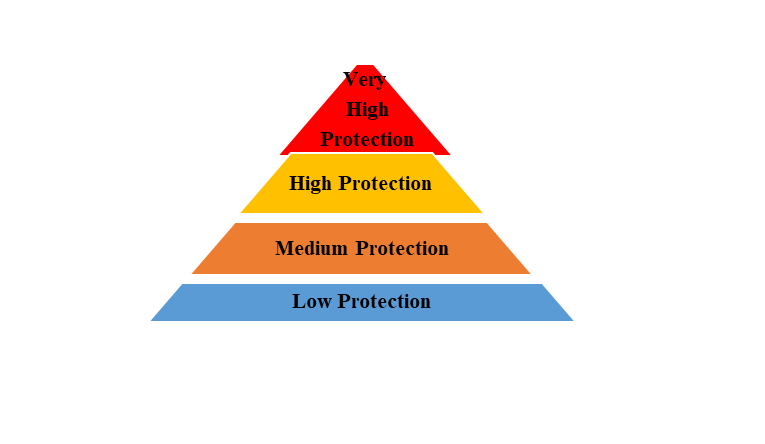
SPF is classified as -
|
Protection level |
SPF value |
|
Low Protection |
6,1024 |
|
Medium Protection |
15,20,2524 |
|
High Protection |
30,4024 |
|
Very High Protection |
50+24 |
1. Protects Against Skin Cancer:
One of the main causes of skin cancer, including melanoma, basal cell carcinoma, and squamous cell carcinoma, is UV radiation, particularly from extended exposure. By protecting the skin from damaging UV rays, sunscreen lowers the risk.25
2. Prevents Premature Aging
Deeply penetrating the skin, UVA rays cause collagen and elastin to break down, resulting in wrinkles, fine lines, sagging skin, and hyperpigmentation. Sunscreen guards against these consequences, keeping you looking younger.19
3. Reduces Sunburn Risk
UVB rays are the main cause of sunburn, which damages the skin’s outer layers and can lead to pain, peeling, and long-term damage. - Sunscreen minimizes this damage by blocking or absorbing UVB rays.26
4. Maintains Even Skin Tone
Overexposure to the sun can result in hyperpigmentation, dark patches, and uneven skin tone. Frequent application of sunscreen promotes a smoother, more even complexion by preventing these problems.24
5. Protects Against DNA Damage
Because UV rays can enter skin cells and harm their DNA, causing mutations, sunscreens lessen the likelihood of this harm and safeguard the health of cells.27
6. Essential for Sensitive or Treated Skin
UV damage is more likely to affect people who have rosacea, acne, or are getting skin treatments like chemical peels or laser therapy. Sunscreen shields delicate or recovering skin from irritation and additional damage.28
7. Shields Against Eye Damage
Additionally, UV radiation can damage the eyes, resulting in diseases like cataracts. Sunscreen and sunglasses that block UV rays help shield the sensitive skin around the eyes.29
8. Necessary in All Weather
UV rays can penetrate clouds and glass, meaning your skin is exposed even on cloudy days or indoors near windows. Daily sunscreen application provides consistent protection. Using sunscreen regularly is a simple and effective step to maintain skin health and protect against the harmful effects of the sun.29
Ultraviolet:
Ultraviolet The part of the electromagnetic spectrum that stretches from the violet, or short-wavelength, end of the visible light spectrum to the X-ray area is known as UV radiation. Although ultraviolet (UV) radiation is invisible to the human eye, it may cause some materials to glow, or release lower-energy electromagnetic radiation like visible light. On the other hand, a lot of insects can sense UV light. On the visible-light side, ultraviolet radiation has wavelengths of around 400 nanometres (1 nanometre [nm] equals 10−9 meter), whereas on the X-ray side, it is approximately 10 nm.30
Types of Ultraviolet:
Three forms of ultraviolet (UV) radiation— UV A, UV B, and UV C—make up the dangerous solar radiation. Because UV C light is filtered by the ozone layer and does not reach the earth's surface, it does not pose a significant threat to skin health. Sunburn-related skin damage is caused by UVB radiation. UVA rays promote premature skin aging by penetrating the deeper layers of the epidermis and dermis.28
Types of UV Rays
Penetrate deeply into the skin. Contribute to premature aging and play a role in the development of skin cancer. Can damage DNA indirectly.31
Cause sunburn and have a more direct role in causing skin damage. Damage the DNA in skin cells, leading to mutations that can result in skin cancer.31
Rarely reach the Earth's surface because they are absorbed by the ozone layer. Typically, not a significant risk in natural sunlight.31
Skin cancer has been linked to ultraviolet light as a contributing factor. UV filter substances (sunscreens) may be divided into three categories based on their ability to absorb either shorter or longer wavelengths: UVA, UVB, and broad-spectrum protection (UVA plus UVB) [1]. The most popular method of preventing UV-induced skin damage is topical sunscreen use.
Sunflower oil can be extracted using a suitable solvent, such hexane, or by pressing, cold pressing, or other methods from sunflower seeds.8
Linoleic acid (66%), oleic acid (21.3%), palmitic acid (6.4%), arachidonic acid (4%), stearic acid (1.3%), and behenic acid (0.8%) make up sunflower oil. 8,11
Types of Skin Cancer Linked to UV Rays
1. Basal Cell Carcinoma (BCC):
Most common and least aggressive type of skin cancer. Strongly linked to intermittent, intense sun exposure.32
2. Squamous Cell Carcinoma (SCC):
Linked to cumulative, long-term sun exposure. Can sometimes spread to other parts of the body if untreated.33
3. Melanoma:
The deadliest form of skin cancer. Strongly associated with intense, intermittent UV exposure, such as sunburns.34
Prevention Tips
Use sunscreen with a high SPF (30 or higher) and broad-spectrum protection. Wear protective clothing, sunglasses, and a wide-brimmed hat. Seek shade during peak sunlight hours (10 a.m. to 4 p.m.). Avoid tanning beds. Regularly examine your skin for unusual moles or spots and consult a dermatologist for routine check-ups.35
2. Based on Mechanism of Action
Physical (Mineral) Sunscreens:
Contain active ingredients like zinc oxide or titanium dioxide. Work by reflecting or scattering UV rays. By choosing the right sunscreen based on individual needs, skin type, and activities, you can effectively protect your skin while addressing other cosmetic preferences. Sunscreen is essential for protecting your skin from the harmful effects of the sun’s ultraviolet (UV) rays. Here's why sunscreen is crucial20:
1. Protects Against Skin Cancer:
UV radiation, especially from prolonged exposure, is a leading cause of skin cancer, including melanoma, basal cell carcinoma, and squamous cell carcinoma. Sunscreen reduces the risk by shielding the skin from harmful UV rays.36
2. Prevents Premature Aging
UVA rays penetrate deep into the skin, leading to the breakdown of collagen and elastin, which causes: Wrinkles, Fine lines, sagging skin, Hyperpigmentation, Sunscreen helps maintain a youthful appearance by protecting against these effects.37
3. Reduces Sunburn Risk-
UVB rays are the main cause of sunburn, which damages the skin’s outer layers and can lead to pain, peeling, and long-term damage. - Sunscreen minimizes this damage by blocking or absorbing UVB rays.26
4. Maintains Even Skin Tone
Excessive sun exposure can cause Dark spots, uneven skin tone, Hyperpigmentation, Regular use of sunscreen helps prevent these issues, promoting a smoother and more even complexion.26
5. Protects Against DNA Damage
UV rays can penetrate skin cells and damage their DNA, leading to mutations. Sunscreens reduce the chances of this damage, protecting cellular health.38
6. Essential for Sensitive or Treated Skin
People with conditions like rosacea, acne, or those undergoing skin treatments like chemical peels or laser therapy are more vulnerable to UV damage. Sunscreen protects sensitive or healing skin from irritation and further harm.39
7. Shields Against Eye Damage
UV rays can also harm the eyes, leading to conditions like cataracts. Sunscreen, along with UV-protective sunglasses, helps protect the delicate skin around the eyes.40
8. Necessary in All Weather
UV rays can penetrate clouds and glass, meaning your skin is exposed even on cloudy days or indoors near windows. Daily sunscreen application provides consistent protection.41
Using sunscreen regularly is a simple and effective step to maintain skin health and protect against the harmful effects of the sun.35
Additionally, the sunflower oil has a 609 mg/kg concentration of alpha-tocopherol 42. In cosmetics, alpha tocopherol, often known as vitamin E, serves as an antioxidant and UV protection agent. When it comes to UV-B free radical damage, alpha tocopherol is quite effective. In the UV-B spectrum, which spans from 280 to 320 nm, vitamin E absorbs substantially.43 Sunscreens that are advertised often come in lotion, gel, and cream form. 43
Nowadays, the stability of the prepared material throughout time, during shelf life, and in harsh environments is a concern for both consumer safety and efficacy.44
Oil-in-water (o/w) emulsions with mean droplet sizes between 50 and 1000 nm are referred to as Nanoemulsions. The typical droplet size ranges from 100 to 500 nm. The particles' cores can be either water or oil, and they can exist as water-in-oil or oil-in-water forms, respectively.45
The spontaneous emulsification approach produced the Nanoemulsion used in this investigation.46 Emulsions with smaller droplet sizes not only prevent emulsion droplets from coalescing or coagulating, but they also prevent emulsions from precipitating and aid in the delivery of active ingredients. Because of its small particle size, which creates a large surface area that permits absorption, strong stability to separation, and transparent visual aspect, Nanoemulsion is therefore highly helpful in cosmetics.46
Among the active components to the region and will therefore offer greater action of sunscreen. Sunscreens that contain Fruit peel from rambutans high SPF-valued extracts in the form of Research has been done on Nanoemulsion gel.47 The purpose of this investigation was to make sunflower oil. Nanoemulsion using the method of spontaneous emulsification, as well as to assess their stability and identify Sun value of the Protecting Factor (SPF) in vitro employing techniques that use spectrophotometry. Method of in vitro testing have been created since they are frequently utilized. for the quality test of quick control.42
Ideal properties of sunscreen creams:
Sun protection factor:
A sun protection factor is a number which describes how much protection a sunscreen provides. A greater number of SPF will offer great protection against harmful UV rays. The most effective product which can protect the skin from sunburn should have high SPF value. In other ways the photoprotection provided by the sunscreen formulation over the UV Radiation is determined by in vitro or in vivo, and it is mainly determined by human volunteer photo testing. For many years this way of determination has been followed which is more precise and useful; but it was more expensive, time consuming and complex process. For developing in vitro required in the determination of photoprotection of sunscreen formulation needs lots of efforts.8
SPF=CF×EE×I λ×Abs λ

Skin anatomy:
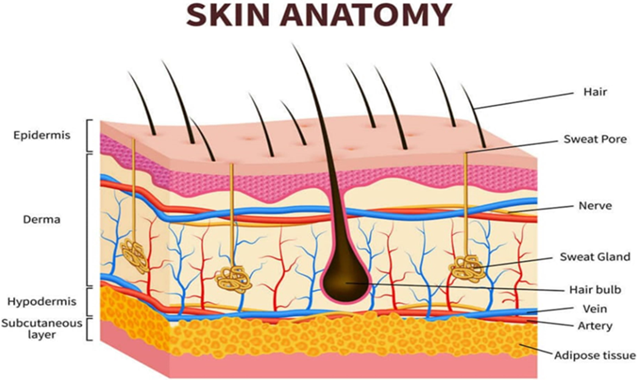
Figure 2
Human skin is the largest organ. It is a unique organ which regulates heat & water loss from body and prevents the body from microorganism & chemicals. The skin covers about 1.7m2 of our body. The therapeutic agent administered to the skin acts both locally and systematically. The membrane of the skin is regarded as a physical barrier. The drug transport mainly takes place through the pores in the skin tissues. Some drug may prove to be optimal in invitro studies, but it should be prevented in case of any immunological response alteration.47
Structure of skin:
Human skin is the organ through which transdermal drug delivery is done; through it is more complex organ. The skin is mainly categorized to four layers,
Ingredients And Methods
|
Ingredients: - |
|
Sunflower oil |
|
Tween 8049 |
|
Span 8050 |
|
Methylparaben |
|
Propylparaben |
|
Propylene glycol |
|
Glycerine |
|
Sodium CMC |
|
Aqua demineralised |

Figure 3
Synonyms: Aceite de Girasol, Adityabhakta51
Biological source: herbaceous plants of the aster family (Asteraceae)51
Family- Helianthus annuus51
Chemical constituents: Sunflower oil contains lecithin, tocopherols, carotenoids, and waxes. 51
Uses:
Sunscreen Invention: -
Absent sun protection gear Just a century later, pharmacy shelves are crowded with a wide range of sunscreens with different active ingredients and vehicle compositions that cater to both outdoor enthusiasts and shoppers who are concerned about their appearance. As you stood between these aisles, you might have pondered how our current approaches to sun protection came to be. A brief history of sunscreen, one of dermatology's most significant and adored actors, is given in the timeline below.
300,000-200,000 bc:
Homo sapiens' ancestors were most likely dark-skinned Africans with natural melanin to protect them from sunlight.
70,000-60,000 bc:
The early Homo sapiens gradually start to lose the natural pigmentation that protected them from the sun as they gradually migrate to colder, northern settings with less solar radiation.
3100-300 bc:
Due to the cultural preference for lighter skin, the ancient Egyptians used sun protection techniques for aesthetic purposes. The Egyptians employ lupine, jasmine, and rice bran to prevent the sun's tanning effects on the skin. (The fact that lupine lightens skin, jasmine aids in DNA repair, and rice bran absorbs ultraviolet [UV] light was only recently found.)
800-500 bc:
The ancient Greeks applied olive oil on their skin to protect it from the sun and to moisturize it afterward. (Recent tests on olive oil have confirmed that it has an SPF rating of around 8.)
700:
Since this century, a white face, or o-shiroi, made with powders containing lead or mercury, has been linked to female attractiveness in Japan.
1600s:
The upper class still places a premium on having fair skin. In Europe, women employ lead-based skin-whitening cosmetics and wear unpleasant visards, which are velvet face covers, to shield their complexion from the sun.
1798:
The skin disorder known as eczema Solare, or skin sensitivity to light, is described by Robert Willan, the pioneer of modern dermatology.
1801:
The first person to discover UV radiation was Johan Wilhem Ritter of Germany.
1820:
Sir Everard Home, an English physician, was the first to suggest that skin pigmentation provides protection from the sun and that the skin is impacted by a component of sunlight other than heat. He observes that in observational trials, exposing a bare hand to the sun results in a "scorched" pigmentation, but it does not when the hand is covered with a black cloth, even if the black cloth registers as 4° to 10° warmer. He exposes the back of an African man's hand to the same sun without producing any "scorched" effect to illustrate the impact of skin pigmentation.
1878:
Tannins are a type of sun protection, according to Austrian Otto Veiel. Tannins' darkening impact on the skin, however, keeps them from being marketed as sunscreen.
1889:
In a groundbreaking discovery, Erik Johan Widmark of Stockholm demonstrates experimentally that UV radiation can result in burns and skin erythema.
1891:
Using quinine produced in an ointment as the first human sunscreen, Dr. Hammer of Stuttgart, Germany, is the first to explicitly advocate the use of chemical sunscreens to prevent UV radiation from producing erythema solare of the skin.
1896:
The German doctor Dr. Paul Unna is the first to explain the link between sun exposure and skin cancer. He explains how sun-exposed skin can develop precursors to skin cancer, such hyperkeratosis. He refers to these alterations as sailor's skin carcinoma, or seemanshautcarzinom.
1910:
Dr. Unna creates a sunscreen using chestnut extract that is marketed as "Zeozon" and "Ultrazeozon," but people dislike the thick formula.
1920s:
During photos of her are taken during a Mediterranean cruise, Coco Chanel popularizes the idea of tanning. "I think she may have invented sunbathing," claims Prince Jean-Louis de Faucigny-Lucigne, a friend of hers. A healthy, relaxed, and affluent lifestyle is symbolized by tanned skin. In Western culture, it is the modern standard for beauty. (However, postcolonial nations in Asia and Africa do not adhere to this ideal, as having lighter complexion is still linked to more privilege and higher social status.)
1928:
The first experimental evidence linking UV radiation to skin cancer in an animal study (mice) is published in a publication by Dr. G. M. Findlay.
1935:
Benzyl salicylate is the active ingredient of the first tanning oil with UV radiation-filtering capabilities, created by Eugene Schueler, the founder of modern-day L'Oréal. Ambre Solaire, which is still available today, makes the promise that it can "tanning five times faster without burning."
1938:
Ten years later, Swiss chemist Franz Greiter will be inspired to invent the first modern sunscreen after he gets sunburned while hiking Mount Piz Buin.
1942:
Para-aminobenzoic acid, an active component that will dominate sunscreens in the United States for many years, is initially described by Stephen Rothman and Jack Rubin.
1942:
To determine the best protective materials to avoid sunburn in personnel who are trapped in the desert or on life rafts, the Army Air Force approaches the American Medical Association Council of Pharmacy and Chemistry for a "top secret experiment." They discover that the substance that has all their desired characteristics—waterproof, affordable, and toxicity-free—is dark red veterinary petroleum.
1944:
Benjamin Green, a pharmacist who worked as an airman during World War II and used red veterinary petroleum, adds cocoa butter and coconut oil to make the product more palatable and consumer-friendly. This mixture eventually becomes the Coppertone suntan lotion.
1946:
Franz Greiter, a Swiss chemist, creates and markets "Gletscher Crème," or Glacier Cream, the first contemporary sunscreen. He honors the mountain he climbed by naming his brand Piz Buin. With improved versions of Glacier Cream, the brand is still in business today.
1962:
The sun protection factor (SPF) value was created by Greiter, and the original Gletscher Crème had an SPF of 2.
1967:
Sunscreen formulators start creating sunscreens that are resistant to water.
1978:
The US Food and Drug Administration (FDA) start to control the rapidly growing market for sunscreens. In the US, UV tanning beds are also becoming more common.
1980s:
SPF is defined as "the ratio of UV energy needed to produce a minimal erythemal dose on protected to unprotected skin" in Australia and other countries. When evaluating sunscreen formulas, SPF becomes the norm. Because of its nitrosamine concentration and sensitizing potential, sunscreen containing PABA and its derivatives is also discontinued during this time.
1990s:
The most common ingredient for UVA protection is avobenzone (with octyl triazone added to boost photostability), whereas the most common ingredient for UVB protection is octyl methoxycinnamate. Most sunscreen creams on the market have SPFs between 15 and 30.
2007:
An important study demonstrating the link between tanning beds and melanoma is published by the International Agency for Research on Cancer.
2008:
The first study detailing the possible contribution of sunscreen chemicals to coral bleaching in regions with high levels of human recreational usage is published by Danovaro and colleagues.
2018:
Hawaii is the first state to enact legislation prohibiting the sale of sunscreens that contain oxybenzone and octinoxate, active ingredients found in most well-known sunscreen brands, after Downs and colleagues' paper raised concerns about the possible harm these two ingredients may cause to coral bleaching and underwater ecosystems.
2019:
The JAMA article by Matta and colleagues describes how four widely used sunscreens were applied to healthy volunteers, resulting in plasma concentrations that were higher than the threshold set by the FDA to waive nonclinical toxicology investigations for sunscreen. The study's active components are encapsule, octocrylene, oxybenzone, and avobenzone. The necessity for additional research to ascertain the importance of these findings has been sparked by this study.
Marketed Sunscreen:
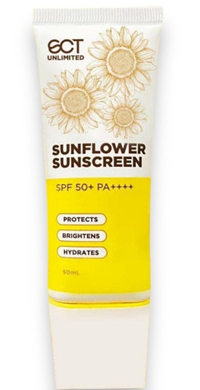
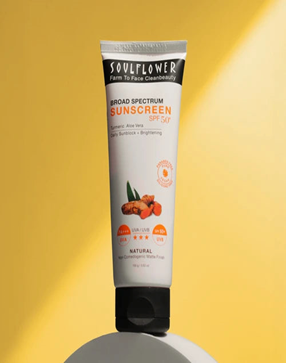
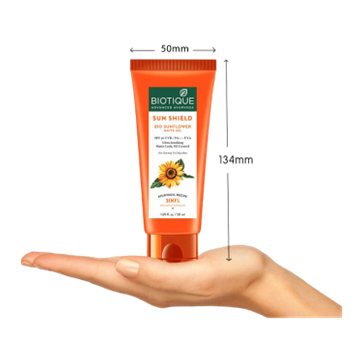
Figure 4 Figure 5 Figure 6
How’s Don’t Use Sunscreen:
According to a recent survey, most Americans do not frequently apply sunscreen to protect their skin from UV light damage. According to the survey, less than 15% of men and 30% of women frequently apply sunscreen to their faces and other exposed skin areas.
The Centres for Disease Control and Prevention (CDC) researchers' study was published online in the Journal of the American Academy of Dermatology on May 19.
Sunscreen products can help prevent melanoma and other skin cancers when used properly. It is advised to use broad-spectrum sunscreens with a sun protection factor (SPF) of at least 15 that block both UVB and UVA rays.
The results were in line with earlier research that found few American adults wear sunscreen. However, the study also provided data on sunscreen usage. According to the survey, some adults especially women frequently apply sunscreen to their faces but not to other exposed areas of their bodies.
According to Dawn Holman, M.P.H., a behavioural scientist at the CDC and the study's lead author, women may be more prone to apply sunscreen to their faces due to its anti-aging properties or because it's a common ingredient in beauty products. "But you should shield your entire body from the sun, not just your face."
According to the report, non-Hispanic Black people and those who don't get sunburned don't apply sunscreen too often.
"Given the variation in susceptibility even within racial/ethnic groups, these groups may have a lower perceived susceptibility to sun damage and need guidance on balancing the risks and benefits of sun exposure," the study's authors said. Men typically apply sunscreen less regularly than women, and many do not use it at all, as has been previously documented.
Men may view sunscreen as “nonmasculine, messy, or inconvenient,” the authors wrote, noting that sunscreen advertisements tend to target women more than men. Additional research is needed to develop effective sun-safety interventions that target men, they added.
The study also revealed a consistent relationship between sunscreen use and household income. For both men and women in the study, sunscreen use was significantly lower among those with lower household incomes. “This finding suggests that the cost of sunscreen can be a barrier to regular use,” Holman said.
According to Holman, encouraging sun safety in communities is one approach to start addressing the expense issue. Communities can, for instance, offer shade in outdoor recreation areas, which can help people be sun-safe while having fun in the great outdoors, she said.
More than 4,000 adults participated in the study, but the researchers pointed out that it had flaws, such as participants' self-reporting and a lack of information regarding sunscreen reapplication and other sun safety precautions.
"You can lower your risk of skin cancer and early skin aging by using broad-spectrum sunscreen with an SPF of 15 or higher," Holman added. However, you shouldn't rely just on sunscreen to protect yourself from the sun. Make sure to protect all exposed skin, not just your face, and use sunscreen in conjunction with other types of UV protection.
CONCLUSION:
The preparation of a sunflower oil Nanoemulsion for sunscreen purposes involves a combination of physical methods (e.g., high-shear homogenization) and chemical methods (e.g., UV absorption, SPF testing). Characterization techniques like DLS, zeta potential, TEM, and viscosity measurements ensure the formulation is stable and has the desired properties for application. Sunscreen efficacy is evaluated through SPF testing, UV absorption, and photostability tests, while safety and sensory evaluations ensure the product is suitable for consumer use.
FUTURE ASPECTS
While applying the practical aspect to the formulation of sunscreen cream, we will perform the above-mentioned extraction processes for extracting the active chemical constituent from the crude drugs. After extracting the active chemical constitutents they will be stored in suitable temperature conditions and the active chemical constitutents will be preserved using suitable preservatives. After that the formulation will be formulated with the above-mentioned procedure and total practical aspects. Once the formulation is made the evaluation test will be performed on the formulation and results will be obtained.
REFERENCES

Shubhangi Lingot, Dipali Kulkarni, Exploring Sunflower Oil Nanoemulsions: Properties, Applications, and Future Directions, Int. J. of Pharm. Sci., 2026, Vol 4, Issue 2, 3935-3956. https://doi.org/10.5281/zenodo.18761615
 10.5281/zenodo.18761615
