
Sayali Charitable Trust Collage of Pharmacy
Market relationships and competition are increasing in the pharmaceutical industry. defines the need for main characteristics of commercialization and scientific and targeted use in the context of supplying the population with medicines . Pharmacies and pharmaceutical companies. Marketing strategies help them respond effectively to environmental changes, consumer expectations and organizational capabilities in market research and analysis-based management decisions. From product planning and development to customer service and studying consumer reactions, marketing has a wide range of applications. When entering a foreign market, marketing is essential to increasing exports. Marketing is the essence of business and the global business community has adopted this standard of effective marketing for products to achieve desired results. The pharmaceutical industry is one of the world's leading industries. It has a wide range, from over-the-counter (OTC) products to survival medications to medical devices. So much so that the entire medical training program includes a separate component of pharmaceutical training and these advanced training experiences form the foundation for the production of pharmaceutical products. To bring the bringing this product to market requires essential skills and hence this means the effort of pharmaceutical marketing. Unlike general product marketing, pharmaceutical marketing deals with more essential aspects as it falls under the category of products that are useful and necessary but not desirable products as one usually does not include them. now plan to purchase any medicine or medical device without a prescription or recommended in the context of medical care.
Pharmaceutical sales representatives are salespeople that work for pharmaceutical, biotech, or healthcare firms and sell their goods to a wide range of external stakeholders. These Sales Representatives are also charged with educating and influencing healthcare experts and key opinion leaders about the company's products [1] The development of market relations and competitiveness in the pharmaceutical market necessitates the scientific and practical application of the key marketing provisions and their features in the domain of drug delivery to the public.
Marketing as a concept for pharmacies and pharmaceutical firms aids to a successful response to environmental changes, consumer expectations and wants, and gives management decisions based on the organization's market research and analysis capabilities. [2] The pharmaceutical sales representative's mission is to promote provider use while also ensuring the safety and efficacy of medical products. They persuade clinicians to administer drugs to patients who would benefit from them by providing critical information and insights. A pharmaceutical sales representative's primary responsibilities include contacting existing customers to discuss their needs, emphasizing product features to demonstrate how they solve customers' problems, answering product-related questions, and keeping a list of customers to follow up with in order to maintain relationships .While a physician's responsibility is to prescribe medication to the proper patient, the professional sales representative (PSR) spends the majority of their time on the road visiting physicians at their offices .A balanced detail refers to a pharmaceutical representative stressing background information such as patient profile, safety, efficacy, and access to the medication they are attempting to promote.
PHARMACEUTICAL MARKETING
Definition: The strategic process of promoting, advertising, and creating awareness for pharmaceutical products and medical solutions among healthcare professionals, consumers, and other stakeholders.
Objectives: To influence product adoption and increase sales.
Key Activities:
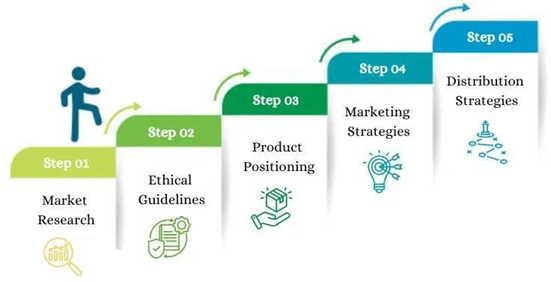
Pharmaceutical sales means promoting and selling prescription drugs, over-the-counter medicines, and other treatments to doctors, pharmacists, and healthcare organizations. It usually includes:
PERSONAL SKILL RELATED TO PHARM PROFESSION
Key soft skills
Your ability to think strategically and solve problems creatively will help you succeed in any line of work. These competencies are all the more important in the pharmaceutical industry. This is where strategic thinking comes into play. It helps to make challenging decisions and offer solutions. To guarantee the success of complex initiatives, you have to be skilled at analysing complex situations, identifying patterns, and formulating creative solutions that align with long-term goals and objectives. It involves considering multiple perspectives, anticipating potential outcomes, and making informed decisions to achieve desired outcomes. These abilities assist you in developing a reputation as a trustworthy employee.
Pharmaceutical companies are constantly working on a variety of projects. These initiatives support business expansion and drive the industry’s continued development. You must be adept at project planning if you want to blend in with the corporation.
In the pharmaceutical business, project planning skills include locating and allocating resources for the manufacture of drugs and devices. Planning also includes managing the budget and timeline for various projects. You must be able to recognise every issue and difficulty that users have and be certain of your approach to resolving these issues.
In the pharmaceutical industry, it is essential to be detail-oriented and to be able to follow procedures accurately and consistently. This helps to ensure that products are manufactured to the highest standards and are safe for patients.
Making decisions in the life science sector requires more than simply being flexible; it also requires the ability to confidently analyse and evaluate data. This is a particularly crucial skill for scientists who must analyse vast amounts of data quickly while yet doing comprehensive work so that significant decisions may be made.
You must be able to describe your decision-making process and the procedures you take to ensure that your choices are supported by thorough and accurate work.
Pharmaceutical companies rely on teams of professionals to develop, test, and market new drugs. Teamwork skills are essential for collaborating effectively with colleagues and sharing ideas and information.
The pharmaceutical industry is a fast-paced and ever- changing field, which requires individuals to be able to identify and solve complex problems quickly and efficiently. This requires a combination of analytical skills, creativity, and the ability to think outside the box. Digital Literacy
Since the beginning of the COVID-19 pandemic, which showed how quickly our work settings might be forced to change, adaptability has become more crucial. However, adaptation is more than simply having the capacity to fit into a new work situation. It also implies having the flexibility to adapt to new policies, products, technology, and more. Companies want you to be able to convey to them how you handle change and how you individually get ready for it.
To maintain effective levels of communication between each of the numerous groups of stakeholders, which is crucial in the highly collaborative life science sector. Whether you’re speaking to a co-worker, a government official, or a patient, you’ll need to be direct and brief and know how to convey various messages to various audiences.
Be aware of this from the moment you submit your job application because even though you should be prepared with instances of occasions you’ve effectively communicated for recruiters, how you act in your interviews and during the rest of the recruitment process will also show how well you communicate.
Communication with others is characterised by interpersonal skills, also referred to as “people skills.” Verbal and nonverbal communication, listening and leadership abilities, empathy, and the capacity to forge trust are a few examples of interpersonal skills.
ROLES AND RESPONSIBILITY
Sales Roles and Responsibilities
Marketing Roles and Responsibilities
MARKETING IN PHARMACEUTICAL INDUSTRY
Digital Marketing

Digital marketing is an indispensable tool for pharmaceutical companies. It offers significant value by providing data to understand customer needs and create personalized campaigns. By leveraging digital channels like social media, email marketing, and websites, pharma companies can engage their audiences more effectively. These digital marketing strategies are also used to promote medical devices, highlighting their role in patient care and clinical training.
However, the rapid dissemination of information in digital spaces presents compliance challenges, especially with the need for creating accurate real-time moderation of user-generated content and adherence to European Union local regulations and regulatory challenges.
Emerging trends such as the integration of telehealth and an omnichannel marketing approach are gaining importance as they adapt to the increased online accessibility of physicians.
Direct-to-Consumer Advertising

In the digital era, pharmaceutical companies must transition from traditional B2B sales models to direct to consumer advertising approaches to stay competitive. This shift is reflected in the significant increase in consumer spending on DTC advertisements, reaching $5 billion annually, highlighting its importance in pharmaceutical marketing.
Direct to consumer marketing of prescription drugs is subject to strict regulations in regions like the United States and European Union to ensure truthful and balanced promotion.
However, DTC advertising comes with its own challenges. Many advertisements fail to provide sufficient quantitative risk information, often not meeting FDA guidelines. Pharmaceutical companies must ensure their print advertising is accurate and informative, addressing both the benefits and potential risks of their products.
Measuring the Success of Pharma Marketing Campaigns

Measuring the success of pharma marketing campaigns involves evaluating them across three stages: awareness, consideration, and conversion, each with specific KPIs. Establishing clear goals and regularly tracking KPI baselines are essential for ongoing assessment and necessary adjustments during a marketing campaign.
Addressing Public Health Challenges
Pharmaceutical marketing can enhance public health by effectively communicating the importance of preventive healthcare measures and running campaigns on vaccines, diabetes, and mental health support to protect public health. These campaigns empower patients by informing them about health conditions and treatment options.
Public health campaigns can also help raise awareness about new drugs, supporting innovation and improved treatment options.
Awareness campaigns led by pharmaceutical companies can significantly improve patients’ knowledge about available healthcare services and raise awareness about patient assistance programs, which also helps individuals manage their healthcare costs in a cost effective way, ultimately improving patient outcomes.
CHARACTERISTICS
Five characteristics of successfully aligned Sales & Marketing departments

Preparing your systems to ensure a handoff as smooth as silk is hugely important to effective Marketing and Sales alignment. Aligned teams will be working to the same criteria for MQL’s (marketing qualified leads) and SQL’s (sales qualified leads), no matter how nuanced (e.g. lead score, product interest, buying stage), and expectations will be understood as prospects move to a sales-ready state from those considered marketing qualified.
Alignment dictates the mechanism for the handoff is frictionless. Internal notifications via email notify sales at the right time, ensuring the prospect is nurtured with care and precision. HubSpot tools facilitate this process and remove the need for external integrations, which segways nicely into our next area!
The marketing tech scene is one hell of a beast. There are literally hundreds of tools and platforms that could be used to manage marketing and sales actions. Aligned teams reduce the number of platforms and tools to the bare minimum: the most aligned teams take it down to one! This eliminates context switching, common when using multiple tools, and ensures the correct data is being collected and shared. Aligned systems, such as HubSpot, remove data gaps and provide a single source of truth for decision making.
Properly aligned teams benefit from consistent data as it is passed between functions and platforms. A tightly defined process working within a tool such as HubSpot helps eliminate data inconsistencies. This creates smooth handoffs, personalised campaigns, correct segment allocation and sensitively touched prospect accounts.
MQL generation is a universal marketing metric that can serve as a reasonably accurate barometer of marketing success. That is until it is viewed in the context of conversion to sales. Too often the drive to generate MQL’s does not always generate the quality demanded by sales, as the prospect consuming the content that generated the MQL is not always the prospect ready to buy the product.
Aligned teams coordinate the inputs to be able to maximise the outputs. They work together to learn from the process and define the TOFU (top of funnel)/MOFU (middle of funnel) needs to nurture MQL’s that are correctly supported by sales until they become sales-ready.
Successful ABM (account-based marketing) campaigns come from successfully aligned teams. Because alignment provides data and insight that helps identify the entire buying committee that you need to know to execute an ABM campaign.
ABM activity demands forensic insight into job titles and buying roles, helping you build pictures of who and how to target, a product of sales and marketing functions that are complementary, aligned and back in bed. HubSpot is ideally suited to aligned teams, helping them plan, coordinate, and execute successful revenue generating activity through a single platform.
CONCLUSION
In conclusion, sales remain an essential aspect of business operations, requiring effective strategies and competent management to achieve organizational goals. Sales managers play a crucial role in shaping sales force organization, providing leadership, and ensuring alignment with company strategies. In the pharmaceutical industry, professionals face diverse responsibilities vital for organizational success, planning, market including research, and strategic effective communication. The adoption of policies governing interactions with pharmaceutical sales representatives reflects the industry's commitment to compliance and ethical practices. Moreover, the role of a Professional Sales Representative (PSR) demands a versatile skill set, emphasizing the importance of persuasive speaking, empathy, and clear communication. Overall, the evolution of marketing, especially within the pharmaceutical sector, underscores the need for continuous adaptation to changing market dynamics and regulatory frameworks while maintaining focus on customer relationships and ethical promotion practices.
REFERENCE

Atharav Pakhare, A Review on Pharmaceutical Sale and Marketing, Int. J. of Pharm. Sci., 2025, Vol 3, Issue 11, 4474-4481. https://doi.org/10.5281/zenodo.17737048
 10.5281/zenodo.17737048
