
St. Xavier College (Autonomous) Ahmedabad.
Cancer is one of the leading causes of death worldwide. Currently, drugs are used to treat cancer whether alone or in combination but come with various side effects which leads the researcher for alternative treatment. This review discusses about the anticancer properties of the phytochemicals particularly derived from Catharanthus roseus commonly called as nayantara. The principal alkaloids found in Catharanthus roseus include vinblastine (VBL), vincristine (VCR), vinorelbine (VRL), vindesine (VDS) and vinflunine. Vinca alkaloid are the class of chemotherapeutic compounds used to treat various cancers by targeting microtubules to arrest cell division and causes cell death. Despite of their effectiveness the vinca alkaloid faces challenges such as developing environmentally friendly production method and bioavailability. Aside from their anticancer properties vinca alkaloid may exhibit hypoglycemic and cytotoxic effect and also used to treat diabetes and hypertension. The compound VCR, VBL, and VRL are approved in United States while vinflunine is approved in Europe. As one of the most used cancer drug classes, vinca alkaloid holds a significant place in therapy with ongoing research exploring new applications and overcoming current production and efficacy challenges.
Cancer refers to a diverse group of complex disease characterized by proliferation caused by genetic mutation or damage to DNA [1]. These mutations disrupt normal cell cycle regulation leading to formation of abnormal cells. According to world health organization (WHO), in 2020 cancer was responsible for 10 million deaths globally. The most prevalent cancer includes breast cancer, lung cancer, colorectal cancer, prostate cancer, skin cancer and stomach cancer [4]. Several clinically approved strategies are currently used to manage cancer such as: chemotherapy (used to kill rapidly dividing cell), radiotherapy (uses radiation to kill cancer cells), immunotherapy (enhance body immune system to fight with cancer cell), hormone therapy (target hormone dependent cancer) [1]. Limited selectivity toward cancer cell affecting normal tissue; natural product especially derived from plants have played a crucial role in drug discovery. Among them alkaloid represent one of the extensively studied classes of secondary metabolite due to their diverse pharmacological activities including anticancer properties. Significant alkaloid include morphine (analgesic), quinine (antimalarial), and reserpine (antihypertensive). One of the most notable examples of plant-based anticancer agents is the group of Vinca alkaloids, which are extracted from Catharanthus roseus (Madagascar periwinkle). These compounds include: Vincristine, Vinblastine, Vindesine, Vinorelbine, Vinflunine [1-4].
2.Alkaloid in medicine
Alkaloids are a fascinating and diverse group of naturally occurring compounds, best known for their nitrogen-containing structure and their powerful biological activities. These compounds are widely distributed in plants, fungi, and even some animals, and they play an important role in nature as a defense mechanism against herbivores, pathogens, and environmental stress[1]. Interestingly, alkaloids make up about 20% of all known secondary metabolites in plants, highlighting their significance in plant chemistry and pharmacology. They have been found to influence the nervous system, regulate metabolic pathways, and exhibit therapeutic effects against multiple diseases. Some of the most well-documented biological properties of alkaloids include: Antioxidant (protecting cells from oxidative stress), Anti-inflammatory (reducing inflammation and related disorders), Anticancer (Inhibiting cancer cell growth and inducing apoptosis), Antimicrobial & Antimalarial (fighting bacterial, fungal, and parasitic infections), Immunomodulatory (balancing and boosting immune responses), Hepatoprotective & Cardioprotective (safeguarding liver and heart health), Antidiabetic & Analgesic (regulating blood sugar and relieving pain). Because of these properties, alkaloids are attracting global attention as safer, plant-based alternatives to synthetic drugs, especially at a time when the demand for natural therapeutics is rapidly increasing[22]. For example: Berberine (from Berberis vulgaris) is widely studied for its antidiabetic and antimicrobial effects. Capsaicin (from Capsicum species) is well-known for its pain-relieving and anti-inflammatory benefits. Beyond these popular examples, there are many lesser-known but highly promising alkaloid sources. For instance: Erythrina species produce compounds with sedative and anticonvulsant properties.
Tabernaemontana species contain ibogaine, a compound being explored as a potential treatment for drug addiction and neurological disorders[22]. Overall, alkaloids are not just ancient remedies but modern-day therapeutic candidates, holding the promise of more effective, sustainable, and natural solutions for global health challenges.
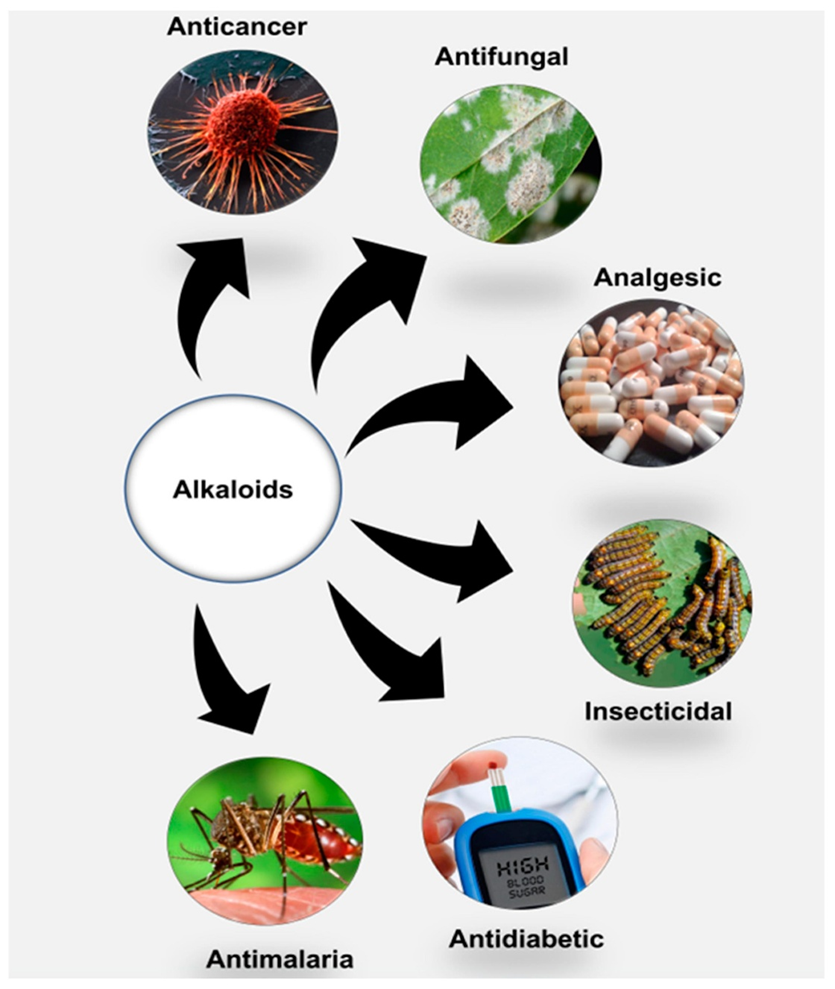
Figure 1. Alkaloids and their general pharmacological significance
3.Vinca alkaloid – A cornerstone in anticancer chemotherapy
Vinca alkaloids are complex, bulky molecules characterized by closely related chemical structures. Each molecule consists of two main components[9] : Indole nucleus (derived from the catharanthine portion)
Dihydroindole nucleus (derived from the vindoline portion)
These two moieties are linked by a carbon–carbon bond, forming a unique polycyclic ring system with various substituents attached to the rings. This intricate structural arrangement is critical for their biological activity, particularly their interaction with microtubules in cancer cells, which makes them valuable chemotherapeutic agents[9]. Vinca alkaloids are naturally occurring or semi-synthetic nitrogen-containing bases extracted primarily from the Madagascar periwinkle plant, Catharanthus roseus (also known as Vinca rosea)[3].
In late 1950s, Canadian scientists Robert Noble and Charles Beer isolated these compounds while investigating the plant for anti-diabetic properties[2]. Instead, they discovered its potent cytotoxic activity, which eventually led to its application in cancer chemotherapy. Currently, the major clinically used vinca alkaloids include: Vinblastine, Vincristine, Vinorelbine, Vindesine These drugs are either directly extracted or semi-synthesized from natural precursors found in C. roseus [3].
This belongs to the Apocynaceae family[7]. It is a small, ornamental flowering plant that is widely grown in tropical and subtropical regions, although it is originally native to Madagascar. Its leaves are smooth, glossy, and green, with an oval to oblong shape. They measure between 2.5 and 9 centimeters in length and 1 to 3.5 centimeters in width, with a pale midrib running down the center and a short petiole. The flowers are attractive and vary in color from white to dark pink, often with a reddish center. Each flower has a basal tube about 2.5 to 3 centimeters long and a corolla that is 2 to 5 centimeters across, made up of five petal-like lobes[6,18].
From a pharmacological perspective vinca alkaloid have revolutionized cancer therapy. Their mechanism of action involve binding to tubulin, a protein essential for the formation of microtubules during cell division. Because of this unique mechanism vinca alkaloid have become a cornerstone in the treatment of various cancers including Hodgkin’s lymphoma, non-Hodgkin’s lymphoma, acute lymphoblastic leukemia, breast cancer and non-small cell lung cancer[9].
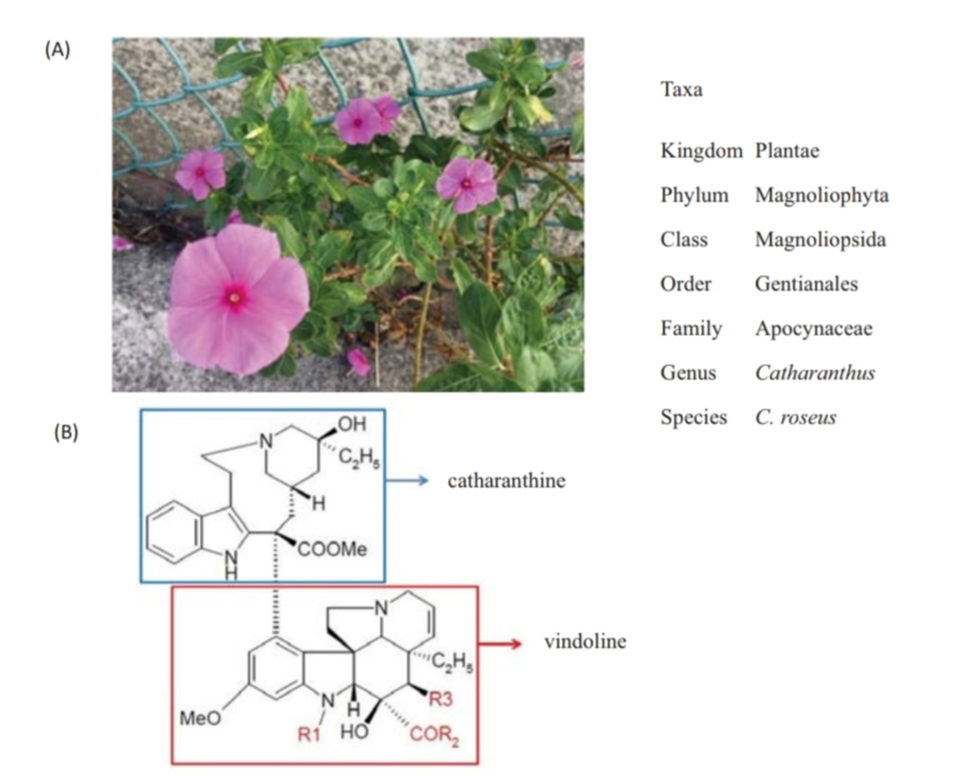
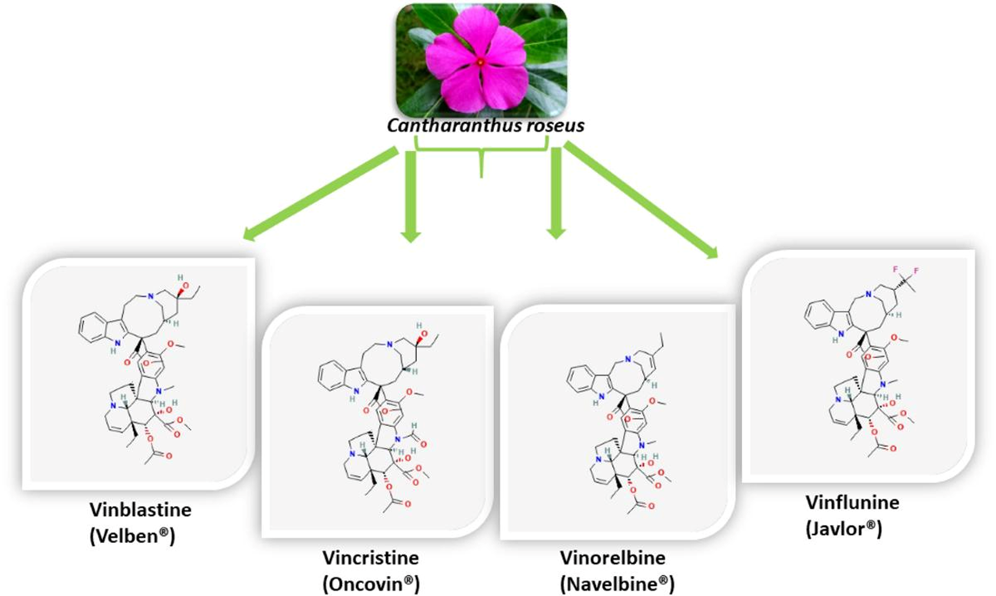
Figure 2: (A) Catharanthus roseus (vinca). (B) The common chemical core structure of vinca alkaloids, generated by joining 2 alkaloids, ca-tharanthine and vindoline. The substitute group R1 of vinblastin, vindesine, vinorelbine, and vinflunine is methyl, and that of vincristine is formyl. The substitute groups R2 and R3 of vinblastin, vincristine, vinorelbine, and vinflunine are methoxy and acetoxy, whereas those of vindesine are amine and hydroxy. The hydroxylation and alkylation site of catharanthine in vinflunine is modified with ethylidene difluoride.
4.Isolation & extraction of vinca alkaloid
Method I:
Five kilograms of dried C. roseus powder were moistened with 2% tartaric acid for 1 hour and extracted three times with benzene (9 L total). The combined benzene extracts were concentrated under vacuum at 50°C to 150 ml, mixed with 2% tartaric acid (300 ml), and the residual benzene was removed. The acidic solution was filtered and extracted with methylene chloride (6 × 50 ml). The combined extracts were washed, dried, and concentrated to obtain the vindoline-rich fraction (A).The remaining acidic solution was adjusted to pH 5.9 with 25% NH?OH, and alkaloids were extracted with methylene chloride (4 × 500 ml), followed by back-extraction into 0.1 M citric acid (pH 2.5, 750 ml). After adjusting to pH 4.4, alkaloids were re-extracted with methylene chloride (3 × 500 ml) to yield the vinblastine-rich fraction (B). The aqueous layer was finally adjusted to pH 5.9, and alkaloids were extracted to obtain the vincristine-rich fraction (C)[20, 23].
Method II
In this modified procedure, 5 kg of dried and powdered C. roseus were extracted three times with 80% methanol (10 L each time). The combined methanolic extracts were concentrated under reduced pressure at 50°C until completely dry. The residue was then dissolved in 2% aqueous tartaric acid solution, and the subsequent steps were carried out as described in Method I, resulting in a vinblastine-rich fraction (D).The remaining aqueous layer was adjusted to pH 5.9 using 25% ammonia solution, and the liberated alkaloids were extracted following the same procedure used for the pH 4.4 fraction in Method I, to obtain a vincristine-rich fraction E[20,23].
Method III
Five kilograms of powdered Catharanthus roseus were percolated three times with 95% methanol (10 L each) for one hour per extraction. The combined methanolic extracts were filtered and concentrated under reduced pressure at 50°C to a volume of about 500 ml. This concentrate was diluted with 200 ml of water, acidified to pH 2 using 1 N sulfuric acid, and then extracted with ethyl acetate (3 × 500 ml). The ethyl acetate layers were discarded.The remaining aqueous solution was adjusted to pH 6.4 with 25% ammonium hydroxide and extracted with methylene chloride (3 × 500 ml). The combined methylene chloride extracts were washed with water until free from acidity, dried over anhydrous sodium sulfate, filtered, and concentrated under reduced pressure to dryness, yielding the alkaloidal fraction (F)[20,23].
Method IV
3.5 kg of air-dried powdered C. roseus were percolated three times with 80% methanol (10 L each) for 2 days per extraction. The combined extracts were filtered and concentrated under reduced pressure at 50°C, yielding a gummy residue, which was dissolved in 5% HCl (750 ml) and kept overnight in a refrigerator. After filtration, the solution was extracted with chloroform (5 × 1 L). The remaining acidic solution was basified with 25% NH?OH (200 ml) and extracted again with chloroform (5 × 1.5 L). The combined chloroform extracts were dried over anhydrous sodium sulfate, filtered, and evaporated to yield 8.8 g of crude alkaloids.This crude alkaloid mixture was dissolved in chloroform (50 ml) and extracted with phosphate buffer (pH 2, 5 × 100 ml). The chloroform layer was dried and concentrated to give 4.4 g of purified alkaloid mixture.The mixture was again dissolved in chloroform (40 ml), mixed with petroleum ether (60 ml, b.p. 40–60°C), and the precipitated alkaloids were removed. The filtrate was concentrated, yielding 0.9 g gummy residue, which was dissolved in ethyl acetate (50 ml) and extracted with phosphate buffer (pH 2, 250 ml). The aqueous layer was separated and extracted with chloroform (3 × 200 ml) to obtain vindoline- and catharanthine-rich fraction (G, 0.305 g). The buffer was then made alkaline (pH 10) with 25% NH?OH and extracted with chloroform (3 × 200 ml) to give vinblastine-rich fraction (H, 0.1225 g)[20,23].
Method V: Adsorption on charcoal column
One kilogram of powdered Catharanthus roseus was percolated overnight with 95% methanol (3 × 3 L). The combined methanolic extracts were filtered and concentrated under vacuum at 50°C to about 500 ml, diluted with 500 ml water, and acidified to pH 2 with 1 N sulfuric acid. The acidic extract was refrigerated overnight, filtered to remove resinous material, and passed through a charcoal column (500 g, 4 × 100 cm) pre-activated at 120°C for 2 hrs.Eluates were collected and tested with Mayer’s reagent to ensure complete alkaloid adsorption. The column was washed with distilled water (2 L), then eluted sequentially with 30%, 50%, 70%, and 100% methanol (500 ml each). Each fraction was concentrated under vacuum at 50°C, adjusted to pH 6.4 with 25% NH?OH, and extracted with methylene chloride (5 × 500 ml). The combined extracts were washed, dried over anhydrous sodium sulfate, and evaporated to yield alkaloidal fractions.The fraction eluted with 70% methanol gave 1.033 g of vincristine- and vinblastine-rich alkaloids (Fraction I). All fractions were analyzed by TLC, confirming the presence of pure alkaloidal components[20,23].
4.1. RESULT AND DISCUSSION
Five methods were evaluated for isolating antineoplastic alkaloids from Catharanthus roseus. Method IV relied on solvent partitioning, while Method V used adsorption chromatography. Method III gave the highest total alkaloid yield, whereas Method V produced the purest mixture, with Fraction I containing both vinblastine and vincristine. The maximum vinblastine yield was from Method III, and vincristine yield was highest in Method I.All fractions were analyzed by HPLC and HPTLC. Vinblastine (Rf 0.54) was present in Fractions B, D, F, and H, while vincristine (Rf 0.21) appeared in Fractions C and E. Fraction I contained both alkaloids as major components. HPLC analysis was performed using isocratic elution with phosphate buffer (pH 6.5) and acetonitrile (55:45)[20,23].
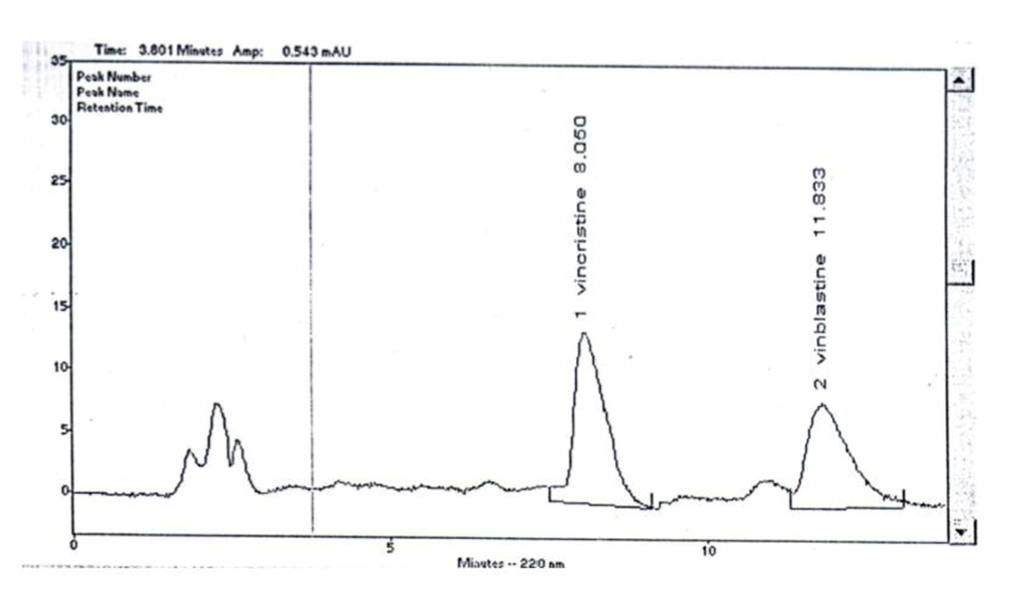
Figure 4 : Standard Vb and Vc
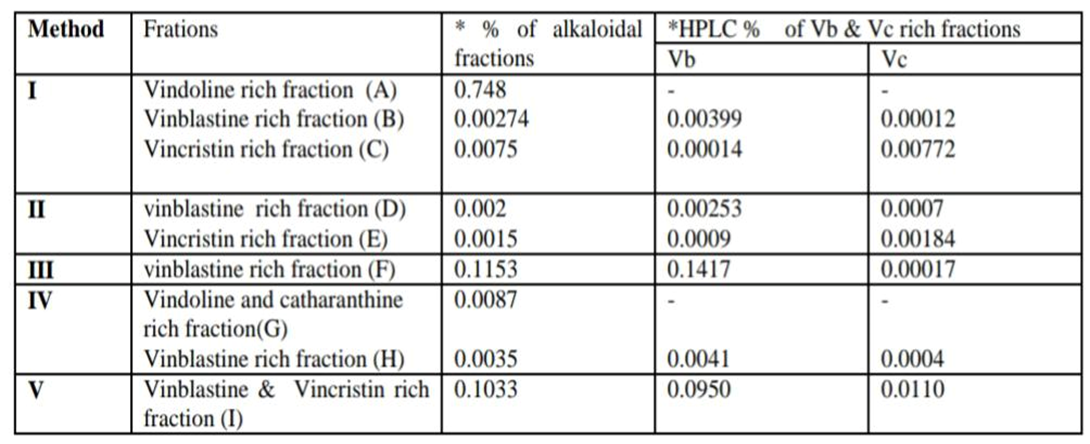
Quantitative determination of alkaloidal fractions of C. roseus (VB & VC rich fractions)
HPLC and HPTLC analysis of alkaloid fractions from the five extraction methods revealed that the fraction eluted from the charcoal column with 70% methanol (Fraction K) contained a relatively pure mixture of vinblastine (Vb) and vincristine (Vc) along with only six other alkaloids.This fraction was further purified by Vacuum Liquid Chromatography (VLC) using a mixed-bed column (5 g sample on silica gel and neutral alumina, 250 g, 120 × 5 cm) and eluted with chloroform containing increasing methanol concentrations (increments of 2.5%), resulting in ten fractions. The fraction eluted with chloroform:methanol (85:15, v/v) contained the target alkaloids with only two additional contaminants.The combined fractions (750 mg) were then subjected to centrifugally accelerated radial chromatography (chromatotron) using silica gel (2 mm thickness, Merck type 7749) and eluted with chloroform:methanol (95:5, v/v) at a flow rate of 6 ml/min, yielding pure vinblastine and vincristine. Their identity and purity were confirmed by TLC, HPTLC, and HPLC against authentic standards.
And by this overall result we can conclude that the charcoal column method is simple, cost-effective, and highly reliable for isolating purified alkaloids, especially vinblastine and vincristine, and is suitable for large-scale production. Additionally, HPTLC results correlated well with HPLC data, confirming its effectiveness for quality analysis[20,23].
5.Mechanism of action
The cytotoxic action of vinca alkaloids is mainly due to their interaction with tubulin, a protein that forms microtubules, which are essential for maintaining cell shape, intracellular transport, and most importantly, for forming the mitotic spindle during cell division [7]. Microtubules are dynamic structures made up of α- and β-tubulin heterodimers, and their function depends on constant polymerization and depolymerization, regulated by GTP. These dynamics, known as dynamic instability and treadmilling, allow microtubules to grow and shrink rapidly, particularly at their plus ends, which is critical for proper chromosome alignment and separation during mitosis. Vinca alkaloids bind to specific sites on tubulin, with high affinity at the plus ends and low affinity along the sides of microtubules [9].There are about 16–17 high-affinity binding sites per microtubule, and binding occurs rapidly and reversibly. When vinca alkaloids bind, they inhibit tubulin polymerization and promote depolymerization, disrupting the dynamic behavior of microtubules. Even at low concentrations, these drugs reduce the rates of growth and shrinkage, creating a “kinetic cap” that suppresses microtubule function[7]. This disruption prevents proper spindle formation and arrests the cell in metaphase, ultimately triggering apoptosis through both p53-dependent and independent pathways. The extent of cytotoxicity depends on the duration of exposure, as prolonged mitotic arrest leads to cell death. Although vincristine, vinblastine, and vinorelbine have similar tubulin-binding affinities, their differences in potency may relate to intracellular retention and the stability of drug-tubulin complexes. Vincristine, for instance, is particularly potent in inhibiting axonal microtubule formation, contributing to its neurotoxicity. At much higher concentrations than those achieved clinically, vinca alkaloids can also inhibit amino acid metabolism, nucleic acid synthesis, and calmodulin-dependent Ca²? ATPase activity, but these effects are secondary to their primary role in microtubule disruption [9].
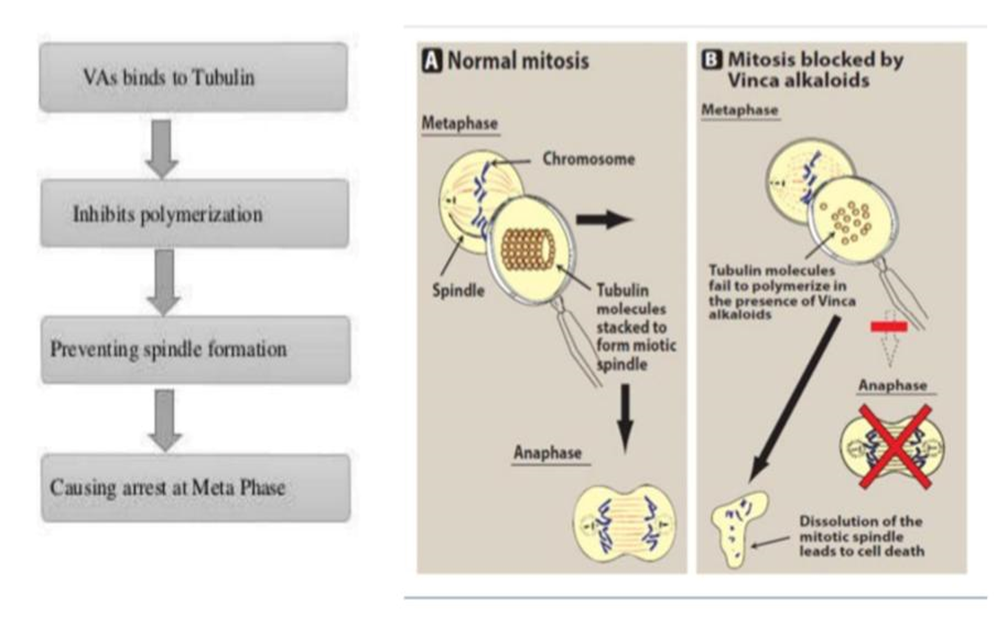
Figure 3: Mechanism of action of Vinca Alkaloid
6.Derivative of vinca alkaloid
The derivatives of vinca alkaloids are semi-synthetic or naturally occurring compounds obtained from the parent alkaloids (mainly vinblastine and vincristine) that have been chemically modified to improve their efficacy, safety, solubility, and therapeutic applications. These derivatives are widely used in cancer chemotherapy.
6.1.Vincristine –
Vincristine (brand name Oncovin), also known as leurocristine and often abbreviated as VCR, is a vinca alkaloid derived from the plant Catharanthus roseus (Madagascar periwinkle), formerly known as Vinca rosea. The name “vinca alkaloid” originates from this plant source[2].It’s molecular formula: C??H??N?O?? having white crystalline solid and melting point is 218 °C. It’s IUPAC name is Methyl (1R,9R,10S,11R,12R,19R)-11-acetyloxy-12-ethyl-4-[(13S,15S,17S)-17-ethyl-17-hydroxy-13-methoxycarbonyl-1,11 diazatetracyclo[13.3.1.0?,¹².0?,¹?] nonadeca-4(12),5,7,9-tetraen-13-yl]-8-formyl-10-hydroxy-5-methoxy-8,16 diazapentacyclo[10.6.1.0¹,?.0²,?.0¹?,¹?] nonadeca-2,4,6,13-tetraene-10-carboxylate[4]. It is a dimeric alkaloid formed by coupling two indole alkaloids, vindoline and catharanthine within the vinca plant.

Medical Uses
Vincristine is an important mitotic inhibitor used in chemotherapy. It is effective against: Leukemia (especially acute leukemia) Lymphomas (including Hodgkin’s lymphoma) Neuroblastoma Wilm’s tumor Multiple myeloma Breast, head, and neck cancer[10].
Mechanism of Action
Vincristine works by targeting tubulin, a protein required for the formation of microtubules. It binds to the tubulin dimer, preventing microtubule polymerization. This stops the formation of the mitotic spindle, leading to cell cycle arrest at metaphase.The drug acts by “end-capping” or “poisoning” microtubule ends, preventing further elongation. At therapeutic concentrations (10 nM to 1 µM), vincristine blocks mitosis. At higher concentrations (>10 µM), it can cause abnormal tubulin polymerization, forming tubulin paracrystals[10].
Side Effects
While vincristine is highly effective, it also has notable side effects: peripheral neuropathy, weakness of motor neurons, neuromyopathy, psychosis, depression, peripheral neuritis, leukopenia (low white blood cell count), constipation, nausea, vomiting, hair loss (alopecia), hyponatremia (low sodium), breathing problems in some patients[10].
6.2.Vinblastine –
Vinblastine (abbreviated VLB) is one of the major naturally occurring active vinca alkaloids. It is available clinically as vinblastine sulfate, which is the salt form of the alkaloid extracted from Catharanthus roseus (Madagascar periwinkle, formerly Vinca rosea Linn.).Earlier, vinblastine was referred to as vincaleukoblastine (VLB). It is classified as a stathmokinetic oncolytic agent, meaning it arrests cell division by halting mitosis at the metaphase stage[2]. It is a dimeric alkaloid which is soluble in water and methanol. Its structure is confirmed by X-ray crystallography. About 50% of vinblastine is made up of the alkaloid vindoline. Plants produce more vinblastine compared to vincristine. In some cases, vinblastine can even be converted to vincristine chemically or by using microbes[10].

Medical Applications
Vinblastine is widely used in the treatment of various cancers, including: non-small cell lung cancer, cancers of the head and neck, testicular cancer, Hodgkin’s lymphoma, breast cancer[10].
Mechanism of Action
Vinblastine functions as an antimitotic agent by targeting microtubules. It binds to tubulin, the protein subunit of microtubules.This binding prevents microtubule assembly and leads to their disassembly during the M-phase of the cell cycle.The process halts mitotic spindle formation, arresting cells in metaphase.This triggers apoptosis (programmed cell death) by disrupting the normal dynamics of microtubules.Microtubules are built from α-tubulin and β-tubulin subunits. They constantly undergo polymerization and depolymerization, processes described as: Treadmilling – addition at one end and removal at the other[10].
Dynamic instability – rapid switching between growth and shrinkage.
Vinblastine binds at the interface of tubulin heterodimers and GTP-binding sites, disturbing these dynamics and preventing normal cell division. Unlike DNA-alkylating agents, vinblastine does not interfere with DNA directly.
Side Effects
Although effective, vinblastine has significant toxic effects: bone marrow suppression, anemia, thrombocytopenia, nausea, vomiting, gastrointestinal toxicity.Extravasation injury (tissue damage if drug leaks outside the vein), fever, chest pain, acute cardiac ischemia, laryngeal paralysis, mutagenic and embryotoxic – contraindicated during pregnancy. Should not be prescribed in patients with viral infections, due to increased risk of complications[10].
6.3.Vinorelbine –
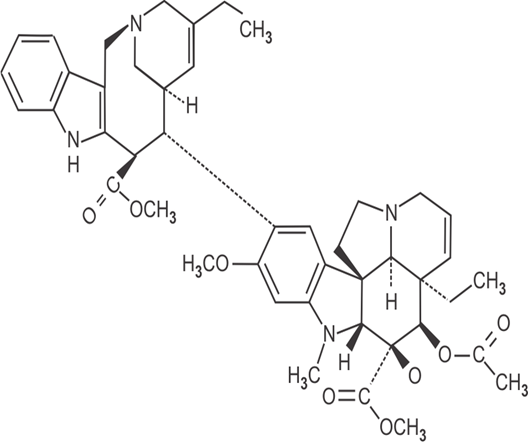
Vinorelbine is the first 5´-NOR semi-synthetic vinca alkaloid, obtained through semi-synthesis from alkaloids extracted from the rosy periwinkle (Catharanthus roseus) [2]. It is produced by combining the monomeric alkaloids vindoline and catharanthine and is considered the earliest and most important 5´-NOR semi-synthetic derivative of Catharanthus roseus. Compared to other vinca alkaloids, vinorelbine has a broader spectrum of antitumor activity and is widely used as an antimitotic agent in cancer therapy.One of the notable advantages of vinorelbine is that it causes less neurotoxicity than other vinca alkaloids, making it a safer option for many patients. It shows significant antitumor activity against MX-1 breast cancer and LC-6 non-small cell lung cancer (NSCLC). When combined with cisplatin (CDDP), vinorelbine demonstrates an even greater effect, making it an important component of combination chemotherapy regimens[10].
Mechanism of action
Vinorelbine acts as an antimitotic agent by binding to tubulin at the vinca-binding site, where it interferes with the polymerization of microtubules that are essential for spindle formation during cell division. By disrupting microtubule dynamics, it prevents the normal alignment and separation of chromosomes, thereby arresting cells in metaphase and ultimately inducing apoptosis. Compared to other vinca alkaloids, vinorelbine shows a selective effect on mitotic microtubules with relatively less impact on neuronal microtubules, which explains its lower neurotoxicity. This targeted action makes it effective against rapidly dividing cancer cells, particularly in breast cancer and non-small cell lung cancer[10].
Side Effects
Nausea and vomiting, diarrhea, anemia, bleeding, inflammation of the vein (phlebitis) at the injection site. Fatigue and weakness (common with chemotherapy)[10].
6.4. Vinflunine –

Vinflunine is a synthetic member of the vinca alkaloid family[2]. It is derived from vinorelbine by the addition of two fluorine molecules to the catharanthine moiety using superacid chemistry. Because of this modification, vinflunine is often referred to as the fluorinated mitotic inhibitor among vinca alkaloids. It has shown promise as a treatment for several cancers, including breast cancer, transitional cell carcinoma, and non-small cell lung cancer (NSCLC)[10].
Mechanism of action
Vinflunine acts as an antimitotic agent by binding to the vinca-binding site on tubulin dimers, where it disrupts microtubule dynamics. Although its binding affinity is weaker than other vinca alkaloids, vinflunine uniquely alters the stability of microtubules, impairing spindle formation and blocking the transition from metaphase to anaphase. This mitotic arrest triggers apoptosis in tumor cells. In addition to its effects on cell division, vinflunine also exerts anti-angiogenic and anti-vascular actions at sub-cytotoxic concentrations, depriving tumors of their blood supply. Its anticancer potential is further enhanced when combined with drugs such as cisplatin, doxorubicin, and 5-fluorouracil[10].
6.5.Vindesine –
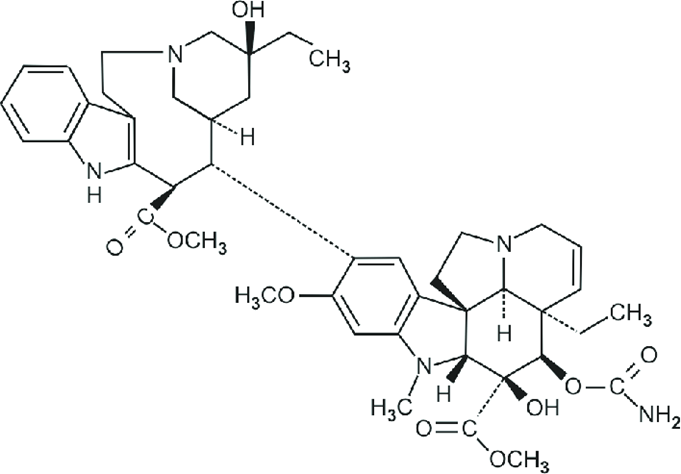
Vindesine is a semi-synthetic vinca alkaloid derived from vinblastine and is widely used in chemotherapy as an antimitotic agent. It prevents cells from entering metaphase during mitosis by inhibiting the function of tubulin, thereby arresting cell division. The compound has a molecular weight of 753.9 g/mol and a molecular formula of C??H??N?O?. Its IUPAC name is methyl (13S,15S,17S)-13-[(1R,9R,10S,11R,12R,19R)-10-carbamoyl-12-ethyl-10,11-dihydroxy-5-methoxy-8-methyl-8,16-diazapentacyclo[10.6.1.0¹,?.0²,?.0¹?,¹?]nonadeca-2,4,6,13-tetraen-4-yl]-17-ethyl-17-hydroxy-1,11-diazatetracyclo[13.3.1.0?,¹².0?,¹?]nonadeca-4(12),5,7,9-tetraene-13-carboxylate[4]. Commercially, vindesine is marketed under the names Eldisine and Fildesin. It is supplied as a powder that, when dissolved in water, forms a colorless solution for intravenous administration. Clinically, vindesine is used in the treatment of several cancers, including acute lymphocytic leukemia, non-small cell lung cancer, juvenile chronic lymphocytic leukemia resistant to vincristine, breast cancer, melanoma, and lymphoma.In terms of potency, vindesine has shown remarkable activity in laboratory studies. In vitro experiments demonstrated that it is three times more effective than vincristine and nearly ten times more effective than vinblastine when used at concentrations that block 10–15% of cells from entering mitosis. At higher doses (blocking 40–50% of cells), vindesine and vincristine display nearly equal effectiveness. Unlike vinblastine, vindesine produces only a small number of post-metaphase cells. Its clinical value is further highlighted in patients who relapse after vincristine-based chemotherapy, where vindesine has shown promising results.Like other vinca alkaloids, vindesine acts as an antimitotic inhibitor, and its side effect profile is similar to vinblastine, including bone marrow suppression, gastrointestinal toxicity, and neuropathy. Despite these toxicities, vindesine remains an important therapeutic option due to its activity against tumors resistant to other vinca alkaloids[10].
6.CONCLUSION
Vinca alkaloids remain one of the most significant classes of anticancer agents, holding their place as the second most widely used group of cancer drugs. Their unique mechanism of action, which disrupts microtubule dynamics and halts cell division, sets them apart from DNA-alkylating agents and minimizes cross-resistance. While they have been explored in conditions such as diabetes, hypertension, and even as disinfectants, their greatest therapeutic value lies in oncology.Currently, vinblastine, vincristine, vinorelbine, and vindesine are the primary vinca alkaloids in clinical practice, with vinflunine emerging as a promising synthetic derivative approved in Europe for transitional cell carcinoma and under investigation for other malignancies.Given the rising burden of cancer worldwide, vinca alkaloids continue to serve as cornerstone therapies in combination regimens. Their established role, coupled with ongoing research into new derivatives and applications, ensures that they will remain integral to cancer treatment strategies while offering scope for future innovation.
REFERENCES

Kashish Lohiya*, Therapeutic Potential of Vinca Alkaloid in Cancer Treatment, Int. J. of Pharm. Sci., 2025, Vol 3, Issue 12, 420-435 https://doi.org/10.5281/zenodo.17798044
 10.5281/zenodo.17798044
