
Dr. C.S.N Institute of Pharmacy, Bhimavaram, Andhra Pradesh - 534203, India
Spirulina, a blue-green microalga, is recognized as a nutrient-dense superfood with potent therapeutic properties. Rich in proteins, vitamins, minerals, antioxidants, and essential fatty acids, it has gained attention for its health-promoting benefits and potential role in disease prevention. This review provides a comprehensive overview of spirulina’s nutritional profile, pharmacological activities, and applications in health promotion, highlighting its potential as a functional food and nutraceutical. Evidence from in vitro, in vivo, and clinical studies indicates that spirulina exhibits antioxidant, anti-inflammatory, immunomodulatory, and lipid-lowering effects, with beneficial roles in managing malnutrition, metabolic disorders, cardiovascular diseases, and immune-related conditions. Its safety profile is favorable, with minimal adverse effects reported at recommended doses. Overall, spirulina represents a promising superfood with multifaceted health benefits, and regular dietary inclusion may contribute to nutritional adequacy and disease prevention. Further well-designed clinical trials are warranted to establish optimal dosing, long-term safety, and specific therapeutic applications.
Spirulina, a blue-green microalga, has garnered significant attention as a potent functional food due to its exceptional nutritional profile and therapeutic potential [1]. It is rich in proteins, essential amino acids, vitamins, minerals, and bioactive compounds, standing out as a sustainable and nutrient-dense supplement [2]. Its high protein content, comprising 55–70% of dry weight, positions it as a superior plant-based protein source, surpassing traditional animal proteins in digestibility and amino acid composition [3].
Beyond its nutritional value, spirulina exhibits a range of bioactivities, including antioxidant, anti-inflammatory, immunomodulatory, and lipid-lowering effects [4]. Evidence from in vitro, in vivo, and clinical studies highlights its potential in managing conditions such as cardiovascular diseases, diabetes, and metabolic disorders [5].
The growing interest in spirulina is also attributed to its environmental sustainability. Cultivated in controlled aquatic systems, it requires minimal land and water resources compared to conventional crops, making it an attractive option for addressing global food security challenges [6].
This review aims to provide an in-depth exploration of spirulina's nutritional composition, therapeutic benefits, and its applications in pharmaceutical and nutraceutical formulations. By synthesizing current research, we seek to underscore spirulina's role as a functional food and its potential in promoting human health [7].
TAXONOMY, MORPHOLOGY, AND SOURCES OF SPIRULINA
Spirulina is a filamentous, spiral-shaped cyanobacterium belonging to the phylum Cyanophyta, class Cyanophyceae, order Oscillatoriales, and family Oscillatoriaceae [8]. Two species are most commonly used for nutritional and therapeutic purposes: Arthrospira platensis and Arthrospira maxima [9]. Unlike true algae, Spirulina is a prokaryotic microorganism capable of photosynthesis, which contributes to its high protein and nutrient content [10].
Morphologically, spirulina consists of multicellular filaments called trichomes that are typically 0.2–0.5 µm in diameter and 100–500 µm in length. These filaments are helical or spiral in shape, providing the characteristic “spiral” appearance from which the organism derives its name [11]. The trichomes are composed of cells containing chlorophyll-a, phycocyanin, carotenoids, and other pigments that give spirulina its bluish-green color [12].
Spirulina naturally thrives in alkaline and saline water bodies, particularly in tropical and subtropical regions. Major natural sources include lakes in Mexico (Lake Texcoco), Chad (Lake Chad), and China, while commercial cultivation occurs in controlled open ponds or photobioreactors to ensure consistent biomass production and quality [13]. The controlled cultivation environments allow for optimization of growth parameters such as temperature, pH, light intensity, and nutrient supply, which are critical for maximizing biomass yield and nutrient content [14].
Due to its environmental adaptability and robust growth characteristics, spirulina is considered a sustainable source of high-quality protein and bioactive compounds for human and animal nutrition [15].
COMPOSITION AND NUTRITIONAL PROFILE OF SPIRULINA PROTEIN
Spirulina is renowned for its high protein content, which constitutes approximately 55–70% of its dry weight, making it a superior plant-based protein source [16]. The protein is rich in essential amino acids, including leucine, isoleucine, valine, lysine, and methionine, which are critical for human nutrition [17]. Compared to traditional plant proteins such as soy or legumes, spirulina protein exhibits a well-balanced amino acid profile and higher digestibility [18].
In addition to proteins, spirulina contains bioactive compounds such as phycocyanin, chlorophyll, carotenoids, vitamins (B-complex, vitamin E), minerals (iron, magnesium, potassium), and polyunsaturated fatty acids, all contributing to its functional properties [19]. Its phycocyanin content is particularly notable for its antioxidant and anti-inflammatory activities, distinguishing spirulina from other protein-rich foods [20].
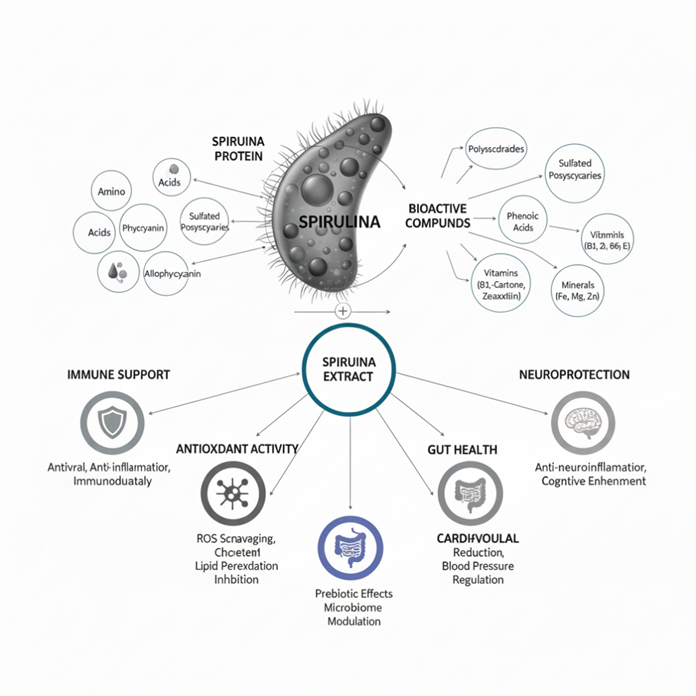
The nutritional composition may vary depending on species, cultivation conditions, harvesting methods, and processing techniques, emphasizing the importance of standardized production for consistent quality [21]. Spirulina protein is considered highly digestible, with studies reporting digestibility values between 80–95%, which is comparable to or better than conventional animal proteins [22].
Table 1. Nutritional Composition of Spirulina (per 100g dry weight)
|
Component |
Amount |
Notes / Functional Importance |
|
Protein |
55–70 g |
Complete protein, high digestibility |
|
Carbohydrates |
15–20 g |
Low sugar content, energy source |
|
Fat |
5–7 g |
Rich in essential fatty acids (γ-linolenic acid) |
|
Fiber |
3–4 g |
Improves digestion |
|
Phycocyanin |
10–15 g |
Antioxidant, anti-inflammatory |
|
Chlorophyll |
1–2 g |
Detoxifying properties |
|
Carotenoids |
0.3–1 g |
Antioxidant, supports eye health |
|
Vitamin B1 (Thiamine) |
2.4 mg |
Supports metabolism |
|
Vitamin B2 (Riboflavin) |
3.7 mg |
Energy production |
|
Vitamin B3 (Niacin) |
12 mg |
Helps in DNA repair and metabolism |
|
Vitamin B6 |
0.36 mg |
Neurotransmitter synthesis |
|
Vitamin B12 |
0.02 mg |
Supports red blood cell formation |
|
Vitamin E |
5 mg |
Antioxidant, protects cell membranes |
|
Iron |
28.5 mg |
Prevents anemia, supports hemoglobin synthesis |
|
Magnesium |
195 mg |
Muscle and nerve function |
|
Potassium |
1363 mg |
Electrolyte balance |
|
Calcium |
120 mg |
Bone health |
|
Sodium |
1048 mg |
Electrolyte balance |
|
Zinc |
2 mg |
Immune support |
This nutrient-dense profile has positioned spirulina as an ideal candidate for dietary supplements, functional foods, and therapeutic formulations, providing not only protein but also bioactive compounds that promote overall health [23].
BIOAVAILABILITY AND DIGESTIBILITY OF SPIRULINA PROTEIN
Spirulina protein is highly digestible, which contributes to its effectiveness as a nutritional supplement [24]. The digestibility of spirulina protein typically ranges from 80–95%, comparable to or even better than conventional animal proteins such as milk or eggs [25]. This high digestibility is attributed to the absence of cellulose in its cell wall, which allows digestive enzymes to access intracellular proteins more efficiently [26].
In addition to digestibility, the bioavailability of spirulina’s nutrients, including amino acids, vitamins, and minerals, is generally high [27]. Studies indicate that essential amino acids from spirulina are efficiently absorbed and incorporated into body proteins, supporting growth and metabolic functions [28]. The bioavailability of minerals such as iron is enhanced due to spirulina’s content of phycocyanin and other chelating agents, which reduce the risk of precipitation and improve intestinal absorption [29].
Processing techniques, including drying, milling, or extraction methods, can influence both digestibility and bioavailability. For example, spray-dried or freeze-dried spirulina powders preserve protein integrity and nutrient bioactivity better than high-heat processing methods [30].
Overall, the high digestibility and bioavailability of spirulina protein make it a valuable ingredient in dietary supplements, functional foods, and therapeutic formulations, ensuring maximum nutritional benefit with relatively small intake [31].
Table 2. Digestibility Comparison of Spirulina Protein with Other Common Proteins
|
Protein Source |
Digestibility (%) |
Notes |
|
Spirulina |
80–95 |
High digestibility, no cellulose in cell wall |
|
Egg |
94 |
Reference standard for protein quality |
|
Milk |
90 |
Well-absorbed, high-quality protein |
|
Soy |
84 |
Plant protein, slightly lower digestibility |
|
Wheat |
78 |
Plant protein, contains anti-nutritional factors |
FORMULATION OF SPIRULINA-BASED PRODUCTS
Spirulina has been incorporated into a wide range of pharmaceutical and nutraceutical formulations due to its rich protein content, bioactive compounds, and functional properties [32]. These formulations include tablets, capsules, powders, oral suspensions, and topical creams, allowing for versatile administration routes to support health and therapeutic applications [33].
Tablets are commonly produced using direct compression or wet granulation, ensuring uniform dosing and stability of spirulina bioactive compounds. Capsules, both hard gelatin and vegetarian, are favored for easy swallowing and taste masking, particularly for powdered spirulina [34]. Powdered spirulina can be directly added to functional foods, beverages, and smoothies, providing a convenient route for daily intake [35].
Oral suspensions are particularly useful for pediatric or geriatric populations, offering easy dosing and enhanced bioavailability when combined with appropriate stabilizers and flavoring agents [36]. Additionally, topical creams and ointments incorporating spirulina extracts have shown potential for antioxidant and anti-inflammatory skin benefits, although these formulations are less common commercially [37].
The choice of formulation depends on target population, intended health benefits, and stability considerations. Standardization of spirulina content and careful selection of excipients are crucial to maintain nutrient integrity and functional efficacy [38].
PROCESSING AND ENHANCEMENT TECHNIQUES FOR SPIRULINA PROTEIN EXTRACTION AND STABILITY
The extraction and stabilization of spirulina protein are critical for preserving its nutritional value and bioactive compounds during processing and storage [39]. Several techniques have been developed to maximize protein yield while maintaining functional integrity.
1. Drying Techniques:
2. Protein Extraction Methods:
3. Stability Enhancement:
These processing and enhancement strategies are essential to ensure the functional and therapeutic potential of spirulina is retained in final products, whether used as supplements, nutraceuticals, or in functional foods [49].
THERAPEUTIC POTENTIALS AND BIOACTIVITIES OF SPIRULINA
Spirulina exhibits multiple bioactivities due to its protein-rich content, phycocyanin, carotenoids, and other bioactive compounds [50]. These properties have been studied extensively for their antioxidant, anti-inflammatory, immunomodulatory, antiviral, anticancer, and metabolic benefits.
1. Antioxidant Properties
Phycocyanin, carotenoids, and chlorophyll in spirulina contribute to strong antioxidant activity, neutralizing reactive oxygen species (ROS) and reducing oxidative stress [51]. Studies have shown that spirulina supplementation can increase antioxidant enzyme activity, such as superoxide dismutase and catalase, in human and animal models [52].
Optional figure suggestion: A simple schematic diagram showing spirulina bioactives neutralizing ROS — could be in black-and-white to save costs.
2. Anti-inflammatory and Immunomodulatory Roles
Spirulina modulates immune responses by enhancing natural killer (NK) cell activity, macrophage function, and cytokine production [53]. It has been reported to reduce pro-inflammatory markers such as TNF-α and IL-6, contributing to its anti-inflammatory potential [54]. Clinical studies indicate potential benefits in allergic rhinitis, arthritis, and other inflammatory conditions [55].
Optional table suggestion: Table summarizing immune and inflammatory markers affected by spirulina—concise, black-and-white.
3. Antiviral, Anticancer, and Metabolic Benefits
Spirulina shows antiviral activity against viruses such as influenza and herpes simplex, primarily via immune system enhancement and phycocyanin-mediated mechanisms [56]. Preclinical studies suggest anticancer properties through apoptosis induction and inhibition of tumor cell proliferation [57].
Furthermore, spirulina supplementation has been associated with improved lipid profiles, glycemic control, and weight management, indicating potential benefits for metabolic disorders such as diabetes and obesity [58].
ANTIOXIDANT PROPERTIES
Spirulina’s antioxidant activity is primarily due to phycocyanin, carotenoids, and chlorophyll, which neutralize reactive oxygen species (ROS) and protect cells from oxidative stress [50,51]. Supplementation with spirulina has been shown to increase activity of endogenous antioxidant enzymes, including superoxide dismutase (SOD), catalase, and glutathione peroxidase, reducing oxidative damage in both animal and human studies [52].
Table 3. Effect of Spirulina Supplementation on Antioxidant Enzymes
|
Study |
Population / Model |
Dose |
Effect on Antioxidant Enzymes |
|
Romay et al., 1998 [51] |
Rats |
50 mg/kg/day |
↑ SOD, ↑ Catalase |
|
Khan et al., 2005 [52] |
Humans |
2 g/day for 12 weeks |
↑ Glutathione, ↓ lipid peroxidation |
|
Belay et al., 1993 [50] |
Humans |
1 g/day for 8 weeks |
↑ Total antioxidant capacity |
ANTI-INFLAMMATORY AND IMMUNOMODULATORY ROLES
Spirulina modulates immune function by enhancing natural killer (NK) cell activity, macrophage function, and cytokine production, while reducing pro-inflammatory markers such as TNF-α and IL-6 [53,54]. Clinical evidence supports its role in reducing inflammation in allergic rhinitis, arthritis, and other immune-mediated conditions [55].
ANTIVIRAL, ANTICANCER, AND METABOLIC BENEFITS
Spirulina demonstrates antiviral activity against viruses such as influenza and herpes simplex, mainly through immune enhancement and phycocyanin-mediated mechanisms [56]. Anticancer effects are attributed to apoptosis induction, inhibition of tumor proliferation, and antioxidant support [57].
Spirulina also improves lipid profiles, glycemic control, and body weight management, highlighting its benefits in metabolic disorders such as diabetes and obesity [58].
AVAILABLE SPIRULINA PRODUCTS IN INDIAN AND GLOBAL MARKETS
Spirulina has gained significant popularity as a dietary supplement, functional food, and nutraceutical ingredient in both India and worldwide [59]. Products are available in multiple forms, including tablets, capsules, powders, energy bars, and fortified foods, catering to different consumer preferences and age groups [60].
In India, several brands market standardized spirulina products, often combined with vitamins, minerals, or herbal extracts to enhance nutritional benefits [61]. Globally, spirulina is sold by well-known supplement companies and incorporated into beverages, protein powders, and fortified snacks [62].
Consumer interest is driven by spirulina’s high protein content, antioxidant properties, and perceived health benefits, particularly in immunity support, weight management, and overall wellness [63].
Table 4. Selected Spirulina Products in Indian and Global Markets
|
Product |
Form |
Manufacturer / Brand |
Region |
Key Features |
|
Spirulina Tablets |
Tablet |
Himalaya |
India |
500 mg, protein-rich, antioxidant support |
|
Spirulina Capsules |
Capsule |
Organic India |
India |
500 mg, vegetarian capsules |
|
Spirulina Powder |
Powder |
HealthKart |
India |
Can be added to smoothies or foods |
|
Spirulina Energy Bar |
Bar |
Nutrilite |
Global |
Fortified with vitamins, protein-rich |
|
Spirulina Drink Mix |
Powder |
NOW Foods |
Global |
Ready-to-mix beverage powder |
|
Spirulina Protein Blend |
Powder |
Vega |
Global |
Plant-based protein, added minerals and vitamins |
SAFETY, TOXICITY, AND REGULATORY STATUS
Spirulina is generally recognized as safe for human consumption, with a long history of use as a dietary supplement and food ingredient [64]. Studies have shown that daily intake up to 10 g for adults is well-tolerated, with minimal adverse effects, mostly limited to mild gastrointestinal discomfort in sensitive individuals [65].
Toxicological evaluations indicate low acute and chronic toxicity, with no significant adverse effects on liver, kidney, or hematological parameters in humans and animal studies [66]. However, contamination with microcystins, heavy metals, or other cyanotoxins during cultivation can pose safety risks, emphasizing the need for standardized production and quality control [67].
Regulatory Status:
LIMITATIONS, CHALLENGES, AND FUTURE PROSPECTS
Despite its nutritional and therapeutic potential, spirulina faces several limitations and challenges in production, formulation, and commercialization [71].
1. Cultivation and Production Challenges:
2. Formulation and Stability Limitations:
3. Regulatory and Market Challenges:
Future Prospects:
Overall, addressing these challenges while leveraging technological and formulation innovations will enhance spirulina’s commercial potential and therapeutic applications globally [81].
CONCLUSION
Spirulina is a highly nutritious microalga with substantial potential in dietary supplementation, functional foods, and therapeutic applications [82]. Its high-quality protein, bioactive compounds, and excellent digestibility make it an attractive ingredient for health promotion [83].
The microalga exhibits a range of bioactivities, including antioxidant, anti-inflammatory, immunomodulatory, antiviral, anticancer, and metabolic benefits, which have been demonstrated in both preclinical and clinical studies [84]. Its incorporation into tablets, capsules, powders, oral suspensions, and topical formulations enhances versatility and consumer accessibility [85].
Safety evaluations indicate that spirulina is generally well-tolerated, with regulatory approvals across India, the USA, Europe, and other global markets supporting its use as a dietary supplement and functional ingredient [86].
Despite challenges in production, stability, and market acceptance, ongoing biotechnological advances, novel processing techniques, and clinical research are likely to enhance its commercial potential and therapeutic relevance [87].
Overall, spirulina represents a promising, safe, and multifunctional nutraceutical, offering both nutritional value and therapeutic benefits, and continued research is warranted to fully exploit its potential.
REFERENCES


Pooja Meka, Maheswari Geddada, Revanth Durga Chodipilli, Lokesh Babu Peddireddy, Sheba Khandavalli, Sunil Boddani, Spirulina: Nutritional and Therapeutic Potential as a Superfood, Int. J. of Pharm. Sci., 2025, Vol 3, Issue 11, 91-103. https://doi.org/10.5281/zenodo.17501427
 10.5281/zenodo.17501427
