View Article

Abstract

Packaging is crucial for maintaining the quality, safety and stability of pharmaceutical products by protecting them from moisture, gases, microbes and other environmental factors. Materials used includes glass, plastic, paper, metal and sealing components such as cork, rubber and aluminium. Traditional QC methods focus on ensuring container closure integrity and protection against environmental factors Advanced nondestructive methods are reshaping the way packaging is evaluated in line with emerging trends. The adoption of smart packaging with sensors enables real time monitoring of temperature, humidity and tampering, enhancing patient safety. Overall pharmaceutical packaging QC is shifting from traditional methods towards sustainable, intelligent, and automated solutions ensuring robust protection of medicines while supporting innovations and regulatory expectations.

Keywords

Pharmaceutical packaging, Quality control, non-destructive testing, Smart packaging, Sustainable materials, automation.

Introduction

Integrity, safety and stability of products. The selection of packaging materials id determined by the physical and chemical properties of the product, its protection, and marketing requirements. An ideal packaging material should protect the product from all environmental factors, ensure safety by being non-toxic and inert and be compatible with the product without causing reactions. This review summarizes the various types of pharmaceutical packaging materials and highlights key quality control tests applied to assess their suitability, including test for identification, permeability, mechanical strength, chemical resistance, and microbiological integrity. The article discusses recent advance in QC testing methods to ensure the reliability of packaging in pharmaceutical supply chain. 
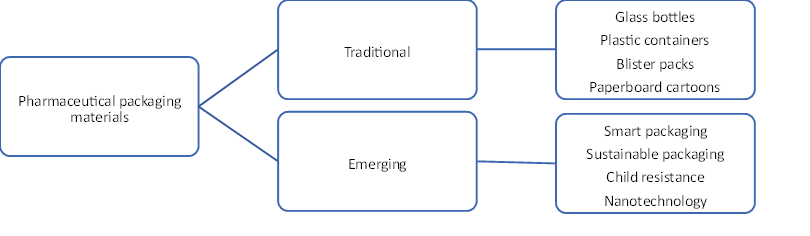
Fig 1. Represents the traditional and new emerging trends in pharmaceutical packaging

DIFFERENT TYPES OF PACKAGING MATERIALS 

1. Primary Packing Material  

  • Packaging that directly protects or houses the product is known as primary packaging.  
  • Primary packaging refers to the material that directly encloses and protects the product.
  • It is the first layer of protection for your product. It’s in direct contact with the product and designed to protect it from damage, tampering, or spillage.  
  • Example :- Bottles, Vials, Ampoules, Tin, etc

2. Secondary Packaging Material

  • It serves to bundle multiple primary packages together, making transportation, storage, and labelling more efficient.1
  • Examples: Shrink wraps, Plastic containers, Cardboard boxes, etc

3. Tertiary packaging Material

  • It serves as the external package, protecting secondary packages during storage and transportation..  
  • It is used for bulk handling & shipping.
  • Examples: Barrel, crate, container, pallets, slip sheet

Role of Packaging Materials in Pharmaceuticals

  1. Protection – Shields drugs from light, moisture, oxygen, contamination, and physical damage.
  2. Containment – Holds the product securely without leakage or loss.
  3. Stability – Maintains drug potency and shelf life.
  4. Identification – Displays essential info (name, dose, expiry, etc.).
  5. Ease of Use – User-friendly design for accurate dosing and handling.
  6. Patient Compliance – Helps patients take medicine correctly (e.g., blister packs).
  7. Tamper Evidence – Prevents unauthorized access; ensures safety.
  8. Regulatory Compliance – Meets legal and safety standards.
  9. Marketing – Enhances product appeal and brand image.
  10. Environmental Safety – Promotes eco-friendly packaging and safe disposal

Table 1. Different types of pharmaceutical packaging materials

Sr No.

Materials

Types

1

Glass

Type I-Borosilicate glass

Type II-Treated soda-lime glass

Type III- Regular soda lime glass

Type IV- General Purpose soda lime glass

2

Plastic

Thermosetting

Thermoplastics

3

Metal

Collapsible Tubes

Foils

4

Paper

-

5

Rubber

Polyisoprene

Styrene butadiene rubber

Quality Control Test For Glass Container

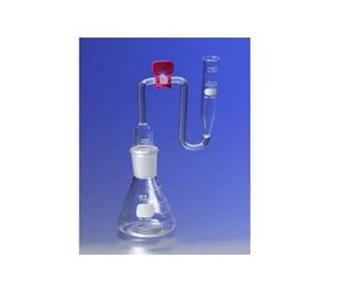
1. Crushed–Glass Test :

The principle involved in the powdered glass test estimate the amount of alkali leached from the powdered glass which usually happens at the elevated temperatures2

Rinse glass containers with purified water → Dry

Grind dried containers in mortar → Pass through sieve no. 20 → Collect portion passing sieve no. 50

Weigh 10 g of powdered glass

Wash with acetone → Dry

Add 50 ml purified water to dried sample

Autoclave at 121°C for 30 minutes

Cool → Decant liquid

Using methyl red as an indicator, carry out titration of the decanted liquid with 0.02 N H?SO?

Record the burette reading of acid used, then determine the alkali leached.

2. Hydrolytic resistance of glass containers:

The resistance to the release of     soluble mineral compounds into water under the specified conditions of contact between the inner surface of the container or glass grains and water is a measure of the hydrolytic stability of glass containers used in pharmaceutical applications.

Rinse containers three times with CO?-free water

Fill with CO?-free water to filling volume

Cover vials/bottles

Autoclave at 100°C for 10 min

Increase temp from 100°C → 121°C over 20 min

Maintain 121–122°C for 60 min

Cool containers

Combine liquids → Measure total volume

Titrate with 0.01 M HCl using methyl red

Record acid volume → Determine hydrolytic resistance

3. Water Attack Test

It is only utilized for containers subjected to SO? fumes in controlled humidity settings. The glass is now more resistant to chemicals. The Water Attack Test's basic idea is to determine whether the amount of alkali that leaks from the container's surface stays within predetermined bounds. The full container (ampoule) must be used because the inner surface is being tested.      

Rinse containers thoroughly with high-purity water

Each container is to be filled with water to 90% of the overflow volume

Autoclave at 121°C for 30 minutes

Cool containers

Decant liquid

Titrate decanted liquid with 0.02 N H?SO? using methyl red indicator

Measure volume of acid consumed

Determine amount of alkaline oxides present in glass

4. Arsenic Test :

Glass containers used for aqueous parenterals are subject to this test. By turning the arsenic in a sample under test into arsine and passing it through a solution of silver diethyldithiocarbamate to create a red complex, this process is intended to detect the presence of trace levels of arsenic.

Wash inner and outer surfaces of container with fresh distilled water for 5 minutes

Repeat steps of hydrolytic test until final combined solution is obtained

Pipette 10 ml from the final combined solution

Add 10 ml HNO? to the sample

Dry in oven at 130°C

Add 10 ml hydrogen molybdate solution

Reflux for 25 minutes

Cool the solution

Measure absorbance at 840 nm

Compare absorbance to standard:  Test absorbance < absorbance from 0.1 ml of arsenic standard (10 ppm)

5. Thermal Shock Test 
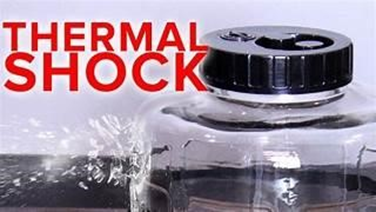
The practice of rapidly transferring a product between two extremely high and low temperatures in order to determine its durability and pinpoint possible breaking points is known as thermal shock testing. The purpose of this testing is to simulate, in a more rapid setting, the wear and tear that a product would experience under normal circumstances or with regular use.2

Place samples upright in a tray

Immerse tray in hot water for specified time

(temperature controlled)

Transfer immediately to cold water bath (temperature controlled)

Inspect bottles for cracks or breaks before and after the test

Note: Thermal shock resistance depends on bottle size, design, and glass distribution ↓

Typical performance:

  • Small bottles: withstand 60–80°C temperature difference
  • 1 point bottles: withstand 30–40°C temperature difference

Standard test: uses ~45°C temperature difference between hot and cold baths

6. Internal Bursting Pressure Test 
Burst is a condition where internal pressure exceeds pressure loading. Burst can happen in several situations, such as well control, pressure test casing/tubing, pumping operation, etc.

Fill test bottle with water

Place bottle inside test chamber

Apply sealing head

Increase internal pressure in increments

Hold each pressure increment for a set time

Continue test until:

  • Preselected pressure level is reached, or
  • Bottle bursts

Record burst pressure

Quality Control Test For Plastic Container

1. Leakage Test : One popular technique for leak testing is air leak testing. It is an adaptable test technique that may be applied to a broad range of components and uses.

Ten water-filled  containers  with  the proper closures are  installed.

For a full day, they are stored upside down at room temperature.

If there are no indications of leakage from any containers, the test is considered successful.

2. Clearity of Aqueous Extract

Select a suitable container at random

Choose unlabeled, unmarked, non-laminated portions

Cut selected portions into strips (surface area < 20 cm² each)

Wash strips to remove extraneous matter:

Shake with ≥ 2 separate portions of distilled water (30 sec each)

Transfer processed strips into a clean flask

(Flask pre-cleaned with chromic acid and rinsed with distilled water)

Add 250 ml distilled water to flask

Cover flask and autoclave at 121°C for 30 minutes

Quality Control Test For Closures

1. Penetrability test: This is used to determine how much effort is needed to allow a hypodermic needle to pass through the closure with ease. A piercing machine is used to measure it. The measurement is done with a piercing machine. The piercing force has a set limit. If it surpasses that specified amount, the hypodermic needle may sustain damage due to the closures' unfavorable hardness.3

2. The fragmentation test: 20 closures are subjected to this test. In a piercing machine, a hypodermic needle is used to puncture each closure five times in a small area. Any fragments are then transferred by washing the needle. The pieces are tallied after the contents are filtered through colored paper that contrasts with the rubber. Generally speaking, each unit should have no more than three pieces. 

3. Extractive test: In this test, water is boiled with the closure for four hours while it is refluxing, and the water is then evaporated until it is completely dry. The residue cannot be more than what is required.

4. Compatibility test: This test makes sure that there is no contact between the closure and the contents of the bottle by determining if rubber closures are compatible with different kinds of substances. 

5. Light absorption : Use a membrane filter to filter solution A. Measure the filtrate's light absorbance between 220 and 360 nm using a blank solution that has been made identically to solution A. There is not more absorption than 2.

Table 1. Quality Control Test For Paper And Board

Name of the test

Description

Moisture content

Every single substance It'll be tracked at the temperature set for the test.

Folding stamina

Refold the test piece .

Air permeability

It is crucial to use thin, uncoated paper in machines with vacuum pick-up systems.

Tensile strength

The max the maximum tensile force per unit width that a piece of paper or board can bear before cracking.

Tears' potency

The median quantity of force needed to tear a single sheet of papers after the first cut.

Rigidity

Degree of resistance that a bent piece of paper or board offers.

Burst resistance

The max pressure that is equally distributed and applied at an angle to the surface on which a test piece of paper and board will stand while the test is being conducted. The diaphragm is compressed by hydraulic pressure until the test piece bursts.

WHO Guidelines for Quality Assurance of Packaging Materials

All containers and closures intended for use must comply with the requirements of the Pharmacopoeia and relevant regulatory standards. Appropriate specifications, quality standards, cleaning, and sterilization procedures must be strictly followed. Packaging materials, including plastic granules, must meet pharmacopoeial requirements for physical, chemical, and biological testing.

Before use, all containers and closures should be washed with water for injection according to documented sterilization protocols. Sealing, capping, and stoppering should ensure an airtight closure without compromising product quality. Containers and lids selected for specific products must not interact adversely with the contents.

For glass bottles, a maintenance program should be implemented. Containers for injections and ophthalmic preparations should be inspected in diffused light against a black background to ensure they are free from visible foreign matter. Glass bottles must have appropriate shapes and designs and should be made from USP Type I or Type II glass. USP Type III glass may be used for sterile, non-parenteral products.

For plastic containers, manufacturing should be carried out internally using automated machinery. Molding, sealing, and filling operations must be performed in equipment that meets regulatory guidelines. For rubber stoppers used in large containers, the requirements of the Indian Pharmacopoeia must be followed.4

Current Trends In Pharmaceutical Packaging

The pharmaceutical packaging industry is undergoing a rapid transformation, driven by rising market demand and the push for smarter, safer solutions. Between 2024 and 2032, the global market is forecast to grow from $110.55 billion to $176.94 billion, at a strong CAGR of 6.06%. This growth isn’t simply due to more medicines being produced—it’s fueled by the complexity of modern treatments, particularly biologics and personalized therapies, which require packaging that does far more than just hold a product.

Multiple forces are propelling this change:

  • Regulatory demands: Stricter and evolving rules are prompting manufacturers to adopt packaging that ensures traceability, tamper resistance, and patient safety—especially for high-value or high-risk drugs.
  • Therapeutic advances: The surge in biologics and other sensitive therapies calls for packaging that can protect stability and potency throughout the supply chain.
  • Patient-focused design: User-friendly features such as easy-open systems, integrated dosing tools, and clear labeling improve adherence and safety, particularly for older adults or those with chronic conditions.
  • Global supply chain expansion: With medicines traveling farther and crossing diverse climates and regulations, packaging must be adaptable to a variety of environments and compliance standards.5

Recent Packaging Technologies

  1. Aseptic Blow-Fill-Seal (BFS) technology is an advanced packaging process in which plastic containers are formed, filled with sterile-filtered products, and sealed in a single, continuous operation within a controlled sterile environment. Recognized globally for its high sterility assurance and operational efficiency, BFS offers several advantages over conventional aseptic methods, including flexible container design, reduced operating costs, minimal staffing requirements, and compact equipment footprint. It supports multiple polymers such as low- and high-density polyethylene and polypropylene, enabling customized packaging solutions that improve usability and integrate easily with modern drug delivery systems, particularly in respiratory therapy.
  2. Counterfeit prevention in pharmaceuticals relies heavily on advanced packaging technologies to ensure product authenticity and supply chain security. Techniques include microtext, embossing, holograms, tamper-evident seals, and customized graphics. Ink-based security features reveal hidden colors when rubbed, while RFID tags provide authentication, product tracking, and pedigree record maintenance.  
    1. Holograms: This anti-counterfeiting technology uses logos, nano-text, and hidden graphics visible only to experts, with high-quality holograms and invisible markers adding extra security.
    2. Tamper-evident stickers: are made from cellulose acetate film, which shatters into small fragments if removed. They can be easily applied using automatic dispensers. Though vinyl is cheaper, acetate is still used for specialized needs.
    3. Sequential product numbering: assigns each product a unique number in ascending or descending order to aid counterfeit detection, though it can be predicted or copied.
    4. On-product marking: uses unique images or codes on dosage forms, effective if packaging remains intact.
    5. Invisible printing: employs special inks visible only under UV or IR light, changing color with wavelength.
    6. Embedded images: reveal hidden graphics through special filters, resistant to standard scanning.
    7. Digital watermarks: hide data in visuals, readable by scanners or mobile devices but invisible to the eye.
    8. Hidden marks and printing: place discreet, hard-to-replicate images on products.
    9. Anti-copy/ anti-scan designs: use background patterns that reveal concealed images after scanning, requiring specialized laser coding tools.6
  3. Child-resistant (CR) packaging Closures easy-to-open designs can increase the risk of accidental child consumption. To address this, child-resistant closures have been developed, requiring multiple simultaneous actions—such as turn-and-push, squeeze-and-lift, turn-and-lift, or squeeze-and-turn—that are difficult for children to perform, thereby enhancing safety.
    1. Tamper-Evident Containers: These containers prevent leaks, tampering, and unauthorized access, playing a vital role in child-resistant packaging by reducing the risk of accidental misuse.
    2. Blister and Strip Packaging: In blister packs, individual doses are sealed in aluminum cavities. Variations include:
    3. Side Squeeze: Applying pressure to the sides releases the blister.
    4. Press and Pull: Pressure on the upper section unlocks the pack to remove the blister.
    5. Combination Lock: To release the tablet, the cavity and exit point must be precisely aligned.
    6. Pill Closure: Designed for larger adult hands to open, making it harder for children to access the contents.
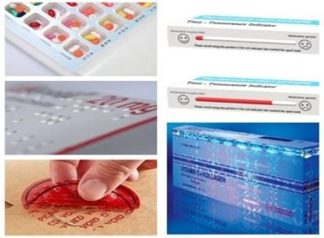
  4. Intelligent packaging is a form of smart packaging that uses both internal and external indicators to provide information about changes in a product or its surrounding environment. By incorporating technologies such as barcode labels, biosensors, time–temperature indicators, oxygen and carbon dioxide sensors, microbial growth detectors, pathogen indicators, and gas sensors, intelligent packaging continuously monitors product conditions and communicates valuable safety and quality insights to consumers.
    1. Time–Temperature Indicators (TTI): TTIs provide a comprehensive temperature history during distribution by monitoring changes in mechanical, chemical, or enzymatic processes.  For example, a shift in ambient temperature that alters product quality can cause the indicator to change color—from red to green—offering a simple visual cue of the product’s freshness and safety.
    2. Gas Concentration Indicators: These indicators detect changes in the internal gas composition of a package caused by chemical or enzymatic reactions. Oxygen indicators shift color (e.g., from pink to blue) when oxygen is present, while carbon dioxide indicators are used in packages requiring high CO? levels. Such tools enable quick quality checks and ensure products are repackaged or stored under optimal conditions.7

Fig 2. Represent different emerging packages in pharmacy

4. Patient Compliance through Specialized Packaging

 Patient compliance is a critical factor in the pharmaceutical industry, directly influencing the effectiveness of treatments. Accurate and consistent medication intake is essential for achieving optimal therapeutic outcomes, prompting the development of innovative packaging solutions that ensure dose accuracy, proper administration, and adherence to prescribed regimens.

For visually impaired patients, medication management poses significant challenges, leading to risks of dosage errors and reduced independence. Solutions under development include Braille labeling, NFC tags, and talk packs to improve accessibility.

  • Braille Labeling: Introduced in 1829 by Louis Braille, this tactile system of raised dots allows blind patients to identify medications, dosage details, and expiration dates by touch.
  • 3D-Printed Tablets (Printlets): Using selective laser sintering (SLS), tactile Braille or moon patterns can be directly embedded into tablets, enabling visually impaired individuals to identify and self-administer medications accurately, reducing the risk of errors.
  • NFC Tags: Developed by VTT Technical Research Centre, these short-range wireless devices can be embedded in pharmaceutical packaging. When tapped with an NFC-enabled phone, they provide accessible medication information in audio, text, or web formats—particularly beneficial for blind or visually impaired users.5

5. Improving Patient Compliance in Alzheimer’s Disease

Alzheimer’s disease, a leading cause of medication non-adherence in older adults, demands patient-friendly solutions. Calendar-integrated prescription packs help patients and caregivers track doses, providing a clear visual reminder aligned with daily or weekly schedules. This simple yet effective packaging innovation supports adherence, eases medication management, and enhances overall care for individuals living with Alzheimer’s.4

REFERENCES

  1. Fulchand Dodke*, S. W. A Review of Current Technologies and Future Innovations. 2025. https://doi.org/10.5281/ZENODO.14801314.
  2. Jaiswal, D.; Samundre, P.; Singh, S.; Banweer, J. A Review on Pharmaceutical Packaging Technology: Keeping the Drug and the Patient Safe. 2024, 11 (5).
  3. K. Bhavya Sri. Quality Assurance and Quality Control Packaging of Materials-A Review. 2024. https://doi.org/10.5281/ZENODO.14886636.
  4. Gahtori, A. U. Recent Trends in Pharmaceutical Packaging. 2022, 13 (08).
  5. Saurabh Argade*, S. M. Revolutionizing Pharmaceutical Packaging: A Comprehensive Review of Current Trends and Future Directions. 2025. https://doi.org/10.5281/ZENODO.14602999.
  6. Sahoo, D.; Nayak, C.; Patro, R. RECENT ADVANCES IN PACKAGING MATERIALS FOR PHARMACEUTICAL PRODUCTS AND THEIR QUALITY CONTROL TEST.
  7. Rakesh Nalam. Essentials of Pharmaceutical Packaging to Prevent Drug Counterfeiting. Int. J. Sci. Res. Arch. 2023, 9 (2), 599–605. https://doi.org/10.30574/ijsra.2023.9.2.0610.
  8. Packaging Materials Science, Theory and Industrial Pharmaceutical Practice, Leon Lachman, 3rd Edition
  9. World Health Organization Technology Report Series, No. 902, Annex 9, 2002.
  10. "INDIAN PIIARMACOPOEIA 2007". Volume:-1, pub lished by The Indian Pharmacopocia Commission. D Central Indian pharmacopocia Laboralory Govl. Of India, Ministry of Hleath & Family Welfare Sector-23. Raj Nagar, Ghaziabad-201 00  Page no. 363-371 
  11. "UINITED STATES PHARMACOPOEIA 2007". Volumc-1,Page no.66 
  12. Swarbrick James, "ENCYCLOPEDIA  OF PHARMACEUTICAL, TECHNOLOGY", Volume -1.Third Edition, Page no.2526-2541 
  13. Lachman leon, Lieberman H1.A, Kanig J.L"THE THEORY AND PRACTICE OF INDUSTRIAI PHARMACY", Third Indian Edition 199, Varghese Publishing House, Dadar Bombay Page no.71 1-732
  14. Organization Of Pharmaceutical Producers Of India, "QUALITY ASSURANCE GUIDE" Fourh Edition 2001, Chapter 11.5 Page no. 1-s 
  15. Banker G.S, Rhodes C.S, "MODERN PHARMACEUTICS", Fourth Edition, Published by Marcel Dekker, Page no.587-600 
  16. "EUROPEAN PHARAMOCOPEIA"5.0, Vol-1,page no.303-317 
  17. Jerkins W.A, Osbom K.J, "PACKAHING DRUGS AND PHARMACEUTICALS", edition 1993. Technomic Publishing Co.Inc.,Page no. 1372-1389
  18. C, Rambabu, V,Ananth, R. T, Srikanth, S. K, Dona, K. G, Anin, T, Tinu, Manavalan, B. M, Venkannas, S H, Viswa, J. K, Ghaharin. A Concise Textbook of QC & QA. KMCH College of Pharmacy, Coimbatore. 2011. 179-189. 
  19. Government of India, Ministry of Health. Indian Pharmacopoeia Volume 1, The Indian Pharmacopoeia Commission, Ghaziabad. 2010. 683 
  20. Urbanck, T; Lee, Johnson."Column Compression Strength of Tubular Packaging Forms Made of Paper"(PDE). Journal of Testing and Evaluation. 34, 6: 31-40. Retrieved 12 Deceber 2011.

Reference

  1. Fulchand Dodke*, S. W. A Review of Current Technologies and Future Innovations. 2025. https://doi.org/10.5281/ZENODO.14801314.
  2. Jaiswal, D.; Samundre, P.; Singh, S.; Banweer, J. A Review on Pharmaceutical Packaging Technology: Keeping the Drug and the Patient Safe. 2024, 11 (5).
  3. K. Bhavya Sri. Quality Assurance and Quality Control Packaging of Materials-A Review. 2024. https://doi.org/10.5281/ZENODO.14886636.
  4. Gahtori, A. U. Recent Trends in Pharmaceutical Packaging. 2022, 13 (08).
  5. Saurabh Argade*, S. M. Revolutionizing Pharmaceutical Packaging: A Comprehensive Review of Current Trends and Future Directions. 2025. https://doi.org/10.5281/ZENODO.14602999.
  6. Sahoo, D.; Nayak, C.; Patro, R. RECENT ADVANCES IN PACKAGING MATERIALS FOR PHARMACEUTICAL PRODUCTS AND THEIR QUALITY CONTROL TEST.
  7. Rakesh Nalam. Essentials of Pharmaceutical Packaging to Prevent Drug Counterfeiting. Int. J. Sci. Res. Arch. 2023, 9 (2), 599–605. https://doi.org/10.30574/ijsra.2023.9.2.0610.
  8. Packaging Materials Science, Theory and Industrial Pharmaceutical Practice, Leon Lachman, 3rd Edition
  9. World Health Organization Technology Report Series, No. 902, Annex 9, 2002.
  10. "INDIAN PIIARMACOPOEIA 2007". Volume:-1, pub lished by The Indian Pharmacopocia Commission. D Central Indian pharmacopocia Laboralory Govl. Of India, Ministry of Hleath & Family Welfare Sector-23. Raj Nagar, Ghaziabad-201 00  Page no. 363-371 
  11. "UINITED STATES PHARMACOPOEIA 2007". Volumc-1,Page no.66 
  12. Swarbrick James, "ENCYCLOPEDIA  OF PHARMACEUTICAL, TECHNOLOGY", Volume -1.Third Edition, Page no.2526-2541 
  13. Lachman leon, Lieberman H1.A, Kanig J.L"THE THEORY AND PRACTICE OF INDUSTRIAI PHARMACY", Third Indian Edition 199, Varghese Publishing House, Dadar Bombay Page no.71 1-732
  14. Organization Of Pharmaceutical Producers Of India, "QUALITY ASSURANCE GUIDE" Fourh Edition 2001, Chapter 11.5 Page no. 1-s 
  15. Banker G.S, Rhodes C.S, "MODERN PHARMACEUTICS", Fourth Edition, Published by Marcel Dekker, Page no.587-600 
  16. "EUROPEAN PHARAMOCOPEIA"5.0, Vol-1,page no.303-317 
  17. Jerkins W.A, Osbom K.J, "PACKAHING DRUGS AND PHARMACEUTICALS", edition 1993. Technomic Publishing Co.Inc.,Page no. 1372-1389
  18. C, Rambabu, V,Ananth, R. T, Srikanth, S. K, Dona, K. G, Anin, T, Tinu, Manavalan, B. M, Venkannas, S H, Viswa, J. K, Ghaharin. A Concise Textbook of QC & QA. KMCH College of Pharmacy, Coimbatore. 2011. 179-189. 
  19. Government of India, Ministry of Health. Indian Pharmacopoeia Volume 1, The Indian Pharmacopoeia Commission, Ghaziabad. 2010. 683 
  20. Urbanck, T; Lee, Johnson."Column Compression Strength of Tubular Packaging Forms Made of Paper"(PDE). Journal of Testing and Evaluation. 34, 6: 31-40. Retrieved 12 Deceber 2011.

Photo
Aditi Kardile
Corresponding author

Srinath College of Pharmacy, Aurangabad, Maharashtra, India

Photo
Prashant Jadhav
Co-author

Srinath College of Pharmacy, Aurangabad, Maharashtra, India

Photo
Rupali Karke
Co-author

Srinath College of Pharmacy, Aurangabad, Maharashtra, India

Photo
Dhiraj Kardile
Co-author

Srinath College of Pharmacy, Aurangabad, Maharashtra, India

Photo
Prasad Kalaskar
Co-author

Srinath College of Pharmacy, Aurangabad, Maharashtra, India

Aditi Kardile, Prashant Jadhav, Rupali Karke, Dhiraj Kardile, Prasad Kalaskar, Quality Control in Pharmaceutical Packaging: Methods and Emerging Trends, Int. J. of Pharm. Sci., 2026, Vol 4, Issue 4, 1143-1153. https://doi.org/10.5281/zenodo.19463981

More related articles
Formulation, Standardization and Evaluation of a P...
Vishal Misal , Smita Patil, Shubham Kumbhar, Sachin Karche, Anuja...
Formulation And Evaluation of In-Situ Gelling Syst...
Krish Shetty, Madhuri Jain, Suraj Yadav, ...
Pros And Cons Of Luprops Tristis - A Review...
Syamjith P, Shijin M. S., E. Tamil Jyothi, G. Babu, ...
Reviewing Herbal Remedies for Managing Anxiety and Depression...
Aman Upaganlawar, Chandrashekhar Upasani, Manojkumar Mahajan, Puja Suryawanshi, Sumitkumar Sharma, R...
Formulation and Evaluation of Niosomal Foot Crack Gel using Pomegranate Peel...
Asna A, Anagha Ajayakumar, Ashik Nazeer, Malavika S, Mereena Johnson, Dr. Prasanth V V, ...
Related Articles
Association Between Health Knowledge and Framingham Score for CVD...
Rama Narsimha Reddy Anreddy, Raju Korra, Srinidhi Bongani, Gayathri Kamarapu, Anitha Enukonda, ...
Quality Assurance of Extemporaneous Formulations in a Resource-Limited Setting: ...
Umalhassan Alawad Abdalla Elamin , Abdulrahman Abdullllahi Ishag, Malaz Abdulazim Musa, ...
Cutting edge Techniques for Impurity Profiling in Pharmaceutical Analysis: A bri...
Aditi A Kokande, Sanket S Gite, Nikit S Thakare , Aniket B Bairagi, Shubham R Jadhav, Himmat D Sawan...
The Impact of Medicine Prices and Taxes on Access to Healthcare...
Dr. Sapna Khemnar, Gokul Cholke, Rushikesh Ghuge, Sunil Jadhav, ...
Formulation, Standardization and Evaluation of a Polyherbal Churna for Antidiabe...
Vishal Misal , Smita Patil, Shubham Kumbhar, Sachin Karche, Anuja Katkar, Arundhati Ghadge, Tushar S...
More related articles
Formulation, Standardization and Evaluation of a Polyherbal Churna for Antidiabe...
Vishal Misal , Smita Patil, Shubham Kumbhar, Sachin Karche, Anuja Katkar, Arundhati Ghadge, Tushar S...
Pros And Cons Of Luprops Tristis - A Review...
Syamjith P, Shijin M. S., E. Tamil Jyothi, G. Babu, ...
Formulation, Standardization and Evaluation of a Polyherbal Churna for Antidiabe...
Vishal Misal , Smita Patil, Shubham Kumbhar, Sachin Karche, Anuja Katkar, Arundhati Ghadge, Tushar S...
Pros And Cons Of Luprops Tristis - A Review...
Syamjith P, Shijin M. S., E. Tamil Jyothi, G. Babu, ...