
KYDSCT Pharmacy College, Sakegaon, Bhusawal, Maharashtra.
Alopecia, hair oil, hair gel Alopecia is a medical condition characterized by baldness and hair loss, typically affecting the scalp. Various factors can contribute to hair loss, such as genetics, environmental influences, pollutants, medications, and nutritional deficiencies. Hair loss is categorized into different types based on the pattern and underlying causes. Hair consists of follicles located in the skin and is defined as an "enhanced epithelial structure formed by the keratinization of germ cells." Herbal treatments are applied both topically and internally to prevent hair loss and premature graying, with claims of promoting hair growth and reducing hair loss. Herbal remedies form the basis of much medical research, as they tend to have fewer side effects compared to synthetic drugs and yield more favorable results. Additionally, these synthetic medications can cause side effects such as redness, scaling, itching, dermatitis, and irritation. Therefore, to tackle hair loss, natural remedies have been explored, revealing several herbs with a history of effective treatment various formulation like hair oil,herbal hair gel and shampoo was prepared in future reaserch our Aim and objective ‘’exploring potential of polyherbal reversing alopecia’’
Hair loss (HL) is an evident condition that affects both males and females of different age groups, both individual’s self-esteem and quality of life can be significantly impacted by this common issue . 1,2 Minoxidil and finasteride are some examples of conventional treatments for HL. Although those treatments are widely available, they have been linked to different side effects such as scalp irritation, sexual dysfunction, and increased risk of prostate cancer,3,4 leading to the growing interest in natural and herbal remedies (HRs) for HL.
HRs have been used and trusted for centuries for promoting hair growth and preventing HL.5 Although their safety and efficacy have not been well established 6 these remedies are believed to have fewer SE than conventional drugs 7
The potential of HRs for the treatment of HL has been discussed in different studies, and Prager et al. reported that the combination of herbal extracts, such as saw palmetto (SP) and beta-sitosterol, drastically improve hair density and quality in men with androgenetic alopecia (AGA)8 . Another study by Esfandiari and Kelly found that topical application of green tea extracts improved hair density and thickness in women with pattern HL . Furthermore, studies on pumpkin seed oil (PSO) prove its blocking action of 5-alpha reductase, an enzyme that converts testosterone to dihydrotestosterone (DHT), which is implicated in HL . In addition, a study by Cho et al.10showed that administration of PSO for 24 weeks increased hair count compared to placebo administration.
Despite those findings, more research is needed to completely understand the effects of HRs on HL. This review article aimed to review the current scientific evidence in this regard and provide an evidence-based perspective on the use of HRs for HL, encouraging healthcare practitioners and patients to make informed decisions about managing this common and distressing condition.
Hair is among the valuable parts of the physique derived from ectoderm of the skin and is a protective appendage on the physique. Humans have hairs that serve principle position of their lives. From the historic times, hairs had been a magnificence symbols for both men and women. On a daily basis, the hair falls out of the head, specifically throughout washing and brushing. 70-100 hairs loss a day is a very common; however, dropping over 100 hairs a day lasting longer than a couple of weeks indicates a serious problem. When more hair falls out than grows, hairstyle becomes thinner; if that procedure persists, even baldness may occur. 11Alopecia is the scientific term for hair loss or baldness. Alopecia will also be of everlasting or transitority kind; it might probably cover quite a lot of variety and areas of haired head epidermis of various shapes. It happens from numerous explanations, and the special identification is not often feasible. Alopecia by and large begins with one or more small, circular, delicate bald patches on the scalp and can growth to whole scalp hair loss or whole physique hair loss.12 Male is more susceptible than female in the case of alopecia. It usually is due to the presence of an excessive quantity of androgenic hormone, testosterone, in male. Average merchandise within the form of herbal formulations are available in the market and are used as hair tonic, hair growth promoters, hair conditioner, hair-cleansing agent, antidandruff agent as well as for the treatment of alopecia and lice illness . 13
Ayurveda has described hair diseases in three words : 14
A crucial part of the human body is hair. It is crucial to take good care of the hairs because they are one of the vital components that complete a person's appearance. According to the definition of hair, it is "improved epithelial structure formed as a result of keratinization of germ native cells." The follicles that are found on the skin produce hair as their out growth 15. On the scalp, skin, face, and other places, there is hair. Human hair is regarded as one of the symbols of human beauty, and the scalp plays a crucial role in hair growth. The skin that overs the cranium and the region of the head where hair grows is made up of soft tissue layers. Sebaceous glands and many hair follicles make up the scalp. The PH of the hair shaft is 3.67 while that of the scalp is 5.5. It is more prone to mitotic diseases such profuse dandruff, tinea captitis, and scalp infections because of the presence of Seba Glands and the cyclical changes in the environment. Scalp follicles from psoriasis, head lice, and even baldness .16
Reason of hair fall
Alopecia, often known as hair loss, is a disorder where hair in some areas of the scalp is gone or no longer grows. There are Numerous Causes of Hair loss, Including Alopecia aerate(AA) and Androgenetic Alopecia (AGA). Hair loss is brought on by both genetic and environmental factors, with work stress emotional changes, and hormone secretion disturbance being particularly prevalent in contemporary life. Young people are more likely to experience it, and it can lead to disrupted self-perception and psychological turmoil. It is now an issue affecting people of all ages on a global scale . 17
Hormonal Changes
Alopecia, or hair loss, is a condition where some parts of the scalp have no hair or have stopped growing. There are many reasons why people lose their hair, including Alopecia areata and androgenetic alopecia. Both hereditary and environmental causes can cause hair loss, with occupational stress, emotional changes, and disturbances in hormone secretion being particularly common in modern life. Young people are more likely to experience it, and it can cause psychological distress and a disruption in one's sense of self. It is now a global problem that affects people of all ages.18
Stress
Age stress is a major concern for many health issues, including hair fall. When you’re stressed your body produces excess cortisol and disrupts your usual hair cycle, resulting in excessive hair fall. Lack of sleep also triggers the same hormone.19
Excessive Exercise
If you’ve just started working out vigorously and are experiencing a sudden bout of hair fall, your workout is to be blamed. Physical stress is equally responsible for hair loss, as Psychological Stress.20
Deficiencies
Your hair requires a whole lot of nutrients to keep it healthy and maintain that volume. When your body isn’t getting enough Nutrients, it tends to slow it thought your lovely lacks. the most common deficiencies linked to hair loss are zinc and iron, however deficiencies in Vitamins A, B12 an effect on hair quality.21
Drugs used in hair- fall treatment
1. Bhringaraj
Biological Source: Commonly known as false daisy, karisalankanni and Bhringaraja, is a species of plant Eclipta prostrata. It is widespread across much of the world .
Family: Asteraceae
Phytoconstituents: It contains coumestan derivatives, steroidal alkaloids, flavonoids, phenolic acids .
Use: The plant is used for skin diseases. It is good for blanking and strengthening of the hair, for stopping hemorrhages and fluxes and for strengthening the gums. Carminative, Diuretic. 22

Fig:1
2. Onion
Biological Source: - Allium Cepa is the botanical name for onions. It belongs to the Allium Genus
Family: - Liliaceae
Phytoconstituents: Volatile oil with sulphurous constituents, Sulphur containing compounds such as Allicin and Allin, flavonoids and sterols . Ascorbic acid, Tuteolin, Kaempferol
Uses: Onion has a long standing reputation as an aphrodisiac, and it is also used cosmetically to stimulate hair growth,diuretic,cough ,used as antiinflammatory 23
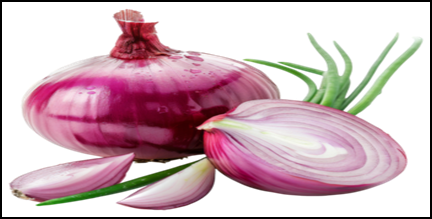
Fig:2
3. Neem
Biological Source: it consists leaflets of Azadirachta indica. .
Family: Meliaceae .
Phytoconstituents: - Neem contains meliacins, triterpenoid bitters, tannins and flavonoids . Leaf: - Quercetin, nimbosterol, nimbin . Bark: - Nimbin, nimbdin, nimbosterol .
Use: - Neem oil expressed from the seeds and used as a hair dressing and hair fall treatment and Treats acne(anti-inflammatory), treats fungal infection, increase immunity . Vrana, Daha, rakta, pitta .

Fig:3
4. Aloe
Biological Source: The botanical name of Aloe is Aloe barbadensis miller the biological source of aloe is dried latex of leaves of it .
Family: Liliaceae .
Phytoconstituents: Rasins, tannins, polysaccharides, aloectin B .
Use: Aloe vera contains vitamins A, C, and E all vitamins contribute to cell turnover, promoting healthy cell growth and shiny hair.

Fig:4
5. Coconut
Biological Source: Cocos Nucifera (L) known as coconut coco, coco-da-bahia or coconut of the beach .
Family: Arecaceae
The plant is originally from southeast Asia and the islands between the India and pacific oceans.
Phytoconstituents: Phenols, Tannins, Flavonoids, Steroids, and alkaloids
Use: Coconut prepare oil is used to prevent hair loss treatment Other Use: Treat diarrhea, renal inflammation, asthma treatment . Diabetes, urinary discharges, diseases of the blood.

Fig: 5
6. Brahmi:
It consist of the fresh and dried leaves and stem of Centella asiatica urban.
Biological name: Bacopa Monnieri
Family: Umbelliferae
Phytoconstituents: Saponin glycosides, Triterpene acids, Steroidal saponins’ Brahmi resembles Strychine, Alkloid. Herpestine .- Purgative, diuretic, laxative .
Use: Treatment of hair fall and skin disease
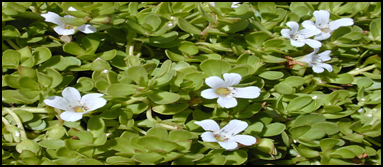
Fig:6
7. Hibiscus
Biological Source: - An evergreen shrub growing 1-3 meters, the Hibiscus rosa- sinesis flowers frequently in hot and humid condition .
Family: Malavaceae .
Phytoconstituents: Tannins, flavonoids, steroids, alkaloids, saponins, phenol
Use: Hibiscus extract have been used for again in Ayurveda to cure many aliments. They are used to cure aliments such as hair loss and hair graying . Other Use: Cancer treatment, blood sugar, skin disease
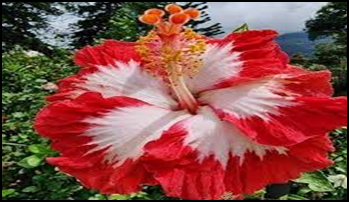
Fig:7
8. Curry Leaves
Biological Source: Murraya koenigii, its common name curry leaf tree is a small strong-smelling perennial shrub commonly found in forests as undergrowth .
Family: Rutaceae .
Phytoconstitute: Essential oil, protein, minerals, vitamin . Curry leaves are a rich source of protein, beta-carotene and antioxidants that help in strengthening the hair fibers, encourage fast hair growth and prevent hair loss amino acids present in the curry leaves help retain hair strength and hair shine

Fig:8
9. Beet Root
Biological Source: Beet, Beta Valgaris, also called beetroot, common beet or garden beet, one of the four cultivated forms of the plant beta vulgaris of the amaranth family .
Phytoconstitute: Protein, lipids, fibers, sugar, glucose, carbohydrates .
Use: Proteins, vitamins, calcium and minerals stimulate your hair follicles to produce strong and healthy strands while also accelerating their growth rates . vitamin c

Fig:9
Method of preparation :
1. Authentication :
All these ingredients purchase from the market and authentication of herbal was done from botanical expert
2. Preparation of Dry material:
CONCLUSION AND FINDINGS
Natural herbs hold promising potential in the treatment of alopecia due to their diverse biological actions, safety profile, and traditional use. While preliminary findings are encouraging—particularly for Bhringaraja , Aloe ,onion , Brahmi, beetroot , coconut , hibiscus , Almond , Curry leaves and Amla these traditional herbs in Future research should focus on large-scale, well- controlled clinical trials and standardization of herbal formulations to establish reliable efficacy and safety data.
REFERENCE

Pooja Wani, Kanak Wani, Ruchika Patil, Dr. Sandhya Godi, Exploring Potential of Polyherbal Reversing Alopecia, Int. J. of Pharm. Sci., 2025, Vol 3, Issue 11, 4895-4901. https://doi.org/10.5281/zenodo.17762517
 10.5281/zenodo.17762517
