
Department Of Pharmaceutics, G M Institute of Pharmaceutical Sciences and Research Davangere – 577006 Karnataka
Centella asiatica is a plant that contains phenolic acids, flavonoids, and triterpenoids as active ingredients. These compounds have anti-inflammatory, anti- oxidant, anti-microbial, anti-carcinogenic, and wound-healing properties. Centella asiaitica has been used for hundreds of years, notably in dermatological conditions, to improve the healing of tiny wounds, scratches, burns, hypertrophic wounds, and anti- inflammatory and anti-microbial activities, especially in eczema. Additionally, this composition shielded the skin from radiation damage. It also treats a variety of skin conditions include allergies, dermatitis, redness, swelling, burning, and itching. A fresh strategy in this field, films producing polymeric solutions, may offer an alternative to the common skin-applied dosage forms, such as ointments, lotions, gels, or patches. Poor patient compliance, cross contamination, and readily wiped off by clothing during daily activities are the main downsides of topical semisolid medicines. In order to increase patient compliance, the goal of the current study was to develop a film-forming polymeric solution for different skin infection. Methods: A film-forming polymeric solution of Centella asiaitica was prepared using different concentration of poly vinyl alcohol as film forming polymers. Triethonolamine as a plasticizer. The prepared solutions were tested for drying time, stickiness of the outer surface, cosmetic attractiveness and integrity on the skin. The films were characterized for their physical, mechanical properties and drug content uniformity, followed by stability studies of the optimized formulation.Results: All the formulations showed results within acceptable range for various tests. From characterization study it was observed that all formulations fit in the good results of quality control parameter.Conclusion: formulation can be claimed to decrease duration of therapy, will be more accepted by the patients and in treating different infections of the skin..
Skin is a very attractive organ for the application of pharmaceutically active substances due to its considerable size and easy accessibility. The aim of the drug administration via the skin can be either the local therapy of dermatological diseases or the transdermal delivery of drugs to the underlying tissues or the systemic circulation. The effectiveness of topical therapy depends on the physicochemical properties of the drug and adherence of the patient to the treatment regimen as well as the system’s ability to adhere to skin during the therapy so as to promote drug penetration through the skin barrier.1
The transdermal delivery of drugs as alternative to oral dosage forms has been the subject of research for many decades. Due to the considerable advantages of the transdermal application route for some drugs different dosage forms have been developed for the drug delivery through the skin: polymeric patches and semisolids. Topical Film forming systems are such developing drug delivery systems meant for topical application to the skin, which adhere to the body, forming a thin transparent Film and provide delivery of the active ingredients to the body tissue.
These are intended for skin application as emollient or protective and for local action or transdermal penetration of medicament for systemic action. Patches have various disadvantages, most commonly skin irritation2, because of their occlusive properties causing obstruction of sweat ducts, which in turn prevents loss of water vapor from skin surface, difficulty in applying on the curved surfaces, pain while peeling off and poor aesthetic appeal. Semisolid preparations like creams and ointments overcome some of these drawbacks but have other limitations. These do not ensure persistent contact with the skin surface and can be easily wiped off by patient’s clothes3. Hence repeated application is required in case of chronic diseases like athlete’s foot, ringworm and candidiasis4. Also, these leave a sticky and greasy feel after application leading to poor patient compliance. Therefore, there is a need for development of a dosage form which permits less frequent dosing by maintaining a close contact with the skin for prolonged time period thereby improving the patient compliance5 6.
Film forming systems are defined as non-solid dosage forms that produce a substantial Film in situ after application on the skin or any other body surface. Such compositions can either be liquids or semisolids with a Film forming polymer as basic material for the matrix. The formed Film is sufficiently substantial to provide a sustained drug release to the skin7. These systems contain the drug and Film forming excipients in a vehicle which, upon contact with the skin, leaves behind a film of excipients along with the drug upon solvent evaporation. The formed Film can either be a solid polymeric material that acts as matrix for sustained release of drug to the skin or a residual liquid Film which is rapidly absorbed in the stratum corneum8.
Applications of film forming systems
These wound care preparations can be Film forming systems were predominantly used in the field of surgery initially or wound care. Film forming solutions or gels have been used as tissue glues for the closing of operative wounds. The film formers used for this purpose may be natural like fibrin or synthetic like cyanoacrylates without drugs or with anti-microbial agents to prevent infections in the wounds. It can also be used for non-medical uses, such as the delivery of active ingredients contained in beauty products like silicone Film forming technologies used to prepare cosmetic creams and ointments. It can also be used as transparent peel off mask technologies for skin hydration treatment, acne problems, etc.
The Film forming technology also has potential application as a substrate for various barrier membranes used in the industry. Barrier membranes are widely used to protect workers from detergents, acids, bases and other hazardous chemicals, infra-red heat, UV exposure etc., e.g., hydrophilic and hydrophobic creams and ointments, UV protecting creams. Film forming polymers are sprayed on the soil which forms a membrane Film thus increasing the integrity of soil and elevating the soil temperature, which is useful in crop protection9.
Properties of film forming system
The Film forming preparation can be applied to the site regardless of shape and area, and can be retained for a long time as compared to conventional semi-solid preparations. Fig 1(A) shows that FFS forms an almost completely transparent fast drying film on application. Fig 2 (B) shows that after drying, a non-tacky, flexible and easily peelable Film is formed. There is an excellent adhesion of the formed Film to the skin, hence wipe off resistance. Therefore, the risk of transfer of active ingredients to other people or clothes is reduced.
Appearance of film forming system
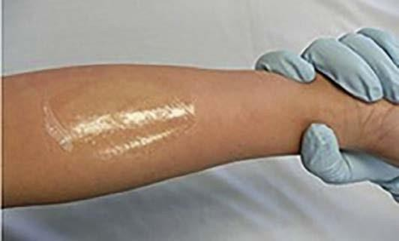
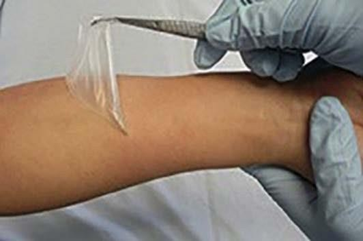
Fig 01 (A) Fig 02 (B)
(B) Non-tacky, flexible, easily peelable Film after drying
MATERIAL AND METHODS
Centella asiatica was collected from the surroundings of Davangere. Polyvinyl alcohol (PVA) and triethanolamine were procured from Loba Chemie Pvt. Ltd., Mumbai. Sodium benzoate, Tween 20, lemon oil, ethanol, potassium dihydrogen orthophosphate, and sodium hydroxide were obtained from S.D. Fine Chem. Ltd., Mumbai.
POWDER MICROSCOPY10
The shade dried leaves of plant were powdered and used for powder microscopic analysis. The organoleptic characters were observed and to identify the different microscopical characteristic features various staining reagent were used. Powder was stained with 1% phloroglucinol in 90% ethanol, concentrated hydrochloric acid and observed under microscope. Powder analysis is used for the detection of characteristic structures and various cell components
PHYSIOCHEMICAL ANALYSIS12
The shade dried powdered leaves of cranberry hibiscus were used for the analysis of various physiochemical parameters which is useful in the determination of quality and purity of crude drugs. Total ash, extractive values, loss on drying, foreign organic matters were determined as per the standard WHO guidelines which is very much useful in the determination of quality and purity of the crude drugs.
Determination of Ash Values
The residue remaining after incineration is the ash content of the drug, which simply represents the inorganic salts naturally occurring in the drug or adhering to it or deliberately added to it as a form of adulteration.
Total ash
Silica crucible was heated to red hot for 30 minutes and it was allowed to cool in desiccators. About 2gm of powdered sample was weighed accurately and evenly distributed in the crucible. Dried at 100 – 105ºC for 1 hour and ignited to constant weight in a muffle furnace at 600±25ºC. The crucible was allowed to cool in a desiccator. The percentage yield of ash with reference to the air-dried substance was then calculated by the formula.
Acid insoluble ash
Acid insoluble ash is the residue obtained after boiling the total ash with dilute hydrochloric acid, and igniting the remaining insoluble matter. This measures the amount of silica present, especially as sand and siliceous earth.
Procedure
To the total ash obtained previously, 25ml of dilute hydrochloric acid was added, covered with a watch glass and boiled gently for 5min on a burner. The watch glass was rinsed with 5ml of hot water and these washings were added to the crucible. The insoluble matter was collected on an ash less filter paper by filtration and the filter paper was rinsed repeatedly with hot water until the filtrate is neutral and free from acid. Filter paper containing the insoluble matter was transferred to the crucible, dried on a hot plate and ignited to a constant weight in the muffle furnace at 450- 500ºC. The silica crucible was removed from the muffle furnace and allowed to cool in a desiccator for 30min, and then weighed without delay. The content of acid insoluble ash was calculated.
Water soluble ash:
The total ash was boiled for 5min with 25ml of water. The insoluble matter was then collected in an ash less filter paper. It was washed with hot water and ignited for 15min at a temperature not exceeding 450ºC. The weight of the insoluble matter was subtracted from the weight of the ash and the difference in weight represented the water-soluble ash, the percentage of water-soluble ash with reference to the air-dried substances was calculated with reference to the air-dried material.
Determination of Extractive Values
This method is used to determine the number of active constituents in a given amount of plant material when extracted with solvents. Extractive values are useful for the evaluation of phytoconstituents especially when the constituents of a drug cannot be readily estimated by any other means. Further these values indicate the nature of the active constituents present in a crude drug.
Determination of water-soluble extractive
About 5gm of the powder was weighed and macerated with 100ml of chloroform water (95ml distilled water and 5ml chloroform) in a closed flask for 24 hours. It was shaken frequently for six hours and allowed to stand for eighteen hours. It was then filtered rapidly, taking precautions against loss of solvent and 25ml of the filtrate was evaporated to dryness in a tarred flat bottomed shallow dish. 2 ml of alcohol was added to the residue and it was dried at 105ºCfor 1 hour in the hot air oven and cooled in desiccators for 30min and weighed. The process was repeated till a constant weight was obtained; the percentage of water-soluble extractive value with reference to the air-dried drug was calculated.
Determination of alcohol soluble extractive
The alcohol soluble extractive value is also indicative for the same purpose as water soluble extractive value. The solvent strength of alcohol varies from 20- 90%v/v. The solvent strength has to be chosen depending upon the strength of alcohol used for the extraction of powdered drug.
Procedure
About 5gm of the powder was weighed and macerated with 100ml 90% ethanol in a closed flask for 24 hours. It was shaken frequently for six hours and allowed to stand for eighteen hours. It was then filtered rapidly, taking precautions against loss of solvent and 25ml of the filtrate was evaporated to dryness in a tarred flat bottomed shallow dish. It was dried at 105ºC for 1hour in a hot air oven. The dish was cooled in desiccator and weighed. The process was repeated till the constant weight was obtained. The percentage of alcohol soluble extractive value with reference to the air-dried drug was calculated.
Loss on drying
Take 2 grams of drug powder. Place this sample in an air oven at 130 0 C for about 3 hours. Afterwards, the sample are taken out and placed in desiccators to cool down. The drop in weight is measured. M. C. of material is based on the differences between the initial weight and final weight of grains.
% Moisture content = (wt. before drying – wt. after drying / wt. before drying) x100
PREPARATION OF CRUDE EXTRACTS13-14:
Plant of C. asiatica were collected in the month of September – October Davanagere (Dist), Karnataka, India. The Fresh Plant were washed under running tap water, air dried in shade and then homogenized to make coarse powder. The coarse power was passed through mesh no.60. The powder obtained is subjected to successive Soxhlet extraction with the solvents with 70% ethanol. The extracts were concentrated under reduced pressure and stored in desiccators until further use and the percentage yield of corresponding extracts were calculated.
PRELIMINARY PHYTOCHEMICAL INVESTIGATION 15-16:
Test for Carbohydrates
2ml of extract was taken in a test tube and 10 ml water was added to it. 2 drops of 25% ethanolic α- naphthol and 2ml concentrated sulphuric acid was added carefully to the mixture. No appearance of reddish-brown color at the junction indicated the absence of carbohydrates.
Test for Alkaloids
Few drops of Dragendorff’s reagent were added to 2ml of crude extract. The orange red color precipitation indicated the presence of alkaloids.
Test for Glycoside:
1ml of extract was mixed with 1ml of glacial acetic acid. 5-6 drops of 1% ferric chloride solution were added then. Appearance brown color ring at the top indicates presence of glycosides.
Test for Coumarins
3 ml of 10% NaOH was added to 2ml of extract in a test tube. Yellow coloration of the mixture confirmed the absence of coumarins.
Test for Tannin
A portion of crude extract was dissolved in water and then it was filtered. 1% FeCl3 solution was added to the filtrate. The color of the mixture was changed to bluish black that indicated the presence of tannin.
Test for Terpenoids
2 ml of extract was added to 2 ml of chloroform. Concentrated sulphuric acid 2-3 drops were carefully added to form a layer. A reddish-brown coloration of the interface indicates the presence of terpenoids.
Test for Saponin
0.5gm extract was dissolved in 10 ml distilled water and shaken for 30 sec. Then the mixture was allowed to stand for 30 minute and the appearance of froth was observed. Presence of saponin.
Test for Flavonoids
3-4 drops of 20% NaOH solution was added in 2ml of extract. Formation of intense yellow color which become colorless when 4-5 drops of diluted HCl was added indicates the existence of Flavonoids.
Test for Steroid (Salkowski’s Test)
2 ml of extract was treated with 2 ml of chloroform and equal amount of concentrated sulphuric acid was added. Reddish ring at the junction indicates the presence of the steroids.
Test for Amino acid
Take 2ml of extract and add 2ml of Millon’s reagent in it. Then boil it for 2-5min. in water bath to develop red precipitate indicates the presence of amino acid.
Fourier Transform Infra-Red Spectroscopy17:
The drug-excipients interaction studies were carried out to check the physical and chemical interaction of materials that used in the formulation. The drug excipients interaction was studied by FTIR spectroscopy (Shimadzu FT-IR) by KBr pellet method. Sample for analysis and KBr were taken in 1:100 ratio and ground in motor for even distribution of sample in KBr. The pellet was prepared in the form of disk by applying pressure of 5 tons for 5min using hydraulic press and subjected to FTIR. The wave number range of 400-4000 cm-2.
Table no:01 Formulation of Novel Film-Formation Polymeric solution of C. asiatica18-19
|
Ingredients |
F1 |
F-2 |
F-3 |
|
Drug extract |
1gm |
1gm |
1gm |
|
Poly vinyl alcohol |
1gm |
1.5gm |
2gm |
|
Sodium benzoate |
0.06gm |
0.06gm |
0.06gm |
|
Triethanolamine |
0.6ml |
0.6gm |
0.6gm |
|
Tween 20 |
0.5ml |
0.5ml |
0.5ml |
|
Lemon oil |
0.03ml |
0.03ml |
0.03ml |
|
Ethanol |
10ml |
10ml |
10ml |
|
Water |
Qs up to 30ml |
Qs up to 30ml |
Qs up to 30ml |
PREPRATION METHOD:
Agitation or stirring method was used for the preparation of C. asiatica film forming polymeric solution. The drug and excipients used for the preparation of different formulation as shown in the above table. 0.06gm of sodium benzoate is added in 10ml of distilled water and stirred continuously for dissolving of sodium benzoate completely at 100rpm, then add required quantity of PVA to above mixture slowly with continuous stirring and again add 10ml of distilled water to above one. In other beaker add 10ml of ethanol and add 1gm of drug extract with continuous stirring by using magnetic stirrer, add drug mixture to the beaker containing sodium benzoate and PVA with continuous stirring then add required quantity of triethanolamine, tween-20 and lemon oil to the above mixture stir until homogeneous product will be formed. The following parameter were used
EVALUATION OF PARAMETER OF THE NOVEL FILM-FORMATION POLYMERIC SOLUTION FORMULATIONS20-21:
The prepared Polymer solution containing fractionized ethanolic extract of C. asiatica were examined for their physical pH, color, Spread ability, stability evaluation.
Polymer solution pH was measured using pH meter (pH meter Microprocessor).
The viscosity of prepared creams was determined using viscometer (Brookfield digital viscometer RVDV Pro) equipped with ULE adapter. The spindle (S06) was rotated at 0.5 rpm. Samples of the cream were allowed to settle over 30 min at the temperature (25±10C) before the measurements were taken. Viscosity was reported in (cp)
For the assessment of the drying time the formulation was applied to the inner sides of the forearm. The applied volume was 10 μl/cm2. After 5 minutes a glass slide was placed on the film without pressure. If no liquid remains visible on the glass slide after removal, the film is considered dry. If liquid remains visible on the glass slide the experiment is repeated with a drying time of 15 to 20 minutes.
The cosmetic attractiveness of the films is assessed by visual examination of the dry films. Transparent films with a low skin fixation had a high attractiveness as they are almost invisible. Opaque films and films with a medium skin fixation are considered less attractive as they exhibited an increased visibility and a slight wrinkling of the skin. Whitish films and films causing heavy wrinkling of the skin due to strong skin fixation displayed only a low attractiveness.
The stickiness of the outer surface was tested by pressing cotton wool on the dry film under low pressure. Depending on the quantity of cotton fibers that are retained by the film the stickiness is rated high (dense accumulation of fibers on the film), medium (thin fiber layer on the film) or low (occasional or no adherence of fibers).
To test the integrity on skin the formulation is applied to the forearm of a volunteer as described for the assessment of the drying time. The dry film is then worn overnight by the test subject. After 24 hours the test area was examined visually with the help of magnifying glass (magnification 10x) for completeness of the film, appearance of cracks or flaking.
In any rational design and evaluation of dosage form for drug, the stability of active components must be major criteria in determining their acceptance or rejection. Stability of the drug can be defined as the ability of particular formulation to specific containers to remain within its physical, chemical, therapeutic and toxicological specification or as the time from the date of manufacturer and the packing of formulation, until its chemical or biological activity is not less than a predetermined level of labelled potency and its physical characteristics have not changed appreciably.
Method:
The optimized formulations (F3) were taken in vials and placed in stability chamber at a temperature of 250C/60% RH for 3 months. Samples were withdrawn at intervals of 7, 14, and 21 days and they were evaluated for above listed parameter.
The films are formed in a Petri dish. Film- formation is evaluated and rated as complete and uniform, incomplete or non-uniform, with or without precipitation of the film forming polymer. The cosmetic aspects of the film are given in terms of transparency or opaque, sticky or dry, peelable or non-peelable55.
Film flexibility is evaluated on the basis of cracking and skin fixation and this is determined by stretching the skin in 2–3 directions. The film is rated flexible if there is no cracking or skin fixation and non-flexible if there is cracking and skin fixation.
The formulation is tested for skin irritancy test like redness, edema, irritation and inflammation during studies. The formulated is safe to use.
RESULTS AND DISCUSSION
POWDER MICROSCOPY
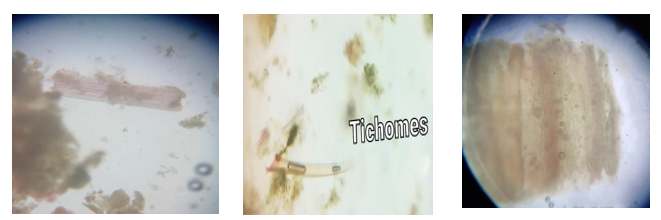
Lignified fibers: They are thin-walled narrow lumen and pointed ends.
Trichomes: unicellular covering trichome they were found to be long, slender and bent at the base and pointed apex.
Epidermis: Leaves of this species are amphistomatic and stomata were found to be amniocytic type. Anticlinal walls of both adaxial and abaxial epidermal cells were straight. There were more stomata on the abaxial surface than on the adaxial surface, and stomatal distribution was random. The mean length and breadth of lower stoma was observed and that of the upper stoma was found to be of 18.7μm× 17.6 μm. Guard cell area (GCA) of lower surface was found to be 482.1 μm2 and that of upper surface 287.6 μm2. The number of abaxial epidermal cells and abaxial stomata per square millimeter area of the leaf were observed as 1125.2 and 270.5 respectively and stomatal index for the lower surface.
PHYSIOCEMICAL ANALYSIS
Physiochemical constants like total ash values, acid insoluble ash, water soluble ash, extractive values, loss on drying, swelling index, foaming index were studied and reported in table no:
Table no: 02: Physiochemical parameters of Centella asiatica plant leaves
|
SI.NO |
PARAMETERS |
VALUES(%W/W) |
|
1 |
Total ash |
14.5% |
|
2 |
Acid insoluble ash |
3.15% |
|
3 |
Water soluble ash |
17% |
|
|
EXTRACTIVE VALUES |
|
|
4 |
Water soluble extractive |
12.7% |
|
5 |
Alcohol soluble extractive |
8.6% |
|
6 |
Loss on drying |
5.5% |
Extraction:
The aerial part leaf of Centella asiatica was extracted with ethanol. The properties of extract of the plant are given below. The extract of Centella asiatica yielded slightly sticky to Amorphous green-colored extract.
Table no. 03: Properties of extract and percentage yield
|
Name of Plant |
Type of extract |
Color of extract |
Appearance |
% Yield |
|
Centella asiatica |
70% ethanol |
Dark Greenish |
Semi solid |
7.4% |
TLC
After treatment with vanillin sulfuric reagent, similar spots at Rf and colour with the profile of C. asiatica extract solution were observed in the chromatographic profile of the cosmetic cream. In the lower third of the chromatogram, a dark green spot (Rf: 0.48) corresponding to asiaticoside was observed. The extract of C. asiatica raw material was analyzed by TLC using asiaticoside as a marker because of its greater commercial availability and lower cost. In that way, asiaticoside, the major active principle in the raw material extract employed, was identified.
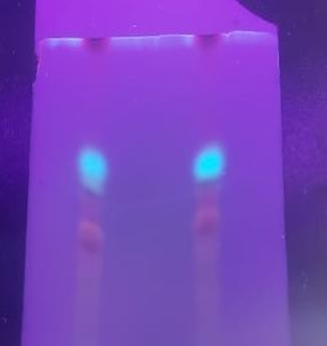
Fig no: 02
Table no: 04 Preliminary Phytochemical Investigation:
|
Phytochemical constituents |
70% ethanolic extract |
|
Carbohydrates |
-- |
|
Alkaloids |
++ |
|
Glycosides |
++ |
|
Coumarins |
-- |
|
Tannins |
++ |
|
Terpenoids |
++ |
|
Saponins |
++ |
|
Flavonoids |
++ |
|
Steroids |
++ |
|
Amino acids |
++ |
Table no. 05: Fourier Transform Infra-Red Spectroscopy106
|
Formulation code |
NH stretching |
C=C stretching |
C-O stretching |
|
Pure extract |
3340.56 cm-1 |
1641.34 cm-1 |
1049.27 cm-1 |
|
Formulation F3 |
3331.56 cm-1 |
1638.78 cm-1 |
1044.16 cm-1 |
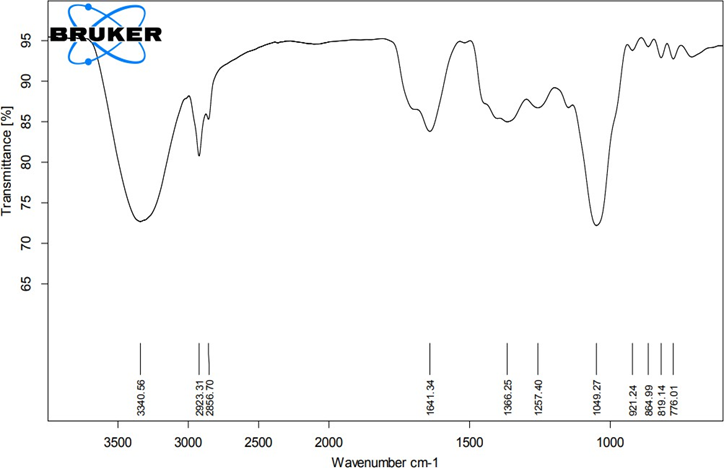
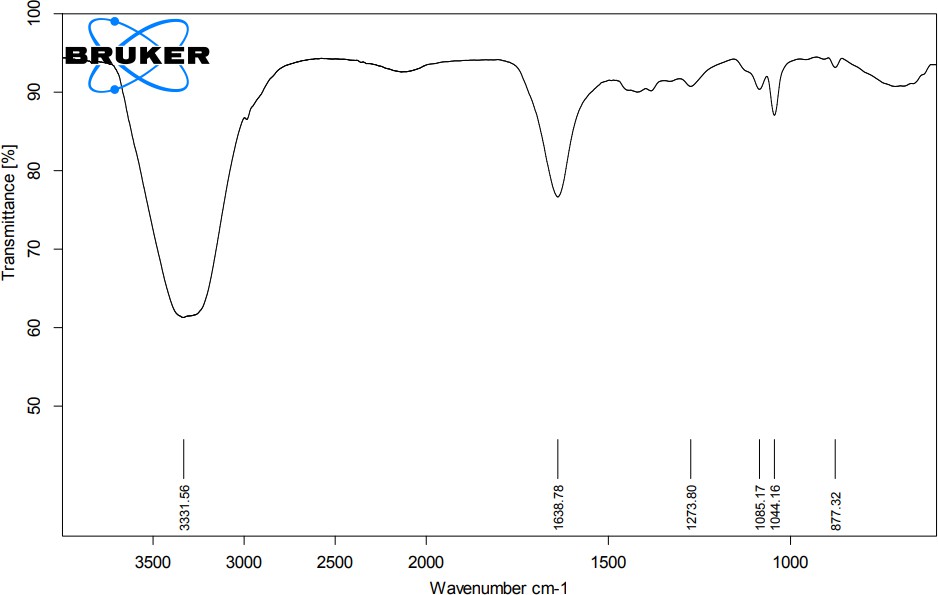
Table no 06: Evaluation parameters for topical cream formulations
|
Code |
Physical appearance |
pH* |
Spreadability * g cm/sec |
Viscosity* (centi poise) |
|
F1 |
Greenish, smooth and translucent |
7.13 |
42.19 |
6083.83 |
|
F2 |
Dark green, smooth, homogenous, translucent |
7.08 |
45.05 |
6590.19 |
|
F3 |
Dark green, smooth, homogenous, translucent |
7.04 |
50.39 |
6829.24 |
Drying time:
Drying time of formulations varied from 20 to 30 min with an increase in concentration of polymer, increase in drying time was observed. The batch F1 showed the lowest drying time i.e.20 min and batch F3 showed highest drying time i.e. 30 min. The variation in a drying time may due to the concentration and viscosity of polymers.
Table no. 07: Evaluation parameters for drying time
|
Code |
Drying time in min. |
|
F1 |
10 |
|
F2 |
15 |
|
F3 |
20 |
Integrity on skin:
The integrity of the formulations on the skin in the form of a thin, almost visible film was evaluated for formulations F1 to F3. The results of the test have been tabulated below.
Table no 08: result of Integrity on skin
|
Sr.no. |
Formulation code |
Observation |
|
1 |
F1 |
Good |
|
2 |
F2 |
Good |
|
3 |
F3 |
Very Good |
Stability studies:
Optimized formulation (F3) containing ethanolic extract of Centella asistica were prepared, and their physicochemical and functional stability under 4-8± 20C, 25 ± 20C/ 60% ± 5% RH, 400 ± 20C/ 75% ± 5% RH for a period of three months. After a months Optimized formulation (F3) maintained their colour and consistency characteristics. At 40±2°C/75±5% RH there was no colour change in formulations while there was consistency decreased. The pH values remained compatible with the pH values of skin.
Irritancy test:
The film forming polymeric solution is applied on skin for 30 min there is no irritancy on skin.
CONCLUSION
In this work a novel film forming polymeric solution containing Centella asiatica plant extract were formulated and evaluated.
film forming polymeric solution containing Centella asiatica were prepared by the Agitation (Magnetic stirring) method. Prepared polymeric solution were evaluated for viscosity, pH, skin penetration study, skin irritation, Drying time, Outward stickiness stability study. From the above-mentioned evaluation parameters, it was concluded that all novel film forming polymeric solution shows the overall best performance and acceptability. Stable novel film forming polymeric solution could be formulated at pH 6-6.25 with 0.06gm of sodium benzoate by the addition of 1-2 gm of poly vinyl alcohol as a film forming polymer. The film forming polymeric solution prepared in this study fulfils all necessary parameters required for topical use. This novel dosage form will improve both the accuracy and the positioning of a delivered dose. The optimized formulation F3 with better bio adhesive property may improve the bioavailability of topical administration of Centella asiatica gave a cool and smooth application. It shows better drying time, stickiness and can be alternative to the conventionally administered topical formulations. It offers the advantage of transparency, lower skin irritation, wipe off resistance, longer retention, improved patient compliance, aesthetic appearance.
REFERENCES
Ali Esmail Al-Snafi OSR Journal Of Pharmacy (e)-ISSN: 2250-3013, (p)-ISSN: 2319-4219 Volume 10, Issue 1 Series. I (January 2020), PP. 26-36
Ali Esmail Al-Snafi OSR Journal Of Pharmacy (e)-ISSN: 2250-3013, (p)-ISSN: 2319-4219 Volume 10, Issue 1 Series. I (January 2020), PP. 26-36






Madhu Kumar H. M., Suhas R. M., Kavyashree N. J., Prajwal R., Saniya Mehaq, Rahul M L, Development And Characterization of Novel Polymeric Film-Forming Solution of Centella Asiatica Extract, Int. J. of Pharm. Sci., 2026, Vol 4, Issue 3, 2665-2677. https://doi.org/10.5281/zenodo.19184526
 10.5281/zenodo.19184526
