
KVN Naik SPS's Institute of Pharmaceutical Education and Research, Canada Corner, Nashik, India.
Shaving cream is a topical product applied to the skin before shaving. It acts as a lubricant and provides an even, continuous layer between the blade and the skin. This improves glide, reduces friction, and helps prevent cuts and scrapes while minimising irritation. Besides assisting the shaving process, shaving creams also work to protect and soften the skin, reducing redness and irritation caused by shaving. This article aims to explain the manufacturing process of shaving cream and examine the variety of ingredients and preservatives used. The ingredients significantly influence the feel, consistency, and effectiveness of the cream, helping to produce a final product that meets various shaving needs.
The average person thinks about the possibility of eliminating 20,000-25,000 terminals daily. The hairs are deposited from the skin at an angle of inclination between 30 and 60°. Home facial supplies can enhance the face area by up to 250 cm². In addition, a diverse range of preparations for shaving trauma are now available [1][5]. The objective is to attract attention and aid in shaving faces without causing discomfort. This involves both preparation and shaving techniques. After shave, it stays healthy and shiny. Unique content, typically regarded as an aspect of content. What steps must be taken to prepare for shaving with a "dry" blade and an "electronic"? Cutting can result in shaving, which is the opposite mechanism of shaving removal. The reason for this was that two tools are required to cut the ends of the hair. Shaving preparations are referred to in three distinct phases: wet shaving preparations, dry shaving preparations and after-shave preparations[1].
History of Shaving Cream: -
A rudimentary form of shaving cream was documented in the summer around 3000 BC[4]. This substance combined with wood alkali animal fat and was applied to beard as a shaving preparation. Until the early 20th century bats or sticks of hard shaving soap were used[5]. Later tubes containing compound of oils and soap were sold.
In 1919 Frank Shields, a former MIT professor developed the first shaving cream[4][13]. The innovative product appeared on the American market under the name Barbasol and offered men an alternative to using a brush to work soap into lather. When it was first produced, Barbasol was filled and packet entirely by hand in Indianapolis. The brand still exists and is currently available worldwide.
The first can of pressurized shaving cream was Rise shaving cream, introduced in 1949[4]. By the following decade this format attained two-third of the American market. Chlorofluorocarbons (CFCs) were used as propellants until they were banned in the late 1990s for destroying the ozone layer. Gaseous hydrocarbons such as mixtures of pentane, propane, butane and isobutane took their place[7].
Classification of Shaving Creams: -
Shaving creams are classified on the basis of application type, formulation basis and packaging form[1][2]. Each type is designed to meet specific consumer needs and preferences.
1. Depending on the Method of Application: -
A. Brush-type shaving cream: -
It is also known as foaming shaving cream. A shaving brush is needed to generate lather[5]. Usually soap-based and contains stearic acid that has been neutralised with potassium hydroxide or sodium hydroxide[7]. Provides a dense, stable foam that softens the beard and lubricates the skin[8]. Example: Purana Masala, Godrej Deluxe Lather Shaving Cream.
B. Brushless shaving cream: -
Apply directly to the face without a brush[1][8]. It contains high concentrations of surfactants, oils and humectants[9]. Forms a thin, oily film instead of thick foam. Practical for quick shaving and suitable for dry or sensitive skin[10]. Example: Nivea Men Sensitive Shaving Cream.
2. Depending on the Packaging Scheme: -
a) Tube Type: -
Regular semi-solid cream is packed in tubes[5]. Requires manual foaming with brushes or hands. Economical and widely used in homes.
b) Aerosol Shaving Foam: -
Packed under pressure with propellant (such as butane or propane)[7]. Supplied as ready-to-use foam. Very practical and healthy. Example: Gillette Foamy, Park Avenue Shaving Foam.
c) Shaving Gel: -
Transparent, non-foaming gel that foams when applied or remains as a smooth film[8]. Provides excellent razor glide and moisture. Suitable for precision shaving (e.g. beard shaping). Example: Gillette Fusion Hydra gel.
d) Shaving Soap (Hard Cream): -
Solid or semi-solid form; Use with a shaving brush[5]. It contains saturated fatty acids. Gives rich foam and lasts a long time. Example: Tabac Original Shaving Soap.
Ideal Characteristics of Good Shaving Cream:
Advantages: -
Disadvantages: -
MATERIALS AND METHODS: -
Raw Material Used in Shaving Cream: -
Equipment: -
1. Steam Jacketed Kettle: -
A steam jacket is frequently used in kettles to heat food and agriculture at a uniform temperature[13]. Product for treatment temperature. In the process of evaporation, there is a heat transfer mechanism that facilitates thermal transfer between the two processes. Heat the extract. The aqueous substance is evaporated by an evaporating pan, which is heated by converting steam into heat. A rise in temperature leads to a decrease in the solvent molecule's ability to escape as more vapour is present. Surging causes solvent molecules to evaporate more readily. The apparatus comprises a casing filled with an evaporative substance, where steam enters through the inlet and condensate exits the outlet, which heats up the material[20]. Mechanical stirring is used for larger quantities, while manual stirring applies to smaller quantities.
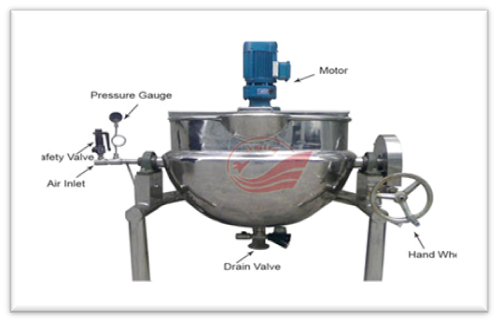
Figure 1: Steam Jacketed Kettle
2. Agitator: -
The purpose of agitators is to uniformly distribute media within tanks[13][20]. The impellers, which are immersed at high speeds and rotate, drive them. RPM is a controlled velocity. The addition of an impeller to the tank causes flow and shear, as it is not a stationary impeller, facilitating the uniformity of materials composed of a single or multiple components. Maintain a state of constant media flow. Agitators are designed to handle liquid, gaseous, and solid media, including granules, powders, slurries, suspensions, and highly viscous liquids. However, choosing the right agitator types, size and design are important factors depending on the type of media.
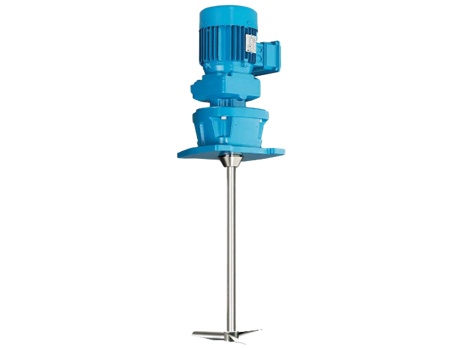
Figure 2: Agitator
3. Homogenizer: -
A homogenizer is a kind of mixing tool used to make a mix that is even and the same everywhere[9][20]. It works by breaking up the parts and spreading them out smoothly in the liquid. The homogeniser was invented by Auguste Gaulin to make milk smooth and consistent. Homogenisers are often used with high shear mixers, batch mixers, and paddle mixers, and they are placed after these machines to make the mixture finer. But some homogenisers can't handle materials with very big or rough parts because it can use too much energy, slow down the flow, create too much heat, and wear out the parts more quickly. Before the homogeniser, mixers are used to mix and prepare the materials by blending them together first.
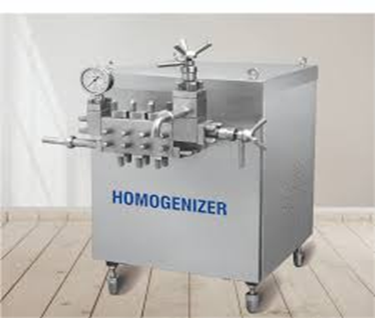
Figure 3: Homogenizer
4. Paste Filling and Sealing Machine: -
A machine known as a Paste filling and sealing machine can automatically fill and seal tubes or bottles with paste products[13][20]. These machines are essential for manufacturing, particularly when dealing with sticky substances. They are used in food, cosmetics, pharmaceuticals and chemicals. These machines, which are specifically designed to fill containers with sticky substances like sauces, creams and adhesive, help ensure the production process is efficient, accurate and consistent.

Figure 4: Fig. 4 Paste filling and sealing machine
Ingredients and Quantity: -
Table 1: Formulation composition of shaving cream
|
Sr. No |
Ingredient |
Weight |
Role |
|
1 |
Stearic acid |
14g |
Emulsifier |
|
2 |
Oleic Acid |
4g |
Surfactant |
|
3 |
KOH Solution |
2g KOH & 12ml H2O |
Saponification Agent |
|
4 |
Sorbitol |
1g |
Emollient |
|
5 |
Sodium Chloride |
2g |
Thickener |
|
6 |
Glycerine |
1g |
Humectant |
|
7 |
Propylene Glycol |
4g |
Humectant |
|
8 |
SLS |
4g |
Foaming Agent |
|
9 |
Water |
q.s |
Aqua Phase |
Preparation Method: -
In the main tank, add 14g of stearic acid, 10 gm coconut oil and 4g of oleic acid and KOH solution (3g KOH, 10ml (H2O)[11][12]. Then heated to 80°C. When this was melted and homogenised, stirring was provoked[9][20]. In a separate vessel, 4g SLS, 1g NaCl and 5ml hot water were weighed and melted and were added to the tank[7][8]. 4g of propylene Glycol, 1g Glycerine, 1g Sorbitol and 6g Lauramide were added with continuous stirring[12][16][18].
Evaluation Test of Shaving Cream: -
1. Determination of pH: Dissolve 1 gram of formulation in 9 ml of water and check by pH paper[12][16].
2. Spreadability: Take an adequate amount of sample between two glass slides and apply weight of 100gm is on the slides for 5 minutes[12][16]. Spreadability can be expressed as:
S=m×lt

Where, m

= weight applied to upper slide, l

= length moved on the glass slide, t

= time taken.
3. Viscosity Testing: Viscosity Measurement; using a viscometer, assess the viscosity of the shaving cream[6][9][20]. This help determine how thick the cream is and its ease of application.
4. Homogeneity: Test formulation for the homogeneity by visual appearance and by touch[12][17]. Or, it was test by pressing a small quantity of the formulated cream between the thumb and index finger.
5. Irritancy Study: Mark an area of 1 sq.cm on the left-hand dorsal surface[10][12]. Apply cream to the specified area and check the irritancy, erythema, edema, if any, for regular intervals up to 24 hrs.
RESULT AND DISCUSSION: -
The formulated shaving cream displayed desirable physical and functional properties, confirming successful formulation[12][16][17]. It exhibited a smooth, homogenous texture with no signs of grittiness or phase separation, ensuring uniformity and product stability[6][9]. The pH was found to be between 6.5 and 7.0, which is compatible with skin and prevents irritation[10][14][15]. The viscosity was appropriate for easy application, while spreadability results indicated smooth coverage and effective lather formation[12][16].
Foam quality and stability were satisfactory due to the presence of stearic acid and sodium lauryl sulphate, which provided dense, stable foam, facilitating smooth razor movement[7][8][19]. Humectants such as glycerine and sorbitol-maintained skin moisture, while emollients contributed to softness and post-shave comfort[18]. The irritancy test revealed no redness or swelling, confirming that the formulation was non-irritant and suitable for sensitive skin[10][14].
Overall, the product met the essential parameters of an ideal shaving cream- stability, spreadability, lathering, and user comfort[1][2][3]. The results demonstrate that the combination of fatty acids, surfactants, and humectants produced an effective, economical, and skin-friendly shaving cream[11][13]. Incorporating herbal additives in future formulations can further enhance their moisturising and soothing properties[16][17].
REFERENCES



Y. P. Kodilkar, H. P. Jagtap, O. S. Bodke, S. R. Aher, Comprehensive Study on Formulation and Evaluation of Shaving Cream, Int. J. of Pharm. Sci., 2025, Vol 3, Issue 12, 1701-1707. https://doi.org/10.5281/zenodo.17869839
 10.5281/zenodo.17869839
