
Dr. R. G. Bhoyar Institute of Pharmaceutical Education Research, Wardha.
Food colour additives are widely used to enhance the visual appeal of food and make it more appetizing. The United States Food and Drug Administration (FDA) permits nine artificial colorings in foods, drugs, and cosmetics, while the European Union (EU) allows five artificial colors (E-104, E-122, E-124, E-131, and E-142) in foods. The use of these additives is strictly regulated in the European Union, the United States, and many other countries worldwide and there is a growing concern about the safety of some commonly used legal food colourants and replace the synthetic forms with natural product. However, excessive use of these synthetic colourants may lead to various health hazards, including gastrointestinal disorders and potential carcinogenic effects. The aim presents an up-to-date status of the various concerns from use of colour additives in food. There is a growing knowledge about the safety of some commonly used legal food colourants and there is a trend to replace the synthetic forms with natural products. The European Rapid Alert System for Food notifications and US import alerts concerning food colors are analyzed and trends in fraudulent use of color additives identified. Artificial food colours enhance appearance but pose health risks, including hyperactivity and allergies, especially in children. Regions like the EU enforce strict regulations, while developing areas struggle with misuse. Safer, natural alternatives are in focus, demanding cooperation for improved food colouring practices. This review highlights the importance of consumer awareness and regulatory oversight in the use of synthetic food colours
In this article we will discuss something very important artificial food colours. Artificial color are chemical substances that enhance foods, color and appearance .The usage of food dye is increasing and becoming an integral part of the food. However, studies prove that most of them are harmful to human health in the long run today, colour is still added during manufacture of products such as biscuits, pastries, chocolates, cakes, processed meats, cheese, margarine, ice cream, soft drinks. The addition of food colours to food and beverage also serves many technological purposes, such as offsetting colors loss caused by processing conditions, including temperature, time and heat. The choice of food by modern consumers is highly affected by its visual appearance, with colour as a key constituent making it more attractive to consumers. Food colours are substances added to enhance the aesthetic appearance of food products, making them more attractive and increasing their appetizing value, particularly for children. While regulatory authorities permit certain synthetic food colours, excessive consumption poses serious health risks. Gastrointestinal diseases such as cholera, enteric fever, and tuberculosis have been linked to unsafe food practices, while synthetic colours may also exhibit mutagenic and carcinogenic properties. The United States Food and Drug Administration (FDA) allow nine synthetic colours, while the European Union (EU) permits only five artificial colourants (E-104, 122, 124, 131, and142). Concerns over the safety of synthetic colours have led to a growing preference for natural food colour additives, which are derived from plant, animal, or mineral sources. These natural alternatives offer safer options without compromising food quality or consumer appeal. Despite regulatory frameworks, consumer awareness regarding food color safety remains essential. Food colouring can be artificially, created in the same way as natural colours, or naturally derived. Natural colors are extracted from natural sources by more or less complicated processes.
The use of colour additives in foods (include beverages) is therefore important to both the food manufacturer and the consumer in terms of determining the acceptability of processed foods. Food colours are pigments, dyes or any other compound which were added to food products for various several reasons like identification of various products, to preserve the attractive and colourful appearance, to make them more tempting to enhance the appetizing value and the palatability of food products. This led to incorporation of artificial petroleum-based ingredients in artificial food colours, which became widely popular over natural colours due to their manufacturing benefits, such as reduced their costs and prolonged shelf life. The artificial food colours are the colouring material that are simple substances to attract the children’s to marketing their foods. Foods are coloured with artificial colors to replace the natural colors that are lost during processing, to reduce variations between batches that are caused by natural colors, and to make products that are aesthetically and psychologically attractive. In recent years, food additives in general, and colour additives in particular, have increasingly come under investigation for evaluation of their safety. In order to prevent malpractice, regulations have been developed by many countries to limit the type, purity, use and amount of food colour additives permitted in foods. At present, nine artificial colour additives are generally permitted by Kuwait's law to be used as food-colouring agents and many others have been banned in the last two decades due to their toxicity as well as carcinogenicity More recently there has been renewed concern about the potential toxicological risk associated not only with the type of artificial colour additive used, permitted or not, and the levels, within or above the maximum limits permitted, but also with daily exposures to these chemicals in the diet.
The Joint Food and Agriculture Organization and World Health Organization (FAO/WHO) Expert Committee on Food Additives (JECFA) strongly recommends that governments periodically check the total intake of each and every food additive, particularly those that may pose a potential hazard if their use is abused and if total intakes exceed allowable levels, based on dietary studies at national levels (FAO/WHO 1989). Unfortunately, to date Kuwait has studied neither levels in products nor total additive intakes. Determine the quantitative contents of these artificial colour additives, assess the intake levels of these colour additives by children (based on food consumed) and compare the intake level to ADIs set by the FAO/WHO. Globally, government agencies have established strict guidelines to control the use of artificial food colours. In India, the Food Safety and Standards Authority of India (FSSAI) regulates permissible colours and additives under the Food Safety and Standards (Food Products Standards and Food Additives) Regulations. FSSAI prohibits the use of industrial dyes such as Rhodamine-B, Malachite Green, Sudan dyes, and Metanil Yellow in food and mandates that only permitted synthetic colours can be used within fixed limits. FSSAI also promotes preventive measures such as routine food surveillance, label transparency, strict monitoring of street foods, advisories to states on food adulteration, and training programs for food handlers.
Approved synthetic colours are proved to be toxic and carcinogenic. This need has come from legislative action and consumer orientation against synthetic food colours. The usage of large amount of synthetic colours causes pollution, disturbs the ecological balance and causes health hazards to human. Colours that come from nature come from things like minerals, animals, plants, and insects. Amongst the all-natural colours, plant-based pigments have wide range of medicinal benefits. Nowdays the role of natural colours as food colourant is becoming increasingly important. They contribute to the most important attributes of food both for aesthetic value and for quality evaluation but also, they tend to give potential health effects, as they have been observed to possess potent antioxidant activities. The expenditure in natural food colour market across the globe has reached to US $ 1 billion and is constantly increasing 10% annually. Nature gives a number of compounds adequate for food colouring, such as the water-soluble anthocyanins, betalains, as well as the oil soluble carotenoids and chlorophylls. However, substituting synthetic colours with natural colourants presents a challenge because the colour and stability of plant pigments are dependent on various factors like structure and concentration of the pigment, light. Intensity, metals, pH, temperature, enzymes, oxygen, ascorbic acid, sugars, flexibility during processing, long lasting effect, profitability. Synthetic colourants are more favorable from all this point of view.
The natural colourants are ecofriendly, harmonized with nature, obtained from renewable sources and their method of preparation involves minimum possibility of chemical reactions and they are bio disposable. Because of the pitfalls of existing natural food colourants, the demand for natural colourants is continuously increased by the food processing industries. This need can be fulfilled by research to offer a more natural and healthier way of colouring foods. There by, plant pigment research is looking new sources of pigments. Food colour manufacturers therefore striving to develop new technologies to meet customer demands. The objective of adding colour to foods is to make them appealing, adjust the loss of colour during pricing to improve the quality and also influence the come to buy a product. Colour is added to food for the following replace and restore colour lost sharing processing, is to enhance colour that is already present, to minimize batch variations in processing and to colour the uncoloured food. Food colours can be grouped divided into four categories a natural colours, nature-identical colors, synthetic colours and inorganic colours. Colour is an important factor increasing consumer's acceptability to food products. This is due to consumers always links food colour with other qualities such as ripeness, freshness, and food safety. Thus, many food products have added food colourants to make the food products more desirable and acceptable. The synthetic food colours are available in different colour shades. There are many reports on the toxicity of synthetic colours.
1. Attraction – Make food look colourful and nice Food colours are used to enhance the natural beauty of food and make it more visually appealing. A colourful product immediately captures attention and stimulates appetite, especially among children who are strongly influenced by visual cues. Attractive colours can make even simple or plain foods look exciting and desirable.
2. Appearance – Improve the look of food or product Processing, heating, drying, or storing food can cause natural colours to fade. Adding colouring agents helps restore the product’s original appearance or even improve it beyond its natural state. This makes the food look fresher, richer, and more appetizing, improving overall consumer satisfaction.
3. Marketing – Helps in selling by making items eye-catching Colour plays a major role in marketing and branding. Bright, vibrant colours on foods help products stand out on shelves and influence buying decisions. Consumers often associate colourful products with better taste or higher quality, making colour a powerful marketing tool used by manufacturers to boost sales.
4. Identification – Helps tell different flavours or types apart Colour helps consumers quickly identify flavours and varieties without reading labels. For example, red is commonly associated with strawberry, yellow with mango, and green with mint. This visual distinction reduces confusion and helps buyers choose their preferred flavour instantly.
5. Consistency – Keeps product colours the same every time Natural ingredients may vary in colour due to season, climate, or quality differences. Adding food colour ensures that every batch looks identical, giving consumers a uniform experience. Consistency builds trust, as customers expect the same product appearance each time they buy it.
6. Decoration – Used in cakes, sweets, and drinks for design Colours allow bakers and food makers to create attractive designs, patterns, and themes in cakes, pastries, sweets, and beverages. Decorative colouring enhances visual presentation for festivals, celebrations, and commercial displays, making foods more appealing and enjoyable.
7. Flavour hint – Colour often matches the taste colour serves as a visual indicator of flavour. Consumers expect certain colours to represent specific tastes (e.g., orange colour for orange flavour). Matching colour to flavour helps set expectations and improves the eating experience by creating a connection between what people see and what they taste.
8. Shelf appeal – Makes packed food look fresh and bright in packaged foods, colour is crucial for attracting buyers. Bright and fresh-looking colours make a product more appealing and signal quality. Shelf appeal influences quick decision-making in shops, helping coloured products stand out against dull or uncoloured ones.
1.1 Types of Artificial food colours:
Table no 1: Artificial food colours authorized by FDA according to Regulation (FDA) 1333/200
|
ARTIFICIAL FOOD COLOURS |
|
|
E-NUMBER |
NAME |
|
E 102 |
Tatrazine |
|
E104 |
Qunoline yellow |
|
E110 |
Sunset Yellow FCF/Orange Yellow |
|
E122 |
Azorubine, Carmoisine* |
|
E123 |
Amaranth* |
|
E124 |
Ponceau 4R, Cochineal Red A |
|
E127 |
Erythrosine |
|
E129 |
Allura Red AC* |
|
E131 |
Patent Blue V |
|
E133 |
Brilliant Blue FCF |
|
E142 |
Green S |
Table no 2:Natural Food Colours Alternatives:
|
Colours |
Primary source (pigment) |
Source material |
Uses & stability |
|
Red |
Betanin |
Beetroot (powder or juices) |
Gives bright, appealing colour that stays stable in cold products. |
|
Pink |
Anthocyanins
|
Raspberries or strawberries (freeze dry powder is best) |
Mixes easily and stays bright without changing taste. |
|
orange |
Carotenoids (Beta-carotine) |
Carrots, paprika (juices or powder) |
Withstands processing and keeps colour uniform. |
|
Yellow |
Curcumin |
Turmeric (powder) |
Highly stable pigment that gives a natural yellow shade. |
|
Green |
chlorophyll |
Spinach (juices or powder) |
Provides clean green tones with almost no flavour impact. |
|
Blue |
Phycocyanin |
Spirulina extract (blue spirulina) |
Doesn’t fade and adds colour without affecting taste. |
|
Brown |
Caramel, cocoa |
Caramelized sugar, cocoa powder, coffee |
Creates stable brown shades from heated sugar. |
Table No:3 Artificial food colours additives concentration range in different food product vs good manufacturing practices (GMPS) and permitted levels in some countries (mg/kg).
|
Food Category |
Tartrazine |
Sunset Yellow |
Carmoisine |
Erythrosine |
Allura Red |
Permitted Limit (India) |
Permitted Limit (Australia) |
Permitted Limit (USA) |
Permitted Limit (UK) |
|
A |
– |
217–217 |
– |
– |
– |
100 |
290 |
– |
2–256 |
|
B |
0.17–0.19 |
2.39–4.98 |
– |
– |
2.8–2.8 |
100 |
290 |
10–200 |
1–151 |
|
C |
0.6–26.3 |
0.32–224.6 |
2.28–114 |
2.28–114 |
– |
100 |
70 |
5–200 |
1–20 |
|
D |
0.32–19.7 |
0.02–46.5 |
0.18–12.3 |
0.18–12.3 |
2.58–76.3 |
100 |
290 |
10–400 |
2–265 |
|
E |
0.1–5.8 |
0.52–14.3 |
5.14–14.3 |
5.14–5.14 |
0.74–42.8 |
200 |
290 |
10–400 |
13–136 |
|
F |
– |
8.19–8.19 |
10.46–15.9 |
10.46–15.9 |
– |
100 |
290 |
– |
– |
A= Chocolates; B = Ice cream; C = Juices and drinks; D = Candy; E = Jelly; F = Gums
2. MATERIAL AND METHODS:
2.1 Design of the study:
The main objective of this survey to get the knowledge and percentage of the awareness and harmful effects of artificial food colours which are commonly and excessively used in candies, beverages, cakes, pastries, and many more food products.
2.2 Objectives:
To assess students’ awareness of artificial food colours in commonly consumed foods. This objective aims to determine how familiar school students are with the presence of synthetic food colours in everyday food products such as candies, packaged snacks, beverages, bakery items, and street foods. Understanding their awareness level helps identify whether students can recognize artificially coloured products, read ingredient labels, and distinguish between natural and synthetic additives. This also provides insight into the influence of marketing, packaging, and peer consumption on their food choices.
To evaluate the health risks linked to synthetic food colours like allergies and behavioural issues. Many synthetic food colours have been associated with health concerns, including allergic reactions, hyperactivity in children, gastrointestinal discomfort, and potential long-term toxic effects. This objective focuses on assessing whether students are aware of these possible health implications and whether their knowledge affects their consumption patterns. It also emphasizes the importance of educating the younger population about risk factors so they can make informed decisions.
To encourage healthier food choices by promoting natural or homemade alternatives. A key purpose of this survey is not only to measure awareness but also to influence behavior positively. Promoting alternatives such as naturally coloured foods, minimally processed snacks, and homemade preparations can help students reduce dependency on artificially coloured foods. By understanding students’ current preferences, the survey helps design interventions that encourage shifts toward healthier dietary habits and reduce exposure to unnecessary additives.
To educate students about the presence of artificial food colours in daily food items. This objective highlights the need for awareness campaigns or curriculum-based education that informs students about how synthetic food colours are used in processed foods. Many young consumers may not be aware that products like soft drinks, ice creams, pickles, or flavored chips contain added colours. Educating them builds critical thinking regarding food label reading, enhances consumer literacy, and empowers students to make conscious dietary choices.
To identify the overall level of awareness among school students about artificial food colours. This broader objective focuses on capturing baseline knowledge, misconceptions, attitudes, and behavioural tendencies among the student population. Assessing overall awareness helps researchers identify knowledge gaps and design targeted educational interventions. It also contributes to understanding how age, grade level, and socio-economic background may influence awareness levels, ultimately supporting policymakers and educators in developing effective health education strategies.
2.3 Sample Method:
A simple random sampling method was employed to select the respondents. Evaluation methods including an interview and questionnaires in English language. Respondents were based on education level and social level during questionnaires. The 100 respondents 70 were students,10 were teachers and 20 from different professions. The initial part of questionnaires are demographic information include Name, Sex, Age, Address and Occupation. Then question on the daily consumption of artificial coloured food product.
The first step is to define the purpose, scope, and significance of the survey so that the results are meaningful and focused on specific objectives. The main objective is to gauge the awareness level of school students and personnel regarding synthetic food colours used in commonly consumed food items and health dangers posed by their consumption. The objective also includes assessment of the frequency with which students consume foods artificially colored, identification of artificially colored food, and knowledge about adverse effects listed in the scientific literature, including allergic reactions, behavioral disturbances, hyperactivity, and other long-term hazards. All this would provide a sound basis for the design of the survey, which would help in formulating relevant questions and keep the study focused on broader objectives, such as the improvement of the safety of food, healthy eating, and informed decisions among students and the school staff. Well-articulated objectives will also help while interpreting the results and drawing plausible recommendations for future programmes on awareness.
3. Data Management and Analysis:
Data was collected by using questionnaire and interviews to evaluate the awareness among respondents about harmful effects including carcinogenicity by excessive using of artificial food colours in products. The survey, though useful for assessing awareness, also embodies several limitations that may affect the accuracy and reliability of the findings. First, it is subject to survey bias, in that a respondent may not always report their real knowledge due to social desirability or lack of seriousness, which distorts the results. Besides, this may limit the representativeness of the survey since, if the participants are only drawn from certain regions or socioeconomic strata, such as urban students, the findings may not be representative of the general population's awareness, particularly from rural or less privileged areas. Another significant challenge is that designing, distributing, collecting, and analyzing data from a survey requires a high cost in many aspects and a huge resource outlay, which may limit the scope and depth of research. Further, there is a risk of misinterpreting data where improper analysis or incorrect conclusions might lead to ineffective or harmful recommendations, which in turn mislead public health initiatives. Finally, privacy considerations may discourage some individuals from participating or providing honest responses, leading to low response rates and incomplete data. Collectively, these considerations raise concerns about careful planning, execution, and interpretation of survey-based studies if their outcomes are to be credible and meaningful.
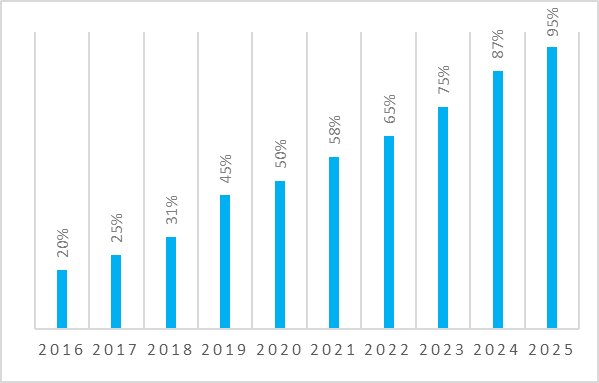
Fig:1 representation of globally aware about the artificial food colours (2016-2025).
A total of 315 students from grades 8th to 10th participated in the survey, representing a diverse group in terms of age, gender, and academic level. Data was categorized in a systematic manner with regard to the demographic variables and analyzed for patterns, trend, and variation in students' awareness about artificial food colours. This structured approach helped in understanding how awareness differed among different groups and highlighted areas where knowledge gaps existed.

Fig no 2: Representation of aware about risk by artificial food colour
The survey instrument was a 10-item structured instrument designed to assess the understanding and perception of artificial food colours among students. These questions focused on the following key areas: Understanding artificial food color involves recognizing its definition and the various types commonly found in food products. It is essential to be knowledgeable about these colors to identify which foods contain them. Additionally, awareness of the potential health risks linked to the consumption of artificially colored foods is crucial for making informed dietary choices. Reliable sources of information on food safety and artificial food colors include educators, media outlets, parents, and online resources, all of which can provide valuable insights into this topic.
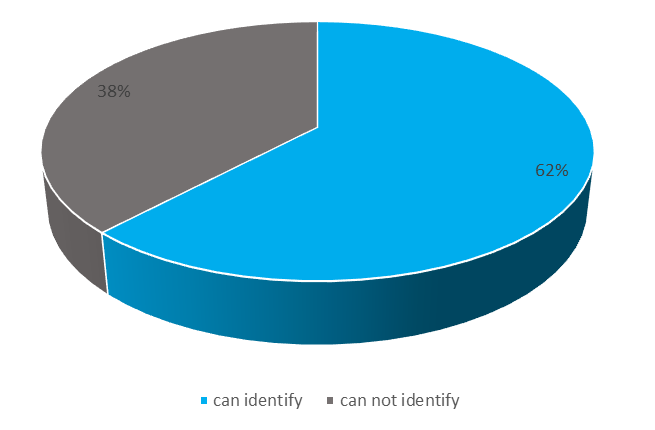
Fig no 3: Representation of ability to identify artificial food colours
This comprehensive questionnaire allowed both factual assessment and a perception-based response, hence giving a holistic view of the students' level of awareness. After collecting the data, quantitative and qualitative means were utilized to draw a comprehensive interpretation of the information. Quantitative analysis focused on numerical responses, percentages, and trends, while qualitative analysis examined students’ opinions, explanations, and perceptions for deeper insight into their understanding.
Many students reported confusion in identifying food items, especially in packaged snacks, sweets, and beverages. They usually identified by sight rather than by food labels or ingredient lists. This indicates limited awareness about nutritional labeling and a need for education on reading and interpreting food package information. Holding hands is quite a normal thing. Overall Interpretation The results show that a majority of the students have basic awareness of artificial food colours, but their knowledge is highly limited and mostly assumed rather than factually known. Low percentages of identification among the students about the artificially coloured foods express a significant lack in practical awareness. In addition, the negligible knowledge of specific artificial food colours and their health implications calls for immediate educational interventions.

Fig no 4: Representation of general awareness about artificial food colours.
Hazardous Effect of Artificial food colours on Health:
Artificial food colours, while effective in enhancing food appearance, but show the harmful effects on health concerns:
a) Gastrointestinal Issues: Excessive intake may contribute to digestive disorders, including diarrhea and other gastrointestinal diseases.
b) Carcinogenic and Mutagenic Risks: Several synthetic colors are reported to have mutagenic potential, which can lead to DNA damage. Concerns regarding the carcinogenic potential of specific AFCs are based primarily on chronic animal bioassays and in vitro geno- toxicity assessments. Red No. 3 (Erythrosine): Has been linked to thyroid tumors in laboratory rats, prompting regulatory action in various jurisdictions.
c) Hyperactivity and Behavioral Issues: Some artificial colors especially Red 40, Yellow 5, and Yellow 6-have been linked to increased hyperactivity, attention problems, and restlessness in children. Multiple randomized, placebo-controlled trials (RCTs), including the seminal Southampton study, have demonstrated a statistically significant, albeit small, association between the ingestion of mixtures of common azo dyes (e.g., Tartrazine/Yellow 5, Sunset Yellow/Yellow 6, Carmoisine/Red 3, Allura Red/Red 40) and increased hyperactivity and inattention in children, both with and without a prior diagnosis of Attention-Deficit/Hyperactivity Disorder (ADHD). This effect is often more pronounced in children with pre-existing sensitivities.
d) Allergic Reactions: Artificial colours can cause skin rashes, hives, itching, and asthma-like symptoms in sensitive individuals. Yellow 5 (Tartrazine) is known to cause reactions in people who are sensitive to aspirin.
e) Potential Cancer Risk: Certain dyes such as Red 3 have been associated with cancer in animal studies Some older dyes were banned because they were found to be carcinogenic; concerns remain for several still in use.
f) Effects on the Immune System: Artificial colours may cause low-grade inflammation in some people. They may also stress the liver and kidneys, which work to detoxify these chemicals.
g) DNA Damage and Cell Toxicity (in animal/lab studies): Laboratory studies show that high doses of some dyes may cause cell damage, oxidative stress, and DNA changes, though evidence in humans is still limited.
h) Neurobehavioral Toxicity and Developmental Effects: The most consistently reported adverse effect of AFCs involves neurobehavioral perturbation, predominantly observed in pediatric populations.
Preventive Measures by FSSAI & FDA:
FSSAI's regulations are detailed in the Food Safety and Standards (Food Products Standards and Food Additives) Regulations, 2011. Their preventive approach focuses on strict limits and the prevention of non-permitted dye usage.
1. Pre-Approval and Restriction: Permitted List: Only a specific list of natural (e.g., Curcumin, Beta-Carotene, and Chlorophyll) and synthetic (e.g., Tartrazine, Sunset Yellow FCF, Erythrosine) food colours are authorized for use. The use of any non-approved colour is strictly prohibited and illegal.
2. Purity and Quality Standards:
3. Labeling and Compliance:
The FDA regulates colour additives under the Federal Food, Drug, and Cosmetic (FD&C) Act. Their primary control mechanism is the pre-market approval and mandatory batch certification for synthetic dyes.
1. Mandatory Pre-Market Approval:
2. Certification and Purity:
3. Labeling and Monitoring:
Recent Development in Research of Artificial:
The regulatory and consumer push is fueling massive R&D into natural colorants:
CONCLUSION
Synthetic food dyes improve appearance but can lead to health issues if overused. Synthetic dyes like Tartrazine and Allura Red are linked to hyperactivity, allergic reactions, and possible long-term health problems, especially in children. Though the EU implements rigorous regulations and promotes natural options, developing areas face challenges with illegal and rampant dye usage. Organizations such as FSSAI and FDA have set boundaries and labeling requirements, yet enhanced enforcement and public awareness remain vital. Natural colorants, while safer, encounter issues with cost and stability, requiring partnerships for safer, sustainable food choices.
REFERENCES



Ritik Toliwal, Ragini Chute, Sakshi Chavat, Nitin Indurwade, Artificial Food Colours: Hazardous Effect of Artificial Food Colours on Children’s Health, Int. J. of Pharm. Sci., 2026, Vol 4, Issue 3, 1350-1363. https://doi.org/10.5281/zenodo.18993399
 10.5281/zenodo.18993399
