
Shraddha Institute of Pharmacy, Washim, Maharashtra, India.
Charaka, Acharya. It is also a primary component of numerous herbal extracts, decoction-based brain tonics, and formulations that improve memory. It is known by several Ayurvedic names, including medhya, ksheerpushpi, and manglayakusuma. Convolvulus pluricaulis, another name for Shankhpushi, is a member of the convolvulacea family. As Medhya Rasayana, the use of paste (kalka) was explained in the ancient Ayurvedic book Charaka Samhita. Convolvulus pluricaulis has been the subject of numerous pharmacological, clinical, and experimental investigations that have shown encouraging results in terms of neuroprotective, memory-enhancing, and anxiety-reducing qualities. Convolidine, convolvine, confoline, and other chemicals were analyzed in the study, and they may aid in promoting brain activity. Other qualities that aid in the management of different ailments have also been demonstrated by the studies, including diuretic, antioxidant, hypolipidemic, hypotensive, antiulcer, and antipyretic. Its chemical makeup, including convolidine, convolvine, confoline, and others, was examined in the studies and may aid in promoting brain activity. Furthermore, research has demonstrated additional characteristics such as diuretic, antioxidant, hypolipidemic, hypotensive, antiulcer, and antipyretic that aid in control the different conditions. According to traditional sources, the whole plant or specific plant parts are used to make the various dosage forms, such as powder, paste, and syrup. The experimental or clinical research conducted in the treatment of different illnesses was the main emphasis of the current review study on Shankhpushpi. Shanka pusphi is a natural substance. Medhya (brain tonic), digestive, and are listed as indications for shanka pushpi.It is a digestive system carminative and appetite stimulant. It also possesses heart-strengthening, cardio-protective, andmanages hypertension. Although several symptoms are used, controlled studies are required to ascertain its efficacy.actual effectiveness. The clinical applications, mechanism of action, characteristics, and nature of the shanka pushpi plant are all discussed.
Everyone wants to in this cutthroat environment. aim for the greatest objective. This is becoming more and more common. essential in schools at the student level and universities, since the test model is used there The existing system relies only on memorizing the the people themselves. A strong memory is always valued in everyday social connections and life. The Sanskrit term for plant is "Shankhpushpi." having blooms that are shell-shaped." The conch, also known as the shankha, one of Lord Shiva's holy instruments, It is frequently employed in ritual worship. It's a the combination of two words (shankh + pushpa), which is the The flower has a "shankh"-like appearance. The term "pushpa" means flower, and "shell" is a shell. The botanical Convolvulus Pluricaulis is the name of the medication. Choisy is a member of the Convolvulaceae family. that may be found in the majority of areas. It is a little, hairy, A proportionate, spreading plant that is sometimes referred to as morning triumphs. It is a perennial herb with little elliptical or oblong, prostrate branches leaves that are spiny, blunt, and lanceolate. Its flowers range from white to typically found alone in the top axil, or blue blooms occasionally in pairs, with the axillary located in the middle close to the flower stalk, which has two tiny, opposing two distinct styles of lanceolate bracts that extend From the base, each one is further divided to form. four distinct fashion trends.[1] The perennial herb shanka pushpi resembles morning glory in appearance. Its branches are dispersed over the ground. and have a length of over 30 cm. The leaves are elliptical in shape and the blooms are blue in color (5 mm). They are shaped like 2mm and alternate positions with flowers or branches. In, it is called Aloe weed. The herb is mostly found in India and in England, particularly in the state of Bihar. The whole herb is used. are known to have medicinal qualities. It is thought to be the only herb that can improve all aspects of mental function, including learning and memory and the capacity to remember. But its appeal comes from its capacity to successfully treat anosmia.[2] Shankhpushpi's leaves were roots are used to treat childhood fever, and historically, it has been used to treat asthma and chronic bronchitis. The oil derived from plants encourages hair growth, and it is among the greatest herbs that They are used to improve beauty and aid in the nourishment of every layer of the skin. The ethanolic Total serum cholesterol, triglycerides, phospholipids, and are all lowered by the plant extract. unesterified fatty acid. The only research on the herb sheds light on its anti-ulcer properties. by lowering the hyperthyroidism symptoms, by reducing the characteristics of the disease. the liver enzyme's activity.[3] As a result of the numerous studies that have been conducted and published, shankhpushpi has been demonstrated to have non-toxic properties. on several websites. It aids in balancing the tristambha of the body, which is the vitiated kapha-vaat-pitta. There are many. Research conducted on various kinds of shankhpushpi has revealed a wide range of variations on this plant. demonstrated successful therapy for conditions affecting the central nervous system, anti-anxiety, anti-amenic It has maltose, rhamnose, sucrose, starch, proteins, and carbohydrate-D-glucose The alkaloids-convolvine, convolamine, phyllabine, and amino acids convolidine, confoline, convoline, subhirsine, convosine, and Scopoline, FlavonsCoumarin, Betasitosterol, fatty acid and wax components, hydrocarbons, aliphatic, and conolvidine are all present in combination.sterol.[4]
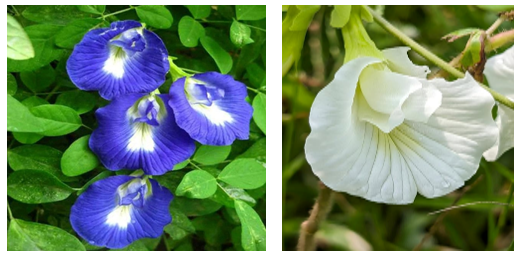
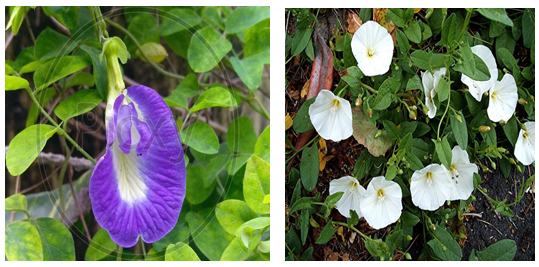
Fig.1: Shankhpushpi
Scientific Classification of Convolvulus Pluricaulis
Botanical name: Convolvulus pluricaulis
Kingdom : Plantae
Sub kingdom : Tracheobionta
Super division : Spermatophyta
Division : Magnoliophyta
Class : Magnoliopsida
Order : Solanales
Family : Convolvulaceae
Genus : Convolvulus
Species : pluricaulis
Popular names : Shankhpushpi, Shankhini, Kambumalini, Shankhpushpi, Sadaphuli
Parts used : entire plant and juice
Habitat : found in India and Burma[3]
Botanical Description:
The stem of Shankhpushpi is a light green color. with a thickness of around, thin, and cylindrical no more than 0.1 cm. Its nodes are clearly hairy, and internodes. When viewed under a microscope, the stem reveals a one-layered epidermis with a dense cuticle, containing only a few single-celled hairs. The cortex is split into two areas: the top two to three layers of the upper 1-2 layers of lower collenchymatous cells parenchymatous cells, both of which are round to oval and lengthy. The leaves' midribs seem convex on with the top side being convex and the bottom side being concave, 4–5 layers of tissue surrounding the vascular bundles parenchymatous cells and common components of phloem and xylem. Unicellular cells are seen in the lamina. two-layered palisade, and hairs on both sides. just a handful of bicollateral vascular bundles in the spongy tissue parenchyma. The number of vein islets is 20–25 persquare millimeter.
Morphological Description of Shankhpushpi: The root is usually cylindrical, ribbed, and branched. with tiny secondary roots and harsh stem nodules. Its dimensions are 1–5 cm long and 0.1–0.4 cm wide. with a color ranging from yellowish brown to light brown in thickness. Stem: Thin and cylindrical, with a diameter of about 0.1 cm or less in thickness, with prominent hairy nodes and light green internodes.
Leaf: Linear-lanceolate and pointed with a short petiole, having hairs on both sides; 0.5–2 cm in length and 0.1–light green, 0.5 cm broad.
Flower: White or pinkish, occurring alone or in pairs The sepals are either sessile or practically sessile in the leaf axils. sparse, linear-lanceolate, and little hairy. The The corolla is disc-shaped and short. It has five separate, free, alternating with the petals are epipetalous stamens, profoundly embedded within the corolla tube. The ovary is superior and bicarpellary.
Fruit: With a capsule-like shape, ranging from oblate to spherical, and a the exterior layer (pericarp), which is pale brown and leathery.
Seed: Brown in color and covered with tiny, fine hairs (minutely).pubescent [5]
Phytochemical Constituents
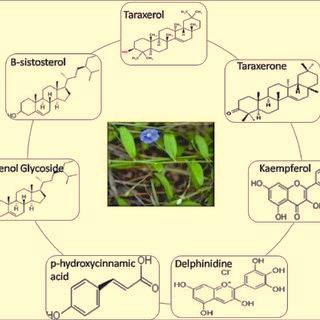
Carbohydrate and L-Mannomethylose are the primary active chemical ingredients of Shankhpushpi. malt sugar (maltose), saccharose, and amylum. Additionally, it includes α-amino [alpha-amino].
The alkaloids, proteins, and carboxylic acid include the following: C16H21NO4 (convolvine) and C17H23NO4. C17H21NO5 (Confoline), C33H40N2O9 (Subhirsine), C16H21NO5(Convoline), and (convolamine) are the chemical compositions of the compounds. In addition to lipids, the compounds include convolidine, phyllabine, β-sitosterol, Convosine, subhirsine, and convolvidine. hydrocarbons, wax and acid components, and other bio-chemicals, such as scopoletin, glacial acetic acid, three coumarins, tropane alkaloids, kaempferol, linoleic acid, palmitic acid tetratriacontanoic acid, 20-oxodotriacontanol, and the linear hydrocarbon hextriacontane and 29-oxodotriacontanol. alcoholic extract of speedwheel produce: Betastosterol-glucos steroid of microphyllic acid, kaempferol, and di-oh-cinnamic acid. Octacosanol tetracosane and hydroxy cinnamic acid also contain glucose and saccharose. been separated from the plant.[6]
Pharmacological Effects
Effect of nootropics
Volatile oil, fatty alcohols, flavonoids, and other compounds are found in C. prostratus (CP). e.g., kaempferol, hydroxy cinnamic acid, b-sitosterol, and Carbohydrates, like glucose, rhamnose, sucrose, etc., which give this plant nootropic qualities. Additionally, an The plant also contains the alkaloid convolvine, which is identified as such. M2 and M4 were discovered to inhibit cholinergic muscarinic receptors. Additionally, convolvine enhances the effectiveness of other drugs. arecoline, a muscarinic memory enhancer, is one example. giving CP nootropic qualities (Sethiya et al., 2009). In a Additionally, in their study, Rawat and Kothiyal have discovered that the extracts they obtained from aquomethanolic, ethanolic, and petroleum ether were all The anxiolytic, memory-enhancing, and nootropic effects of CP (50–400 mg/kg) were determined by using step-down and elevated plus maze (EPM) models in mice. The interactions have mostly been studied using the EPM test. between the mice's negative memories and anxiety responses. CP The impacts on EPM activity have been discovered to be similar to the Piracetam, a common medication for the standard of care (Rawat and Kothiyal, 2011; Kaushik, 2017). Additionally, therapy using the alcoholic extract of CP mice spent more time on average in the plant. an increase in the enclosed arm of the plus maze model, as well as On the jumping box paradigm, the mean avoidance response is mean (Rawat and Kothiyal, 2011)
Neuroprotective Activity
The aqueous extract of the roots of C. prostratus blocked the the activity of acetylcholinesterase (AChE) in the cortex and The hippocampus of intoxicated male Wistar rats with scopolamine. CP extract also exhibited clear antioxidant properties. increased activity and increased glutathione reductase levels, decreased glutathione and superoxide dismutase in the Kaushik (2017) discovered comparable findings between the cortex and hippocampus. occurred when aluminum chloride was induced neurotoxicity in the cerebral cortex of rats. Regular administration of The CP root extracts (150 mg/Kg) prevented the development of the illness for three months. reduction in Na+ /K+ ATPase activity was maintained, and the mRNA was also kept intact. Muscarinic acetylcholine receptor 1 (M1) expression levels choline acetyl transferase (ChAT), the receptor, and nerve growth (Bihaqi et al., 2010) factor-tyrosine kinase A receptor (NGF-TrkA) Kaushik, 2017; 2009). The Na+ The /K+ ATPase pump assists with maintaining the membrane potential and osmotic balance in neuronal cells (Forrest, 2014). Second, the muscarinic The neurotransmitter acetylcholine binds to receptors, which results in this. aiding the transfer of electrical impulses within the the Brown (2018) Central Nervous System. In addition, the The production of choline acetyl transferase enzyme is necessary. and the neurotransmitter acetylcholine; the nerve growth factor tyrosine kinase A receptor is required for the binding of the thus guaranteeing the survival of neuronal trophic factors neurons (Indo, 2018; Johnson et al., 2018). Such reduction in the tau protein expression accounts for resulting in a reduction in the amyloid b-induced impairments in For neurodegenerative illnesses like Alzheimer's disease (Vossel et al., 2010). Therefore, the existence of phytochemicals For instance, convolvine may be the source of CP's endowment. the capacity to control every factor/protein in neurons, and demonstrating its clear neuroprotective state. Ray and Ray, 2015; Sethiya et al., 2009.[7]
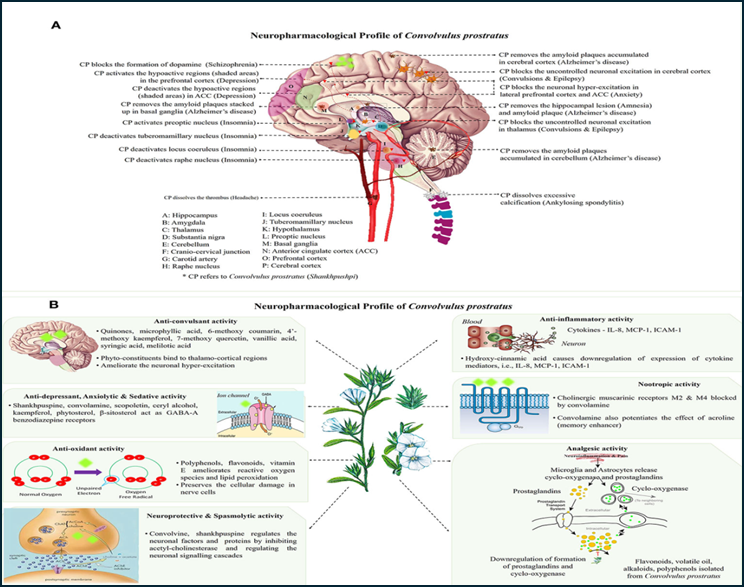
Fig 2: Neuropharmacological profile of convolvulus pluricaulis
Action against convulsions
The portion of an alcoholic extract that dissolves in water ended the fighting and all involuntary movement.response, but not the escape response; electricallytremorine-induced and brought on by convulsive seizures The extract countered the tremors (Sharma 1965).The methanolic-treated animals were seen to have whole plant (200 mg/liter), leaf callus, and stem callus extracts The oral administration of CP at a dose of kg provided considerable protection against tonic seizure activity. seizure brought on by transcorneal electroshock, which It was also similar to the standrad medicine's.phenytoin (Ahmad 2007). In addition, CP has been shown to have a strong anticonvulsant effect (Shukla 1981a).
Antioxidant action
The ethanolic extract of CP has a high concentration of In vitro studies showed antioxidant activity (Nahata 2009).
Low-lipemic
When administered, an ethanolic extract of the entire plant decreased serum cholesterol and LDL in gerbils fed a cholesterol diet triglycerides, cholesterol and phospholipids in high concentrations following 90 days (Chaturvedi 1997).[8]
Impact on learning and memory
Study on Polyherbal Formulation, in which Convolvulus pluricaulis was on streptomycin-induced memory impairment. The entire content The 14-day monitoring period yielded the improvement in decreased oxidative stress and cholinergic behavior.
The study also looked at the Convolvulus pluricaulis, often referred to as a cognitive enhancer.conducted on the variety called Canscora decussta. The ethanolic extract of In Nerve Growth Factor, the plant displayed the most notable outcome, which may be the cause of the increase in cognitive ability. In India According to tradition, Shankhpushpi is a widely used and reliable natural cure that is utilized in children at the same time as honey or cow milk for memoryenhancement. In addition to functioning as an adjuvant, these natural compounds also do so. a nutritional supplement for growing children . Bhavita, you have potential. It's possible to create the dosage form of Shankhpushpi by using [adopting] the following approach. the traditional rules of Bhavana (levigation/wet grinding) and investigated for its biological potential in memory improvement. Initiatives should also be manufactured to produce green-synthesized metal nanoparticles made using the extract of the Shankhpushpi plant and its biological Properties should be examined in several neurological illnesses. as a result of this even if the newly developed The dosage forms should be closely monitored.
Antiulcer and antigastric action
Five fresh juice samples of the Convolvulus pluricaulis were provided.days, which showed the important conclusion of protecting the gastric mucosa using the mucus production Effects that shield the liver Convolvulus pluricaulis's hepatoprotective effect was examined on chloroform extract, alcoholic, and aqueous. Serum is said to have it.Animals treated with extract have lower biochemical variables.[4]
Health Benefits
• Lessens stomach ulcers: Most stomach ulcers are caused by an excessive amount of stomach acid or in situations where the eating patterns are inconsistent. In these cases, excess acid can break. causing sores or ulcers on the inside of the stomach lining. Research has demonstrated that Shankhpushpi is a really beneficial herb that can help treat stomach ulcers by making lesions heal more quickly and by fortifying the mucous membranes and mucosal cells.
• Lowers tension: In the past, Shankhpushpi was one of the few medications used to alleviate stress. and induce a peaceful mental condition. According to research on stressed animals, The stress and depression-reducing effects of shankhpushpi are well known. Further research is needed on the It is necessary to carry out stress reduction procedures.
• Regulates neurotoxicity levels: In addition to being an anti-depressant and stress reliever, shankhpushpi also does this. It may also lessen the impact of poisons in the brain. Research on lab animals that were given Higher levels of neurotoxicity were seen in aluminum chloride. However, giving Shankhpushpi reduces neurotoxicity to a large degree more study on the neurotoxicity of the extracts The mitigating consequences must be addressed.
• Enhances memory: Through basic memory exercises such as passive avoidance and pole-climbing equipment. Laboratory animals were subjected to active avoidance paradigm and paradigm tests, which demonstrated a enhancement of memory after giving shankhpushpi extracts.
• Pain-killing or analgesic: Qualities are among the key attributes of shankhpushpi plant. These painkilling qualities are quite helpful in treating arthritis, rheumatic pains, and other conditions osteoarthritis, among other things. The analgesic effects of Shankhpushpi were comparable to those of morphine those that are induced.
• Capable of treating hyperthyroidism: The thyroid gland, which controls metabolism, is a vital organ through the production of thyroid hormones in our bodies. Hyperthyroidism can result from an overabundance of thyroid hormones illness. Regular consumption of shankhpushpi extracts might lessen hyperthyroidism.[2]
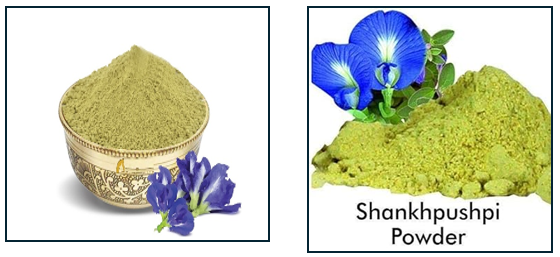
Fig.3: Shankhpushpi Powder
Advantages of convolvulus pluricaulis:-
1. Enhances memory and learning ability – Acts as a natural brain tonic and improves cognitive function.[9]
2. Shows neuroprotective activity – Protects brain cells from oxidative and degenerative damage.[11]
3. Reduces anxiety and stress – Exhibits anxiolytic and adaptogenic effects.[10]
4. Has antidepressant properties – Helps in mood regulation and mental relaxation.[10]
5. Rich in antioxidants – Contains flavonoids and alkaloids that reduce free radicals.[12]
6. Supports liver health – Shows hepatoprotective action.[14]
7. Promotes wound healing – Aids tissue repair and regeneration.[16]
8. Shows antimicrobial effects – Effective against some bacterial and fungal strains.[1]
9. Improves overall brain function – Enhances concentration, alertness, and mental clarity.[13]
10. Safe and well-tolerated – Low toxicity and suitable for long-term herbal use.[15]
Disadavantages of convolvulus pluricaulis:-
1. May cause mild hypotension in sensitive persons.[9]
2. Possible hepatotoxicity due to coumarin content.[9]
3. Drug interactions with CNS and antiepileptic drugs.[12]
4. Sedative effect at higher doses.[12]
5. Lack of human clinical safety data.[14]
Current Ayurvedic formulations:-
India has a large selection of combination medications right now.Several plant powders or extracts with two or three Medhya plants like Convolvulus pluricaulis. These preparations include intricate preparations of compound drugs and require several processes. Many treatments have gone through to clinical studies. Examples include:
Remem (Zydus Industries, India):
Tablets, syrup. There are 10 species: Celastrus paniculatus, Centella asiatica, Convolvulus Embelia, Acorus calamus, Asparagus racemosus, and pluricaulis Terminalia, Achyranthes aspera, Tinospora cordifolia, ribes chebula, Saussurea lappa.
Tirukati :
Has 13 species, including Convolvulus and Bacopa monnieri. Valeriana, Asparagus racemosus, Centella asiatica, and pluricaulis Wallichii, Rueraria tuberosa, Saussurea lappa, Embelia ribes, Pavonia odorata, Operculina turpethum, Tinospora cordifolia, Foeniculum vulgare, Caryophyllus aromaticus.
Ayumemo (Welexlabs, India):
Five species: Centella asiatica, Celastrus paniculatus, Withania, and Convolvulus pluricaulis Asparagus racemosus, somnifera.
Abana (India's The Himalaya Drug and Co):
Tablets, syrup 19 species: Centella asiatica, Convolvulus pluricaulis, Ocimum, Balsamodendron mukul, and Celastrus paniculatus are the three species. Carum, Piper longum, Nardostachys jatamansi, and sanctuary Cyperus rotundus, Zingiber officinale, Acorus, and copticum are the names of the plants. Syzygium aromaticum, Santalum, Embelia ribes, and Calamus Elettaria cardamomum is the name of the album. Cinnamomum cassia, Rosa damascena, Foeniculum vulgare sativus crocus.
Tejras (Sandu Brothers, India):
Syrup. 12 kinds: Centella Convolvulus pluricaulis, Celastrus paniculatus, asiatica Asparagus racemosus, Cynodon dactylon, and Eclipta alba are all examples. Withania somnifera, Nardostachys jatamansi, Acorus calamus, Vetiveria zizanioides, Zingiber officinale.
Shankhapushpi (Unjha Pharmacy, India):
In syrup form six species: Centella asiatica, Nardostachys, and Convolvulus pluricaulis Nepeta hindostana, Nepeta elliptica, Onosma, and jatamansi bracteatum.

Fig.4: Marketed Samples
CONCLUSION:
A crucial Ayurvedic therapeutic herb traditionally used to boost memory and the brain is shankhpushpi (Convolvulus pluricaulis and Evolvulus alsinoides). Modern pharmacological research confirms its nootropic, neuroprotective, anxiolytic, and adaptogenic actions, demonstrating its function in enhancing cognitive abilities and lowering stress. Its high antioxidant and neuroregenerative capacity is due to the presence of bioactive substances such flavonoids, alkaloids, and coumarins. Additionally, it demonstrates antimicrobial, hepatoprotective, and overall health-promoting benefits.
But its broad therapeutic acceptance is hampered by the fact that there are still no established formulations, clinical trials, or long-term safety data. Additional, more methodical investigation is needed on bioavailability, dosage, and mode of action. With the proviso that well-designed clinical studies demonstrate its efficacy and safety, Shankhpushpi is generally a promising herbal medicine with a lot of potential for treating mental and neurological illnesses.
REFERENCES

Akshay Shyamsundar*, Mamta Surve, Sakshi Kharate, Dr. Swati Deshmukh, An Updated Review on Shankhpushpi as Herbal Medicine (Convolvulus Pluricaulis), Int. J. of Pharm. Sci., 2025, Vol 3, Issue 11, 71-81 https://doi.org/10.5281/zenodo.17501205
 10.5281/zenodo.17501205
