
Chhatrapati Shivaji College of Pharmacy, Deori, Gondia, Maharashtra, India.
Phyllanthus niruri Lin?n. (Commonly known as C?h?anca piedra or Bhumi Amla) is an annual herb that has been historically utilized in traditional medical systems, particularly Ayurveda, for ov?er 2,000 years. It is widely distributed across tropical and subtro?pical regions. The plant’s therapeutic efficacy is attributed to its ri?ch and diverse phytochemical profile, which includes major classes such as lignans (e.g. phyllanthin?), flavonoids, and alkaloids. Contemporary research substantiates its traditional applications and confirms a broad spectrum of pharmacological activities. Key properties include pronounced hep?atoprote?ctive and antioxi?dant effects, anti-lithic activity against kidney stones that has earned it? the common name “stone crusher” and notable antiviral properties against Hepatitis B virus and human immunodeficiency virus (H?IV). Additional documented activities include anti-di?abetic, anti-ulcer, diuretic, antiplasmodial (antimalarial), and anti-amnesic effects mediated through ac?etylcholinesterase (AChE) inh?ibition.
Phyllan?thus niruri Linn. (Euph?orbiaceae), commonly known as Chanka piedra or Bhumi Amla, is a small, erect annual herb wide?ly recognized for its extensive medicinal properties [1]. It is sparsely distributed throughout the tropical and su?btropical regions of? the world?, with an indig?enous occurrence in the Amazon rainforest, India, and China [2]. The genus Phyllanthus is considerable in size, co?mprising more tha?n 600 species of shrubs, trees, and annual herbs [2,3].
Historically, P. niruri has been a cornerstone of tradit?ional medical systems, particularly in Indian Ayurveda, where its use da?tes back more than 2,000 years. Tra?ditional applications utilize its therapeutic potential for a wide array of disorders, including jaundice, ulcers, skin diseases, urinary tract disorders, diabetes, bronchitis, and asthma [4]. It ha?s traditionally been reported to stimulat?e hepatic function, enhance digestion, and act as an astringent and laxative [1].
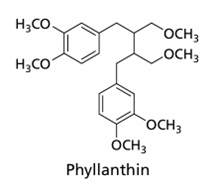
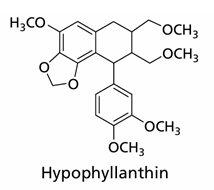
The plant’s documented efficacy is attribute?d to its rich and diverse phytochemical profile. Active constituents iden?tified fr?om various? par?ts of P. niruri include major classe?s such as lignans (e.g., phyll?anthin and hypophyllant?hin), flavonoids, a?lkaloids, terp?enoids, polyphenols, tannins, c?oumarins, and saponins [1,2].
Modern scientific investigations have validated many of its traditional uses and have demonstrated? a broad spectrum of pharmacol?ogical acti?vities [1]. Key th?erapeutic properti?es that have attracted substantial research interest? include its pote?nt hepatoprotective and antioxidant activities [5]. The herb is also wi?dely kno?wn a?s a “stone cr?usher” be?cause of its anti-lithic action against kidney stones. Extracts of P. niruri have additio?nally exhibited important antiv?iral p?roper?ties against virus?es such as Hepatitis B virus and Hum?an Immunodeficiency Virus? (HI?V). Other reported biological activities include antimicrobial, anticancer?, anti-inflammatory, antiplasmo?dial, and diure?tic effects [1].
COMMON NAMES
Table 1. Common Name Of Phyllanthus Niruri [6]
|
Sr. No. |
Country |
Names |
|
1 |
India |
Bhoomi Amalaki , Bhui Amla, Bhuianvalah, Bhumyamalaki, Jar Amla , Kizha Nelli. |
|
2 |
Bangladesh |
Bhui Amla |
|
3 |
East Indies |
Bhuimy-amli, Daun Marisan, Pombinha. |
|
4 |
Pakistan |
Bhuin-Amla, Niruri. |
|
5 |
West Indies |
Cane Peas Senna, Carry-me Seed, Chamber Bitters, En Bas, Gale-Wind Grass, Mimosa, |
|
6 |
Fiji |
Carry-me Seed, Jar Amla. |
|
7 |
Peru |
Chancapiedra, |
|
8 |
Virgin Island |
Creole Senna, |
|
9 |
Haiti |
Derriere-Dos, Deye Do. |
|
10 |
Sudan |
Elrageig, |
|
11 |
Papua-New Guinea |
Eruption Plant, Sasi, Se. |
|
12 |
Bimini |
Gale-O-Wind. |
|
13 |
French Guiana |
Gale-Wind Grass. |
|
14 |
Paraguay |
Para-Parai Mi. |
|
15 |
Thailand |
Ya-Tai-Bai. |
|
15 |
Philippines |
Yerba De San Pablo. |
FIGURES
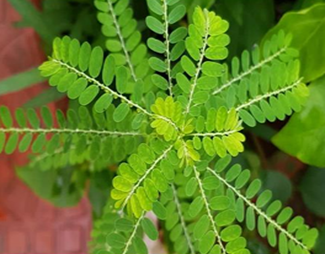
Figure.1: Plant of Phyllanthus Niruri [7]
HISTORICAL CHARACTERS
Table 2. Scientific Classification [7]
|
Domain |
Eukaryota |
|
Kingdom |
Plantae |
|
Family |
Phyllanthaceae |
|
Order |
Malpighiales / Euphorbiaceae [1] |
|
Clade |
Angiosperms, Eudicots, Rosids. |
|
Genus |
Phyllanthus |
|
Species |
P.Niruri |
|
LatinName |
Phyllanthus Niruri Linn |
|
English Name |
Gulf Leaf Flower. |
MORPHOLOGICAL DESCRIPTION [8]
Phyllanthus niruri is an herbaceous plant that grows to approximately 12-20 cm in height. It contains lateral horizontal branches that are very thin and measure 3-7 cm long, bearing from 7 to 28 leaves. The leaves are small (4-12 mm), green, and oval-shaped. The flowers may be male or female; all flowers of one type are usually found on the same plant. The fruits measure 2-2.5 mm in diameter. The seeds are small, about 1 mm, round, and smooth.
CHEMICAL CONSTITUENTS
Table 3. Chemical Constituents of Phyllanthus Niruri
|
Sr. No. |
Class |
Compound |
|
1 |
Alkaloid |
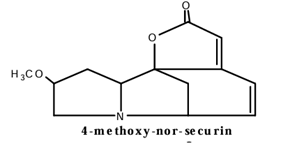
4-Methoxy-nor-securinine [9] |
|
2 |
Benzenoid |
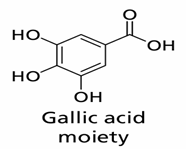
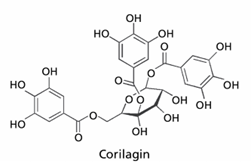
Gallic acid [10], Corilagin [1] |
|
3 |
Coumarin |
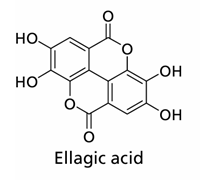
Ellagic acid [11] |
|
4 |
Flavonoid |
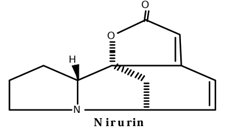
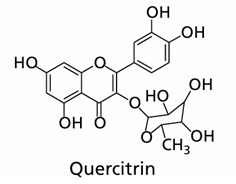
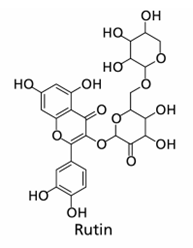
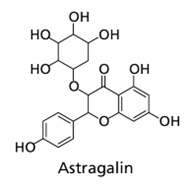
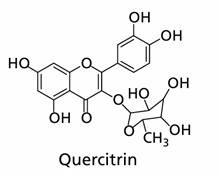
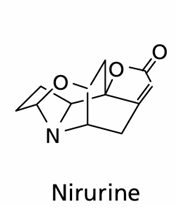
Quercetin, rutin, astragalin ,quercitrin, isoquercitrin nirurin [12,13] |
|
5 |
Lignin |
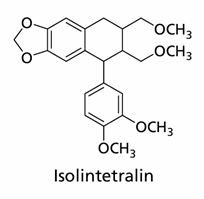
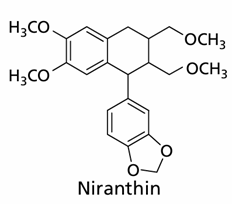
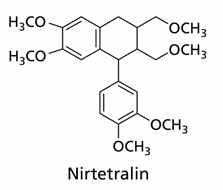
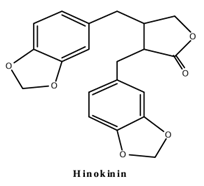
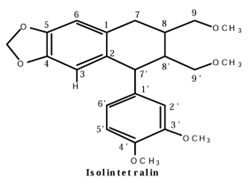
Phyllanthin, hypophyllanthin, niranthin, nirtetralin hinokinin , isolintetralin [13,14] |
|
6 |
Lipid |
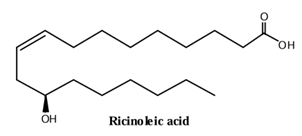
Ricinoleic acid [14] |
|
7 |
Phytallate |
Phyllester [1] |
|
8 |
Sterol |
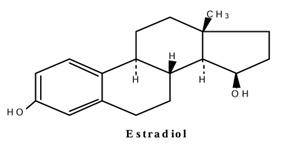
Estradiol, ß-sitosterol [1] |
|
9 |
Tannin |
Geranin [11] |
|
10 |
Triterpene |
Lupeol acetate, lupeol, Phyllanthenol, phyllanthenone , phyllantheol [1] |
STRUCTURES
Table 4. Structures Of Phytochemicals
|
Sr. No. |
Class |
Name Of Structure |
Compound / Structure |
|
|
Alkaloid |
4-Methoxy-Nor-Securin [1]
|
|
|
|
|
Nirurin [1]
|
|
|
|
Benzenoid
|
Gallic Acid [5]
|
|
|
|
|
Corilagin [5]
|
|
|
|
Coumarin
|
Ellagic Acid [5]
|
|
|
|
Flavonoid
|
Quercetin [5]
|
|
|
|
|
Rutin [5]
|
|
|
|
|
Astragalin [5]
|
|
|
|
|
Quercitrin [5]
|
|
|
|
|
Isoquercitrin [5]
|
|
|
|
|
Nirurine [5]
|
|
|
|
Lignin
|
Phyllanthin [5]
|
|
|
|
|
Hypophyllanthin [5]
|
|
|
|
|
Niranthin [5]
|
|
|
|
|
Nirtetralin [5]
|
|
|
|
|
Hinokinin [1]
|
|
|
|
|
Isolintetralin [1]
|
|
|
|
Lipid
|
Ricinoleic Acid [1]
|
|
|
|
Sterol
|
Estradiol [5]
|
|
|
|
Tannin
|
Geranin [5]
|
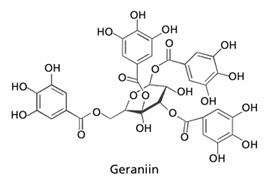
|
|
|
Triterpene
|
Lupeol [1] |
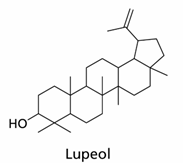
|
PHARMACOLOGICAL ACTIVITY
Anti-Malarial Activity
Malaria is one of the most significant public health problems in tropical and subtropical countries. Several medicinal plants exhibit antagonistic properties against malaria. Phyllanthus niruri have demonstrated antiplasmodial activity when albino mice were administered ethanol extracts [16]. The ethanolic extract of one -month -old in vitro grown callus of P. niruri showed higher antiplasmodial activity than the extract prepared from fresh apical stem tissue [17].
Action On Kidney Stones [4]
Phyllanthus niruri Linn. is commonly referred to as “stone crusher” because of its effects on the urinary tract, where it interferes with stone formation at multiple stages. Calcium oxalate (CaOx) crystals constitute the main component of human urinary stones and can adhere to the lining of the urinary tract, potentially causing cellular damage. The toxicity of CaOx is attenuated by the triterpenes of P. niruri Linn., which also inhibit markers of crystal deposition in the urinary system. The aqueous extract of P. niruri Linn. has the capacity to modify the shape and texture of calculi to a smoother and probably more fragile form, which may facilitate the elimination or dissolution of the calculi.
Anti-Ulcer and Gastroprotective Activity [13]
The anti-ulcer activit?y of P.? nir?uri was evaluated in stress-induced ulcer models, s?pecifically indomethacin- and etha?nol-in?duced? ulcer models. The extract significantly decreased the development of ulcers, and this anti-ulcer effect was a?ssociated with cytoprotection, probably due to the enhancement of prostaglandin synthesis. Similarly, the gastroprotective activity of the leaf e?xtract of P. niruri was evaluate?d against ethanol-induced gastric mu?cosal inj?ury in rats. A?t a concentration of 1000 mg/k?g, a decrease in ulcer area, inhibiti?on of ulcer formation, an?d re?duction of oedema and leukocyte infiltration of the submucosa were observed?. The prevention of gastric ulcer was attributed to the presence of tannin phytocons?tituents of P. nirur?i, which exert an astringent effect.
Immune Modulatory Actions [18]
An arabinogalactan obtained from Phyllanthus niruri tea preparations was found to possess immunological properties and was tested using peritoneal mouse macrophages. The glycoside exhibited the same activity when subjected to acidic and neutral gastric conditions using human gastric fluids and an aqueous hydrochloric acid solution.
Anti-Diabetic Activity [19]
An alcoholic extract of Phyllanthus niruri was observed to significantly reduce blood glucose levels in both normoglycemic rats and rats with alloxan-induced diabetes. In normoglycemic rats, administration of Phyllanthus niruri at a dose of 200 mg/kg body weight resulted in a 34.5% reduction in blood glucose levels, whereas administration at a dose of 1000 mg/kg body weight produced a 47.4% reduction at 1 hour postadministration. By the sixth hour, however, the values had returned to levels that were almost baseline. These findings indicate the potential antidiabetic properties of Phyllanthus niruri.
Hiv Replication [20]
The aqueous extra?ct of Phyllanthus niruri has been reported to possess inhibitory effects on the human immunodefi?ciency virus (HIV). Accordingly, an invest?igation was conducted to evaluate the anti?-HIV effects of the alkaloidal e?xtract of Phyllanthus n?iruri in hu?man cell lines. The inhibitory effect on HIV replication was? assessed by monitoring the inhibition of virus-in?duced cytopathogenicity in MT-4 cells. The alkaloidal extract of Phyl?lanthus niruri demonstrated a pronounced an?d sensitive inhibitory response to the cytopathic effects induced by both strains of HIV on human MT-4 cells at the tested concentrations.
Diuretic Activity [21]
The diuretic, h?ypotensive, and hypoglycemic effects of Phyllanthus n?iruri in human subjects were evaluated. Relevant parameters were measured in blood and? urine samples of the patients. In addition,? the physiological profile and dietary pattern before and aft?er the treatment period were assessed. A significant increase in u?rine volume and in urine an?d serum sodium levels was observed following treatment with Phyllanthus niruri? extract. A significant reductio?n in systolic blood pressure in non-diabetic hypertensive subjects was al?so noted, which further supports its diuret?ic properties.
Lipid Lowering Activity
Phyllanthus niruri? has the ca?pacity to reduce serum lipid levels. Oral administration of the extract at 250 mg/kg body weight in hyperlipemic rats resulted in reduced lipid levels [22]. The meth?anol extract of P. niru?ri was tested against chlorpyrifos (CPF)- evoked erythrocyte fragility and lipoperoxidative changes in Wistar rats and wa?s observed to attenuate li?pid peroxidative alterations? and provide protection fr?om CPF-induced erythrocyte fragil?ity [23].
Antiplatelet And Vasorelaxant Activity
Methyl brevifolin carboxyla?te isolated from P. niruri e?xerted a vasorelaxant effect on rat aortic rings via inhibition of noradrenali?ne-induced v?asoconstricti?on, which was mediated by a decrease in calcium ion influx through receptor-operated? Ca2+ channels [24]?. The same compound also functioned? as an inhibitor of platelet aggregation [25].
Cardioprotective Activity [26]
Only one major animal stud?y has been conducted to investigate the attenuating effect of Phyllanthus niruri extracts? in the prevent?ion of doxorubicin-associated cardio?toxicity. Pret?reatment of rats with P. niruri extr?act significantly protected rat myocardium from doxorubicin-induced toxicity by normalizing cardiac biomarkers, restoring intracellular levels of enzymatic and non-enzymatic a?ntioxidants, an?d decreasing cardiac ti?ssue lipid peroxidati?on
Anti-Amnesic Property [27]
Isoco?rilagin from Phyllanthus nir?uri ha?s been reported to be two to three time?s more potent than galantamine, the clinically used acetylcholinesterase (AChE) inhibitor. Ki?netic analyses indicat?e that isocorilagin functi?ons as a noncompetitive inhibitor of? AChE. In silico molecular docking studies further reveal that isocorilagin effectively blocks substrate entry by forming hydrogen bonds with residues located at the entrance of the AChE active site.
Spasmolytic Activity [27]
Alkaloid extracts of P. niruri have demonstrated smooth muscle relax?ation in the urinary and bil?iary tracts. Extracts of ? P. niruri leaves, ste?ms, a?nd roots have ex?hibited antispasmodic properties in vivo on several types of smooth mus?cle, including guinea pig ileu?m, rat uterus, and canine vascular smooth muscle. Ether extracts were found to be the most ef?fective as antispasmodic agents.
Hepatoprotective [28]
Phyllanthus nir?uri ha?s de?mon?strated si?gnificant anti-hepatitis B virus surface a?ntigen activity in both in vivo and in vitro studies. Hepatitis B infection frequently resul?ts in a chronic carrier state due to the inability of the host immune system? to eliminate the virus from hepatocytes. Dete?ct?able levels of various vir?al antigens, such as HBsAg (the viral surface antigen), and antibodies to the viral co?re antigen (anti-HBc), are indicative of active or past infection. The hepatoprotective effect of an Ayurvedic polyherbal preparation, HPN-12, containing Glycyrrhiza glabra, Picrorhiza kurroa, Berberis aristata, Piper longum, Phyllanthus nir?uri, Solanu?m du?lcamara?, Zingiber officinale, Curculigo orchioides, Eletta?ria cardamomum, Tino?spora cordifol?ia, Desmodium trifolium, a?nd Saccharum officinarum, has also been documented.
CONCLUSION
Phyllanthus nir?uri is a significant medicinal herb with a lo?ng history o?f traditional use, partic?ularly? for liver disord?ers and ur?inary tract conditions, that has now been scientifically validated. Its therapeutic efficacy is associated with a? rich profile of phytochemical?s, including lignans and flavonoids. Key experimentally con?firmed activities in?clude potent hepatoprotective and anti?oxidant effects , anti-lithic action that has earned it the name “st?on?e crusher” and? notable antiviral pro?perties against hepatit?is B virus and human immunodeficiency virus (HIV). In addition, it exhibits anti-diabetic, lipi?d-lowering, cardioprotective, and? anti-amnesic activities. Col?lectively, contemporary rese?arch sup?ports P. niruri as a versatile, multi-target agent with? substantial potential for fu?rther therapeutic development.
REFERENCES





Rohan Nanhe, Krishnakant Haral, Kajal Rane, Shivani Sakhare, Kunal Zode, An Overview of Phyllanthus Niruri, Int. J. of Pharm. Sci., 2026, Vol 4, Issue 2, 2642-2651. https://doi.org/10.5281/zenodo.18670823
 10.5281/zenodo.18670823
