
Gayatri College of Pharmacy, Sambalpur, Odisha
Cancer remains a leading cause of mortality worldwide, highlighting the urgent need for safer and more effective preventive and therapeutic strategies. Azadirachta indica A. Juss. (neem), a medicinal plant extensively used in traditional medicine, has gained considerable attention for its anticancer potential. This review summarizes the major bioactive phytochemicals of neem, including nimbolide, azadirachtin, nimbin, nimbidin, quercetin, and discusses their roles in cancer prevention and treatment. Neem phytochemicals exert antitumor effects through multiple molecular mechanisms, such as inhibition of cancer cell proliferation, induction of cell cycle arrest and apoptosis, modulation of oxidative stress, and suppression of angiogenesis and tumor invasion. In addition, neem exhibits immunomodulatory and anti-inflammatory properties that further contribute to its anticancer activity. Preclinical studies demonstrate the efficacy of neem extracts and isolated compounds against a wide range of malignancies, including breast, prostate, colon, liver, cervical, pancreatic cancers, leukemia, and lymphoma. Compared with conventional chemotherapeutic agents, neem-based formulations show selective cytotoxicity, lower systemic toxicity, and promising synergistic effects in combination therapy. Nevertheless, well-designed clinical studies are required to validate their safety and therapeutic applicability in cancer management.
Azadirachta Indica, the scientific name for neem, is a common and well-liked medicinal tree in tropical regions of the world. The evergreen neem tree grows quickly and can withstand both drought and extreme heat[1]. It is found in nations like Bangladesh, Pakistan, and India and is indigenous to semi-tropical and tropical climates. Throughout the world, it is known by a variety of names, including Neem, Indian lilac, Nim, Margosa, Nimmi, Limba, limbo, Nimba, Imba, mambo, Yepa, Nimbagaha, and numerous others[2]. Taxonomical classification of neem tree includes: Kingdom-Plantae, Phylum-Spermatophyta, Class-Dicotyledonae, Order-Sapindales, Family-Meliaceae, Genus-Azadirachta, Species-indica. Neem tree parts, such as leaves, blossoms, fruits, seeds, and bark, are widely used in traditional medical systems (such as Ayurveda, Unani, and Siddha) to treat a variety of human diseases[3,4]. It is additionally consumed as a vegetable in several countries. Numerous pharmacological actions have been shown for neem phytoconstituents. These actions involve anti-inflammatory, antihistamine, antifungal, anti-tubercular, anti-malarial, diuretic, spermicide, anti-arthritic, anti-protozoal, antipyretic, antibacterial, anti-ulcer etc.[3,5]. Apart from all these actions, laboratory research results indicate that neem's constituents have strong anticancer properties also[3,6]. Extracts from the leaves, flowers, fruits, and seeds of the neem plant have shown potential cancer preventive and therapeutic properties in pre-clinical studies. Phytoconstituents derived from neem plant show properties of inhibiting the growth of cancer by various mechanisms. They cause cell cycle arrest, inhibit cancer cell growth and proliferation, and reduce tumor cell invasion and movement[6].
PHYTOCHEMICAL CONSTITUENTS OF NEEM WITH ANTICANCER ACTIVITY
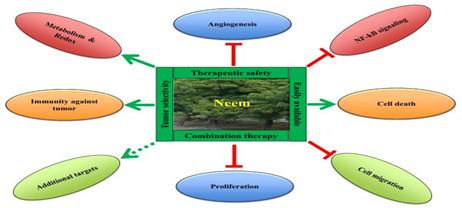
The ability of neem components to alter the tumor environment through a number of mechanisms, such as reducing angiogenesis, inhibiting cancer cell proliferation, cell death, regulate tumor environment and raising cell toxicity, contributes significantly to the prevention of cancer[7,8]. Also, as compared to normal cells, neem extracts exhibit preferential cytotoxicity towards cancer cells, which is important for lowering toxicity during cancer therapy[9,10]. Many beneficial features of neem components, including their easy availability, tumor selectivity, therapeutic safety, and capacity to be used in combination with other anticancer medications, are associated with the treatment of cancer.
The antiangiogenic properties of the neem leaf ethanol extract were evaluated in a study by Mahapatra et al.[11] using endothelial cells derived from the human umbilical vein. Their findings imply that the neem leaf extract has the ability to control the genes involved in the growth and operation of cells and having potent antiangiogenic actions while reducing the vascular endothelial growth factor's (VEGF) stimulating impact[12]. Some major components of neem plant including:
1. Azadirachtin: Azadirachtin has been mainly studied for its insecticidal properties with antiproliferative effect on cancer cells[13].
Mechanism: Inhibition of formation of mitotic spindle, causing cell cycle arrest.
Evidence: Azadirachtin caused Heer act of above-mentioned apoptosis in HeLa cervical cancer cells via the disruption of mitochondrial membrane potential[14].
2. Nimbolide: Nimbolide is a limonoid having great anticancer effects by inhibiting proliferation of cancer cells and triggering apoptosis in several types of cancers, including breast, pancreatic, and prostate cancer[15].
Mechanism: It induces reactive oxygen species (ROS) and modulates pathways like NF-κB, PI3K/Akt, and p53.
Evidence: Nimbolide was found to induce apoptosis in MCF-7 breast cancer cells by activating caspase-3 and downregulating Bcl-2 [16].
3. Nimbin and Nimbidin: They also show potential anti-inflammatory and anticancer properties.
Mechanism: They act by inhibition of angiogenesis and tumor cell invasion.
Evidence: Nimbidin inhibited the growth of melanoma in a mouse animal model[17].
4. Quercetin: The quercetin is a flavonoid from neem leaves, which is known for its activities against free radicals and cancer.
Mechanism: Inhibition of heat shock proteins and modification of apoptotic pathways.
Evidence: Quercetin inhibited growth of colon cancer cells through inhibition of Wnt/β-catenin signaling [18]
[https://www.ncbi.nlm.nih.gov/corecgi/tileshop/tileshop.fcgi?p=PMC3&id=364692&s=57&r=1&c=2]
MECHANISM OF ANTICANCER ACTION
NEEM COMPONENTS INHIBITING CANCER CELL PROLIFERATION
Neem extracts inhibit tumor cell growth and proliferation by interfering with the development of the cell cycle. Basically, cell cycle is regulated by a group of proteins including cyclins, cyclin dependent kinases(CDKs), CDK inhibitors and many other proteins[19]. Several target proteins have been identified by studies on how neem or its constituents affect the cell cycle and tumor cell proliferation for example, HeLa cervical cancer cell proliferation is inhibited by neem seed oil[20]. HeLa cells injected with azadirachtin show reduced levels of cyclin B and cyclin D1, as well as increased expression of CKI p21, all of which contribute to G0/G1 cell cycle arrest. Nimbolide works by arresting GO/G1 and G2/M phase of cell cycle along with change in cyclins, CDKs and CKIs[21,22]. Also, Nimbolide play major roles in treating breast cancer, lymphoma, leukemia etc. Another component Gedunin prevent proliferation of ovarian cancer cells[21].
EFFECT OF NEEM COMPONENTS ON METABOLIZING ENZYMES
By influencing metabolizing enzymes that are essential for detoxifying carcinogens and preserving cellular homeostasis, neem components show potential in the treatment of cancer. They work by:
Modulating Enzyme Activity: Neem constituents such as nimbolide and azadirachtin have the ability to affect the activity of enzymes that metabolize xenobiotics, making them crucial targets for anticancer treatment. These enzymes support the reduction/oxidation balance of cells and aid in the metabolism of carcinogens[22].
Antioxidant and Detoxification: Components of neem include pro-oxidant and antioxidant properties that can aid in the killing of cancer cells. While pro-oxidant activity can produce reactive oxygen species (ROS) that specifically destroy cancer cells, antioxidant activity can shield healthy cells from oxidative harm[20,21]. Neem extracts can increase the activity of detoxifying and antioxidant enzymes, which helps stop the formation of cancer cells. In particular, it has been demonstrated that nimbolide inhibits the development of cells in cancer models by downregulating cytochrome P450-associated monooxygenases[23].
THE EFFECTS OF NEEM COMPONENTS ON CANCER CELL DEATH
Neem components can induce apoptosis (programmed cell death) in cancer cells, thereby inhibiting tumor growth[24]. Neem components advance the act of pro-apoptotic proteins (Bax and caspases) while inhibiting anti-apoptotic proteins (Bcl-2), which leads to apoptosis. Neem extracts from the seeds and leaves cause apoptosis in various types of cancer including cervical, colon, prostate, breast, leukemia etc.[25]. Among the extracts Nimbolide and Azadirachtin can induce apoptosis in case of breast and cervical cancer. Limonoids also show proapoptic actions on stomach cancer and leukemia cells[26,27].
NEEM COMPONENT INHIBIT TUMOR INVASION AND ANGIOGENESIS
According to research on the DMBA-induced HBP carcinogenesis model, NLE (Neem leaf extract) suppresses angiogenesis[28]. The possible anti-angiogenic processes of neem components are clarified by more research. For instance, research utilizing a rat model demonstrates that the ethanolic fraction of neem leaves inhibits the angiogenic protein VEGF-A, which in turn inhibits angiogenesis during chemical carcinogen-induced cancer of the mammary gland[29]. An in vitro investigation revealed that nimbolide suppresses VEGF promoter activity and expression, which lowers angiogenesis. NLE reduces angiogenesis by preventing human endothelial cells from migrating[30,31].
IMMUNOMODULATORY EFFECTS
Neem has considerable immunomodulatory properties and improves the ability of the body to recognize and destroy cancer cells. Neem extracts have been shown to stimulate both cytotoxic T lymphocytes (CTLs) and natural killer (NK) cells, in addition to inducing the secretion of interleukin-2 (IL-2) and interferon-gamma (IFN-γ), both of which are regarded as crucial for antitumor immunity[32]. Furthermore, neem down-regulates activity in regulatory T (Treg) cells as well as inhibitory cytokines such as IL-10 and transforming growth factor-beta (TGF-β), augmenting immune surveillance[33].
ANTI-INFLAMMATORY PROPERTIES
One of the medicinal properties of neem is its capacity to fight inflammation, which is indirectly implicated in neem's anticancer potential. Chronic inflammation is a well-known inducer of tumor initiation and progression. Within the lake of anti-inflammatory constituents, neem exerts its effect by inhibiting pro-inflammatory enzymes like cyclooxygenase-2 (COX-2) and inducible nitric oxide synthase (iNOS) and downregulating inflammatory cytokines like tumor necrosis factor-alpha (TNF-α), interleukin-1β (IL-1β), and interleukin-6 (IL-6)[34]. Neem may also prevent the promotion and progression of tumors by averting the inflammatory surroundings.
ANTICANCER EFFECTS OF NEEM ON VARIOUS TYPES OF CANCER
Breast Cancer
Neem extract and isolated compounds, nimbolide in particular, exhibited high cytotoxicity against breast cancer cell lines MCF-7 and MDA-MB-231. Nimbolide induces G2/M cell cycle arrest, generates reactive oxygen species (ROS), activates caspases, suppresses nuclear factor kappa B (NF-κB) signaling, and also inhibits the phosphoinositide 3-kinase/Akt/mTOR pathway. The in vivo studies also evidenced suppression of tumor growth and metastasis in xenograft models[35].
Prostate Cancer
Azadirachta indica extracts can inhibit proliferation and the survival of immature human prostate cancer cell lines (PC-3, LNCaP). Nimbolide not only represses androgen receptor activity but also induces apoptosis by suppressing Bcl-2 while activating Bax and p53[36]. It also interacts with elements of the epithelial-mesenchymal transition (EMT) to reduce the invading behavior of tumors.
Colon Cancer
Flavonoid quercetin and nimbolide suppress beta-catenin, which in turn inhibits Wnt signaling, an important signaling pathway involved in colon carcinogenesis[37]. Neem extracts, on the other hand, induce caspase-dependent apoptosis and simultaneously downregulate COX-2 and iNOS, thus mitigating inflammation-associated carcinogenesis[37].
Liver Cancer (Hepatocellular Carcinoma)
Apart from inhibiting hepatocellular carcinoma (HepG2) cell line proliferation by downregulating NF-κB, VEGF, and cyclin D1, neem also stimulates detoxifying enzyme systems like GST and SOD, thereby alleviating oxidative stress and DNA damage[38].
Cervical Cancer
The HPV-positive cervical cancer cells (HeLa) exhibit restoration of apoptosis upon the action by azadirachtin and nimbolide, since these compounds resulted in the suppression of expression of the viral oncoproteins E6 and E7, thereby restoring p53 and Rb function[39].These two compounds also initiate activation of the JNK and p38 MAPK signaling pathways.
Skin Cancer
Both azadirachtin and neem oil formulations displayed chemo preventive activity in UV- and chemically-induced skin cancer models by suppressing COX-2, iNOS, and pro-inflammatory cytokines (IL-6, TNF-α) while promoting apoptotic markers such as cleaved caspase-3 and Bax[40].
Leukemia and Lymphoma
Neem leaf glycoprotein NLGP has a role in the activation of antitumor immunity through dendritic cell maturation, CTL response enhancement, and suppression of Tregs[41]. In murine models for lymphoma, it proved to extend survival and suppress tumor burden.
Pancreatic Cancer
In preclinical studies, it has been shown that compounds derived from neem inhibit pancreatic tumor progression driven by KRAS by suppressing such molecules as HIF-1α, angiogenesis, and cell survival proteins, surviving and XIAP[42].
Comparison of Neem-Derived formulations and conventional Chemotherapeutic agents
Efficacy in cancer treatment: Compounds obtained from neem, including nimbolide, azadirachtin, and quercetin, exhibit anticancer effects in several cancers (such as breast, prostate, liver, and colon) by inducing apoptosis, inhibiting proliferation, and modifying signaling pathways such as NF-κB and PI3K/Akt[16,17]. Whereas in case of Conventional drugs like doxorubicin, cisplatin, and paclitaxel, which also induce cell death, rather act through generalized cytotoxic mechanisms leading to injuries to both cancerous and normal cells[43]. Nimbolide exhibited greater tumor regression with less toxicity than cisplatin in xenograft breast cancer models(Arumugam et al., 2014)[43].
Selectivity and Toxicity: The mechanisms of the compounds in the neem tree are selectively cytotoxic to the bad cancer cells, as they avoid damaging the good normal cells, most probably because of the vulnerability of cancer cells to oxidative stress. Systemic toxicity caused by anti-tumor agents is most frequently severe and shall include: Bone marrow suppression, Gastrointestinal toxicity damage, Hair loss, Cardiotoxicity (doxorubicin) (Kumar et al., 2012)[44].
Resistance and Long-Term Use: Often, there are drug resistance to chemotherapeutic agents due to either the action of efflux pumps (P-gp) or an alteration in the targets through mutation[44]. Nimbidin compounds are multiactive and less prone to development of resistance due to: targets of its action being multiple pathways and Modulation of immune surveillance[45].
Cost and Accessibility: The neem formulations can be inexpensive, easily available in different tropical countries, and prepares themselves into numerous forms (extracts, oils, capsules, nano formulations) whereas, Synthetic medicines are costly and need refrigeration, sterile delivery, and elaborate infrastructure.
SAFETY, TOXICITY AND DOSAGE OF NEEM AND ITS CONSTITUENTS
The safety profile, toxicity, and the appropriate dose of neem (Azadirachta indica) are extremely imperative, particularly in the context of its anticancer therapy applicability, though neem is considered safe in the orthodox medicine[46]. Preclinical studies have shown that neem extracts and some of its compounds, including nimbolide, azadirachtin, and quercetin, have shown good tolerance in animals when tested at therapeutic doses. For example, acute oral toxicity in mice showed that neem leaf extract was found to be non-toxic until doses up to 5,000 mg/kg body weight, without a single incidence of mortality or any significant histopathological changes in primary organs (Biswas et al., 2002). In the same way, nimbolide is shown to cause no organ damage even after continuous administration at doses of 20-40 mg/kg/day to rats (Arumugam et al., 2014)[47].However, there have been reports of dose-dependent toxicity at elevated concentrations. For instance, azadirachtin, a limonoid constituent of neem seeds, may cause hepatic and renal toxicity in animals at higher dosage levels (>1,000 mg/kg), necessitating careful consideration of dose selection (Boeke et al., 2004)[48]. Ingestion of neem oil, especially in children, has been implicated in encephalopathy, vomiting, and metabolic acidosis, implying possible neurotoxic potential when taken in large doses or in unrefined preparations (Sundaravalli et al., 1982)[49]. Consequently, refined extracts and purified compounds should receive top priority over crude oil preparations, especially for internal applications. Generally, based on human studies, neem-based formulations exhibit good tolerability. However, because of limited clinical datasertion trials, adverse effects were reported from a pilot study where neem leaf extract was used over psoriatic and eczematous conditions and given at a dose of 1,000 mg/day for 12 weeks (Udeinya et al., 2008)[50].
NEEM IN COMBINATION OF CANCER THERAPY
One of the most promising applications of neem (Azadirachta indica) in oncology is its use with classical anticancer agents in combination therapy. Various preclinical studies have shown that not only neem extracts, but also isolated phytochemicals, such as nimbolide, azadirachtin, and quercetin, can affect conventional chemotherapy or radiotherapy in synergism to enhance therapeutic efficacy, as well as reduce the adverse effects. For example, Paul et al. (2011)[51] have shown that neem leaf extract increased radiosensitivity in cancer cells by enhancing reactive oxygen species (ROS) generation and downregulating anti-apoptotic proteins, thereby amplifying the radiation-induced apoptosis. In the same light, Balasubramanian et al. (2015)[52] have shown that nimbolide, given in combination with cisplatin, dramatically inhibited tumor progression in breast cancer xenograft models compared to either alone, which also possessed ameliorated nephrotoxicity normally associated with cisplatin monotherapy. These results indicate that neem and its constituents can complement conventional therapeutic modalities by reducing doses and systemic toxicity, in addition to overcoming therapeutic resistance, which could ultimately benefit patients.
Table: Synergistic effects of Neem constituents in combination with conventional cancer therapies:
|
Neem Constituent |
Conventional drug |
Cancer Type |
Observed Mechanisms |
Outcomes |
|
Neem leaf extract |
Radiation therapy |
Breast, prostate cancer cell lines |
Enhanced ROS generation, downregulation of Bcl-2, increased caspase activity |
increased radiosensitivity and apoptosis [53] |
|
Nimbolide |
cisplatin |
Breast cancer |
Reduced NF-κB activation, increased DNA damage, reduced cisplatin-induced nephrotoxicity |
Synergistic tumor suppression; reduced toxicity [54] |
|
Nimbolide |
Doxorubicin |
Osteosarcoma |
Inhibition of PI3K/Akt, cell cycle arrest, mitochondrial dysfunction |
Enhanced cytotoxicity, decreased drug resistance [55] |
|
Neem bark extract |
5-Flurouracil (5-FU) |
Colon cancer |
Increased apoptosis, inhibition of tumor growth factor |
Enhanced therapeutic efficacy in vitro and in vivo [56] |
|
Quercetin |
Docetaxel |
Prostate cancer |
Inhibition of androgen receptor signaling, suppression of VEGF |
Improved chemotherapeutic response [57] |
CONCLUSION
Accumulating experimental evidence clearly demonstrates that Azadirachta indica (neem) represents a valuable source of bioactive phytochemicals with significant anticancer potential. Compounds such as nimbolide, azadirachtin, nimbin, nimbidin, quercetin exert antitumor effects through multiple and interconnected molecular mechanisms, including inhibition of cancer cell proliferation, induction of cell cycle arrest and apoptosis, modulation of oxidative stress, suppression of angiogenesis, and regulation of inflammatory and immune responses. These multitargeted actions enable neem phytochemicals to interfere with several hallmarks of cancer simultaneously. Preclinical studies across a wide range of cancer models provide strong support for the efficacy and relative safety of neem-derived compounds, particularly their selective cytotoxicity toward malignant cells and reduced toxicity to normal tissues. Moreover, the ability of neem phytochemicals to enhance the efficacy of conventional chemotherapeutic and radiotherapeutic agents while mitigating adverse effects highlights their promise as adjuvants in combination therapy. However, despite encouraging in vitro and in vivo findings, clinical validation remains limited. Future research should focus on standardized formulations, pharmacokinetic profiling, toxicity evaluation, and well-designed clinical trials to facilitate the translation of neem-based therapies into effective and evidence-based cancer management strategies.
REFERENCES


Akankshya Raul, Soumyashree Dehury, Sucheta Moharana, An Overview of Anticancer Properties of Azadirachta indica and its Molecular Mechanism, Int. J. of Pharm. Sci., 2025, Vol 3, Issue 12, 3978-3988. https://doi.org/10.5281/zenodo.18088610
 10.5281/zenodo.18088610
