
Dr. Vedprakash Patil Pharmacy College Chh. Sambhajinagar.
India has a rich and ancient heritage of traditional medicine, with its materia medica providing extensive information on folklore practices and the therapeutic use of natural products. Traditional systems such as Ayurveda, Siddha, and Unani have long utilized medicinal plants for the treatment of various ailments.Sesbania sesban is one such plant of significant ethnomedicinal importance. Traditionally, the leaves are applied as a poultice to promote suppuration in boils and abscesses and to reduce inflammatory rheumatic swellings. The fresh leaf juice is also reported to possess anthelmintic properties.Pharmacognostical studies of the plant have established important pharmacopoeial standards, including physicochemical parameters and detailed cellular organization of different plant parts. Phytochemical investigations have revealed the presence of diverse bioactive constituents such as triterpenoids, carbohydrates, vitamins, amino acids, proteins, tannins, saponins, glycosides, and steroids.The plant has been reported to exhibit a wide range of pharmacological activities, including anti-inflammatory, anti-arthritic, antidiabetic,CNS Stimulant Effect, Anti-fertility antioxidant, and antimicrobial effects.This review aims to provide a comprehensive overview of the ethnomedicinal significance, phytochemical composition, and diverse pharmacological activities of Sesbania sesban.
Sesbania sesban is a widely distributed leguminous species occurring throughout tropical Africa and several Asian countries, including India, Malaysia, Indonesia, and the Philippines. It is commonly found growing along rice field bunds, roadsides, and in household gardens.Members of the genus Sesbania are typically soft-wooded, semi-woody, or slightly woody perennial plants, generally attaining heights between 1 and 8 meters. Sesbania sesban specifically can reach a maximum height of approximately 8 meters with a stem diameter of up to 12 cm. The species is characterized by its rapid growth rate, often achieving a height of 4-5 meters within six months under favorable environmental conditions.The plant has a long history of cultivation and naturalization across Africa and Asia. Its widespread adoption is largely attributed to its fast growth, nitrogen-fixing ability, and multifunctional utility. Sesbania sesban is extensively utilized as a source of fuelwood and as nutritious fodder, contributing significantly to agroforestry systems and sustainable agricultural practices.1
India possesses a rich and ancient heritage of traditional medicine. The Indian materia medica offers extensive documentation on folklore practices and the therapeutic applications of natural products. Traditional Indian medicine encompasses several well-established systems, including Ayurveda, Siddha, and Unani, each contributing significantly to healthcare through plant-based remedies.According to ethnomedicinal reports, the leaves of Sesbania sesban are used in the form of poultices to promote suppuration in boils and abscesses, as well as to facilitate the resolution of inflammatory rheumatic swellings. Additionally, the fresh leaf juice is traditionally recognized for its anthelmintic properties, indicating its potential use in the treatment of parasitic worm infestations.2-3 The present review of plant is based on its Pharmacognostical, Phytochemical and Pharmacological studies.
Plant Profile:
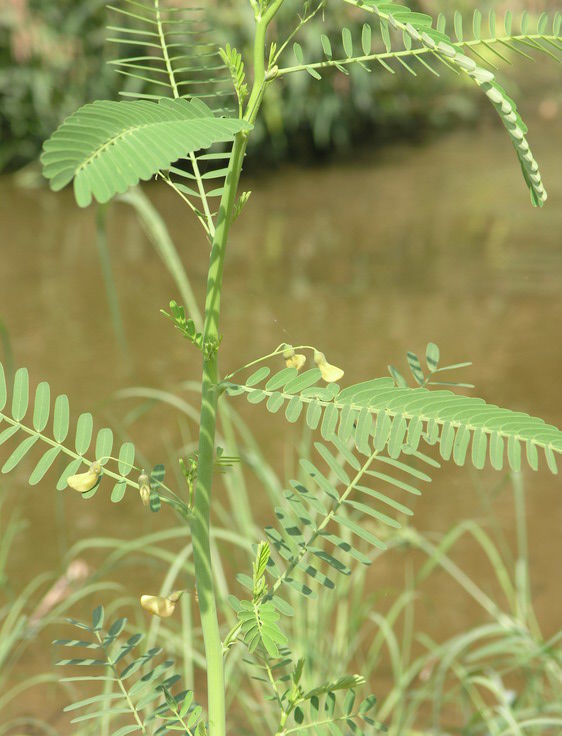
Fig.01: Sesbania sesban.
Taxonomical Classification of Sesbania sesban:4
|
Kingdom |
Plantae |
|
Sub-kingdom |
Tracheobionta |
|
Super division |
Spermatophyta |
|
Division |
Magnoliophyta |
|
Class |
Magnoliopsida |
|
Subclass |
Rosidae |
|
Order |
Fabales |
|
Family |
Fabaceae (Leguminosae) |
|
Genus |
Sesbania |
|
Species |
Sesbania sesban (L.) Merr. |
Common Name:5
|
Language |
Name(s) |
|
Arabic |
Sesaban |
|
Bengali |
Jainti, Jayant |
|
Burmese |
Yay-tha-kyee, Yethugyi |
|
English |
Common sesban, Egyptian rattle pod, Frother, River bean, Sesban, Sesbania |
|
Hindi |
Jainti, Jait, Rawasan |
|
Indonesian |
Janti, Jayanti, Puri |
|
Javanese |
Janti |
|
Luganda |
Mubimba, Muzimbandeya |
|
Sanskrit |
Jayanti, Jayantika |
|
Spanish |
Añil francés, Tamarindillo |
Plant Description:
Members of the genus Sesbania sesban can be described as soft, semi or slightly woody, 1-8 m tall perennial nitrogen fixing trees. Sesbania sesban can grow up to 8 metre and obtain a diameter of up to 12 cm. Growth is extremely rapid, on the right sites it can reach 4-5 m in just 6 months. The species has been widely planted and has a long history throughout Africa and Asia including India. esbania sesban Merr. is a fast-growing, short-lived, perennial leguminous shrub or small tree widely distributed in tropical and subtropical regions. It typically grows to a height of 3-8 meters, with a stem diameter of up to 12 cm. The plant is characterized by its soft, woody structure and rapid growth, often reaching 4-5 meters within six months under favorable conditions.6
The stem is erect, sparsely branched, and covered with smooth greyish to greenish bark. Leaves are alternate, pinnately compound, measuring about 10-30 cm in length, and consist of numerous small, oblong leaflets arranged in pairs along the rachis. These leaflets are typically green, soft, and delicate.The plant bears attractive yellow flowers with purple or brown streaks, arranged in axillary racemes. The flowers are papilionaceous, characteristic of the family Fabaceae. Flowering is usually followed by the development of long, slender, cylindrical pods (legumes), which may reach up to 20-30 cm in length. These pods contain several small, smooth seeds. The root system is well-developed and possesses nitrogen-fixing nodules, contributing to soil fertility. Due to this property, Sesbania sesban plays an important role in agroforestry systems. Overall, the plant is valued for its rapid growth, adaptability to various soil types (including waterlogged conditions), and multiple uses such as fodder, green manure, fuelwood, and traditional medicinal applications.7
Traditional use:8
Sesbania sesban is widely utilized as a fodder crop and plays a significant role in soil improvement due to its nitrogen-fixing ability. The plant is commonly incorporated into agroforestry systems to enhance soil fertility and support sustainable agricultural practices.
According to ethnomedicinal reports, the leaves of S. sesban are traditionally applied as a poultice to promote suppuration in boils and abscesses, as well as to facilitate the resolution of inflammatory rheumatic swellings. Furthermore, the fresh leaf juice is reported to possess anthelmintic activity and is used in the management of helminthic infections.
Top of FormPhytochemistry: Preliminary Phytochemical screening revealed the presence of triterpenoids, carbohydrates, vitamins, amino acids, proteins, tannins, Saponins glycosides and steroids.
Preliminary phytochemical screening of Sesbania sesban has revealed the presence of diverse bioactive constituents, including triterpenoids, carbohydrates, vitamins, amino acids, proteins, tannins, saponins, glycosides, and steroids. These compounds contribute to the plant’s wide range of pharmacological activities.9
The flowers are reported to contain anthocyanin pigments such as cyanidin and delphinidin glucosides, which are known for their antioxidant properties. Additionally, pollen grains and pollen tubes have been found to contain key metabolic intermediates, including α-ketoglutaric acid, oxaloacetic acid, and pyruvic acid.10
Previous phytochemical investigations have led to the isolation of several important compounds, such as oleanolic acid and stigmasta-5,24(28)-diene-3-ol-3-O-β-D-galactopyranoside, along with various fatty acids and amino acids. The plant also contains lignins composed of guaiacyl, syringyl, and p-hydroxyphenylpropane units.
Furthermore, the presence of bioactive flavonoids, particularly kaempferol disaccharide, has been reported, which is associated with potential antitumor activity.10
Pharmacological Review: Seed, bark and leaves of the plant are used in traditional medicine. Seeds are used in diarrhea, excessive menstrual flow, to reduce enlargement of spleen and in skin disease. Leaves are used in inflammatory rheumatic swelling and as Anthelmintic.11-12
Antioxidant Activity: Anthocyanins isolated from the flower petals of Sesbania sesban using methanolic and acidified methanolic extraction methods exhibited potent antioxidant activity. The extracts showed a concentration-dependent free radical scavenging effect against DPPH radicals, superoxide anions, and hydroxyl radicals, indicating their potential as natural antioxidant agents.14
Anti inflammatory Activity: The leaves of Sesbania sesban were evaluated for topical anti-inflammatory activity using a crude saponin extract formulated as a gel. The study was conducted using the carrageenan-induced rat paw edema model in Wistar albino rats. Two concentrations of the crude saponin gel (1% w/w and 2% w/w) were tested, while diclofenac sodium gel (1% w/w) was used as the reference standard.The results demonstrated that the crude saponin extract exhibited significant anti-inflammatory activity, with the 2% w/w gel formulation showing a more pronounced effect compared to the lower concentration.13-17
Antibacterial Activity:Phytochemical analysis of methanolic and ethanolic extracts of Sesbania sesban collected from India revealed the presence of several bioactive constituents, including alkaloids, flavonoids, phenolic compounds, phytosterols, fixed oils, and gums.
The antimicrobial potential of the methanolic stem extract was evaluated against ten bacterial strains, comprising both Gram-positive and Gram-negative organisms. The tested Gram-positive bacteria included Staphylococcus aureus (ATCC 25923), Enterococcus faecalis (ATCC 29212), and Bacillus subtilis (ATCC 441), while Gram-negative bacteria included Escherichia coli (ATCC 25922), Salmonella typhi (MTCC 733), Erwinia amylovora (MTCC 2760), Proteus vulgaris (MTCC 1771), Pseudomonas aeruginosa (MTCC 424), Klebsiella pneumoniae (ATCC 15380), and Shigella dysenteriae (MTCC 5151).The results demonstrated significant antibacterial activity of the extract, with the highest zone of inhibition observed against Erwinia amylovora (17.25 mm), followed by Escherichia coli (16 mm) at a concentration of 250 µg/mL. In general, increased zones of inhibition were observed at concentrations of 250 µg/mL and 500 µg/mL, indicating dose-dependent antibacterial activity.When compared with the standard flavonoid quercetin, the extract exhibited considerable inhibitory effects against several bacterial strains, including Bacillus subtilis (15.5 mm at 500 µg/mL), Escherichia coli (16 mm at 250 µg/mL), Enterococcus faecalis (12.75 mm at 250 µg/mL), Erwinia amylovora (17.25 mm at 250 µg/mL), and Shigella dysenteriae (10.25 mm at 500 µg/mL).15
Antimicrobial activity: The in vitro biological screening of the methanolic stem extract of Sesbania sesban was evaluated against ten bacterial species and five fungal species. The extract exhibited significant antimicrobial activity against both bacterial and fungal pathogens.Among the bacterial strains tested, the highest activity was observed against Erwinia amylovora, followed by Escherichia coli, indicating strong antibacterial potential.16
Anti-diabetic activity: Two independent studies have reported the antidiabetic potential of leaf and root extracts of Sesbania sesban. In these studies, diabetes was experimentally induced using streptozotocin in Swiss albino mice and Wistar albino rats.Aggarwal et al. prepared crude root extracts using petroleum ether, whereas Pandhare et al. utilized aqueous extracts of the leaves. Both extracts demonstrated significant antidiabetic activity in their respective experimental models.19The observed effects included a marked reduction in fasting blood glucose (FBG) levels, increased body weight, decreased food intake, and improvement in lipid profile parameters such as reduced total triglycerides and total cholesterol levels, along with modulation of low-density lipoprotein (LDL) and high-density lipoprotein (HDL) levels. Additionally, restoration of glycogen content was reported.These beneficial effects are likely attributed to enhanced insulin secretion from pancreatic β-cells, suggesting a possible insulinotropic mechanism of action.18
Anti-fertility properties: Two studies have reported the antifertility effects of Sesbania sesban in both male and female albino Wistar rats.Investigated saponin extracts obtained from the leaves and observed significant antifertility activity. The study demonstrated that the extract exhibited implantation inhibitory effects and was capable of inducing abortion. Additionally, the leaf saponin extract was found to prolong the estrous cycle, indicating its influence on female reproductive physiology.In another study reported that oleanolic acid 3-β-D-glucuronide, an active constituent isolated from the root extract of Sesbania sesban, exhibited spermicidal activity in adult Sprague Dawley rats.20-21
Adjuvant-induced arthritis in the rat: Oral administration of petroleum ether extract of Sesbania sesban bark (300 mg/kg, p.o.) in an adjuvant-induced arthritis model resulted in a significant, time-dependent reduction in paw edema. The extract exhibited maximum anti-arthritic activity between days 14 and 21. A concurrent decrease in edema in the non-injected paw further supports its systemic therapeutic effect. Changes in body weight and lymphoid organ weights (spleen and thymus) indicate possible immunomodulatory activity.22
CNS Stimulant Effect: A study was conducted to evaluate the central nervous system (CNS) stimulant activity of crude extracts of Sesbania sesban. The investigation was performed using albino mice as the experimental model, with caffeine employed as the reference standard.The results demonstrated that the crude extract exhibited significant CNS stimulant activity when compared to the control group. Furthermore, the observed effects were comparable to those produced by the standard drug, caffeine, indicating the potential of Sesbania sesban as a CNS stimulant agent.23
CONCLUSION
Sesbania sesban has been demonstrated to possess a wide range of pharmacological activities, as evidenced by numerous studies conducted on different parts of the plant. These biological effects are largely attributed to its diverse phytochemical constituents.Furthermore, the efficacy of these pharmacological properties is influenced by factors such as the extraction method and the choice of solvent, which play critical roles in isolating active compounds.
Despite the promising therapeutic potential reported, the precise mechanisms of action underlying many of these activities remain inadequately elucidated. Therefore, further detailed investigations are necessary to better understand the mechanisms involved and to validate the pharmacological effects highlighted in this review.
REFERENCES


Priti Gaikwad, A Review: Phytochemical and Pharmacological evaluation of Sesbania Sesban Plant, Int. J. of Pharm. Sci., 2026, Vol 4, Issue 4, 1174-1180 https://doi.org/10.5281/zenodo.19465712
 10.5281/zenodo.19465712
