
1Department of Chemistry, Balbhim Arts, Science and Commerce College, Beed, Maharashtra, India.
2Department of Chemistry, Milliya Arts, Science and Management Science College Beed, Maharashtra, India.
This study presents a systematic pH-metric investigation into the complexation behaviour of phenylephrine hydrochloride with selected transition metal ions Cr (III), Co (II), Ni (II), Cu (II) and Zn (II). pH metric titration was done using Calvin Bjerrum techniques under controlled temperature and ionic strength, the Proton-ligand constants (pK) and the stability constants (log K) of the resulting metal complexes determined. order of stability of the ligand with metal ions were found to follow Irving Williams natural order. The results demonstrate phenylephrine’s strong chelating potential, especially with Cu²? and Zn²? underlining its relevance in analytical and medicinal chemistry.
In recent years, there has been growing interest in how drugs interact with metal ions, especially those that play important roles in biological systems. These interactions can significantly influence a drug’s behaviour—affecting how it is absorbed, distributed, and how effective it is in the body. One such drug is phenylephrine hydrochloride, commonly used as a nasal decongestant, to dilate the pupil in eye exams and to raise blood pressure in certain medical conditions. Its ability to cause vasoconstriction or the narrowing of blood vessels, is central to many of its therapeutic effects. Beyond its clinical use, phenylephrine’s chemical structure allows it to act as a ligand, meaning it can bind to metal ions and form complexes. This aspect is particularly interesting because the formation of such metal-drug complexes can influence both the chemical stability and biological activity of the drug. Transition metals like Cr³?, Co²?, Ni²?, Cu²? and Zn²? are known to form complexes with a variety of biologically active molecules, and studying these interactions can provide useful insights for both medicinal chemistry and chelation therapy. In this study, we investigated how phenylephrine interacts with selected transition metal ions using pH-metric titration techniques. The experiments were carried out at 29 ± 1°C under controlled conditions to determine the drug’s protonation constants (pK) and the stability constants (log K) of the resulting metal complexes. The observed shifts in the titration curves indicated complex formation. Among the metal ions tested, Cu²? and Zn²? showed particularly strong binding, suggesting phenylephrine has notable chelating potential. These findings add to our understanding of how commonly used drugs like phenylephrine interact with metal ions. Such knowledge can aid in drug formulation, improve therapeutic strategies and even help assess the potential for using these interactions in detoxification therapies involving metal overload.
MATERIALS AND METHODS
All chemicals used were of analytical grade. Phenylephrine hydrochloride was obtained AR grade, which was subsequently diluted to attain the final volume. The metal ion solution was prepared by dissolving metal nitrate and standardizing it using the EDTA titration. A carbonate-free sodium hydroxide solution was obtained by dissolving pellets in distilled water and standardizing the solution. Subsequently, a solution of nitric acid and sodium nitrate was also prepared. All measurements were conducted at room temperature using a digital pH meter equipped with a magnetic stirrer and a combined glass electrode assembly was employed for pH determinations. The pH meter was calibrated before each titration using aqueous standard buffer solutions of pH 4.00, 7.00 and 10 prepared from buffer tablets. The instrument exhibited a sensitivity of 0.01 pH units and a measurement range of 0.00 to 14.00 pH with a resolution of 0.005 pH units. The pH meter was switched on for at least 30 minutes before measurements to ensure stability. Glass electrodes were stored in appropriate storage solutions when not in use and were rinsed thoroughly with distilled water before each measurement.
PROCEDURE
The experimental procedure involved the titrations of Acid, Acid + ligand and Acid + ligand+ Metal ion against standard NaOH. A standard sodium hydroxide solution was employed to titrate the sample using the Calvin-Bjerrum pH titration technique. All solutions were prepared using double distilled water and maintained at a constant ionic strength by adding sodium nitrate. Titrations were conducted in distilled water, with pH readings recorded for every 0.02 ml increment of NaOH added. The resulting pH versus volume of NaOH curves were analysed using the Irvin-Rossotti method and a computer program to determine the proton-ligand constants.
RESULTS AND DISCUSSION
|
Proton Ligand Constant |
Metal ions |
Log K1 |
Log K2 |
Log β |
|
pK? = 8.970885 pK? = 9.606316 [a] |
Zn²? |
4.145604 |
3.994231 |
8.1398914 |
|
Cu²? |
4.163789 |
3.709939 |
7.873728 |
|
|
pK? = 9.010936 pK? = 9.530545 [b] |
Co²? |
3.973595 |
2.694949 |
6.668544 |
|
Ni²? |
3.486766 |
3.031774 |
6.51854 |
|
|
|
Cr³? |
3.202882 |
2.761174 |
5.964056 |
|
[a] Point-wise Method, [b] Half-Integral Method |
||||
|
Metal ion |
Log K 1 -LogK2 |
|
Cr³? |
0.441708 |
|
Co²? |
1.27864 |
|
Ni²? |
0.454992 |
|
Cu²? |
0.45385 |
|
Zn²? |
0.151373 |
Data from titrimetric analysis was used for determination of Protonation constant and stability constant values using Microsoft excel programme. Graph of n?A (average no. of protons bound to ligand) vs. pH gives the values of Protonation constant graph as seen in figure 2, these values are in agreement with literature, this graph is called as proton ligand formation curve. Values of n? (metal ligand formation no.) and pL (free ligand concentration) were determined from Microsoft excel programme. The n? values were plotted against pL values to obtain formation curve as seen in figure.3. This graph is labelled as Metal ion ligand formation curve. From these curves values the values of stability constant were determined and matched with the calculated values obtained from software. Proton ligand constant and metal ligand stability constant were determined by half integer method and pointwise method. The average number of protons associated with ligand n?A was calculated from acid, acid + ligand titration curves and used to obtain pKa values. From table it is clear that ligand have two pK values. Higher value due to -OH group and lower value for -NH2 group. Two pK values of 9.010 and 9.50 were determined for –NH? and –OH groups, respectively. Such values are also reported by earlier researchers. Turel et al reported pK of 8.54,8.56 and 7.78 for deprotonation of piperazine group drugs of ciprofloxacin family. Joshi et al reported the pK1 of 9.948 for -OH group of hyroxy substituted hydrazones. The stability constant were calculated by pointwise and half integer method. The values of n? (metal ligand formation number) and pL (free ligand concentration) were used to calculate logK values of the complexes. It was found that the stability constant increases with increasing atomic number and following Irving Wiliams natural order. The order is particularly valid for most of the ligands having Nitrogen and Oxygen donor ligands.
pH-metric study of phenylephrine hydrochloride confirmed the formation of 1:1 and 1:2-coloured complexes was confirmed. The difference between the stability constants for the 1:1 and 1:2 complexes formed was positive, ranged from 0.15 -1.27. logK1- logK2 are positive, suggesting that the coordination of the first ligand molecule with metal ion is more favourable than bonding its bonding to the second one. The ratio of logK1/ logK2 found to be positive in all cases which suggests that there is little or no steric hinderance to the addition of secondary ligand molecule. The order of stability of the complexes reported was Zn (II) < Cu (II) < Co (II) < Ni (II) < Cr (III) which is in agreement with Irving Williams natural order and reported many researchers11-13. The sequence is due to decreasing atomic radius and increasing second IP. Complexes of Zinc were reported to have highest stability and chromium complexes were reported to have least stability. The elevated stability of the Zn (II) complex, despite its d10 configuration, can be attributed to:
The Cu (II) complexes, which typically forms the most stable complex in many systems, showed slightly lower log β, possibly due to geometrical strain or partial hydrolysis at experimental pH conditions. The bidentate nature of phenylephrine, involving –NH? and –OH groups, enables the formation of stable five- or six-membered chelate rings. The formation of both 1:1 and 1:2 metal-ligand complexes was confirmed by the nature of the titration curve and the two successive stability constants observed for each metal ion.
The stronger binding of Zn (II) and Cu (II) is consistent with their high affinity for oxygen and nitrogen donors, supporting their biological relevance in phenylephrine-metal interactions. The Irving-Williams series, which orders the stability of divalent transition metal complexes (Mn2+< Fe2+< Co2+< Ni2+< Cu2+> Zn2+), establishes that stability generally increases with increasing atomic number (and decreasing ionic radius) within a period. Cr 3+ is not part of the standard Irving-Williams series as it is a trivalent ion, but its performance in titrations is frequently compared to the divalent ions in the series.
Chromium (III) complexes are usually less stable than divalent transition metal complexes in pH metric titrations due to a grouping of factors related to their ionic charge, size, and electronic configuration. Chromium (III) has a higher charge (+3) compared to divalent ions (+2), which leads to stronger electrostatic attractions with ligands but also greater charge density, making it more susceptible to hydrolysis and precipitation, especially at higher pH values. Additionally, the electronic configuration of Cr3+(d3) is more stable in octahedral coordination than in tetrahedral coordination, which can be a factor in its complex formation.
CONCLUSION
The above analysis of phenylephrine confirms its role as a bidentate ligand, capable of forming stable complexes with transition metal ions. The determined Protonation and stability constants highlight its coordination potential, especially in bioinorganic and medicinal chemistry. These findings suggest further potential for synthesizing and biologically evaluating phenylephrine-metal complexes in therapeutic applications. The pH-metric study of phenylephrine hydrochloride with transition metals (Cu²?, Ni²?, Co²?, Zn²?, Cr³?) confirmed the formation of metal-ligand complexes, including 1:1 and 1:2 complexes. The significant separation of the metal complexes curve from the reagent curve along the volume axis provides evidence for complex formation.
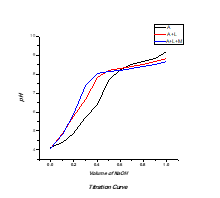
Figure.1. Titration Curve
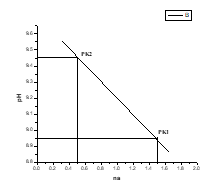
Figure 2. Proton Ligand Formation Curve

Figure 3. Metal Ion Ligand Formation Curve
REFERENCES


T. A. Patekar, Shaikh Abdul Rahim*, pH-metric studies of Phenylephrine-Metal Complexation: Stability Constants and Protonation Equilibria, Int. J. of Pharm. Sci., 2025, Vol 3, Issue 11, 4758-4763 https://doi.org/10.5281/zenodo.17759281
 10.5281/zenodo.17759281
