
Lokmany Tilak Institute of Pharmacy, Kharghar, Navi Mumbai, Maharashtra, India.
Pomegranate (Punica granatum L.) is a nutritionally valuable fruit widely cultivated in Asia and Mediterranean regions and recognized for its rich phytochemical composition. Among its various components, the peel constitutes nearly 40–45% of the total fruit mass and is often discarded as agro-industrial waste. However, recent studies have highlighted pomegranate peel as a significant source of bioactive compounds, particularly polyphenols, flavonoids and hydrolyzable tannins such as punicalagin, ellagic acid and gallic acid. These phytochemicals contribute to a wide range of pharmacological activities including antioxidant, anti-inflammatory, anticancer, neuroprotective and antimicrobial effects. The therapeutic potential of these compounds is mainly associated with their ability to scavenge free radicals, inhibit oxidative stress and modulate immune and cellular signaling pathways involved in disease progression.This review summarizes the phytochemical composition and pharmacological properties of pomegranate peel, emphasizing its multifunctional health benefits. In addition to biomedical applications, pomegranate peel has shown promising potential in environmental and industrial fields. It has been explored as a natural biosorbent for wastewater treatment, dye adsorption and as a precursor for renewable energy materials and biomaterials. The utilization of this agricultural by-product as a functional ingredient supports sustainable development and circular economy principles. Therefore, pomegranate peel represents a valuable and sustainable resource with promising applications in nutraceutical, pharmaceutical and eco-friendly industrial sectors.
Pomegranate (Punica granatum L., family Punicaceae), a name derived from the Latin words pomum and granatum, meaning “seeded apple” or “granular apple” is a widely consumed fruit across the world. It is native to regions including Afghanistan, Iran, China and the Indian subcontinent. Historical evidence indicates that pomegranates have been cultivated for thousands of years in these regions, establishing a cultural and agricultural link between ancient Iran, Pakistan, China and eastern India. Originating in Persia (modern-day Iran), pomegranate cultivation gradually expanded westward throughout the Mediterranean region, reaching as far as the European borders of Turkey, and later spreading to the southwestern United States, particularly California and to Mexico.
Botanical Classification
Kingdom: Plantae
Division: Magnoliophyta (Angiosperms)
Class: Magnoliopsida (Dicotyledons)
Order: Myrtales
Family: Punicaceae
Genus: Punica
Species: Punica granatum L [1]
Pomegranate peel (PP) accounts for nearly half of the fruit, but it is often discarded. In reality, it is rich in fiber, minerals, and a range of beneficial compounds. Its composition can vary with the fruits variety and ripeness. Because of this, the peel is increasingly valued for uses in food, health and cosmetic products.
PP constitutes the outer, non-edible portion of the fruit and is known to be rich in polyphenolic compounds with strong antioxidant properties. The peel contains significant amounts of bioactive substances such as punicalagin, which plays a key role in its antioxidant potential. The high concentration of these phenolic constituents makes pomegranate peel an important natural source of antioxidants suitable for various applications.[2]
Due to its excellent properties such as nutritional value and antioxidant capacity, PP is the nutritive by-product of pomegranate obtained after juice extraction. It exhibits several beneficial biological activities, including antioxidant, anti-cancer, anti-inflammatory and antimicrobial properties.[3]
In addition to their health-promoting effects, these phytochemicals have been utilized in food and pharmaceutical formulations, including encapsulated nutraceuticals, nano-delivery systems and functional ingredients, highlighting the sustainability and economic feasibility of this natural resource. This shift in perspective from waste management to value-added applications emphasizes the importance of exploring the phytochemistry of pomegranate peel to develop innovative and eco-friendly solutions that align with the principles of the circular economy.[4]

Fig.no.1. Botanical description of Punica granatum L. fruit (A) whole fruit; (B) anatomical description of pomegranate fruit; (C) peel; (D) arils; (E) seeds; (F) juice; (G) oil.[5]
The concentrations and bioactivities of these phytochemicals can vary depending on extraction techniques, environmental conditions and processing methods such as drying. These factors influence the efficacy of pomegranate peel extract (PPE) in various applications. Overall, the interaction of these compounds with biological systems through antioxidant action, enzyme inhibition and signaling pathway modulation forms the basis of the peels pharmacological and functional potential.[6]
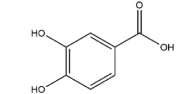
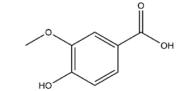
Chemical structures and pharmacological activity of the bioactive compounds present in pomegranate peel.[7]
|
CLASS |
BIOACTIVE COMPOUND |
MOLECULAR FORMULA |
STRUCTURE |
PHARNACOLOGICAL ACTIVITY |
REFERENCE |
|
A] Ellagitannins |
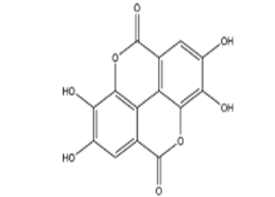
a. Ellagic acid |
C14H6O8
|
|
Ellagic acid shows antioxidant and nephroprotective activity through radical scavenging |
|
|
|
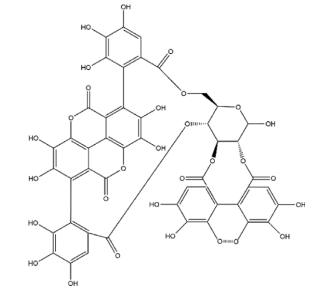
b. Punicalagin |
C48H28O30 |
|
Antioxidant and protective activity. |
|
|
|
c. Punicalin |
C34H22O22 |

|
Anti-hepatotoxic, Anti-oxidant activity. |
|
|
|
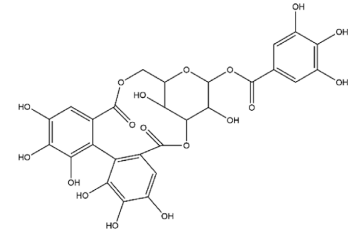
d. Corilagin |
C27H22O18 |
|
Antioxidant,anti inflammatory, hepatoprotective. |
|
|
|
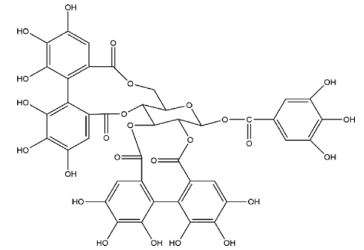
e. Pedunculagin |
C41H28O26 |
|
Anti-cancer, anti-inflammatory, antibacterial. |
|
|
|
f. Casuarinin |
C41H28O26 |
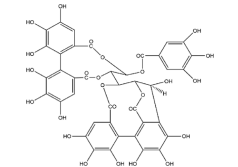
|
Anti-inflammatory effect on skin cells. |
|
|
|
g. Tellimagrandin |
C41H30O26 |
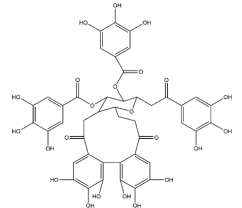
|
Antitumor, antioxidant, hepatoprotective. |
|
|
B] Flavonoids
|
a.Quercetin |
C15H10O7 |
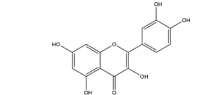
|
Antioxidant, antibacterial, antiparasitic, anticancer, cardioprotective, immunomodulatory |
|
|
|
b.Catechin |
C15H14O6 |

|
Extraction and application of catechins from food and plant residues to enhance absorption of functional foods and bio-cosmetics, while ensuring safety for human use. |
|
|
|
c.Kaempferol |
C15H10O6 |

|
Antioxidant, antimicrobial, anticancer, neuroprotective and hepatoprotective effects for protecting cellular and organ integrity |
|
|
|
d. Granatin A |
C34H24O22 |
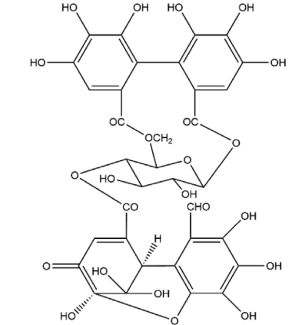
|
|
|
|
|
e. Granatin-B |
C41H32O27 |

|
Anti-colorectal cancer, anti-inflammatory and anti-mucositis effects |
|
|
C]Phenolic Acids |
a.Protocatechuic acid |
C7H6O4 |
|
Anti-inflammatory, antioxidant, anticancer and neuroprotective effects. |
|
|
|
b. Gallic acid |
C7H6O5 |

|
Exhibits anti-inflammatory, antioxidant, antiviral, antibacterial, and anticancer activities. |
|
|
|
c. Methyl gallate |
C8H8O5 |

|
Exhibits anti-tumor, anti-inflammatory, antioxidant, neuroprotective, hepatoprotective and antimicrobial activities. |
|
|
|
d. Vanillic acid |
C8H8O4 |
|
Exhibits antioxidant, anti-inflammatory and neuroprotective activities. |
2. PHARMACOLOGICAL ACTIVITY AND MECHANISM OF ACTION OF POMEGRANATE PEEL
2.1. ANTIOXIDANT ACTIVITY
The phenolic composition of pomegranate (Punica granatum L.) peels is notably rich in punicalagin, a major ellagitannin that represents one of the predominant bioactive constituents of this by-product. Punicalagins are recognized for their strong antioxidant potential and contribute significantly to the characteristic coloration of the peel. In addition to punicalagin, other phenolic compounds such as ellagic acid and gallic acid further enhance the antioxidant capacity and overall bioactivity of PP. Ellagic acid, a well-known polyphenolic compound, has been widely studied for its health-promoting and pharmacological properties. The extraction of these valuable polyphenols can be performed using a variety of methods, ranging from conventional solvent extraction to innovative and eco-friendly technologies such as microwave-assisted and ultrasound-assisted extraction, which have been shown to improve extraction efficiency and preserve compound stability.[22] The Institute of Medicine (U.S.) reported that antioxidants obtained from food can play a significant role in protecting the body. They act by reducing the damage caused by harmful molecules, such as reactive oxygen species (ROS) and reactive nitrogen species (RNS), which can disrupt normal physiological functions.[23]
Free radicals contribute to the development and progression of various diseases, including cancer and AIDS. Antioxidants help mitigate this risk by neutralizing free radicals, thereby playing a crucial role in disease prevention and management.[6]
MECHANISM OF ACTION
The phenolic compounds in PP, especially punicalagin, ellagic acid and gallic acid, act as antioxidants by neutralizing harmful free radicals such as reactive oxygen species (ROS) and reactive nitrogen species (RNS). This scavenging reduces oxidative stress, prevents cellular damage and helps protect against diseases like cancer and immune disorders.[6] [22] [23]
2.2 ANTI-INFLAMMATRY ACTIVITY
Inflammation is a natural defense response of living tissues to injury or harmful stimuli. It involves the activation of white blood cells, the release of immune signaling molecules and the production of inflammatory mediators such as prostaglandins. Traditionally, the peel of Punica granatum (pomegranate) has been utilized for managing various inflammatory disorders due to its rich composition of bioactive compounds with anti-inflammatory potential.[24]
Punicalagin, ellagic acid and punicalin help reduce inflammation. A recent study using human colon cells showed that an aqueous extract of pomegranate peel at 10?µg/mL lowered the release of Chemokine (C-X-C motif) ligand 8 (CXCL8) a molecule that attracts immune cells involved in inflammation by 43% compared to a control. The compounds in PP may be important for treating autoimmune diseases and chronic inflammatory conditions, such as type 1 diabetes and multiple sclerosis. Another study found that pomegranate peel pectins can modulate the immune system by activating various immune cells, including macrophages, natural killer cells, dendritic cells and both B and T lymphocytes.[6]
MECHANISM OF ACTION
Bioactive compounds in PP, including punicalagin, ellagic acid and punicalin, reduce inflammation by inhibiting the release of chemokines such as CXCL8, which limits immune cell recruitment to inflamed sites. Additionally, pectin components modulate the immune system by activating macrophages, natural killer cells, dendritic cells and B and T lymphocytes, thereby contributing to the regulation of chronic and autoimmune inflammatory conditions.[6] [24]
2.3 NEUROPROTECTIVE POTENTIAL ACTIVITY
Alzheimer’s disease gradually impairs memory and independence, and current treatments are often expensive and associated with side effects. Functional foods are emerging as natural strategies to support brain health. Pomegranate peel extract (PPE) (Punica granatum L.) has shown potential to enhance memory, reduce oxidative stress and mitigate inflammation. This study explores PPE as an affordable, natural approach to slow cognitive decline and improve quality of life in individuals affected by Alzheimer’s disease.[25]
Alzheimer’s disease (AD) is a progressive neurodegenerative disorder with no cure. Compounds from PP (Punica granatum L.), rich in phenolics, are being studied for their antioxidant and anti-cholinesterase activities. Computational modeling further explores their interactions with AD-related targets, aiming to identify natural, plant-based compounds with neuroprotective potential.[26]
PP, rich in phenolics and antioxidants, inhibit acetylcholinesterase and may serve as sustainable natural agents for supporting cognitive health and managing neurodegenerative diseases.[27]
PP has been used in traditional medicine to manage digestive, respiratory, and wound-healing conditions. This article reviews its therapeutic potential, focusing on neurodegenerative diseases and highlights its promise as a natural strategy to improve human health.[28]
Although historically discarded, PP are rich in beneficial compounds like phenolics, polysaccharides and urolithins. This transforms them from waste into a valuable resource with potential therapeutic applications.[29]
Pomegranate is a fruit rich in beneficial compounds, making it a valuable source of health-promoting agents. Even the non-edible parts, such as the peels, contain bioactive molecules that have been used in traditional medicine for centuries. These compounds, including polyphenols, flavonoids and phenolic acids, act synergistically to provide antioxidant, anti-inflammatory and protective effects against various diseases.
This highlights PP as a multifunctional natural resource capable of supporting overall health and wellbeing, including heart and brain function, as well as offering protection against chronic conditions such as diabetes and cancer.[30]
MECHANISM OF ACTION
PP bioactive compounds, including polyphenols, flavonoids and phenolic acids, exert neuroprotective effects through multiple mechanisms.They reduce oxidative stress by scavenging free radicals, inhibit acetylcholinesterase to enhance cholinergic neurotransmission and mitigate inflammation in neural tissues. Together, these actions help preserve memory, support cognitive function and may slow the progression of neurodegenerative disorders such as Alzheimer’s disease.[25] [26] [27] [28] [29] [30]
2.4 ANTICANCER ACTIVITY
There are investigations on the potential of pomegranate peel extract (PPE) to influence breast cell lines, including both healthy epithelial cells and tumor cells, as well as its effects on oxidative metabolism. Pomegranate, a fruit with a long history of medicinal use, continues to attract attention for its promising health benefits.
With growing interest in fruit-based functional foods, PP has emerged as a noteworthy candidate for the prevention and treatment of various health conditions. This study aims to elucidate PPE effects on breast cell behavior, thereby contributing to a better understanding of its therapeutic potential.[31]
The focus is on the PP, which contains potent compounds such as ellagitannins and their potential role in combating cancer. By elucidating the mechanisms through which these natural compounds act, researchers aim to uncover new strategies for cancer prevention and treatment, leveraging the fruits traditional medicinal value.[32]
PP extract is a rich source of polyphenols, which have demonstrated potential in combating cervical cancer. Bioactive compounds such as punicalagin, punicalin and ellagic acid act synergistically to regulate cellular homeostasis, induce apoptosis and inhibit the proliferation of cancer cells.The therapeutic potential of PPE for the prevention and treatment of cervical cancer, offering promising strategies for improving women’s health.[33]
MECHANISM OF ACTION
Polyphenols in PPE, including punicalagin, punicalin and ellagic acid, act synergistically to regulate cellular homeostasis, induce apoptosis and inhibit the proliferation of cancer cells. These bioactive compounds modulate oxidative metabolism and signaling pathways, contributing to their anti-cancer and therapeutic effects.[31] [32] [33]
2.5 ANTIMICROBIAL ACTIVITY
The health-promoting properties of PP, revealing their significant therapeutic potential. By extracting bioactive compounds from the peels using various solvents, they have identified a rich profile of phenolic compounds, including antioxidants and flavonoids.
These extracts have demonstrated strong free radical scavenging activity, reduced oxidative stress and exhibited antimicrobial effects. Additionally, they have shown promising ultraviolet (UV) protection properties, highlighting their potential application in cosmetic formulations.
This study emphasizes the value of PP, traditionally considered agricultural waste, as a sustainable resource for health and wellness applications. With their abundant phytochemical composition and multifunctional bioactivities, PP extracts represent a promising focus for future research with broad implications in both nutrition and cosmetic industries.[34]
Food safety is a major concern worldwide, with diseases like listeriosis and antibiotic-resistant infections posing a significant threat. Researchers are turning to nature for solutions, exploring plants with antimicrobial properties to combat these pathogens.
PP, often discarded, have shown promise as a natural inhibitor of food-borne pathogens. Studies have evaluated the antimicrobial activity of PPE against various pathogens, using both lab-based and real-food tests. The results are promising, highlighting the potential of pomegranate peels as a natural preservative to keep our food supply safe and healthy.[35]
PP demonstrates significant antimicrobial potential, showing effectiveness against both Gram-positive and Gram-negative bacteria. Its extracts are also capable of suppressing resilient pathogens such as methicillin-resistant Staphylococcus aureus and multidrug-resistant Salmonella typhimurium, positioning it as a promising natural agent in combating antibiotic resistance.[36]
PP, are packed with polyphenols and have impressive antimicrobial properties. These peels, making up 30–40% of the fruit, have shown broad-spectrum activity against both Gram-positive and Gram-negative bacteria, including tough antibiotic-resistant strains like methicillin-resistant Staphylococcus aureus.
Adding ferrous salts to pomegranate formulations gives them a temporary antimicrobial boost. Building on this, researchers are now exploring combinations of PPE with various metal salts and vitamin C to see if this amplifies the effect.[37]
MECHANISM OF ACTION
PPE, rich in polyphenols and flavonoids, inhibit microbial growth by disrupting bacterial cell membranes, interfering with metabolic processes and reducing microbial viability. They show broad-spectrum activity against Gram-positive and Gram-negative bacteria, including antibiotic-resistant strains, and their efficacy can be enhanced with metal salts or vitamin C.[34][35][36][37]
The non-edible peel of the pomegranate, traditionally regarded as a waste by-product of juice and fruit processing, has recently gained scientific attention for its valorisation — converting waste into value — in line with circular-economy principles. Several sustainable applications of PP have been explored across environmental remediation, food-industry uses, biorefinery development and renewable-energy or biomaterial production.[3]
3.1 Wastewater Treatment & Bio-adsorption
PP serves as an effective, low-cost biosorbent for removing pollutants such as heavy metals, phosphates, ammonium, and dyes from wastewater. Studies have shown that raw PP, biochar and activated-carbon forms exhibit strong adsorption capacities due to their hydroxyl (–OH) and carboxyl (–COOH) functional groups. Using PP for wastewater treatment not only enhances environmental remediation but also reduces agro-industrial waste and landfill disposal.[6]
3.2 Food Industry, Food Packaging & Functional Ingredients
PPE contains high levels of polyphenols, tannins and flavonoids, giving it potent antioxidant and antimicrobial activity. Incorporating Pomegranate peel into edible films and coatings can increase shelf life, reduce microbial growth and prevent oxidation in packaged foods
Moreover, PP fits well into the “clean-label” concept, promoting the use of natural preservatives over synthetic ones in the food industry.[24]
3.3 Biorefinery & Circular-Economy Approaches
Biorefinery applications of PP involve recovering multiple high-value products, such as phenolics, pectins, dietary fibers and bioactive compounds, which can be used in nutraceuticals, cosmetics and pharmaceuticals.[30]
Green-extraction methods—such as microwave-assisted, enzyme-assisted and ultrasound-assisted extraction—enhance the yield of valuable compounds while minimizing environmental impact. This approach supports Sustainable Development Goal (SDG) 12 for responsible production and consumption.[32]
3.4 Renewable Energy & Biomaterials
Due to its lignocellulosic and fibrous composition, PP is a promising raw material for renewable energy production and eco-friendly biomaterials. PP derived activated carbon and hydrogel composites have been used to remove heavy metals such as lead and cadmium from water, while pyrolysis and fermentation processes enable conversion into bioethanol, biogas, or bio-oil. These applications demonstrate the dual environmental and energy potential of PP.[33]
Pomegranate (Punica granatum L.) peel extract has been incorporated into several sustainable cosmetic formulations, utilizing its antioxidant, antimicrobial, and anti-inflammatory activities for skin health and eco-friendly product development. The following subsections summarize key product types and supporting studies.
4.1 Face Mask / Peel-Off Mask:
A cosmetic emulsion study used different solvent extracts of PP and demonstrated photoprotective + antimicrobial ability when included in a mask/emulsion format.[34]
4.2 Sunscreen / Protective Cream:
A fermented PPE was shown in a study to have anti-UVB and antioxidant properties, supporting its use in UV-protection cosmetic formats.[38]
4.3 Moisturizing Ointment / Eco-Cream:
A novel natural ointment formulated with PPE and grape seed extract infused in extra virgin olive oil and beeswax base, designed for sustainable cosmetic application (valorising waste peel).[39]
CONCLUSION
Pomegranate peel, traditionally regarded as an agro-industrial by-product generated during juice and fruit processing, has recently attracted significant scientific attention due to its rich composition of biologically active compounds and its diverse therapeutic potential. The peel constitutes a large proportion of the total fruit mass and is particularly abundant in polyphenols, flavonoids and hydrolyzable tannins, including key compounds such as punicalagin, ellagic acid and gallic acid. These phytochemicals are responsible for a wide range of biological and pharmacological activities that contribute to human health. Numerous studies have demonstrated that pomegranate peel exhibits strong antioxidant properties by neutralizing free radicals and reducing oxidative stress, which plays a major role in the development of many chronic diseases. In addition, the peel possesses notable anti-inflammatory, anticancer, neuroprotective and antimicrobial effects, largely attributed to its high phenolic content and ability to modulate various cellular and molecular pathways. These bioactive compounds help regulate immune responses, inhibit the proliferation of harmful microorganisms and support protective mechanisms within the body. Beyond its biomedical importance, pomegranate peel also offers promising environmental benefits, including applications in wastewater treatment, pollutant adsorption and the development of eco-friendly biomaterials. Therefore, pomegranate peel represents a sustainable, multifunctional and value-added natural resource with considerable potential for applications in nutraceutical, pharmaceutical and environmental industries.
ACKNOWLEDGEMENT
We, the authors, would like to express our sincere gratitude to our mentors and academic guides for their continuous support, encouragement and valuable guidance throughout the preparation of this review article. Their expertise, insightful suggestions and constructive feedback greatly contributed to shaping the direction and improving the quality of this work. We are also thankful to our colleagues and peers who provided helpful discussions, technical assistance and motivation during the development of this manuscript. Their cooperation and thoughtful input played an important role in refining the ideas presented in this review. In addition, we extend our appreciation to the editorial board members and peer reviewers for their careful evaluation and insightful comments, which helped enhance the clarity, structure and scientific quality of the manuscript. Finally, we acknowledge all researchers and authors whose published studies served as important references and inspiration for this work. Their contributions to scientific knowledge made this review possible.
REFERENCES





S. Kasture, V. Ghavare, P. Bansode, S. Sawant, T. Mane., The Outer Gold of Pomegranate: Bioactive Compounds and Sustainable Applications of the Peel, Int. J. of Pharm. Sci., 2026, Vol 4, Issue 3, 3015-3027, https://doi.org/10.5281/zenodo.19202915
 10.5281/zenodo.19202915
