
Department of Pharmacy, Mahatma Jyotiba Phule Rohilkhand University Bareilly.
In recent years, starch-derived hydrogels have attracted considerable interest because of their distinctive characteristics, biocompatibility, and biodegradability. This review seeks to deliver a thorough overview of starch-based hydrogels, encompassing their classifications, preparation techniques, properties, evaluations, and applications in pharmaceuticals. The article elaborates on the different varieties of starch-based hydrogels, such as physical, chemical, and hybrid types, along with their preparation techniques, which include gelation, cross-linking, and polymerization. The characteristics of starch-based hydrogels, such as their mechanical strength, swelling behavior biodegradability, and responsiveness to environmental stimuli, are likewise explored. Moreover, the article examines the evaluation techniques for starch-based hydrogels, including rheological, thermal, spectroscopic, and imaging analyses. The pharmaceutical uses of starch-based hydrogels, like as in drug delivery, wound dressings, tissue engineering, and regenerative medicine, are emphasized. The review also addresses the challenges and limitations faced by starch-based hydrogels, including their restricted mechanical strength, susceptibility to degradation, and variability from batch to batch. Additionally, future prospects for the advancement of starch-based hydrogels, such as the incorporation of nanotechnology, biomimetic strategies, and 3D printing, are also considered. This review aspires to provide a thorough comprehension of starch-based hydrogels and their promising applications in the pharmaceutical arena, concentrating on future perspectives and directions
Hydrogels, recognized as hydrophilic polymeric networks, possess an extraordinary capacity to absorb water (Thousands of times their dry weight). [1,2] These materials might come from natural resources as well as man made ones, as documented in the Journal of Polymers and the Environment.[3] The defining characteristic of hydrogels is their remarkable capacity to hold onto a lot of volumes of solvents (such as biological fluids and water) under various conditions. Much like living tissues, hydrogels exhibit softness and flexibility, making them extremely appropriate for a variety of possible uses.[4] Over recent decades, hydrogels have found utility in numerous critical fields, including tissue engineering,[5] drug delivery systems, wound care, water purification, biomedical applications, personal care product development, and agriculture.[6] Another notable characteristic of hydrogels is their ability to react to various environmental factors, including shifts in temperature, pH levels, fluctuations in magnetic fields, and certain electrical stimuli.[7] Owing to their capacity for rapid environmental response, they are referred to as smart polymers (for instance, hydrogels that respond to stimuli).[8] Hydrogels are also recognized as innovative biomaterials of this time due to several distinctive attributes such as biodegradability, resilience in chemical and biological fluids, consistent shape, biocompatibility and environmental friendliness, high absorption capacity for water-soluble metabolites and nutrients.[9] The application of hydrogels as biomaterials is well-established, their delicate texture, low interfacial tension, and permeability to tiny molecules allow them to mimic properties of real tissues.[10] The adoption of hydrogels is consistently increasing due to their exceptional properties.[11] In hydrogel networks polymeric structure, covalent bonding are essential, formed through reactions between comonomers, while hydrogen bonds and Vander Waals forces facilitate interactions between the chains, leading to physical crosslinking.[12] The cross-linked configuration of hydrogels prevents them from breaking apart during water retention.[13] Typically, crosslinking agents are utilized alongside the polymers to initiate chemical crosslinking within hydrogel networks.[14] Hydrogels contain various hydrophilic groups like as –OH, -COOH, -SO3H and –NH2, can improve the networks hydrophilic properties.[15] The ability of hydrogels to hold onto water hinges on two primary factors: the interactions between polymeric chains and water, as well as temperature.[16] The water retention process in hydrogels comprises several stages— hydration of the hydrophilic groups in hydrogels,[17] Water’s interaction with hydrogels hydrophobic groups, and the presence of crosslinks in hydrogel networks prevents dilution, allowing for additional water absorption.[18] Synthetic polymers are extensively employed in the production of commercially available hydrogels, owing to their remarkable chemical, physical, and mechanical properties. However, they do come with certain disadvantages. They lack eco-friendliness, the cost of production is not economical, they are unrenewable, and their biodegradation poses challenges.[19]Because of these factors, researchers are becoming more and more interested in hydrogels made from naturally occurring polysaccharides like cellulose and starch.[20] Hydrophilic functional groups, such as -OH, are scattered throughout the molecular chains of starch.[21] The resulting hydrogels' hydrophilic qualities and biodegradability are improved by these functional groups.[22] A significant quantity of starch is inherently synthesized in plants through the method of photosynthesis utilizing CO2 and water. Plants serve as a plentiful source of starch polysaccharides, with chloroplasts in green leaves and amyloplasts in tubers and seeds containing substantial amounts of starch in granule form.[23] Commercial starch production primarily comes from rice, corn, wheat, and potatoes. The three primary processes of plasticization and hydration are how starch becomes gelatin.[24] Hydrophilic starch granules first swell after absorbing water.[25] When starch dissolves in water, the granule structure is upset, which causes the second step gelatin formation to occur.[26] The last stage entails cooling and aging to create a starch hydrogel network, which reorganizes the polysaccharide structure..[27] This final phase is also referred to as retrogradation. The amount of amylose in the starch and the temperature at which gelatin production takes place have a significant impact on hydrogel formation.[28] Due to these attributes and their ready availability, starch-based hydrogel formation has gained popularity since the 1970s. Additionally, starch-based hydrogel products have attracted attention for their potential to mitigate environmental impact and their wider applicability.[29]To create SHs, a range of chemical techniques can be employed, including the grafting and etherification of starch.[30]The -OH groups found in the starch molecule are substituted with different ether groups, such as carboxymethyl starch, in etherified starches.[31] On the other hand, the grafted starch approach creates hydrogels by grafting various vinyl monomers onto starch.[32] The utilization of SHs in several domains offers both benefits and drawbacks.[33] Some advantages of utilizing SHs include—abundant in nature, globally accessible, cost-effective and appealing, comparatively straightforward preparation methods, environmentally friendly, greater solvent absorption capacity, applicable in diverse processes.[34]On the other hand, some disadvantages of SHs include—low surface area, the necessity for chemical derivatization to enhance sorption capacity, limited durability, etc. [35] Despite being entirely biodegradable, the application of polymers like poly (lactic acid) is still limited across various fields, particularly in drug delivery.[36]Despite being fully biodegradable, SHs have limited applications in fields such as medication delivery systems.[37] Other polymers, such as poly (lactic acid) and poly (glycolic acid), are employed in this field. More research should be conducted on SHs.[38]
STARCH
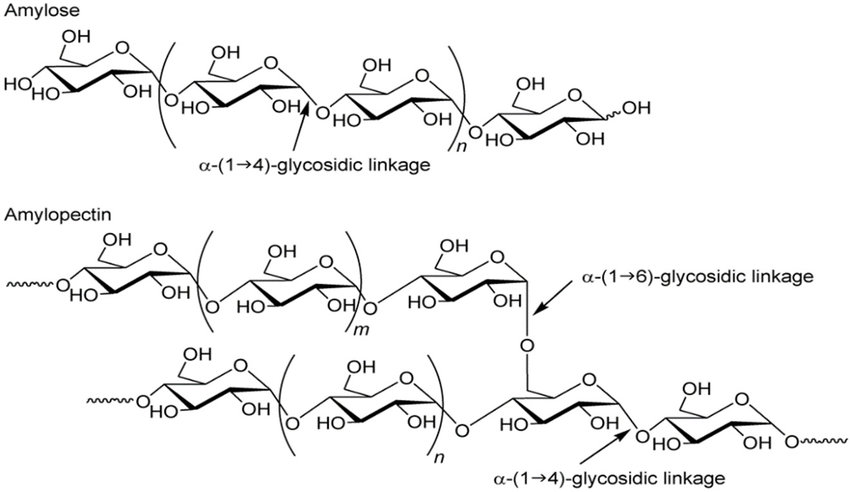
Many plants use starch, a polysaccharide, as their main molecule for storing energy. Amylose and amylopectin are the two forms of glucose polymers that make up this substance. Amylose, a linear chain of glucose units joined by α (1→4) glycosidic linkages, normally makes up 20–30% of starch.[39] Amylose's solubility in water is increased by the helical conformations it can form thanks to its linear structure.[40] However, the remaining 70–80% of starch is made up of amylopectin, which is highly branched and composed of glucose units connected by α(1→4) bonds in linear segments and α(1→6) bonds at branching points.[41] Amylopectin has a huge surface area thanks to this branching structure, which helps it form gels and retain its viscosity.[42]Several hydroxyl(-OH) groups are present along the glucose unit chains of starch, which is an important characteristic.[43] There are two hydroxyl groups at the carbon-2 and carbon-3 locations (secondary -OH groups) and one at the carbon-6 position (primary -OH group) in each glucose monomer found in starch.[44] These hydroxyl groups are essential to starch's hydrophilic properties, which enable it to interact well with water molecules.[45] The -OH groups of starch and the water molecules create hydrogen bonds when they come into touch with these hydroxyl groups, which helps explain why starch absorbs water. This interaction is essential to the creation of starch-based hydrogels because it causes the starch granules to swell when hydrated.[46]In addition to being essential for its interactions with water, hydrogen bonding in starch controls the mechanical and physical characteristics of materials derived from it. Although the degree of crystallinity varies depending on the starch source, the substantial hydrogen bonding between starch molecules adds to the overall stability and crystallinity of starch granules. These hydrogen bonds are broken when starch is cooked in water during the gelatinization process, which enables the starch chains to unwind and rearrange into a three-dimensional network structure after they cool. The function of starch hydrogels is based on this network creation, where the equilibrium of hydrogen bonding and hydration levels greatly affects the gel's capacity to retain water and swell. Thus, the hydroxyl groups not only enhance the water affinity of starch but also affect its processing behavior, leading to diverse applications in biocompatible and biodegradable materials such as hydrogels for medical, agricultural, and environmental solutions.[47] Because of its many special qualities, starch can be used in a wide range of applications. One of its most notable characteristics is its excellent biodegradability, allowing it to decompose naturally in the environment, making it an eco-friendly alternative to synthetic polymers. Starch is highly hydrophilic due to the presence of numerous hydroxyl (-OH) groups, which contribute to its ability to absorb water and swell in moisture-rich environments. This property is crucial for its use in hydrogels, where the ability to retain water enhances functionality in applications such as drug delivery and agricultural products.[48] Additionally, starch has good mechanical properties, displaying strength and flexibility in its native form, which can be further modified through physical or chemical treatments to improve its performance. However, it does have certain limitations, including poor dimensional stability and a tendency to retrograde or crystallize over time, which may affect its stability in long-term applications. Starch's low-cost and high availability from natural sources, such as potatoes, corn, and rice, further enhance its appeal as a sustainable and economical option for producing bio-based materials and packaging.[49]
CLASSIFICATION OF HYDROGELS
There exists a range of hydrogel types, distinguished by various properties, including swelling characteristics, physical attributes, methods of preparation, origin, biodegradability, and nature of crosslinking.[50] Various types of hydrogels are physical crosslinking techniques are used in physical gels, which are created via hydrogen bonding, chain aggregation, and polymer chain complexation and are reversible for conformational changes. Chemical hydrogels, on the other hand, make use of procedures like covalent crosslinking.[51] However, chemical hydrogels are characterized by their irreversibility concerning configurational changes. Conversely, both chemical and physical hydrogels can be integrated to form dual-network hydrogels.[52]Dual-network hydrogels offer greater advantages compared to individual physical and chemical hydrogels due to their superior propertiescan hold a relatively significant volume of liquid and their responsiveness across various pH levels surpasses that of chemical or physical hydrogels alone.[53] Introduced a dual-network hydrogel recently that integrates graphene–polymer composites to provide improved mechanical properties. Depending on their origins, hydrogels can be categorized as either natural or synthetic.[54] They can be categorized as hydrogels that are homopolymeric or copolymeric according to the monomers used in the hydrogel synthesis. There is just one kind of monomer used in hemolytic hydrogels.[55] On the other hand, copolymeric hydrogels are made using two or more distinct monomers. Within the polymer chain, these monomers are grouped in a variety of ways, including alternating, block, and random topologies. The interpenetrating polymeric hydrogel is another important type of hydrogel. In semi-IPN hydrogels, cross-linked and non-cross-linked polymers coexist.[56]
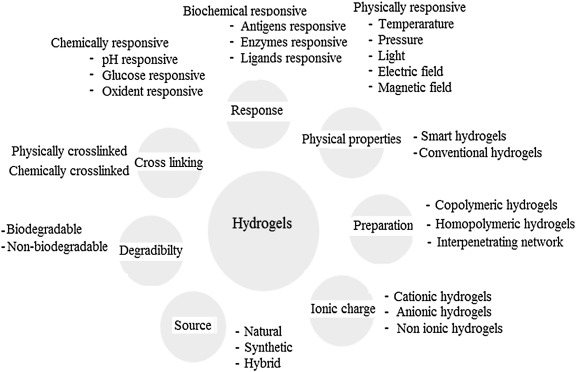
Because of their sensitivity to different environmental conditions like temperature, pressure, and pH levels, responsive hydrogels constitute an important class of hydrogels. Stimuli-responsive hydrogels are sophisticated hydrogels that react to outside stimuli. The molecular interactions can be altered by variations in chemical parameters (such as pH, ionic strength, and chemical agents) and physical stimuli (such as light, pressure, temperature, electric fields, magnetic fields, and mechanical stress).[57]In the biomedical, pharmaceutical fields, stimuli-responsive hydrogels are highly sought after. As the surrounding temperature varies, the swelling and contraction of thermo-responsive hydrogels also fluctuate. developed a thermo-responsive hydrogel for a regulated drug delivery system by copolymerizing polyacrylamide and polyacrylic acid. These hydrogels can react to temperature changes in both positive and negative ways.[58]pH-responsive hydrogels are a significant family of hydrogels that are frequently utilized in drug delivery systems because of their capacity to react to variations in the pH of their surroundings. Changes in the pH of the media quickly alter the degree of ionization in pH-sensitive hydrogels. The two types of pH-responsive hydrogels are cationic (having amine-pendant groups) and anionic (having carboxylic or sulfonic acid pendant groups). developed a dual pH-sensitive hydrogel actuator and effectively used it to a lipophilic drug delivery system.[59]
PREPARATION METHODS OF STARCH BASED HYDROGELS
Networks of hydrophilic polymers make up hydrogels. Hydrogels are created using several processes that use both hydrophobic and hydrophilic monomers, depending on the different application factors. Both synthetic and organic polymers can be used in the hydrogel manufacturing process. Hydrogels made from synthetic polymers are less biodegradable than their natural equivalents, although having a noticeably higher mechanical strength. By using different kinds of crosslinkers, the main goal of the hydrogel production method is to create crosslinking between the monomers.[60] Copolymerization and cross-linking free-radical polymerizations are frequently used methods for producing hydrogels. In general, the bond formation principles listed below are used to formulate hydrogels from the monomers.
Interactions between the monomers physically,
Using chemical processes to join polymer chains,
Utilizing ionizing radiation.
The monomer, initiator, and crosslinker are the three key ingredients in the creation of hydrogel. Diluents are used to control the hydrogel's characteristics. The following describes several polymerization techniques for hydrogel creation.[61]
Bulk Polymerization
This is a widely used method for synthesizing hydrogels characterized by the conversion of monomers into polymers without solvents, resulting in a homogeneous mixture where the monomer and initiator are present in a physical mixture. This technique involves initiating the polymerization process through heat or a chemical agent, leading to the formation of a gel as the reaction progresses. The absence of a solvent contributes to a higher concentration of the reactants, which often results in faster reaction rates and a more robust polymer network. One of the primary advantages of bulk polymerization is its simplicity and efficiency, as it minimizes the need for purification steps associated with solvent removal. However, controlling the polymerization process can be challenging due to the exothermic nature of the reaction and potential for heat buildup, which might lead to uneven polymer distribution or thermal degradation. Additionally, in the case of hydrogels, the choice of monomers and cross-linkers, as well as the optimized reaction conditions, are crucial for achieving desired properties like as swelling capacity, mechanical strength, and responsiveness to environmental stimuli.[62]
Solution Polymerization
This is a widely utilized method for synthesizing hydrogels, where monomers are dissolved in a solvent to create a homogeneous solution before polymerization begins. This technique typically involves the copolymerization of monomers in the presence of a cross-linking agent, where the solvent often acts as a heating bath that facilitates better temperature control during the reaction. One of the key advantages of solution polymerization is its cost-effectiveness and ease of preparation, as it allows for precise control over reaction conditions, minimizing the risk of thermal degradation. The process employs initiators, such as ultraviolet (UV) radiation or redox systems, to initiate the reaction and promote the formation of polymer chains. After polymerization, the resulting hydrogels are purified by washing with distilled water to remove unreacted monomers and byproducts, ensuring the final product is safe for various applications. Various types of solvents, including water, ethanol, and benzyl alcohol, can be utilized depending on the hydrogel’s intended characteristics. The method effectively allows for the modification of the physical characteristics of the final hydrogel products, such as their swelling behavior and mechanical strength, which are critical for applications ranging from drug delivery systems to tissue engineering.[63]
Free Radical Polymerization
This is a prevalent and versatile method employed in the synthesis of hydrogels, characterized by its ability to create polymer networks through a chain-growth mechanism. In this process, free radicals are generated from initiators, which can decompose thermally or through other means, enabling them to react with the monomers, thereby initiating the polymerization. This method can be carried out in various forms, including bulk, suspension, solution, and emulsion polymerization, expanding its applicability across different materials and conditions. One of the primary advantages of free radical polymerization is its rapid reaction kinetics, which allows for the efficient formation of polymer chains and can lead to high molecular weight products. The process involves several stages: initiation, propagation, chain transfer, and termination, with the control over these stages significantly influencing the properties of the resulting hydrogels, such as their swelling capacity and mechanical strength. This method is particularly advantageous when using vinyl or acrylate monomers, as they readily undergo polymerization via free radical mechanisms. However, one challenge associated with free radical polymerization is the potential for uncontrolled reactions, which can lead to cross-linking and variations in gel structure unless carefully managed.[64]
Suspension Polymerization
This is a technique that facilitates the formation of hydrogels by dispersing monomers and initiators in an organic phase, creating a system where the reacting components form droplets suspended in a continuous phase, usually water. By creating a uniform mixture, the heat produced during the reaction is effectively transferred from the droplets to the surrounding medium, which has a low viscosity and a large heat capacity. One significant benefit of suspension polymerization is that it eliminates the need for additional grinding following polymerization and enables the creation of hydrogels in a variety of shapes, such as powders or beads. A low hydrophilic-lipophilic balance (HLB) suspending agent is used in the procedure to keep the droplets stable and stop them from coalescing. Furthermore, a number of elements are crucial to the effectiveness of this process, including the mixing rotor's design, agitation speed, and the monomer's viscosity. Through meticulous manipulation of these variables, scientists may customize the characteristics of the resultant hydrogels, rendering them appropriate for a variety of uses, such as medication administration and tissue engineering.[65]
Physical Cross-linking
This is a process for synthesizing hydrogels that relies on non-covalent interactions to build a network of polymer chains in three dimensions. This process enables polymers to connect without the creation of covalent bonds by utilizing a variety of interactions, including hydrogen bonding, hydrophobic interactions, ionic interactions, and van der Waals forces. Physical cross-linking has several benefits, including ease of production because it frequently doesn't require harmful cross-linking chemicals, which makes it ideal for biological applications like tissue engineering and drug delivery systems. Various techniques can be employed in physical cross-linking, including thermal gelation, where heating a polymer solution followed by cooling promotes gel formation; ionic cross-linking, which uses multivalent ions to stabilize the hydrogel network; and complex coacervation, which leads to phase separation of polymers in solution. These hydrogels tend to be reversible in nature, meaning they can transition back to a sol state under changing environmental conditions. Although physical cross-linked hydrogels generally exhibit lower mechanical strength compared to their chemically cross-linked counterparts, their favorable biocompatibility and adaptability make them highly valuable across diverse applications, from agriculture to the food industry.
Chemical Cross?linking
Chemical cross-linking is a widely utilized method for the production of mechanically stable hydrogels, involving the process by which polymer chains establish covalent connections. Usually, this procedure calls for the employment of chemical cross-linking agents like citric acid, glutaraldehyde, or formaldehyde, which react with the polymer's functional groups like -OH or -COOH to create a stronger three-dimensional network. Unlike physical hydrogels, which are held together by weak interactions, chemically cross-linked hydrogels exhibit enhanced stability and mechanical strength due to the permanent nature of covalent bonds formed during the reaction. The degree of cross-linking significantly influences the hydrogels' swelling behavior and overall performance; higher cross-link densities usually lead to reduced swelling but improved structural integrity. Despite their advantages, a significant concern associated with chemical cross-linking is the potential toxicity of the reagents used, necessitating their thorough removal prior to application, particularly in biomedical contexts. Methods such as graft copolymerization or chain-growth polymerizations are commonly employed to achieve the desired cross-linked structures in starch-derived hydrogels, enabling the customization of properties for specific applications.[66]
PROPERTIES:
Starch-derived hydrogels exhibit several key attributes: exceptional water retention capabilities, a unique blend of durability and flexibility, and permeability. These characteristics open up numerous avenues for utilizing hydrogels across diverse fields. The remarkable water absorption of starch makes it ideal for food packaging materials, effectively preventing moisture loss in food, thereby helping to extend its freshness. Conversely, the swelling behavior of starch enables hydrogels to experience changes in volume or shape in reaction to various physical and chemical stimuli, including temperature, light, magnetic/electric fields, pressure, ionic strength, and pH levels. Research has indicated that the rheological strength and structural rigidity of maize starch hydrogels are inversely related to the extent of inherent mobile fractions present within the hydrogels.[67]
Swelling properties
Hydrogels are substances that, when immersed in water, swell and hold a considerable amount of water within their framework without dissolving. The unique characteristic of hydrogels is their swelling behavior, which depends on various environmental factors such as temperature, pH, and ionic strength. Hydrogels are formed by combining polymers that have undergone different cross-linking processes. Consequently, they are perceived as single molecules. Minor environmental fluctuations can trigger rapid and reversible transformations in hydrogels.[68]
Mechanical properties
In contrast to physical hydrogels, injectable chemical hydrogels exhibit enhanced mechanical properties and greater stability over time. Nonetheless, the use of toxic cross-linking agents in the creation of chemical hydrogels may negatively impact their biocompatibility; in hydrogels, physical-chemical interactions are formed, thereby avoiding such harmful initiators. When developing hydrogels for medical applications, one of the most essential considerations is their mechanical characteristics. The mechanical properties of scaffolds, at both macroscopic and microscopic scales, play a vital role in influencing cell behavior within tissue engineering. The shape of cells is significantly affected by biomechanical cues and the interactions between cells and the extracellular matrix (ECM). For instance, the rigidity of the ECM has a notable effect on adult human skin fibroblasts. Furthermore, cells that come into contact with sturdier substrates adapt their cytoskeleton and plasma membrane to exhibit a greater elastic modulus.[69]
Biological properties
Key attributes such as biocompatibility, non-toxicity, suitable mechanical properties, optimal viscosity, stability, and biodegradability are fundamental for injectable hydrogels utilized in various medical applications. The mechanical and biological characteristics of the hydrogel should align with those of the tissue it is intended to replace and be suitable for use. Numerous studies have aimed to achieve optimal mechanical and biological properties by integrating cross-linking and electrospinning techniques. Gelatin methacrylate fibers that were electrospun were crosslinked using UV light. The results showed that altering the exposure time altered the biological and physical properties of the electrospun hydrogels.
Viscoelastic properties
The viscoelastic properties of hydrogels are commonly evaluated via rheological or compression testing. By changing the concentrations of polymers and crosslinkers, hydrogels' viscoelastic behavior can be modified, impacting their elasticity and stiffness. For instance, in glutaraldehyde-crosslinked gelatin hydrogels, increasing the crosslinker concentrations improves rigidity and causes the substance to become more elastic. Furthermore, by altering the viscosity of the aqueous phase in agarose and polyacrylamide hydrogels using dextran, Hydrogel design for biomedical applications is improved by the ability to precisely regulate viscoelastic characteristics while preserving a constant elastic modulus. The viscoelasticity observed in hydrogels is caused by a variety of molecular mechanisms, especially in systems that are physically or non-covalently crosslinked. Stress can cause crosslinkers to detach, allowing the polymer matrix to flow and reattach, as seen in weakly crosslinked collagen gels, alginate gels, and PEG hydrogels. Other mechanisms that release energy and produce reversible elastic responses, like polymer entanglement and protein unfolding, also have an impact on viscoelasticity. Even in well-crosslinked hydrogels, the high-water content results in energy dissipation, generating a measurable loss modulus that does not include plasticity. As observed in PEG hydrogels, alginate gels, and collagen gels with mild crosslinking, crosslinkers may break free under stress, allowing the polymer matrix to flow before reattaching.[70]
EVALUATION OF TOPICAL HYDROGELS–
STRUCTURAL ANALYSIS
FTIR
FTIR is extensively utilized for characterizing the chemical structure of polysaccharide-based hydrogels. This technique involves measuring the absorption of infrared radiation by the hydrogel, which provides information about the vibrational transitions of molecular bonds. The resulting spectra reveal characteristic peaks corresponding to specific functional groups present in the hydrogel. For instance, in the synthesis of sodium carboxymethyl cellulose (NaCMC) hydrogels, FTIR analysis confirmed the formation of the hydrogel by identifying peaks associated with the -COOH groups of carboxymethyl cellulose and the interaction with metal ions like Fe³?, indicated by a new peak at 1751 cm?¹. This information is crucial for understanding the interactions between different components in the hydrogel and for optimizing its properties for various applications.[71]
NMR
NMR spectroscopy is another powerful tool for characterizing polysaccharide-based hydrogels. It offers comprehensive details regarding the dynamics and molecular makeup of the hydrogel's constituent parts. For example, NMR-H analysis has been used to confirm the formation of chitosan-based superabsorbent polymers (SAPs) by analyzing the spectral lines of the constituent compounds. Additionally, pulsed gradient NMR spectroscopy is particularly useful for characterizing SAPs used in drug delivery systems, as it can reveal details on how medications diffuse throughout the hydrogel matrix. In order to create efficient drug delivery systems that can release therapeutic compounds in a controlled manner, researchers must first understand how the hydrogel interacts with pharmaceuticals.[72]
XRD
XRD is a crucial technique for analyzing the crystalline and amorphousphases in hydrogels based on polysaccharides. It offers information on the hydrogel matrix's percentage of crystallinity, which is crucial for comprehending its stability and mechanical characteristics. Researchers can determine the structural alterations that take place during the production of hydrogels by looking at the diffraction patterns. Nie et al., for example, used XRD analysis to look at how the addition of calcium ions changed the structure of cellulose-based hydrogel beads. As the calcium ion concentration rose, the results revealed that the intensity of particular peaks increased, suggesting improved crystallinity. This data is essential for maximizing the characteristics of hydrogels for a range of uses, including tissue engineering and medication delivery, where stability and mechanical strength are crucial elements.[73]
UV-VIS
This is a powerful analytical technique used to study the electronic transitions of molecules in polysaccharide-based hydrogels. It helps in identifying the presence of functional groups and assessing the purity of the hydrogel. By measuring the absorbance of UV light at specific wavelengths, researchers can learn more about the concentration and chemical makeup of different hydrogel constituents. This method is very helpful for tracking the hydrogel synthesis process since it can show whether desirable chemical linkages are forming and whether contaminants are present. Furthermore, hydrogel stability under various environmental circumstances, including light exposure, can be assessed by UV spectroscopy, which is essential for applications in tissue engineering and drug delivery.[74]
RAMAN
Raman spectroscopy is another non-destructive technique that provides important information about the molecular makeup of hydrogels based on polysaccharides. Raman spectroscopy measures the inelastic scattering of photons after irradiating the hydrogel with laser light. This provides details about chemical bonds and molecular vibrations. This technique is particularly useful for studying the effects of ions, such as calcium, on the structure of cellulose in superabsorbent polymer (SAP) beads. The presence of new peaks in the Raman spectra, such as those at 554, 527, and 481 cm?¹, indicates structural changes in the cellulose due to ion interactions, which can significantly affect the hydrogel's properties and performance.[75]
MORPHOLOGICAL ANALYSIS
SEM
This is an essential tool for investigating the microstructure and surface morphology of hydrogels based on polysaccharides. This method yields photos with great resolution that allow researchers to visualize the distribution of pores and the overall texture of the hydrogel. Understanding these structural features is crucial, as they directly influence the hydrogel's swelling behavior and mechanical properties. For instance, a well-defined porous structure can enhance water absorption capacity, which is vital for applications in drug delivery and tissue engineering. By analyzing SEM images, researchers can also assess the effects of different synthesis parameters on the hydrogel's morphology, leading to optimized formulations for specific applications.[76]
THERMAL ANALYSIS
Thermal analysis encompasses various techniques, including in order to assess the thermal stability and transitions of hydrogels, thermogravimetric analysis (TGA) and differential scanning calorimetry (DSC) are essential. Through the measurement of weight changes in the hydrogel as it is heated, TGA offers information about the stability and thermal degradation of the material. For instance, remaining lignin particles improve heat stability because they are more resistant to degradation than cellulose, according to TGA curves of cellulose-based superabsorbent polymers (SAPs). Conversely, DSC aids in determining the glass transition temperature as well as if the hydrogels include both bound and free water. These thermal characteristics are crucial for comprehending how the hydrogels would act in physiological settings, especially in biomedical settings where temperature swings are possible.[77]
MECHANICAL ANALYSIS
This technique, such as Dynamic Mechanical Analysis (DMA) and rheology, are employed to characterize the mechanical properties of hydrogels. These methods assess the viscoelastic behavior, tensile strength, and flexibility of the hydrogels, which are crucial for their application in biomedical fields. For instance, hydrogels used in wound healing must possess adequate mechanical strength to support tissue regeneration while remaining flexible enough to conform to the wound site. The results from mechanical analysis help in optimizing the formulation of hydrogels to achieve desired mechanical performance, ensuring they can withstand the stresses encountered in practical applications. Additionally, understanding the mechanical properties can guide researchers in tailoring hydrogels for specific uses, such as scaffolds for tissue engineering or drug delivery systems.[78]
DYNAMIC MECHANICAL ANALYSIS
This is a vital technique for assessing the viscoelastic properties of polysaccharide-based hydrogels. It provides insights into how these materials respond to applied stress or deformation across a range of frequencies and temperatures. By applying an oscillating force, DMA measures the storage modulus (elastic response) and loss modulus (viscous response), which are essential for understanding the mechanical behavior of hydrogels under different conditions. This analysis is particularly important for identifying the optimal formulation for specific applications, ensuring that the hydrogels possess the necessary strength and flexibility for their intended use. For instance, a hydrogel with a high storage modulus may be more suitable for structural applications, while one with a higher loss modulus may be better for applications requiring more flexibility and energy dissipation.[79]
RHEOLOGY
Rheology is another critical technique that complements DMA by providing insights into the flow and deformation behavior of hydrogels. It assesses how the material behaves under various shear rates, which is particularly important for applications where hydrogels need to flow or be injected, such as in drug delivery systems. The rheological properties, including viscosity and shear modulus, are critical for determining how the hydrogel will perform during processing and application. For example, a hydrogel with appropriate viscosity can be easily injected into a target site, while maintaining its structural integrity once in place. Understanding these properties allows researchers to tailor the hydrogel formulations to achieve desired performance characteristics, such as maintaining stability during storage while being easily injectable when needed. Additionally, rheological measurements can help predict how the hydrogel will behave under physiological conditions, ensuring that it meets the requirements for biomedical applications.[80]
TEMPERATURE INFLUENCE
Temperature significantly influences the mechanical properties of hydrogels. Both DMA and rheological measurements can be affected by temperature changes, impacting the viscoelastic behavior of the material. For instance, as the temperature increases, the mobility of polymer chains within the hydrogel may increase, leading to changes in viscosity and elasticity. This temperature dependence is crucial for applications where hydrogels are exposed to varying thermal conditions, such as in biomedical implants or drug delivery systems. Understanding how temperature affects the mechanical properties helps in designing hydrogels that maintain their performance across a range of physiological temperatures. Moreover, the thermal stability of hydrogels is essential for ensuring their longevity and effectiveness in real-world applications, as degradation or changes in properties at elevated temperatures can compromise their functionality.[82]
APPLICATIONS OF STARCH DERIVED HYDROGELS
BIOMEDICAL APPLICATIONS
Drug Delivery Systems: Starch-based hydrogels have been extensively studied for their ability to encapsulate drugs and release them in a controlled manner. Their structure can be tailored to respond to physiological conditions such as pH and temperature, which is critical for targeted drug delivery.[83]
Tissue Engineering: The hydrophilic nature of starch-based hydrogels allows them to retain large amounts of water, making them suitable for applications in tissue scaffolding. They can mimic the extracellular matrix (ECM), providing a supportive environment for cell adhesion and growth. The incorporation of other biopolymers or agents can enhance their effectiveness in promoting tissue regeneration.
Wound Healing: These hydrogels can be formulated as dressings that maintain moisture and provide a protective barrier over wounds while facilitating gas exchange. Their biodegradability and biocompatibility are essential for reducing the risk of infection and promoting healing.[84]
COSMETIC APPLICATIONS
Product Formulations: Starch-based hydrogels can be integrated into creams, lotions, and other cosmetic products serving as emulsifiers, stabilizers, or thickening agents. Their ability to encapsulate active compounds such as vitamins and antioxidants helps improve the efficacy and longevity of cosmetic products.
Smart Hydrogels: The development of hydrogels that react to environmental stimuli (like pH or temperature) enhances their functionality in cosmetic applications, potentially allowing for timed release of active ingredients.[85]
FOOD INDUSTRY
Biodegradable Packaging: With increasing consumer demand for sustainability, starch-based hydrogels are emerging as alternatives to conventional plastic packaging. They can help maintain the freshness of food while contributing to waste reduction.
Food Preservation: These hydrogels can be designed to release natural preservatives and moisture-absorbing agents, which is useful in extending the shelf life of perishable products.[86]
AGRICULTURE APPLICATIONS
Water Retention: Starch-based hydrogels can absorb significant amounts of water, holding up to hundreds of times their weight, which is particularly beneficial in arid regions. They enable the gradual release of moisture, reducing watering frequency and helping crops flourish under drought conditions.
Soil Conditioners: By improving soil structure, starch-based hydrogels can enhance nutrient availability and support healthier root systems, which ultimately leads to increased crop yields.[87]
ENVIORNMENT APPLICATIONS
Pollutant Remediation: Starch-based hydrogels are being explored for their capabilities to encapsulate heavy metals and organic pollutants from wastewater. Their high affinity for contaminants allows for enhanced sorption, leading to cleaner effluents.
Biodegradable Absorbents: In spill clean-up operations, starch-based hydrogels can act as absorbents for oils and chemicals due to their superabsorbent properties, offering an eco-friendly solution to hazardous waste management.[88]
INNOVATION AND EMERGING TECHNOLOGIES
3D Printing: Starch-based hydrogels are being adapted for 3D printing applications, especially in creating complex biomedical devices. This allows for creating customized implants or scaffolds tailored to specific patient needs.
Nanocomposites: The incorporation of nanofillers into starch-based hydrogels is a growing area of research. These nanocomposites can significantly enhance mechanical properties, thermal stability, and other performance characteristics, broadening their application scope.[89]
CHALLENGES AND, FUTURE ASPECTS
The review discusses several challenges and future aspects regarding starch-derived hydrogels, which are integral to various industries due to their versatility and eco-friendly nature. One of the primary challenges is the need for sustainable processing methods. Traditional methods, such as chemical cross-linking and high-temperature extrusion, are often energy-intensive and can result in environmental degradation. As a result, there is an urgent need for researchers to explore innovative processing alternatives, such as high-pressure processing (HPP), which may reduce environmental impact while enhancing the functional properties of starch-based hydrogels.Another significant challenge is the mechanical and stability issues associated with starch-based hydrogels. While these materials exhibit good biodegradability and compatibility with biological systems, their mechanical properties tend to be weaker compared to synthetic hydrogels. This poses limitations in applications requiring robust materials, such as drug delivery systems and tissue engineering scaffolds. Future research efforts should focus on improving these properties by developing advanced formulations, utilizing blending techniques with other biopolymers, or incorporating additives that enhance structural integrity and performance.Additionally, the increasing global demand for starch has intensified competition for traditional sources, which presents a logistical challenge for industries relying on starch-based materials. To mitigate this issue, future investigations should prioritize the exploration of alternative starch sources, particularly those derived from agricultural waste and byproducts. This not only alleviates the pressure on conventional crops but also promotes a circular economy through the utilization of otherwise discarded materials. Furthermore, even though starch-based hydrogels have advanced in their uses, especially in the biomedical industry for tissue engineering and drug delivery, there remains a notable gap in comprehensive studies that validate their efficacy and safety in real-world scenarios. To facilitate their integration into clinical applications, rigorous testing and regulatory approvals are required, underscoring the need for a focused approach on safety and long-term performance in these fields.Lastly, navigating the regulatory landscape presents an additional challenge. The approval and standardization of starch-based materials for use in sensitive applications, such as food and biomedical products, require thorough investigation and adherence to strict safety guidelines. Engaging with regulatory bodies early in the research and development process can help streamline the path to market and ensure compliance with necessary safety standards.
CONCLUSION
The conclusion of the article provides a comprehensive reflection on the state of starch-based hydrogels, highlighting their growing importance as eco-friendly materials in various sectors, including biomedical applications, food packaging, and cosmeceuticals. The authors underscore that these hydrogels, derived from renewable and inexpensive sources like starch, are gaining traction due to their biodegradability and potential to replace synthetic materials, aligning with global sustainability goals.Furthermore, the review points out that recent advances in processing methods, particularly high-pressure processing (HPP), have shown promising results in enhancing the structural characteristics and functional properties of starch-based hydrogels. This innovative approach addresses existing limitations tied to traditional methods, such as high energy consumption and environmental harm. The article notes that while HPP can significantly improve the hydrogels' performance, further studies are required to fully elucidate its effects and optimize processing conditions.The authors also reflect on the diverse applications of starch-based hydrogels, especially in tissue engineering and drug delivery systems. They emphasize how well the materials can contain and release medicinal ingredients, which could revolutionize treatment modalities in healthcare. However, they emphasize that the mechanical properties and long-term stability of these hydrogels are critical factors that still require substantial research to enhance their performance and reliability.Moreover, the conclusion stresses the need for standardized production practices to ensure uniform quality and regulatory compliance for commercial applications. It is essential for researchers and industry stakeholders to collaborate in addressing these challenges and developing guidelines that support the safe and effective use of starch-based hydrogels.
Overall, the article concludes that while starch-based hydrogels present exciting opportunities for the development of sustainable materials, ongoing innovation and research are crucial. By overcoming the existing challenges related to their functional properties and ensuring environmentally friendly production processes, starch-based hydrogels can play a transformative role in various industries, contributing to a more sustainable future
REFERENCES


Neha, Sobhna Singh, Keshav Maurya, Starch-Based Hydrogel: Classifications, Preparations, Properties, Evaluations, And Future Applications, Int. J. of Pharm. Sci., 2026, Vol 4, Issue 2, 2756-2775. https://doi.org/10.5281/zenodo.18673021
 10.5281/zenodo.18673021
