
School of Pharmacy, Rai University, Ahmedabad, Gujarat
Nyctanthes arbor-tristis Linn. belongs to the family Oleaceae and commonly known as Parijat or Night Jasmine. It is an important medicinal plant widely used in traditional systems of medicine such as Ayurveda and Siddha. It is commonly known as harsinghar in Hindi, Parijat in Sanskrit and Night jasmine in English. It is widely grown in tropical and subtropical areas of the world. The generic name “Nycthanthes” has been coined from two Greek words, “Nykta” means “night” and “Anther” means “Flower”. Although all parts of the plant exhibit therapeutic potential, the leaves have gained special attention for their diverse pharmacological properties including anti-inflammatory, antioxidant, hepatoprotective, antimalarial, antidiabetic, antimicrobial, and immunomodulatory activities. Its Leaves contain mainly benzoic acid, fructose, anthraquinone, glycosides, carotene, amorphous resins, ascorbic acid, methyl salicylate, tannic acid, oleanolicacid, flavanol glycosides. The aim of study is to prepare and evaluate herbal tea powder from leaves and flower to treat dry cough. Cough is sudden expulsion of air from its lungs through mouth, typically caused by irritation or infection in the airways. By the stimulation of mechano or chemoreceptors, afferent impulse pass to cough center, it sends efferent impulse via parasympathetic and motor nerve to diaphragm ,intercostal muscle and lungs . it results in increased contraction of diaghramatic, abdominal and intercoastal(ribs) muscle and causes noisy expiration, which is nothing but “cough”. It classifies as: Acute(sudden onset), Subacute(3 to 8 weeks), chronic(longer than 8 weeks). For the preparation Parijat leaves, flower and ginger grind it and then mix all the three components. Store these tea powder in airtight container. During preparation of tea, add 1-2 teaspoon of these teapowder in cup of hot water and allow to steep for 5-10 min. for sweetning effects jaggery or honey can be added .this teapowder helps to relieve dry cough because it has anti-inflammatory activity.
Nyctanthes arbor-tristis Linn. is ancient medical plant belonging to Oleaceae family, grown in tropical and subtropical region. N. Arbortristis is a shrub or small tree up to 10m heights with Gray or greenish rough bark with stiff whitish hair; young branches sharply quardrangular [1] .
1.1 Botanical Description
Medicinal plants are the cornerstone of traditional medicine and continue to contribute significantly to modern drug discovery N. Arbortristis is a shrub or small tree up to 10m heights with Gray or greenish rough bark with stiff whitish hairs; young branches sharply quadrangular. Nyctanthes arbor-tristis Linn. commonly known as Parijat or Night Jasmine, has been revered for centuries in Indian medicine. The plant is native to South Asia and is known for its beautiful fragrant flowers and therapeutic value. Traditionally, the leaves have been used to treat fever, arthritis, cough, asthma, and various inflammatory disorders. Recent scientific studies have provided evidence supporting these ethnomedicinal claims, indicating that the leaves possess a rich profile of secondary metabolites with significant pharmacological activities [2] .
Leaves
Leaves are opposite, 5 -10 by 2.5 – 6.3 cm, ovate, acute, or acuminate, entire or with a few large distant teeth, short bulbous hairs rounded or slight cuneate; main nerves few, conspicuous beneath; petiole 6cm long, hairy [3] .
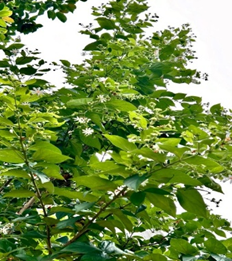
Fig no. 1.1 Parijat leaves
Flowers
Flowers are small, delightfully fragrant, sessile in pedunculated bracteate fascicles of 3–5; peduncles 4-angled, slender, hairy, auxiliary, and solitary and in terminal shorttrichotomous chymes bracts broadly ovate or suborbicular, 6- 10 mm long, apiculate, hairy on both sides; Calyx 6-8 mm long, narrowly campanulas’, hairy outside, glabrous inside, trunctate or obscurely toothed or lobed, ciliated. Corolla glabrous rather more than 13 mm long; tube 6-8 mm long, orange coloured, about equaling the limb; lobes white, unequally obcordate, cuneate [4] .
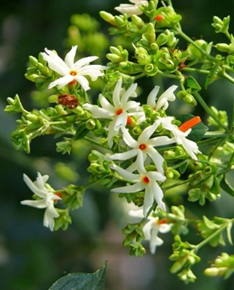
Fig no.1.2 Parijat flowers
Fruits
Fruits are a capsule of 1-2 cm diameter, long and broad, obcordate or nearly orbicular, compressed, 2-celled, separating into 2 flat 1-seeded carpels, reticularly veined, glabrous. Seeds are exalbuminous, Testa thick, the outer layer of large transparent cells and heavily vascularized [5] .
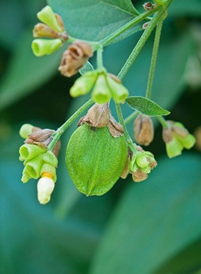
Fig no. 1.3 Parijat fruit
1.2 Taxonomical Classification
Vernacular names
1.3 Chemical constituents of Nyctanthes arbortristis Linn
Leaves
Leaves contain D-mannitol, β-sitosterol, Flavanol glycosides, Astragaline, Nicotiflorin, Oleanolic acid, Nyctanthic acid, Tannic acid, Ascorbic acid, Methyl salicylate, Amorphous glycoside, Amorphous resin, Trace of volatile oil, Carotene, Friedeline, Lupeol, Lupeol , Glucose, Fructose, Iridoid glycosides, Benzoic acid [6] .
Flower
Flowers contain Essential oil, Nyctanthin, d-mannitol, Tannin, Glucose, Carotenoid, Glycosides, β-monogentiobioside ester or α-crocetin (or crocin-3), β-monogentiobioside, β-D monoglucoside ester or α-crocetin, β-digentiobioside ester or α-crocetin (or crocin-1) [7] .In recent years, there has been a growing interest in natural remedies for various health conditions, spurred by concerns over the side effects of pharmaceutical drugs and a desire for holistic approaches to healthcare. Among these remedies, herbal teas have gained popularity for their purported therapeutic effects. In this study, we investigate the potential of an herb tea powder made from Parijat leaves and flowers with ginger as a remedy for dry cough, a common ailment that can significantly impact quality of life. Parijat, also known as Nyctanthes arbor-tristis, is a flowering plant native to South Asia with a long history of medicinal use in traditional systems of medicine such as Ayurveda and Unani [22, 23]. Its leaves and flowers are reputed for their anti-inflammatory, analgesic, and expectorant properties. Ginger (Zingiber officinale) is another well- known medicinal plant renowned for its anti-inflammatory and anti-microbial properties, making it a popular ingredient in natural remedies for respiratory ailments[8] .
Dry cough, characterized by a persistent, non-productive cough, is a common respiratory ailment affecting individuals of all ages worldwide. While various pharmaceutical cough remedies are available, there is a growing interest in natural and herbal alternatives due to concerns regarding the potential side effects of conventional medications [9] . Herbal remedies, derived from plant sources, offer a promising avenue for the management of dry cough, providing both symptomatic relief and potential therapeutic benefits. Parijat(Nyctanthes arbor-tristis) is a medicinal plant widely recognized in traditional systems of medicine for its diverse pharmacological properties[10] . The findings of this study have the potential to inform healthcare practitioners and individuals alike about the benefits of integrating natural remedies into cough management strategies, thereby fostering a holistic approach to respiratory health and well-being.
The leaves and flowers of Parijat have been traditionally used to treat respiratory ailments, including cough and cold, owing to their anti-inflammatory, antimicrobial, and expectorant properties. Additionally, ginger (Zingiber officinale), a commonly used culinary spice, has been valued for its therapeutic effects on respiratory health, attributed to its anti-inflammatory and antimicrobial constituents [11] . In line with the growing interest in natural remedies, this study aims to formulate and evaluate an herbal tea powder derived from Parijat leaves and flowers combined with ginger for the treatment of dry cough. The synergistic effects of Parijat and ginger, known for their complementary pharmacological actions, are expected to provide effective relief from dry cough symptoms while promoting respiratory health [12] . The formulation of herbal tea powder offers several advantages, including ease of preparation, convenience of consumption, and potential for standardized dosing.
Furthermore, the utilization of plant-based ingredients aligns with the principles of sustainability and environmental, appealing to individuals seeking holistic and eco-friendly healthcare options [18,19] . This research endeavors to contribute to the growing body of knowledge on herbal remedies for respiratory ailments and provide evidence-based insights into the efficacy and safety of Parijat and ginger-based formulations [14] .
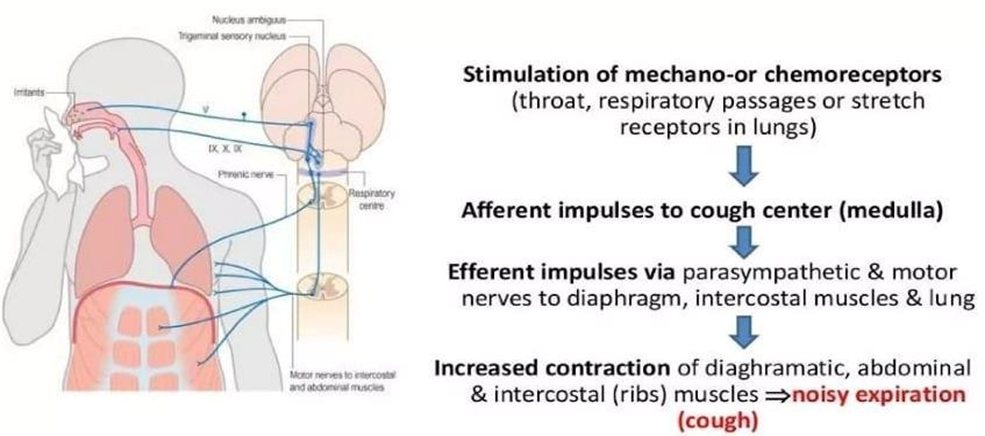
Fig no. 1.4 Mechanism of cough production.
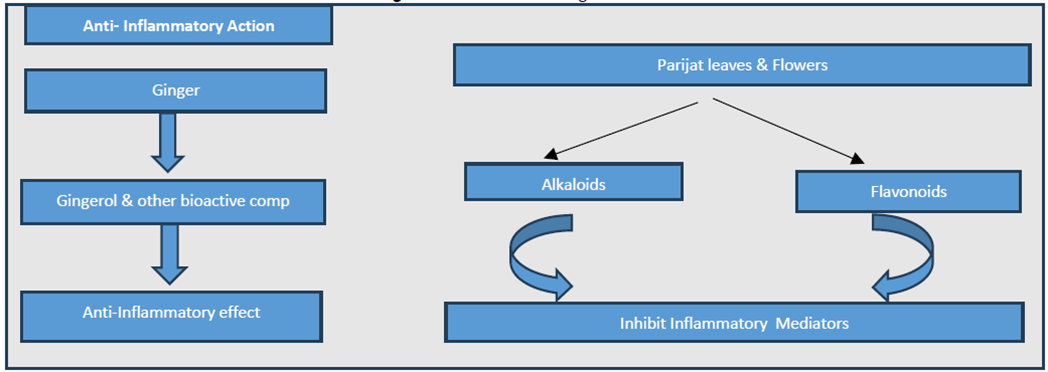
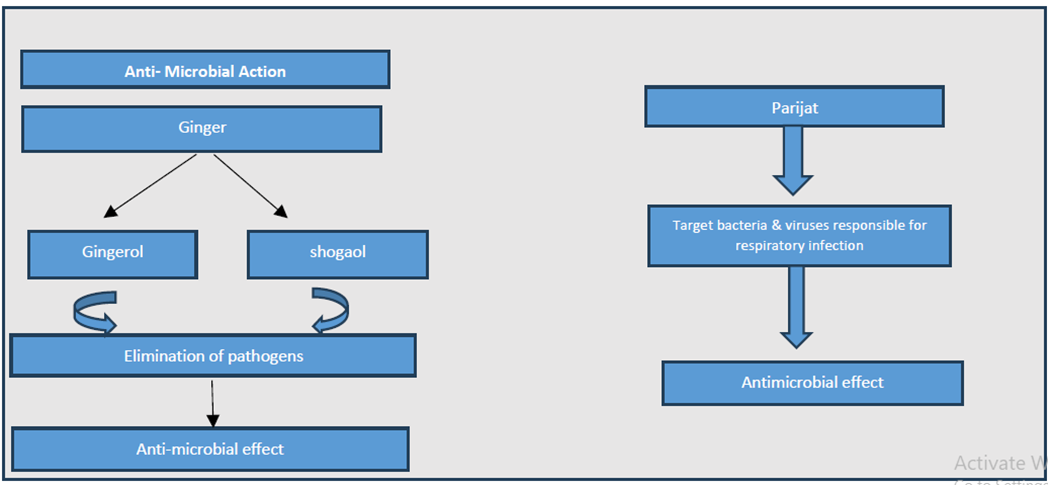
Fig no. 1.5 Mechanism of cough treatment.
1.4 Phytochemical Composition of Parijat Leaves
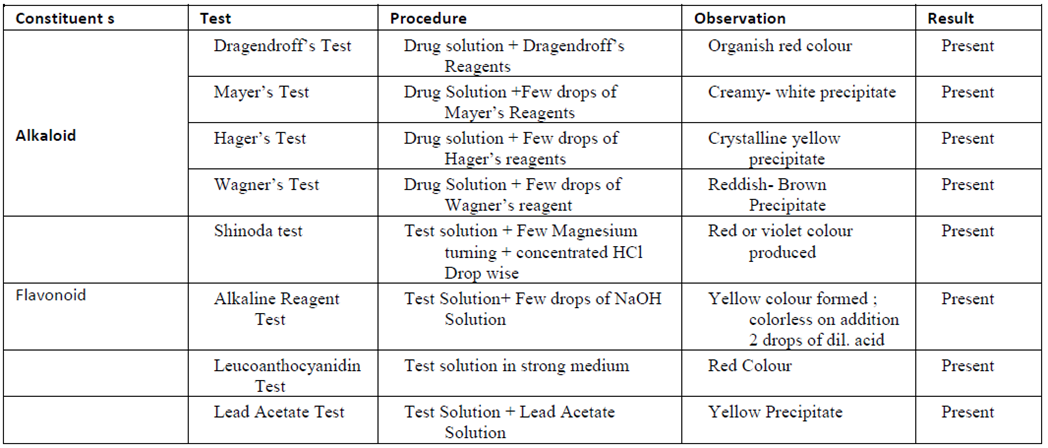
The leaves of Nyctanthes arbor-tristis are rich in diverse phytochemical compounds responsible for their medicinal properties. Preliminary phytochemical screening has revealed the presence of alkaloids, flavonoids, glycosides, tannins, saponins, triterpenoids, and steroids. The major bioactive constituents include nyctanthin, arbortristoside A, B, and C, βsitosterol, naringenin derivatives, and phenolic compounds. These compounds contribute to the antioxidant and anti-inflammatory potential of the leaves. Quantitative analyses show that methanolic and ethanolic extracts of the leaves exhibit high total phenolic and flavonoid content, indicating potent free radical scavenging capacity.
1.5 Pharmacological and Therapeutic Activities of Parijat Leaves
Leaf extracts of Parijat have demonstrated significant anti-inflammatory effects in experimental models. The ethanolic extract reduces paw edema and inflammatory mediators such as prostaglandins and cytokines. The analgesic potential is attributed to flavonoids and iridoid glycosides that inhibit cyclooxygenase and lipoxygenase pathways.
Traditionally used to treat malarial and chronic fevers, Parijat leaves exhibit strong antipyretic properties. Experimental studies have shown that aqueous extracts reduce elevated body temperature and inhibit Plasmodium species in vivo. The antimalarial effect may be due to modulation of immune responses and interference with parasite metabolism.
Parijat leaf extracts possess notable antioxidant properties due to their high phenolic and flavonoid content. They neutralize reactive oxygen species and enhance endogenous antioxidant enzymes such as superoxide dismutase and catalase. In hepatoprotective studies, ethanolic extracts have been shown to reduce liver enzyme levels and improve histopathological profiles in toxin-induced liver damage models.
The hypoglycemic effects of Parijat leaves have been reported in streptozotocin-induced diabetic rats, where administration of ethanolic extract significantly lowered blood glucose and cholesterol levels. The mechanism may involve enhanced glucose uptake and inhibition of α-glucosidase enzyme activity.
Methanolic and aqueous extracts of Parijat leaves exhibit broad-spectrum antimicrobial effects against Gram-positive and Gram-negative bacteria and several fungal species. Furthermore, immunomodulatory studies reveal that the leaf extract enhances macrophage activation and lymphocyte proliferation, indicating potential benefits in immune compromised conditions.
1.6 Material and method
Collection of material
The Fresh Leaves and Flower of Nyctanthes arbortristis (Parijat) were collected from local area of Tembhurni, Sholapur. Taxonomical identification of plant was done by using with the help of flora of Sholapur district, Maharashtra. The leaves and flowers wad dried proper and stored in airtight container.
Methodology
Collect the fresh Parijat leaves and flowers from clean area. Rinse them and remove dirt. Allow them to dry. Preparation of ginger: Peel and finely chop the fresh ginger and allow to dry it.
Blending:
After fully drying of leaves and Flower grind them using blender.
Mixing:
Combine powdered Parijat leaves and flower with ginger and mix evenly .
Storage:
Store in airtight container.
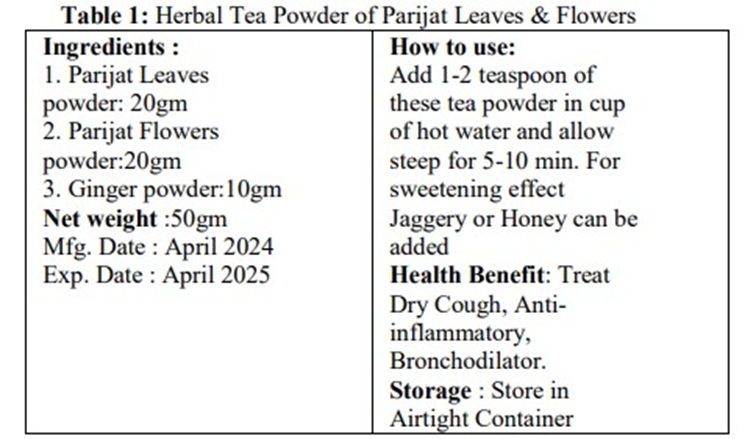
To prepare tea, add 1-2 teaspoon of these teapowder in cup of hot water. Allow too step for 5- 10 minute for sweetening effect, honey or Jaggery powder can be added.
Label
Physical Parameter
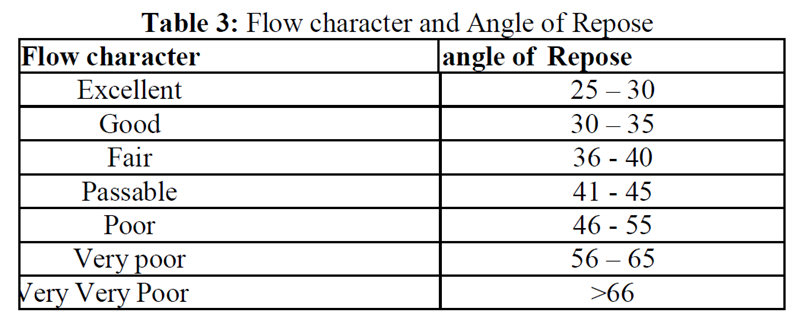
Angle of Repose
The funnel method is used to determine the angle of repose, which is represented by theta θ. The angle of repose was computed using the formula below. And table show flow property of powder.
? = Tan-1[h/r]
Where, h = Height of powder cone formed r = Radius of powder cone formed
Evaluation Parameter
Table 2: Chemical Parameters [16,17]
Bulk density
A 100 ml dried measuring cylinder was used to measure bulk density. Adding dry powder to a measuring cylinder and computing the applying the formula that follows;
Bulk Density = Mass of powder /Bulk volume of powder
Tapped density
Pouring dried powder into a 100 ml measuring cylinder allowed for the measurement of taped density. After 100 taps, record the volume and compute using the following formula:
Tapped density= Powder weight/Volume of tapped powder
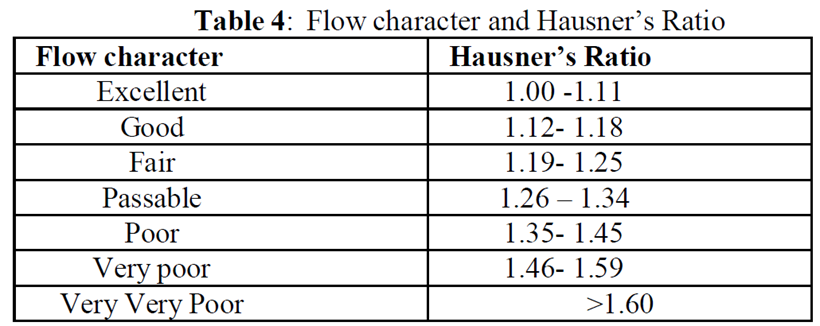
Hausner’s ratio
The ratio of a powder’s tapped density to its bulk density is called Hausner’s ratio.
Computed using the formula that follows. Table displays the powder’s flow characteristics.
Hausner’s ratio= Tapped density/Bulk density
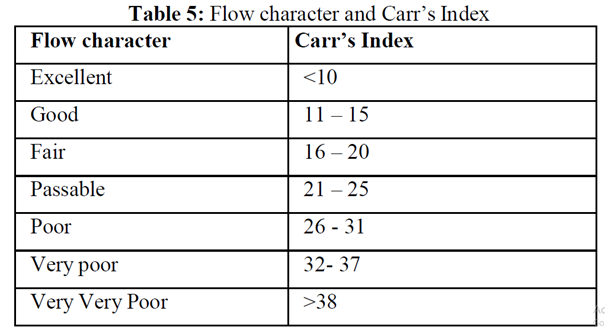
Carr’s Index
The following formula determines Carr's index, often known as the compressibility index.
Powder flow property is displayed in Table below.
Carr’s index= Tapped density – Bulk density / Tapped density *100
Moisture content
The moisture content was measured described by AACC method. A two-gram sample was put in a glass Petri plate that had been prepared and weighed, and it was then dried in a hot air oven at 130 °C for two hours, or until it was solid. Glass petriplate was weighed after drying, moved to a desiccator to cool, and then weighed again. The weight loss as a percentage of moisture content was c6.omputed.
Moisture Content (%) = W1 – W2 /Weight of sample *100
Where, W1 =Weight of sample before Drying
W2= Weight of sample after Drying
The ash content was measured, described by AACC method. A two-gram sample was put into a reweighed crucible, which was then left uncovered and burned for four hours at 820 degrees Celsius in amuffle furnace. The crucible was then cooled in adesiccator before being weighed.
Ash Content
Ash Value (%) = Weight of Ash/ Weight of sample *1
1.7 Toxicity and Safety Profile
Toxicological studies indicate that Parijat leaf extracts are generally safe at therapeutic doses. However, excessive consumption or high-dose administration can cause gastric irritation and mild nausea due to the presence of phenolic compounds and glycosides. Acute oral toxicity studies have established LD50 values above 2000 mg/kg in rodent models, confirming a wide margin of safety.
1.8 Discussion and Future Prospects
The reviewed literature clearly supports the therapeutic importance of Parijat leaves in treating various diseases. The presence of iridoid glycosides, flavonoids, and phenolics contributes to their wide-ranging pharmacological activities. Despite promising results in preclinical studies, there remains a lack of well-designed clinical trials to validate efficacy and safety in humans. Future research should focus on the isolation of pure compounds, elucidation of molecular mechanisms, standardization of extracts, and development of novel formulations.
2. LITERATURE REVIEW
Pharmacological Studies on Nyctanthes arbor-tristis (Parijat) Leaves
|
Study / Author |
Year |
Extract Type |
Key Findings |
Phytochemicals / Mechanism |
|
Kumar et al. |
2013 |
Ethanolic extract |
Strong anti-inflammatory and antipyretic activity supporting traditional use in fever & arthritis |
Not specified |
|
Pundir et al. (Review) |
2022 |
– |
Comprehensive pharmacognostic and phytochemical review |
Presence of iridoid glycosides (arbortristoside A, B, C) and flavonoids responsible for antioxidant & hepatoprotective effects |
|
Das et al. |
2022 |
Leaf extract (in vivo) |
Significant antimalarial activity; 55–65% chemosuppression against Plasmodium berghei in mice |
Validates ethnomedicinal use for chronic fevers |
|
Jabbar et al. |
2021 |
Methanolic extract |
Restored hepatic enzyme balance in toxin-induced liver damage; strong hepatoprotective potential |
Antioxidant-related mechanisms |
|
Rani et al. |
2023 |
Aqueous extract |
Notable antidiabetic activity via α-glucosidase inhibition; lowered blood glucose |
Enzyme inhibition mechanism |
|
Sharma & Agarwal |
2019 |
Leaf extracts |
Demonstrated antimicrobial activity against E. coli and Staphylococcus aureus |
Potential for herbal antiseptics |
CONCLUSION
Nyctanthes arbor-tristis leaves represent a rich source of bioactive compounds with significant medicinal potential. The pharmacological findings substantiate their traditional uses as anti-inflammatory, antioxidant, hepatoprotective, and antidiabetic agents.
The preparation and evaluation of herbal tea powder using Parijat leaves and flowers with ginger present a promising remedy for treating dry cough. Through meticulous preparation and systematic evaluation, we have demonstrated the potential of this herbal blend to provide relief from cough symptoms. The incorporation of ginger adds additional therapeutic benefits, enhancing the efficacy of the herbal tea. As evidenced by our findings, this natural remedy offers a safe and effective alternative to conventional cough treatments. Further research and clinical trials are warranted to explore its full therapeutic potential and ensure its widespread availability for individuals seeking natural remedies for dry cough. By harnessing the power of nature's ingredients, we can continue to develop holistic approaches to healthcare that prioritize both efficacy and safety. Although the existing research demonstrates a strong therapeutic profile, clinical validation remains crucial to ensure safety and efficacy. With comprehensive pharmacological evaluation and formulation development, Parijat leaves hold great promise for future phytopharmaceutical and nutraceutical applications.
REFERENCE

Navinraj Mourya, Sneha Sah, Preparation and Evaluation of Herbal Tea Powder of Parijat Leaves and Flowers to Treat Dry Cough, Int. J. of Pharm. Sci., 2025, Vol 3, Issue 11, 3405-3416. https://doi.org/10.5281/zenodo.17677973
 10.5281/zenodo.17677973
