
1,3 Department of Pharmaceutical sciences, Shri Jagdishprasad Jhabarmal Tibrewala University, Jhunjhunu, Rajasthan, India
2 Department of Pharmaceutical Chemistry, Al-Azhar College of Pharmacy, Thodupuzha
Phaleria macrocarpa, commonly known as the "devil’s fruit," is a plant renowned for its medicinal properties, with various bioactive compounds identified in its different parts. This study aims to conduct a comprehensive phytochemical analysis of the ethanol extract from the fruit of Phaleria macrocarpa to evaluate its chemical composition. The extraction process was carried out using ethanol as a solvent, and the resultant extract was analyzed for the presence of primary and secondary metabolites, including alkaloids, flavonoids, saponins, tannins, and terpenoids, through standard phytochemical screening techniques. Results indicated the presence of several bioactive compounds that are commonly associated with medicinal activity, supporting the traditional use of P. macrocarpa in herbal medicine. The findings highlight the potential of the ethanol extract from Phaleria macrocarpa as a valuable source of phytochemicals with therapeutic properties, paving the way for further research into its Nano particles formulation and evaluation & pharmacological applications.
Diabetes mellitus, often referred to simply as diabetes (from the Ancient Greek "diabetes," meaning "to pass through [urine]"), is a metabolic disorder, typically resulting from a combination of hereditary and environmental factors, leading to abnormally high blood sugar levels (hyperglycemia). Diabetes is often described as "starvation in the midst of plenty" because the body has high levels of glucose, but the cells are unable to consume it due to osmotic differences. Insulin is a hormone produced in the pancreas that enables body cells to absorb glucose and convert it into energy. When body cells cannot absorb glucose, it accumulates in the blood, causing hyperglycemia. This can lead to acute metabolic complications such as ketoacidosis and, over the long term, contribute to chronic microvascular complications.
Diabetes is a serious, chronic disease that occurs when the pancreas either does not produce enough insulin (a hormone that regulates blood glucose) or when the body cannot effectively use the insulin it produces. Elevated blood glucose, a common result of uncontrolled diabetes, can, over time, cause significant damage to the heart, blood vessels, eyes, kidneys, and nerves. More than 400 million people worldwide live with diabetes. There are four types of diabetes mellitus: Type 1 diabetes (formerly known as insulin-dependent, juvenile, or childhood-onset diabetes), Type 2 diabetes (previously referred to as non-insulin-dependent or adult-onset diabetes), Gestational diabetes (GDM), a temporary condition that occurs during pregnancy and carries a long-term risk of developing Type 2 diabetes, and MODY (Maturity Onset Diabetes of the Young).
1.1 There Are Three Main Types Of Diabetes:
Type – 1 Insulin Dependent Diabetes Mellitus (IDDM), also known as Type 1 diabetes, is not typically associated with obesity and may be linked to acidosis or ketosis. Insulin administration is essential for patients with Type 1 diabetes. This form of diabetes is further subdivided into immune and idiopathic types. The immune form is the most common and can affect individuals at any age, although most patients are diagnosed before the age of 30. When it occurs in infancy (due to a congenital disorder) or childhood, it is referred to as Juvenile diabetes. Genetic susceptibility plays a role, with a multifactorial genetic linkage; however, only 15-20% of patients have a positive family history. Type 1 diabetes involves the degeneration of β cells in the islets of Langerhans in the pancreas. β cells may be destroyed by viral infections, congenital disorders, or autoimmune responses in which the body produces antibodies against its own β cells.
Cause: Type 1 diabetes is an autoimmune condition where the body’s immune system attacks and destroys the insulin-producing beta cells in the pancreas.
Characteristics: People with type 1 diabetes produce little to no insulin and must rely on external insulin injections or an insulin pump for life.
Onset: It usually develops in children or young adults, though it can occur at any age.
Management: Requires regular insulin administration, blood sugar monitoring, and a carefully managed diet.
Type – 2 Diabetes is characterized by tissue resistance to insulin and a relative deficiency in insulin secretion. It typically occurs after the age of 40, which is why it is often referred to as maturity onset diabetes mellitus. It is also known as adult-onset diabetes or Non-Insulin Dependent Diabetes Mellitus (NIDDM). Impaired insulin action in this type of diabetes affects fat metabolism, leading to increased free fatty acid flux and elevated triglyceride levels, while high-density lipoprotein (HDL) levels are typically low. In Type 2 diabetes, the structure and function of β cells, as well as insulin levels in the blood, are generally normal. However, the condition develops due to the absence or reduced number of insulin receptors on the cells throughout the body, preventing proper glucose uptake.
Cause: Type 2 diabetes occurs when the body becomes resistant to insulin, or the pancreas does not produce enough insulin to maintain normal blood glucose levels.
Characteristics: It is the most common form of diabetes, often associated with obesity, physical inactivity, and poor dietary habits.
Onset: Type 2 diabetes typically develops in adults, although it is increasingly being diagnosed in children and adolescents due to rising obesity rates.
Management: It can be managed with lifestyle changes such as diet and exercise, oral medications, and in some cases, insulin injections.
Cause: Gestational diabetes occurs during pregnancy when the body cannot produce enough insulin to meet the increased needs of pregnancy, leading to high blood sugar levels.
Characteristics: It usually develops around the 24th week of pregnancy and may resolve after delivery, but women who experience gestational diabetes are at higher risk of developing type 2 diabetes later in life.
Management: It is typically managed through diet, exercise, and, if necessary, insulin therapy during pregnancy.
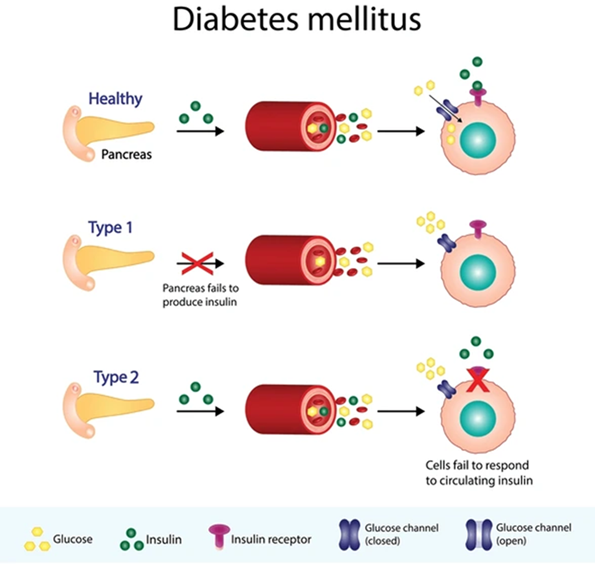
Fig: 1 Diabetes Mellitus
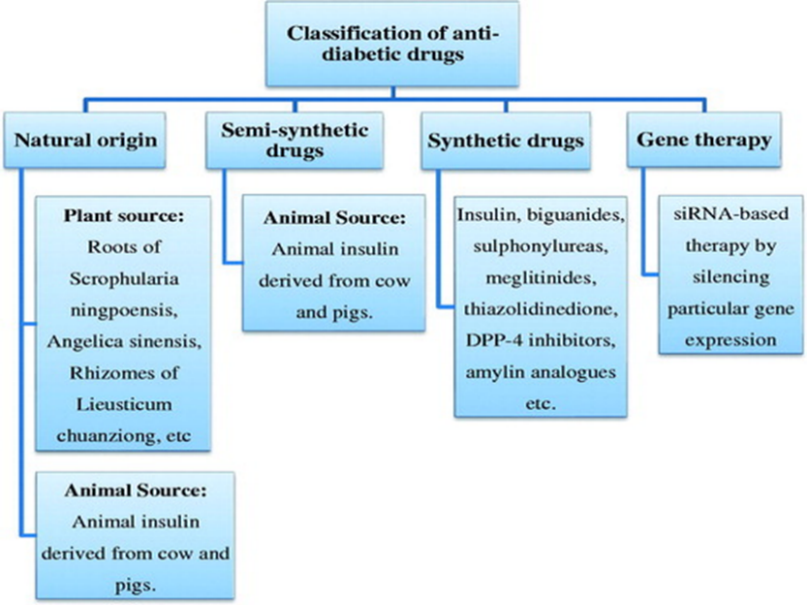
Fig: 2 Anti Diabetes Drugs
2.1 Phaleria Macrocarpa:
Phaleria macrocarpa, commonly known as God's Crown, Mahkota Dewa, or Pau, is an Indonesian plant from the Thymelaceae family, native to the tropical regions of Papua Island. This plant is a complete tree, comprising its stem, leaves, flowers, and fruits. It can grow between 1 and 18 meters in height, with a straight root that can extend up to 1 meter long, secreting sap. The tree has brownish-green bark and white wood. It thrives at elevations ranging from 10 to 1,200 meters above sea level and typically has a productive lifespan of 10 to 20 years. The leaves are green, tapering, and measure between 7 to 10 cm in length and 3 to 5 cm in width. Flowers grow in clusters of 2 to 4 and range in color from green to maroon. The fruit is round and white, although it is poisonous, with an elliptical shape and a diameter of approximately 3 cm.
The fruits are green when unripe and turn red as they ripen. Phaleria macrocarpa's seeds usually number between 1 and 2 per fruit. They are brown, ovoid, and anatropous. While the plant can be used in both unprocessed and processed forms, the unprocessed form may be toxic and poisonous. P. macrocarpa is mainly recognized for its potential in treating lifestyle-related diseases. Extracts from this plant have demonstrated a range of pharmacological activities, including anti-tumor, anti-hyperglycemic, anti-inflammatory, anti-diarrheal, vasodilatory, antioxidant, antiviral, antibacterial, and antifungal effects. The stem of P. macrocarpa is used in the treatment of bone cancer, while the eggshells of its seeds are used for addressing breast cancer, cervical cancer, lung diseases, liver diseases, and heart diseases. Additionally, the leaves contain compounds that can help treat impotence, blood disorders, allergies, diabetes mellitus, and tumors.
This review article examines the medicinal properties of P. macrocarpa extracts and the chemical constituents isolated from these extracts. The aim is to provide an updated understanding of this valuable plant and offer guidance for its future use in medical applications.
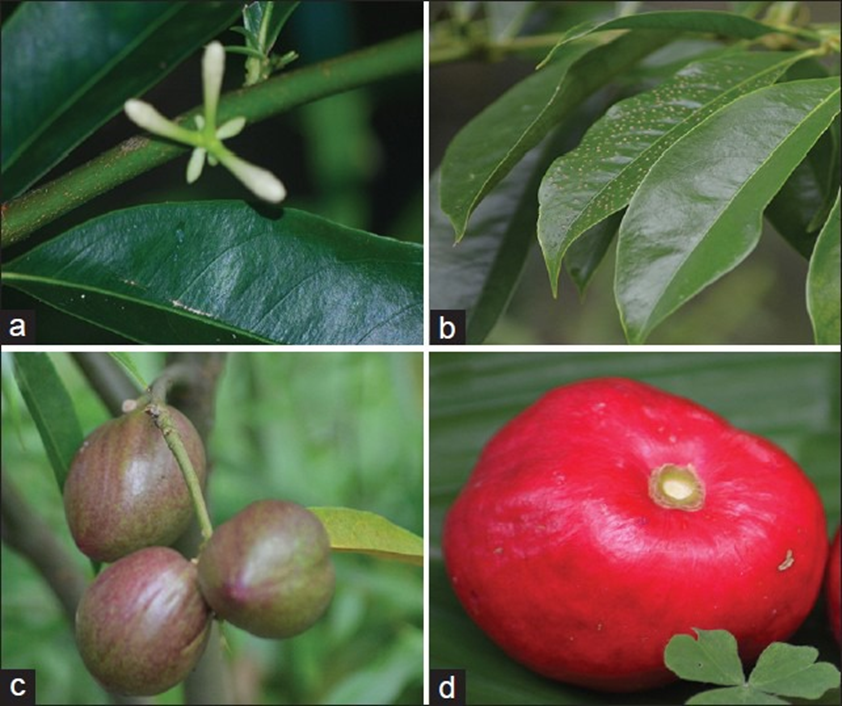
Fig: 3 Phaleria macrocarpa
Botanical description of Phaleria macrocarpa showing a typical (a) small flower bud, (b) green tapering leaves, (c) un-ripened green fruit (c), and (d) fully grown red fruit.
Table: 1 Scientific Classification
|
Kingdom: |
Plantae |
|
Clade: |
Tracheophytes |
|
Clade: |
Angiosperms |
|
Clade: |
Eudicots |
|
Clade: |
Rosids |
|
Order: |
Malvales |
|
Family: |
Thymelaeaceae |
|
Genus: |
Phaleria |
|
Species: |
P. macrocarpa |
Table: 2 Classifications & Characteristics
|
Plant Division |
Angiosperms (Flowering Seed Plants) (Dicotyledon) |
|
Plant Growth Form |
Tree (Small (6m-15m)) |
|
Lifespan (in Singapore) |
Perennial |
|
Mode of Nutrition |
Autotrophic |
|
Maximum Height |
6 m to 18 m |
2.4 Qualitative Phytochemical Studies:
A variety of chemical constituents have been identified in different parts of P. macrocarpa, each present in varying concentrations. These include mahkoside A, dodecanoic acid, palmitic acid, des-acetyl flavicordin-A, flavicordin-A, flavicordin-D, flavicordin-A glucoside, ethyl stearate, lignans, and sucrose. Yang and colleagues were the first to isolate mahkoside A (4,4′-dihydroxy-2-methoxybenzophenone-6-O-β-D-glucopyranoside) from the pit of P. macrocarpa, along with six known compounds: magniferin (a C-glucosylxanthone), kaempferol-3-O-β-D-glucoside, dodecanoic acid, palmitic acid, ethyl stearate, and sucrose.
Lignans isolated from various parts of P. macrocarpa, analyzed using chiral column techniques, include pinoresinol (79 ± 4% [−] enantiomer excess), lariciresinol (55 ± 6% [−] enantiomer excess), and matairesinol (pure [+] enantiomers). The bark and fruits are rich in saponins, alkaloids, polyphenolics, phenols, flavonoids, lignans, and tannins. Isolated constituents from the fruit include Icariside C3, magniferin, and gallic acid.
Chemical structures of constituents isolated from Phaleria macrocarpa extracts: (a) fevicordin-A, (b) fevicordin-D, (c) magniferin, (d) kaempferol, (e) myricetin, (f) naringin, (g) gallic acid, (h) rutin, (i) quercitin, (j) lariciresinol, (k) pinoresinol, (l) matairesinol.
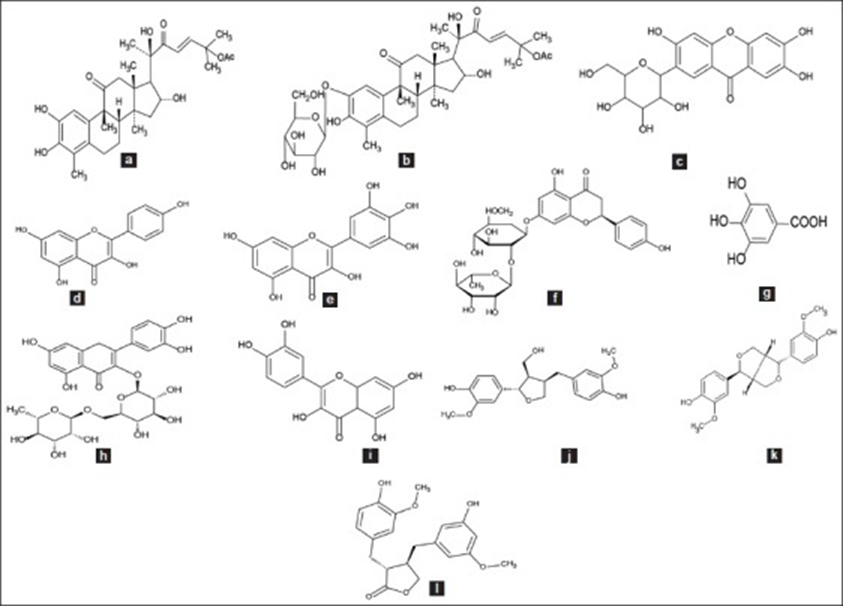
Fig: 4 Chemical Constituents
1. Pharmacological Effects: Numerous studies have explored the pharmacological effects of Phaleria macrocarpa. Research has investigated its anti-inflammatory, antioxidant, antidiabetic, anticancer, and antimicrobial properties, among others.
2. Phytochemical Constituents: The pharmacological effects of P. macrocarpa are largely attributed to its diverse phytochemical profile.
3.1 Extraction:
Identification of the plant: the plant specimen is collected and herbarium is prepared and it was identified by a skilled professional.
Extraction of dried ripened fruits: Riped fruits of Phalaria macrocarpa are collected from a farm at Chennai and it is dried. It can be extracted using subcritical carbon dioxide soxhlation method with sonication and solvent extraction.
Phytochemical screening: The extracts of Phalaria macrocarpa fruits are examined for phytochemicals, flavonols, flavonoids, and phenol content.
3.3 Phytochemical Studies:
Shade dried powdered plant materials for used for the determination of the physio chemical constants in accordance with the WHO guidelines.
3.3.1 Determination of Ash Values:
Ash values are helpful in determining the quality and purity of a crude drug in the powdered form. The residue remaining after incarnation is the ash content of the drug, which simply represents inorganic salts, naturally occurring drug or adhering to it or edibility added to it, as a form of adulteration.
Ash value of a crude drug is defined as the inorganic residue remaining after incineration, which complies of inorganic salts, naturally occurring in drug or adhering to it or deliberately added to it as a form of adulteration. Hence it is used for the determination of the quality and purity of the crude drug in the powdered form.
Total Ash: Total ash method is designed to measure the total amount of material remaining after ignition. They include both physiological ash which is derived from plant tissue itself and non-physiological ash which is the residue of extraneous matter adhering to the plant surface.
Procedure: Silica crucible was heated to red hot for 30 minutes and cooled in the desiccators Incinerate about 2 to 3 g accurately weighed, of the ground drug in a tarred silica dish at a temperature not exceeding 4500C until the sample is free from carbon, cooled in desiccators and weighed. The ash obtained was weighed. The percentage of total ash was calculated.
Water Soluble Ash: The difference in weight between the total ash and the residue after treatment of the total ash in water.
Procedure: Total ash obtained is boiled for 5 minutes with 25 ml of water, insoluble matter were collected in an ashless filter paper, washed with hot water and ignite for 15 min at a temperature not exceeding 4500. Subtract the weight of this residue in mg from the weight of total ash. Calculate the content of water-soluble ash in mg per gram of air-dried material.
Acid Insoluble Ash: The residue obtained after boiling the total ash with dilute hydrochloric acid, the remaining insoluble matters are ignited and measured. This measures the amount of silica present, especially as sand and siliceous earth.
Procedure: To the crucible containing total ash of the sample, 25 ml of dilute hydrochloric acid is added. The insoluble matter is collected on an ashless filter paper (Whatman 41) and washed with hot water until the filtrate is neutral. Filter paper containing the insoluble matter to the original crucible, dry on hot plate and ignite to constant weight. Allow the residue to cool in a suitable desiccator for 30 minutes and weighed without delay. Content of acid-insoluble ash with reference to the air-dried drug is calculated.
3.3.2 Determination of Extractive Values:
Extractive values are useful for the evaluation of phytoconstituents especially when the constituents of a drug cannot be readily estimated by any other means. Further these values indicate the nature of the active constituents present in a crude drug.
Determination of Water-Soluble Extractive:
5gm of air dried coarsely powdered sample was weighed and macerated with 100ml of chloroform water (95ml distilled water and 5ml chloroform) in a closed flask for 24 hours. It was shaken frequently for six hours and allowed to stand for rest eighteen hours. It was then filtered rapidly, taking precautions against loss of solvent and 25ml of the filtrate was evaporated to dryness in a tarred flat bottomed shallow dish and was dried at 105°C for 1 hour in the hot air oven and cooled in desiccators for 30min and weighed. The process was repeated till a constant weight was obtained; the percentage of water soluble extractive value was calculated with reference to the air dried drug.
WATER SOLUBLE EXTRACTIVE VALUE =Wt. of the dried extract / Wt. of the sample taken × 100
3.3.3 Determination of Moisture Content:
Loss On Drying: 10 g of the sample substances (without preliminary drying) was taken in a tarred evaporating dish. Use of high speed mill in preparing the samples are avoided. The sample in the tarred evaporating dish were placed in the drying chamber (105°C) for 5 hours and weigh. Drying and weighing is continued every one hour interval until the difference between the two successive weight is not more than 0.25 percent. Constant weight is reached when the two consecutive weighing after drying for 30 minutes and cooling for 30 minutes in a desiccators, show not more than 0.001 g difference. Percentage moisture content is compared with respect to the air dried sample.
% Moisture content = Final weight of the sample / Initial weight of the sample X 100
3.3.4 Isolation of Components and Characterization of Antidiabetic Molecules:
The plant extract and its sub fractions were analyzed by HPTLC- Rf value – based identification process.
3.4 Quantitative Estimation of Phytoconstituent:
Determination of Total Flavonoids:
Methods:
Ultra Violet spectroscopy method was carried out for the determination of total flavonoids content.
Preparation of Standard Stock solution:
Accurately weighed 25 mg of Quercetin standard transferred to 100 ml of volumetric flask and dissolved with dimethyl sulfoxide (DMSO). The serial dilution (20mcg, 40mcg, 60mcg, 80 mcg, 100 mcg) were made with dimethyl sulfoxide.
Preparation of Test Solution:
The leaf extract was weighed accurately equal to the weight of Standard Quercetin and transferred to 100 ml volumetric flask and the extract dissolved with dimethyl sulfoxide (DMSO). The dilution was made with dimethyl sulfoxide.
Procedure:
From the prepared solution of standard and test solutions 2ml was withdrawn from each concentration to the test tube and added equal volume of 2% Aluminium Chloride solution to every single concentration. Incubate the solution about 10 minute at ambient temperature. After 10 minute, Standard and sample solution measure the absorbance of spectrophotometrically at 430 nm with the standard and test sample solutions.
Results of the Preliminary Phytochemical Constituents present in Phalaria macrocarpa extract
Table: 3 Preliminary Phytochemical Screening
|
Sr. No |
Constituents |
Phalaria macrocarpa |
|
1. |
Alkaloids |
+ |
|
2. |
Carbohydrates |
_ |
|
3. |
Protein |
_ |
|
4. |
Terpinoids |
+ |
|
5. |
Phenols |
+ |
|
6. |
Tannins |
+ |
|
7. |
Flavanoids |
+ |
|
9. |
Glycosides |
+ |
|
10. |
Saponins |
+ |
+ = Present - = Absent
4.2 Preliminary Phytochemical Analysis:
Table: 4 Preliminary Phytochemical Analysis
|
Sr. No |
Physio-Chemical Constant |
Phalaria Macrocarpa |
Limits (%W/W) |
|
1 |
Total Ash |
8.1±1.7 |
Not more than 13 |
|
2 |
Acid Insoluble Ash |
1.2±1.4 |
Not more than 2.7 |
|
3 |
Water Soluble Extractive |
28.7±1.7 |
Not less than 23 |
|
4 |
Loss On Drying |
8.2 |
Not more than 15 |
4.3 QUANTITATIVE ESTIMATION:
Total Flavonoid Content:
The determination of total flavonoids from various extracts of Phalaria macrocarpa were performed with the Quercetin standard. The accuracy of test made by the serial dilution of Standard and the absorbance was measured spectrophotometrically at 435 nm S.
Standard Calibration Curve for Quercetin:
To determine the accuracy of the flavonoid compound by plotted the standard absorbance obtained from spectrophotometrically. The calibration curve done by made serial dilution (20mcg, 40mcg, 60mcg, 80 mcg, 100 mcg) of quercetin Standard stock solution, the absorbance plotted against concentration.
Table: 5 Spectrophotometric Absorbance Of Standard and Sample
|
Sr. No |
Concentration of standard Solution (µg/ml) |
Absorbance (435nm) |
|
1. |
20 |
0.132 |
|
2. |
40 |
0.170 |
|
3. |
60 |
0.219 |
|
4. |
80 |
0.329 |
|
5. |
100 |
0.401 |
|
6. |
Phalaria macrocarpa |
0.188 |
From the replicate absorbance value obtained by the spectrophotometry, the calculation of concentration of flavonoid present in 1gm of the extract was calculated by applying the dilution factor. The concentration of each extract obtained.
Table: 6 Percentage Yield of Total Flavonoid
|
Sr. No |
Sample |
Concentration Obtained (mg/gm) |
Percentage of Flavonoids Present |
|
1. |
Phalaria macrocarpa |
42.30 |
4.2 |
High Performance Thin Layer Chromatography (HPTLC):
The HPTLC fingerprinting of Phalaria macrocarpa extract were studied individually.
HPTLC Finger Printing of Phalaria macrocarpa extract:
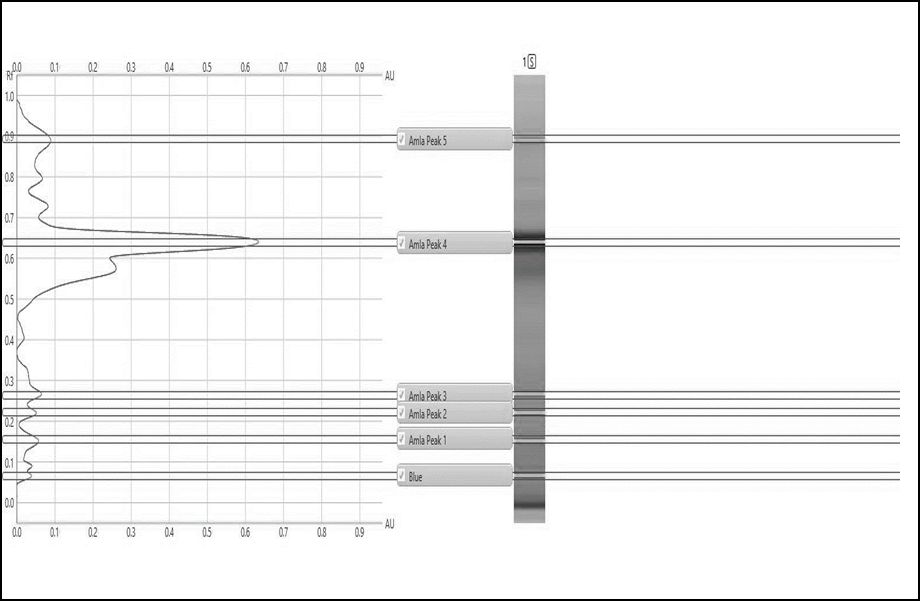
Fig: 5 HPTLC peak at System suitability test for Phalaria macrocarpa
Table: 7 Rf values from HPTLC Chromatogram of Phalaria macrocarpa
|
Sr. No. |
Track No. |
Rf value |
|
1. |
Tr.1 |
0.063 |
|
2. |
Tr.2 |
0.142 |
|
3. |
Tr.3 |
0.209 |
|
4. |
Tr.4 |
0.231 |
|
5. |
Tr.5 |
0.498 |
|
6. |
Tr.6 |
0.791 |
This study investigates the phytochemical profile of the ethanol extract from Phaleria macrocarpa, focusing on the identification of important chemical constituents, as well as conducting quantitative analysis for flavonoids and HPTLC analysis. The phytochemical analysis confirmed the presence of key bioactive compounds such as alkaloids, flavonoids, tannins, saponins, and terpenoids. Quantitative determination of flavonoids revealed significant concentrations, while High-Performance Thin-Layer Chromatography (HPTLC) analysis allowed for the precise separation and identification of these compounds. The results meet all required parameters, confirming the chemical richness of the extract, which may contribute to its therapeutic potential. The study's findings support the traditional use of P. macrocarpa in medicine and suggest its possible pharmacological applications.
REFERENCES



Liji Jacob, Shyamkumar B, Chainesh Shah, Phytochemical Analysis of Ethanol Extract from Phaleria macrocarpa, Int. J. of Pharm. Sci., 2026, Vol 4, Issue 3, 2044-2054. https://doi.org/10.5281/zenodo.19104548
 10.5281/zenodo.19104548
