View Article

Abstract

Numerous comorbidities, including cardiovascular disorders, depression, diabetes mellitus, dyslipidemia, osteoporosis, rhinosinusitis, and primarily gastro-oesophageal reflux disease and allergic rhinitis, are frequently linked to asthma. Despite the fact that bronchodilators are crucial for treating asthma, their overall effects on comorbid asthma, whether positive or negative, are not well described. This narrative review investigates how bronchodilators may affect asthmatic comorbidities.

Keywords

Asthma, Comorbidities, Bronchodilators, Respiratory disorders

Introduction

Numerous comorbidities are frequently linked to asthma, which may impact the severity and clinical intensity of the condition [1]. Even while the prevalence of these comorbidities varies greatly between research, which may cause the significance of this link to be underestimated, we firmly feel that serious consideration of how we need to thoroughly examine the phenomena is necessary.

While inhaled corticosteroids (ICSs) are the mainstay of asthma pharmacotherapy, bronchodilators, including long-acting β2-agonists (LABAs) and/or long-acting muscarinic antagonists (LAMAs), are crucial adjunctive treatments when necessary, and short-acting β2-agonists (SABAs) are recommended for prompt alleviation of asthma symptoms and bronchoconstriction [2].

Despite the fact that bronchodilators are crucial for treating asthma, their effects on comorbid asthma are not well described, regardless of whether favorable or negative.

In this narrative review, we plan to examine the potential effects of bronchodilators on comorbidities of asthma.

TYPES OF ASTHMA

Types of Asthma by Trigger

  • Allergic Asthma

Allergens such as mold, dust mites, pollen, and pet dander can cause asthma symptoms.

  • Non-Allergic Asthma

Non-allergenic causes like stress, certain drugs (like NSAIDs, like aspirin), infections, or air pollution might cause symptoms.

  • Occupational Asthma

This kind is brought on by inhaling dust, fumes, gasses, or other materials from the workplace.

  • Exercise-Induced Bronchoconstriction (EIB)

This disorder, which is also known as exercise-induced asthma, arises when physical activity causes airway restriction.

  • Cough-Variant Asthma

The persistent cough is the sole or main symptom.

SYMPTOMS

Symptoms of Asthma (Enlisted Form)

  1. Breathlessness (dyspnea)
  2. Whistling sound when breathing, or wheezing
  3. Coughing, particularly in the early morning or at night
  4. Tightness or pressure in the chest
  5. Breathing difficulties when exercising or exposed to cold
  6. Rapid respiration, or tachypnea
  7. Weariness during or following exercise
  8. Coughing or breathing issues that keep you from falling asleep
  9. An increase in the production of mucous
  10. Restlessness or anxiety during an asthma episode

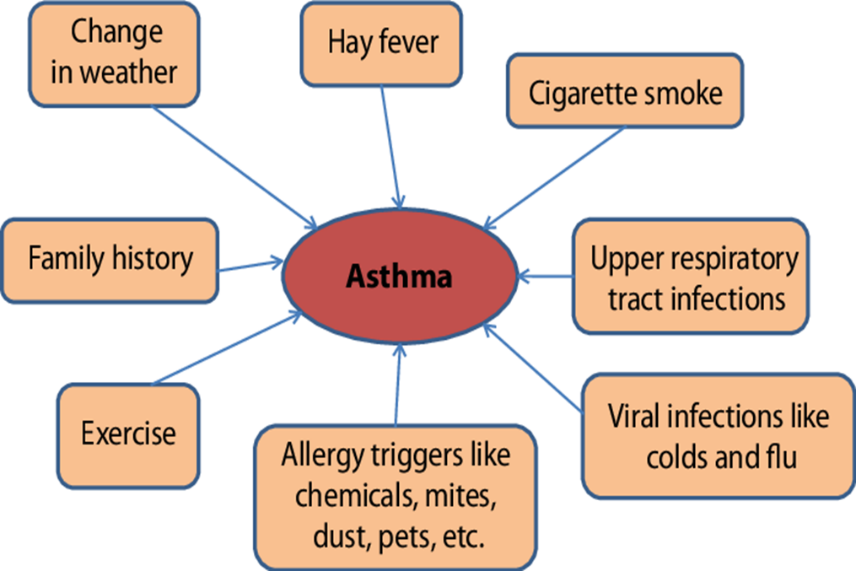
CAUSES OF ASTHMA

  1. Genetic susceptibility
  2. History of allergies or asthma in the family
  3. Environmental allergens, such as mold, dust mites, pollen, and pet dander
  4. Tobacco smoke and air pollution
  5. Exposure to dust or chemicals at work
  6. Infections of the respiratory system, particularly viral
  7. Changes in the weather (humidity, chilly air)
  8. Some drugs (NSAIDs, β-blockers, aspirin)
  9. Food preservatives and additives (sulfites)
  10. Exercise-induced bronchoconstriction
  11. Emotional strain or intense feelings
  12. Low birth weight or premature delivery
  13. Lack of breastfeeding in infancy
  14. Exposure to second-hand smoke during childhood

HOW BRONCHODILATOR ACT ON ASTHMA

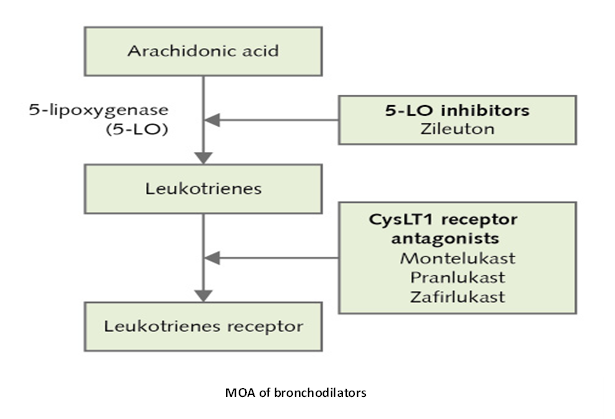
Mechanism of Action of Bronchodilators in Asthma

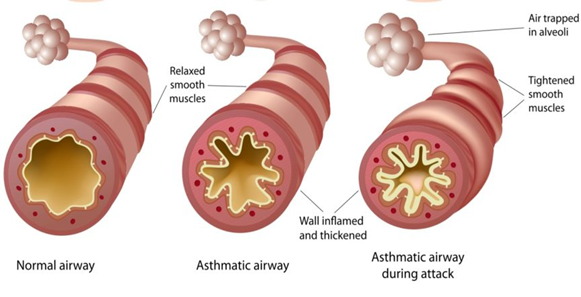
Drugs known as bronchodilators assist asthmatics breathe easier by relaxing and widening (dilating) their bronchial airways.

How Bronchodilators Work:

The bronchial smooth muscles relax and broaden as a result of their action on the surrounding muscles.

Decrease airway resistance and enhance oxygen flow by dilatation of the bronchi and bronchioles.

Reduce bronchospasm → They prevent or lessen airway constriction brought on by allergies, physical activity, or other causes.

Minimize asthma attack symptoms → Assist in relieving coughing, chest tightness, wheezing, and shortness of breath.

Types of Bronchodilators & Their Action

Type

Example Drugs

Mechanism of Action

β?-adrenergic agonists

Salbutamol (Albuterol), Formoterol, Salmeterol

Stimulate β?-receptors → relax bronchial smooth muscle by increasing cAMP

Anticholinergics

Ipratropium bromide, Tiotropium

Block acetylcholine (ACh) on muscarinic receptors → prevent bronchoconstriction

Methylxanthines

Theophylline, Aminophylline

Inhibit phosphodiesterase enzyme → increase cAMP → relax airway muscles

Bronchodilators Used in Asthma

Class/ Type

Examples

Mechanism of Action (MOA)

Advantages

Disadvantages/ Side Effects

1. β?-Adrenergic Agonists

Short-acting: Salbutamol (Albuterol), Terbutaline
Long-acting: Salmeterol, Formoterol

Stimulate β?-receptors in bronchial smooth muscle → ↑ cAMP → muscle relaxation → bronchodilation

Rapid relief of acute attack (SABA)
Long-term control (LABA) when combined with corticosteroids

Tremors, nervousness, tachycardia, tolerance on overuse

2. Anticholinergics (Muscarinic Antagonists)

Ipratropium bromide, Tiotropium

Block muscarinic (M?) receptors → inhibit acetylcholine → prevent bronchoconstriction

Useful in patient’s intolerant to β?-agonists
Effective in COPD-asthma overlap

Dry mouth, throat irritation, headache

3. Methylxanthines

Theophylline, Aminophylline

Inhibit phosphodiesterase (PDE) → ↑ cAMP → bronchodilation; also, mild anti-inflammatory effect

Oral route available
Improves diaphragm contractility

Narrow therapeutic index, nausea, arrhythmia, insomnia

4. Combination Inhalers

Salmeterol + Fluticasone
Formoterol + Budesonide

Combine bronchodilation (β?-agonist) and anti-inflammatory (steroid) actions

Dual benefit: long-term control + symptom relief

Costly, potential steroid-related side effects (oral thrush)

ADVANTAGES

  • Provide quick relief from asthma symptoms
  • Relax bronchial smooth muscles and open airways
  • Improve airflow and oxygen supply to the lungs
  • Reduce wheezing, coughing, and shortness of breath
  • Useful in both acute attacks and long-term control (depending on type)
  • Enhance effectiveness of inhaled corticosteroids when used in combination
  • Improve exercise tolerance and daily activity
  • Can be administered easily through inhalers or nebulizers
  • Reduce frequency and severity of asthma attacks
  • Improve overall quality of life for asthma patients

DISADVANTAGES

  • may result in muscle shaking or tremors.
  • may result in tachycardia, or elevated heart rate, or palpitations.
  • Anxiety, restlessness, or nervousness may arise.
  • You might feel lightheaded or have a headache.
  • Irritation of the throat and dry mouth, particularly when taking anticholinergics.
  • Theophylline, also known as methylxanthine, has a limited therapeutic range and a potential for toxicity.
  • Sleeplessness, nausea, and vomiting are examples of potential adverse effects.
  • Ineffective at reducing airway inflammation; corticosteroids are required for that.

REFERENCE

  1. S Suh, D. I., & Johnston, S. L. “The Wiser Strategy of Using Beta-Agonists in Asthma: Mechanisms and Rationales.” Allergy, Asthma & Immunology Research, 2024;16(3):217-234.
  2. “Bronchodilators - Stat Pearls.” NCBI Bookshelf. — general mechanisms, adverse effects, types.
  3. JCI – “β-Agonists and asthma: too much of a good thing?” — mechanism of β?-agonists and risks with chronic use.
  4. “Beta-agonists: what is the evidence that their use increases the risk of asthma morbidity and mortality?” — systematic review.
  5. “Adverse Outcomes Associated with Short-Acting Beta-Agonist Overuse in Asthma: A Systematic Review and Meta-Analysis.”
  6. “The role of anticholinergics in acute asthma treatment: an evidence-based evaluation.”
  7. “Asthma Medications - StatPearls.” — side-effects, types of bronchodilators including anticholinergics and methylxanthines.
  8. “The use of anticholinergics in asthma.” — review on efficacy (Flynn RA, Glynn DA, Kennedy MP) et al.
  9. “Anticholinergics in the treatment of children and adults with acute asthma: a systematic review with meta-analysis.”
  10. “Over-prescription of short-acting β?-agonists and asthma management in the Gulf region: a multicountry observational study.” Alzaabi, A. et al., Asthma Research & Practice, 2022.
  11. Clinical evaluation of asthma (symptoms, physical exam) — PubMed article.
  12. Mayo Clinic — “Asthma: Symptoms and causes.”
  13. My Cleveland Clinic — “Bronchodilators: Asthma, Purpose, Types & Side Effects.”
  14. American Academy of Allergy, Asthma & Immunology / AAFA — “What Are Asthma Symptoms?”
  15. Ada Health — “Asthma: Symptoms, Causes and Treatment.”
  16. “Anticholinergic agents for chronic asthma in adults.” — review article on long-term anticholinergic use.
  17. “Inhaled Corticosteroid Asthma Inhaler for Long-Term Treatment.” WebMD — for comparison and contexts.
  18. The Cochrane Review — “Combination fixed-dose beta agonist and steroid inhaler as required for adults or children with mild asthma.”
  19. “Clinical concerns with inhaled beta2-agonists: adult asthma” — risks & adverse effects.
  20. Osmosis — “Anticholinergics: What Are They, How Do They Work, and More.” — for basic pharmacology and side effects. Matera, M. G., Page, C. J., Liccardi, G., Paola Rogliani, & Mario Cazzola. Pharmacology and Therapeutics of Bronchodilators Revisited. Pharmacological Reviews. 2019;72(1):218-252.
  21. Clinical Pharmacology of Bronchodilator Medications. Authors: various. Review article on β-agonists & anticholinergics in asthma & COPD.
  22. Theophylline (3-methylxanthine) review — Mechanism, use, side effects.
  23. Expert Panel Report 3: Guidelines for the Diagnosis and Management of Asthma (Section on Methylxanthines) — U.S. National Asthma Education and Prevention Program.
  24. Doxofylline: The next generation methylxanthine — Sankar J., Lodha R., Kabra SK. Indian J Pediatr. 2008.
  25. Drugs for Preventing and Treating Asthma — MSD Manual. (Theophylline, etc.)
  26. Comparative study of adverse drug reaction patterns of two anti-asthma groups (Beta-2 agonists vs Methylxanthine) — Narendra Babu S. et al.
  27. Patterns of bronchodilator therapy in asthmatic outpatients — Toetik Aryani, Riska Kholifatul Rahmawati, etc.
  28. Long-Acting β?-Agonist Step-off in Patients with Controlled Asthma: Systematic Review with Meta-analysis — JAMA Internal Medicine.
  29. What is the evidence for stopping long-acting beta2-agonists for adults with stable asthma using combination therapy? — Cochrane Review.
  30. The effects of long-acting bronchodilators on total mortality in patients with stable COPD — Respiratory Research. (Though COPD-focused, relevant for LABA/LAMA insights)
  31. Status Asthmaticus in the Pediatric ICU: A Comprehensive Review of Management and Challenges — MDPI, authors describing add-on therapies including methylxanthines.

Reference

  1. S Suh, D. I., & Johnston, S. L. “The Wiser Strategy of Using Beta-Agonists in Asthma: Mechanisms and Rationales.” Allergy, Asthma & Immunology Research, 2024;16(3):217-234.
  2. “Bronchodilators - Stat Pearls.” NCBI Bookshelf. — general mechanisms, adverse effects, types.
  3. JCI – “β-Agonists and asthma: too much of a good thing?” — mechanism of β?-agonists and risks with chronic use.
  4. “Beta-agonists: what is the evidence that their use increases the risk of asthma morbidity and mortality?” — systematic review.
  5. “Adverse Outcomes Associated with Short-Acting Beta-Agonist Overuse in Asthma: A Systematic Review and Meta-Analysis.”
  6. “The role of anticholinergics in acute asthma treatment: an evidence-based evaluation.”
  7. “Asthma Medications - StatPearls.” — side-effects, types of bronchodilators including anticholinergics and methylxanthines.
  8. “The use of anticholinergics in asthma.” — review on efficacy (Flynn RA, Glynn DA, Kennedy MP) et al.
  9. “Anticholinergics in the treatment of children and adults with acute asthma: a systematic review with meta-analysis.”
  10. “Over-prescription of short-acting β?-agonists and asthma management in the Gulf region: a multicountry observational study.” Alzaabi, A. et al., Asthma Research & Practice, 2022.
  11. Clinical evaluation of asthma (symptoms, physical exam) — PubMed article.
  12. Mayo Clinic — “Asthma: Symptoms and causes.”
  13. My Cleveland Clinic — “Bronchodilators: Asthma, Purpose, Types & Side Effects.”
  14. American Academy of Allergy, Asthma & Immunology / AAFA — “What Are Asthma Symptoms?”
  15. Ada Health — “Asthma: Symptoms, Causes and Treatment.”
  16. “Anticholinergic agents for chronic asthma in adults.” — review article on long-term anticholinergic use.
  17. “Inhaled Corticosteroid Asthma Inhaler for Long-Term Treatment.” WebMD — for comparison and contexts.
  18. The Cochrane Review — “Combination fixed-dose beta agonist and steroid inhaler as required for adults or children with mild asthma.”
  19. “Clinical concerns with inhaled beta2-agonists: adult asthma” — risks & adverse effects.
  20. Osmosis — “Anticholinergics: What Are They, How Do They Work, and More.” — for basic pharmacology and side effects. Matera, M. G., Page, C. J., Liccardi, G., Paola Rogliani, & Mario Cazzola. Pharmacology and Therapeutics of Bronchodilators Revisited. Pharmacological Reviews. 2019;72(1):218-252.
  21. Clinical Pharmacology of Bronchodilator Medications. Authors: various. Review article on β-agonists & anticholinergics in asthma & COPD.
  22. Theophylline (3-methylxanthine) review — Mechanism, use, side effects.
  23. Expert Panel Report 3: Guidelines for the Diagnosis and Management of Asthma (Section on Methylxanthines) — U.S. National Asthma Education and Prevention Program.
  24. Doxofylline: The next generation methylxanthine — Sankar J., Lodha R., Kabra SK. Indian J Pediatr. 2008.
  25. Drugs for Preventing and Treating Asthma — MSD Manual. (Theophylline, etc.)
  26. Comparative study of adverse drug reaction patterns of two anti-asthma groups (Beta-2 agonists vs Methylxanthine) — Narendra Babu S. et al.
  27. Patterns of bronchodilator therapy in asthmatic outpatients — Toetik Aryani, Riska Kholifatul Rahmawati, etc.
  28. Long-Acting β?-Agonist Step-off in Patients with Controlled Asthma: Systematic Review with Meta-analysis — JAMA Internal Medicine.
  29. What is the evidence for stopping long-acting beta2-agonists for adults with stable asthma using combination therapy? — Cochrane Review.
  30. The effects of long-acting bronchodilators on total mortality in patients with stable COPD — Respiratory Research. (Though COPD-focused, relevant for LABA/LAMA insights)
  31. Status Asthmaticus in the Pediatric ICU: A Comprehensive Review of Management and Challenges — MDPI, authors describing add-on therapies including methylxanthines.

Photo
Pratiksha Shejul
Corresponding author

Yash Institute of Pharmacy, Chh. Sambhajinagar, Maharashtra, India 431134

Photo
Tarrnum Shaikh
Co-author

Yash Institute of Pharmacy, Chh. Sambhajinagar, Maharashtra, India 431134

Photo
Shrikant Madhekar
Co-author

Assistent Professor, Yash Institute of Pharmacy, Chh. Sambhajinagar, Maharashtra, India 431134

Photo
Sanchidanand Angdi
Co-author

Principal, Yash Institute of Pharmacy, Chh. Sambhajinagar, Maharashtra, India 431134

Pratiksha Shejul, Tarrnum Shaikh, Shrikant Madhekar, Sanchidanand Angdi, Introduction of Asthma, Which is Treated by Bronchodilator, Int. J. of Pharm. Sci., 2025, Vol 3, Issue 11, 3183-3188. https://doi.org/10.5281/zenodo.17663098

More related articles
Plant Dicliptera bupleuroide is a source of Anti-o...
Ankit Sharma, Dr Dev Prakash Dahiya, Anchal Sankhyan, Vishal, ...
An Overview of Sample Preparation Methods for Bioa...
Aditya Bogar, Prerana Kothawade, Akshay Tuljapure, Vinayak Jamkar...
Introduction To Lepidium Sativum Linn Seeds, And E...
Sumangal narayan wahule, Sushant Marchande, Girija Bhanushali, Ha...
A Review on Introduction to Delonix Regia and it's various uses or Activities...
Mayur B. Mane, Smita.S.Aher, Rishikesh S. Bachhav, Tushar.P.Patil, ...
An Introduction To Pharmaceutical Excipients Use In Soid Oral Formulation : A Re...
Rajeshwari G. Khairnar, Aniket T. Chavan, Rupali R. Tasgaonkar, ...
Related Articles
Introduction Of Lord of Shiva Plant: A Review...
Prajakta Patil, Parth Palamkar, Ranjit Patil, Abhishek Patil, Pavan vilas chavan, Shivani Patil, ...
Plant Dicliptera bupleuroide is a source of Anti-oxidant, anti-inflammatory and ...
Ankit Sharma, Dr Dev Prakash Dahiya, Anchal Sankhyan, Vishal, ...
More related articles
Plant Dicliptera bupleuroide is a source of Anti-oxidant, anti-inflammatory and ...
Ankit Sharma, Dr Dev Prakash Dahiya, Anchal Sankhyan, Vishal, ...
An Overview of Sample Preparation Methods for Bioanalytical Analysis: Introducti...
Aditya Bogar, Prerana Kothawade, Akshay Tuljapure, Vinayak Jamkar, Aditya Gurav, Akshay Nalawade, ...
Introduction To Lepidium Sativum Linn Seeds, And Extraction Of Mucilage...
Sumangal narayan wahule, Sushant Marchande, Girija Bhanushali, Harshal Ashok Vishe, ...
Plant Dicliptera bupleuroide is a source of Anti-oxidant, anti-inflammatory and ...
Ankit Sharma, Dr Dev Prakash Dahiya, Anchal Sankhyan, Vishal, ...
An Overview of Sample Preparation Methods for Bioanalytical Analysis: Introducti...
Aditya Bogar, Prerana Kothawade, Akshay Tuljapure, Vinayak Jamkar, Aditya Gurav, Akshay Nalawade, ...
Introduction To Lepidium Sativum Linn Seeds, And Extraction Of Mucilage...
Sumangal narayan wahule, Sushant Marchande, Girija Bhanushali, Harshal Ashok Vishe, ...