
Associate Professor, 2-5 – B. Pharmacy scholars, Pydah College of Pharmacy, Patavala, Yanam Road, Kakinada.
Herbal medicine, or phytotherapy, involves the use of plants and their extracts to prevent and treat various health conditions. It is one of the most ancient medical practices, originating from traditional systems such as Ayurveda, Traditional Chinese Medicine, and numerous indigenous healing traditions. In recent years, there has been a resurgence of global interest in natural and holistic healthcare, leading to the increased use of herbal remedies as complementary or alternative options alongside modern medicine. This article examines the field of herbal medicine, highlighting its historical background, bioactive components, therapeutic uses, and associated challenges. It underscores the need for scientific research, product standardization, and safety evaluation to confirm effectiveness and reduce potential risks. As modern pharmacology continues to study the active compounds found in medicinal plants, herbal medicine remains an essential and evolving aspect of global healthcare—linking traditional knowledge with modern scientific understanding.
Herbal medicine, also known as botanical or Phytotherapy, one of the first medical treatments in human history. It employs plants and their extracts to prevent and treat a variety of ailments and is rooted in traditions reaching back in many cultures. Most of the important drugs over the past 50 years, which have revolutionized modern medicinal practice, have been isolated from plants. Herbal medicine is currently receiving an increasing amount of attention in the scientific community and the general public due to the growing interest in natural and holistic health methods. This increasing interest is a reflection of a global movement meant to show the Documentation of the effectiveness and safety of herbal remedies by fusing traditional knowledge with modern Medical research- Knowledge of the principles, background, and current uses of herbal medicine can help an individual better fathom and understand its long-term importance for human health and its potential to contribute to future medical improvements1. Long before the development of thousands of years, in fact until the discovery of modern drugs, people used herbs for both general health and healing. One of the first medical and One of the oldest practices in human history is herbal medicine. It has its roots in longstanding customs from many cultures and utilizes plants and plant extracts to prevent and treat a variety of ailments2. People used herbs for both healing and general well-being long well before modern medications were invented. Today, both the general public and the scientific community are taking keen interest in herbal medicine due to interest in natural and holistic health
While the actual expenses for a consultation, medication, and tests for most general practices continue to increase. This growing interest reflects a global trend towards combining traditional knowledge with current medical research to prove the efficacy and safety of herbal treatments. Understanding the concepts, history, and present applications of herbal medicine provides important insights into its long-term significance in human health and potential contributions to future therapeutic Breakthroughs 1-4.
Present Scenario and Future Prospects of Herbal Medicine:
The global herbal medicine market was valued at or about US$70.57 billion by 2023. According to a report by Grand View Research, it is estimated that the value of about US$ 186.4 billion in 2023 for the wider herbal medicine market. Strong consumer interest in "natural", "plant based" health solutions and the increasing global adoption of traditional systems of medicine-such as Ayurveda in India and Traditional Chinese Medicine in China-are driving the market. Consumers are increasingly using herbal/plant-based remedies either incombination with conventional healthcare or for wellness, prevention, or chronic condition support rather than for acute treatment. Europe has the largest share due to both regulatory frameworks and consumer acceptance, while the Asia, Pacific region is one of the strong growth regions due to the traditional medicine heritage and rising incomes 4-7.
What will be the drivers of future growth?
Increasing health awareness globally, particularly in the younger consumer generation; demand for plant-based, clean label, natural wellness solutions. More people are living with chronic conditions of diabetes, cardiovascular, stress, and mental health; hence, there is an increasing demand for support or adjunctive therapies. Some countries' governments are promoting herbal/traditional medicine; support for Ayurveda, for example, in India, TCM in China. Improved extraction methods, standardization of plant, bioavailability enhancement, digital health/personalization - for instance, personalized herbal combinations according to biomarkers-will increase credibility as well as adoption. Growing middle-class in Asia, Africa, Latin America; regulatory harmonization may open new markets; ingredients sourcing globally. Ease of purchase via online channels, direct-to consumer models, global shipping will reduce access barriers 6.
Sources of Herbal Medicine:
Herbal medicines are prepared from natural plant materials with therapeutic or prophylactic properties. Main sources include wild plants, cultivated medicinal species, marine organisms, fungi, and aromatic herbs. These sources form the basis of traditional and modern herbal drug industries.
A great number of herbal drugs are still collected from naturally growing wild plants in forests and uncultivated lands. The required parts of the plants like roots, bark, leaves, and flowers are collected by tribals inhabiting nearby areas. Examples include Rauwolfia serpentina, collected for use in treating hypertension, and Saraca asoca, used in gynaecological disorders. However, indiscriminate collection in the wild could result in the disappearance of valued species due to over-harvesting and loss of biodiversity.
Most medicinal plants are now being cultivated in controlled agricultural conditions to overcome these issues. Cultivation ensures a continuous and uniform supply of raw materials with better quality control. Common examples of cultivated medicinal plants include Aloe vera, Withania somnifera (Ashwagandha), and Mentha arvensis (Peppermint).
Marine sources, including algae and seaweeds, represent new promising sources of bioactive compounds, such as polysaccharides and polyphenols, exhibiting antioxidant and antiviral activities. In the same vein, fungi and lichens like Ganoderma lucidum and Usnea Barbata are used for their properties against microbes and immune system modulation. Aromatic and spice plants like Curcuma longa (turmeric) and Zingiber officinale (ginger) are also valued sources of herbal medicines due to their therapeutic essential oils. New studies focus on agro-industrial residues, such as pomegranate peel and grape seeds, as novel sources of herbal bioactive 8-11.
These include examples of Herbal medicinal plants:
Roots:
Roots have been used in herbal medicine for centuries, and many are still used today for their medicinal properties. Here are some examples of roots used in herbal medicine.
Echinacea Root (Echinacea spp.): Used to enhance the immune system and help fight off infections.
Dandelion Root (Taraxacum officinale): Used to support liver and kidney function and to treat digestive complaints.
Burdock root (Arctium lappa): Applied to treat skin conditions such as acne and eczema and also supports digestive health.
Valerian Root (Valeriana officinalis): Used to relax, diminish stress, and improve sleep.
Goldenseal Root (Hydrastis canadensis): Used to treat infections, such as conjunctivitis and gastrointestinal infections, and to support immune function.
Kudzu Root (Pueraria Montana var. lobata): Utilized to treat cardiovascular issues, including hypertension and angina.
Ashwagandha (Withania somnifera): This is used for the relief of stress and anxiety.
Turmeric (Curcuma longa): The rhizome of Curcuma longa is used in the management of inflammation and pain.
Ginseng (Panax ginseng): utilized for energy and vitality.
These roots can be used in various forms, including Teas, Tinctures, Capsules, Powders, Decoctions 12-17.
Leaves:
Leaves can be used in teas, infusions, tinctures, and topical applications. Some are edible, while others are best used medicinally under guidance. Here are some examples of Leaves used in herbal medicine:
Peppermint Leaves (Mentha piperita): Digestive issues, nausea, and headaches
Tulsi Leaves (Ocimum sanctum): Stress relief, respiratory issues, and antioxidant properties.
Ginkgo Biloba Leaves: Cognitive function, memory, and blood flow.
Neem Leaves (Azadirachta indica): Skin issues, infections, and immune system support.
Senna Leaves (Cassia senna): Laxative properties, constipation relief.
Moringa (Moringa oleifera): Used for nutritional benefits, antioxidant properties.
Tulsi(Ocimum sanctum): utilized in stress related ailments and respiratory conditions18-20.
Bark:
Barks have been used for centuries in herbal medicine and find their application even nowadays because of their medicinal value. The barks of some plants contain salicin, which gets converted into Salicylic acid in the body, thus offering anti-inflammatory action. Barks containing phenolic compounds exert antioxidant activity and are thus protective against cell damage and oxidative stress. Other examples include :
Cinchona tree bark: Used to treat malaria and fever.
Kalopanax pictus bark: Anti-inflammatory effects via inhibition of heme oxygenase-1 induction and NF-κB suppression.
Khaya grandifoliola Bark: Evaluated for anti-inflammatory properties.
Cinnamon tree bark: This contains cinnamaldehyde, which exerts antimicrobial activity.
Pine bark extracts: Flavonoids, phenolic acids, and terpenoids are present with antioxidant activity.
The powder of Terminalia arjuna bark is cardioprotective and possesses anti-inflammatory activity.
Birch bark extract: Indications include the treatment of epidermolysis bullosa and superficial skin wounds.
Cinchona (Cinchona officinalis): This is utilized in the treatment of malaria 21.
Fruits:
Fruits can be consumed fresh, dried, or in supplement form, and can be used in teas, juices, and other herbal preparations. Here are some examples of fruits used in herbal medicine:
Berries: Rich in antioxidants and anthocyanins, berries like blueberries, raspberries, and elderberries are used to support cardiovascular health and cognitive function.
Citrus fruits: Oranges, lemons, and limes are high in vitamin C and flavonoids, which can help boost the immune system and support skin health.
Tropical fruits: Fruits like mangosteen, acai, and noni are used for their antioxidant and anti-inflammatory properties.
Ginger: While technically a root, ginger is often used in conjunction with fruits and has anti-inflammatory properties.
Amla (Indian gooseberry): Used to support immune function and digestive health.
Tulsi (Holy Basil) fruits: Used in Ayurvedic medicine to support respiratory health.
Pomegranate: Used to support heart health and antioxidant function.
Haritaki: Terminalia chebula is an herbal medication used for digestive problems.
Bibhitaki: It is used to treat digestive and respiratory problems.
Soursop fruit (Annona muricata): Shows its potential for Anti- Cancer properties22-24.
Seeds:
Seeds are a great source of nutrition and have been used in herbal medicine for various purposes. Seeds can be consumed whole, ground, or as an oil extract, and can be used in various herbal preparations, such as teas, infusions, and tinctures. Here are some examples:
Flaxseeds: Rich in omega-3 fatty acids and fibre, flaxseeds are used to support heart health and digestive function. - Chia seeds: High in fibre and antioxidants, chia seeds are used to support digestive health and satiety.
Pumpkin seeds: Used to support prostate health and urinary function.
Sesame seeds: Rich in healthy fats and antioxidants, sesame seeds are used to support heart health and skin function. - Fenugreek seeds: Used to support digestive health and blood sugar regulation. - Cumin seeds: Used to support digestive health and relieve gas and bloating. - Coriander seeds: Used to support digestive health and relieve digestive issues.
Some potential health benefits of seeds include:
Rhizomes:
Rhizomes are underground stems that produce new plants, and many have medicinal properties. Rhizomes can be used in teas, tinctures, capsules, or powders. Some examples of rhizomes used in herbal medicine include:
Ginger: Used to support digestive health and reduce nausea.
Galangal: Used to support digestive health and reduce inflammation.
Goldenseal: Used to support immune function and digestive health.
Some potential health benefits include:
Flowers:
Flowers have been used in herbal medicine for centuries, and many are still used today for their medicinal properties. Flowers can be used in various forms, including teas, infusions, tinctures, and topical applications. Here are some examples:
Calendula flowers: Used topically for skin issues, such as wounds, burns, and eczema, due to their anti-inflammatory and antimicrobial properties.
Chamomile flowers: Used to promote relaxation, reduce anxiety, and improve sleep quality.
Lavender flowers: Used to promote relaxation, reduce stress, and improve sleep quality.
Rose petals: Used to support heart health, reduce inflammation, and promote skin health.
Hibiscus flowers: Used to support cardiovascular health, lower blood pressure, and reduce inflammation.
Butterfly Pea flowers (Aparajita): To improve memory and intelligence. The flowers are also used as a natural food dye and to make a popular blue tea 18.
Some potential health benefits of flowers include:
Ayurvedic Plants:
Ayurvedic plants have been used for centuries in herbal medicine to promote health and wellness. Here are some examples:
Ashwagandha (Withania somnifera): Used to reduce stress, anxiety, and inflammation.
Turmeric (Curcuma longa): Used for its anti-inflammatory and antioxidant properties.
Guggul (Commiphora Mukul): Used to support cardiovascular health and reduce inflammation.
Triphala (Terminalia chebula, Terminalia belerica, and Emblica officinalis): Used to support digestive health and promote detoxification.
Neem (Azadirachta indica): Used to support immune function and skin health.
Ginger (Zingiber officinale): Used to support digestive health and reduce nausea.
Tulsi 19(Ocimum sanctum): Used to support respiratory health and reduce stress30.
Traditional Chinese Medicine: Traditional Chinese Medicine (TCM) has a rich history and extensive use in herbal medicine. Some examples of TCM herbs include:
Ginseng (Panax ginseng): Used to boost energy and vitality.
Ginkgo biloba: Used to improve cognitive function and memory.
Liquorice root (Glycyrrhiza glabra): Used to soothe digestive issues and balance hormones.
Astragalus (Astragalus membranaceus): Used to support immune function and overall health.
Schisandra (Schisandra chinensis): Used to support liver health and adaptogenic function31-33.
Methods of Extraction:
Extraction is one of the most crucial steps in the preparation of herbal medicines. The process involves the separation of therapeutically active constituents of plant or animal tissues using suitable solvents by standard procedures. Its major purpose is to get concentrated and purified bioactive phytochemicals like alkaloids, flavonoids, tannins, glycosides, terpenoids, saponins, and phenolic compounds for various pharmaceutical formulations. Different parameters interact with the efficiency of extraction, such as the method to be used, polarity of the solvent, temperature, particle size of the drug, and time required for extraction. The chosen method must guarantee the highest yield of the active principles without degrading or altering their chemical nature34-37.
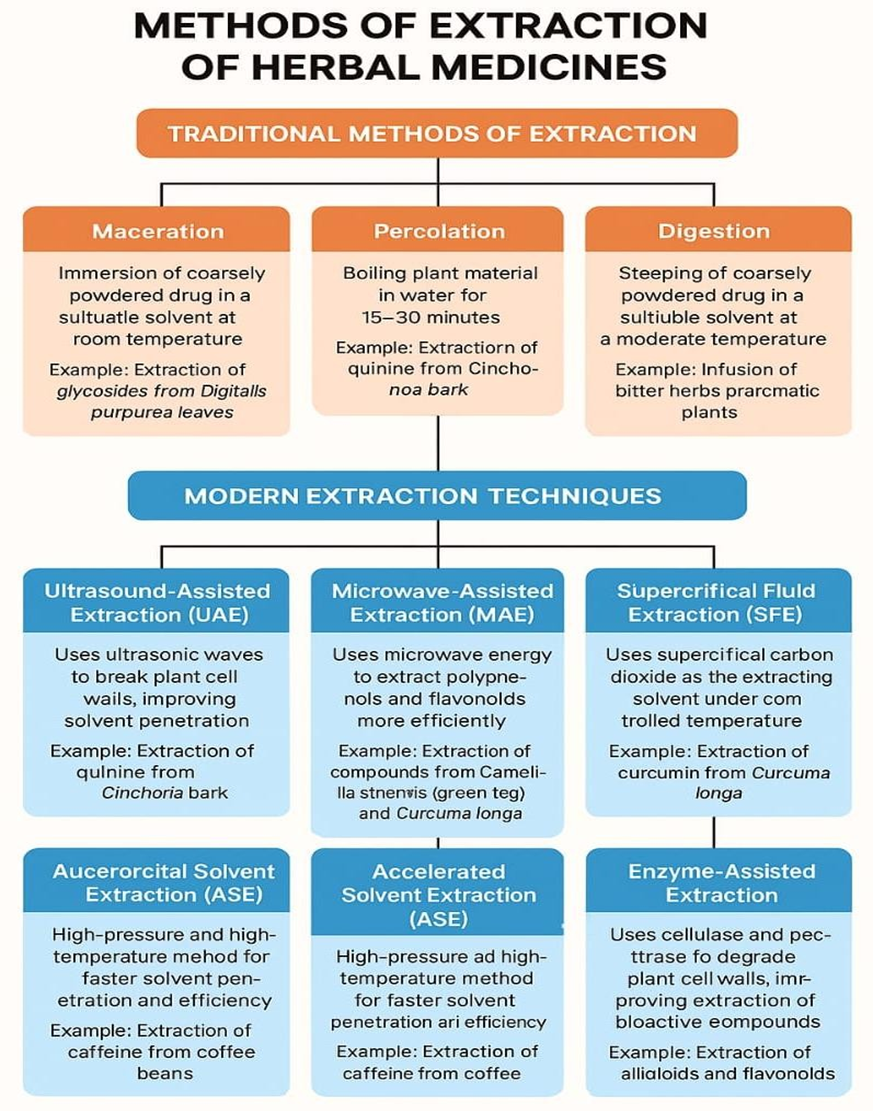
Figure- 1: Methods of Extraction
Safety, Efficacy and Bioactivity of Herbal Medicines:
Herbal medicines have been used for centuries as an integral part of traditional health systems like Ayurveda, Siddha, Unani, and Traditional Chinese Medicine. These medicines have their origin from natural plant sources and are considered much safer than the synthetic drugs. However, for therapeutic reliability and ensuring patient safety, their safety, efficacy, and bioactivity need scientific evaluation38-39.
1. Safety of Herbal Medicines :
Safety refers to a drug's freedom from causing harmful or adverse effects when used at therapeutic doses. Being natural does not automatically mean that all herbal products are safe. Factors affecting the safety of herbal medicine include correct plant identification, cultivation and harvest practices, extraction techniques, dosage, and possible contamination40.
Adulteration and Contamination The herbal preparations are often contaminated with heavy metals such as lead, arsenic, and mercury, pesticides, microbial toxins, or adulterated with synthetic drugs to enhance activity. Such contamination can result in toxic effects on the liver, kidneys, or other organs. Strict quality control measures are essential to prevent such risks41.
Toxicity
Some plants inherently possess toxic compounds, like pyrrolizidine alkaloids, cardiac glycosides, or cyanogenic glycosides. For instance, Aconitum species contain aconitine, which can be poisonous if not properly processed42.
Drug–Herb Interactions
Herbal products can interact with conventional drugs either by altering their pharmacokinetics or their pharmacodynamics. For instance, Ginkgo biloba is known to increase the risk of bleeding when combined with anticoagulants, while St. John's Wort decreases the efficacy of oral contraceptives and other drugs through the induction of liver enzymes.
Proper standardization, identification, and toxicological evaluation of all herbal medicines before use are recommended by the WHO to ensure safety43-44.
2. Efficacy of Herbal Medicines Efficacy relates to the ability of a herbal medicine to achieve the intended therapeutic effect. The pharmacological action of a plant is totally dependent on the active phytochemicals present in it, including alkaloids, flavonoids, terpenoids, saponins, and glycosides. The overall effectiveness of an herbal formulation is dictated by the concentration and bioavailability of these components.
Harvesting and Storage: Poor drying or storage conditions may cause a loss of active constituents.
Extraction Method: The yield of bioactive compounds may be different depending on the chosen solvent and temperature.
Formulation Process: The combination of herbs in polyherbal formulations may have synergistic or antagonistic interactions.
3. Bioactivity of Herbal Medicines
Bioactivity refers to the capability of a compound to generate biological or pharmacological responses in living organisms. Herbal bioactive act on multiple targets and pathways, thereby adopting a holistic therapeutic approach.
a. Types of Bioactivity
Antioxidant Activity: Compounds such as flavonoids, phenols, and tannins neutralize free radicals, reducing oxidative stress.
Antimicrobial Activity: Essential oils and alkaloids are known to inhibit the growth of bacteria, fungi, and viruses.
Anti-inflammatory and Analgesic Activity: Terpenoids and glycosides act by modulating inflammatory mediators, thus reducing pain and swelling.
Antitumor Activity: Polyphenols and alkaloids interfere with cancer cell proliferation and induce apoptosis.
Immunomodulatory and Hepatoprotective
Effects: Extracts of Withania somnifera and Phyllanthus niruri enhance immune function and protect liver cells47.
The mechanisms underlying herbal bioactivity include enzyme inhibition, receptor modulation, antioxidant scavenging, and regulation of gene expression. Modern pharmacological research into the mechanisms is carried out by techniques including chromatography, spectroscopy, and molecular docking48.
Use of Herbal Medicine in Life Threatening Diseases:
Herbal remedies have a place in traditional medicine for many cultures, mostly for promoting general health and the treatment of various diseases, including inflammatory disease. Although none of these natural treatments should be regarded as alternatives to conventional therapies, certain herbs are considered to hold potential value in disease treatment. Possible benefits include alleviating symptoms, reducing side effects of therapies, and perhaps improving the effectiveness of conventional therapies. Care should be exercised with regard to herbal remedies, since they are not all safe or effective and may interfere negatively with conventional treatments. Additionally, some components of such herbs may interact with immune-suppressing medications and need to be used carefully, particularly in patients being treated with immunotherapy49-50.
Therefore, herbal remedies can play a role in supportive disease management by alleviating symptoms, reducing side effects, and even enhancing the efficacy of conventional therapies. A number of other factors are also contributing to the growing use of herbs by patients or individuals for self-medication, including:
Patients' discomfort discussing medical issues and their fear of their health information not being handled confidentially,
Patients' fear of a misdiagnosis and incorrect treatment by patients with vague symptoms or general malaise, and (iii) A lack of time to see a doctor, which is typically the case when a previous visit did not result in a positive experience. Moreover, patients' freedom to choose their own practitioner encourages them to use herbal remedies and alternative therapies, though many choose herbal medicines based on anecdotal evidence, such as "it worked for my friend or relative."
It's essential to note that while herbal medicine may have potential benefits, it should not replace conventional medical treatment for life-threatening diseases.
Some examples include:
Cancer:
Cancer is a complex and multifaceted disease characterized by the uncontrolled growth and spread of abnormal cells. It can affect various parts of the body and is a leading cause of death worldwide. Cancer can be caused by genetic mutations cancer continues to be one of the most significant causes of mortality worldwide 51.
(Curcuma longa), Ginger (Zingiber officinale), and Green Tea (Camellia sinensis) have shown potential in reducing cancer risk or managing symptoms.
Diabetes:
Diabetes is a chronic metabolic disorder characterized by high blood sugar levels, and family medical history can play an important role.
Cardiovascular Disease:
Cardiovascular disease refers to conditions that affect the heart and blood vessels, often involving serious health problems.
Neurodegenerative diseases
Neurodegenerative diseases are a group of disorders characterized by progressive damage to the brain and nervous system. Examples include:
Alzheimer's disease: Memory loss and cognitive decline.
Parkinson's disease: Motor symptoms include tremors, rigidity, and bradykinesia. - ALS (amyotrophic lateral sclerosis): progressive muscle weakness and paralysis. - Huntington's disease presents with cognitive decline, motor dysfunction, and psychiatric symptoms.
? Various herbs, such as Ginkgo biloba, Ashwagandha (Withania somnifera), and Turmeric (Curcuma longa), have neuroprotective properties53.
Comparison Between Herbal Medicine and Modern Medicine:
The difference between herbal medicine and modern medicine (also called allopathic or conventional medicine) lies primarily in their approach, origin, standardization, and mechanism of action.
Table-01: Comparison between Herbal medicine and Modern medicine
|
Aspect |
Herbal Medicine |
Modern Medicine |
|
Origin |
Based on traditional knowledge, theories, beliefs, and experiences indigenous to various cultures; often dates back centuries. |
Based on scientific research, evidence-based medicine, and rigorous clinical trials. |
|
Approach |
Holistic—focuses on supporting the body’s natural healing process and addressing the root cause; integrates emotional, mental, and spiritual well-being. |
Focused on diagnosing and treating specific diseases; targets symptoms through a pathological understanding of the body; highly specific and localized. |
|
Composition |
Contains a complex mixture of natural compounds from plants (whole plants or plant parts such as herbs, roots, flowers, etc.). |
Typically uses a single, isolated, and highly purified active ingredient (synthetic or plant-derived). |
|
Mechanism / Pace |
Acts gently with slower effects; often has broad, complementary, or synergistic actions on body systems. |
Designed for specific, fast acting therapeutic effects to quickly suppress symptoms. |
|
Regulation |
Often less regulated; quality and consistency may vary between batches. |
Strictly regulated (e.g., by the FDA); ensures standardized dosage, purity, and quality. |
|
Side Effects |
Generally fewer side effects; however, can still cause toxicity or interact with other medications. |
Often associated with more significant adverse effects and risks, though these are well documented. |
Advantages of Herbal Medicines:
Limitations of Herbal Medicines:
CONCLUSION:
Herbal medicines have played a vital role in human health care since ancient times and continue to hold great promise for the future. The growing interest in natural therapies has revived the importance of medicinal plants as safe, effective, and affordable sources of treatment. Various extraction methods have improved the isolation and purification of active compounds, enhancing their therapeutic potential. However, ensuring the safety, efficacy, and bioactivity of herbal products through proper scientific validation remains essential to build trust and global acceptance.
Herbal medicines have shown positive results in managing life-threatening diseases such as cancer, diabetes, and cardiovascular disorders, either alone or as supportive therapy. When compared with modern synthetic drugs, herbal medicines are generally considered safer, less toxic, and more holistic, though they may act more slowly. Despite their many advantages—such as fewer side effects, cost-effectiveness, and cultural acceptance—herbal medicines also face limitations, including lack of standardization, variable quality, and insufficient clinical data.
Looking ahead, the future of herbal medicine lies in integrating traditional knowledge with modern scientific research, biotechnology, and quality control systems. By doing so, herbal medicines can contribute significantly to global health care, providing sustainable and effective alternatives to modern pharmaceuticals.
REFERENCES





A. Venkateswara Rao, S. Pavitra Mahi Amulya*, S. Sasiratna, T. Anvesh, U. Siddu, Healing from Nature: Sources and Scope of Herbal Medicine, Int. J. of Pharm. Sci., 2025, Vol 3, Issue 11, 3136-3149 https://doi.org/10.5281/zenodo.17662114
 10.5281/zenodo.17662114
