
1,5 Rungta Institute of Pharmaceutical Sciences, Bhilai
2,3,4 Rungta Institute of Pharmaceutical Science & Research, Bhilai.
This study's major goal is to create an antifungal herbal shampoo with curry leaves as the key ingredient, which are known to strengthen hair follicles and encourage hair growth. This herbal shampoo attempts to improve hair growth, strength, and natural darkening while preventing hair loss, a frequent hair condition1. An efficient and secure shampoo formulation was created by combining curry leaves with additional natural ingredients including amla, aloe vera gel, neem, Reetha, Shikakai1. The shampoo is made to clean hair by eliminating dandruff, sebum, and filth without the dangers of chemical compounds that are frequently included in commercial shampoos. There are many different kinds of shampoo, both liquid and solid, but this article focuses on a natural herbal liquid shampoo2,3.
Growing worries about the negative effects of synthetic substances frequently present in personal care products have led to an increase in the demand for herbal cosmetic formulations worldwide in recent years2. There has been a notable movement in the hair care industry toward herbal substitutes that offer long-term advantages, safety, and effectiveness. In order to improve scalp health and hair vitality, two shampoos and hair treatment formulas are increasingly including botanical components, which are recognized for their therapeutic qualities3. Hair is the fundamental element of human attractiveness. Herbs have been used for hair management, cleaning, and decoration since ancient times6. As time has passed. Despite the substantial market share of synthetic agents, people are becoming aware of their negative effects impacts on hair, eyes, and skin2. Herbal shampoo is a kind of cosmetic preparation made with natural plant materials called herbs. Any hair washing product made with extracts from herbs can be referred to as "herbal shampoo." Another way to think of it is as a thick liquid hair care solution that cleanses and gets rid of oil and dirt from hair5.
A hair-cleaning product made with extracts from two or more medicinal plants with antifungal qualities is called a polyherbal antifungal shampoo. It is intended to cure or prevent fungal illnesses including seborrheic dermatitis and dandruff while cleaning the hair and scalp. Herbal components including neem, reetha, shikakai, amla, and tulsi, which offer organic cleaning, antibacterial, and conditioning properties, are frequently found in these shampoos. The development of fungi that cause scalp infections is inhibited by the combined action of many herbs. Polyherbal antifungal shampoos are popular for preserving scalp health and enhancing hair quality since they are often thought to be safer and gentler than synthetic shampoos.
1.2 Function of poly shampoo
Polyherbal Shampoo
Synthetic Shampoo
1.4Anatomy and Physiology of Hair
The fatty layer of the scalp contains follicular units from which hair develops. Each unit has one to four hairs and a hair bulb at the base that generates hair cells that are fed by dermal blood vessels. As hair develops and separates from the skin, its outer layer solidifies into keratin6.
There are three primary stages of hair growth:
(1) Anagen (Growth Phase): Hair production is active and can continue for years.
(2) Catagen (Transitional Phase): A brief stage during which hair growth ceases.
(3) Telogen (Resting Phase): New growth starts and hair loses.
2.Classification Of Shampoo7
A. Based on the appearance:
B. Based on their origin:
C. Based on their function:
3.Advantages of poly-herbal shampoo
4.MATERIALS AND METHODS
Materials -
Table4.1- Ingredients
|
S.N. |
Ingredients |
Quantity (50ml) |
Properties |
|
1 |
Reetha |
5g |
Natural cleanser / Surfactant |
|
2 |
Shikakai |
5g |
Hair cleanser / Conditioner |
|
3 |
Amla |
5g |
Antioxidant |
|
4 |
Neem |
5g |
Antifungal / Antibacterial |
|
5 |
Tulsi |
2.5g |
Antimicrobial |
|
6 |
Aloe vera gel |
2.5ml |
Moisturizer and Conditioner |
|
7 |
Sodium lauryl sulphate |
5g |
Foaming Agent |
|
8 |
Citric Acid |
0.1g |
Ph Adjuster |
|
9 |
Methyl Paraben |
0.05g |
Preservative |
|
10 |
Distilled Water |
Up to 50ml |
Solvent |
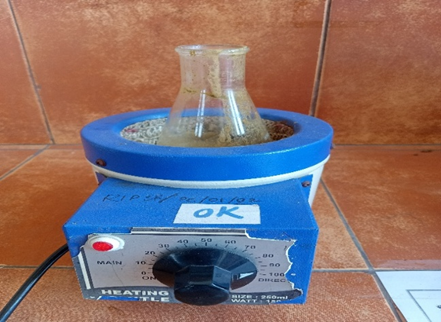
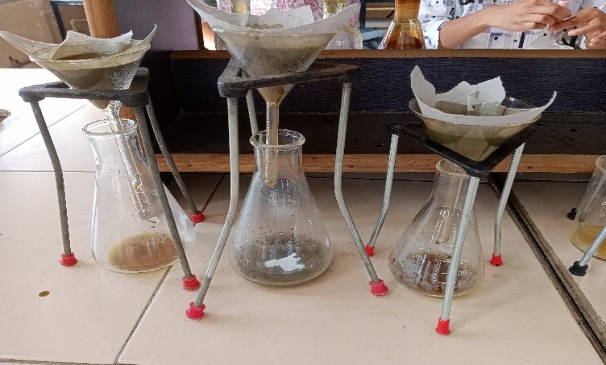
Methodology
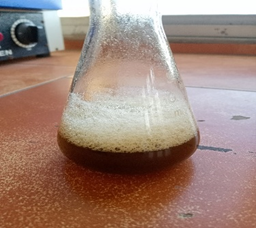
5. RESULT
The formulated polyherbal shampoo was evaluated to ensure its effectiveness, stability, and consumer acceptability. The tests performed included physical appearance, pH determination, foaming, and viscosity determination. These evaluations are necessary to verify the effectiveness and safety of the shampoo by comparing it with marketed formulations.
The prepared formulations were assessed for fluidity, clarity, and capacity to produce foam.
Table 1. physical appearance
|
Color |
Brownish color |
|
Odor |
Characteristic |
|
Transparency |
Not transparent |
|
Texture |
Smooth |
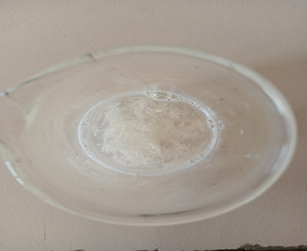
2 mL of the polyherbal shampoo solution was taken into a Petri dish. After that, a pH litmus paper was dipped into the 2 mL solution. The observed pH was found to be 5.5 to 6.5.
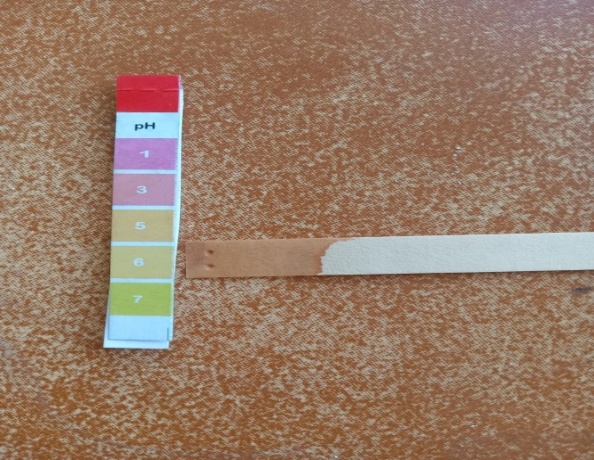
Fig. pH determination
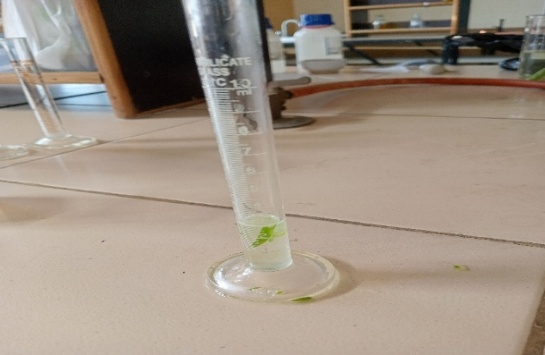
To evaluate the foaming ability, the cylinder shake method was used. 1.5 mL of polyherbal shampoo was taken in a 10 mL graduated cylinder. The cylinder was covered by hand and shaken 10–12 times. After shaking, the foam produced was measured.

Fig. Foaming Test
Viscosity influences the spreading ability of shampoo and its ease of application. The viscosity of the prepared shampoo was determined at 25°C using an Ostwald viscometer.
A small amount of the prepared shampoo was taken and stored at different temperatures. However, no microbial growth was observed in the prepared shampoo.
Table 2. Evaluation parameter
|
Evaluation parameter |
Inference |
|
Color |
Brownish color |
|
Odor |
Characteristic |
|
Transparency |
Not transparent |
|
Texture |
Smooth |
|
pH determination |
5 – 6 |
|
Microbial activity |
No microbial growth |
Table 3. Stability test
|
Parameter |
Room temperature |
|
Color |
No change |
|
Odor |
No change |
DISCUSSION
The polyherbal shampoo showed satisfactory performance with acceptable appearance, consistency, and cleansing ability. The natural ingredients contributed to effective hair cleaning while being gentle on the scalp. Adequate foaming and stability were observed, indicating a well-balanced formulation. Overall, it offers a safe and eco-friendly alternative to synthetic shampoos.
CONCLUSION
Poly-herbal shampoo formulation and assessment is a complicated procedure that necessitates careful consideration of several elements. These include choosing the herbal powders or components needed for the formulation and assessing the efficacy and safety of the finished product. There are a number of possible advantages to using herbal components in shampoo composition, including better hair health and less of an influence on the environment. To guarantee the product's efficacy and safety, however, appropriate testing and assessment are crucial. All things considered, the development and assessment of herbal shampoo is a crucial field of study that may provide customers a more sustainable and natural hair care choice.
The current study's goal was to create a herbal shampoo that guards against fungal infections. Furthermore, compared to chemical conditioning treatments, it is safer. The shampoo's pH was modified to preserve the scalp's acidic environment. Shampoo is made with a variety of plant powders or herbal substances, including neem, reetha, shikakai, amla, and aloe vera.
REFERANCES

Kamlesh Patel, Praveen Kumar Sahu, Suchita Wamankar, Dr Gyanesh Kumar Sahu, Dr Chanchal Deep Kaur, Formulation and Evaluation of Polyherbal Antifungal Shampoo, Int. J. of Pharm. Sci., 2026, Vol 4, Issue 3, 3830-3837, https://doi.org/10.5281/zenodo.19332664
 10.5281/zenodo.19332664
