
Department of pharmaceutics, Hindustan College of Pharmacy, Chenappady, Kanjirappally.
Transdermal drug delivery system is an innovative dosage form which is an alternative to conventional dosage form. The present study focuses on formulation and evaluation of transdermal patch using Centella asiatica and eggshell membrane. Centella asiatica, the widely accepted medicinal plant with proven wound healing, anti-inflammatory and collagen stimulating properties due to the presence of active constituents like asiaticoside, madecassoside, asiatic acid. The eggshell membrane is a natural biomaterial rich in collagen, glycosaminoglycan and structural proteins essential for tissue regeneration.The study investigates the drug release of the transdermal patch containing Centella asiatica extract and eggshell membrane. This patch was formulated and evaluated for physical parameters, weight uniformity, folding endurance, pH, drug content, moisture content, moisture uptake and in-vitro drug release study. Overall, this study highlights the potential of natural bioactive ingredients in sustained drug release application.This study reflects that the formulated transdermal patch exhibits acceptable physical character, uniform drug distribution and sustained drug release. Overall, the findings suggest that the prepared patch is stable and effective
Cosmetic are used almost regularly and in different forms to enhance beauty. Cosmetics gain importance because it reduces wrinkles, fight acne and to control oil secretion [1]. Cosmetics are preparations which are intended for beautification purpose. Cosmeceuticals are the cosmetic products that have medicinal or drug like benefits are able to affect the biological functioning of skin owing to type of functional ingredients they contain. These products improve the functioning or texture of skin by encouraging collagen growth by combating harmful effect of free radicals, thus maintaining keratin structure in good condition and making the skin healthier. The term cosmeceuticals are to be a combination of two words: “cosmetics and pharmaceuticals” by Abbert Kligman in 1984.The types of cosmeceuticals include skin cosmeceuticals, hair cosmeceuticals and other [2]. In modern era drug delivery system transfer active pharmaceutical ingredients to achieve desired therapeutic effect. Drug delivery involves conventional drug delivery system and novel drug delivery system [3,4]. Conventional drug delivery system involves the release of drug immediately after administration while novel drug delivery system is the new system helps to understand the pharmacokinetic and pharmacodynamic behaviour of drug [5]. Transdermal drug delivery system is a type of novel drug delivery system designed to deliver drugs through the skin. Among the various novel drug delivery system (NDDS) approach transdermal patches are widely used due to sustained drug release. Transdermal drug delivery system (TDDS) is innovative dosage form designed to deliver drug through the skin into the systemic circulation which is also known as medicated adhesive patch or skin patch [6]. It offers numerous advantages such as bypassing first pass metabolism, maintaining steady plasma level, improving patient compliance and minimizing side effect The main aim of our work is to develop a transdermal patch containing Centella asiatica and eggshell membrane. Centella asiatica also known as Gotu kola is a herbaceous perennial plant member of Apiaceae family also known as Umbelliferae. It is used for the treatment of various skin condition such as eczema, psoriasis, leprosy because of its antimicrobial, antioxidant and wound healing properties [7]. Eggshell membrane (ESM) is always considered as waste but it accelerates burnt skin healing and nerve regeneration [8]. The eggshell membrane contains fibrous proteins, glycosaminoglycans, glycoprotein which improve structural integrity and support collagen synthesis in injured skin [9].
METHODOLOGY
Collection of Centella asiatica
Fresh leaves of Centella asiatica were collected from our locality Chenappady, Kottayam district, Kerala, India, during October 2025. All experimental work was conducted at the Department of Pharmaceutics, Hindustan College of Pharmacy, during the period October-March Chenappady, during the period 2025-2026.
The collected Centella leaves were washed with water to remove dirt and dried in hot air oven at 30-400 C then powdered.
Chemicals and Reagents
The following materials were utilized for formulation development: Centella asiatica extract, Eggshell membrane, Ethanol (solvent), Purified water (Vehicle), Hydroxy propyl methyl cellulose (HPMC) (film-forming polymer), Carbopol 934 (Bioadhesive polymer), Glycerol (plasticizer), Propylene glycol (penetration enhancer). All chemicals were of pharmaceutical grade and procured from authorized suppliers.
Equipment
The study employed an electronic weighing balance, Magnetic stirrer, Soxhlet apparatus, Franz diffusion cell apparatus, Hot air oven and digital pH meter for formulation and evaluation. All equipment was calibrated according to standard operating procedure before use.
Extraction Procedure
The collected leaves were thoroughly washed with distilled water to remove surface contaminants and the collected Centella leaves were washed with water to remove dirt and dried in hot air oven at 30-400 C then powdered.
Preparation of Centella asiatica extract
Centella asiatica was extracted using Soxhlet apparatus. In this method, the dried and powdered leaf of Centella asiatica was covered in a muslin cloth and was placed in thimble of the Soxhlet apparatus. At desired temperature, the ethanol in round bottom flask is boiled and its vapours are condensed in condenser, where it cools and drips onto the plant material. The condensed solvent dissolves the active constituents from the plant powder. Siphon aspirates the solution into the round bottom flask when the liquid in the thimble rises to overflow level. This process is continued for several hours and the extract is concentrated [10].
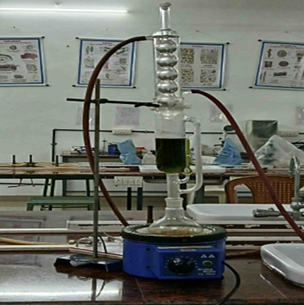
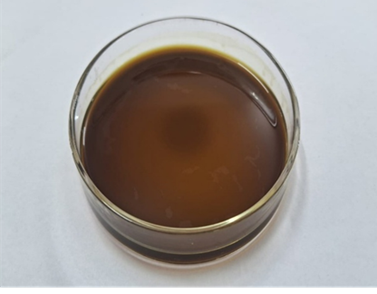
Figure 1: Extraction of Centella asiatica
Collection of eggshell membrane
Egg was collected from local market Kottayam, Kerala.
Separation of eggshell membrane
Firstly, fresh eggs were collected from the local market then these are washed with distilled water. After washing a small hole was ruptured at the tip of the eggs to remove the contents inside, after that the inside of egg was washed three times with distilled water. Then 5% (v/v) acetic acid was added and kept for 45 min at room temperature. Later the membrane was separated from the eggshell with proper care followed by three times washing with acetone and again cleaned with distilled water [11,12].
Formulation of transdermal patch
Weigh 0.50g of HPMC and 0.25g of Carbopol 934 in a beaker and combine with 10ml solvent containing distilled water and ethanol in the ratio of (1:1). Then continuously stir it over a hot water bath until the mixture dissolves. Once the temperature attained (250C) add Centella asiatica and eggshell membrane in the ratio 70:30 then glycerol and propylene glycol (0.5ml) were added. Then this was transferred into a glass petri dish and kept for 24hrs without any disturbance. After 24 hrs the prepared transdermal patch was carefully removed from the petri dish and stored. [13,14].
Table 1: Composition of transdermal patch
|
Ingredients |
Quantity |
|
Centella asiatica & egg shell membrane |
70:30 |
|
HPMC |
0.50 g |
|
Carbopol 934 |
0.25 g |
|
Propylene glycol |
0.5ml |
|
Glycerol |
0.5ml |
|
Ethanol: water |
10 ml |
RESULT
Phytochemical screening
The phytochemical screening confirms the presence of saponin, tannin, alkaloids, flavonoids and steroids.
Table 2: Phytochemical screening of Centella extract
|
PHYTOCONSTITUENTS |
OBSERVATION |
INFERENCE |
|
|
Stable foam appears |
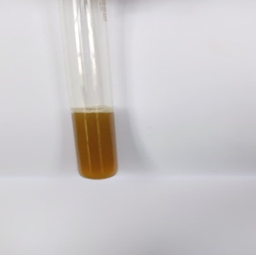
Figure 2 Indicates the presence of saponin
|
|
|
Blue- black color |
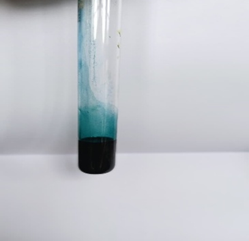
Figure 3 Indicates the presence of tannin
|
|
|
Reddish-brown color |

Figure 4 Confirms the presence of alkaloids
|
|
|
Yellow color |
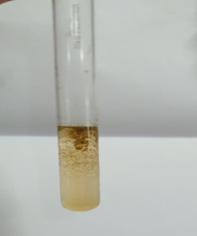
Figure 5 Indicates the presence of flavonoids
|
|
e. Steroids |
Upper layer turns into red and sulfuric acid layer turns into yellow color with slight green fluorescence |
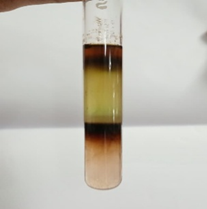
Figure 6 Indicates the presence of steroids |
Quantitative analysis
Organoleptic evaluation
Organoleptic properties were found to be satisfactory.
Table 3: Physical appearance
|
Color |
Transparent |
|
Appearance |
Clear |
|
State |
Solid |
|
Consistency |
Smooth |
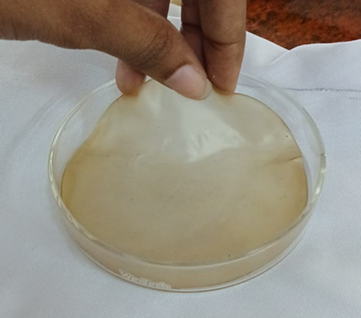
Figure 7: Transdermal patch
Weight uniformity:
The prepared transdermal patch was evaluated for weight uniformity by randomly selecting 5 patches. The average weight of the patch was found to be 2.322 so the patch showed uniform weight distribution.
Table 4: Weight Uniformity
|
SL.NO |
Weight of patch |
|
1 |
2.29 |
|
2 |
2.30 |
|
3 |
2.33 |
|
4 |
2.37 |
|
Average |
2.322 |
Folding resistance:
The patch does not show any visible cracks during the folding resistance up to 200 folds. It shows that the formulation exhibits good mechanical properties and durability. Formulation shows high folding endurance due to strong intermolecular force between fibrous protein structure of eggshell membrane and polymer matrix provide flexibility and mechanical stability
pH:
The pH of the formulated transdermal patch was found to be 6.01. Thus, it was in the ideal pH range of the skin so the skin gets no irritation.
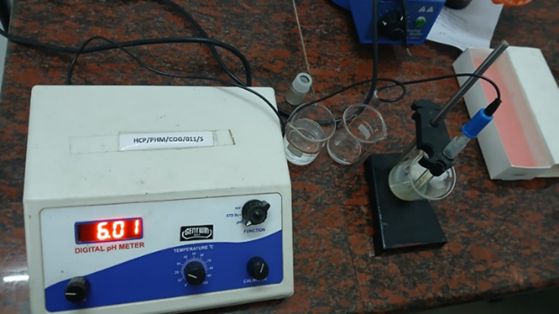
Figure 8: pH meter showing pH value of Formulation
Table 5: pH of formulated patch
|
Formulation |
pH |
|
F1 |
6.01 |
Moisture content:
The moisture content of the transdermal patch was found to be 4.62 %. The formulation shows low moisture content indicates good stability because it was within acceptable range 2-8% so it keeps the patch from becoming dry and brittle. The patches are prevented from microbial contamination by the low moisture content.

Figure 9 : Moisture content
Table 6: Moisture Content
|
Formulation |
Initial weight |
Final weight |
|
F1 |
2.26 |
2.16 |
Moisture uptake:
The moisture uptake of the transdermal patch was found to be 4.10 %. The formulation shows the patch has low water absorption and are stable under humid condition. It falls in acceptable range (<5%).
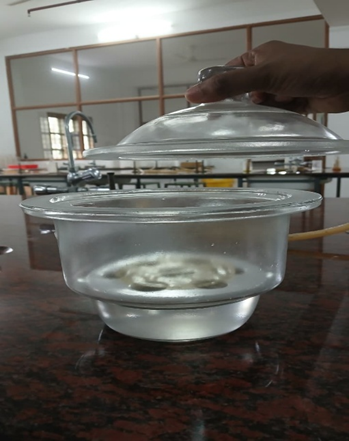
Figure 10: Moisture uptake
Table 7: Moisture Uptake
|
Formulation |
Final weight |
Initial weight |
|
F1 |
2.28 |
2.19 |
Drug content:
Drug content analysis is performed to determine the uniform distribution of active constituent within transdermal patch. The obtained drug content value is 95.26% shows successful drug incorporation into polymer matrix.
Drug release:
The in-vitro drug release using Franz diffusion cell shows a gradual increase over 8hr shows improved drug release. In vitro drug release studies demonstrated sustained release of drug over a prolonged period of time.
Table 8: In vitro drug release study
|
Time (in hr.) |
% Drug release |
|
1 |
10.24 |
|
2 |
19.56 |
|
3 |
26.67 |
|
4 |
43.52 |
|
5 |
59.86 |
|
6 |
74.28 |
|
7 |
86.18 |
|
8 |
93.14 |
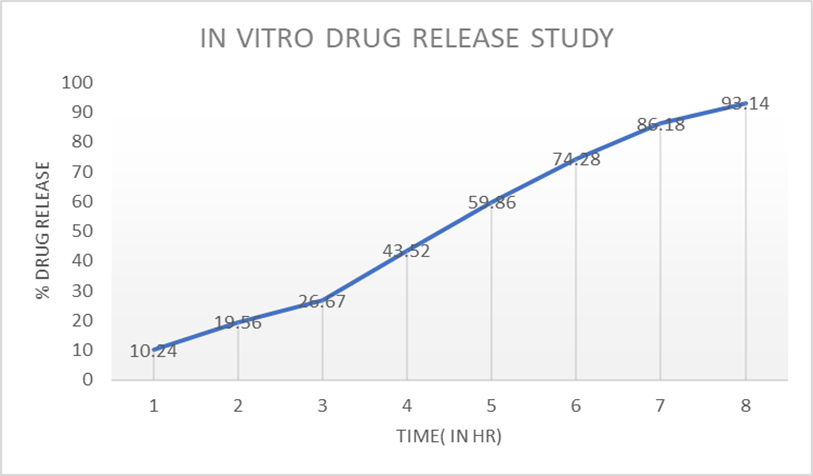
Figure 11: Graphical representation of in-vitro drug release study
DISCUSSION
Drug delivery system helps to achieve proper therapeutic effect by ensuring the proper administration of drug at the desired site of action. Conventional dosage form such as oral and injections may cause limitations like first pass metabolism, frequent dosing, poor patient compliance. To overcome these drawbacks transdermal drug delivery system (TDDS) has gained attention and significant growth in drug delivery system because of its advantages like bypassing first pass metabolism, improved patient compliance, reduce dose frequency etc. Transdermal drug delivery system is one of the advanced drug delivery systems which deliver drug through the skin into systemic circulation. Transdermal patch is a medicated dosage form which is a part of TDDS. The present study of our work is to formulate and evaluate a transdermal patch using Centella asiatica and eggshell membrane. Incorporation of Centella asiatica provide wound healing, anti- inflammatory, anti-oxidant and collagen boosting properties due to the presence of active constituent asiaticoside. Eggshell membrane rich in collagen, glycosaminoglycan which promoting skin regeneration. Due to its fibrous protein structure eggshell membrane provide mechanical strength, flexibility to the formulation. The prepared formulation was evaluated for various physicochemical parameters such as organoleptic evaluation, weight uniformity, folding endurance, pH, moisture content, moisture uptake, drug content and drug release. By conducting organoleptic evaluation, the prepared patch was found to be smooth, uniform appearance and shows good flexibility. The weight uniformity study showed minimal variation among patches, indicating uniform distribution of drug and polymer confirms proper mixing. Formulation shows high folding endurance due to strong intermolecular force between fibrous protein structure of eggshell membrane and polymer matrix provide flexibility and mechanical stability pH of the formulated patch was found to be 6.01 thus it was in the range of ideal skin pH so it does not cause any skin irritation. The moisture content of the formulated patch was determined using calcium chloride was found to be within acceptable limits, indicating good stability and reduced risk of contamination. Calcium chloride helps to remove moisture so it helps to maintain a constant humid condition. The moisture uptake of the formulated patch was determined using potassium chloride was within the acceptable limits. Potassium chloride used to provide high humid condition. In vitro drug release studies demonstrated sustained release of drug over a prolonged period suggesting diffusion-controlled release from polymer matrix. The formulated transdermal patch containing combination of Centella asiatica and eggshell membrane shows good mechanical strength, physicochemical properties and sustained release of drug which promote wound healing and skin regeneration. Overall, the results indicate the formulated patch has promising potential as safe and effective transdermal drug delivery system.
CONCLUSION
From the overall evaluation results, it can be concluded that the formulated transdermal patch containing Centella asiatica and eggshell membrane showed satisfactory physicochemical properties, good mechanical strength, uniform drug distribution, and sustained drug release. Therefore, the developed transdermal patch can be considered as a promising drug delivery system for wound healing and related therapeutic applications. The drug content was uniform, and the in-vitro drug release study demonstrated sustained and controlled release of the active constituents over a period of time. The presence of bioactive compounds in Centella asiatica along with the collagen-rich eggshell membrane contributed to good mechanical strength and potential wound healing activity. Therefore, the developed transdermal patch can be considered a promising, stable, and effective drug delivery system for prolonged therapeutic application.
ACKNOWLEDGEMENT
The authors express sincere gratitude to the Management of Hindustan College of Pharmacy, Chenappady, for providing necessary facilities and infrastructure to conduct this research. The authors thank Dr. Lincy John, M. pharm, Ph.D., Professor, Department of Pharmaceutics, for guidance and support throughout the study. The authors also acknowledge Dr. Shiny George, Principal, for encouragement and academic support. The authors are thankful to all faculty members of the Department of Pharmaceutics for their valuable suggestions and assistance during the experiment work conducted in 2025-2026.
REFERENCES

Radhika V., Ann Mary Jose, Gayathri A. R. Muhsina N. Muhsina M. K., Dr. Lincy John, Formulation And Evaluation of Transdermal Patch Using Centella Asiatica and Eggshell Membrane, Int. J. of Pharm. Sci., 2026, Vol 4, Issue 2, 3044-3053. https://doi.org/10.5281/zenodo.18698217
 10.5281/zenodo.18698217
