
Global college of pharmacy, Khanpur Khui, Anandpur sahibIKGPTU
Drug repurposing refers to finding new indications for existing drugs. The drug development is a complex, time consuming and expensive process. Due to low success rate of new drug development drug repurposing developed. That is powerful tools are developed to support the research and development (R&D) process. The drug re-purposing process finds new therapeutic uses for current, existing, or approved drugs, different from its original use. The main aimed of Drug repurposing is to reduce research time investments and cost in Research & Development. Drug re-purposing identifies new application for already banned or existing drugs from market. It reducing time efforts, expenses and failures in drug discovery process. It is also called as drug repositioning, drug redirecting, drug reprofiling. Drug repurposing strategies have developed over the years from straight forward coincidental observations to increasingly sophisticated computational techniques in tandem with our expanding understanding of drugs, illnesses, protein targets, and signaling pathways; however, this understanding is still far from comprehensive. Repurposed medications must overcome numerous challenges before they can be successful, albeit fewer than those of novel drugs.
Drug repurposing (DR) is also known as drug repositioning, drug re-tasking, drug redirection, drug reprofiling, drug recycling, drug resuming and therapeutic switching. It is the process of identifying pharmacological indications from previously developed, marketed, FDA-approved, failed, investigational, pro-drugs, and old drugs, as well as the application of newly developed drugs to treat conditions other than those for which they were originally intended [1-3]. A drug that has been repurposed may also have a new formulation, dosage, mode of use, or patient base. Finding a target for a disease of interest—which could be an aberrant protein, a signaling pathway, or a gene mutation connected to the illness of interest—is the first step in the discovery of new drugs. High-throughput screening is then used to find "hits" against the target. The hits with the highest activity become the lead compounds, which are subsequently optimized to improve the compounds' favorable pharmacokinetic characteristics and characterize their structure-activity relationship (SAR). These lead compounds are validated through assays. After lead optimization, preclinical and clinical research comes next.[4] Such a procedure is labour-intensive, time-consuming, excessively expensive, and it offers no assurance of success. The main distinction between new drug discovery and drug repurposing in drug repurposing is that the lead compounds found have established safety and a large body of literature, allowing for accelerated drug development, shorter time consumption, lower costs, and fewer risks [5].
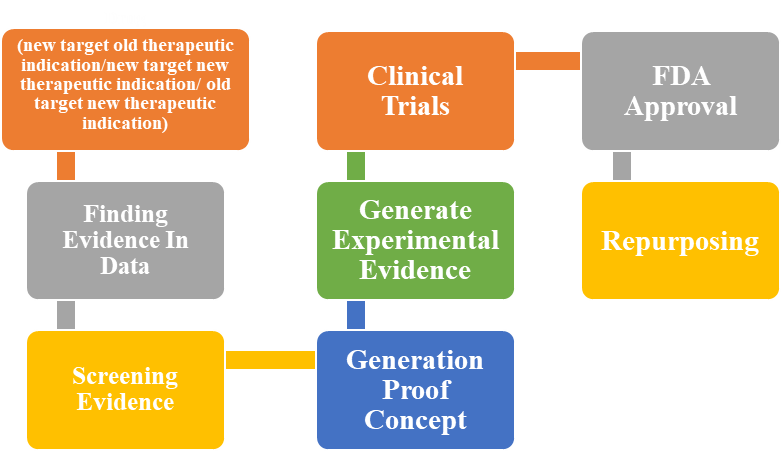
Figure No. 1 Main Steps involved in Drug Discovery and drug repurposing
Advantages:
(i) Spending on research and development (R&D) is significantly reduced.
(ii) Phase 1 clinical trials are not necessary for several existing compounds, which have already shown to be safe in humans. This shortens the time required for drug development.
(iii) Possibility of reusing drug molecules despite side effects and ineffectiveness in certain indications [6].
Disadvantages:
Although there are many benefits to repurposing drugs, there are some obstacles in the way.
These mainly include:
(i) Lack of clear regulatory pathways:
The primary focus of pharmaceutical companies is on developing novel medications, and there are insufficient regulatory frameworks to enable the repurposing of drugs.
(ii) Lack of financial incentives and research findings:
There is very little incentive for the pharmaceutical industry, including the generic industry, to spend money on the research required to secure regulatory approval for a medication that is no longer covered by a patent. This is due to the fact that, considering the low cost of generic formulation and the absence of intellectual property protection, no return on investment is expected.[6]
NEED FOR DRUG REPURPOSING
1. Repurposing with Purpose
2. Repurposing with Strategy
3. Repurposing with Confidence
1. Repurposing with Purpose:
The molecule utilized in medication repurposing is a marketed medication that was stopped in a clinical trial for a purpose other than safety concerns.
a) Drug Centric repurposing
b) Disease centric repurposing
a) Drug centric repurposing:
The identification of a new use for an already-approved medication. Pharmaceutical businesses with a focus.
b) Disease centric repurposing:
Finding a disease's therapeutic molecule of choice.
2.Repurposing with Strategy:
Drugs with a known safety profile and clinical trials for different indications are more affordable. It might be a quicker process. Compared to denovo drug discovery and development, it is less risky.
3.Repurposing with Confidence:
The main factor contributing to the present success of medication repurposing is the demonstrated utility of repurposing.[7]
CLASSIFICATION
When a drug's mechanism is understood, new indications can be discovered. If two distinct therapeutic effects are produced by the same molecule acting on the same target.
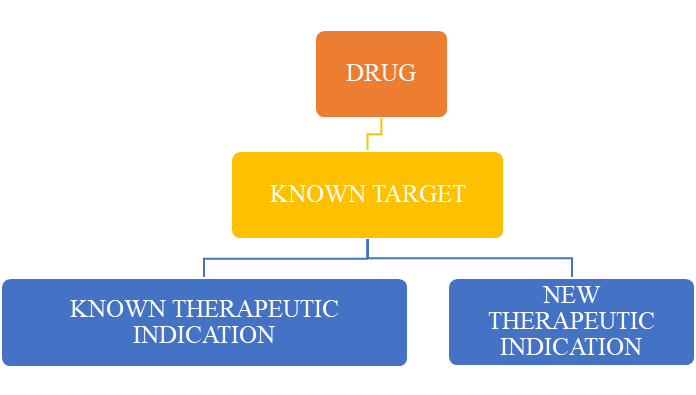
Figure No. 2 On target repurposing
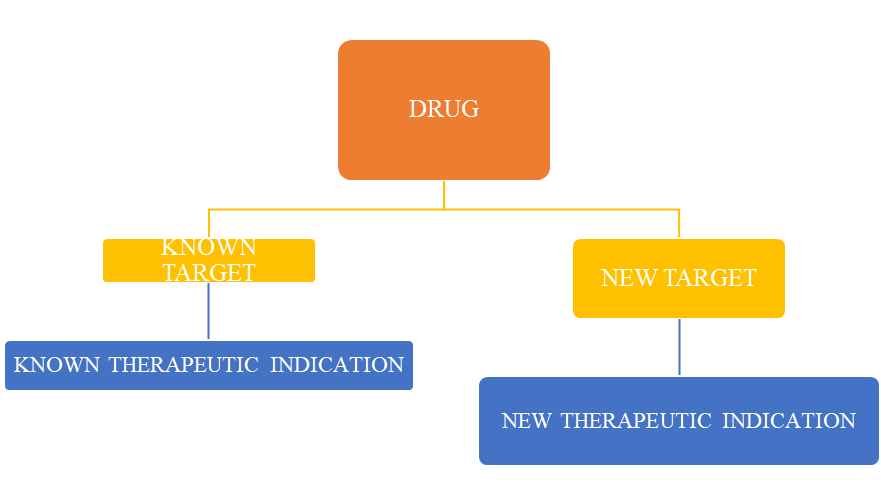
Figure No. 3 Off target repurposing
TRADITIONAL DRUG DISCOVERY VERSUS DRUG REPURPOSING
Traditional Drug Discovery Steps:

Figure No. 4 Traditional Drug Discovery Steps
Table No. 1 Traditional drug development process 10- 17 years
|
Steps for drug discovery |
Time period |
|
|
Discovery and preclinical study |
6.5 years |
|
|
Safety review |
30 days |
|
|
Clinical Research |
Phase 1 |
1.5 years |
|
Phase 2 |
2 years |
|
|
Phase 3 |
3.5 years |
|
|
Phase 4 |
1.5 years |
|
Drug Repurposing Steps:

Figure No. 5 Drug Repurposing Steps
Table No. 2: Drug Repurposing 3-8 years process and reduced pharmacophoric uncertainty
|
Steps for Drug Repurposing |
Time period |
|
Compound identification |
1.2 years |
|
Compound acquisition |
2years |
|
Development |
1 – 5years |
MATERIAL AND METHODS
The methodologies are included in Drug Repurposing process are divided into three classes are:
1. Drug oriented
2. Target oriented
3. Disease/therapy oriented
1.Drug oriented:
The structural properties, side effects, adverse effects, and phenotypic screening of the drug molecules are assessed in the drug-oriented mechanism. This approach uses an animal or cell assay to identify compounds with biological effects. Traditional pharmacology and drug discovery principles form the basis of this kind of repositioning methodology; considerable success in drug discovery has been attained with this focused profile. The unexpected new uses for drugs that are found, particularly in clinical research and development trials.[10-13]
2.Target oriented:
Target-oriented in vitro and in vivo high-content screening of molecules was conducted. in the side effects of target-oriented drugs or discover new applications. Then they are primarily targeted there and manifest their consequences. target-based approaches use known target molecules to find drugs. [14-16]
3.Disease / therapy oriented:
If there are additional diseases or treatments available, they should be considered when repurposing drugs. As a result, the relevant details are provided, including any potential mechanisms, negative effects, and side effects. In this instance, medication repurposing will be determined by the condition and the available data, with treatment plans tailored accordingly. [17, 18] The main cause of the present success in medication repurposing is the repurposing's demonstrated utility. Finding new therapeutic indications for medications that differ from those for which they were previously approved is necessary for their repurposing. This derisks clinical activities while leveraging prior investments, making it a method for discovering novel medicines that is being used more and more. The main reason this strategy is interesting is that there are still a lot of gaps in the drug-target interactions matrix, and safety and efficacy data from clinical trials are still being gathered. Opportunities for drug repurposing exist when as much data as possible about the target profile of drugs is gathered and made publicly available. However, this may restrict the commercial applications of patent applications. Because of notable variations in certain clinical applications, some may be more practical for repurposing than others.
Examples of drug repurposed
1.For Cardiovascular system
Table No. 3 Examples of drug repurposed For Cardiovascular system
|
Drug
|
Original indication
|
New indication
|
Year of approval
|
|
Aspirin
|
Fever and pain
|
Antiplatelet, myocardial infarction, and stroke |
1980 |
|
Lignocaine
|
Local anaesthetic
|
Arrhythmia |
2010
|
2.For nervous system
Table No. 4 Examples of drug repurposed for nervous system
|
Drug
|
Original indication
|
New indication
|
Year of approval
|
|
Gabapentin |
Anticonvulsant |
Post?herpetic neuralgia |
2004 |
|
Amitriptyline |
Antidepressant |
Neuropathic pain |
2005 |
3.For antimicrobial drugs
Table No. 5 Examples of drug repurposed for antimicrobial drugs
|
Drug
|
Original indication
|
New indication
|
Year of approval
|
|
Colchicine |
Gout |
Familial Mediterranean fever |
2009 |
|
Amphotericin B |
Antifungal |
Leishmaniasis |
1997 |
|
Zidovudine |
Anticancer |
HIV/AIDS |
1987 |
4.For cancer chemotherapy
Table No. 6 Examples of drug repurposed for cancer chemotherapy
|
Drug
|
Original indication
|
New indication
|
Year of approval
|
|
Raloxifene |
Osteoporosis |
Breast cancer |
2007 |
|
Bleomycin |
Antibiotic |
Anticancer (squamous cell carcinoma, melanoma) |
1973 |
Regulatory aspects of drug repurposing
Repurposed drugs represent a developing trend in the pharmaceutical industry, with many questions still unanswered. There is still much to be defined when it comes to repurposing, even though major regulatory bodies worldwide have established a certain amount of legislation for the inclusion and regulation of new indications to an approved drug product. Regulations do not address the repurposing of drug products in a clear and concise manner in their guidelines, which gives various pharmaceutical companies an opening to establish such drugs. Repurposing medicinal agents can also be difficult from a regulatory perspective.[19] Repositioning pertains to pharmaceutical products or substances that were previously approved or recognized for distinct medical purposes. Since the researchers and sponsors of the repurposing developmental studies are using products that are legally obligated to different entities, they must overcome a number of legislative obstacles. Both the patient groups hoping to benefit from the new indication and the researchers developing the drug may suffer from the use of such products, as they could result in infringement charges and a protracted and exhausting legal battle over the pharmaceutical product's intellectual rights.
Moreover, any newly discovered indication must be registered by submitting an application to the local regulatory body.Due to the various challenges that researchers of newly repurposed drugs encounter, a number of well-established regulatory bodies are advocating for the incentivization of drug repositioning. Despite their complexity, these programs not only improve public health by offering alternative therapeutic routes but also yield financial benefits for sponsors and manufacturers who choose to fund them. This section's goal is to highlight some of the policies and procedures that have been put in place over time to permit the repurposing of pharmaceuticals in the drug market.
Government Agencies for Repurposing
The repurposing of drugs, has time and again, proven its worth through various incidents in the recent years. Especially with the recent pandemic that hit the world equally, government officials were forced to make some decisions to overcome the severe adversities that they were faced with. With such a predicament, drug repurposing was the technology that helped provide various regions with the necessary therapeutic alternatives, that may not have provided the necessary cure, but were effective in providing a surrogate outcome and benefit to the general public. Repurposing of drug products has always been a topic of great interest for the pharmaceutical industries as well the government organisations. This interest in development of existing drug products has led several government authorities to establish organisations that incentivise the repurposing of existing drugs in their regions and demographics. These organisations help provide financial aid to the various investigators and sponsors who have held an interest in the repurposing of drug products. One of the major organisations that works with repurposed drugs, is the organisation under the USFDA (Food and Drug Administration), i.e., the National Centre for Advancing Translational Service (NCATS). The principal objective of this organisation is to aid various investigators working on the repurposed drug products and provide them with the essential financial aid in the development of new indications and therapeutic benefits from the existing drug markets. They are also known to be prevalent in the implementation and incentivisation of novel therapeutics that are developed by the sponsors under this organisation. In addition to that, the organisation also finds responsibility in surveying the effects of the repurposed drug in the region it was marketed to provide a post-marketing response to help evaluate the repurposed drug in a better way and to provide as much information about it as possible to the general public. In Canada, the regulatory authority, Health Canada along with the Ministry of Health have also come up with a similar sister organisation, the Canadian Institute of Health Research (CIHR) that functions with the same principles in mind. The organisation is also established in the country with the aim of providing efficient and beneficial repurposed drugs to the patient groups in the country. The organisation works in tandem with the organisation functioning under the European Medicines Agency (EMA) to fund and provide all necessary support to organisations and establishments that work with the repurposing of drug products in their respective regions. Similarly, the Medical Research Council (MRC) that was established under the UK (United Kingdom) provided similar incentives to investigators in their nations.
Regulatory considerations for repurposing of drugs
The fact that pharmaceutical products can be repurposed or repositioned in a variety of ways is now widely acknowledged. This brings us to the regulatory considerations that must be made when bringing a product of this type to market for commercialization. Many developed nations have made the decision to enact laws and regulations controlling the manufacture, sale, and even the development of pharmaceuticals and their constituent ingredients. These regulations are required to guarantee the products' quality and safety prior to their distribution, as well as to evaluate if the new therapeutic ingredient's potential benefits outweigh any potential risks. Finally, they confirm whether the new therapeutic ingredient offers any advantages over currently available commercial options for that specific demographic. On the other hand, pharmaceutical companies must choose the pathway and registration procedure established by Article 10 Directive 2001/83/EC if they want to market their drugs in European countries with the plan to reclassify the drug product in later stages of manufacturing and development. This registration pathway allows sponsors of different drug products to file and market any additions or novelties they may have made to the current reference listed drugs in the European Medicine Agency (EMA). Through this registration and approval process, the sponsors and investigators will have eight years of exclusivity beginning with the drug product's registration. In addition, the sponsors will have the option to obtain an extra two years of exclusivity if they choose to add a new clinical indication to the drug product's current profile [20]. Additionally, different regional regulatory bodies offer incentives to pharmaceutical industry sponsors and researchers for the development of repurposed drug products using various approaches. Several regulatory bodies have used this technique, which involves offering "Indication-specific market exclusivity [21]. This phrase suggests that the marketing exclusivity rights would be awarded to the therapeutic indication that the drug formulation is meant for, rather than the formulation itself, for any drug formulation that may be submitted for approval to any regulatory body. This encourages the repurposing of currently available chemical compounds because the sponsor would receive additional market exclusivity rights for each new indication a drug product might add to its repertoire. This kind of registration, also known as a "Second-indication Patent," is widely used in many areas to approve repurposed or reprofiled pharmaceutical products.
Regulatory barrier to Drug Repurposing
Even with the various tools available to pharmaceutical researchers to encourage the creation of repurposed medications, registering and regulating such drug products is likely to present a number of difficulties for many sponsors. The majority of the limitations on repurposing and reprofiling stem from the sponsors' ignorance of how to handle a second indication in any pharmaceutical product. The regulation of reprofiled drugs is particularly challenging because many organizations find it convenient to permit doctors to prescribe the medication for a therapeutic effect for which it was not originally intended, a practice known as off-label prescribing. [21] When it comes to repurposing drugs, off-label use of drug products is the largest obstacle for the majority of generic drugs. Regulatory agencies discourage the off-label use of pharmaceuticals because the effects have not been thoroughly studied and may have unknown or unexpected consequences. Repurposing in this way could therefore be against regulatory policies. Conversely, there are a lot less repurposing studies because it is not a convenient process to regulate the repurposing of generic medications. The simple explanation for this is that the money that a pharmaceutical product could make from its repurposing is insufficient to cover the costs of conducting experiments and laboratory studies needed to conduct a clinical investigation into the second indication. Additionally, the regulation of repurposed drugs specifies a number of registration pathways for such drugs; however, pharmaceutical organizations find the process of registering a second indication to be onerous, making it an unappealing option for sponsors and establishments. Repurposing pharmaceutical products may also be hampered by the patent rights and intellectual property considerations surrounding the original drug. A drug formulation, for example, receives a certain amount of market exclusivity in that specific region if it is registered with any regulatory authority for any one indication. This exclusivity may be violated in the event of repurposing. Repurposed pharmaceutical products have an impact on the original product's exclusivity on the market, particularly if a different organization than the one that initially registered the original drug formulation is responsible for the reprofiling or registration of a second indication. Conflicts arise with the regulatory bodies over who will profit from the commercialization of pharmaceutical products for a second indication. Repurposing a drug involves no changes to the chemical composition of the drug formulation, making the conflict much more difficult to resolve. The sponsor has deviated from the repurposing route and would need to use a different pathway of submission of drug product as compared to the pathway that may be used for repurposed drugs if any establishment chooses to alter the formulation in the slightest to provide a difference or an edge as compared to the current therapeutic options. Thus, the researchers would lose any advantage they might have had while creating a drug with a new purpose and would have to go through yet another completely different process. The fact that different manufacturers have developed different Active Pharmaceutical Ingredients with patents presents another challenge for investigators when it comes to repurposing. Repurposing would be discouraged if a facility or sponsor registered an active ingredient or drug substance and obtained a patent for it. This is due to the fact that any research and development activities will be prohibited by a patent on the drug's substance. To re-profile the drug substance, any additional therapeutic indications may only be submitted by the pharmaceutical company that holds the patent for the specific API.Additionally, regardless of who conducted the research for that specific compound, only the entity or organization holding the patent for it may be credited with discovering the existence of any new clinical indication that the particular molecular compound may show during any research and developmental studies. Repurposing the drug for other purposes does not benefit investigators in these cases either, which effectively impedes the reprofiling process. The same would apply to "shelved API," which might seem like a great candidate for repurposing studies but aren't because sponsors and investigators for those studies are probably going to run afoul of the API's original patent holder [22]. In certain situations, the government's insufficient incentives and provisions may make it more difficult to repurpose pharmaceutical products. Numerous regulatory bodies from different nations do not have the ability to support pharmaceutical products that investigators repurpose. To date, many regulatory bodies have not created any guidelines for the approval of new uses for pharmaceutical products. Any future indications that may be developed do not have the benefit of market exclusivity in these countries because the formulation and composition of the drug product itself is registered for the grant of a marketing approval. In these situations, the regulatory agencies require the development of an alternative dosage form or strength in order to validate the reprofiled drug substance; however, doing so would immediately diverge from the sponsor's initial goal of repurposing [23].
RESOURCES
More databases from the chemical, medical, pharmaceutical, and biological domains have been established along with the advancement of biological technology and the accumulation of diverse omics data (genomics, proteomics, or metabolomics, etc.). We compiled 80 commonly used databases or other resources that are useful for creating strategies for drug repositioning. Pharmacological databases are essential tools for repurposing medications [26, 33-38]. These databases gather information on drug properties as well as interactions between pharmaceuticals and other living things. Many computational approaches are based on pharmacological data. For example, Drug Bank is a special cheminformatics and bioinformatics resource that combines extensive drug target information with detailed drug data. Several computational methods were developed using this database, particularly network-based methods [30, 31]. Another kind of data resource for drug repositioning are proteomics databases. Approaches for drug repositioning based on networks utilize the most significant protein-protein interaction (PPI) networks found in proteomics databases. Proteomics databases are also valuable tools for creating heterogeneous networks, such as those between drugs, proteins, and diseases [28, 29, 34-36] MIPS is a well-known proteomics database that contains manually annotated, high-quality PPI data from academic publications. For certain network approaches, PPI information can be obtained via MIPS. It is also a useful tool for assessing the experimental outcomes of some computational techniques. Important information is provided by the chemical characteristics of drugs when developing chemical-based strategies [28, 32, 35]. Chemical structure databases that are accessible to the general public include a wealth of important data, including 3D conformations and 2D topological fingerprints. Chemical data on pharmaceuticals is typically used to predict new drug structures and identify novel uses for drugs with comparable structures [27, 36, 37]. PubChem is a famous database for chemical molecules structures [38]. A vast amount of medical and biological literature containing novel biological entity relations has been published as a result of ongoing studies on drug repositioning. Even with the growing number of databases being created, selecting appropriate methods to mine new information remains a significant challenge. Finding the potential benefits of the growing body of medical literature and databases is essential to developing effective drug repositioning strategies.
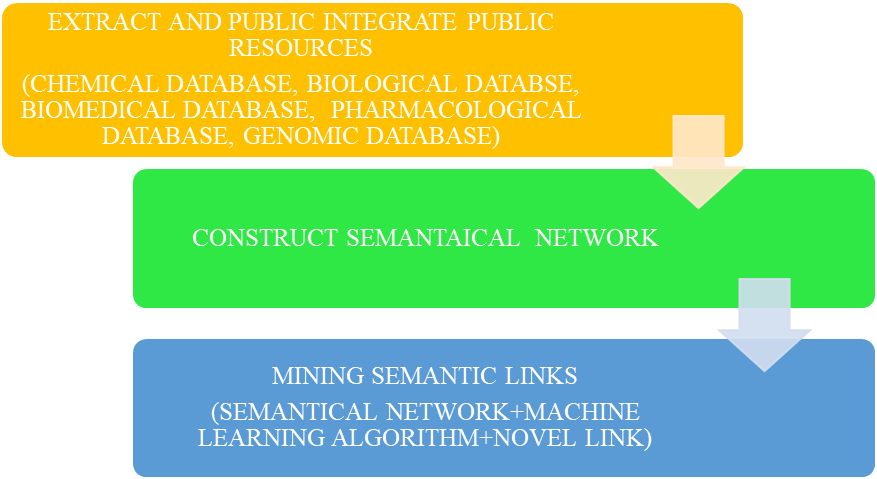
Figure No. 6 Various Resources
CONCLUSION
Drug repurposing greatly reduces drug development costs and time by discovering new indications for existing drugs. This method enables the joint analysis of different sources of data, including genomic, which improves drug repositioning efficiency.In this review, available repositioning methods were described according to the source of data and information used. With the increased importance of precision medicine and personalized drug, mechanism-based repurposing approaches are expected to be extended to finding new indications for individual patients as these repurposing approaches can reducing the risk of drug toxicity or inefficacy caused by inter-patient variability. Drug repurposing, which gives unsuccessful medications and drug candidates a second chance at life and expands on successful ones, seems to offer a viable solution to the pharmaceutical industry's problems by reversing the erosion of pipelines and providing opportunities for the identification of unmet medical needs as well as the discovery of safer, more effective, and more affordable medications for the general public. Each drug repurposing strategy has advantages in order for a repurposed drug to be successful on the market, a combination of strategies that are specifically tailored to the need must be chosen.
REFERENCES

Dr. Dupinder Kaur., Drug Repurposing: A Strategic Approach to Accelerating Drug Development and Reducing R&D Costs, Int. J. of Pharm. Sci., 2026, Vol 4, Issue 2, 2727-2739. https://doi.org/10.5281/zenodo.18672784
 10.5281/zenodo.18672784
