
Nibha Institute of Pharmaceutical Sciences, Rajgir.
The chronic metabolic disorder diabetes mellitus is a fast growing global health problem in the world . Diabetes Mellitus ( DM ) is a group of a metabolic disease in which a person has high blood sugar because the body does not produce enough insulin because cell do not respond to the insulin that is produced .The high blood sugar produces the symptoms like polyuria ( frequent urination ) , polydipsia ( increase thirst ) polyphagia ( increase hunger ) . In this article explorethe classification of diabetes mellitus such as the Type 1 , Type 2 and Gestational diabetics risk factor such as the obesity , age and sedentary lifestyle etc . diagnostic technique including fasting sugar , random blood sugar ,hemoglobin A1C test and oral glucose tolerance test treatment like lifestyle change , pharmacological treatment like insulin therapy. Recent updates from the 2025 Standards of Care in Diabetes reflect the evolving understanding of the disease and its management, with increasing emphasis on technological solutions, individualized approaches, and comprehensive risk reduction. The reconceptualization of diabetes as part of a broader metabolic dysfunction syndrome represents an important paradigm shift that may lead to more integrated approaches to prevention and treatment. Moving forward, continued research into the pathophysiological mechanisms of diabetes and its complications will be essential for developing novel therapeutic targets and improving outcomes for the growing number of individuals affected by this global health challenge.
Diabetes Mellitus ( DM ) is a chronic progressive metabolic disorder which there are high level of sugar in the blood called as Hyperglycemia ( Elevated blood glucose levels ) It is caused by ineffective production of insulin by pancreas or decrease concentration of glucose in the blood . It is found to damage many of body system particularly blood vessels, eyes kidney , heart , and nerves . DM is one of the most common endocrine ( hormone related disorder ) globally represent a significant public health challenge contributing to economic burden.
TYPES OF DIABETICS MELLITUS
Diabetics mellitus is classified into three main types.
a. Type 1 diabetics ( T1DM ) juvenile diabetics /insulin dependent diabetics -
An autoimmune condition where the body, immune system mistake attack and destroy the insulin producing beta cell in the pancreas T1DM affects both adults and children at any age individual with T1DM require lifelong insulin therapy to manage their condition .
b. Type 2 diabetics ( T2DM ) / Non insulin dependent diabetics mellitus
This is the most common forms of diabetics of that most often occur in adult . approximately 90 %of all diabetics is T2DM . where the body cell do not respond effectively to insulin . the pancreas may also lose the ability to produce sufficient insulin to body need . some of the patient have prediabetics that went uncontrolled once considered a disease of middle and old age . T2DM is also becoming more common in youth as the incidence of childhood obesity .
c. Gestational diabetics mellitus ( GDM )
A form of diabetics that develops during pregnancy and typically resolve after birth . weight gain and changing hormones that occurs during pregnancy can impair insulin function , resulting in high blood sugar . women who have gestational diabetics have 40 – 60 % chance of developing T2D within 5 to 10 years .
RISK FACT0R FOR DIABETICS MELLITUS
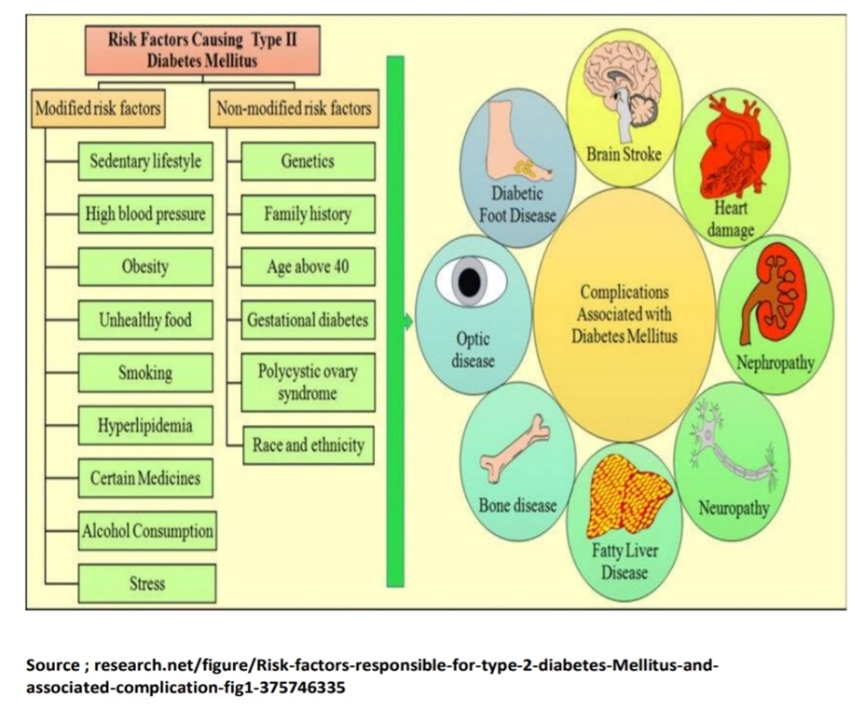
Several risk factor contribute to the development of diabetes mellitus polycystic ovary syndrome ( PCOS )Women with PCOS are likely to have insulin resistance and may develop type 2 diabetes Stress and sleep disorderChronic stress and poor sleep pattern can disrupt hormonal balance and increase the risk of insulin resistance.• Several risk factor contribute to the development of diabetes mellitus
Genetics and family history
Having a close family members with diabetics significantly increase developing of the disease because certain genes are known to cause maturity – onset diabetics of young . gene also contribute to other forms of diabetics including type 1 and type 2 . For example – A person whose present both have type 1 diabetics has a 10 to 25 % chance of developing that disease according to the American diabetics association and someone whose parent both type 2 diabetics has 50 % chance of developing that disease .
Obesity
Obesity or excessive weight gain identified as the most important and significant risk factor in the development and progression of type 2 diabetics mellitus ( DM ) in all age group because excess body fat particularly around the abdominal region is a major contributor to insulin resistance and development of type 2 diabetics .
Physical inactively
Look of regular physical actively is linked to an increased risk of type 2 diabetics . Diet The effect of diet in the also play role in diabetes mellitus some studies have linked with heavy consumption of soft drink and other carbohydrate to risk of diabetics mellitus .
Stress and mental health
sugar levels. Stress hormone such as cortisol has been linked to fluctuating glucose level in type 2 diabetes and stress hormone in women pregnancy have been linked to risk of type 1 diabetes in child .A wide range of hormone Chronic stress and mental health issues can effect blood treatment including anabolic steroids growth hormone , estrogen , contraceptives pills has been linked with secondary diabetics
History of gestational diabetics
Women who have gestational diabetics during pregnancy have an increase risk of developing type 2 diabetics in life .
Symptom
Type 1 diabetes
Symptom of type 1 diabetes develop over a short period of time symptom like weight loss, urination frequently, excessive thirst, hunger, fatigue and weakness having more local infection.
Type 2 diabetes
Symptom develop slowly with some people showing no symptom at all symptoms like blurred vision and blader infection
DIAGNOSIS
Diabetes is typically diagnosed through several clinical test that assess blood glucose level
• Hemoglobin A1C test
This is blood test that show how will you are controlling diabetes. It show the average blood glucose over the previous three months
• OGTT (oral glucose tolerance test)
A person consume a glucose rich drinks after fasting and blood glucose level are measure after two hours.Result- >200 mg/dl indicates diabetes
• Fasting
it is the prefer method of determining diabetes in children and non pregnant adult. Measure blood glucose after fasting for at least 8 hours Result – more than 120 mg/dl indicate diabetes
• Random plasma glucose
A blood glucose level more than 150mg/dl at any time of the day, along with symptom of hyperglycemia exercise thirst and frequently urination
Complication
Diabetes particularly when poorly controlled can lead to range of serious complication. All of these factor contribute to the long -term complication of diabetes which include –
• Kidney disease (diabetes nephropathy )
In diabetes nephropathy Kidney damage ,resulting in CKD (chronic kidney diseases) end state kidney diseases which requires treatment with dialysis or a transplant.
Diabetics neuropathy
In neuropathy condition nerve damage particularly in the peripheral nerve causing pain , numbness .Impaired thinking Many studies have linked diabetes to increase risk of memory loss, Alzheimer and other deficits . recently some research have suggest that Alzheimer disease might be type 3 diabetes involving insulin resistance in the brain .
Cardiovascular diseases
In diabetes mellitus significantly increase the risk of the heart diseases like CHF, stroke and peripheral artery diseases Infection and wound Diabetes can impair the immune system leading to a skin disorder such as ulcer, make diabetics the leading cause of nontraumatic foot leg amputations people with diabetes are also prone to infection incidence periodontal diseases , thrush ‘ UTI ( urinary tract infection ) and yeast infection .
Cancer
Some study suggest that diabetes mellitus increase the risk of melignant tumor in the colon pancreas liver and other orans
Treatment
Patient who are diagnosed with diabetes usually require regularly monitoring by various healthcare professional Diet and exercise are crucial in managing diabetes especially type 2 and gestational diabetes .
Biotechnological treatment
a. Gene therapy
In this method treat the fault genes .and adding new gene , fixing the faulty one , or turning off the gene causing this disease gene therapy treatment haswith regular medicine .Gene therapy are two types :
- Somatic gene therapy
In this therapy desired gene is transferred to a somatic cell. The gene is not transferred to the offspring.
- Germline gene therapy
Germline gene therapy is desired gene is introduced in the germ cell . the gene transferred from one generation to another generation .
Insulin therapy
Insulin therapy involves administering insulin to manage diabetes , aiming to enhance beta – cell function .
Pharmacological treatment
Type 1 diabetes
Managed with insulin therapy including raid short intermediate and long acting insulins. Multiple daily injections or insulin pumps are commonly used .
Type 2 diabetes
Pathophysiology of Diabetes Mellitus:
General Metabolic Dysregulation:
Diabetes pathophysiology centers around disrupted glucose homeostasis, with different types sharing the endpoint of hyperglycemia while arising through distinct mechanisms. The maintenance of normal blood glucose levels depends on a complex interplay between insulin secretion from pancreatic beta cells and insulin sensitivity in peripheral tissues, particularly muscle, liver, and adipose tissue. When this balance is disturbed—whether through autoimmune destruction of beta cells, progressive beta cell dysfunction, insulin resistance, or other
Mechanisms- hyperglycemia results. Chronic hyperglycemia triggers a cascade of metabolic abnormalities through multiple pathways, including "inflammation, endoplasmic reticulum stress (ERS), oxidative stress, and ectopic lipid deposition".
Type 1 Diabetes Pathophysiology:
In type 1 diabetes, an autoimmune process targets and destroys the insulin-producing beta cells in the pancreatic islets. Genetic susceptibility combined with environmental triggers initiates this autoimmune response, which may progress over months or years before clinical symptoms emerge. As beta cell mass declines, insulin production becomes increasingly inadequate. When approximately 80-90% of beta cells are destroyed, the remaining insulin-producing capacity becomes insufficient to maintain glucose homeostasis. At this point, the body continues to break down carbohydrates into glucose, but without adequate insulin, this glucose cannot enter cells, instead accumulating in the bloodstream and leads to hyperglycemia.
Type 2 Diabetes Pathophysiology:
The pathophysiology of type 2 diabetes is multifactorial and progressive, involving two primary defects: insulin resistance and inadequate insulin secretion. Research indicates that "for type 2 diabetes mellitus to occur, both insulin resistance and inadequate insulin secretion must exist." Insulin resistance typically precedes the development of hyperglycemia, often by many years. During this period, pancreatic beta cells compensate by increasing insulin secretion, maintaining relatively normal glucose levels despite reduced tissue sensitivity. However, this compensatory mechanism eventually fails as beta cells become dysfunctional and begin to decline in mass
A critical aspect of type 2 diabetes pathophysiology involves what has been described as an "islet paracrinopathy in which the reciprocal relationship between the glucagon-secreting alpha cell and the insulin-secreting beta cell is lost, leading to hyperglucagonemia and hence the consequent hyperglycemia". This derangement in alpha cell function results in inappropriate glucagon secretion, exacerbating hyperglycemia through increased hepatic glucose production. With disease progression, pancreatic atrophy may occur, further compromising both endocrine and exocrine pancreatic functions.
Gestational Diabetes
Gestational diabetes develops during pregnancy and typically resolves following delivery, though it significantly increases the risk of developing type 2 diabetes later in life. This form of diabetes results from pregnancy-induced insulin resistance combined with inadequate compensatory insulin secretion. Hormonal changes during pregnancy, particularly in the second and third trimesters, contribute to insulin resistance as the body attempts to prioritize nutrient delivery to the developing fetus. Gestational diabetes requires careful management to prevent complications affecting both mother and child, including macrosomia, birth trauma, and neonatal hypoglycemia.
Other Types of Diabetes:
Beyond the common classifications, approximately 2% of diabetes cases fall into other categories with Distinct etiologies. These include monogenic forms Such as Maturity Onset Diabetes of the Young (MODY) and neonatal diabetes, which result from Single-gene mutations affecting pancreatic beta cell Function or insulin action. Other specific types Include Latent Autoimmune Diabetes in Adults (LADA), which shares features of both type 1 and type 2 diabetes, and secondary diabetes arising from conditions like cystic fibrosis, pancreatic disease, or medication effects (particularly steroids and antipsychotics). Rare genetic syndromes such as Wolfram Syndrome and Alström Syndrome also include diabetes as a prominent feature.
Metabolic Pathways in Complications:
Hyperglycemia induces tissue damage through Several interconnected biochemical pathways. These Include the polyol pathway, hexosamine biosynthetic Pathway, protein kinase C activation, and increased Formation of advanced glycation end-products.(AGEs). In the polyol pathway, excess glucose is Converted to sorbitol and subsequently to fructose, Depleting NADPH and glutathione, thereby Increasing oxidative stress. The hexosamine pathway Diverts excess glucose metabolism to produce N-Acetylglucosamine, which modifies transcription Factors and alters gene expression. Protein kinase C Activation affects vascular permeability and blood Flow, while AGEs crosslink proteins, disrupting their Normal function and triggering inflammatory Responses. These pathways converge to produce Reactive oxygen species, creating a cycle of oxidative Stress that perpetuates tissue damage even after Hyperglycemia is controlled.
Retinopathy:
Diabetic retinopathy stands as the leading cause of blindness in working-age adults (20-74 years), with virtually all patients with type 1 diabetes and more than 60% of those with type 2 diabetes developing some degree of retinopathy within 20 years of diagnosis. This complication manifests as a spectrum of lesions affecting the retinal microvasculature, including "vascular permeability changes, capillary degeneration, capillary microaneurysms, and abnormal production of blood vessels". The pathogenesis begins with hyperglycemia-induced alterations in the blood-retinal barrier and increased vascular permeability. As the condition progresses, it may advance from non-proliferative (characterized by microaneurysms, hemorrhages, and hard exudates) to proliferative retinopathy (marked by neovascularization and the risk of vitreous hemorrhage and retinal detachment). Color vision deficiency often accompanies these changes, further impacting quality of life.
Neuropathy:
Diabetic neuropathy affects more than half of all Diabetic patients, making it one of the most common Complications of the disease. This complication Encompasses a heterogeneous group of disorders Affecting different parts of the nervous system, with Distal symmetric polyneuropathy being the most Prevalent form. Advanced diabetic neuropathy Results in impaired nerve fiber function, leading to “a Total decline in sensory perception”. This sensory Loss creates a significant risk for undetected injuries, particularly in the lower extremities, contributing to the development of diabetic foot ulcers. Additionally, neuropathy may manifest as painful conditions (hyperalgesia and allodynia), autonomic dysfunction affecting cardiovascular, gastrointestinal, and genitourinary systems, and focal mononeuropathies. The comprehensive impact of these neurological disturbances significantly compromises quality of life and increases mortality.
Prevention and Management Strategies:
While there is currently no cure for diabetes, type 2 diabetes can be prevented or potentially put into remission through targeted interventions.Prevention strategies focus on modifiable risk factors, including maintaining a healthy body weight, regular physical activity, balanced nutrition, and smoking cessation. For established diabetes, management approaches have evolved toward more personalized, patient-centered models considering individual factors such as age, comorbidities, preferences, and resources. A holistic approach to diabetes management extends beyond glycemic control to include cardiovascular risk reduction, kidney protection, and prevention of other complications. Regular monitoring for complications through appropriate screenings (eye examinations, kidney function tests, foot examinations) remainsessential for early detection and intervention. Because adipocytes produce interleukin 6 (IL-6) and tumour necrosis factor α (TNF-α), which are essential agents for CRP activation, elevated Reactive protein (CRP) levels have been associated With excess body weight, so it is important to Decrease body weight as a diabetic risk factor .
Diabetes can impair the immune system, leading to a Higher susceptibility to infection, and that’s why Diabetics and immunocompromised patients must go To the medical laboratory for serum ferritin level Analysis, to decrease their levels and lower the Probability of experiencing serious complications in Different viral infections such as COVID-19.The emerging concept of diabetes as part of a broader Metabolic dysfunction syndrome has led some Researchers to propose referring to “diabetic Complications” as “MDS-related target organ Damage (TOD)” to acknowledge that these Complications involve not just hyperglycemia but Multiple metabolic disturbances.
CONCLUSION:-
As of 2025, diabetes mellitus remains a critical global health challenge, with rising prevalence driven by aging populations, sedentary lifestyles, urbanization, and unhealthy diets. Despite advancements in diagnostic tools, medications (like GLP-1 receptor agonists and SGLT2 inhibitors), and digital health technologies (e.g., continuous glucose monitors, AI-assisted care), prevention and management remain suboptimal in many regions, especially low- and middle-income countries.
REFERENCES

Shashi Bhushan, Manish Pathak, Diabetes Mellitus Overview 2025, Int. J. of Pharm. Sci., 2025, Vol 3, Issue 7, 2517-2525. https://doi.org/10.5281/zenodo.16080558
 10.5281/zenodo.16080558
