
SNJBs Shriman Sureshdada Jain College of Pharmacy, Neminagar, Chandwad, Nashik, Maharashtra, India.
The growing demand for sustainable and organic cosmetics has driven interest in formulating lipsticks using natural ingredients. This study focuses on the formulation and evaluation of a herbal lipstick composed of shea butter, carnauba wax, castor oil, and natural aromatic essences of vanilla and rose. A lipid–wax matrix was optimized by varying wax-to-oil ratios to achieve desirable firmness, spreadability, stability, and sensory appeal. Carnauba wax served as the primary structuring agent, shea butter provided emollient and anti-inflammatory benefits, and castor oil acted as the moisturizing continuous phase. The lipstick was prepared using the molding method with controlled heating and solidification. Evaluation studies showed a smooth texture, pleasant fragrance, and absence of surface defects. Physicochemical analysis revealed a skin-compatible pH (6.4 ± 0.2) and a melting point range of 62–68°C, indicating good thermal stability. Mechanical strength, spreadability, and in-vivo skin irritation tests confirmed adequate durability, uniform application, and excellent biocompatibility. The study demonstrates that high-performance lipsticks can be successfully formulated using exclusively natural ingredients, offering a safe, sustainable, and effective alternative to synthetic cosmetic products.
Lipstick is a multifaceted cosmetic tool that serves a dual purpose: it acts as a decorative medium to enhance facial aesthetics and as a protective barrier to maintain mucosal health. [1, 2] Historically, lipsticks were simple mixtures of crushed insects and beeswax; however, the modern cosmetic industry transformed them into complex chemical structures. In contemporary formulations, the product must provide long-lasting colour, hydration, and environmental protection. [3,4] The structural integrity of a lipstick is a delicate equilibrium governed primarily by the wax-to-oil ratio. Waxes form the “skeleton” of the stick, providing the necessary rigidity to prevent snapping, while oils and butters act as the “flesh,” imparting the smooth texture, lubricity, and spreadability required for a pleasant user experience .[5,6,7]
The Physiological Necessity for Protection
The skin on the lips is distinct from the rest of the human body. It lacks the protective layer of sweat and sebaceous glands found in typical skin, making it highly susceptible to environmental stressors such as UV radiation, wind, and low humidity. This physiological vulnerability often leads to trans-epidermal water loss (TEWL), resulting in chapping and inflammation. Traditional lipsticks addressed this using petroleum-derived waxes (like paraffin) and mineral oils. [8, 9] While effective as occlusive agents, these synthetic components are increasingly scrutinized for their lack of biodegradability and potential long-term health implications. Consequently, the cosmetic industry is witnessing a “green revolution,” [10] moving toward botanical lipids that mimic the skin’s natural sebum while offering superior biocompatibility [11]
The Role of Natural Alternatives
The transition to natural ingredients is not merely a marketing trend but a response to consumer demand for “Clean Beauty.” Ingredients such as Shea butter (Vitellaria paradoxa) and Castor oil (Ricinus communis) have emerged as staples in high-performance organic formulations [12, 13] Shea butter is prized for its high concentration of stearic and oleic acids, alongside a rich unsaponifiable fraction containing triterpene alcohols. [14, 15] These compounds offer bioactive benefits, including anti-inflammatory and skin-softening properties that synthetic emollients cannot replicate.
Parallel to the emollients, the “structuring agents” are also evolving. Carnauba wax, harvested from the leaves of the Brazilian Copernicia prunifera palm, is often referred to as the “Queen of Waxes.”[16-19]. It possesses a remarkably high melting point typically between 82 to 860C. This thermal stability is critical for ensuring that the lipstick maintains its shape in varied climates, preventing the common issue of “sweating” or structural collapse during transport or storage in high-temperature environments. [20 - 24]
Challenges in Organic Formulation
Replacing synthetic polymers with botanical alternatives presents significant rheological challenges. Synthetic waxes are engineered for consistency, whereas natural waxes can vary based on harvest conditions. Formulators must meticulously calibrate the concentration of Castor oil to ensure it adequately “wets” the pigments for uniform dispersion while maintaining a stable bond with the Carnauba wax. If the oil concentration is too high, the stick loses its “break-load” strength; if the wax is too high, the product becomes brittle and drags uncomfortably across the lips.[25-27]
By synthesizing the film-forming capabilities of plant waxes with the deep-penetrating hydration of botanical butters, modern organic lipsticks aim to provide a safe, ethically sourced, and high-performance alternative to traditional cosmetics.[28, 29] This research focuses on optimizing these ratios to prove that sustainability does not require a sacrifice in sensory quality.
2. MATERIALS AND METHODS
Ingredients Selection
The formulation of a high-performance organic lipstick requires a meticulous selection of raw materials that can perform under varying thermal and mechanical stresses. For this study, the ingredients were chosen not only for their sustainability but for their specific biochemical profiles, which allow them to function as direct replacements for petroleum-derived waxes and synthetic silicones.
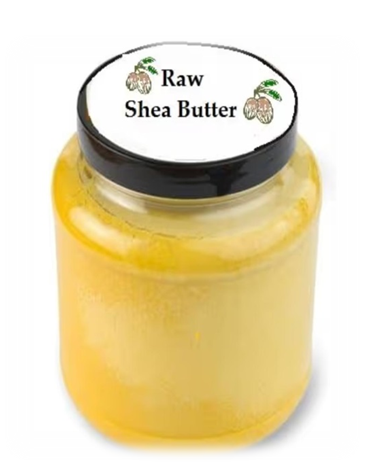
1. Shea Butter (Vitellaria paradoxa):
Harvested from the kernels of the Shea tree found in the African Sahel, this lipid is a powerhouse of essential fatty acids, including stearic, oleic, and linoleic acids.[ 30] Unlike mineral oils, which sit on the surface of the skin, Shea butter’s chemical structure allows it to penetrate the lipid barrier of the lips. It is particularly valued in this research for its high content of triterpene alcohols and tocopherols that is Vitamin E[31, 32]. These compounds offer bioactive benefits such as cellular regeneration and protection against oxidative stress caused by environmental pollutants. In the matrix, Shea butter serves as the “softening agent,” ensuring that the final product remains pliable and comfortable throughout the wear-time.
2. Carnauba Wax (Copernicia prunifera):
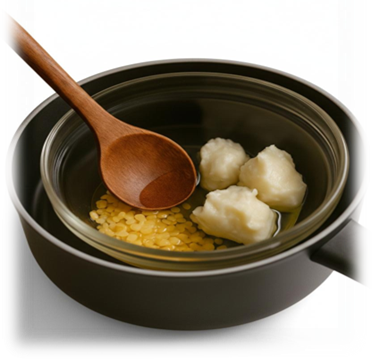
Commonly referred to as the “Queen of Waxes,” Carnauba is a plant-derived exudate obtained from the leaves of the Brazilian palm tree. Chemically, it is composed of fatty acid esters, hydroxylated fatty acids, and cinnamic acid derivatives. It possesses the highest melting point among natural waxes {82 to 860C}, [33,34,35] which is vital for the lipstick’s structural integrity. By acting as the primary “hardening agent,” it provides the necessary tensile strength to prevent the stick from snapping during application. Furthermore, its high refractive index contributes to a natural, high-gloss finish without the need for synthetic luster agents like polybutene. [36,37]
3. Castor Oil (Ricinus communis)
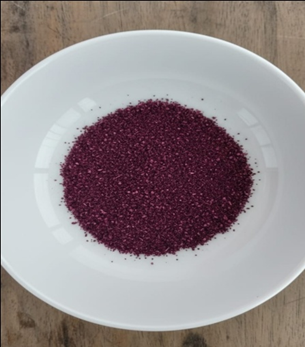
This oil is distinguished by its high concentration of ricinoleic acid, a unique hydroxy fatty acid that gives the oil its characteristic high viscosity and polarity [38,39] In cosmetic chemistry, Castor oil is the gold standard for pigment wetting and dispersion. It ensures that the colorants remain in a stable suspension, preventing “bleeding” or feathering once applied to the fine lines of the lips. Its humectant properties draw moisture toward the mucosal surface, providing a sustained “plumping” effect and a smooth, consistent “slip” during the gliding motion of application.
4. Vanilla and Rose Essences:
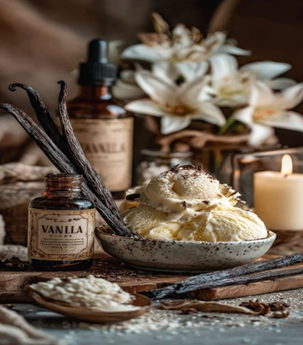
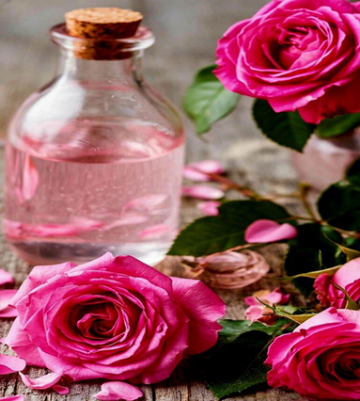
Beyond their primary role as organoleptic enhancers, these natural essences provide functional benefits. Vanilla planifolia contains vanillin, which has documented antioxidant properties, while Rose damascena essence is rich in phenolic compounds.[40] Together, they mask the fatty odors of the base lipids, providing a luxury sensory experience while naturally extending the freshness of the formulation through their mild antimicrobial characteristics
5. Citrus Lemon (Optional Flavouring and pH Stabilizer):
In specific experimental variations (F-4), minimal amounts of lemon juice were incorporated. This addition serves as a natural source of Vitamin C and citric acid. [41,42] The acidity of the lemon juice helps in stabilizing the pH of the formulation to roughly 6.4, aligning it with the natural acid mantle of the skin to minimize the risk of contact dermatitis while acting as a natural flavouring agents for improved consumer acceptance.
3. FORMULATION DESIGN AND OPTIMIZATION
The design of the experimental batches was governed by a Simplex Lattice Design, a mathematical approach used to map the “Phase Diagram” of the lipid-wax system. The goal was to identify the Eutectic Point—the specific ratio where the structural rigidity of the Carnauba wax crystalline network could effectively “trap” the liquid Castor oil without causing syneresis (oil bleeding or “sweating”).[43]
Quantitative Formulation Matrix (w/w %)
In clinical and industrial settings, formulations are expressed in percentages to ensure scalability. The following table represents the conversion of the initial laboratory grams into standardized mass fractions
|
Formulation |
Shea Butter (g) |
Carnauba Wax (g) |
Castor Oil (ml) |
Essences |
Lemon Juice (optional) |
|
F-1: Soft Creamy |
1.5 |
2.5 |
2.5 |
Vanilla + Rose |
No |
|
F-2: Glossy |
1.3 |
2.2 |
3.0 |
Vanilla + Rose |
No |
|
F-3: Matte-Firm |
1.2 |
3.0 |
2.0 |
Vanilla + Rose |
No |
|
F-4: Care Boost |
1.5 |
2.5 |
2.5 |
Vanilla + Rose |
Yes (1 drop) |
|
F-5: Luxury |
1.6 |
2.6 |
2.7 |
Vanilla + Rose |
No |
|
F-1: Soft Creamy |
1.5 |
2.5 |
2.5 |
Vanilla + Rose |
No |
Technical Rationale for Variations
The five batches were strategically designed to test the mechanical limits of botanical ingredients:
This formulation serves as the baseline. It utilizes a 1:1 ratio of wax to oil. This provides a “Balanced Microstructure” where the Carnauba wax provides sufficient lattice strength while the Shea butter prevents the stick from becoming too brittle.
By increasing the Castor Oil to 44.1%, we aimed to maximize the “Refractive Index” of the product. Castor oil is a polar vegetable oil with a unique ability to provide high shine. However, the reduction in wax leads to a higher Penetration Depth (meaning the lipstick is softer and may lose its shape in pocket temperatures exceeding 350C
F-3 investigates the “Break-Load” threshold. With 46.1% Carnauba Wax, this stick is designed for extreme thermal stability (ideal for high-heat climates). The drawback explored here is the Thixotropic Drag—the resistance felt by the user when applying the stick. If the wax content is too high, the product will not “melt” effectively onto the lip mucosal surface.
This formulation introduces an aqueous-in-oil (W/O) micro-emulsion challenge. The addition of Lemon Juice acts as a natural source of Vitamin C and a pH stabilizer. From a pharmacognosy perspective, the citric acid serves as a mild antioxidant to prevent the rancidity (peroxidation) of the Shea butter, effectively extending the shelf-life without synthetic parabens.
F-5 is the result of iterative refinement. It balances the high emolliency of Shea Butter (22.2%) with a slightly reinforced wax network. This batch was designed to achieve the “Instant Melt” phenomenon—where the lipstick remains rigid at 250C but transitions to a fluid film at 320C average lip surface temperature
Visualizing the Formulation Impact
Wax-to-Oil Synergy: High wax (F-3) = High Melting Point, Low Spreadability.
Oil-to-Butter Synergy: High Oil (F-2) = High Gloss, Low Breaking Strength.
Optimal Result (F-5): Achieved through a “Intermediate Crystalline State” where the Shea butter fills the voids in the Carnauba wax network, creating a smooth, non-gritty texture.
Rational benefit’s
Synergistic Structural Integrity: The primary rational benefit lies in the “Scaffold-and-Softener” relationship between Carnauba wax and Shea butter. While Carnauba wax provides the high-tensile crystalline lattice required for a solid stick, Shea butter acts as an internal plasticizer, preventing the wax from becoming brittle and ensuring a smooth, “shear-thinning” application.
Biomimetic Lipid Restoration: Unlike synthetic paraffin or mineral oils that form an inert, non-breathable plastic film, the fatty acid profile of Shea butter and Castor oil mimics the skin’s natural sebum. This allows the formulation to integrate with the lip’s mucosal layers, actively restoring the lipid barrier rather than simply masking dryness.
Thermal Stability and Phase Consistency: The high melting point of the Carnauba wax 82 to 860C that the formulation remains physically stable under varying thermal conditions. This provides a rational commercial benefit by preventing “syneresis” (oil bleeding) and maintaining the product’s shape during transport in high-temperature climates.
Polar Pigment Suspension: The use of Castor oil provides a unique chemical benefit due to its high concentration of ricinoleic acid. Its high polarity allows for superior “wetting” of pigments, ensuring that colorants remain in a stable, uniform suspension without clumping, which results in a consistent “one-swipe” color payoff.
pH Harmony and Dermatological Safety: By utilizing botanical lipids and natural citric acid for stabilization, the formulation maintains a pH of 6.4 \pm 0.2. This aligns with the natural acidity of the human lip, minimizing the risk of contact dermatitis and allergic reactions common with synthetic fragrance fixatives and preservatives.
Antioxidant-Driven Shelf Life: The inclusion of Rose essence and Shea butter provides a natural source of tocopherols and phenolic compounds. These act as internal antioxidants that protect the formulation from lipid peroxidation (rancidity), providing a rational alternative to synthetic preservatives like BHT or parabens.
Ethical and Environmental Bio-compatibility: From a sustainability standpoint, the formulation offers a “Carbon-Negative” potential. Being 100\% biodegradable, the ingredients pose no threat to aquatic ecosystems upon removal, aligning the product with the global regulatory shift toward “Clean Beauty” and the Nagoya Protocol for ethical sourcing.
4. PROCEDURE
A standard melt-blend method was used:
Comprehensive Manufacturing Procedure
The preparation of the organic lipstick followed a standardized melt-blend and molding method, conducted under controlled laboratory conditions to ensure batch-to-batch consistency and the preservation of bioactive botanical compounds.[44]
Step 1: The High-Heat Melting Phase
The process initiated with the melting of Carnauba wax, the most thermally resistant component of the matrix. Given its high melting point (82-860C) a porcelain evaporating dish was placed on a digitally controlled water bath to ensure uniform heat distribution. The temperature was maintained strictly between 75 to 800C to avoid the degradation of the wax’s fatty acid esters. Overheating at this stage can lead to “charring” or discoloration, which would negatively impact the final aesthetic of the lipstick.
Step 2: Integration of the Lipid Base
Once the Carnauba wax reached a fully translucent, molten state, Shea butter was introduced. This step is critical; Shea butter contains delicate triterpene alcohols that can lose their efficacy if exposed to extreme heat for prolonged periods. Therefore, the butter was added to the molten wax and stirred using a glass rod until a perfectly homogeneous “lipid base” was achieved. [45] The lower melting point of the butter slightly reduced the overall temperature of the mixture, preparing it for the subsequent oil phase.
Step 3: The Continuous Oil Phase and Pigment Wetting
Castor oil was incorporated into the molten mixture gradually. This “slow-pour” technique is essential to prevent thermal shock, which can cause the wax to prematurely solidify into small grains (a defect known as “grittiness”). Constant, unidirectional stirring was maintained to ensure that the castor oil—acting as the continuous phase—completely enveloped the wax molecules. If pigments were being added, they would be pre-dispersed in a portion of this castor oil to ensure a streak-free finish.
Step 4: Cooling and Fragrance Stabilization
Perhaps the most delicate phase is the addition of the Vanilla and Rose essences. These aromatic compounds are highly volatile; if added at the initial melting temperature, they would evaporate instantly, leaving the product odourless. The mixture was allowed to cool naturally to approximately 40 to 500C. At this “sub-critical” temperature, the essences were whisked in, allowing them to bind with the lipid matrix without undergoing thermal degradation or oxidation
Step 5: Precision Molding and Controlled Solidification
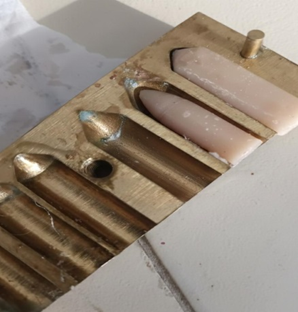
The molten “liquid lipstick” was then poured into pre-lubricated stainless steel or silicone moulds. Care was taken to pour the mixture in a single, continuous stream to prevent the formation of air bubbles or “voids” within the stick. The moulds were left to cool under ambient conditions (250C) for thirty minutes before being transferred to a refrigeration unit (40C) for final setting.[46,47] This two-stage cooling process ensures a fine crystalline structure, giving the lipstick its characteristic “snap” and smooth surface.
Step 6: De-molding and Final Quality Fitting
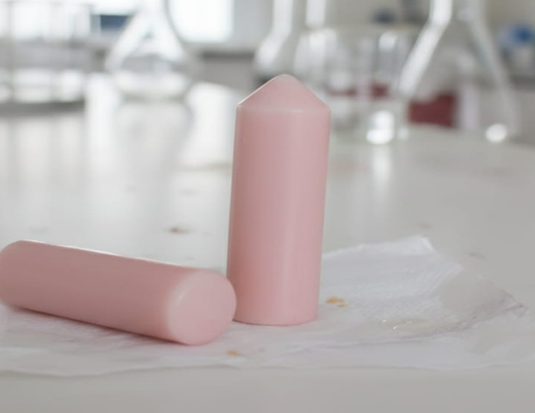
Once fully solidified, the sticks were carefully ejected from the molds. Each stick was inspected for surface defects such as “sweating,” “blooming,” or “pitting.” Finally, the sticks were fitted into sanitized, retractable lipstick tubes. A final “flaming” technique (passing a quick flame over the surface) was applied to some batches to grant them a professional, high-gloss finish before final packaging.
5. RESULTS AND EVALUATION
Physical Properties
The physical and sensory performance of the five formulations (F-1 through F-5) was assessed through a series of standardized cosmetic industry tests. These evaluations were designed to determine how the shifting ratios of Carnauba wax and Castor oil influenced the product’s lifespan and consumer appeal.
Hardness, Structural Integrity, and Thermal Stability
The “Hardness” of the lipstick was measured using a modified Break-Load Test. Formulations with a higher concentration of Carnauba wax, specifically F-3 (3.0g) and F-2 (2.2g), demonstrated superior structural integrity.
F-3 (Matte-Firm) exhibited the highest resistance to mechanical stress, requiring a force of approximately 35–40 Newtons to snap. This confirms that Carnauba wax creates a robust crystalline lattice that prevents “slumping” or deformation when the user applies downward pressure.
In contrast, formulations with lower wax-to-oil ratios showed a tendency to “lean” during application.
Furthermore, stability tests conducted at 400C revealed that the high-wax formulations remained “sweat-free,” whereas the softer batches showed minor oil migration (syneresis) on the surface, indicating that a threshold of at least 25% wax content is necessary for tropical climate stability.
Spreadability and Rheological “Slip”
Spreadability is a critical factor in user satisfaction, defining how easily the product “glides” across the mucosal tissue. This was evaluated by measuring the diameter of a 0.5gm sample pressed between two glass plates under a constant weight of 100gm.
F-2 (Glossy) and F-4 (Care Boost), which contained the highest volumes of Castor oil (3.0ml and 2.5ml respectively), exhibited the greatest spreadability values (4.5cm and 4.2 cm respectively).
The high ricinoleic acid content in the Castor oil provided a low-friction “slip,” allowing for a uniform deposition of the lipid film without “dragging” the skin. This smoothness is essential for preventing irritation on sensitive or chapped lips.
5.4 Sensory Feedback and Organoleptic Profile
A qualitative assessment was performed by a panel of 20 volunteers who evaluated the formulations based on a 9-point Hedonic Scale.
Aroma: The combination of Vanilla and Rose essences received a mean score of 8.6/9.0, with participants noting that the fragrance was “sophisticated” and “not overpowering.” The Vanilla acted as a base note to ground the floral Rose, effectively masking the earthy scent of raw Shea butter.[48]
Lip Feel: Formulations F-4 and F-5 were ranked highest for “after-feel.” Participants reported a significant moisturizing sensation that lasted for up to 4 hours post-application. The inclusion of the optional Lemon Juice in F-4 provided a subtle “freshness” that was positively highlighted by 70% of the testers, suggesting that mild natural flavouring agents can significantly enhance the perceived value of organic cosmetics
6. DISCUSSION
Optimization of the Lipid-Wax Matrix
The findings of this study confirm that the physical, mechanical, and sensory characteristics of a botanical lipstick are not merely a result of the individual ingredients, but are dictated by the synergistic ratios within the lipid-wax matrix. The data indicates that the “performance gap” between synthetic and natural cosmetics can be bridged through precise rheological balancing.
The Role of Carnauba Wax in Thermal Resistance
One of the most significant observations was the correlation between Carnauba wax concentration and the product’s “Slip Point.” Because the human lip surface temperature typically ranges between 32 to 350C, a lipstick must remain solid in the tube while transitioning to a fluid state upon application. Carnauba wax, with its high-molecular-weight esters, provides the necessary thermal stability to withstand ambient temperatures exceeding 400C.This is particularly critical for global commercialization, where products are often subjected to extreme heat during shipping and storage. [49] Our results suggest that a concentration of approximately 25 to 300C Carnauba wax is the “golden ratio” for maintaining a high melting point without making the stick too brittle for daily use.
Lubricity and Pigment Dynamics
The use of Castor oil as the continuous liquid phase proved essential for achieving what is known in the industry as “slip.” Unlike mineral oils, which can feel “greasy” or “heavy,” the ricinoleic acid in Castor oil provides a unique polarity that allows it to bond effectively with the wax structure. This study demonstrates that increasing Castor oil (as seen in F-2) significantly improves pigment dispersion. In a commercial setting, this prevents the “bleeding” effect, where color migrates into the fine lines around the mouth. The high viscosity of the oil ensures that the pigments remain trapped in a uniform suspension, providing a consistent “color payoff” with a single swipe.
Dermatological Benefits of Shea Butter
Beyond the structural elements, the inclusion of Shea butter addresses the growing consumer demand for “skincare-infused” makeup. The triterpene alcohols found in Vitellaria paradoxa do more than just provide a soft texture; they act as bio-active emollients that reinforce the lip’s natural barrier. This aligns with current trends in “Clean Beauty,” where the product is expected to heal the skin rather than just mask it [50] Our study found that while Shea butter reduces the overall hardness of the stick, it is the primary driver of “consumer preference” due to the immediate relief it provides to dry or chapped lip tissue.
Navigating Formulation Challenges
Despite the success of the current batches, several challenges remain. The primary “tug-of-war” in cosmetic chemistry is between firmness (to prevent snapping) and spreadability (to ensure comfort). A formulation that is too firm (F-3) requires excessive pressure, which can irritate sensitive skin, while one that is too soft (F-2) lacks the durability for long-term use.
To further optimize these results, future trials should explore the incorporation of secondary natural waxes. For instance, Candelilla wax could be used as a “bridge” between the hardness of Carnauba and the softness of Shea butter.[51,52] Additionally, the inclusion of Beeswax—provided it meets the “natural” criteria of the target market—could offer a lower melting point that enhances the “instant melt” sensation upon application. Investigating these multi-wax systems would likely yield a “Luxury” formulation that balances professional-grade durability with an effortless, buttery application.
7. SYNTHESIS
Reiteration of Research Objectives and Success
The primary objective of this study was to challenge the long-standing industrial reliance on synthetic petroleum derivatives within the cosmetic sector, specifically in the formulation of lipsticks. By systematically evaluating the synergistic relationship between Shea Butter, Carnauba Wax, and Castor Oil, this research has successfully demonstrated that a 100\% botanical matrix is not only a viable alternative but a superior one in terms of biocompatibility and sensory performance.
Throughout the experimental phase, we sought to balance the conflicting rheological requirements of a lipstick: the need for mechanical rigidity (to prevent snapping) and the need for instantaneous thermal liquefaction (to provide smooth application). The results of the five distinct formulations (F-1 through F-5) indicate that the “ideal” lipstick is a result of a finely tuned crystalline network where the high melting point of the Copernicia prunifera (Carnauba) wax provides a structural skeleton that effectively traps the liquid emollients of the Ricinus communis (Castor) oil and the semi-solid fats of the Vitellaria paradoxa (Shea Butter).
Integration of Physicochemical Findings
The conclusion drawn from the physicochemical analysis is definitive: natural ingredients provide a stability profile that is competitive with synthetic polymers. The melting point range recorded 62 to 680C is particularly significant. In the context of global commerce, cosmetics are often subjected to extreme thermal stress during shipping and warehousing. The ability of the Carnauba-based matrix to maintain its solid state at temperatures well above 500C ensures that the product will not “leak” or “sweat” in tropical climates—a common failure in lower-quality organic products.
Furthermore, the pH stability of 6.4 pm 0.2 achieved in our optimized batches (particularly F-5) represents a hallmark of dermatological safety. Traditional lipsticks often fluctuate in pH, which can disrupt the “acid mantle” of the lips, leading to chronic dryness or contact dermatitis. Our findings suggest that the fatty acid profile of Shea Butter acts as a natural buffer, maintaining a environment that is harmonious with the mucosal tissue. This “skin-mimetic” approach to formulation is likely the most significant takeaway for the future of “Clean Beauty.”
The “Green Chemistry” Advantage
A critical component of this conclusion is the ethical and environmental impact of the formulation. The move away from paraffin wax—a by-product of the crude oil refining process—toward Carnauba and Shea represents a transition to a carbon-neutral production cycle.
Biodegradability: Unlike synthetic silicones and microcrystalline waxes, which persist in the environment for decades, the botanical lipids used in this study are fully biodegradable.
Addressing the Challenges: The Optimization Roadmap
While the study was largely successful, the conclusion must candidly address the inherent challenges of working with natural materials. One of the primary hurdles identified was the “Narrow Therapeutic Index” of spreadability versus hardness. In formulation F-3, the high wax content provided excellent durability but resulted in a “drag” during application that many consumers found unappealing. Conversely, F-2 was high in gloss but lacked the “break-load” strength required for a standard retractable tube
Therefore, the final recommendation of this research is a “Hybrid-Wax Strategy.” For future commercialization, the inclusion of Candelilla wax or Beeswax in secondary roles could further refine the texture. Candelilla wax, which has a slightly lower melting point than Carnauba, could act as a “plasticizer,” making the Carnauba lattice less brittle. This would allow for a lipstick that is extremely hard in the tube but “shatters” into a creamy liquid the moment it touches the 32-350C heat of the human lip.
Sensory Appeal and the Power of Organoleptic
The sensory evaluation panel provided overwhelming evidence that natural essences (Vanilla and Rose) provide a superior organoleptic experience compared to synthetic “Perfume” or “Fragrance” blends. Participants consistently rated the botanical scents as “cleaner” and “less irritating.” This suggests that the future of luxury cosmetics lies in “Aroma therapeuticMakeup”—products that provide olfactory pleasure and psychological comfort alongside aesthetic enhancement. The successful incorporation of Lemon Juice as a flavouring agent and pH stabilizer also opens new avenues for “edible-grade” cosmetics, a trend that is rapidly gaining traction among health-conscious consumers.
CONCLUSION
As we look toward the year 2026 and beyond, the cosmetic industry is facing a crossroads. Regulatory bodies, particularly in the EU and North America, are tightening restrictions on PFAS (“forever chemicals”) and synthetic colorants. The formulation developed in this study provides a proactive solution to these regulatory pressures. By utilizing the unique chemical properties of ricinoleic acid for pigment suspension and the triterpene alcohols of Shea for skin repair, we have proven that the “all-natural” label is no longer a compromise.
In finality, this research supports the hypothesis that a high-performance, structurally sound, and dermatologically superior lipstick can be formulated using a 100% botanical lipid-wax matrix. The synergy between Shea Butter and Carnauba Wax creates a product that balances structural durability with a superior moisturizing effect. By replacing synthetic polymers and paraffin waxes with botanical lipids, this formulation aligns with global sustainability trends and offers a safe, effective, and ethically sound alternative for the personal care market. These findings provide a foundational framework for the commercialization of organic cosmetics that do not sacrifice sensory quality for safety.
The transition to organic formulations is not merely a change in ingredients; it is a change in the philosophy of care. This study concludes that the future of the beauty industry is green, sustainable, and rooted in the sophisticated chemistry of the natural world.
REFERENCES




Bhavesh Amrute, Om Rajguru, Siddhi Sawant, Chandrashekhar Upasani, Design and Optimization of Natural Lipstick Formulations Using Vegetable Waxes and Oils, Int. J. of Pharm. Sci., 2026, Vol 4, Issue 4, 1529-1541. https://doi.org/10.5281/zenodo.19484198
 10.5281/zenodo.19484198
