
ASPM College of Pharmacy, Sindhudurg
Many aspects of medication discovery, development, manufacturing, clinical trials, and marketing have changed as a result of the pharmaceutical industry's adoption of artificial intelligence (AI). AI can do everything from improve accuracy and reduce errors to make previously unthinkable new concepts possible. The pharmaceutical industry uses AI in medication development for things like molecular structure prediction and drug design optimization.Additionally, AI helps in drug repurposing by swiftly identifying existing pharmaceuticals for novel therapeutic uses, which saves time and money. Automation driven by AI in manufacturing streamlines processes, enhances quality assurance, and maximizes production parameters. While AI-powered trend analysis helps identify and solve future issues, advanced process control and fault detection enable efficient manufacturing. AI helps with patient recruitment, data processing, and monitoring during clinical trials, an essential phase of drug research.The use of AI algorithms to predict trial outcomes and identify medical conditions holds great promise for enhancing patient care and trial success rates. Adoption of AI in the pharmaceutical sector is hindered by issues including high upfront costs, worries about job displacement, and data gathering limitations, despite its many advantages. Because AI has the ability to improve patient outcomes and alter drug development procedures, the pharmaceutical sector is expected to grow greatly in the future.AI's introduction into the pharmaceutical sector represents a major breakthrough, providing a host of advantages while tackling the difficulties and complexities of contemporary medicine and drug development.
Artificial intelligence (AI) is the simulation of human intelligence in machines that are designed to think and act like people. AI is sometimes defined as a technology that allows machines to imitate a range of complex human abilities. In 1956, Marvin Minsky and John McCarthy organised a meeting where the concept of artificial intelligence was first proposed [1][2]. The pharmaceutical business is undergoing a rapid transformation thanks to artificial intelligence (AI) and machine learning (ML), which are speeding up research, cutting costs, and increasing the effectiveness of numerous processes, from medication development to production.AI has greatly enhanced the diagnosis of illnesses. These days, developing sensible therapies and guaranteeing patients' wellbeing depend on disease analysis. AI is quickly entering the healthcare industry. In the biotech industry, AI is thought to play "a key supporting role in the fight to treat and stop" the virus and could "contribute to a solution coming faster than we would have otherwise." AI is acknowledged as playing a vital supporting role in the fight against and management of the virus, which could hasten the biotech industry's search for remedies.
Among the new projects utilising AI technology in pharmacy are drug discovery, drug delivery formulation, development, and other healthcare applications. Hype has already given way to hope in this movement. AI models are also used to predict in vivo reactions, the pharmacokinetic properties of the medicines, the right dosage, etc.[3]AI technology is used to achieve both helpful interpretation and more accurate analyses [4]. According to this viewpoint, AI technology combines computer intelligence with a number of practical statistical models [5]. The worry of unemployment is frequently linked to the advancement and invention of AI technologies. However, the confidence that greatly helps to AI technology's effectiveness in the industry is the reason that practically all developments in its applications are being welcomed.
Classification of AI:
The majority of pharmaceutical applications use AI designed for certain tasks, such as patient data analysis, molecule screening, or drug target prediction. As an illustration, consider IBM Watson for literature mining and Deep Chem for chemical property prediction.
At this point, it is hypothetical that it will be able to reason, learn, and make decisions similarly to a human scientist.
Not yet used in pharmaceutical practice.
2) According to the Pharma Value Chain's Application Stage:
AI methods: reinforcement learning, generative adversarial networks (GANs), and deep learning.
AI methods: such as toxicity prediction, QSAR models, and predictive modelling.
Table No 1: AI Types, Methods and Pharma application
|
AI Type |
Method / Example |
Pharma Application |
|
Machine Learning (ML) |
Regression, Random Forest, XG Boost |
Drug response prediction, toxicity modelling |
|
Deep Learning (DL) |
CNNs, RNNs, GANs |
Structure based drug design, image based screening |
|
Natural Language Processing (NLP) |
Text mining, entity recognition |
Literature analysis, clinical documentation |
|
Export System |
Rule- based system |
Quality control, decision support |
|
Robotic and Automation |
AI-driven roots, co bots |
High – throughput screen, packaging |
|
Reinforcement Learning (RL) |
Policy learning, Reward optimization |
Optimizing synthesis routes, clinical decision support |
Depending on the Domain or Stakeholder:
Artificial Intelligence Frameworks [Machine learning Tools]:
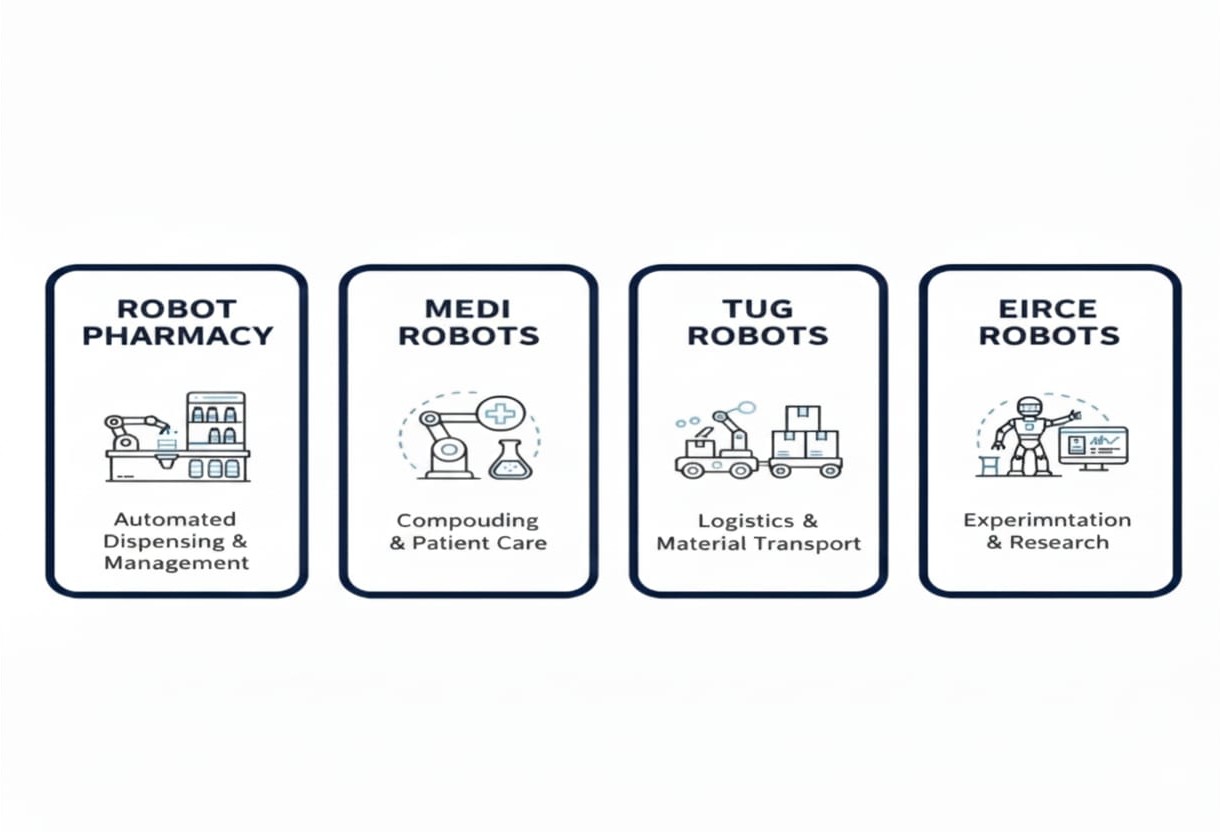
Figure No.4.1: AI in robotics and pharmacy
To improve patient safety, UCSF Medical Centre uses robotic technology to track and prepare drugs. They assert that 3,50,000 doses of medication have been expertly made by the technology. In terms of both size and medication administration accuracy, the robot has proven to be noticeably better than humans.[6]
MEDI stands for Medical and Engineering Designing Intelligence. AI tools The study that led to the creation of the pain management robot was managed by Tanya Beran, an Albertan professor of community health sciences at the University of Calgary. She got the concept from her experience working in hospitals where children scream throughout treatments. The robot tells the children what to anticipate during a medical procedure after building a rapport with them.[7]
Aethon TUG robots are designed to navigate hospitals independently and transport heavy objects like trash and linen as well as supplies, food, medications, and specimens. It is available in two configurations: permanent and secured carts and an interchange base platform that can be used to shift racks, bins, and carts.
The new care robot Erica was developed by Professor Hiroshi Ishiguro of Osaka University in Japan. It was developed in collaboration with the Japan Science and Technology Agency, Kyoto University, and the Advanced Telecommunications Research Institute International (ATR). It has a combination of Asian and European face traits. Additionally, it can speak Japanese. It wishes to go to Southeast Asia, see animated films, and have a life partner with whom it can converse like any other person.
AI FOR DRUG DISCOVERY:[8]
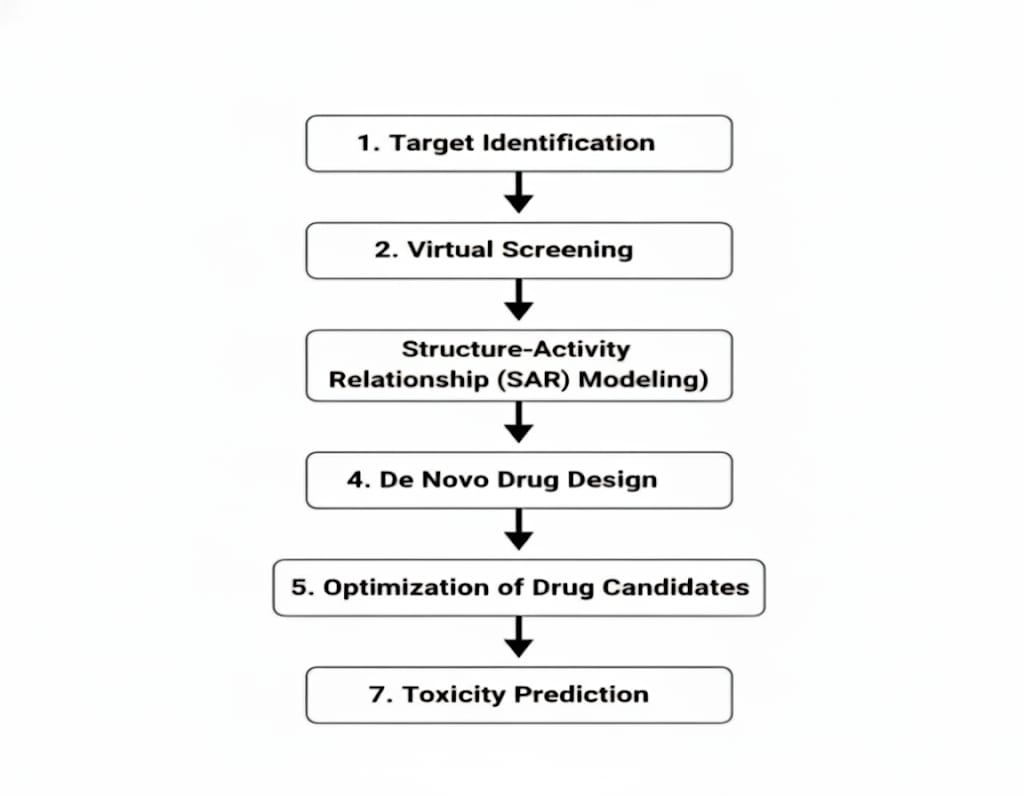
Figure No.5.1: AI for drug discovery
AI has transformed drug discovery and research in a number of ways. The following are some of AI's most significant achievements in this field
To find possible therapeutic targets, AI systems can examine a variety of data types, including genomic, proteomic, and clinical data. AI helps develop drugs that can alter biological processes by identifying disease-associated targets and molecular pathways.
AI makes it possible to efficiently screen large chemical libraries in order to find therapeutic candidates that are highly likely to bind to a particular target. AI saves time and money by helping researchers prioritise and choose compounds for experimental testing by modelling chemical interactions and forecasting binding affinities.
AI models can create connections between a compound's chemical structure and its biological activity. By creating compounds with desired characteristics including high potency, selectivity, and advantageous pharmacokinetic profiles, researchers are able to optimise medication prospects.
AI computers can suggest new chemical compounds that resemble drugs by using generative models and reinforcement learning. AI broadens the chemical universe and facilitates the creation of novel therapeutic candidates by learning from chemical libraries and experimental data.
AI algorithms are capable of analysing and optimising drug candidates by taking into account a number of variables, such as pharmacokinetics, safety, and efficacy. This aids scientists in optimising therapeutic compounds to increase their efficacy while reducing any adverse effects. 1) Drug Repurposing: AI methods can examine vast amounts of scientific data to find current medications that might be useful in treating various illnesses. AI speeds up and lowers the cost of drug research by repurposing current medications for new applications.
By examining the properties and chemical structure of substances, AI systems are able to forecast the toxicity of drugs. Machine learning algorithms that have been trained on toxicological databases are able to recognise dangerous structural characteristics or predict negative outcomes. In clinical studies, this aids researchers in prioritising safer drugs and reducing possible negative reactions.[9]
Pharma companies collaboration with AI Technology[8]: Pharmaceutical businesses and AI have partnered to develop therapeutic items. A lot of the industry's AI partnerships are focused on clinical research and drug development.AI is essential to solving many of the most important problems facing the sector.The top ten pharmaceutical companies that use artificial intelligence (AI) or machine learning for drug discovery, clinical research, disease diagnosis, creative treatment, predictions, data analysis, and other purposes will be examined.
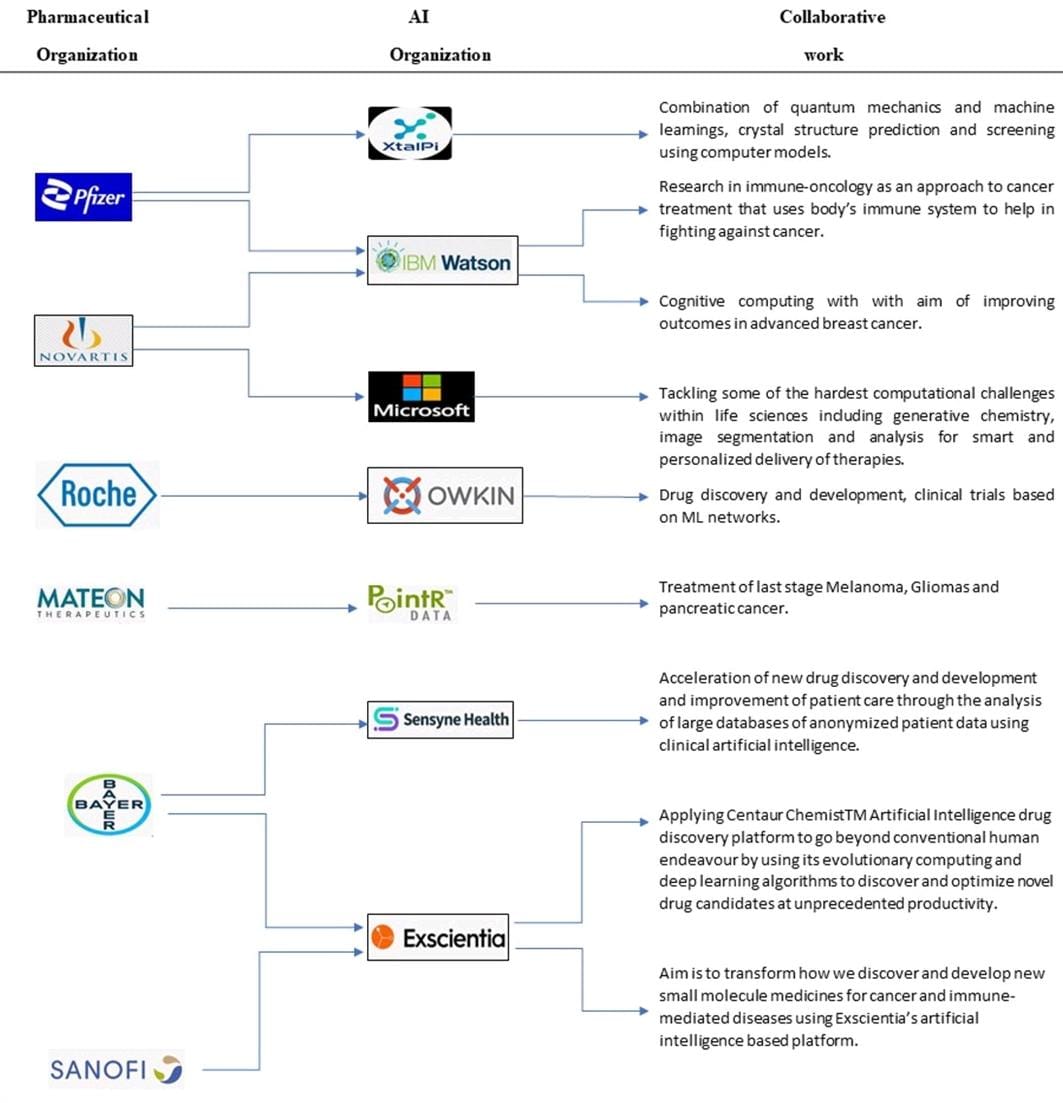
Figure No.6.1: Prominent pharmaceutical businesses and their relationships with AI firms involved in CNS illnesses, cardiovascular disease, and cancer.
Challenges Of AI In Pharma:
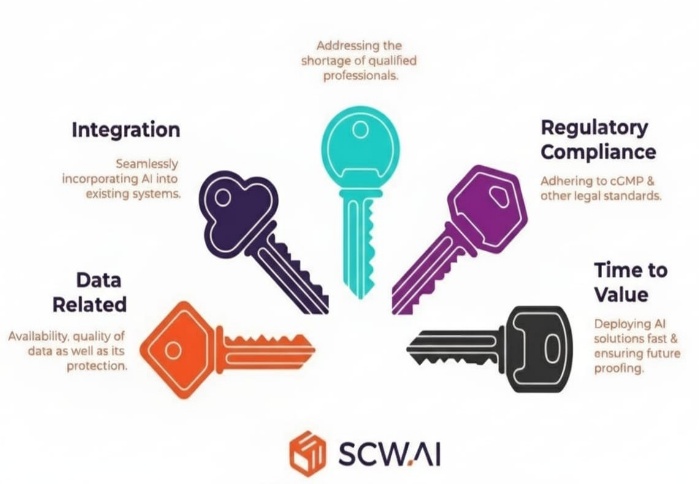
Figure No.7.1: Challenges of AI in pharma
Challenge: This relates to data availability, quality, and security.
The quality of AI models depends on the quality of the training data. Pharma frequently works with fragmented data and old systems, which makes it challenging to get standardised, high-quality datasets. Additionally, patient data is extremely sensitive, making it difficult to comply with laws like GDPR and HIPAA on data security and privacy.
Respecting current Good Manufacturing Practice (cGMP) and other legal requirements is a challenge.
Specifics: Processes must be controllable, repeatable, and traceable, according to regulatory agencies like the FDA. These fundamental ideas are directly at odds with the "black box" character of many sophisticated AI/machine learning models, where the decision-making process is difficult to understand. To verify and guarantee the ongoing performance and non-drift of AI models, the industry needs frameworks.
Overcoming the lack of skilled workers is a challenge. Detail: A specialised workforce with a blend of data science, AI engineering, and pharmaceutical knowledge is necessary for the successful implementation of AI. The interdisciplinary skill set required to create, implement, and manage compliant AI systems in a highly regulated environment is in short supply worldwide.
Integrating AI into current systems in a seamless manner is a challenge.
Detail: Operational technology (OT) and IT systems that have been tested for decades are frequently used by pharmaceutical manufacturing. It is a difficult, expensive, and time-consuming technical and change management challenge to integrate these fragmented, inflexible legacy systems—like ERP or LIMS—with contemporary, cloud-native AI platforms without interfering with established processes.
The challenge is to ensure future proofing and quickly deploy AI technology.
Details: It can take a pharmaceutical company a very long time to go from a pilot AI project to a fully scaled, value-generating solution because of the complexity of validation, compliance, and integration. This sluggish pace puts the AI solution at danger of becoming antiquated (legacy costs) before it yields a substantial return on investment (ROI).
AI In Pharma Global Market:
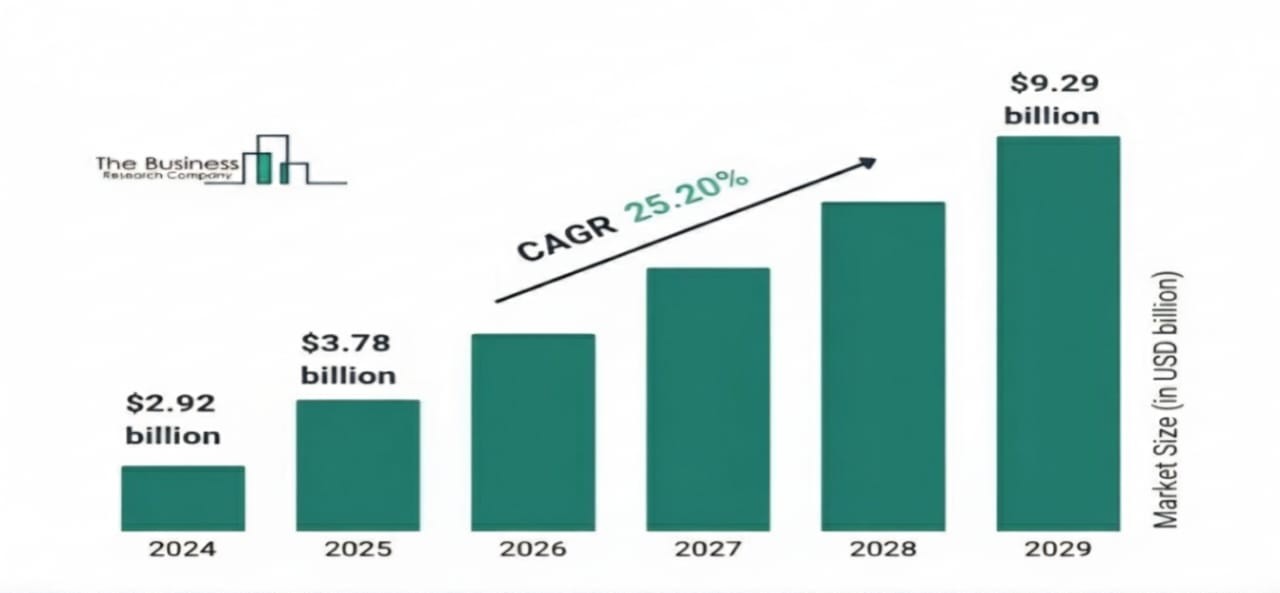
Figure No.8.1: AI in Pharma Global Market Report 2025[11]
The study outlines the anticipated expansion of AI in the pharmaceutical industry worldwide between 2024 and 2029.
Market Growth Rate: A compound annual growth rate (CAGR) of 25.20% is anticipated for the market.
Forecasts of Market Size (in USD billion):
$2.92 billion in 2024
$3.78 billion in 2025
Estimated for 2029: $9.29 billion
Benefits of Artificial Intelligence Technology’s:
Artificial intelligence helps to improve accuracy by lowering errors and increasing precision. Because they can survive difficult air conditions, robust metallic robotic entities are used for space exploration.[12]
Artificial intelligence shows promise in the mining sector and is being used in fuel exploration. By overcoming mistakes caused by humans, Al technology can explore the ocean.[13] 1. Routine Implementations: Al contributes significantly to our daily activities and deeds. For example, GPS systems are frequently used on long trips, and the incorporation of artificial Android devices helps to anticipate user input and correct spelling mistakes.[14]
To cut down on the requirement for human labour, smart organisations are using systems such as "avatars," or models of digital assistants. Because they are emotionless, the "avatar" is able to make the right, rational decisions. Human emotions and moods interfere with judgement efficiency, but computer intelligence can aid.[15]
Physicians can typically assess their patients' conditions and study any side effects or other health hazards associated with their prescriptions with the help of an Al software. Trainee surgeons can learn a lot by using Al apps, such as many artificial surgery simulators (such as those that model the heart, gastrointestinal tract, brain, etc.). [16]
Artificial intelligence (Al) technology is used in almost every cutting-edge technological development in the globe. It may produce a variety of computational modelling programs and aims to produce new compounds. Al technology is also used in the creation of medication delivery formulations.
All technology provides round-the-clock assistance to people of all ages, including children and the elderly, and serves as educational resources for teaching and learning.
Machines are emotionless and have no boundaries. These dispassionate computers are capable of doing a variety of jobs more accurately and efficiently than humans.[18]
ADVANTAGES AND DISADVANTAGES OF AI:
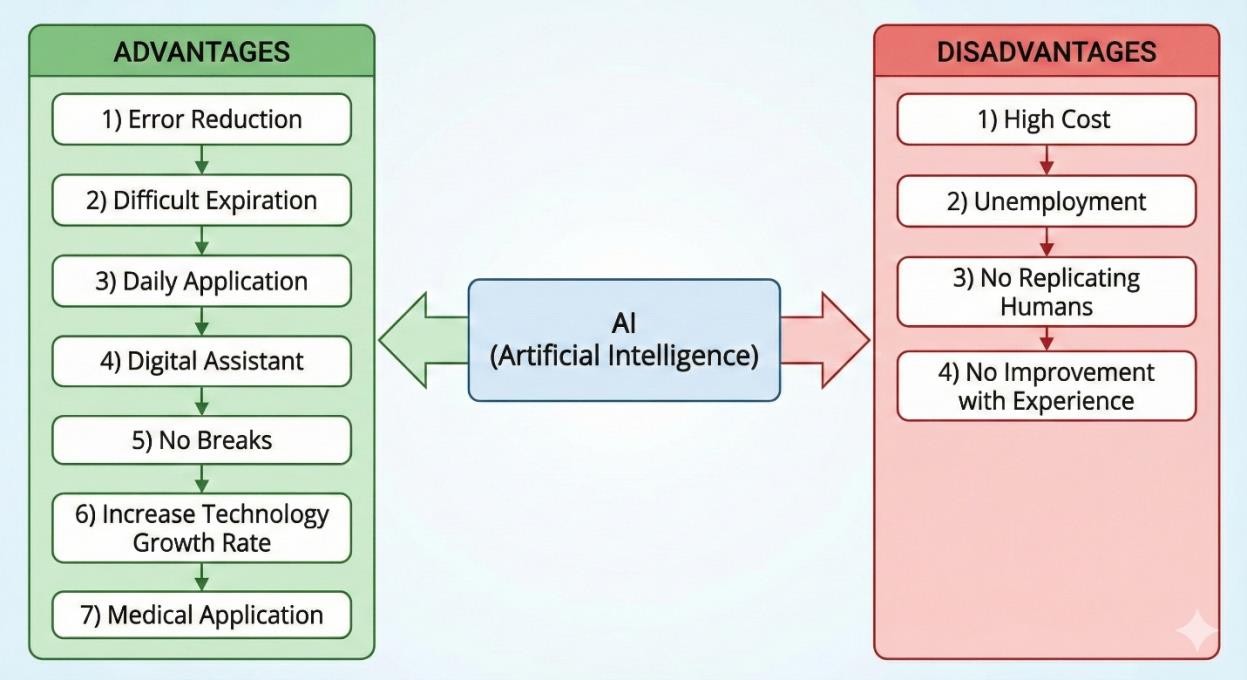
Figure No 11.1: Advantages and Disadvantages of AI
Advantages of AI:
By reducing errors and boosting accuracy, artificial intelligence, or AI, is essential to improve the effectiveness of many processes. Because of their robust metal bodies, intelligent robots can withstand the severe conditions found in space. They are therefore selected for space exploration missions.[19]
AI shows promise in the mining sector and is equally useful in the search for new fuels. Furthermore, by successfully reducing errors brought on by human participation, AI systems are essential to marine exploration. Everyday Use: AI is quite helpful in the things we do on a daily basis. For instance, long-distance driving makes extensive use of GPS. Installing AI on Android devices helps forecast what a user will input. Additionally, it helps correct spelling mistakes. For the former lady SIRI.
AI systems are widely used in banking and financial sectors, where they effectively manage and arrange data to identify fraudulent activity.
Digital Assistant: To reduce reliance on humans, modern businesses use AI systems, such as digital assistant "avatars." These avatars are emotionless and make rational decisions. They make better decisions and solve problems because, in contrast to humans, their emotions don't affect their judgement. The limitations of human emotions are removed by machine intelligence, which also improves overall efficacy.
Unlike humans, who usually work eight hours a day with breaks, machines are designed to function nonstop for long periods of time without getting bored or confused.
The most cutting-edge technological developments in the world make extensive use of AI technology. It attempts to create new chemicals and can create a variety of computer modelling programs. AI is also being used to develop formulations for the distribution of medications.
Artificial intelligence is currently being used by doctors to evaluate patients and assess health issues. The AI program informs doctors about a variety of drugs and their adverse effects.
Disadvantages of AI:
Because of the complex machinery design, maintenance, and repair needed, introducing AI requires a substantial expenditure. The system requires regular software updates. Reinstalling and restoring the system requires a significant amount of work and money. Furthermore, the R&D department spends a lot of time creating a single AI system, which raises costs.
A significant rise in unemployment could result from the widespread use of machines to replace people in a variety of sectors. Due to their frequent reliance on technology, humans may lose their creativity and become complacent.
While AI-powered robots are capable of mimicking human thought processes, they are devoid of moral values and emotions. Because of this, individuals perform their assigned tasks exactly as intended and without exercising judgement. It can occasionally result in serious issues. Robots cannot make decisions if they are not familiar with the situation. At that point, they either collapse or fabricate a report.
Unlike humans, AI-powered machines are not capable of learning from their mistakes. They are unable to distinguish between people based on their work ethic and show no signs of care, belonging, or caring.[20][21]
CONCLUSION
Over the past several years, there has been a noticeable increase in interest in the applications of AI technology for the analysis and interpretation of several significant pharmacy domains, including drug development, dosage form design, polypharmacology, hospital pharmacy, etc. The Al technical approaches are similar to how humans imagine knowledge, solve issues, and make decisions. It has been demonstrated that the utilisation of databases and automated workflows for efficient analyses using Al methods is beneficial. The application of Al methods has made it possible to construct new hypotheses, strategies, predictions, and assessments of numerous related elements with ease and at a lower cost. AI and machine learning are drastically changing the pharmaceutical sector by speeding up research, cutting expenses, and increasing productivity in a variety of activities, from manufacturing to medication development.
AI algorithms can suggest new drug-like chemical structures using generative models and reinforcement learning, broadening the known chemical space and supporting the creation of fresh therapeutic candidates.By forecasting drug toxicity, modelling chemical interactions to anticipate binding affinities, and creating connections between chemical structures and biological activity to optimise candidates, AI systems improve the drug development process.
In addition to research, AI methods like robotic process automation and IoT-based analytics are applied to supply chain forecasting, process optimisation, quality control, and equipment predictive maintenance.
REFERENCES






Dr. M. J. Patil, Kapil Pawar, Aniket Jambhale, Rohit Kamble, Sakshi Kamble, Manthan Kage, Artificial Intelligence in The Pharmaceutical Industry: Applications, Challenges, And Future Landscape, Int. J. of Pharm. Sci., 2026, Vol 4, Issue 3, 2299-2310. https://doi.org/10.5281/zenodo.19132956
 10.5281/zenodo.19132956
