
Department of Pharmacy Practice, Paavai College of Pharmacy and Research, Namakkal, Tamil Nadu, India 637018
Artificial Intelligence (AI) is revolutionizing healthcare delivery by enabling faster, more accurate diagnostics, personalized treatment planning, and efficient resource allocation. This comprehensive review examines the multifaceted applications of AI across diverse healthcare domains including diagnostics, genomic medicine, therapeutic optimization, population health management, mental health support, pediatric care, geriatric care, and pharmacy practice. Machine learning algorithms, deep learning neural networks, and natural language processing technologies have demonstrated superiority over traditional methods in critical areas such as cancer detection, drug dosing optimization, and clinical decision support. Despite significant benefits, implementation challenges including data privacy concerns, algorithmic bias, regulatory frameworks, and ethical considerations require careful attention. This review synthesizes current evidence, real-world applications, and future perspectives on AI integration in healthcare. We highlight that successful implementation requires interdisciplinary collaboration among healthcare providers, technology developers, and policymakers to ensure equitable, patient-centered healthcare delivery while maintaining human oversight and ethical responsibility.
Artificial Intelligence (AI) represents a paradigm shift in computational capabilities, enabling machines to perform complex tasks that traditionally required human intelligence. AI encompasses problem-solving, pattern recognition, natural language understanding, and learning from experience at scales and speeds exceeding human capacity [1]. The field has evolved dramatically from early rule-based systems in the 1950s, through the machine learning revolution of the 1980s-1990s, to contemporary deep learning and large language model architectures [2].
Historical milestones have shaped AI development: Christopher Strachey's first AI program (1951), John McCarthy's coining of the term "Artificial Intelligence" at the Dartmouth Conference (1956), IBM's Deep Blue defeating Garry Kasparov in chess (1997), and the emergence of advanced virtual assistants like Siri and Alexa in the 2000s [3]. Today, AI technologies including machine learning (ML), deep learning (DL), and natural language processing (NLP) form the technological backbone of healthcare innovation.
The healthcare sector faces persistent challenges: diagnostic errors contributing to preventable mortality, variation in treatment efficacy across patient populations, resource constraints limiting access to specialists, and escalating healthcare costs. AI addresses these challenges by automating routine tasks, enhancing diagnostic accuracy, enabling personalized medicine, and optimizing clinical workflows. This review provides a comprehensive examination of AI's current applications, demonstrated benefits, implementation challenges, and future trajectory in healthcare. Understanding AI's role is essential for healthcare professionals to effectively integrate these technologies into clinical practice while maintaining patient safety and ethical standards.
2. Literature Review and Background
2.1 Fundamental AI Technologies
Suleimenov et al. (2020) established foundational understanding of AI as systems capable of performing human-level cognitive tasks through algorithms, data processing, and machine learning models [1]. Their work emphasized AI's role in decision-making automation and knowledge representation critical for healthcare applications where rapid, accurate decisions impact patient outcomes.
Jordan and Mitchell (2015) provided pivotal perspectives on machine learning as a data-driven discipline, distinguishing supervised and unsupervised learning approaches [4]. Their analysis predicted that future AI development would emphasize model interpretability and real-world adaptability factors essential for clinical acceptance and regulatory approval.
Russell (2010) delivered comprehensive theoretical foundations in his seminal work "Artificial Intelligence: A Modern Approach," establishing rational agent frameworks and knowledge representation systems upon which healthcare AI applications are built [2]. McCorduck (2004) provided historical and philosophical context, chronicling AI's evolution while addressing ethical dimensions crucial to biomedical implementation [3].
2.2 AI in Healthcare Context
Davenport and Kalakota (2019) pioneered the conceptualization of AI's healthcare potential, demonstrating how AI-driven tools enhance diagnosis accuracy, reduce medical errors, and optimize hospital workflows [5]. Their work established the economic rationale for AI investment, identifying specific areas where AI could improve both clinical and operational outcomes.
Recent advances in large language models (LLMs) and natural language processing have expanded AI's capacity to extract meaning from unstructured clinical data, generate evidence-based summaries, and support clinical documentation [1]. These capabilities represent a significant advancement from earlier AI systems limited to structured data analysis.
3. Aim and Objectives
Aim
To provide a comprehensive review of artificial intelligence applications across diverse healthcare domains and evaluate the clinical, operational, and ethical implications of AI integration in healthcare practice.
Objectives
4. Methodology
This systematic review synthesized evidence from peer-reviewed literature, clinical trials, and validated healthcare implementations. Literature was obtained from databases including PubMed, ScienceDirect, Google Scholar, and supplemented by grey literature from regulatory agencies and professional organizations. Search parameters included combinations of terms: "artificial intelligence healthcare," "machine learning diagnostics," "clinical decision support," "deep learning medical imaging," and domain-specific searches (pediatric AI, geriatric AI, pharmacy automation).
Inclusion criteria encompassed: (1) peer-reviewed research publications, (2) clinical trial data with quantifiable outcomes, (3) FDA-cleared or CE-marked medical devices, (4) regulatory framework documents, (5) publications from 2015 onwards reflecting contemporary AI capabilities. Exclusion criteria included opinion pieces without data, preclinical research without clinical validation, and purely theoretical papers without implementation evidence.
More than fifty articles were systematically reviewed and categorized by healthcare domain. Data extraction focused on: application type, study population, outcome metrics, comparison to standard care, and implementation barriers. Results were synthesized thematically across diagnostic, therapeutic, and operational domains.
5. AI in Diagnostics: Enhancing Accuracy and Speed
5.1 Diagnostic Accuracy Enhancement
Diagnosis remains a fundamental healthcare challenge despite medical advances. Early disease detection directly impacts treatment efficacy and patient prognosis, yet diagnostic errors continue to cause preventable morbidity and mortality [6]. AI addresses this challenge through pattern recognition capabilities exceeding human visual perception.
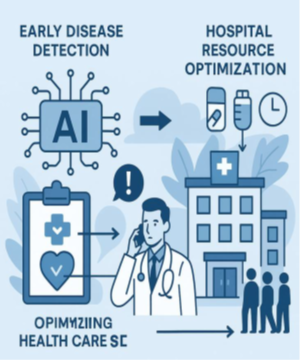
Machine learning algorithms analyze imaging data with remarkable sensitivity. A landmark UK study utilizing AI systems to interpret mammograms demonstrated absolute reduction in false positives and false negatives by 5.7% and 9.4% respectively [7]. South Korean research comparing AI-based breast cancer diagnosis to radiologist interpretation showed AI sensitivity of 90% versus radiologists' 78% for mass detection, and superior early cancer detection (91% vs. 74%) [7].
Convolutional Neural Networks (CNN) and deep learning architectures identify subtle patterns in medical images X-rays, CT scans, MRIs—that may escape human detection. These capabilities have been validated across multiple cancer types, enabling more confident diagnosis and faster clinical decision-making [8].
5.2 Emergency Department Applications
Emergency departments face unique diagnostic challenges: incomplete patient information, time-critical decisions, overcrowding, and high error rates. AI-powered decision support systems provide real-time guidance on patient triage, symptom assessment, and diagnostic hypothesis generation [8].
AI algorithms analyze patient data for urgency-based triage, prioritizing high-risk cases and optimizing ED flow. Studies document that AI-enabled symptom assessment tools reduce unnecessary ED visits by ruling out alternative diagnoses, while real-time clinical decision support improves diagnostic accuracy and reduces diagnostic errors that contribute to increased mortality and extended hospital stays [9].
6. AI in Genomic Medicine and Personalized Treatment
6.1 Genomic Data Integration
The convergence of AI and genomic medicine enables unprecedented personalization of medical care. Machine learning algorithms recognize complex genetic variation patterns associated with disease susceptibility and drug response patterns that traditional statistical methods may overlook [10].
High-throughput genomic sequencing combined with AI analysis accelerates drug discovery and identifies novel therapeutic targets. In oncology, transcriptomic profiling using AI-guided molecular classification enables categorization into clinically relevant subtypes previously developed for breast cancer and now extended to colorectal, ovarian, and sarcomas [10]. These molecular classifications directly inform diagnostic, prognostic, and treatment decisions.
6.2 Predicting Drug Toxicity and Efficacy
A critical barrier to drug development is non-clinical toxicity, accounting for significant pipeline failures during clinical trials. Computational modeling powered by AI predicts drug toxicity particularly cardiotoxicity and hepatotoxicity substantially improving drug development efficiency [11].
Machine learning models trained on extensive pharmacological datasets predict individual patient responses to specific medications with over 80% accuracy [12]. This capability enables precision dose selection and drug choice optimization, reducing adverse effects while maximizing therapeutic benefit.
7. AI in Treatment Optimization and Therapeutic Monitoring
7.1 Personalized Treatment Planning
Precision medicine represents a transformative approach where medical care is tailored to individual patient characteristics including genetics, environment, lifestyle, and biomarkers [13]. AI enables real-time analysis of complex patient datasets to generate treatment recommendations optimized for individual patients.
Huang et al. demonstrated AI's treatment prediction capability using patient gene expression data to forecast chemotherapy response. In their cohort of 175 cancer patients, AI-derived predictions achieved over 80% accuracy across multiple chemotherapy drugs [12]. Similarly, Sheu et al. successfully predicted antidepressant response using electronic health records from 17,556 patients, with AI models achieving good predictive performance while minimizing confounding bias [14].
7.2 Dynamic Dose Optimization
CURATE.AI represents an innovative AI platform for dynamic chemotherapy dose optimization based on individual patient responses. Prospective trials in patients with advanced solid tumors showed that CURATE.AI-generated personalized doses, based on tumor marker readouts correlated with chemotherapy dose variations, successfully reduced chemotherapy toxicity while improving response rates compared to standard dosing [15].
Therapeutic Drug Monitoring (TDM), essential for medications with narrow therapeutic indices, benefits from AI integration. ML algorithms predict individual drug responses considering genetic makeup, medical history, and other factors, enabling true personalization of drug therapy. AI predictive analytics identify patients at high risk for adverse drug reactions before they occur, enabling proactive intervention [15,16].
8. AI in Population Health Management
8.1 Predictive Analytics and Risk Identification
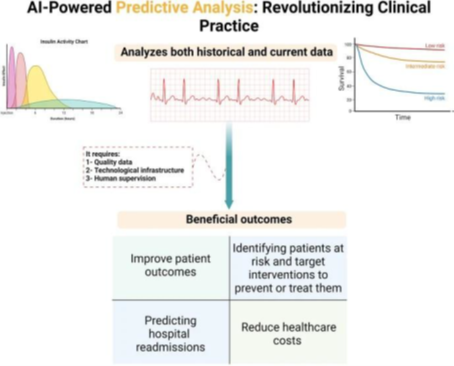
Population health management increasingly utilizes AI-powered predictive analytics to identify at-risk individuals and guide targeted interventions. Machine learning algorithms analyze historical and current data to anticipate future health trajectories, enabling preventive action [17].
Predictive models successfully identify patients at risk for chronic disease development (endocrine, cardiac) by analyzing medical history, demographics, and lifestyle factors. Particularly impactful is hospital readmission prediction: by analyzing patient demographics, medical history, and social determinants, AI models identify readmission-risk patients enabling targeted interventions that reduce costs while improving outcomes [17,18].
8.2 Population-Level Disease Surveillance
At a Saudi Arabian scale, Sehaa a big data analytics platform analyzing Twitter data detected disease prevalence patterns, identifying dermal diseases, heart disease, hypertension, cancer, and diabetes as leading conditions [19]. Geographic analysis showed Riyadh with highest awareness-to-afflicted ratios and Taif as the healthiest city, enabling targeted resource allocation [19].
9. AI in Pharmacy Practice and Drug Information
9.1 Hospital Pharmacy Automation
AI and robotic systems dramatically enhance medication safety and operational efficiency in hospital pharmacies. At UCSF Medical Center, robotic systems have accurately prepared over 350,000 medication doses without error, handling oral, injectable, and chemotherapy medications while assembling sterile IV preparations [20,21]. This automation enables pharmacists to redirect effort toward direct patient care and clinical consultation.
9.2 Community Pharmacy Integration
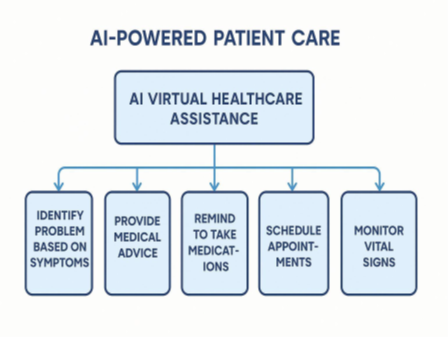
Community pharmacies increasingly deploy AI-powered chatbots simulating pharmacist-patient interactions, handling routine medication queries, providing refill reminders, and escalating complex issues to human pharmacists [20]. Retail chains like Walgreens integrate AI with telehealth platforms, enabling patient-pharmacist video consultations.
AI supports inventory management through demand forecasting achieving 90% accuracy, drastically reducing delivery times, minimizing waste, and enabling personalized refill notifications [20]. AI algorithms analyze patient medication history to generate specific recommendations considering health conditions, past medications, and lifestyle preferences, optimizing therapy selection.
10. AI in Mental Health and Patient Engagement
10.1 AI-Powered Mental Health Support
Mental health represents an underserved healthcare domain where AI applications show particular promise. AI-powered mental health applications assist in early detection and diagnosis of mental health conditions, providing tailored treatment and support [21]. Web-based cognitive behavioral therapy (CBT) supplemented by AI tools demonstrates efficacy comparable to in-person therapy while improving accessibility [21].
Research demonstrates depression as the most investigated mental disorder in AI literature. A notable study evaluating Woebot a mental health digital application in patients with substance use disorders found that Woebot engagement significantly correlated with improved substance use outcomes, reduced cravings, and decreased depression and anxiety [22].
10.2 Patient Education and Provider Support
AI-enhanced patient education using interactive chatbots personalizes health information across domains: diet recommendations, smoking cessation, and medical management. The PROSCA (Prostate Cancer Communication Assistant) chatbot increased participant knowledge about prostate cancer [23]. ChatGPT assists diabetes patients in understanding diagnosis, monitoring symptoms, tracking medication adherence, and answering questions [23].
AI technology addresses a critical healthcare challenge: provider burnout. By automating administrative documentation, scheduling, and routine inquiries, AI reduces non-clinical workload, potentially improving provider retention and patient satisfaction [24].
11. AI in Pediatric Care
11.1 Chronic Disease Management in Children
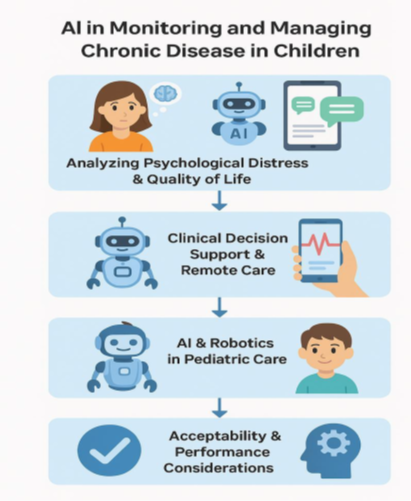
AI technologies support comprehensive pediatric chronic disease management. Speech analysis tools classify emotional quality and intensity in children with mental health issues, while AI analysis of standardized questionnaires reveals correlations between symptom levels and psychological distress in conditions like inflammatory bowel disease [25].
Social media analysis using AI models detects psychological distress and suicidal ideation, providing early intervention opportunities. Combined analysis of posts and community reactions on platforms like Facebook and Reddit improves prediction accuracy for mental health risks [25,26].
11.2 Clinical Decision Support and Robotics
AI-powered clinical decision support tools assist treatment planning and guideline adherence. For asthma management, AI determines optimal therapy escalation/de-escalation decisions. Tools estimating dry weight in pediatric dialysis patients perform comparably to specialist nephrologists [26].
Mobile applications for chronic disease management enable children and parents to record health data reviewed by AI algorithms providing tailored recommendations. Over time, AI systems generate independent recommendations comparable to physician recommendations, making remote monitoring efficient and accessible [26]. Humanoid robots support children with type 1 diabetes, assisting with insulin dose calculations while engaging patients through interactive games [27].
12. AI in Geriatric Care
12.1 Supporting Independence and Safety
AI-powered systems assist older adults in performing daily activities medication management, fall detection, navigation enabling independent living. Home-based AI algorithms detect deviations from behavioral norms and provide real-time emergency alerts, empowering sophisticated decision-making in aging-in-place scenarios [28].
AI-driven wearable devices monitor vital signs and activity levels, promoting healthier independent lifestyles. Systems can send real-time alarms to family, care facilities, or medical providers without requiring patient intervention [28]. This capability is particularly valuable for cognitively intact older adults desiring autonomous living arrangements.
12.2 Chronic Disease Management and Mental Health
AI algorithms revolutionize health monitoring in older populations. By analyzing wearable device data, electronic health records, and other sources, AI provides real-time data analysis, detects early disease warning signs, and generates personalized treatment recommendations [29]. AI-enabled telemedicine platforms enable remote monitoring and virtual consultations, improving healthcare access for geographically isolated older adults.
Artificial Intelligence addresses mental health in the geriatric population, where age-related depression, dementia, anxiety, and cognitive impairment increase in prevalence [30]. AI-based technologies enable early identification and continuous monitoring through speech, facial expression, and behavioral pattern analysis. Machine learning algorithms predict mental health decline risk, facilitating timely personalized interventions. Virtual assistants and chatbots serve as supportive companions reducing social isolation [30]. AI-integrated wearables monitor sleep, mood, and activity, providing clinicians and caregivers with valuable health insights.
13. Discussion
13.1 Transformative Impact Across Healthcare Domains
The evidence synthesis demonstrates AI's profound transformative impact on healthcare across multiple domains. In diagnostics, AI systems achieve sensitivity and specificity exceeding human performance for cancer detection and other conditions requiring pattern recognition in complex imaging data. This superiority arises from AI's capacity to analyze massive datasets, identify subtle patterns imperceptible to humans, and apply consistent decision-making criteria.
In genomic medicine, AI enables systematic analysis of genetic variations predicting disease susceptibility and drug response. This integration of genomic data with AI analysis accelerates drug discovery, predicts drug toxicity before clinical trials, and facilitates personalized medicine implementation at scale.
Therapeutic optimization through AI-driven clinical decision support, personalized dose optimization platforms like CURATE.AI, and treatment response prediction capabilities represent genuine advances in precision medicine. These applications translate genomic insights and real-world outcome data into individualized treatment recommendations.
Population health management benefits substantially from AI-powered predictive analytics identifying high-risk individuals for targeted intervention. Hospital readmission prediction, chronic disease risk identification, and public health surveillance exemplify how AI scales healthcare insights across populations.
13.2 Implementation Challenges and Considerations
Despite demonstrated benefits, AI implementation in clinical settings faces significant obstacles. Data privacy and security represent paramount concerns: patient data integration into AI training datasets must comply with HIPAA, GDPR, and equivalent regulations while maintaining patient autonomy through informed consent mechanisms [31].
Algorithmic bias, arising from training data that underrepresents certain populations, may result in differential AI performance across demographic groups, potentially exacerbating existing healthcare inequities [32]. Rigorous bias testing during algorithm development and external validation across diverse populations is essential.
Regulatory frameworks remain nascent. The FDA is developing guidelines for AI in medicine and frameworks governing AI-based software as medical devices. The European Medicines Agency has designated AI regulation as strategic priority [23]. These frameworks must balance innovation encouragement with patient safety assurance.
Clinical integration requires adequate healthcare provider training in AI interpretation and appropriate skepticism toward recommendations. AI should augment human clinical judgment rather than replace it providers must understand AI limitations, potential failure modes, and when to seek additional information before acting on AI recommendations.
13.3 Ethical and Professional Considerations
Healthcare AI raises fundamental ethical questions regarding human agency, accountability, and informed consent. When AI contributes to diagnostic or treatment decisions, responsibility for outcomes must remain clearly defined either with the AI system's developer/organization or the attending clinician. Transparency regarding AI's role in clinical decisions enables informed patient consent and preserves autonomy.
The displacement of routine healthcare tasks by AI necessitates workforce planning. While automation reduces administratively burdensome work potentially improving clinician satisfaction and retention, it simultaneously may eliminate certain positions. Workforce transition support and retraining programs merit consideration as healthcare evolves.
CONCLUSION
Artificial Intelligence represents a transformative force reshaping healthcare across diagnostic, therapeutic, operational, and population health domains. Evidence demonstrates AI's capacity to enhance diagnostic accuracy, personalize treatment selection, optimize dosing regimens, and enable early disease prediction. AI technologies extend healthcare access through remote monitoring and virtual consultants, reduce clinician administrative burden, and provide mental health support at scale.
However, realizing AI's healthcare potential requires proactive attention to data privacy, algorithmic bias mitigation, rigorous clinical validation, and appropriate regulatory oversight. Successful implementation depends upon interdisciplinary collaboration among clinicians, healthcare administrators, technology developers, data scientists, policymakers, and ethicists.
As AI technologies mature and integrate into clinical workflows, healthcare professionals must develop competency in AI literacy understanding capabilities, limitations, and appropriate use cases. Conversely, technologists must incorporate clinical expertise and ethical principles into AI development, ensuring that technological solutions address genuine clinical problems while maintaining patient centeredness.
With thoughtful implementation balancing innovation with rigorous evidence generation and ethical oversight, AI promises to revolutionize healthcare delivery: making diagnosis faster and more accurate, treatment more personalized and effective, and healthcare systems more efficient and equitable. The trajectory toward AI-enhanced medicine is inevitable; ensuring that trajectory prioritizes patient welfare, clinician empowerment, and equitable healthcare access remains the fundamental imperative.
REFERENCES


Dr. R. Sivakumar, Sathishkumar S, Dr. Hariharan V, Sunil Kumar R. U., Dharun Dexit T, Vignesh R, Jagadesh S, Pooja S, Ashwini V, Nithya Sri S, Harini R, Artificial Intelligence in Healthcare: A Comprehensive Review of Clinical Applications and Implementation, Int. J. of Pharm. Sci., 2026, Vol 4, Issue 3, 3740-3751. https://doi.org/10.5281/zenodo.19273117
 10.5281/zenodo.19273117
