
P. R. Patil Institute of Pharmacy, Talegaon, Ashti, Wardha, 442202, Maharashtra, India.
Ultraviolet (UV) spectroscopy is a vital analytical technique used across chemistry, pharmaceuticals, and biological sciences for qualitative and quantitative analysis. It is based on the absorption of ultraviolet light (200–400 nm) by molecules, leading to electronic transitions from lower to higher energy states. The technique follows Beer-Lambert’s law, which establishes a linear relationship between absorbance and concentration, making it suitable for precise quantitative measurements. A typical UV-Vis spectrophotometer consists of a radiation source, monochromator, sample cell, detector, and recording system. Common light sources include deuterium and tungsten lamps, while prisms or diffraction gratings serve as monochromators to isolate specific wavelengths. Detectors such as phototubes and photomultiplier tubes convert transmitted light into measurable signals. UV spectroscopy finds wide applications in quantitative chemical analysis, pharmaceutical quality control, biochemical research, and environmental monitoring. Its simplicity, accuracy, and cost-effectiveness make it indispensable for determining molecular structure, concentration, and purity, supporting research and industrial processes with high analytical precision and reproducibility.
Spectroscopy is the technique which measures the Electromagnetic radiations (EMR) which is emitted or absorbed by molecules or atoms or ions of a sample when it moves from one energy state to another energy state and Electromagnetic radiation is a type of energy such as UV rays, Infrared rays, Micro-waves, Radio-waves, X-rays, Gamma rays and visible light etc.
Ultraviolet (UV) spectroscopy is one of the most widely employed analytical techniques in modern chemistry and pharmaceutical sciences. It is a type of absorption spectroscopy which involves the interaction of ultraviolet light, typically in the wavelength range of 200–400 nm, with a substance to study its electronic structure. When UV light passes through a sample, some of it is absorbed, causing the electrons in the molecules to move from a lower energy level (ground state) to a higher energy level (excited state), producing a distinct absorption spectrum. This spectrum serves as a molecular fingerprint that helps in the identification, purity assessment, and quantitative determination of chemical compounds.
Principle
The principle of UV-Vis spectroscopy is Based on the principle of absorption of UV light by chemical compounds, which result in production of different Spectra and the spectra arise from the transition of an electron within a molecule from ground state to excited state. When the molecules absorb UV radiation frequency the electron in that molecule undergoes transition from ground level to higher energy level cause electronics transition.
Electronic Transitions
When a molecule absorbs UV light, electronic transitions occur — electrons jump to higher energy orbitals. Molecules that have π-electrons (in double bonds) or non-bonding electrons (lone pairs) can easily absorb UV radiation. This absorption results in different types of transitions depending on the kind of electrons involved:
These transitions differ in energy, arranged as:
Σ–σ > n–σ > π–π* > n–π***
(from highest to lowest energy required).
Beer-Lambert’s Law
This absorption process is mathematically represented by the Beer–Lambert Law, which defines a direct proportionality between absorbance (A) and the concentration (C) of the absorbing species in the solution,
Beer – Lambert’s law states that;
When a beam of monochromatic radiation is passes through the absorbing medium, then the decrease in the intensity of the radiation is directly proportional to the thickness/pathlength as well as concentration of the solution.
The Beer -Lambert’s law can be expressed as :
A a c × l
A= ε ×c×l
Where,
A=Absorbance ε=Molar absorptivity c= concentration l= pathlength According to this law, absorbance increases linearly with concentration within a specific range, which makes UV spectroscopy a reliable quantitative method for solution analysis.
Instrumentation
The essential parts of a spectrophotometer are :
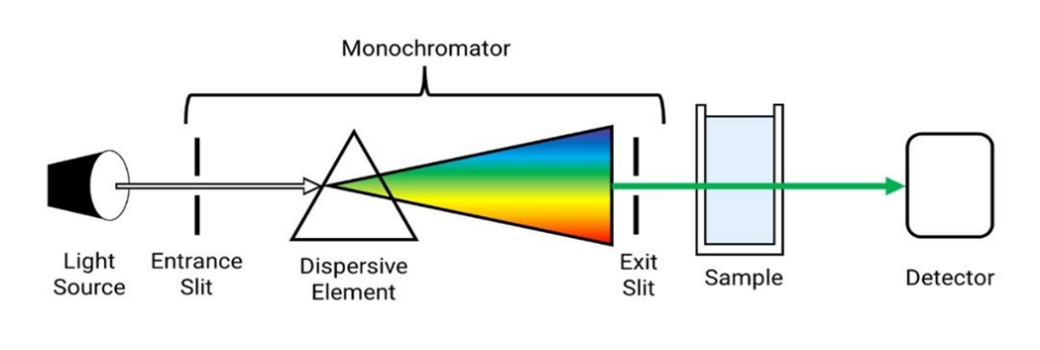
Fig.1. A basic block diagram of the elements in a spectrometer.
Radiation Source
In UV-Vis spectroscopy, the selection of a light source is crucial for accurate and reliable measurements.
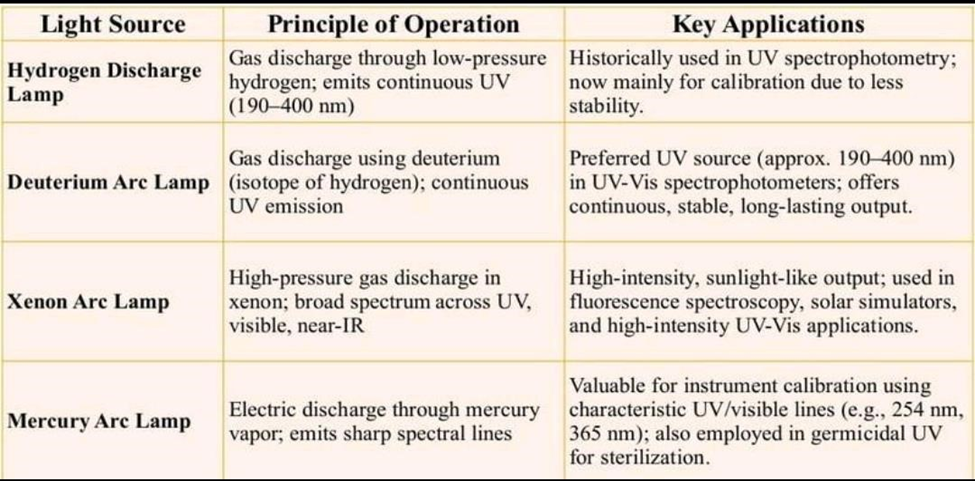
The light source used in UV-Visible spectroscopy should give a steady and uniform intensity of light for all wavelengths. However, maintaining this uniformity is challenging. Therefore, to cover the full range of wavelengths—from ultraviolet to visible and sometimes even near-infrared regions—spectrophotometers usually use a combination of two different light sources.
Common light sources used in UV-Vis Spectrophotometers
Monochromator
Monochromator is also known as Wavelength selectors. Used to isolate the desired wavelength of radiation from wavelength of continuous spectra.
Components of Monochromator
TYPES OF MONOCHROMATOR
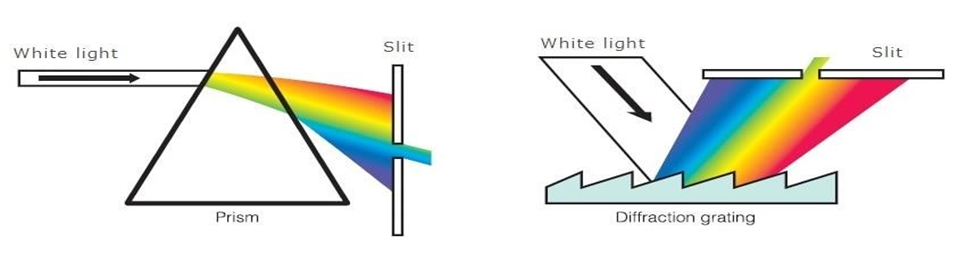
Fig. 2 Working of Monochromators
Sample cell
In UV-Vis spectrophotometry, a sample cell, also known as a cuvette, it is a transparent container that holds the sample being measured They are typically constructed from materials like quartz, glass, or plastic.
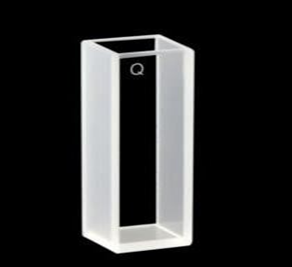
Fig. 3 Sample holder (Cuvette)
Detectors
A UV-Vis spectrophotometer, the detector is the component responsible For converting the light that has passed through the sample into a measurable electrical signal. This signal is then processed to determine the amount of light absorbed or transmitted by the samples.
Here are the common types of detectors used:
Photovoltaic cell (photocell)
Working Principle: Based on the photovoltaic effect light falling on a semiconductor generates electron–hole pairs, producing an electric current.
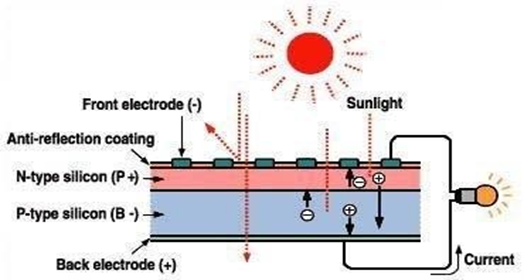
Fig. 4 Photovoltaic cell detector
Photomultiplier tube (PMT)
Working Principle: Also based on the photoelectric effect but with electron Multiplication. The photoelectrons emitted from the cathode strike a series of Dynodes, each releasing multiple secondary electrons, resulting in a large Amplified current.
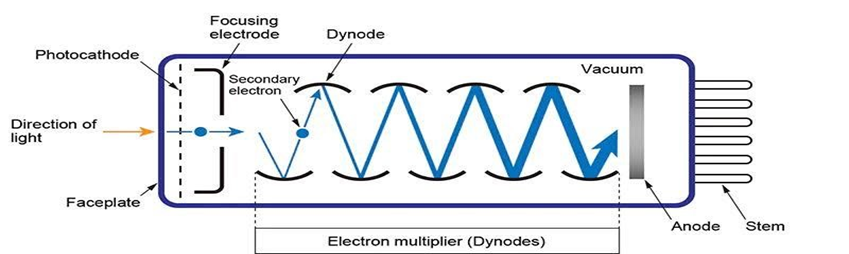
Fig. 5 Photomultiplier tube detector
Phototube (Photoemissive Cell)
Working Principle: Works on the photoelectric effect – light photons strike a Photosensitive cathode, releasing electrons, which are collected at an anode
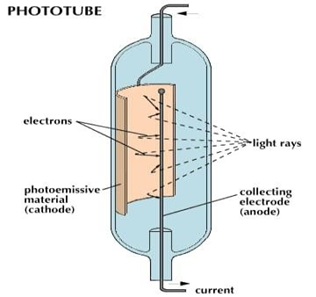
Fig. 6 Phototube detector
Working
Working principle of a spectrophotometer is based on the following steps:
Blank (measure of the intensity of light transmitted through the solvent):
Sample determination:
Applications
In chemistry labs, UV spectrophotometry is used to measure how much of a substance (solute) is present in a solution. The Beer-Lambert Law explains that the amount of light absorbed by a solution is directly related to the concentration of the absorbing substance. This allows scientists to accurately determine concentrations.
In biology and medicine, UV spectrophotometers are used to study important molecules like proteins and nucleic acids (DNA and RNA). They help identify, measure, and monitor any structural changes in these biomolecules.
In the pharmaceutical industry, UV spectrophotometry is used to check the concentration of active pharmaceutical ingredients (APIs) in drug formulations. This ensures that medicines contain the correct amount of each ingredient.
REFERENCE





Lishika Ingole, Lokesh Aglawe, Mohit Rithe, Mrunali Niwal, Mahesh Gadge, An Overview on UV Spectroscopy with Applications, Int. J. of Pharm. Sci., 2025, Vol 3, Issue 11, 2925-2930. https://doi.org/10.5281/zenodo.17649969
 10.5281/zenodo.17649969
