
MET Institute of D. Pharmacy, Adgaon, Nashik
Pharmacovigilance (PV), which protects patients by identifying, evaluating, and averting adverse drug reactions (ADRs), is the cornerstone of post-marketing pharmaceutical safety. Despite its inherent limitations in terms of time, sample size, and demographic diversity, pre-marketing clinical trials are essential for establishing early safety and efficacy. As a result, adverse effects that are uncommon, persistent, or population-specific could not appear until the drug is broadly accessible. Despite being crucial in identifying safety risks, traditional PV methods like manual case assessment, literature analysis, and spontaneous reporting still have issues like underreporting, delayed signal detection, and ineffective analysis of the massive amounts of raw data produced in contemporary healthcare. Examples of national and international monitoring systems created in reaction to historical events include the WHO-Uppsala Monitoring Centre, FAERS (USA), EudraVigilance (EU), and PvPI (India). The 1960s thalidomide disaster served as a stark reminder of the importance of pharmacovigilance. When taken as a whole, these initiatives have improved pharmaceutical safety worldwide, but they are still unable to keep up with the increasing need for innovation. In recent years, pharmacovigilance has been revolutionized by artificial intelligence (AI). Adverse drug responses (ADRs) can be identified almost instantly from a variety of sources, including as social media, pharmacovigilance databases, electronic health records, and big data analytics, thanks to machine learning (ML) and natural language processing (NLP). Additionally, AI helps automation in case processing, improves patient involvement through digital tools, and lowers false positives in signal detection. There are still issues with algorithmic transparency, data security, and regulatory harmonization even as it presents new possibilities for accuracy, efficiency, and scalability. This article explores the evolution of pharmacovigilance, contrasts AI-based innovations with conventional systems, and talks about the benefits, drawbacks, and uses of each. Pharmacovigilance may develop into a preventive, internationally standardized drug safety system in the digital age by fusing cutting-edge technology with human knowledge.
Pharmacovigilance (PV) has become one of the most crucial elements in the healthcare systems and ensures the safety and proper utilization of drugs way after they are in the market. PV is the science and the works involving identifying, evaluating, comprehending, and avoiding the development of adverse drug effects or any other drug-related issues, as declared by the World Health Organization (WHO) [1]. PV addresses the actual scenario of medications used by millions of patients in different communities unlike in clinical trials which involve only few patients, a number of well-selected volunteers. By itself, clinical trials cannot be sufficient to represent the complexity due to the possible difference in genetics, diets, age, co-morbidities, and concurrent medications of these patients. PV therefore serves as a unified safety net to the patients in all places because of its ability to handle the gap between the conclusions of controlled trials and the facts of real practice.
2.1 History
The history of pharmacovigilance began with several drug-related deaths that demonstrated the urgent necessity for well-organized post-marketing safety protocols. The most notable event was the thalidomide catastrophe of the early 1960s, when thousands of babies were born with severe limb deformities because their mothers had taken the drug during pregnancy. This tragedy exposed significant shortcomings in medication safety evaluation, leading to the development of formal pharmacovigilance frameworks worldwide.
In the decades that followed, other drug safety incidents highlighted the need for constant monitoring. Examples include cerivastatin, which was withdrawn in 2001 due to deaths from rhabdomyolysis; troglitazone, which was discontinued in 1997 due to fatal liver damage; and rofecoxib (Vioxx), which was recalled in 2004 due to increased cardiovascular risk.
These instances demonstrated the inadequacy of pre-approval clinical trials in identifying all rare or enduring side effects. This led to the creation of global pharmacovigilance systems. The International Drug Monitoring Program was founded by the WHO in 1968 and was based in the Uppsala Monitoring Center in Sweden. Furthermore, areas developed their own systems, such as FAERS (USA), EudraVigilance (EU), and PvPI (India). Together, these groups form the international network responsible for ensuring medication safety.
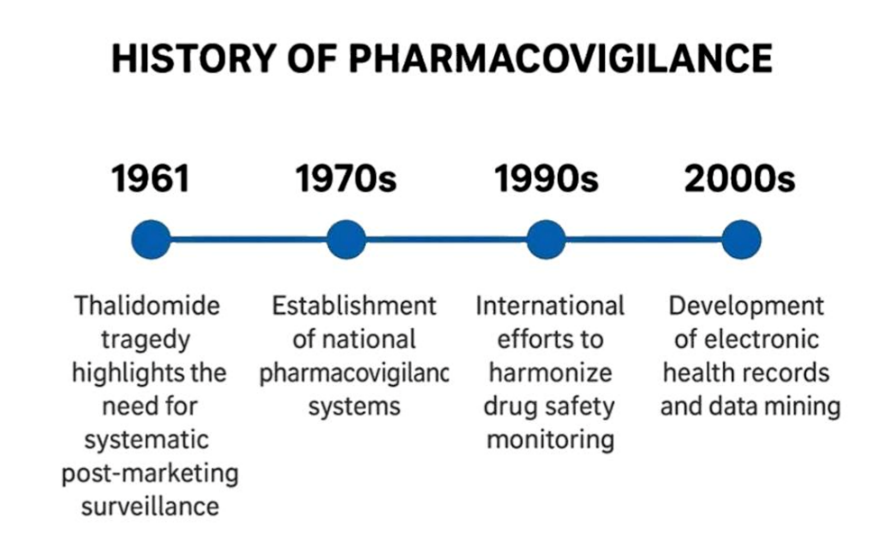
Fig 1.1 :- History of pharmacovigilance
2.2 Types of Pharmacovigilance Approaches:
Pharmacovigilance has employed several Approaches to monitor and observe ADRs over time. Patients and healthcare providers can report to the system on a voluntary basis, and this is known as the spontaneous reporting system (SRS). The most popular one is voluntary reporting of suspected ADRs to the national or global centers. This paradigm is shown by such systems as the Yellow Card (UK), FAERS (USA) and PvPI (India). SRS is able to detect unusual, unexpected. This is not expensive and it takes place regularly. Research estimates that less than ten percent of ADRs are in fact documented, that the underreporting remains a major constraint [8]. Cohort event monitoring (CEM), a form of monitoring that involves prospective monitoring of a given group of patients under a prescription of a particular drug, another important method is to document all the negative events and report them to the medicine. Despite having more resources, this approach is more resourceful, less developed and more intensive in the low- and middle-income countries, it provides more data than unplanned reporting. As a hybrid paradigm, targeted spontaneous reporting (TSR) was developed, which is focused on some specific medications or populations, e.g. treatment of tuberculosis or antiretroviral therapy in HIV treatment. To identify adverse drug reactions (ADRs), the prescription event monitoring (PEM) that is widespread in the UK and New Zealand, monitors patients to whom a new medication has been prescribed. In the meantime, hospitals are utilizing electronic data to infer ADR patterns on a real-time basis, rendering electronic health record (EHR)-based observing becoming increasingly significant. Last but not the least, to discover safety signals that have not been detected yet by the regular reporting, literature-based pharmacovigilance systems involve a systematic search of the journals, case reports and academic literature publications. Such interventions combine to create a multi-layered approach to risky drug use. Even though both methods have their shortcomings, in combination, they enhance the possibility of discovering common and uncommon ADRs, which ensure a comprehensive drug safety framework. The ideal qualities of a pharmacovigilance system include the following: A pharmacovigilance system requires there are ideal features one has to possess to work well. It must be comprehensive to start with; it ought to be capable of monitoring every therapy, classes, formulations, and patient populations, such as vulnerable ones such as youngsters, the aged, and unborn mothers. The system should also prevent bias and duplication as well as validate data through scientific rigor. Ensure quality and reliability. Timeliness is also very important; ADRs should be detected and announced as early as possible, could be prevented resulting in large-scale damage. Other important elements are accountability and transparency. To maintain the level of trust that people have in the system, information must be made available to regulators, healthcare givers and the general population. A patient-centered PV system is also necessary to its provision of user friendly reporting tools that patients can use to share their experiences with the drug effectiveness. As the concerns with drug safety often involve international borders, it should be integrated with international databases such as VigiBase by WHO. Adaptability is yet another trait that is desirable. The PV systems should evolve in order to address the safety concerns of such cutting. There are rapid developments in edge treatments as biologics, vaccines, nanomedicines, and gene therapies. Last but not least, a strong educational element is critical to a working system, which trains patients, pharmacists, and healthcare experts regarding the importance of ADR reporting and the different methods. In conclusion, the “ideal” pharmacovigilance system is a proactive radar which can detect safety signals in time and authenticate them distinctly, and deliver information in an expeditious and clear manner to ensure the protection of the health of the population.
India is one of the biggest producers and consumers of pharmaceuticals worldwide, which presents special obstacles for the implementation of pharmacovigilance. Adverse drug response (ADR) patterns are more variable due to the population's diversity in socioeconomic level, healthcare access, and prescription practices. Complexity is increased by problems like polypharmacy, self-medication, and the widespread use of over-the-counter medications. Underreporting is still one of the biggest challenges facing the Indian PV system in spite of these facts.
The CDSCO established the Pharmacovigilance Programme of India (PvPI) in 2010 to address these issues. Over 250 Adverse Drug Reaction Monitoring Centers (AMCs) are presently coordinated nationwide by PvPI. The initiative has added new tools, like the ADR PvPI smartphone application, and integrated with the WHO VigiBase to improve patient and physician reporting. Pharmacists and students are actively contributing to the expansion of PV in India through academic training and awareness campaigns.
Pharmacovigilance has developed from a reactive reporting system to an organized, global field. The ability of nations to gather and evaluate actual safety data has been greatly improved by the creation of international databases, standardized reporting formats like CIOMS, and electronic reporting platforms. These developments have enhanced patient reporting and made it easier to find safety-related information that could otherwise go missed.
But problems still exist. Globally, underreporting persists, data fragmentation among systems prevents thorough analysis, and patients are still at danger due to delayed identification of genuine safety signals. These problems show that pharmacovigilance needs more creativity. The fundamental idea of pharmacovigilance is still the same, despite the fact that new techniques and technologies will be covered later. Pharmacovigilance is a constantly developing scientific field that is based on a methodical approach and is motivated by the desire to safeguard patient health.
2.3 Importance of pharmacovigilance :-
In order to make sure that the advantages of medications outweigh their hazards, pharmacovigilance, or PV, has become an essential component of contemporary healthcare. No pharmaceutical is totally free from side effects, and many safety concerns only become apparent after widespread use across a variety of groups, even while new treatments offer therapeutic advancements. PV enhances therapy trust and safeguards public health by identifying, evaluating, and preventing adverse drug reactions (ADRs).
Reducing patient injury is one of PV's main functions. 5–7% of hospital admissions worldwide are caused by adverse drug reactions (ADRs), which prolong hospital stays and are more common in the elderly and people with chronic illnesses. The load is further increased in India by self-medication, polypharmacy, and illogical prescribing. Early detection of these dangers is made possible by PV, which also facilitates prompt actions such therapy modifications, dose adjustments, or regulatory alerts. As demonstrated by the COVID-19 vaccination deployment, where PV data helped improve booster recommendations and address public concerns, it has also proved essential in protecting immunization programs.
PV data is used by regulatory bodies including the FDA, EMA, and CDSCO to make important safety judgments, ranging from total drug withdrawals to label modifications. Troglitazone, cerivastatin, and rofecoxib are well-known instances that were eliminated after PV systems showed significant side effects. These examples show that post-marketing surveillance is still crucial and that pre-marketing trials are insufficient on their own. By facilitating prompt regulatory action and averting significant public health emergencies, PV also promotes legal accountability. PV is a tool for innovation and sustainability as well as a legal requirement for the pharmaceutical sector. Early detection of safety concerns aids businesses in avoiding expensive withdrawals and preserving public confidence. PV data can reveal new medicinal uses or target demographics and frequently offer insight into practical efficacy.
PV also improves healthcare systems’ effectiveness. Preventable adverse drug reactions (ADRs) result in longer hospital stays, more tests, and more treatments, all of which raise hospital expenses. PV contributes to resource optimization by lowering these occurrences and encouraging sensible drug use. Current safety information also helps medical practitioners make well-informed choices regarding medication selection, dosage, and monitoring. Another significant result of PV is public confidence in pharmaceuticals and regulatory bodies. Patients feel reassured that their health is being regularly monitored when hazards, safety alerts, and regulatory measures are communicated openly. On the other hand, a lack of openness may result in vaccine reluctance, treatment refusal, or dread.
Significance: Training programs assist healthcare providers in understanding their need to report adverse drug reactions (ADRs), especially under efforts like PvPI. By making sure that the use of medications is kept as safe as possible, pharmacovigilance incorporates the ethical ideal of non-maleficence. Thalidomide, cerivastatin, rofecoxib, and troglitazone are just a few of the worldwide medication withdrawals that highlight the vital role PV plays in discovering dangers missed during clinical trials. While India’s PvPI continues to increase ADR monitoring through national AMCs, international systems such as WHO’s VigiBase, EudraVigilance, and FAERS build an integrated worldwide safety network. Strengthening PV is crucial for a nation like India, which contributes significantly to the world’s supply of vaccines and pharmaceuticals, despite enduring issues like underreporting and low awareness .All things considered, pharmacovigilance is still essential for guaranteeing drug safety, upholding public confidence, assisting with regulatory choices, and enhancing medical results. The traditional methods employed in PV and the difficulties they still encounter are discussed in the next section.
3. Conventional methods in Pharmacovigilance
The foundation of medication safety monitoring around the world is still pharmacovigilance (PV), which was first built on traditional methods. The earliest frameworks for gathering, examining, and evaluating adverse drug reactions (ADRs) were offered by these techniques. Database mining, literature or manual case assessment, and spontaneous reporting systems are the most well-known traditional approaches.
Spontaneous Reporting Systems (SRS):-
In pharmacovigilance, spontaneous reporting is the most traditional and popular approach. Under this method, reports of probable ADRs are freely submitted by pharmacists, medical experts, and a rising number of individuals. For assessment, these reports are then assembled into consolidated national or worldwide databases. The FDA Adverse Event Reporting System (FAERS) in the US, the Pharmacovigilance Programme of India (PvPI), and the Yellow Card Scheme in the UK are notable examples. Early safety detection has benefited greatly by spontaneous reporting. For example, in the 1960s, drugrelated congenital defects linked to thalidomide were discovered through such doctor reports, which ultimately resulted in the development of contemporary PV systems. Spontaneous reporting is still widely accepted today and provides insightful practical information about drug safety in a variety of demographics.
Database Mining :-
Large-scale pharmacovigilance databases were created to systematically arrange and evaluate data as ADR reporting increased. These consist of the European Medicines Agency's EudraVigilance, WHO's VigiBase, and FAERS. These platforms use statistical techniques to find possible "signals"—anomalous patterns that imply a medicine might be connected to a specific reaction. The Reporting Odds Ratio (ROR), the Proportional Reporting Ratio (PRR), and Bayesian neural network models are important techniques [9]. These enable scientists to assess if specific drug–ADR pairings happen more frequently than anticipated. By allowing the examination of millions of reports at the national and worldwide levels, database mining has greatly advanced PV by enabling the early identification of unusual or novel safety risks that would not be achievable with individual reports alone.
Review of the Literature and Manual Case Evaluation A comprehensive evaluation of clinical case reports and medical literature is another essential pharmacovigilance strategy. Unusual or new ADRs, especially those that are too uncommon to be recorded in spontaneous reporting databases, are frequently described in published research, journals, and case series. Pharmaceutical corporations and regulators regularly keep an eye on literary sources to learn about new discoveries. Manual case assessment is still an essential procedure in addition to literature. Here, qualified pharmacovigilance specialists categorize and assess possible reactions by looking into ADR reports, clinical trial documentation, and hospital case notes. Every case is evaluated for clinical importance, seriousness, and causality. Despite requiring a lot of resources, manual review guarantees close examination and offers qualitative insights that are not possible with only statistical approaches. The function of traditional techniques These conventional techniques have collectively influenced the development of pharmacovigilance and continue to be essential to regulatory practice. They serve as the cornerstone for the integration of more recent technologies and offer an organized, evidence-based method for medication safety monitoring. Even if cutting-edge technologies like artificial intelligence are just starting to appear, traditional methods are still relevant since they provide tried-and-true, internationally accepted methods for guaranteeing the safety of medications.
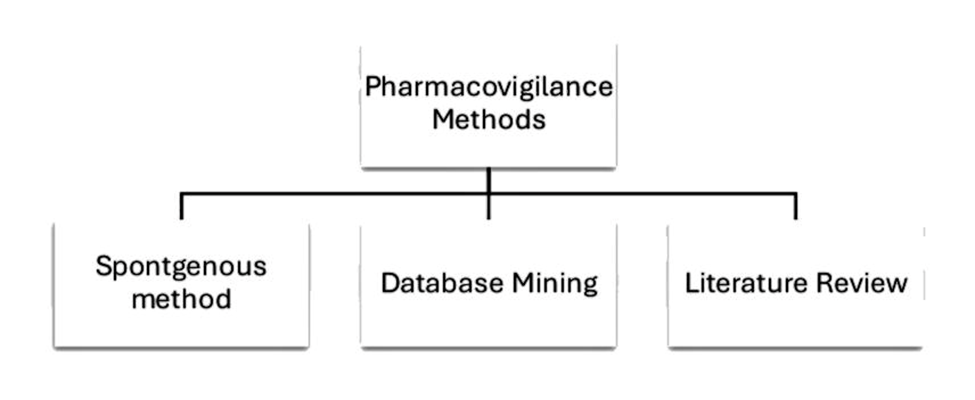
Fig 1.2 Pharmacovigilance methods
4. Applications of artificial intelligence in Pharmacovigilance :-
Pharmacovigilance (PV) has seen a revolution thanks to artificial intelligence (AI), which provides instruments to get beyond the drawbacks of traditional methods. AI makes it possible to monitor drug safety more quickly, accurately, and scalablely by combining machine learning (ML), natural language processing (NLP), and sophisticated data analytics. From signal validation and patient engagement to adverse drug reaction (ADR) detection, its uses cover the whole PV cycle.
AI in Adverse Drug Reaction Detection :-
PV relies heavily on ADR detection. The actual prevalence of drug-related harm is frequently underestimated by traditional systems, which mostly rely on spontaneous reporting. By examining clinical notes, patient registries, and electronic health records (EHRs), AI enhances this procedure. AI can find ADR mentions concealed in unstructured data, like a doctor’s letter that reads, “Patient developed rash after antibiotic,” by using natural language processing (NLP). Compared to manual methods, this capacity to mine textual data allows for the detection of ADRs earlier and in greater quantities [11]. In addition to EHRs, AI systems now keep an eye on online health communities and social media, where patients commonly share experiences that might not be reported through formal channels. Early warning indicators of new safety issues are provided by algorithms that have been trained to identify patterns in medication names and symptom descriptions [13].
AI in Adverse Drug Reaction Detection :-
PV relies heavily on ADR detection. The actual prevalence of drug-related harm is frequently underestimated by traditional systems, which mostly rely on spontaneous reporting. By examining clinical notes, patient registries, and electronic health records (EHRs), AI enhances this procedure. AI can find ADR mentions concealed in unstructured data, like a doctor’s letter that reads, “Patient developed rash after antibiotic,” by using natural language processing (NLP). Compared to manual methods, this capacity to mine textual data allows for the detection of ADRs earlier and in greater quantities [11]. In addition to EHRs, AI systems now keep an eye on online health communities and social media, where patients commonly share experiences that might not be reported through formal channels. Early warning indicators of new safety issues are provided by algorithms that have been trained to identify patterns in medication names and symptom descriptions [13].
Identification and Verification of Signals Traditionally, disproportionality analysis has been used for signal discovery in big databases such as VigiBase or FAERS. These techniques are helpful, but they are constrained by bias in reporting and duplicate reports. By using machine learning algorithms that can identify intricate relationships between medications and side effects, AI improves this. When it comes to separating real safety signals from noise, for example, Bayesian neural networks and decision-tree models have demonstrated greater performance [9,12]. Additionally, by combining many data streams—such as EHRs, unplanned reports, literature, and even wearable device outputs—AI makes signal validation possible. This multifaceted strategy speeds up the identification of clinically significant risks and improves the evidence base for regulatory decision-making.
Case Processing Automation One of pharmacovigilance’s most resource-intensive components is case processing. It is necessary to code, evaluate for causality, and enter each individual case safety report (ICSR) into regulatory systems. This procedure is streamlined by AI-powered automation technologies that classify reports, extract pertinent information, and apply standardized terminologies like MedDRA. This frees up pharmacovigilance specialists to concentrate on more complex analysis by lowering human labor and clerical errors. In order to prevent numerous reports of the same event from being counted more than once, AI also helps with duplication detection. Automated workflows reduce processing times, assisting pharmaceutical businesses and regulatory bodies in meeting stringent compliance standards.
Data mining and literature monitoring Pharmaceutical corporations are required by law to keep an eye on scientific literature. Traditionally, this entails searching databases and periodicals by hand for references to ADRs. This work is automated by AI systems with text-mining algorithms, which quickly scan hundreds of articles and mark pertinent content for expert assessment. This ensures that uncommon ADRs published in specialized journals are not missed while simultaneously increasing coverage and saving time [10,11]. AI is also very good at mining large amounts of data, especially from diverse sources. To find safety trends, social media, prescription data, and empirical evidence can all be analyzed at the same time. With traditional approaches, such large-scale integration was not possible. Participation and Reporting of Patients Patient-centric reporting is another new use of AI in PV. Virtual assistants and chatbots help patients properly and instantly describe their negative experiences. Accessibility is enhanced by these technologies, particularly in areas with minimal understanding of ADR reporting. AI lowers barriers between patients and PV systems by streamlining communication, which boosts reporting rates and improves the caliber of data gathered. Additionally, patients can send structured information straight to national databases via AI-powered smartphone applications. This encourages a shared responsibility culture in drug safety and fortifies active surveillance.
Combining Digital Health and Wearable Technology PV has new prospects as wearable technology becomes more popular. Continuous data streams from biosensors, including blood pressure, glucose, and heart rate, can be processed by AI algorithms to identify possible adverse drug reactions (ADRs) in real time. For instance, it may be possible to identify early indicators of cardiotoxicity from cancer medications before significant damage is done. A move toward proactive and predictive PV is shown by the integration of such digital health data with pharmacovigilance platforms.
Wider Effects When taken as a whole, these uses show that AI is not only an accessory but a revolutionary force in PV. AI transforms pharmacovigilance from a reactive to a proactive, real-time system by increasing detection, increasing accuracy, and decreasing manual labor. Even while there are still moral and legal issues, its uses already portend a time when patient safety will be constantly observed in a variety of intricate data contexts.
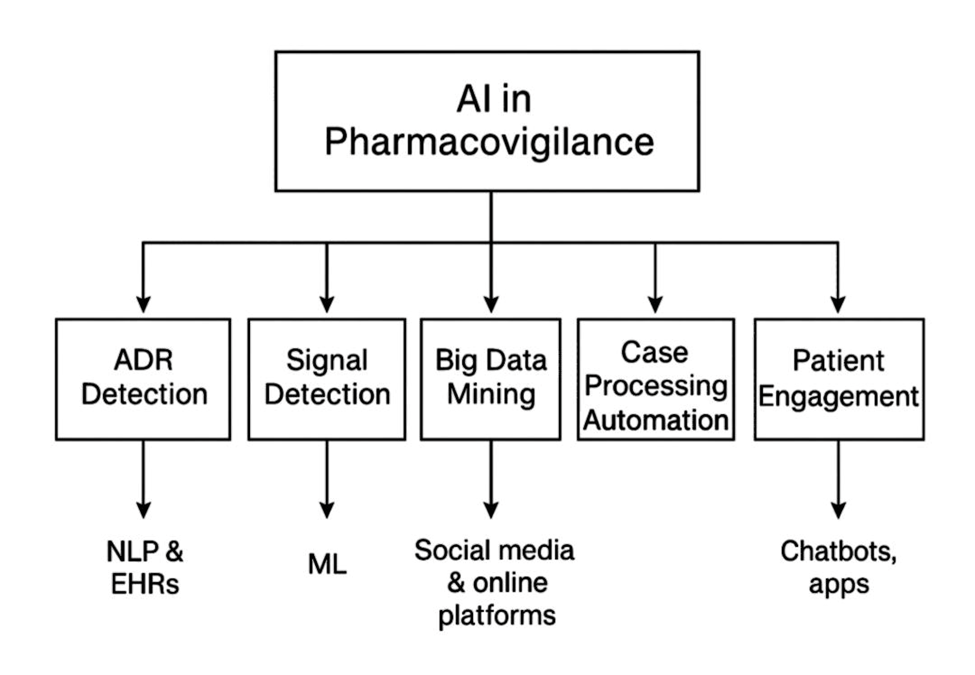
Fig 1.3 :- AI in Pharmacovigilance
Advantages and Disadvantages of Artificial Intelligence in Pharmacovigilance:-
4.1 Advantages:-
Artificial intelligence (AI) has become a transformative technology in pharmacovigilance (PV), offering multiple benefits for medication safety monitoring. One of its primary advantages is real-time surveillance and rapid detection of adverse drug reactions (ADRs). By analyzing data from electronic health records (EHRs), social media platforms, and spontaneous reporting systems almost instantaneously, AI enables early identification of potential ADRs, thereby facilitating timely regulatory interventions and enhancing patient safety. Machine learning (ML) algorithms further improve accuracy by reducing background noise and minimizing false positives, strengthening signal validation and ensuring more reliable pharmacovigilance outcomes. AI demonstrates exceptional capacity in managing large-scale datasets, processing millions of records across multiple platforms. This capability allows for comprehensive safety analyses and enhances the detection of rare ADRs that might be overlooked using conventional methods. Its predictive abilities also contribute significantly to patient safety by identifying individuals at high risk of severe ADRs, supporting precision medicine strategies that proactively mitigate potential harm. Automation through natural language processing (NLP) streamlines PV workflows, enabling efficient extraction of relevant information, MedDRA coding, and duplicate detection. As a result, AI accelerates the preparation of individual case safety reports (ICSRs) and reduces the workload for PV professionals. Integration of data from multiple sources further strengthens regulatory decision-making, enabling more confident actions regarding risk minimization, product withdrawals, and safety labeling. Moreover, AI enhances patient engagement through interactive chatbots and mobile applications, increasing both the quantity and quality of ADR reporting. The integration of wearable devices allows continuous monitoring of physiological parameters, such as heart rate and glucose levels, providing real-time, predictive insights that support proactive pharmacovigilance. Beyond clinical advantages, AI adoption offers strategic and economic benefits; early detection and prevention of ADRs can reduce healthcare costs, improve system efficiency, and enhance the reputation of pharmaceutical organizations. Collectively, these benefits highlight AI’s expanding role as a vital enabler of accurate, efficient, and patient-centered pharmacovigilance.
4.2 Disadvantages:-
Despite its transformative potential, the implementation of AI in pharmacovigilance is associated with several challenges. Data privacy and security concerns are paramount, as AI systems require access to sensitive health information that may be vulnerable to breaches, potentially resulting in legal consequences and loss of public trust. Data quality issues and inherent algorithmic biases may also reduce reliability; AI systems can underdetect ADRs in vulnerable populations, including children, the elderly, or individuals from low- and middle-income countries, leading to inequities in safety monitoring. The “black box” nature of many deep learning models limits transparency, making it difficult to interpret AI-generated predictions or alerts. This opacity may prompt regulatory skepticism or rejection of AI-derived evidence. Legal and regulatory uncertainties, such as the absence of globally harmonized guidelines for liability, validation, and AI governance, can slow adoption and lead to inconsistent PV practices. Overreliance on technology may also compromise human clinical judgment, increasing the likelihood of misinterpreted signals and unsafe decisions. High technical and operational costs further restrict the equitable implementation of AI. Infrastructure investments and the requirement for specialized expertise can exacerbate disparities in PV capabilities across regions. Misinterpretation of AI outputs, such as conflating correlation with causation, may additionally complicate decision-making and signal management. These challenges underscore the importance of carefully integrating AI within existing pharmacovigilance systems, balancing automation and predictive analytics with human oversight to ensure safe, effective, and ethical drug safety monitoring.
5. Future scope of artificial intelligence in Pharmacovigilance:-
Pharmacovigilance's (PV) future depends on embracing digital transformation while upholding strict moral and legal principles. In addition to enhancing the identification and analysis of adverse drug reactions (ADRs), artificial intelligence (AI) is anticipated to become increasingly important in transforming PV into a proactive, predictive field. For the upcoming years, several promising directions can be expected. Blockchain Integration for Safe Reporting One emerging possibility is the combination of AI with blockchain technology. Blockchain addresses issues of data integrity and patient confidentiality by providing tamper-proof, transparent, and secure storage for ADR data. When integrated with AI algorithms, such technologies could ensure real-time detection of safety signals while maintaining public trust in the accuracy and confidentiality of reported data. Wearables and Biosensor Data Expansion The increasing prevalence of biosensors and wearable devices has made real-time ADR monitoring more feasible than ever. Future PV systems could integrate AI with continuous health data, such as blood pressure, heart rate, or glucose levels, to detect subtle changes associated with drug exposure. This combination would enable predictive pharmacovigilance, allowing early interventions before significant harm occurs. Patient-Centered Pharmacovigilance AI can also support the development of patient-centered PV models. Patients may actively contribute to drug safety monitoring through voice-based reporting systems, chatbots, and mobile applications. Future systems are likely to combine expert reports with patient-reported outcomes to provide richer datasets that better reflect real-world experiences across diverse populations. Global Harmonization and Standardization Harmonization of regulatory frameworks is another critical area. International agencies such as the U.S. Food and Drug Administration (FDA), the European Medicines Agency (EMA), and the World Health Organization (WHO) will need to establish clear guidelines for accountability, transparency, and validation as AI systems become more widespread. Developing globally recognized standards will encourage broader adoption and ensure consistency across countries. Integration with Multi-Omics and Personalized Medicine In the long term, AI may integrate PV with multi-omics data, including proteomics, metabolomics, and genomics, to personalize medication safety monitoring. By analyzing how individual genetic and biological variations affect drug responses, AI-enabled PV could identify patients at the highest risk of ADRs, paving the way for truly individualized pharmacotherapy. In conclusion, the future of AI in pharmacovigilance lies in shifting from reactive detection of adverse events to proactive prediction and prevention. Through wearable-based monitoring, blockchain integration, patient engagement, regulatory harmonization, and personalized safety models, AI has the potential to transform PV into a predictive, globally harmonized system. Ensuring that these technologies are applied ethically, transparently, and in collaboration with human expertise will be essential to maintaining patient safety as the foremost priority.
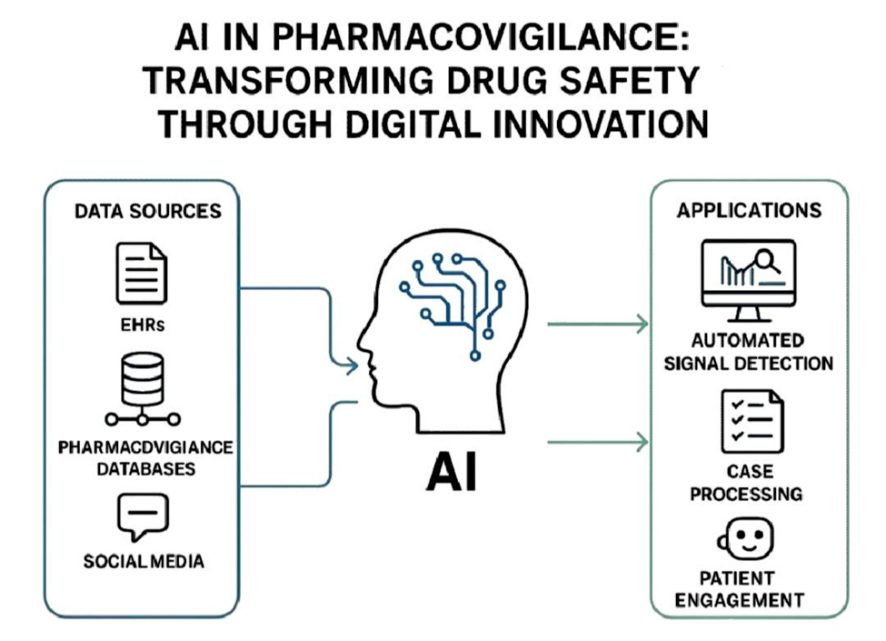
Fig 1.4:- Future scope
6. CONCLUSION :-
The foundation of drug safety is still pharmacovigilance, which safeguards patients and guarantees the prudent use of medications throughout their lives. Although traditional methods like literature reviews, database mining, and spontaneous reporting have been helpful in identifying safety issues, they are constrained by underreporting, delays, and an inability to handle the enormous volume of unstructured health data produced in the digital age. By automating resource-intensive procedures, integrating disparate data sources, and facilitating quicker identification of adverse medication responses, artificial intelligence (AI) provides game-changing solutions. AI has the potential to transform pharmacovigilance into a proactive and predictive science, as evidenced by applications ranging from chatbots for patient involvement to machine learning for signal identification and natural language processing of electronic health records. AI has many benefits, including increased patient safety, speed, accuracy, and scalability. However, it is important to consider its drawbacks, which include algorithmic bias, lack of transparency, data privacy issues, and regulatory ambiguity. AI must be used as a supplement to human judgment, not as a replacement, in order to foster responsible innovation. In terms of the future, the combination of AI with wearable technology, blockchain, patient-centric reporting, and tailored medicine presents intriguing opportunities. AI has the potential to make pharmacovigilance a fully predictive, globally harmonized system with robust ethical protections and harmonized regulations. The promise of AI may be fulfilled while maintaining patient safety at the center of pharmacovigilance by finding the ideal balance between technology and human judgment.
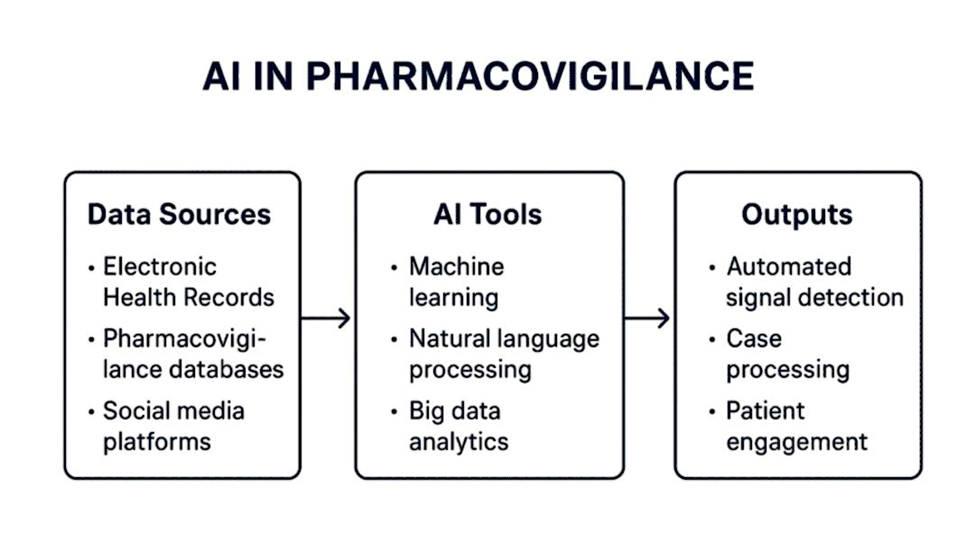
Fig 1.5:- AI in Pharmacovigilance
REFERENCE


Gauri Chaudhari, Vaishali Rawal, Sakshi Dawange, Vrushali Ghuge, AI in Pharmacovigilance: Transforming Drug Safety Through Digital Innovation, Int. J. of Pharm. Sci., 2025, Vol 3, Issue 11, 4879-4894. https://doi.org/10.5281/zenodo.17762431
 10.5281/zenodo.17762431
