
Yadavrao Tasgaonkar Institute of Pharmacy, Bhivpuri Road, Karjat, Maharashtra, India.
Dental caries is a biofilm-mediated infectious disease caused mostly by Streptococcus mutans and other acidophilic bacteria. Fluoride and artificial antimicrobial agents are the main active components in conventional toothpaste formulations, but they have disadvantages like staining and user complaints of change in taste and toxicity with prolonged usage. Fenugreek (Trigonella foenum-graecum) is a well-known herb in indigenous medicine with proven properties like anti-bacterial, anti-fungal, anti-inflammatory, and antioxidant activities in various studies and reviews. The review interprets scientifically the available information related to the anti-microbial property of fenugreek to prevent or treat “tooth caries” and its applicability as a key active ingredient in toothpaste formulation. In-vitro studies have clearly revealed a positive action of fenugreek gel and seed extracts in different concentrations in inhibiting the growth of S.mutans and Lactobacilli species, Efaecalis, and Candida albicans with inhibition zones larger than doxycycline in high doses. Fenugreek seed extracts in mouthrinses decrease significantly the count of S.mutans in dental plaque in short term clinical trials in humans, and a clinical experiment using a tooth paste with anti-caries action similar to conventional fluoride tooth paste in improving gingival indices has been observed in a controlled trial in humans. The broad anti- plaque and anti-microbial action of polyherbal tooth pastes and mouth rinses containing American-Fenugreek has also been reported in other studies. Alkaloids, flavonoids, tannins, steroidal saponins, and a viscous galactomannan mucilage in Fenugreek seeds might produce anti-microbial and anti-inflammatory and mucoadhesive effects with specific implications in the prevention of “tooth caries” in various studies and reviews. There are no randomized controlled experiments with longer term follow-up studies to demonstrate any reduction in caries contents with Fenugreek based toothpastes and related preparations so far.
Fenugreek (Trigonella foenum-graecum L., family Fabaceae). Despite advances in prevention and treatment, dental caries has remained one of the most common chronic conditions found globally. It is a biofilm-related, sugars-based disease process involving demineralization of the tooth hard tissues by organic acids produced through bacterial fermentation of carbohydrates in the diet by certain bacteria such as Streptococcus mutans and Lactobacillus species. Mechanical plaque control performed by brushing the teeth is the mainstay of prevention; but supplementary chemicals in the form of toothpaste and mouthwashes are commonly employed. Conventional antimicrobial compounds, like chlorhexidine, triclosan, or quaternary compounds, may suppress bacterial numbers, but adverse effects (staining, taste alteration, changes in oral flora) and concerns about long-term toxicities, along with resistances, have limited their use.) Therefore, there has been increasing emphasis on herbal toothpaste containing plant extracts with antimicrobial and anti-inflammatory properties. Among these, fenugreek an acrid spice commonly used in Indian and Middle Eastern cuisine, has found favor due to its versatile pharmacological properties such as antimicrobial, antifungal, antioxidant, anti-inflammatory, and hypoglycemic properties. This review will enumerate the details about the antimicrobial properties of fenugreek in relation to tooth decay that can be used in toothpaste composition.
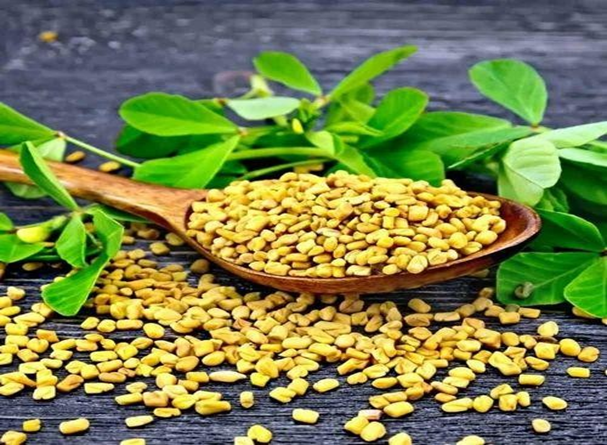
Figure: 1 Fenugreek Seeds
Botanical Description
Trigonella foenum-graecum, commonly Known as Fenugreek, is an annual herbaceous plant in the Fabaceae family. It is believed to be native to the Mediterranean region, Southern Europe, and Western Asia, but due to its high medicinal and culinary value, it is now widely cultivated across the world. Fenugreek is extensively grown in countries such as India, Pakistan, Afghanistan, Iran, Egypt, Nepal, and parts of China and Bangladesh. Among these, India is the largest producer, with major cultivation taking place in Rajasthan, Gujarat, Uttar Pradesh, Madhya Pradesh, Maharashtra, and Punjab. Fenugreek grows well in semi-arid to subtropical climates and prefers well-drained loamy or sandy soil with a pH range of 6–7. It is a hardy plant that can tolerate drought conditions, making it suitable for regions with low rainfall. The crop is usually grown as a rabi (winter) crop in India and sown between October and November. The widespread geographical distribution and adaptability of fenugreek have contributed to its global popularity not only as a culinary spice but also as a source of bioactive compounds like 2-methoxyphenol, which holds significant potential in pharmaceutical and personal care applications, including oral hygiene products like toothpaste.
Classification Of Fenugreek
Domain: Eukarya
Division: Magnolyphyta
Class.: Magnoliopsida
Order.: Fabales
Family.: Fabaceae
Sub Family.: Trifoliae
Genus.: Trigonella
Sub Genus.: Foenumgracaeum
Species: Trigonella Foenum-Graecum
Leaves of T. foenum graecum Traditional use
Fenugreek (Trigonella foenum-graecum) has been used for centuries in traditional medicine systems such as Ayurveda, Unani, Traditional Chinese Medicine (TCM), and folk practices across the Middle East, Africa, and Asia. In Ayurveda, fenugreek seeds are known as Methi and are used to balance the Vata and Kapha doshas, commonly employed to treat digestive issues, diabetes, inflammation, and reproductive disorders. (4)
Traditionally, fenugreek is used:
The seeds and leaves are rich in saponins, alkaloids, flavonoids, and phenolic compounds like 2- methoxyphenol, contributing to its antimicrobial, anti-inflammatory, and antioxidant properties, making it suitable for modern applications like toothpaste, skincare, and nutraceuticals.

Figure 2: Composition Of Fenugreek
Phytochemistry
Fenugreek In Herbal
Fenugreek toothpaste was found to be effective in the management of gingivitis, showing a noticeable reduction in key clinical signs of gingival inflammation such as bleeding, oedema, and discoloration. Maintaining healthy gingiva is crucial not only for oral health but also for the overall systemic well- being of patients. Since bleeding is a primary indicator of active gingival inflammation, this study assessed bleeding levels in both the control and test groups before and after the use of toothpaste using the Sulcus Bleeding Index. The findings indicate that fenugreek toothpaste effectively reduces gingival inflammation and bleeding. Therefore, it may be considered a promising alternative to conventional toothpaste and could be used as an adjunct to routine oral prophylaxis. However, research on fenugreek toothpaste and its effects on periodontal health remains limited. To better understand and validate its therapeutic potential, larger and longer-term longitudinal studies are needed.
Tooth Decay
Tooth decay, commonly called dental caries or cavities, is a long-term but largely preventable condition that affects people of all ages. It develops when bacteria in the mouth produce acids that slowly damage the tooth’s outer protective layer, known as enamel. Over time, this damage can lead to cavities and, if left untreated, may progress to pain, infection, and tooth loss. Dental caries occurs when plaque builds up on the tooth surface and bacteria use free sugars from foods and drinks to produce acids. Frequent consumption of sugary foods, poor oral hygiene, and inadequate fluoride exposure increase the risk.
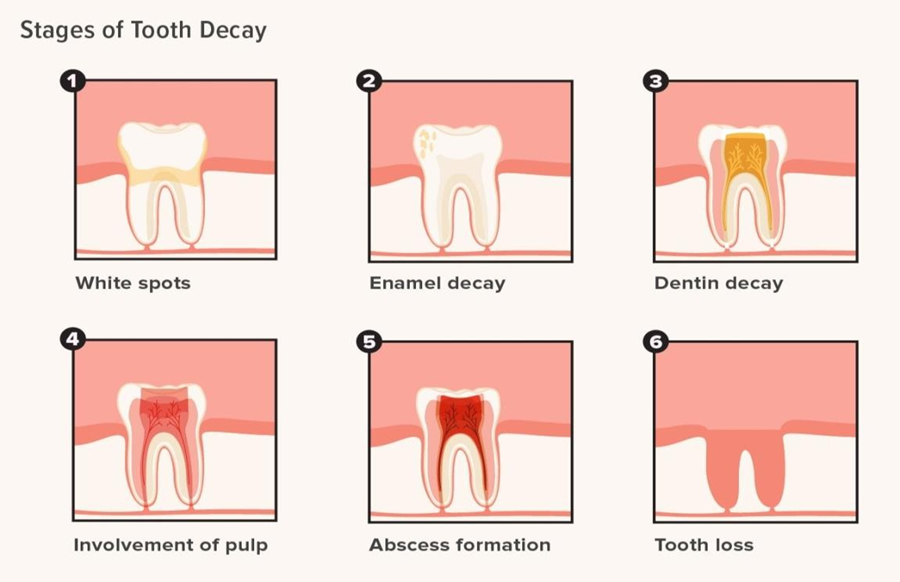
Figure 3: Sages Of Tooth Decay
Mode of Action of Antimicrobials against Tooth Decay
From in vitro studies, there are numerous ways how fenugreek can prevent cavities, some of which include:
Fenugreek extracts as well as gels are inhibiting the growth of S. mutans and Lactobacillus spp. Against diffusion assays, with increasing concentrations of inhibition.
These secondary compounds include steroidal saponins, flavonoids, tannins, as well as alkaloids that can inhibit the bacterial cell membrane integrity, enzyme functions, as well as nucleic acid biosynthesis.
Antifungal and broad-spectrum activity
Fenugreek gel has a broad-spectrum action against C. *albicans* and E. *faecalis*, which cause root caries, stomatitis related to dentures, and endodontic infections; zones of inhibition have been found to be even larger than doxycycline.
Anti-inflammatory properties in gingival and periodontal tissues
Fenugreek gel markedly prevented protein denaturing in an egg albumin anti-inflammatory model, with stronger inhibition than aspirin at comparable concentrations. Isolated steroidal saponin glycosides from fenugreek seeds that inhibit the production of inflammatory cytokines. Another study has reported Decreasing gingival inflammation could mean that fenugreek indirectly assists in controlling plaque and patient comfort in relation to caries prevention.
Antioxidant and metabolic functions
Antioxidant properties of Fenugreek and known benefits of the compound on the metabolic system (regulating glucose and lipids metabolism) are well-established and could be of benefit for a patient with diabetes at risk of periodontal disease; however, this would be more appropriate when taken systemically and not as a paste.
Mucoadhesive and rheological properties
The mucilage derived from the galactomannan in fenugreek can add viscosity and adhesive properties to oral preparations, which could increase the contact time between the active ingredients and dental plaque if incorporated in a toothpaste gel.
Evidence Concerning Toothy Decay Found Through In-Vivo and Clinical Evidence
Fenugreek seed extract mouth rinse against S. mutans
In preclinical experimental research, the researchers examined a mouth rinse containing a fenugreek seed extract against S. mutans colonies in dental plaque in 2021. 60 participants were randomly allocated into three groups: Negative control (Distilled water), Positive control (commercial mouthrinse)
Experimental (Mouthrinse containing fenugreek seed extract; hydroalcoholic extract. The samples of plaque were taken before and 2 hours after rinsing. Both the fenugreek mouth rinse and the mouth rinse significantly reduced the number of S. mutans colonies; there was no significant difference between the two, whereas distilled water caused no change.
This means that fenugreek seed extract has the potential to decrease Cariogenic S. mutans in vivo, an important component in the inhibition of tooth decay, though it was not tested in terms of its long-term results in this study.
Clinical evaluation of fenugreek toothpaste in gingivitis
In a trial called “Clinical Evaluation of Fenugreek Toothpaste and Regular Toothpaste in Control of Gingivitis – A Comparative Study,” a toothpaste containing fenugreek was tested on patients suffering from chronic gingivitis
In a study called “The Clinical Effectiveness”
Patients were allocated randomly either to fenugreek toothpaste or fluoride-containing regular toothpaste for 14 days. Investigations of clinical parameters (Gingival Index, Sulcus Bleeding Index, Oral Hygiene Index- Simplified) were made after the initial period and after 14 days. Both groups revealed a significant improvement in their groups; the fenugreek toothpaste group indicated a statistically significant reduction in gingival index values (p = 0.001), whereas there was no significant difference between fenugreek toothpaste and control toothpaste concerning bleeding and oral hygiene indices. Fenugreek toothpaste is as efficient as regular toothpaste when it comes to managing gum inflammation in the short term.
Caries incidence, DMFT [District Mineral Foundation Trust] scores, and progress of enamel lesions were not assessed during the trial; therefore, the evidence for the direct anti-caries activity is indirect and suggested only by improvements in plaque and gingivitis control.
Polyherbal toothpaste containing
In 2025, a study in the Asian Journal of Research in Pharmaceutical Sciences reported the formulation and evaluation of a polyherbal tooth paste using Azedarach indica (neem) leaf extract and Trigonella foenum- graecum seeds amongst other actives. The polyherbal toothpaste exhibited antibacterial properties against S. *mutans* and other bacteria found in the oral cavity and was marketed as an herbal anti-caries and anti-gingivitis toothpaste. However, the role of Fenugreek cannot be distinguished separately as it is a mixture and has various components. Polyherbal preparations verify a strong interest in fenugreek as a co-acting substance in herb-based toothpaste products, especially for anti-plaque and anti-caries purposes.
The Formulation Aspects of Fenugreek-
Choice of extract
Aqueous extracts: Utilized by preparing a gel formulation, which is effective against principal oral pathogens. Hydroalcoholic Extracts:
These have been used in mouth rinse solutions and are very effective against S. mutans. the extract type affects saponin, flavonoid, and tannin and show and affecting anti-microbial activity
Concentration and dose
In vitro, a concentration of 100 µg/mL of Fenugreek Gel demonstrated the highest antimicrobial property. Functional concentrations of toothpaste would require a balance between the antimicrobial agents and factors like taste, and color. Commercial herbal toothpaste products would require low single-figure percentages of herbal plant extracts, though the exact concentration levels of fenugreek would seldom be revealed.
Compatibility with dentifrice excipients
Fenugreek’s saponins have surfactant-like properties and may interact with conventional foaming agents (e.g., SLS). The mucilage can alter viscosity and rheology, affecting spreadability and foam. Compatibility studies are needed with fluoride salts (NaF), abrasives (silica, calcium carbonate) and humectants (glycerin, sorbitol).
Organoleptic considerations
Fenugreek has a strong characteristic odor and taste, often described as bitter or maple-like. Flavor masking with mint, menthol, eucalyptus or other essential oils is necessary for consumer acceptability.
Pharmacological Activity
Fenugreek seeds are rich in bioactive constituents such as 2-methoxyphenol (guaiacol), which contribute to their broad pharmacological profile. Modern studies and in silico predictions (e.g., PASS Online) reveal that 2-methoxyphenol possesses multiple biological activities that make it suitable for therapeutic and peering to the formation of hemiacetal and ester bonds that cross-linked the gel network. Among the materials tested, fenugreek-derived aerogels showed superior structural integrity and stability, most likely due to their higher galactose content, which facilitates more extensive cross-linking and produces a stronger, more elastic network.
The aerogels also demonstrated the ability to load and release active compounds. The release of polymyxin B and nisin was evaluated against bacterial strains, while the release of protease and lipase was assessed in solutional care applications, particularly in oral health.
Key pharmacological activities of 2-methoxyphenol include:
These pharmacological activities support the potential use of Fenugreek-derived 2-methoxyphenol in herbal toothpaste formulations, offering a natural alternative to chemical agents for promoting oral hygiene and treating gingivitis, plaque, and bad breath.
Critical Appraisal and Future Directions
Well established
There are in-vitro tests that reveal inhibition of cariogenic and oral pathogens by the use of fenugreek gel and extract.
Moderate evidence
Human mouth rinse study proves acute decrease in S. mutans plaque comparable to a commercial mouth rinse in effectiveness. Fenugreek toothpaste is beneficial for treating gum conditions resulting from chronic gingivitis with efficiency comparable to that of conventional toothpaste.
Supporting, but indirect, evidence
Polyherbal toothpaste/mouthrinses containing fenugreek extract exhibit anti-plaque and antimicrobial activity, but it is impossible to identify the individual contribution of fenugreek.
CONCLUSION
Fenugreek (Trigonella foenum-graecum) has shown significant antimicrobial activity against cariogenic bacteria like Streptococcus mutans and Lactobacillus spp., among other oral bacteria, and anti-inflammatory properties that are useful to gingival health. Clinical evidence suggests that fenugreek incorporated into mouthrinses and toothpastes can decrease bacterial counts and improve gingival indices, with efficacy similar to commercial products in the short run.
However, there is still no direct clinical evidence available to confirm that the toothpaste containing fenugreek alone has high caries reduction when compared to standard fluoride dentifrices. For the time being, fenugreek needs to be viewed as a promising adjunctive herbal ingredient in anti-caries and antigingivitic formulations, not as fully validated stand-alone anti-caries agents. In other words, the most rational approach for a toothpaste focused on tooth decay would be a combination with fluoride and other evidence-based components, using fenugreek's antimicrobial, anti-inflammatory, and mucoadhesive properties for overall oral health support while relying on fluoride as the prime anti-caries agent.
REFERENCES





Aasawaree Mane*, Aayush Gawale, Vinaya Gharat, Rushikesh Ghatul, Rudraksha Gharge, A Review on the Anti-Microbial Activity of Fenugreek (Trigonella Foenum Graceum) for Tooth Decay in Toothpaste, Int. J. of Pharm. Sci., 2026, Vol 4, Issue 4, 605-613. https://doi.org/10.5281/zenodo.19410687
 10.5281/zenodo.19410687
