
Department of Chemistry, Sanjay Ghodawat Institute, Atigre, Kolhapur, Maharashtra, India 416138.
Heterocyclic compounds containing sulphur have drawn a lot of attention because of their possible anti-cancer effects. These substances are predicted to play a bigger part in treating various cancer states because they are varied and have multiple mechanisms of action. These days, medicinal chemistry has had a variety of effects on the discovery and development of these heterocycles. Because they can inactivate the repair mechanisms necessary for cell survival or growth. The thiophene derivatives and sulforaphane are the compounds that have demonstrated relatively significant anti-cancer effects. These discoveries are raising increasing expectations that these substances may develop into potent anti-cancer treatment tools that successfully frustrate desired disease targets. Structure-activity relationships (SARs) have been a very proactive approach to improving the activity and specificity of pharmaceuticals through molecular changes, which has made it easier to build highly effective and selective treatments. The purpose of this review is to go deeper into the anti-cancer accumulation of sulphur-containing heterocycles, elucidating their mode of action, SAR results, and recent advancements in their clinical use. This review will be a crucial step in the development of new target-based cancer medicines since it will serve as a roadmap for future research on the basis of previously published publications
1.1. Background to heterocyclic compounds
Heterocyclic compounds are a significant class of organic chemicals. These substances are widely used in both synthetic and natural chemistry. They add to the fundamental structures of several physiologically active substances, including medicines, agricultural products, and different dyes [1]. Heterocyclic compounds are extremely useful for medicinal chemistry applications due to their unique physical properties and adaptable chemistry. Each heteroatom in the ring produces a distinct electronic impact that affects reactivity and gives the molecules special ways to interact with biological target [2]. This variety enables them to have antiviral, antibacterial, antifungal, anti-inflammatory, and anticancer properties. The potential of heterocyclic-based medications to efficiently interact with a wide range of biological pathways and targets has made them a foundation for the design of therapeutic agents over time [3]. Numerous medications with heterocyclic building blocks have significantly advanced the treatment of illness. In oncology the antineoplastic agents include in these heterocyclic compounds. The addition of sulphur atoms to heterocyclic structures significantly modifies the compounds' chemical, biological, and physical characteristics [4]. The inclusion of sulphur in heterocycles imparts special characteristics like increased stability of the metabolism, increased lipophilicity and capacity to create a wide range of chemical interactions and linkages [5]. Sulphur improves drug-like characteristics like bioavailability and membrane permeability which are necessary for correct delivery of therapeutic agents. The majority of sulphur-containing substances have considerable affinities for biological targets, including enzymes and receptors, which makes them important modulators of various biochemical pathways. Among the sulphur-containing heterocyclic families with promising pharmacological potentials are thiazoles, thiophenes and Thiazolidinones [6]. For instance, thiazole rings present in epothilone is an anticancer drug and stabilizes microtubules while Thiophene containing substances are used for treating inflammation. This highlights the utility of sulphur in medicinal chemistry [5, 7]. It has marked the every significant milestone from the discovery of natural compounds. The synthesis of modern derivatives of it has made it a promising anti-cancer agent today. These substances are distinguished by their unique heterocyclic ring structures that contain sulphur atoms. Because it supports their varied biological activity and therapeutic promise against different forms of cancer, an understanding of these structures is essential. The chronological order for evolution of sulphur-containing heterocyclic compounds is given Table 1.
1.2. Overview to anti-Cancer characteristics:
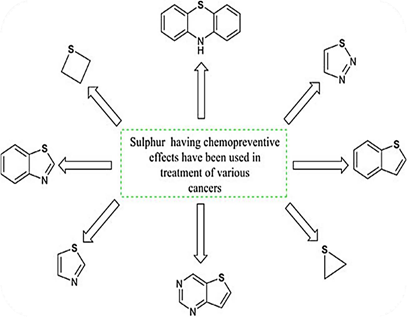
Cancer is a multifaceted disease characterized by uncontrolled cell growth, invasion, and metastasis [8]. The conventional methods of treating cancer, such as radiation, chemotherapy, and surgery, frequently have detrimental side effects and inconsistent efficacy [9]. As a result, there is ongoing interest in developing more focused and efficient strategies. Due to their diverse mechanisms of action that target distinct facets of cancer cell biology, sulphur-containing heterocyclic compounds are an appealing class of anticancer agents [10]. One of the primary mechanisms by which sulphur-containing heterocyclic compounds produce anticancer effects is by inhibiting the survival and growth of cancer cells by specifically targeting the enzymes that these cells use to survive. Compounds containing sulphur act as topoisomerase inhibitors, rendering the enzymes responsible for DNA replication and repair inoperable. It finally results in damaging the DNA of cancer cells. This in consequence triggers the apoptosis. Other mechanisms of action for sulphur-containing heterocyclic compounds in combatting cancer include induction of oxidative stress within the cancer cells [11]. But some cancer cells have managed to get survival under conditions of excessive oxidative stress. Sulphur compounds leads these ROS limits to such an extent that the targeted cancer cells gets killed [12]. This mechanism often causes the induction of apoptosis which guarantee for not only stopping cell proliferation but also for active elimination of the cancer cells. While dealing cancer with traditional treatments like chemotherapy, there is chance that the cancer cells under treatment might become resistant to chemotherapy drugs due to different mechanisms [13]. Efflux or regrowth may be the cause of this resistance. However, by combining several pathways with fewer opportunities for resistance to develop, sulphur heterocycles can negate these resistance pathways [14]. In addition, these commercial compounds have been found to potentiate existing cancer therapies. Sulphur heterocycles, when combined with chemotherapy or radiation therapy, can actually aid the latter by synergistically improving treatment outcomes [15]. For example, they can sensitize cancer cells to chemotherapy drugs so that the cells become susceptible to treatment. Recent works on sulphur containing heterocyclic have presented a spectrum of compounds with noteworthy anticancer activities. For example, cruciferous vegetables include a naturally occurring chemical called sulforaphane, which has shown strong anti-cancer effects [16]. Sulforaphane exhibits anticancer action at the cellular level by changing the epigenetic processes. DNA methylation, histone acetylation, and histone phosphorylation are some of these epigenetic processes. The efficiency profile of sulphur based nucleus present in anticancer drugs is shown in Fig. 1
In summary, sulphur-containing heterocyclic compounds comprise a diverse class of highly promising anticancer medicines. They are excellent prospects for cancer treatment due to their unique chemical characteristics, intricate mechanisms of action, and capacity to concurrently target several pathways. This review guides readers and researchers in examining heterocyclic compounds' anti-cancer characteristics with an emphasis on cancer treatment. This will involve discussing the structure-activity connections of these compounds, evaluating their potential clinical applications, and elucidating the processes by which these compounds work to cure cancer. In spite of the knowledge gaps in the field, the current study investigates the dramatic solutions to sulphur-containing heterocyclic compounds in cancer. The study examines their classifications, chemical structures, and synthetic pathways in order to emphasize the wide range of unique properties and structural variations that they exhibit. Their mechanisms of action include biochemical processes, enzyme scenarios, apoptosis induction, configurations, and signalling pathways. As a result, it clarifies the absolute links between structure and activity in terms of synthesis and design. Lastly, this study offers some creative synthetic and application tactics based on the emerging trends and future research scopes. It is expected that this review will serve as the foundation for upcoming research and advancements in medicinal chemistry, where many chemicals are still being studied in relation to cancer treatment.
Table 1 Chronological order for evolution of sulphur-containing heterocyclic compounds
|
Period / Era |
Key Sulphur-Containing Heterocycles |
Representative Drugs / Examples |
Medicinal Significance |
|
Late 19th century |
Thiazoles, Thiophenes |
Thiamine (Vitamin B1) |
First recognition of sulphur heterocycles as biologically essential molecules |
|
Early 20th century (1900–1930) |
Thiazoles, Thioethers |
Sulphur dyes, early antiseptics |
Foundation of sulphur chemistry in pharmaceuticals |
|
1930s–1940s (Antibiotic era) |
Thiazoles, Thiazolidines |
Sulfonamides, Penicillin |
Breakthrough in antibacterial therapy; sulphur heterocycles became drug design staples |
|
1950s–1960s |
Thiazines, Thiadiazoles, Thiazolidinediones |
Chlorothiazide, Tolbutamide |
Expansion into diuretics, antidiabetics, and CNS drugs |
|
1970s–1980s |
Benzothiazoles, Thiophenes |
Ranitidine, Thiabendazole |
Improved potency and selectivity; rise of heterocycle-based rational drug design |
|
1990s |
Thienopyridines, Thiazepines |
Clopidogrel, Diltiazem |
Cardiovascular and antiplatelet drug development |
|
2000s |
Thiazoles, Thiadiazoles, Thiosemicarbazones |
Ritonavir, Dasatinib |
HIV and cancer therapeutics; sulphur heterocycles in kinase inhibitors |
|
2010s–Present |
Complex fused sulphur heterocycles |
Sunitinib, Ticagrelor |
Precision medicine, multitarget drugs, improved bioavailability |
|
Future trends |
Hybrid sulphur heterocycles, bioisosteres |
Experimental compounds |
Drug resistance management, targeted and personalized therapy |
2. Chemical structures for sulphur-containing heterocyclic compounds
To better understand the likely effects on complex bio-dispositions, it will be crucial to compare the structural units and methods for organizing and classifying various types of heterocyclic compounds that contain sulphur. The following tables discuss sulphur-containing heterocyclic compounds after providing background information on the potential biological interactions that some of the molecules carry. Table 2 given below shows the prominent sulphur-containing heterocycles and their clinical relevance with mechanisms.
Table 2 Prominent Sulphur-Containing Heterocycles and Clinical Relevance with Mechanisms
|
Heterocycle |
Representative Compounds |
Mechanism of Action |
Clinical/Biological Relevance |
|
Thiazole |
Thiamine (Vitamin B?), Ritonavir |
Enzyme cofactor activity; protease inhibition |
Essential in carbohydrate metabolism; antiretroviral therapy (HIV) |
|
Thiazolidine |
Penicillins |
Inhibition of bacterial cell wall synthesis (β-lactamase targeting PBPs) |
Widely used antibiotics |
|
Thiazolidinedione |
Pioglitazone, Rosiglitazone |
PPAR-γ agonism → increased insulin sensitivity |
Type 2 diabetes mellitus |
|
Benzothiazole |
Pramipexole (related scaffolds) |
Dopamine receptor agonism; neuroprotective effects |
Parkinson’s disease; neurodegenerative research |
|
Thiophene |
Clopidogrel, Tiagabine |
ADP receptor (P2Y??) inhibition; GABA reuptake inhibition |
Antiplatelet therapy; antiepileptic drugs |
|
Thiazole |
Epothilones |
Microtubule stabilization |
Anticancer agents (taxane alternatives) |
|
Thiazine |
Methylene blue |
Redox cycling; inhibition of nitric oxide synthase |
Methemoglobinemia; diagnostic dye; emerging neuro applications |
|
Dithiazole |
Disulfiram |
Aldehyde dehydrogenase inhibition |
Alcohol dependence therapy |
|
Phenothiazine |
Chlorpromazine |
Dopamine D? receptor antagonism |
Antipsychotic drugs |
|
Thiohydantoin |
Dantrolene |
Inhibition of calcium release from sarcoplasmic reticulum |
Malignant hyperthermia; muscle spasticity |
|
Sulfonamide heterocycles |
Sulfamethoxazole |
Inhibition of dihydropteroate synthase (folate pathway) |
Antibacterial therapy |
|
|
Fig. 1 Efficiency profile of sulphur based nucleus present in anticancer drugs [15]
2.1. Classification and examples of sulphur-containing heterocyclic compounds
2.1.1 Thiophenes in Anticancer Applications
Thiophenes are five-membered aromatic sulphur-containing heterocycles that have emerged as valuable scaffolds in anticancer drug discovery [5, 17]. The electron-rich nature of the thiophene ring, arising from the participation of the sulphur lone pair in the aromatic system, enables strong interactions with biological targets and facilitates structural modification for activity optimization. Owing to their favourable lipophilicity and metabolic stability, thiophenes are frequently employed as bioisosteres of phenyl rings in anticancer lead compounds. Thiophene-based derivatives have demonstrated broad-spectrum anticancer activity through diverse mechanisms, including inhibition of tubulin polymerization, kinase modulation, DNA intercalation, and induction of apoptosis [18]. Several synthetic thiophene analogues have shown potent cytotoxicity against breast, lung, colon, and leukaemia cell lines. Furthermore, the synthetic accessibility of thiophenes via well-established methods such as the Paal–Knorr and Gewald reactions [19, 20] allows rapid generation of structurally diverse libraries, supporting structure–activity relationship studies. Collectively, these attributes highlight thiophenes as promising and versatile heterocyclic frameworks for the development of novel anticancer agents.
2.1.2 Thiazoles in Anticancer Applications
Thiazoles are five-membered aromatic heterocycles containing both sulphur and nitrogen atoms, and they represent an important class of privileged scaffolds in anticancer drug discovery. The presence of heteroatoms within the thiazole ring imparts unique electronic properties, enabling strong hydrogen-bonding interactions and coordination with key biomolecular targets [21]. These features, combined with favourable lipophilicity and structural rigidity, make thiazoles highly suitable for the design of anticancer agents. Thiazole-based compounds have exhibited significant anticancer activity through multiple mechanisms, including inhibition of protein kinases, disruption of microtubule dynamics, DNA binding, and induction of cell cycle arrest and apoptosis. Several synthetic thiazole derivatives have shown potent cytotoxic effects against a wide range of cancer cell lines such as breast, lung, prostate, and colorectal cancers [22]. Moreover, the synthetic versatility of thiazoles, commonly accessed via the Hantzsch thiazole synthesis and related methodologies, allows extensive structural modification to optimize potency and selectivity. These attributes underscore the thiazole scaffold as a promising platform for the development of novel and effective anticancer therapeutics.
2.1.3 Thiazolidines in Anticancer Applications
Thiazolidines are five-membered saturated sulphur and nitrogen containing heterocycles that have attracted increasing interest in anticancer research due to their distinctive structural and pharmacological properties. Unlike aromatic heterocycles, the flexible and partially saturated nature of the thiazolidine ring allows better conformational adaptability within biological targets, enhancing binding interactions and selectivity [23]. The presence of both sulphur and nitrogen atoms further contributes to favourable electronic characteristics and improved drug-like properties. Thiazolidine-based derivatives have demonstrated notable anticancer activity through diverse mechanisms, including inhibition of tumour-associated enzymes, modulation of signalling pathways involved in cell proliferation, and induction of apoptosis. Several thiazolidine and thiazolidine-2, 4-dione analogues have shown potent cytotoxic effects against a variety of cancer cell lines, such as breast, liver, lung, and colon cancers [24]. Their straightforward synthesis and ease of functionalization enable rapid generation of compound libraries for structure–activity relationship studies. Collectively, these features highlight thiazolidines as promising heterocyclic scaffolds for the development of novel anticancer agents.
2.1.4 Benzothiazoles in Anticancer Applications
Benzothiazoles are fused bicyclic heterocycles comprising a benzene ring condensed with a thiazole moiety, and they have emerged as an important class of scaffolds in anticancer drug discovery. The rigid and planar structure of benzothiazoles facilitates effective π–π stacking and strong interactions with nucleic acids and protein targets, while the presence of sulphur and nitrogen heteroatoms contributes to favourable electronic and pharmacokinetic properties [21]. Numerous benzothiazole derivatives have exhibited potent and selective anticancer activity against a broad spectrum of tumour cell lines, including breast, lung, colon, ovarian, and melanoma cancers [25]. Their mechanisms of action include DNA intercalation, inhibition of topoisomerases and kinases, modulation of cell cycle progression, and induction of apoptosis. In particular, certain substituted benzothiazoles have shown high selectivity toward cancer cells over normal cells, making them attractive lead compounds. The synthetic accessibility of benzothiazoles, commonly achieved through the cyclization of o-amino-thio-phenols with carboxylic acids or aldehydes, allows extensive structural diversification and optimization [26]. These attributes underscore the significant potential of benzothiazoles as promising frameworks for the development of novel anticancer therapeutics.
2.1.5 Dibenzothiophenes in Anticancer Applications
Dibenzothiophenes are polycyclic sulphur containing hetero-aromatic compounds composed of two benzene rings fused to a central thiophene moiety [27]. This rigid, planar, and highly conjugated structure endows dibenzothiophenes with strong π–π stacking ability and enhanced lipophilicity, features that are advantageous for interactions with DNA and protein targets implicated in cancer progression. The embedded sulphur atom further contributes to unique electronic properties that can be exploited for biological activity [28]. Dibenzothiophene based derivatives have demonstrated promising anticancer potential through multiple mechanisms, including DNA intercalation, inhibition of tumour-related enzymes, disruption of signalling pathways, and induction of apoptosis. Several functionalized Dibenzothiophenes have shown significant cytotoxic activity against breast, lung, colon, and leukaemia cancer cell lines [29]. Their structural rigidity and synthetic amenability allow systematic modification to fine-tune potency and selectivity. Collectively, these characteristics highlight Dibenzothiophenes as attractive heteroaromatic scaffolds for the development of novel anticancer agents.
Table 3 Comparison between different Sulphur-Containing Heterocyclic Compounds with respect to Chemical Structure and methods of Synthesis
|
Class of Heterocycle |
Ring Size / Structure |
sulphur Position |
Aromaticity |
Typical Precursors |
Common Synthesis Methods |
|
Thiophene |
5-membered ring |
One S atom in ring |
Aromatic |
1,4-Dicarbonyls, alkynes |
Paal–Knorr synthesis; Gewald reaction |
|
Thiazole |
5-membered ring |
One S and one N |
Aromatic |
α-Haloketones, thioamides |
Hantzsch thiazole synthesis |
|
Thiazoline |
5-membered ring |
One S and one N |
Non- aromatic |
β-Amino thiols |
Cyclization of amino-thiols with carbonyls |
|
Thiazolidine |
5-membered saturated ring |
One S and one N |
Non- aromatic |
Amino acids, aldehydes |
Condensation and intramolecular cyclization |
|
Benzo-thiophene |
Fused bicyclic system |
One S in five-membered ring |
Aromatic |
o-Alkynyl thiophenols |
Intramolecular cyclization |
|
Benzo-thiazole |
Fused bicyclic system |
One S and one N |
Aromatic |
o-Amino-thiophenols |
Condensation with carboxylic acids or aldehydes |
|
Pheno-thiazine |
Tricyclic system |
One S, two N atoms |
Aromatic |
Diphenylamine derivatives |
Cyclization with sulphur reagents |
|
Thiazine |
6-membered ring |
One S and one N |
Aromatic/ partially saturated |
Diamines, sulphur reagents |
Condensation and ring closure reactions |
|
Dithiazole |
5-membered ring |
Two S atoms |
Aromatic |
Dithio-carboxylic acids |
Oxidative cyclization |
|
Sulfolane (sulphur heterocycle) |
5-membered saturated ring |
One S (sulfone) |
Non- aromatic |
Alkenes, sulphur dioxide |
Cycloaddition followed by oxidation |
2.2 The Synthesis of sulphur -Containing Heterocyclic Compounds
Sulphur containing heterocyclic compounds constitute a major class of organic molecules with extensive applications in pharmaceuticals, agrochemicals, and advanced materials [30]. The incorporation of sulphur into cyclic structures imparts distinctive electronic properties, enhanced lipophilicity, and improved biological activity. Over the years, numerous synthetic methodologies have been developed to access diverse sulphur heterocycles, ranging from simple thiophenes to complex fused systems such as benzothiazoles and Dibenzothiophenes. These methods often involve condensation, cyclization, and oxidative transformations that enable efficient construction of sulphur containing rings. Table 3 shows the comparison between different sulphur-containing heterocyclic compounds with respect to chemical structure and methods of synthesis
One of the most widely used strategies for synthesizing five-membered sulphur heterocycles is the Paal–Knorr synthesis, which converts 1,4-dicarbonyl compounds into thiophenes under acidic or sulphurizing conditions [31]. The Gewald reaction is another valuable approach, enabling the formation of substituted thiophenes through a one-pot condensation of ketones or aldehydes with α-cyanoesters and elemental sulphur [32]. For thiazoles, the classical Hantzsch thiazole synthesis involves the reaction of α-haloketones with thioamides, offering a straightforward route to 2, 4-disubstituted thiazoles [33]. Thiazolidines are commonly synthesized via condensation of amino thiols with aldehydes or ketones, leading to cyclized products under mild conditions [34].
Fused sulphur heterocycles such as benzothiazoles are typically prepared by cyclization of o-aminothiophenols with carboxylic acids, aldehydes, or nitriles, often using oxidative or dehydrative conditions [35]. Similarly, dibenzothiophenes are formed through intramolecular cyclization reactions, frequently starting from o-halothiophenyl derivatives via transition-metal-catalysed C–S bond formation. Modern synthetic advancements have also introduced catalytic and green methodologies, including metal-catalysed cross-coupling, microwave-assisted cyclization, and environmentally friendly sulphur sources, which enhance efficiency and selectivity.
2.3 Structural Diversity of Sulphur-Containing Heterocyclic Compounds with their significance for biological activity
Sulphur-containing heterocyclic compounds represent one of the most structurally diverse and pharmacologically significant classes of organic molecules. The incorporation of sulphur into cyclic frameworks creates a wide range of heteroatom arrangements, ring sizes, and degrees of saturation, leading to an extensive variety of chemical and biological properties. This structural diversity plays a crucial role in determining the biological activity, selectivity, and pharmacokinetic behaviour of sulphur heterocycles, making them indispensable in drug discovery and medicinal chemistry. The representative sulphur heterocycles with anticancer activity: mechanisms and biological targets are given in table 4.
One of the key factors contributing to the structural diversity of sulphur heterocycles is the ability of sulphur to form stable five and six-membered rings, both in isolation and fused with aromatic systems [36]. Simple five-membered rings such as thiophenes, thiazoles, and thiazolidines differ significantly in electronic character and reactivity, despite sharing the same ring size. Thiophenes are aromatic and electron-rich, favouring electrophilic substitution reactions and acting as bioisosteres of phenyl rings [37]. Thiazoles combine sulphur and nitrogen atoms, enhancing hydrogen-bonding capability and improving target binding interactions [38]. Thiazolidines, being saturated, provide greater conformational flexibility and distinct pharmacokinetic profiles, which are valuable in optimizing drug-like properties [39].
Fused sulphur heterocycles such as benzothiazoles, benzothiophenes, and dibenzothiophenes introduce additional aromatic rings, leading to increased planarity and rigidity. These features enhance π–π stacking interactions and facilitate strong binding to DNA, enzymes, and receptors. The presence of fused aromatic systems also improves lipophilicity and membrane permeability, which can enhance bioavailability and cellular uptake [40]. Furthermore, sulphur heterocycles can exist in oxidized forms such as sulfones and sulfoxides, expanding their structural repertoire and offering unique electronic and steric characteristics that can modulate biological activity and metabolic stability.
The structural diversity of sulphur-containing heterocycles has direct implications for their biological activity. Variations in ring size, saturation, heteroatom placement, and fusion patterns influence molecular polarity, electron distribution, and three-dimensional shape, which in turn affect binding affinity, selectivity, and metabolic pathways [41]. For instance, aromatic sulphur heterocycles often exhibit strong target binding and favourable pharmacodynamics, whereas saturated sulphur rings may improve solubility and reduce toxicity. This versatility allows medicinal chemists to tailor sulphur heterocycles for specific therapeutic targets, ranging from anticancer and antimicrobial agents to CNS drugs and anti-inflammatory compounds.
Table 4 Representative sulphur heterocycles with anticancer activity: Mechanisms and biological targets
|
Sulphur Heterocycle |
Representative Examples |
Primary Anticancer Mechanisms |
Target/Effect |
|
Thiazole |
Thiazole-based kinase inhibitors |
Kinase inhibition, cell cycle arrest |
EGFR, CDKs, MAPK pathway |
|
Thiadiazole |
1,3,4-thiadiazoles |
ROS induction, enzyme inhibition |
Proteasome, HDAC, apoptosis |
|
Thiazolidinone |
2-thiazolidinones |
Microtubule disruption, DNA damage |
Tubulin polymerization, apoptosis |
|
Thiochromene |
Thiochromene derivatives |
DNA intercalation, topoisomerase inhibition |
DNA replication inhibition |
|
Thioflavone |
Thioflavone analogs |
Microtubule destabilization, apoptosis |
Tubulin binding, G2/M arrest |
|
Thioindole |
Thioindole derivatives |
Kinase inhibition, apoptosis induction |
CDKs, PI3K/Akt pathway |
|
Thioquinoline |
Thioquinoline derivatives |
DNA intercalation & alkylation |
DNA strand breaks |
|
Thioimidazole |
Thioimidazole analogs |
DNA damage, enzyme inhibition |
Topoisomerase, ROS generation |
|
Thiopyran/Thiochroman |
Thiopyran derivatives |
Redox modulation, mitochondrial disruption |
Mitochondrial membrane potential |
|
Benzothiazole |
Benzothiazole-based drugs |
Aromatase/kinase inhibition, apoptosis |
Aromatase, EGFR, cell cycle |
|
Thiosemicarbazone |
Thiosemicarbazone complexes |
Metal chelation, ROS generation |
Iron chelation, DNA damage |
|
Thiopeptide |
Thiopeptide antibiotics (derivatives) |
Protein synthesis inhibition |
Ribosome binding, apoptosis |
2.4 Structure–Activity Relationship (SAR) of Sulphur-Containing Heterocyclic Compounds
Sulphur-containing heterocyclic compounds represent an important class of anticancer agents due to their structural diversity and favourable physicochemical properties. The presence of sulphur in heterocyclic scaffolds significantly influences lipophilicity, electronic distribution, and binding interactions with biological targets. SAR studies across various sulphur heterocycles reveal that anticancer potency is highly dependent on substitution patterns, oxidation state of sulphur, ring size, and fused aromatic systems [5]. Table 5 gives Structure–Activity Relationship (SAR) trends of sulphur-containing heterocycles in anticancer drug design.
2.4.1. Role of the sulphur atom
The sulphur atom contributes to anticancer activity through several structural effects like enhanced lipophilicity which improves the cell membrane permeability and intracellular accumulation, soft nucleophilicity and polarizability which facilitate the strong interactions with cysteine residues in enzymes and proteins (e.g., kinases, proteases) and Oxidation state (thioether vs. sulfoxide vs. sulfone) which modulates electronic properties and hydrogen-bonding capacity, influencing target affinity and metabolic stability [15].
2.4.2. Substitution Patterns of sulphur and Electronic Effects
SAR studies commonly show that electron-withdrawing substituents (e.g., nitro, halogens, trifluoromethyl) on the aromatic ring enhance cytotoxicity by means of increasing electrophilicity, favouring DNA interaction and alkylation, improving binding affinity to enzyme active sites and enhancing metabolic stability and bioavailability [42]. On the contrary, electron-donating groups (e.g., methoxy, alkyl) may reduce activity in some scaffolds but can improve selectivity by reducing off-target toxicity.
2.4.3. Ring Fusion and Planarity
Planar and fused sulphur heterocycles (e.g., benzothiazoles, thiochromenes) often show increased anticancer activity due to improved DNA intercalation capability [43], enhanced π–π stacking interactions with nucleic acids and protein aromatic residues and better accommodation in hydrophobic binding pockets of enzymes.
2.4.4. Ring Size and Heteroatom Position
The position of sulphur and ring size critically affects biological activity [44]. The Five-membered rings like thiazoles, Thiadiazoles typically display strong kinase inhibition and enzyme binding due to favourable geometry [45]. Six-membered rings such as thianes, thiochromenes often show improved DNA intercalation and metabolic stability, and positional isomers e.g., 1, 3-thiazole vs. 1, 2-thiazole exhibit markedly different binding modes and cytotoxic profiles.
2.4.5. Impact of sulphur oxidation state
Oxidation of sulphur alters activity and pharmacokinetic behaviour. Thioethers are generally more lipophilic and shows stronger membrane permeability [46]. While sulfoxides and sulfones increase polarity and can improve solubility and target binding through hydrogen-bonding. To make a note, oxidation can also influence metabolic stability, reducing rapid clearance and enhancing in vivo efficacy.
Table 5 Structure–Activity Relationship (SAR) trends of sulphur-containing heterocycles in anticancer drug design
|
Structural Feature |
Common Modifications |
Observed SAR Trend |
Effect on Anticancer Activity |
|
Sulphur Atom Position |
1,3-thiazole vs. 1,2-thiazole; v in ring vs. exocyclic |
Different position changes binding geometry and target interaction |
Alters potency and target specificity (e.g., kinases vs. DNA) |
|
Sulphur Oxidation State |
Thioether → Sulfoxide → Sulfone |
Increased polarity and hydrogen-bonding ability |
Sulfoxides/sulfones often improve solubility and target binding; thioethers enhance membrane permeability |
|
Aromatic Ring Fusion |
Benzothiazole, thiochromene, thioindole |
Planar fused rings increase π–π stacking and DNA intercalation |
Enhanced DNA binding, topoisomerase inhibition, and cytotoxicity |
|
Electron-Withdrawing Substituents |
–NO?, –CF?, –Cl, –Br, –F |
Increase electrophilicity and metabolic stability |
Generally increases potency and DNA/enzyme interaction |
|
Electron-Donating Substituents |
–OCH?, –CH?, –NH? |
Reduce electrophilicity; may improve selectivity |
Can decrease potency but improve safety/selectivity in some scaffolds |
|
Hydrophobic Substituents |
Alkyl/aryl groups, halogens |
Increase lipophilicity and cell permeability |
Often improves cellular uptake and cytotoxicity |
|
Hydrogen-Bond Donors/Acceptors |
–OH, –NH?, –CONH?, –COOH |
Enhances interactions with protein residues |
Improves target binding and selectivity |
|
Ring Size (5- vs. 6-membered) |
Thiazoles (5), thianes/thiochromenes (6) |
Changes geometry and binding orientation |
5-membered rings favour kinase/enzyme inhibition; 6-membered rings favour DNA intercalation |
|
Substitution at Key Pharmacophoric Positions |
Ortho/para substitution on aromatic rings |
Influences steric fit and binding pocket complementarity |
Modulates potency and selectivity |
|
Metal Chelating Moieties |
Thiosemicarbazones, thioureas |
Strong chelation with Fe²?/Cu²? |
Generates ROS and disrupts DNA/protein function, increasing cytotoxicity |
3. Mechanism of Action of sulphur-Containing Heterocyclic Compounds as Anticancer Agents:
Sulphur-containing heterocyclic compounds represent a structurally diverse class of bioactive molecules that have gained considerable attention in anticancer drug discovery [12]. The incorporation of sulphur into heterocyclic frameworks enhances molecular lipophilicity, modulates electronic distribution, and facilitates unique interactions with biological targets. These features contribute to potent anticancer activity through multiple mechanisms.
3.1. DNA Intercalation and Alkylation
Many sulphur-containing heterocycles, such as thioquinolines and thiochromenes, possess planar aromatic systems that enable intercalation into DNA, disrupting the normal structure and function of nucleic acids [30]. Additionally, sulphur atoms can act as nucleophilic centres facilitating alkylation of DNA bases, leading to cross-linking, strand breaks, and inhibition of DNA replication and transcription. These effects ultimately trigger apoptosis in rapidly dividing cancer cells.
3.2. Inhibition of Tubulin Polymerization
Several sulphur-based heterocycles, including thioflavones and thioindoles, target microtubule dynamics by binding to tubulin and inhibiting polymerization [15]. This interference disrupts mitotic spindle formation, leading to cell cycle arrest at the G2/M phase and subsequent induction of apoptosis. Such mechanisms are analogous to established anticancer agents like vinca alkaloids and colchicine.
3.3. Modulation of Redox Homeostasis
Sulphur-containing heterocycles often exhibit redox-active properties, allowing them to influence cellular oxidative balance [47]. Compounds such as thiadiazoles and thiazolidinones can generate reactive oxygen species (ROS) or impair antioxidant defences, leading to oxidative stress. Elevated ROS levels damage proteins, lipids, and DNA, triggering intrinsic apoptotic pathways and reducing cancer cell viability.
3.4. Enzyme Inhibition (Kinases, Proteases, and Epigenetic Targets)
The sulphur atom provides strong coordination ability and hydrogen-bonding interactions, enabling these heterocycles to inhibit key oncogenic enzymes [21]. The notable targets include protein kinases e.g., EGFR, BRAF, CDKs which binds ATP sites and proteasome and cysteine proteases, where sulphur-containing moieties interact with catalytic residues. The Histone deacetylases (HDACs) and other epigenetic enzymes lead reactivation of tumour suppressor genes and inhibition of cancer proliferation.
3.5. Inhibition of Topoisomerases
Certain sulphur heterocycles inhibit topoisomerase I/II, enzymes essential for DNA replication and transcription [48]. By stabilizing the DNA–topoisomerase cleavage complex, these compounds prevent relegation of DNA strands, causing double-strand breaks and triggering apoptosis.
3.6. Targeting Cancer Cell Metabolism
Thioheterocycles can disrupt metabolic pathways critical for tumour survival, such as inhibition of glutathione synthesis or utilization, compromising detoxification, disruption of mitochondrial function, leading to loss of membrane potential and activation of intrinsic apoptosis and interference with folate metabolism which causes limiting nucleotide synthesis and cell proliferation [49, 50].
CONCLUSION
In terms of cancer treatments, heterocyclic compounds represent a broad and promising class of substances. Their chemical structures, methods of action, therapeutic actions against different forms of cancer, toxicological profiles, and future directions for their study are all included in this review article. The anti-cancer capabilities of sulphur-containing heterocyclic compounds, such as thiazoles, thiophenes, thiosemicarbazones, and benzothiazoles, are highlighted by the variety of their chemical structures. Through mechanisms including interaction with DNA/RNA, enzyme inhibition, apoptosis induction, and signalling pathway modulation, these mouse drugs target the several cellular pathways associated with cancer cell growth, cell survival, and metastasis. Numerous cancer types, such as breast, lung, colorectal, prostate, and haematological malignancies, have been tested against these substances. These chemicals are intriguing for either monotherapy or combinatorial treatment schemes because of their capacity to address specially tailored molecular vulnerabilities and counteract their resistance mechanisms. Personalized medicine, immunomodulatory qualities, resistance reversal tactics, targeted drug delivery systems, and multi-target techniques are a few examples of conceptual frameworks. The chemical diversity and medicinal potential of these molecules can be further enhanced by new synthetic approaches such as DOS, green-chemistry principles, or bioinspired counterparts. Sulphur-containing heterocyclic chemical combination medicines can work in concert with chemotherapy, target therapy, immunotherapy, and radiation therapy to improve patient outcomes and survival.
Conflicts Of Interest: Authors declare no conflict of interest in any ways
REFERENCES


Dinkar Sanade, Nilam Jadhav, Sachin Kamble, Structure and Anticancer Activity of Sulphur-Containing Heterocyclic Compounds: A Review, Int. J. of Pharm. Sci., 2026, Vol 4, Issue 4, 2253-2268, https://doi.org/10.5281/zenodo.19590598
 10.5281/zenodo.19590598
