
Dr Vithalrao Vikhe Patil Foundation’s College of Pharmacy, Vadgaongupta (Vilad ghat), Post MIDC, Ahilyanagar
This study focuses on developing and accessing turmeric-based transdermal patches for delivering curcumin through the skin, harnessing its known anti-inflammatory, antioxidant, and antimicrobial properties. The patches were prepared using the solvent casting method, with hydroxypropyl methylcellulose (HPMC) as the film-forming polymer, polyethylene glycol 200 (PEG 200) as a plasticizer for flexibility, and ethanol to enhance curcumin's permeation through the skin. Transdermal drug delivery systems (TDDS) offer an efficient way to deliver drugs, targeting the site of action and reducing the frequency of administration. The formulation of these patches aims to overcome the limitations of oral curcumin, improving its bioavailability. The patches were evaluated for their physical properties, including thickness, moisture content, drug content, and drug release profiles. Skin irritation tests were also conducted to ensure safety. The findings indicated that the turmeric-based transdermal patches provided sustained release and enhanced permeation of curcumin, improving its delivery and offering a non-invasive treatment option for inflammatory conditions.
Turmeric (Curcuma longa) is a medicinal plant widely used in traditional healing systems, especially in Ayurveda and traditional Chinese medicine. Its primary active compound, curcumin, is responsible for most of its therapeutic effects. Curcumin has been extensively studied and is known to have powerful anti-inflammatory, antioxidant, anticancer, and antimicrobial properties. Because of these pharmacological benefits, curcumin holds significant potential in the prevention and treatment of various diseases, including arthritis, infections, cancers, and chronic inflammatory conditions.
Despite its promising health benefits, curcumin faces major challenges when used in clinical or pharmaceutical applications. The main issue is its poor bioavailability, which means that only a small amount of curcumin actually reaches the bloodstream and tissues when taken by mouth. This is due to several factors:
Because of these limitations, even high oral doses of curcumin may not produce the desired health outcomes. To solve this problem, researchers are now exploring alternative delivery systems that can enhance curcumin’s absorption and effectiveness. These include transdermal patches, nanoparticles, liposomes, and other advanced drug delivery techniques. Such systems aim to bypass the digestive system, protect curcumin from rapid metabolism, and allow for a sustained and controlled release of the compound into the body.
In summary, while curcumin offers great potential as a natural therapeutic agent, its clinical effectiveness depends largely on finding better ways to deliver it into the body. ttttT
KEY REQUIREMENTS FOR AN EFFECTIVE TRANSDERMAL TURMERIC PATCH
For a turmeric-based transdermal patch to be effective and user-friendly, several important factors must be considered during its formulation and design:
Curcumin, the active compound in turmeric, must be efficiently absorbed through the skin. This can be improved by using penetration enhancers that help the compound cross the skin barrier and enter the blood stream or targeted tissues.
The patch should be designed to release Curcumin gradually over a set period, ensuring a steady therapeutic effects without the need for frequent reapplication.
All materials used in the patch must be gentle on the skin, causing no irritation, allergies or other adverse reaction. This is essential for long term or repeated use.
The patch should stick well to the skin to avoid sleeping or falling off, while also being comfortable to wear, without causing itching tightness or skin damage.
To maintain its effectiveness, curcumin needs to be protected from environmental factors like light, heat and air, which can cause it to degrade over time. the patch formulation must preserve curcumin’s potency throughout its shelf life.
The transdermal system should end to reduce side effects, including skin irritation or allergic reactions. It should also avoid the gastrointestinal issues that can occur with oral curcumin.
The patch should be simple to apply and remove, without leaving sticky residue, damaging the skin, or causing discomfort. It should also be discreet and user friendly for daily use
For practicality, the patch should be resistant to water so user can bathe shower, or sweat during physical activity without compromising its effectiveness.
Depending on the intended use, the patch can be tailored to deliver curcumin either locally (e.g. To treat joint inflammation) or systemically (to reduce inflammation throughout the body).
Finally, the patch should be produced in a way that balances high quality materials and performance with reasonable cost, making it accessible to a broad range of users.
These features, when carefully incorporated, can significantly enhance the therapeutic effectiveness, safety, and user satisfaction of curcumin-based transdermal patches.
TRANSDERMAL DRUG DELIVERY SYSTEM INTRODUCTION
Transdermal drug delivery systems (TDDS) are designed to deliver medications through the skin and into the bloodstream. Transdermal drug delivery systems (TDDS) offer a compelling solution for overcoming the limitations of conventional oral administration. By delivering drugs directly through the skin, transdermal systems provide several advantages, such as avoiding the first-pass metabolism in the liver, improving patient compliance, and providing sustained and controlled release of the drug. Transdermal patches have become a popular method for the delivery of a wide variety of therapeutic agents, including those with low bioavailability.9 Transdermal patches consist of a backing layer, an adhesive layer, a reservoir layer, and a rate-controlling membrane. The medication is contained in the reservoir layer and is released through the rate-controlling membrane at a controlled rate.4 Transdermal patches can be used to deliver a wide range of medications, including pain medications, hormones, cardiovascular medications, and neurological medications. The formulation of turmeric-based transdermal patches, specifically designed to deliver curcumin, represents a novel approach in improving its therapeutic efficacy. These patches can potentially enhance the transdermal permeation of curcumin by using suitable excipients, including skin penetration enhancers and biocompatible polymers. Moreover, the development of turmeric-based patches could also provide localized treatment for conditions such as arthritis and other inflammatory diseases, where curcumin has shown promising therapeutic effects.
Transdermal patches provide a needle free and painless method for delivering medication, making them more comfortable for patients.
These systems are designed to release the drug gradually over a time, maintaining consistent therapeutic levels in the body.
Since the drug bypass the digestive system and liver metabolism (first pass effects): More of the active compound reaches the blood stream.
By avoiding the gastrointestinal track and maintaining steady drug levels, the risk of side effects especially digestive issues is released.
Transdermal patches are easy to use and require less frequent dosing, increasing the likelihood and patients will follow their treatment plans correctly.
Prolonged contact with the patch or the presence of certain chemicals can cause redness, itching or allergic reactions in some individuals.
Only medications that are effective in small doses and can penetrate the skin are suitable for transdermal delivery, which limits the range of drugs. That can be used.
Factors like skin type, temperature, hydration and location in application can lead to variable drugs absorption rates between individuals.
The technology and materials using developing transdermal patches can make them more expensive than traditional dosage forms like tablets or capsules.
In some cases, patches may not stick well, especially during sweating, movement or exposure to water, leading to reduced effectiveness.
This balance of pros and cons is important to consider when choosing transdermal systems for drug delivery, particularly for compounds like curcumin that benefit from enhanced bioavailability.
PLANT PROFILE -TURMERIC PLANT
Turmeric (Curcuma longa), a member of the ginger family (Zingiberaceae), is a widely valued plant in traditional herbal medicine. Its name originates from the Arabic word "Kourkoum," which means saffron, referencing its distinct bright yellow hue. Native to Southeast Asia, turmeric thrives in warm, humid environments and is predominantly cultivated in countries like India, China, and Indonesia. The plant features broad leaves and a short stem, but it’s the underground rhizomes that are harvested and used for both medicinal and culinary purposes.
The most important compound in turmeric is curcumin, which not only gives the spice its characteristic yellow colour but also provides powerful anti-inflammatory and antioxidant effects. These properties have made turmeric a key ingredient in natural remedies for centuries.
Historically, turmeric has played a significant role in both Ayurvedic and Traditional Chinese Medicine. It has been used to treat a range of health issues, including digestive disorders, joint pain, skin conditions, and respiratory ailments. Even today, turmeric continues to be a popular natural remedy and is commonly used in cooking, particularly in Asian cuisine. Ongoing scientific studies continue to confirm and expand upon its potential health benefits.
In India, turmeric is commercially grown in two main varieties: Madras and Alleppey.
DEVELOPMENT OF TURMETIC PLANT
Turmeric grows best in tropical regions with warm temperatures, high humidity, and moderate rainfall. Under ideal conditions, the plant reaches a height of approximately 3 feet (about 1 meter). It features large, lance-shaped green leaves, and its flowers, which bloom in clusters, range in colour from yellow to purple.
The most important part of the turmeric plant is its rhizomes—the thick, underground stems that store nutrients. These rhizomes are typically harvested 7 to 10 months after planting, usually when the leaves begin to dry out and die back, signalling that the rhizomes have matured. After harvesting, the rhizomes undergo a multi-step process: they are washed thoroughly, then boiled, dried, and finally ground into a fine powder. This powdered form of turmeric is used widely in cooking, traditional medicine, and cosmetic or health products around the world.
Table no. 1 Features of Turmeric Plant
|
Features |
Description |
||
|
Scientific name |
Curcuma longa |
||
|
Family |
Zingaberaceae |
||
|
Plant type |
Perennial herb |
||
|
Height |
Grow up to 1m (3.3 feet) |
||
|
Leaves |
Large, oblong lance-shape leaves with long petioles |
||
|
Stem |
Short pseudo stem |
||
|
Flowers |
Small, yellow-orange blossom with waxy green or purple bracts |
||
|
Rhizome |
Underground, fleshy and orange-yellow, used for medicinal and culinary purposes |
||
|
Active compounds |
Curcumin responsible for its yellow colour and health benefits |
||
|
Climate |
Tropical, humid, and requires abundant rainfall |
||
|
Growing region |
Native to India and Southeast Asia; cultivated in tropical regions worldwide |
||
|
Used |
Culinary, medicinal, cosmetic, food colouring, supplements |
||
|
|
|
|
|
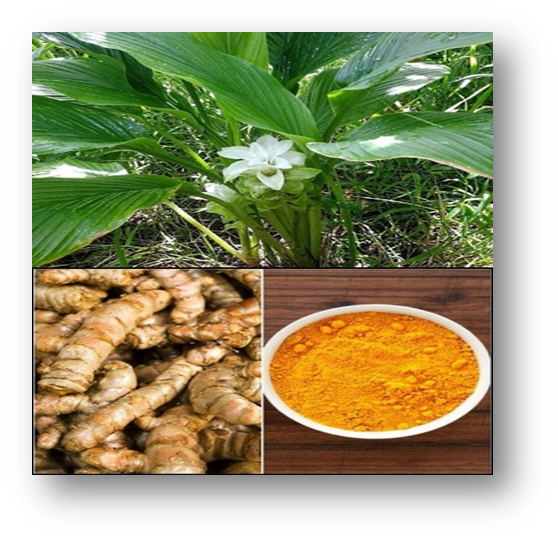
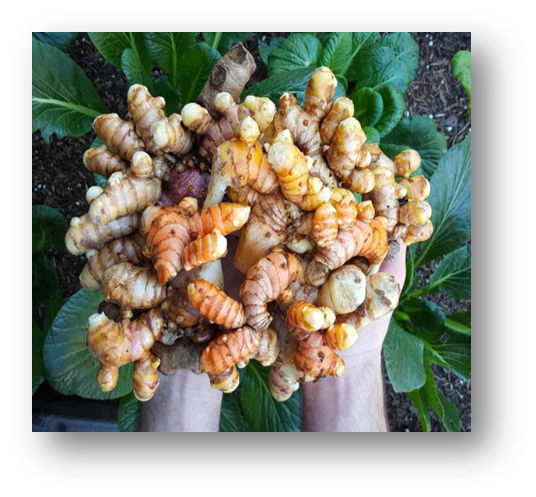
Fig.no.1Different Parts of the Turmeric plant Fig.no.2 Fresh Turmeric Rhizomes
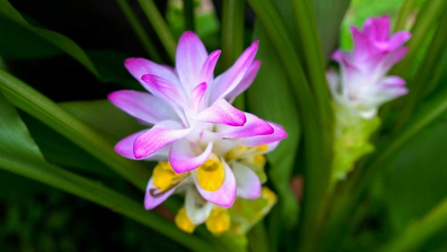
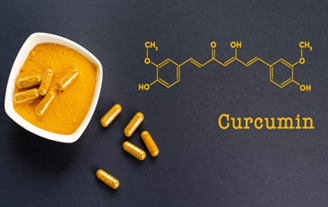
Fig.no.3 Flower of Turmeric Plant Fig no.4 Structure of Curcumin
Turmeric is also commonly known as Indian Saffron, Yellow Ginger, Haldi (in Hindi), and Kunyit (in Malay/Indonesian).
Turmeric refers to the dried or fresh rhizomes (underground stem) of the plant Curcuma longa Linn. Which belongs to the Zingerberaceae family (the ginger family)
Turmeric is native to southern India and Indonesia but it is widely grown throughout the maintained and islands of the Indian Ocean region. India is the world’s leading Andhra Pradesh, Tamil Nadu, Odisha, Karnataka, Maharashtra. Among these Andhra Pradesh is the largest producer accounting for about 38% of the cultivation area and nearly 58.5% of the total turmeric production in India.
TAXONOMICAL CLASSIFICATION OF TURMERIC:
Carbohydrates (69.4%), protein (6.3%), fat (5.1%), Minerals (3.5%), α-phellandrene (1%), zingiberene (25%), sabinene (0.6%), cineole (1%), and sesquiterpenes (53%), mixture of three Curcuminoids [i.e., curcumin I (C21H20O6, Diferuloylmethane, 94%), curcumin II (C20H18O5, Demethoxycurcumin, 6%) and curcumin III (C19H16O4, bis-demethoxycurcumin, 0.3%)].
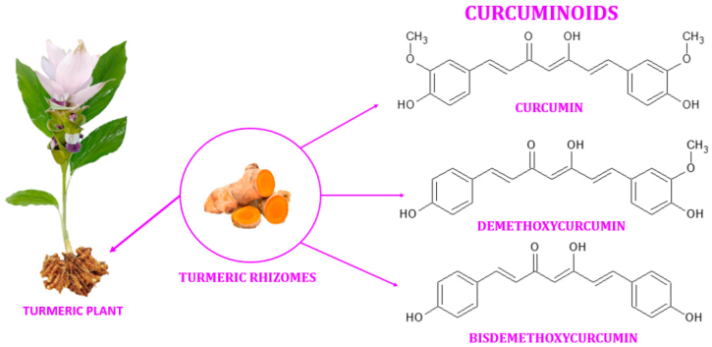
Fig no5 Turmeric Plant and main chemical constituents with structure
7. Oral Health:
Table no.2 Ingredient used in formulation
|
Sr. No. |
INGREDIENTS |
QUANTITY |
USES
|
|
1 |
TURMERIC EXTRACT |
2 ML |
ACTIVE COMPONENT ACT AS ANTI INFLAMMATORY |
|
2 |
HPMC |
1000MG |
MATRIX POLYMER CONTROLLED RELEASE AGENT |
|
3 |
PEG200 |
0.2ML |
PLASTICIZER |
|
4 |
MENTHOL |
0.25MG |
COOLING AGENT PENETRATION ANHANCER |
|
5 |
METHYL PARABEN |
0.25MG |
PRESERVATIVE |
|
6 |
GLYCERIN |
2-4 DROPS |
HUMECTANT SKIN MOSTURIZER |
|
7 |
VIT E |
0.25MG |
ANTIOXIDANT |
|
8 |
ETHANOL |
QS |
SOLVENT PENITRATION ANHANCER |
Table no. 3 Compatibility with the Human body
|
INGREDIENTS |
HUMAN BODY COMPATIBILLITY |
|
HPMC |
Safe, non-toxic, biocompatible; widely used in oral and topical form |
|
PEG200 |
Low toxicity, safe, use in topical formulation |
|
ETHANOL |
Generally safe in small amounts; may cause irritation in high concentration |
|
GLYCERINE |
Safe, moisturizing; use in many skin care product |
|
MENTHOL |
Safe in limited doses; use in topical formulation, may cause irritation if overused. |
|
TURMERIC EXTRACT |
Natural, safe appropriate doses; has anti-inflammatory properties |
The Soxhlet extraction process is a popular technique for extracting bioactive compounds, like curcumin from turmeric, using a solvent.
Materials Needed:
a) Turmeric powder
b) Solvent (e.g., ethanol, methanol, or acetone)
c) Soxhlet extractor apparatus
d) Heating source (heating mantle)
e) Round-bottom flask
f) Condenser
g) Thimble (to hold the turmeric powder)
h) Filter paper
i) Glass jar with tight lid
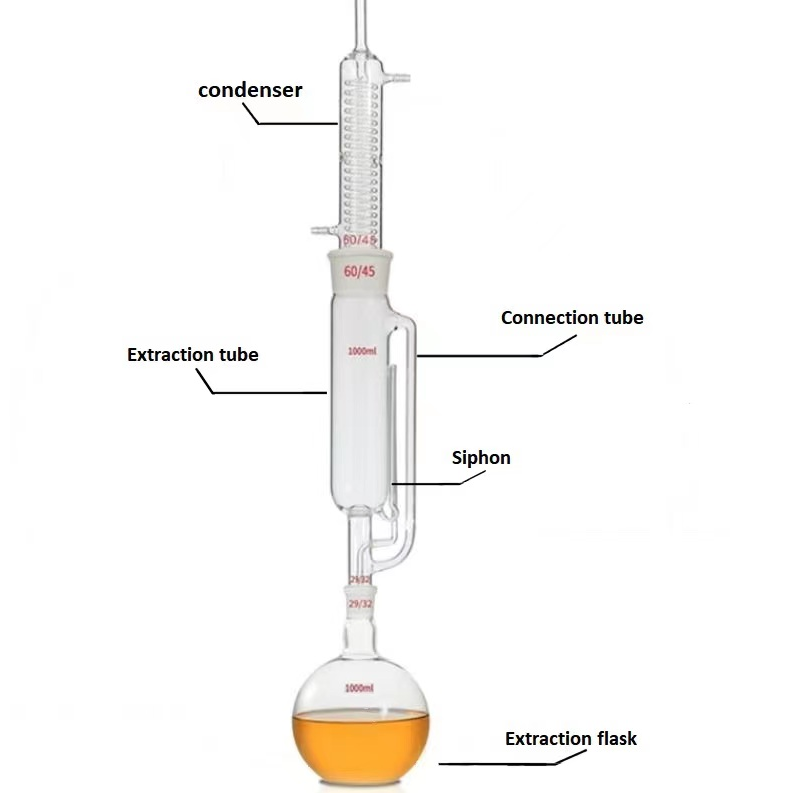
Fig.no.6 Soxhlet Appratus
1.Extraction of Turmeric Using Soxhlet Apparatus
Step 1: Preparation of Turmeric Powder
Step 2: Assembling the Soxhlet Apparatus
Set up the following equipment:
?? Ensure all glass joints are sealed properly and the setup is securely clamped. Make sure the system is vented safely to avoid pressure build-up.
Step 3: Adding Solvent and Turmeric Powder
Step 4: Condenser Setup
Step 5: Start the Extraction Process
Step 6: Continuous Extraction
Step 7: Collect and Evaporate Extract
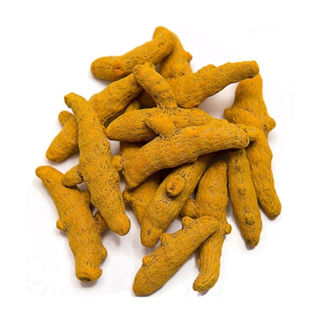
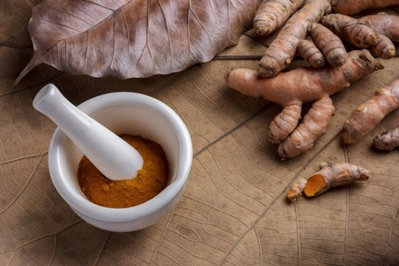
Fig no. 7 Dried Turmeric Rhizomes Fig.no 8 Grinding of Rhizomes
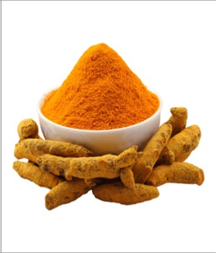
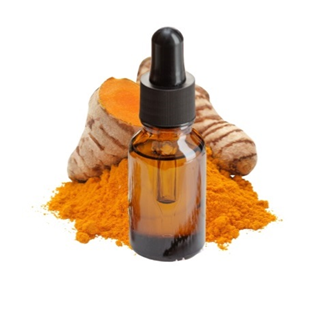
Fig.no 9 Turmeric powder Fig.no 10 Final Turmeric Extract
2.Method for Preparing Turmeric-Based Transdermal Patches
Step 1: Preparation of the Polymer Solution: Take a measured quantity of Hydroxypropyl Methyl cellulose (HPMC). Dissolve it in ethanol while stirring continuously. Stir until a clear and uniform solution is obtained.
Step 2: Incorporation of Additives: Add methyl paraben (used as a preservative) into the polymer solution. Stir until it is completely dissolved. Next, add vitamin E (acts as an antioxidant) and menthol (serves as a penetration enhancer). Menthol should be pre-dissolved in a small volume of ethanol before adding to the solution. Continue stirring to ensure thorough mixing.
Step 3: Addition of Plasticizers: Add PEG 200 and glycerine as plasticizers to enhance the flexibility and elasticity of the patch. Mix well to ensure even distribution throughout the solution.
Step 4: Incorporation of Turmeric Extract: Add the liquid turmeric extract into the prepared polymer-additive mixture. Stir the mixture continuously to achieve a homogeneous distribution of the active ingredient (curcumin).
Step 5: Casting the Patch Pour the final solution into a clean petri dish or a glass plate lined with a backing membrane such as polyethylene sheet or aluminium foil. Allow the solution to spread evenly to ensure a uniform thickness of the film.
Step 6: Drying Leave the dried film to dry at room temperature undisturbed for 24 to 48 hours. Avoid direct sunlight, dust, or airflow during drying to prevent surface defects.
Step 7: Peeling and Cutting Once fully dried, carefully peel off the patch from the casting surface. Cut the dried film into desired sizes, such as 2 cm × 2 cm squares, using sterile scissors or a blade.
Step 8: Packaging: Store the finished patches in airtight containers or seal them in aluminium foil pouches to prevent exposure to moisture and air. Label properly and store in a cool, dry place until use.
1. Organoleptic Evaluation
Table no. 4 Organoleptic Characteristics of Turmeric Transdermal Patch
|
Parameter |
|
Observation |
|
|
||
|
Colour |
|
Uniform yellow, characteristic of turmeric |
|
Odour |
|
Distinct turmeric aroma with a minty scent due to the presence of menthol |
|
Texture |
|
Smooth, flexible surface without grittiness |
|
Flexibility |
|
Patches bend easily without cracking or breaking |
|
Adhesiveness |
|
Adequate stickiness, allowing proper adherence to skin without premature detachment |
|
Surface Appearance |
|
Uniform surface without bubbles, cracks, or crystallization |
2. Thickness Evaluation
To ensure consistency in the turmeric transdermal patches, their thickness was carefully measured. The blend of polymers used formed smooth, even films, and the casting technique helped in producing patches with a uniform structure. Only slight variations in thickness were observed, indicating that the patches were consistently prepared across all samples.
Method:
3. Weight Variation Test
To check how uniform the patches are in terms of weight, a simple weight variation test was carried out.
Method:
This test helps confirm that each patch has been made a similar amount of material which is important for accurate dosing.
4. Percentage Moisture Content Test
Moisture content analysis was performed to understand how the composition of the patch materials affects water retention. Results showed that increasing the amount of hydrophilic (water-attracting) polymer led to higher moisture content in the films. In contrast, a higher amount of hydrophobic (water-repelling) polymer reduced moisture absorption. The overall moisture content across all formulations remained low, which is beneficial for improving the patch's stability and minimizing brittleness during long-term storage.
Method:
|
Percentage Moisture Content (%) ={Initial Weight – Final Weight |
5. Tack Test
The tack test is a crucial assessment used to evaluate the initial stickiness of transdermal patches. This test determines how well the patch adheres to the skin right after application, which is essential for proper drug delivery and patient comfort. The adhesive nature of the patch largely depends on the type of polymer used in its formulation.
6. Peel Strength Test
The peel strength test measures how strongly the patch adheres to a surface when pulled off, simulating its ability to stay attached to the skin during normal movement and use. This test is important for evaluating the durability of the patch's adhesive property.
7. pH Test
Method:
To assess the pH compatibility of the turmeric transdermal patch with human skin, a small patch section (1 cm²) was immersed in 10 mL of distilled water. The sample was left to soak at room temperature for 2 hours. The mixture was then gently stirred, and the pH of the solution was measured using a calibrated digital pH meter.
8. Skin Irritation Test
Method:
The test area (usually on the forearm or back) was first cleaned with mild soap and water, then allowed to dry completely. A turmeric transdermal patch was applied to the clean skin and secured using hypoallergenic tape to prevent shifting or exposure to water. The patch remained on the skin for 24 hours. After this period, the patch was removed and the skin was carefully examined for any signs of irritation such as redness, swelling, itching, or rashes.
9. Stability Studies
Stability studies were conducted to evaluate how the patch’s properties (such as drug content, adhesive strength, and physical integrity) are affected by environmental factors like temperature, humidity, and exposure to light over time. These studies are crucial for determining the appropriate storage conditions and shelf life of the transdermal patch.
Table no.5 Possible Consequences by Storage Condition of Patch
|
CONDITIONS |
Possible consequences |
|
TEMPRATURE |
Drug degradation, patch deformation or melting, reduced adhesion |
|
HUMIDITY |
Moisture uptake, microbial growth |
|
LIGHT EXPOSURES |
Degradation of active ingredient, discoloration or yellow colour loss. |
10.Storage Condition:
To verify the product’s performance and integrity under specific, intended storage conditions. Different condition recommended from the stability study (room temperature, refrigerated, etc.).
REFERENCES




A. B. Udar, Mrunal Rasal, Atharva Rathor, Nikhil Raut, A Review on Transdermal Patch of Turmeric Extract, Int. J. of Pharm. Sci., 2026, Vol 4, Issue 4, 2598-2611, https://doi.org/10.5281/zenodo.19607009
 10.5281/zenodo.19607009
