
Dnyansadhana College of Pharmacy, Parbhani
Herbal medicines are the significant part of healthcare throughout the world. Herbal medicines have been utilized as effectual remedies for the prevention and management of multiple health conditions. Hand washing can stop the chain of transmission of deadly microorganisms from the hand to other parts of the body. Hand hygiene is a vital principle and exercise in the prevention and reduction of healthcare-acquired infections. Hand sanitization is the best aid to prevent infections caused by different types of microorganisms. The given review represents that the plants like guava Tulsi, clove oil, Ginger, Garlic, are showing benefits in hand sanitizer. The herbal hand sanitizer was found to be effective, economical, and safe for regular use, making it a promising natural alternative for hand hygiene, especially in situations where synthetic alcohol-based formulations are undesirable or cause skin irritation. Hand Sanitizer Is The Most Significant Strategy For Preventing The Transmission Of Hazardous Bacteria And Illnesses.
According to the World Health Organization (WHO), “an alcohol-containing preparation (liquid, gel, or foam) designed for application to the hands to inactivate microorganisms and/or temporarily suppress their growth. Such preparations may contain one or more types of alcohol, other active ingredients with excipients, and humectants.
The emergence of the Corona virus Disease-2019 (COVID-19) pandemic has risen to be a significant global public health concern and led to extensive use of hand disinfectants given its contagious nature. Hands are the primary mode of transmission of microbes and infections. Hand hygiene is therefore the most important measure to avoid the transmission of harmful germs and prevent the infections. Hand hygiene is the single most important, simplest, and least expensive means of preventing nosocomial infections.
Contaminated hands can serve as vectors for the transmission of microorganisms. Pathogenic microorganisms accountable for outbreaks are spread from the hands of the food handler to others when the food handler contaminates his/her hands and then passes the semicroorganisms to consumers via hand contact with food or drinks. The consumer is exposed following the ingestion of these microorganisms, which may cause gastrointestinal illness. Hand contact with ready-to-eat foods represents a very important mechanism by which pathogens mayenter the food supply. Food handlers whose work involves touching unwrapped foods to be consumed raw or without further cooking or other forms of treatment have been identified as a particular risk group .To protect the skin from harmful microorganisms and to prevent spreading of many contagious diseases, hand washing is absolutely an important precaution. Hand washing is the act of cleaning the hands with soap and water for the purpose of removing soil, dirt, pathogenic micro organisms and avoid transmitting transient microorganisms. Food production workers and food service personnel must be taught to use correct hand and fingertip washing by management in preparation for work
Definition
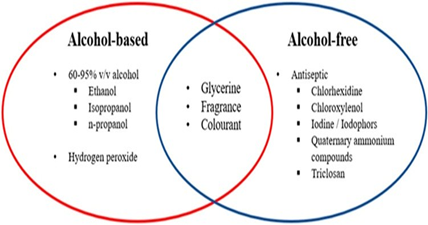
Types of Hand Sanitizer:
Most hand sanitizers fall into one of two categories:
Advantages of Hand sanitizer:
Disadvantages of Hand sanitizer:
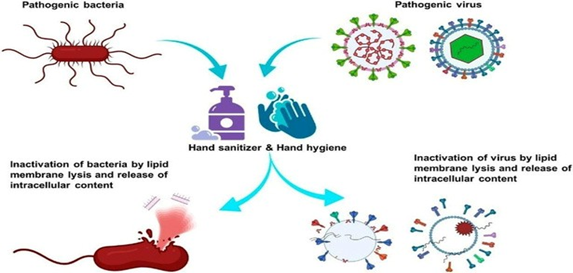
Mechanism of Action:
The compound, n-propanol, is the most commonly used alcohol compound in biocides[13].It is not known with much confidence the exact mechanism of alcohol’s antimicrobial activity; however, it may be related membrane damage, and inhibition or uncoupling of mRNA and protein synthesis through effects on ribosomes and RNA polymerase[14] or associated with protein denaturation[13].For activity against bacteria, its optimal bactericidal efficacy is achieved at concentrations between 60% and 90%[15]. In fact, absolute alcohol, or alcohol that is no more than 1% water, is less bactericidal than alcohol. Water is thus critical in the protein denaturation process, if not multiple, are affected by alcohol, essential metabolic pathways, membrane damage and loss of cellular integrity ultimately occur. However, alcohols exhibit bactericidal activity against vegetative bacteria-those undergoing metabolism and binary fission but not against spores.
Herb's Used In Hand Sanitizer
|
Sr. No. |
Name of Herb’s |
Synonym |
Family |
Uses |
Image of Herb’s |
|
1 |
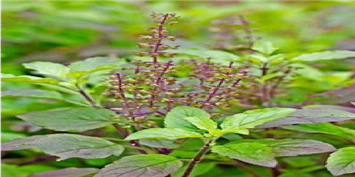
Tulsi |
Ocimum Sanctum |
Lamiaceae |
Antibacterial Insecticidal Stimulant Aromatic Spasmolytic |
|
|
2 |
clove-oil |
Syzygium Aromaticum |
Myrtaceae |
Acne Bruises Keeping Infection Mouth Sores Vomiting |

|
|
3 |
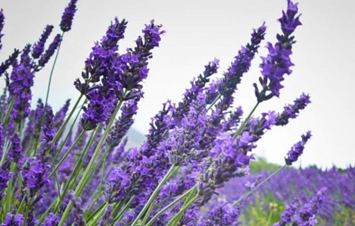
Guava leaves |
psidium guajava |
Myrtaceae |
Cholesterol Diabetes Anticancer Antibacterial Gastric |
|
|
4 |
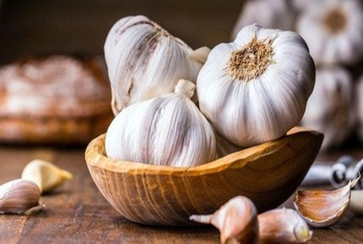
Garlic |
Allium Sativum Linn |
Amaryllidaceae |
Antimicrobial Antihypertensive Antioxidant |
|
|
5 |
Ginger |
Zingiber officinicale |
Zingiberaceae |
Antioxidant
|

|
Benefits of Hand Sanitizer:
Cleaness:
Portability :
Ideal For Group Setting :
Decreases Risk of illness :
Good For Sensitive Skin :
Precaution while using Hand Sanitizer:
CONCLUSION
Nowadays, people are facing various skin-related issues such as dryness, irritation, and allergic reactions due to the frequent use of chemical-based hand sanitizers. These sanitizers often contain high levels of alcohol and synthetic chemicals which can damage the skin barrier and cause long-term side effects. In comparison, herbal hand sanitizers are a better and safer alternative, as they are made from natural ingredients with antimicrobial properties and minimal side effects. The main purpose behind this review was to highlight the effectiveness and safety of herbal-based hand sanitizers as a natural substitute for chemical formulations. By incorporating plant-based extracts with known antibacterial and antiviral activities, we can reduce the harmful impact on skin health while still ensuring proper hygiene. Herbal hand sanitizers are a more skin-frien option in maintaining hand hygiene.
REFERENCE

Vishakha Borkar, Vaishnavi Ture, Bhakti Putta, A Review on Herbs Used in Herbal Hand Sanitizer, Int. J. of Pharm. Sci., 2025, Vol 3, Issue 11, 4399-4404. https://doi.org/10.5281/zenodo.17734872
 10.5281/zenodo.17734872
