
12345Department of Pharmaceutics, Vivekanandha Pharmacy College for Women, Sankari, Salem – 637 303,
6Department of Pharmaceutics, Nandha College of Pharmacy, Perundurai, Erode – 638 052
(Affiliated to The Tamil Nadu DR MGR Medical University), Tamil Nadu, India
Poloxamers are a family of non-ionic, triblock copolymer that consists of a hydrophobic core and chain of polypropylene oxide (PPO) between two hydrophilic chains of polyethylene oxide (PEO). Poloxamers have a molecular weight of between 5,000 and 15,000 g/mol along with distinct characteristics like amphiphilicity, thermoreversible gelation and solubilization of hydrophobic compounds. All these properties make poloxamers highly versatile excipients allowing their use in pharmaceutical formulations, cosmetics and even food processing. In addition to this, they have also been researched in terms of their application in drug delivery systems, gene transfer and scaffolds in tissue engineering. This abstract offers a description of the structure, poloxamers applications, properties and uses. It is extensively applied in different industries, such as pharmaceutical, cosmetic, and food processing. This is a review article covering. the applications, properties and future of poloxamers. We discuss their physicochemical properties, such as solubility, viscosity, and surface tension, as well as their biological properties, including biocompatibility, biodegradability, and immunogenicity. Moreover, we also assess their applications in food, pharmaceuticals and cosmetics, their processing and possible applications in biomedical studies. In conclusion, this review highlights potential future directions for the research and development of poloxamers..
Poloxamer which has the synonym polyethylene-propylene glycol copolymer and in 1950 it was introduced as a non-ionic triblock copolymer with the trade names as Supronic, Pluronic or Tetronic. They were used in numerous medical uses. This versatile polymer is offered in diverse grades and types of functionality, and is a versatile polymer. A good agent for improving both physical and biological characteristics of drugs [1].
The variable polymers with variable properties include 124, 188, 237, 338, and 407 which are produced by polymer blocks of differing lengths. As a rule, it may be denoted by the letter P and three-digit numbers. The molecular weight of the hydrophobic propylene oxide is calculated by multiplying the first two digits by 100 and the final digit by 10 gives the percentage composition of hydrophilic ethylene oxide. Its trade name is Pluronic and the typical copolymer notation is its physical appearance (L-Liquid, P-Paste and F- Flake .In the case of Pluronic the trade name coding is poly, after which two digits and one letter indicating the physical form come. In order to get the molecular mass of propylene oxide multiply the first character in these two figures by 300. Thereafter, the percentage of ethylene oxide may be determined by multiplying the second figure by 10 [2]. Poloxamer is an amphiphilic polymer, a special group of synthetic triblock copolymer, comprising of a non-polar core of polypropylene oxide (PPO) and polar polyethylene oxide (PEO) end caps. This tri-block construction, which is also simultaneous comprising of hydrophilic and hydrophobic groups, possesses distinguishing features of thermosensitivity as an ultrasound mucoadhesives in in-situ gels [3] and micelle-forming drug delivery applications [4]. Certain distinguished features of polaxamers such as Self-assembly based on temperature and thermoreversiblity, biocompatible properties, mild inflammatory properties and non-cytotoxicity, render the poloxamer based biomaterials to be good biomedical applications [5]. It can find extensive application in pharmaceutical preparations as surface active agents, emulsifiers, solubilizers, dispersing agents and in vivo absorbance enhancer material [6]. Poloxamers are commonly regarded as functional excipients as they are critical constituents, and they are significant in the formulation [7]. Poloxamers are triblock copolymers that are synthetics. All poloxamers share a similar chemical structure although their molecular weight and hydrophilic PEO block (a) and hydrophobic PPO block (b) composition differ. Of the numerous applications, there have been minimal analytical methods that have been reported in literature to characterize poloxamers and none of which have reported methods focused on quantifying poloxamer contents in formulations which has the desired sensitivity and accuracy. They are available in differing grades of Poloxamers depending on the Molecular weight and weight percentage of oxyethylene etc. There are commonly available grades among them includes poloxamer (68, 88, 98, 108, 124, 188, 237, 338, and 407) [8]. Their surfactant property has also been useful in detergency, dispersion, stability, foaming and emulsification. Certain of these polymers have been regarded in a number of cardiovascular applications, and in sickle cell anaemia [9]. Two of this type of polymers are poloxamer 188 and poloxamer 407 which are inverse thermosensitive; hence are soluble in aqueous solutions at lower temperature but will gel at higher temperature [10]. The performance and the properties of poloxamers may also be varied by changing the chain length, molecular weight of PPG blocks, and the PEG percentage [11]. There is one of the characteristics of poloxamers, their surfactant properties which allow them to be highly utilized in delivering drugs and healing wounds [12, 13]. Moreover, Poloxamer based hydrogels could retain the moisture during the healing of chronic wounds by availing appropriate environment [14]. Electro spun fibres, between several hundreds of nanometres to several micrometres in diameter, are proving to be the best substrate to use in topical drug delivery and tissue engineering purposes [15]. A number of works were using poloxamers as fibres in electro spun fibres in biomedical applications. Poloxamers possess an effective thermos reversible property with typical sol-gel transition temperature which is utilized in the thermos gelling system Poloxamers used in a drug delivery system are solubilizers, emulsifiers, and stabilizers and may be used orally, topically, or parenterally. Poloxamers are non-toxic, non-irritant and consequently, it is also applicable in wetting wet compounds in ointments, suppository base and gels [16].
DISCOVERY & HISTORY
The development of poloxamers dates back to the 1950s when the need for versatile surfactants for industrial and medical applications was recognized. The first commercial poloxamers were introduced by the BASF company, originally under the brand name "Pluronic," in the early 1960s. These compounds were initially used for applications like detergents and emulsifiers due to their excellent ability to reduce surface tension.
1960s: Poloxamers were initially developed and introduced for industrial applications, where they served as detergents, emulsifiers, and wetting agents due to their surface-active properties.
1970s–1980s: Scientific interest in poloxamers expanded into the pharmaceutical field. Researchers discovered their ability to form micelles capable of solubilizing hydrophobic drugs, paving the way for their use in advanced drug delivery systems.
1990s: Poloxamers began to receive popularity in the biomedical world. They were applicable in the controlled-release drug delivery systems, gene delivery, and even in chemotherapy to enhance the solubility and stability of different drugs.
2000s-Present: More studies led to discovering that poloxamers can be utilized in many applications, such as nanotechnology (drug carriers, tissue engineering, and wound HEM) and in wound healing. Their importance on improving the bioavailability of drugs and their targeting capacity made them a food staple in sophisticated drug delivery platforms [17].
As described in the International Cosmetic Ingredient Dictionary and Handbook (Gottschalck and McEwen 2004) Poloxamers are defined as polyoxyethylene, polyoxypropylene block polymers. Wout et al. (1992) stated that Poloxamer 407 is made up of 70% polyoxyethylene and 30% polyoxypropylene.
Several Poloxamers are known by trade name Pluronic R followed by a letter and number, either L, F, or P, which refers to liquid, flake, or paste physical forms, respectively (Anonymous 1997). Poloxamer 105 Benzoate is an ester of Poloxamer 105 and benzoic acid and Poloxamer 182 Dibenzoate is the diester of Poloxamer 182 and benzoic acid (Gottschalck and McEwen 2004) [18].
Two hydrophilic polyoxyethylene (POE) chains flank the core polyoxyethylene (POE) molecule in polymers. Since their initial introduction in the 1950s, these surfactants have been used in a vast array of different applications [19].
SYNONYMS
Nonproprietary Names
PHYSICOCHEMICAL PROPERTIES [20, 21]:
Structure
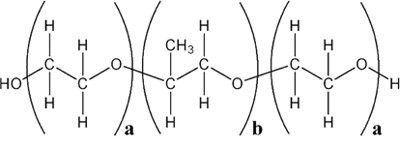
Figure 1: Structure of Poloxamer
Table 1. Different physiochemical properties of Poloxamer
|
S.No. |
Physiochemical Characteristics |
Properties |
|
1. |
Chemical Name and CAS Registry Number |
α-Hydro-????- hydroxypoly(oxyethylene)poly(oxypropylene) poly(oxyethylene) block copolymer [9003-11-6] |
|
2. |
IUPAC Name
|
Poly(oxyethylene)-poly(oxypropylene)-poly(oxyethylene) |
|
3. |
Molecular formula |
(C2H4O)n-(C3H6O)m-(C2H4O)n |
|
4. |
Taste |
Odorless and tasteless |
|
5. |
Acidity/alkalinity |
pH = 5.0—7.4 for a 2.5% w/v aqueous solution |
|
6. |
Melting point
|
16”C for poloxamer 124 52—57’C for poloxamer 188 49°C for poloxamer 237 57°C for poloxamer 338 52—57‘C for poloxamer 407 |
|
7. |
Density |
1.06 g/cm3 at 25°C Flash point: 260"C |
|
8. |
Cloud point
|
>100°C for a 1% w/v aqueous solution, and a 10% w/v aqueous solution of poloxamer 188 |
|
9. |
HLB value |
0.5—30; 29 for poloxamer 188 |
|
10. |
Flowability |
solid poloxamers are free flowing |
|
11. |
Moisture content
|
poloxamers generally contain less than 0.5% w/w water and are hygroscopic only at relative humidity greater than 80% |
|
12. |
Surface tension
|
19.8 mN/m (19.8 dynes/cm) for a 0.1% w/v aqueous poloxamer 188 solutions at 25°C, 24.0 mN/m (24.0 dynes/cm) for a 0.01% w/v aqueous poloxamer 188 solutions at 25°C 26.0 mN/m (26.0 dynes/cm) for a 0.001% w/v aqueous poloxamer solution at 25°C |
|
13
|
Solubility
|
Soluble in both polar and non-polar solvent Freely soluble in water Soluble in organic solvents like ethanol, methanol, acetone, chloroform etc. |
|
14. |
Dynamic Viscocity |
1000 mPa s (1000 cP) as a melt at 77ºC for poloxamer 188 |
Physical and chemical properties of Poloxamers
Table 2. Physical and chemical properties of Different Poloxamers
|
Properties
|
Poloxamer 124 |
Poloxamer 188 |
Poloxamer 237 |
Poloxamer 338 |
Poloxamer 407 |
|
Average molecular weight |
2090–2360a |
7680–9510a |
6840–8830a |
12700–17400a |
9840–14600a |
|
Description |
Colorless liquidb |
White solida |
Solida |
Solida |
White solida |
aCommittee of Revision of the United States Pharmacopeial Convention 1995. bAnonymous 1997
Safety
Poloxamers are finding various applications in the formulation of oral, parenteral, and topical pharmaceutical formulations due to its non - toxic and non - irritant properties. Also it cannot be metabolized in the body.
Animal toxicity studies shows that in the concentration of 5% w/v and 10% w/v poloxamers are found to be nonirritating and non-sensitizing when applied with dogs and rabbits, to the eyes, gums, and skin [22].
Rheology of poloxamer
Amphiphilic polymeric solutions such as poloxamers behave in a more complex way than conventional polymeric solutions because their hydrophilicity depends on the test conditions such as temperature and concentration [23]. Rheology of the aqueous solution of Pluronic may vary from Newtonian to viscoelastic and then to unstable rheological behaviours based upon the temperature and concentration [23]. At low temperatures, the aqueous solutions of Pluronic at intermediate concentrations (13–19 weight percent) act as Newtonian fluids; at higher temperatures, however, they behave as gel temperature (Tg) and higher- they behave as thermoplastic gel showing a yield stress [23]. In actuality, distinct micelles exist in the solution at low temperatures and moderate concentrations, however at higher temperatures, PPO segments become less soluble and the micelles are formed at lower concentrations. The density of micelles rises with increasing concentration or temperature, allowing them to overlap through PEO shells to form gel. At much higher temperatures, relative to Tg , PEO shells shrink due to dehydration resulting in the collapse of gel structure [23]. The gelling temperature can be detected while observing a sudden increase in the viscosity values, or while a yield stress point emerges [23]. For T < T g and relatively low concentrations, the shear stress versus shear rate at a constant temperature is approximately linear similar to Newtonian fluids. The corresponding viscosity values of the solution decrease with the temperature increment until reaching the Tg , where a significant increase in the viscosity values is observed [23]. This relation denotes that the viscosity values at each temperature depend on the viscosity values at 0C (η0) and are a function of T/T g ratio, where η0 is linearly correlated to the concentration values.
η ( T\ T g)= η0 ( c) f (T\ Tg)
The viscous reaction is consistently greater than the elastic response in the sol state (G" > G'). The solid-like behaviour was shown by this structure (G' > G") following the physical network formation, and the crossover between G' and G" is known as the gelation period.
TYPES OF POLOXAMERS
Based upon the molecular weight and the ratio of PEO to PPO, the types of poloxamers had been classified:
1. Poloxamer 188 (Pluronic F68): Low molecular weight, primarily used as a stabilizer and emulsifier in pharmaceutical formulations.
2. Poloxamer 407 (Pluronic F127): High molecular weight, widely applied in thermoreversible gel systems, drug delivery, and tissue engineering (Schmolka, 1972).
Physio -chemical properties based on type
Table 3. Physio chemical properties based on type and application [24, 25, 26]
|
Name |
Molar mass |
Average no. of PO units |
Average no. of EO units |
HLB |
CMC |
Cloud point |
Application |
|
L635 |
1900 |
16.3 |
21.5 |
19 |
5.3 |
73 |
Surfactant, using for synthesizing copolymer |
|
L43 |
1850 |
22.3 |
12.6 |
12 |
2.2 |
42 |
Surfactant, drug encapsulation |
|
L44 |
2200 |
22.7 |
20 |
16 |
3.6 |
65 |
Surfactant, cosmetics and pharmaceuticals |
|
L61 |
2000 |
31 |
4.5 |
3 |
1.1 |
24 |
Inhibitory effect, assist drug delivery system |
|
L62 |
2500 |
34.4 |
11.3 |
7 |
4 |
32 |
Nonionic surfactant, delivery system |
|
L64 |
2900 |
30 |
26.3 |
15 |
4.8 |
58 |
Surfactant |
|
L81 |
2750 |
42.6 |
6.2 |
2 |
2.3 |
20 |
Inhibition of multidrug resistance-associated protein |
|
L92 |
3650 |
50.3 |
16.5 |
6 |
8.8 |
26 |
Surfactant, additive, gene delivery |
|
L101 |
3800 |
58.9 |
8.6 |
1 |
2.1 |
15 |
Drug delivery |
|
L121 |
4400 |
68.2 |
10 |
1 |
1 |
14 |
Nanoparticle engineering |
|
P84 |
4200 |
43.4 |
38.1 |
14 |
7.1 |
74 |
inhibition of multidrug resistance |
|
P85 |
4600 |
39.6 |
52.2 |
16 |
6.5 |
85 |
inhibition of multidrug resistance |
|
P103 |
4950 |
59.7 |
33.75 |
9 |
6.1 |
86 |
Body and hand creams, lotions |
|
P104 |
5900 |
61.03 |
53.6 |
13 |
3.4 |
81 |
Hair tonics, dressings, delivery system |
|
P105 |
6500 |
56.03 |
73.8 |
15 |
6.2 |
91 |
Mouthwashes and breath fresheners, delivery system |
|
|
|
|
|
|
|
|
|
|
P123 |
5750 |
69.4 |
39.2 |
8 |
4.4 |
90 |
inhibition of multidrug resistance, drug delivery |
|
F68 |
8400 |
28.9 |
152.7 |
29 |
4.8 |
>100 |
Antithrombotic, hemorheological activities, cell membrane sealing phagocyte activation (stimulation of phagocyosis and superoxide anion production) and neutrophil degranulation, improve expression of osteogenic and chondrogenic genes |
|
F87 |
7700 |
39.8 |
122.5 |
24 |
9.1 |
>100 |
Scaffold, delivery system |
|
F88 |
11,400 |
39.3 |
207.2 |
28 |
2.5 |
>100 |
Modulation of red blood cell aggregation |
|
F98 |
13,000 |
44.8 |
236.3 |
28 |
7.7 |
>100 |
Modulation of red blood cell aggregation |
|
F108 |
14,600 |
50.3 |
265.4 |
27 |
2.2 |
>100 |
Surfactant, coating |
|
F127 |
12,600 |
65.1 |
200.4 |
22 |
2.8 |
>100 |
Long circulating particles, slow release gels, macrophage stimulation, stimulating EGFc production, tissue engineering |
VARIOUS STRUCTURES BASED ON POLOXAMER
Hydrogel
Hydrogel are three dimensional networks of hydrophilic polymers that have a huge capacity to absorb water. They have been widely integrated in an assortment of fields, and involving biological, agricultural, and industrial applications. There has been high interest in hydrogels being used in biomedicine in biosensors, post implant device, wound dressing and in implantable devices medication delivery. The polymers which are used to prepare hydrogels are of a very diverse nature and encompass both natural and synthetic ones of particular interest has been poloxamer however as a result of its amphiphilic nature [26, 27].
Micelle
Amphiphilic poloxamers are self-assembled within an aqueous solution to create micro- to nano-sized micelles [25, 26]. Its micelle is PPO at its core and the hydrophilic PEO at the surrounding shell. The hydrophobic part of poloxamer can be implanted hydrophobic drugs. The molecular weight of the segments determines the characteristics of the micelles (form, aggregation, critical temperature at which the micelle forms, critical micelle temperature CMT) and CMC. The higher the PPO content, the lower the CMC value because of an increase in the hydrophobicity of the system. Moreover, PEO con- content demonstrated a linear correlation with the CMC values. Increased PEO concentrations further destabilized the micelle [27]. Poloxamer is characterized by a very low CMC and can hardly be regarded as a stimuli-responsive biomaterial.
POLOXAMER CHEMISTRY
Chemistry
Poloxamer is ABA tri-block copolymer comprising of a hydrophilic block PELS (A) and a hydrophobic block PPO (B), commercially sold as Pluronic R BASF developed the nomenclature of Pluronic grades, which are of three types: liquid (L), paste (P), and flake. The PO molecular weight is described by the first or two numbers multiplied by 300 approximately, and the final one defines the one tenth percent of EO weight percentage in the copolymer [28]. A reduction in zeta potential indicates the formation of a stabilizing layer of adsorbed polymer as the sterically-stabilizing polymer layer. When the concentration of the polyelectrolyte is lower, zeta potential reduces, rises with decreasing pH [29]. Additionally, there is an overall tendency of an increased reduction by concentration increment (especially in F127). As PPO is not soluble in water, and PEO is very soluble in it, their copolymer block of amphiphilic structure serves as a surface-active component [30]. Depending on the weight length, poloxamer is used in different applications as surfactants, drug carriers Propylene oxide (PO) and ethylene oxide (EO) are appended sequentially to low molecular weight, water soluble propylene glycol to make PEO-PPO-PEO triblock copolymers. When an alkaline catalyst is present, usually sodium or the oxyalkylation processes are obtained with the help of potassium hydroxide.
METHOD OF SYNTHESIS
Propylene oxide (PO) and ethylene oxide (EO) are then used sequentially to add to low molecular weight, water-soluble propylene glycol to produce PEO-PPO-PEO triblock copolymers. The oxyalkylation processes are accomplished in the presence of an alkaline catalyst, which is usually sodium or potassium hydroxide. The final product is then neutralized by removing the catalyst [30].
Figure 2: Synthesis of Poloxamer by adding PO to form the PPO middle block
POLOXAMER BEHAVIOUR
Poloxamers display aqueous solution properties of intense interest and comprehensive review due to their unusual behaviour and advantage to a great variety of applications. The amphiphilic nature of copolymers in water causes the macromolecule to self assemble into micelles where the inner core is made up of hydrophobic blocks and the outer shell made up of hydrophilic blocks, surface made of hydrophilic units. They are nanosized particles, usually at 10- 200 nm which is observed at the critical micellization concentration (CMC) and at critical poloxamer aqueous solutions micellization temperature (CMT CMC) value is negatively dependent on the temperature, and the number of PEO segments in the polymers whereby a larger hydrophobic (PPO) domain results in a lower micellization temperature and concentration [31]. Poloxamer water solutions are temperature sensitive and at comparatively long enough concentration. they are concentrated forms that have a thermos reversible gelation 31. They are sol-gel transitioning at approximately 37o.C (physiological temperature) and a gel-sol transition of approximately 50ºC. They are able to produce thermoreversible gels with some already being approved by the Food and Drug Administration and of particular importance in application as food additives, drug delivery vehicles in cosmetic products, pharmaceutical materials, and tissue scaffolds [32, 33]. This phenomenon has been put forward with a number of explanations; the first explanation involved the gel transition, which was a product of changes in the micellar properties (Figure 2).
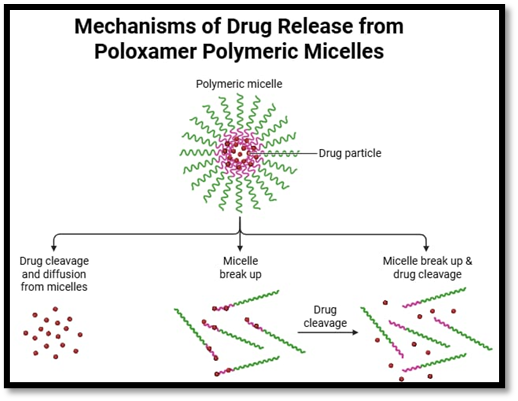
Presence of core–shell structure causes the hydrophobic core to serve as a location for drug-loading, generating an area where hydrophobic medications can be encapsulated by forming chemical or physical bonds The characteristics of the inner core and outer shell affect drug release and may facilitate a longer-lasting or simpler release of the medication. Polymeric micelles can carry a number of medications to the aforementioned characteristics, which also improve circulation time and the permeability as well as the retention impact. Above all, these systems provide minimal-risk of chronic toxicity as the polymeric micelles are disassembled in vivo, in single polymer chains that can be excreted through the kidneys [34].
EVALUATION OF POLOXAMER
1. Assay
Purpose: Determines the purity or active content of poloxamers.
Method: HPLC or titration methods are commonly used (USP and EP guidelines).
Poloxamers with defined molecular weights can also be analysed using size exclusion chromatography (SEC) (Quantitative Determination).Size Exclusion Chromatography (SEC): This technique is based on the use of size exclusion columns using tetrahydrofuran (THF) as the mobile phase and the detection of the refractive index. It has a limit of quantitation (LOQ) of 0.005 mg/ml and a linear range that is at least three orders of magnitude. The recovery rates were also at 97-102, which implies great accuracy and precision.Colorimetric Method: This is a technique that depends on the development of a coloured complex between poloxamers and cobalt (II) thiocyanate in a water solution to measure UV absorbance at 624 nm. It is product specific and there was sufficient specificity and sensitivity proven in the case of some products.
Acceptance Criterion: The assay value should fall within 95.0–105.0% of the labelled amount, in accordance with the USP–NF Monograph for Poloxamers (United States Pharmacopeia, 2023) [35].
2. pH determination
Purpose: To measure the acidity or alkalinity of the poloxamer solution, ensuring it remains within a range compatible with biological systems.
Method: A calibrated digital pH meter is used for pH measurement. For example, in formulations such as organogels, the electrode is immersed directly into the sample, and the stabilized reading is recorded. Alternatively, a 1% or 10% w/v poloxamer solution can be prepared in water and analyzed using the calibrated meter.
Acceptance Criterion: The pH should be within the range of 5.0–7.5 [36].
3. Loss on Drying (LOD)
This test helps determine how much water and other volatile substances are present in a poloxamer sample. A measured amount of the sample is gently heated under set conditions, and the reduction in weight shows the amount of moisture and volatiles lost. The acceptable limit depends on the specific type of poloxamer and how it is meant to be used.
Purpose: To measure the moisture content and any volatile impurities present in the sample.
Method: Accurately weigh the sample, then heat it at 105°C until a constant weight is obtained, indicating that all moisture and volatiles have been removed.
Acceptance Criterion: The loss on drying should not exceed 0.5% [37].
4. UV Spectroscopy
UV spectroscopy is employed to determine the λ max of poloxamers or drugs incorporated within poloxamer-based formulations. In this method, a solution of the sample is scanned within the 200–400 nm range using a UV-Vis spectrophotometer to identify its maximum absorbance wavelength.
Purpose: To detect and quantify any UV-absorbing impurities present in the sample.
Method: Analyze a 1% poloxamer solution using a UV-Vis spectrophotometer over the 200–400 nm range.
Acceptance Criterion: No significant absorbance should be observed at specified impurity wavelengths (e.g., 275 nm and 285 nm) [38].
5. Infrared (IR) Spectroscopy
Purpose: To confirm the identity of poloxamers by verifying the presence of characteristic functional groups.
Method: FTIR spectroscopy is employed to identify specific functional groups and evaluate the compatibility of poloxamers with other formulation components. The sample is usually mixed with potassium bromide (KBr) and analyzed in the 4000–400 cm?¹ range. Characteristic peaks are then compared with reference spectra to confirm structural integrity.
Acceptance Criterion: Peaks corresponding to C–O–C stretching and O–H stretching vibrations should align with those of the reference standard.
Passing Criterion: The spectrum should match the reference spectrum provided in pharmacopeial monographs [39].
6.Viscosity:
Purpose: To evaluate the flow behavior of poloxamer solutions, an important factor influencing the performance of gel-based formulations.
Method: Measure the viscosity of a 20% w/v poloxamer solution at 25°C using a Brookfield viscometer.
Acceptance Criterion: The viscosity should fall within the range specified in the product specification for the respective poloxamer grade.
7.Residue on Ignition:
Purpose: To determine the amount of inorganic residue remaining after the sample is completely combusted.
Method: Heat the sample in a muffle furnace at 600°C until a constant weight is obtained, ensuring complete removal of organic matter.
Acceptance Criterion: The residue should not exceed 0.2% [40].
FUNCTIONS AND USES
Table 4. Uses of poloxamer based on concentration [41]
|
Uses |
Concentration (%) |
|
Fat emulsifier |
0.3 |
|
Flavour solubilizer |
0.3 |
|
Fluorocarbon emulsifier |
2.5 |
|
Gelling agent |
1.5-50 |
|
Spreading agent |
1 |
|
Stabilizing agent |
1-5 |
|
Suppository base |
4-6 or 90 |
|
Tablet coating |
10 |
|
Tablet excipient |
5-10 |
|
Wetting agent |
0.01-5 |
The different concentrations of poloxamers lead to different functions and uses:
Low Concentration (1% - 10%)
Function: At lower concentrations, poloxamers primarily act as surfactants. They reduce the surface tension of water and stabilize emulsions, suspensions, and colloidal systems.
Uses:
Pharmaceuticals: Poloxamers are widely used in drug delivery systems as solubilizers and stabilizers in various formulations, including oral, topical, and parenteral preparations.
Cosmetics: They are commonly incorporated into creams, lotions, and shampoos due to their excellent emulsifying and stabilizing properties.
Biotechnology: Poloxamers are utilized in cell culture media and protein formulations to stabilize proteins and prevent aggregation, enhancing the integrity and performance of biological products.
Medium Concentration (10%–30%)
Function: At these concentrations, poloxamers can form gels or semi-solid structures, often exhibiting thermoreversible gelation. This means they can transition between liquid and gel states depending on the temperature, making them particularly valuable in controlled drug delivery and biomedical applications.
Uses:
Controlled Drug Delivery: Used for creating sustained-release formulations (e.g., gels or hydrogels) that can release drugs over extended periods.
Injectable Gels: Injectable drug formulations capable to become gel at body temperature was used for localized release of a drug.
Personal Care: Used in thickening agents or gel formulations in lotions, ointments, and other products.
High Concentration (Above 30%)
Function: At high concentrations, poloxamers form solid gels or highly viscous systems. Their gel properties are more pronounced, and they exhibit enhanced solubility and stability for active pharmaceutical ingredients.
Uses:
Wound Healing: High concentrations of poloxamers are used in hydrogels for wound care, as they provide moisture and help in drug delivery to the wound site.
Therapeutic Devices: In medical devices, they are used in formulations for controlled release of drugs or to improve the delivery of biologics.
Tissue Engineering: Used in scaffolds creation which aid in adhesion of a cell and regeneration of tissues due to the gel-like properties [41, 42].
BIOMEDICAL USES
1. Cosmetic
The majority of poloxamer serve as surfactants, emulsifying agents, cleansing agents, and/or solubilizing agents in cosmetics, according to the International Cosmetic Ingredient Dictionary and Handbook (GottschalcandMcEwen2004) Poloxamer 182 Di benzoate is mentioned as an emollient and skin conditioning agent, whereas Poloxamer 188 is also an antibacterial.
2. Non cosmetic
As a food additive, stool softener, wetting agent, antimicrobial carrier, topical wound cleanser, emulsifying agent in intravenous fat emulsions, precipitant of plasma proteins, and additive in cardiopulmonary bypass perfusion solutions, Poloxamer 188 has a wide range of non-cosmetic applications (Jewell et al. 1997). Poloxamers are known pharmacological excipients, according to Kabanov and Alakhov (2002), who reviewed the usage of these molecules in drug delivery. They can be used in formation of micelles to enhance a drug's stability and solubility. These authors not only narrated the Poloxamer’s uses history in drug delivery along with the applications mentioned in this section, but also discussed how Poloxamers are used for: (1) the sensitization of drug-resistant cancers to doxorubicin; (2) enhance drugs transportation across the blood-brain barrier; and (3) improve oral bioavailability of drugs.
3.MedicalPoloxamer 188 was assessed as a protective agent for mammalian and insect cells during sparging. Sparging is a method for supplying oxygen to a culture medium in large-scale animal cell bioreactors that can damage cells (Murhammer and Goochee 1990). Poloxamer 407 has been tested for its use as a bacterial adhesive (antiadhesive) for hydrogel contact lenses (Portoles et al. 1994). In a review article describing the use of Poloxamers in drug delivery, Kabanov and Alakhov (2002) noted that Poloxamers are recognized pharmaceutical excipients. They can also be used in the formation of micelles to improve the solubility as well as thw stability of drugs. Alongside reviewing how Poloxamers have been used in drug delivery over the years — including the examples mentioned earlier — the authors also highlighted some of their more innovative uses. These include helping make drug-resistant cancers more responsive to doxorubicin, improving the capability of drugs to penetrate the blood-brain barrier, and boosting how well certain drugs are absorbed when taken by mouth [43, 44, 45].
4. Gene Transfer
According to Van Belle and associates (1998), Poloxamer 407 as a vehicle enhances percutaneous delivery of the adenovirus and lowers the time needed to deliver genes transfection. They also established that gene transfer was possible during stent implantation into a Poloxamer vehicle. These experiments were performed as a part of the creation of new methods to avoid restenosis of vessels by the means of introduction of antiproliferative genes in arterial smooth muscle cells into the sites of angioplasty. In their review, Kabanov and Alakhov (2002) have indicated that Poloxamers could significantly increase the expression of plasmid DNA in the skeletal muscle of mice. This discovery led to the possibility that these block copolymers can be a viable solution in gene therapy. This was subsequently developed by Kuo (2003) who further investigated the use of Poloxamers in the delivery of genes into living organisms[46, 47, 48].
POLOXAMER APPLICATION
1. Poloxamer in tissue engineering
New workable techniques are needed for the reconstruction of deteriorated and injured tissues. When conventional medicines are insufficient, tissue engineering is a viable supplemental and alternative approach [49, 50]. Using a combination of cells, biomaterials, and biochemical elements, tissue engineering creates functional structures that give cells an artificial extracellular matrix to help them repair damaged tissues [50].
Biocompatible scaffolds that cause minimal inflammatory and immunological reactions are essential for tissue engineering [51, 52]. Additionally, they should have desirable mechanical and architectural properties that offer a compatible microenvironment along with pores which are interconnected and suitable for cell growth, cell proliferation, and cell differentiation, as well as regulated biodegradability [53].
2. Poloxamer's role in cartilage repair
Among the most painful and difficult conditions limiting movement are defects of the cartilage, meniscus, tendon, and ligament; tissue engineers are searching for novel ways to repair the tissues which are damaged [52]. The most difficult component of articular cartilage is mostly made up of hyaline cartilage, a low-friction, weight-bearing substance that relies on the surfaces articulation of bones and joints.
3. Neuro-regeneration of Poloxamers
The nervous system consists of two significant parts referred to as the central nervous system (CNS) and the peripheral nervous system (PNS). The control centre of CNS which is the control centre of the brain and the spinal cord are found in the body, whereas PNS are composed of nerves and sense organs. Neurological disorders can occur either as a result of physical trauma or ailments. CNS has depicted low ability to regenerate following injuries because of its low substitution capacity. Destroyed neurons and pronounced inflammatory reactions were bred in the injured location [54]. PNS has a increased capability to regenerate the axons upon damage. But, in the event of chronic trauma, a conduit is never left without filling the gap to offer the right microenvironment to axonal regeneration.
4. Poloxamer in wound healing
The body has an exterior cover that saves the body against the outside and it is known as skin environment and microorganisms [38, 39]. The skin is made up of three layers such as epidermis, dermis, and hypodermis [40, 41]. Traumatic skin damages may cause skin defects as by injury, surgical operation, and a burn or by metabolic disorders produced by pathologies such as diabetes, vascular inadequacies, and obesity [55]. Designing the appropriate wound dressings are a crucially important in facilitating and accelerating the healing process. A perfect wound dressing ought to be non-dressing and non-allergenic so that the dressing will not be adherent to the wound. But they should be capable of absorbing exudates, and keeping the humidity of the wound at the right level [55]. Moreover, the dressing of wounds is to contain antibacterial and antimicrobial and permits a sufficient amount of airflow to heal appropriately.
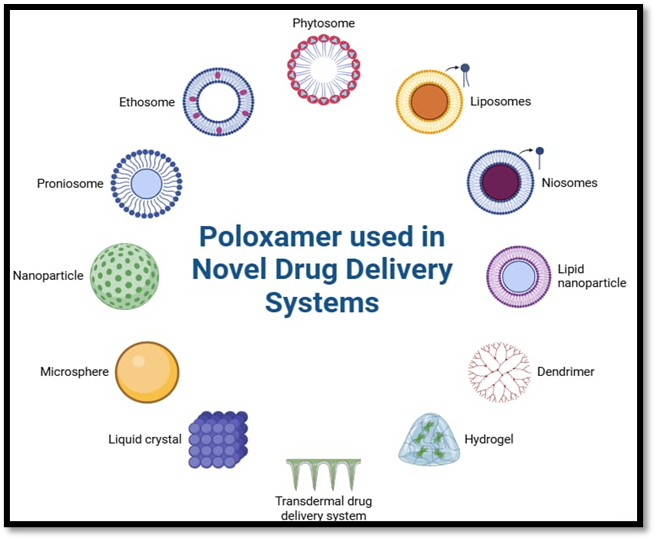
Figure 4: Poloxamer uses in Novel Drug Delivery System
ADVERSE EFFECTS
Poloxamer compound are widely use in pharmaceutical, cosmetics, and drug delivery system because of their biocompatibility and decreased toxicity prolonged and excessive use may lead to certain adverse effects:
Hematological Effects: Haemolysis ,Thrombocytopenia
Immunological Effects: Immune system suppression, Allergic reactions
Gastrointestinal upset: Intestinal obstruction
Hepatic Effects: Hepatotoxicity, Cholestasis
Other Effects: Weight gain, Electrolyte imbalance [56].
CONDITIONS OF STABILITY AND STORAGE
Poloxamers are the stable materials. At the presence of metal ions, acids and alkalis, aqueous solutions remain stable. Heavy aqueous solutions however, favour the growth of molds. The bulk material and should be kept in a well-closed container where there is cool and dry air [57].
INCOMPATIBILITIES
At different relative concentrations, poloxamer 188 does not react with phenols and parabens [57].
HANDLING PRECAUTIONS
Take the precautionary steps that are appropriate to the material and the amount of material to be handles. Wearing eye protection and gloves are suggested [58].
REGULATORY STATUS
The FDA Inactive Ingredients Guide (IV injections; inhalations, ophthalmic) includes them.
Preparations: oral powders, solutions, suspensions and syrups; topical preparations and inclusions of non parenteral medicines licensed in the UK [58].
MARKETED PRODUCTS
Table 5. List of marketed products
|
Drug |
Trade name |
Uses |
Duration of weeks |
Company |
|
Leuprolide acetate |
Lupron Depot |
Prostate cancer |
12-16 |
TAP Pharmaceuticals |
|
Leuprolide acetate |
Eligard |
Prostate cancer |
12-24 |
Sanofi Aventis |
|
"Goserelin acetate |
Zolades |
Prostate cancer |
4 or 12 |
AstraZeneca |
|
"Buserelin acetate |
Suprefact Depot |
Prostate cancer |
8 or 12 |
Sanofi Aventis |
|
Triptorelin pamate |
Decapeptyl |
Prostate cancer |
4 |
Ferting Pharmaceuticals |
|
Octreotide acetate |
Sandostatin LAR |
Acromegaly |
4 |
Novartis |
|
Lanreotide |
Somatuline LA |
Acromegaly |
2 |
Ipsen |
|
#Triptorelin pamoate |
Telstar Depot |
Prostate cancer |
4 |
Watson Pharma, Inc. |
|
#Triptorelin pamoate |
Telstar LA |
Prostate cancer |
12 |
Watson Pharma, Inc. |
|
Risperidone |
Rispendal Consta |
Antipsychotic |
2 |
Janssen Pharmaceuticals |
|
Naltrexone |
Vivitrol |
Alcohol dependence |
4 |
Alkermes, Inc. |
|
"Somatropin |
Nutropin Depot |
Growth deficiencies |
4 or 12 |
Genentech, Inc |
|
"Carmustine |
Gliadel |
Malignant glioma |
80 |
Arbor Pharmaceuticals |
|
"Minocycline HCI |
Anestin |
Periodontitis |
2 |
OraPharma |
|
"Eprinomectin |
Longrange |
Parasitic diseases |
10 -16 |
Merial Limited. |
PATENTS
Table 6. List of Remdesivir related patents
|
S.NO |
Invention /patent number |
Description of invention |
Inventor |
Year of patent |
Year of expiry |
Reference |
|
1. |
US10555917B2 - Thermosensitive Hydrogel for Cancer Therapy |
A patent on thermosensitive hydrogels containing poloxamers for localized drug delivery in cancer treatment. |
Ki Hyun Nam |
2020 |
2040 |
US10555917B2 |
|
2. |
US6534066B2 - Use of Poloxamers in Vaccines |
This patent covers the use of poloxamers as adjuvants in vaccines to improve immune response and drug stability. |
Jennifer C. Parker |
2003 |
2023 |
US6534066B2 |
|
3. |
US6162791A - Ophthalmic Drug Delivery |
A patent for ophthalmic compositions utilizing poloxamers to enhance the bioavailability and retention of drugs in the eye. |
Anjan Patel |
2000 |
2020 |
US6162791A |
|
4. |
US11291204B2 - Preservatives for Cosmetic, Toiletry, and Pharmaceutical Compositions |
This patent discusses the use of poloxamers as preservatives in various compositions, enhancing product stability and shelf life. |
Daniel Winn |
2022 |
2042 |
|
|
5. |
US8840916B2 - Use of Poloxamer 188 in Sickle Cell Disease |
A patent for the therapeutic application of Poloxamer 188 to reduce blood viscosity in sickle cell disease. |
Hemant Misra |
2014 |
2034 |
US8840916B2 |
|
6. |
US9107815B2 - Sustained Release Poloxamer Containing Pharmaceutical Compositions |
: This patent covers pharmaceutical compositions that incorporate poloxamers to achieve sustained release of therapeutic agents. |
Not specified |
2015 |
2035 |
US9107815B2 |
|
7, |
6. EP2551653A1 - Biodegradable Poloxamer Derivatives |
The patent describes modified poloxamers with improved biodegradability, suitable for environmentally friendly applications. |
Ulrich M. Kompany |
2013 |
2033 |
EP2551653A1 |
CONCLUSION
Pluronics or Poloxamers are extremely versatile block copolymers that have extensive uses in many areas, especially pharmaceutical, biomedical engineering and personal care. Their amphiphilic characteristic that is a combination of hydrophilic and hydrophobic properties, they can serve as effective surfactants, solubilizers and drug formulations stabilizers. These characteristics have made poloxamers to be key elements in the formation of secondary drug conveyance mechanism, such as oral, topical as well as injectable formulations, and in nanoparticle-based controlled and targeted drug release.
CONFLICT OF INTEREST
Author declares no Conflict of interests.
REFERENCES






Lathamani Lakshmanan, Poornima Ayyanar, Dhanasekar Jayakumar, Ranjini Sri Chinnathambi, Varshitha Baskar, Tamizharasi Sengodan, Unlocking The Multifaceted Properties of Poloxamers: A Evolutionized Non - Ionic Surfactant, Int. J. of Pharm. Sci., 2026, Vol 4, Issue 2, 2575-2594. https://doi.org/10.5281/zenodo.18668457
 10.5281/zenodo.18668457
