
Vidya Bharti College of Pharmacy, Amravati
In nanomedicine, albumin is a highly preferred carrier due to its unique features. It is the most common protein in blood plasma, making it highly compatible with the body, easy to break down, safe, and unlikely to trigger immune responses, which is important for medical use. Its structure allows it to interact with various drugs, potentially protecting them from being removed or broken down in the body, which improves how these drugs work in the body. Another key feature is that albumin can target specific areas of disease because many diseased tissues and cells have an excess of certain receptors. Among nanocarriers, albumin stands out as a highly biocompatible and effective delivery system. It naturally circulates in the body for a long time and doesn't need extra chemical groups to function. This makes it well-suited for personalized medicine because it can specifically target diseased tissues. Drugs that are not easily dissolved in water can be effectively mixed with albumin, increasing their effectiveness and expanding treatment options. Albumin-based nanocarriers have the potential to revolutionize personalized healthcare by delivering precise and effective treatments. However, challenges remain in improving how much medicine can be loaded and ensuring precise targeting.
The way nanodrugs are delivered is always evolving. This method uses tiny particles called nanoparticles, which are so small they measure between 1 and 100 nanometers, to carry drugs to specific areas in the body. Compared to traditional ways of giving medicine, this approach offers several advantages, such as better drug mixing with liquid, more precise targeting, and less harm to the rest of the body.(1)
Traditional ways of delivering drugs often involve taking them by mouth. Both taking medicine by mouth and through a vein come with certain limitations. Medicine taken by mouth might not be fully absorbed by the stomach and intestines, and the liver can change the drug before it reaches the bloodstream, leading to uncertain results. Medicines given through a vein reach their target areas quickly, but they can also spread to other parts of the body, which may cause unwanted side effects.(2)
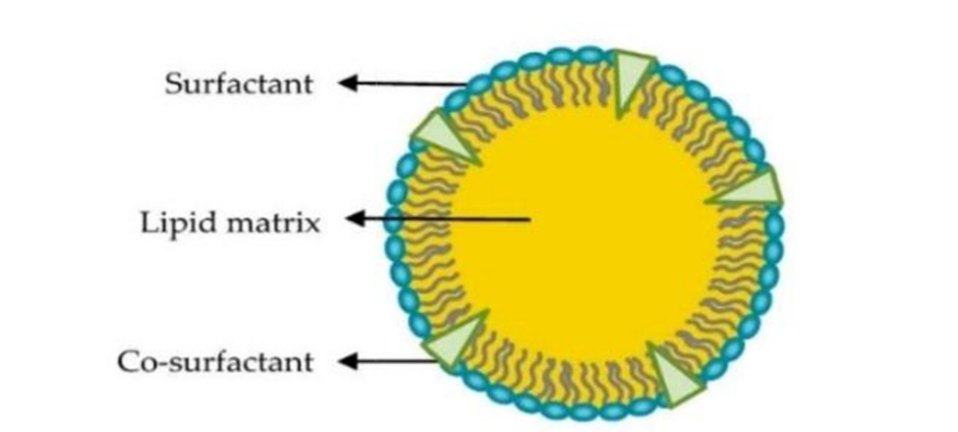
Fig.no 1 : Overview of Nanoparticles
Nanodrug Delivery Advantages :
These challenges can be addressed using nanodrug delivery systems.
Restrictions can be overcome in the following ways:
1. Improving drug solubility:
Nanoparticles can enclose substances that are not very soluble, which helps make the drugs more effective by increasing how much of the drug the body can absorb. This makes the treatment more efficient.
2. Targeting specific tissues:
Ligands or other targeting molecules can be attached to nanoparticles, allowing them to stick to specific receptors on diseased cells. This targeted approach means less medication reaches healthy tissues, which reduces side effects.
3. Controlled drug release:
Nanoparticles can be designed to release their contents slowly over time, providing a steady dose with fewer treatments needed.
4. Protecting drugs from breakdown:
Nanoparticles can shield drugs from enzymes and other molecules that break them down. This protection helps the drugs work better and stay stable for longer.(3)
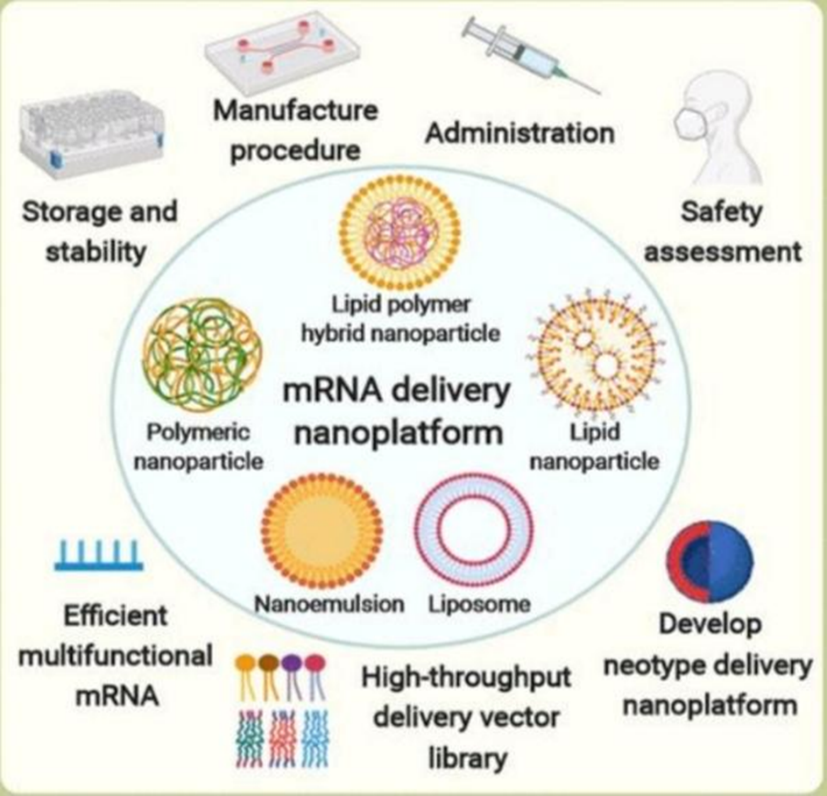
Fig.no 2 : Application of Nano delivery in Different Fields
Albumin
Human blood has more albumin than any other type of protein. About 55% of the total blood volume is made up of blood plasma. Albumin is an important molecule that has many functions, such as helping to keep body fluids balanced, transporting hormones and nutrients, and attaching to and removing harmful substances from the body.(4)
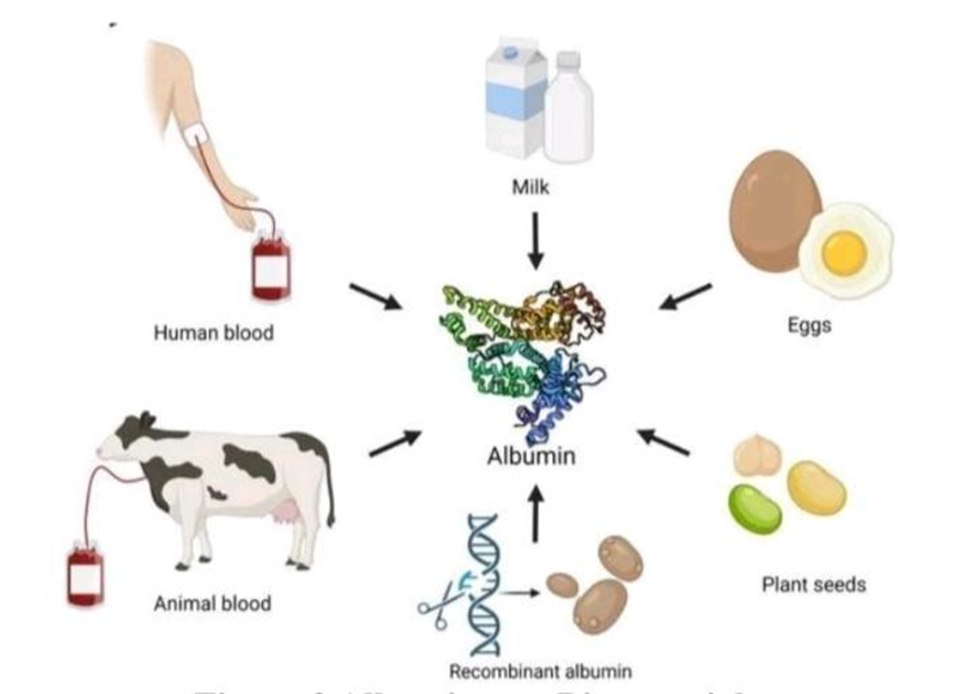
Fig.no 3 : Albumin as Biomaterials
Physiologic Role of Albumin :
Albumin is one of the most important proteins in plasma, making up about 40% of it. It is also the main protein in plasma, accounting for most of the total protein mass, with a concentration of 35 to 50 grams per liter of serum. Albumin plays a key role in maintaining osmotic pressure, contributing about 80% of it. It also acts as a buffer, helping to keep the pH level steady. Besides this, albumin serves as a carrier for various substances like fatty acids, eicosanoids, bile acids, steroid hormones, vitamin D and C, as well as minerals such as copper, zinc, and calcium. (5)
Characteristics Of Albumin from Different Species :
Albumin is the most common protein found in blood plasma, making up about 60% of all proteins in the blood. It's a small, round-shaped protein with a molecular weight of 67 kDa and an average lifespan of 19 days in the body. It dissolves easily in water and remains stable across a wide range of pH levels, from 4 to 9. It can also be safely heated for 10 hours at 60°C. Albumin can be obtained from different sources, such as rat serum (rat serum albumin, RSA), bovine serum (bovine serum albumin, BSA), and human serum (human serum albumin, HSA). While serum albumin (RSA) and egg white protein (ovalbumin, OVA) are also types of albumins, the two most commonly used for drug delivery are BSA and HSA.(6) Serum albumin has binding sites for hydrophobic compounds, especially those that are neutral or negatively charged drugs. These sites are the most important.(7) There are highly extended hydrophobic pockets in regions IIA and IIIA, (8) which contain positively charged lysine and arginine residues. In fact, the warfarin site is also called site I because it binds substances like phenylbutazone, warfarin, and azapropazone. Site II is known as the benzodiazepine site because it binds chemicals such as tryptophan, ibuprofen, and diazepam.
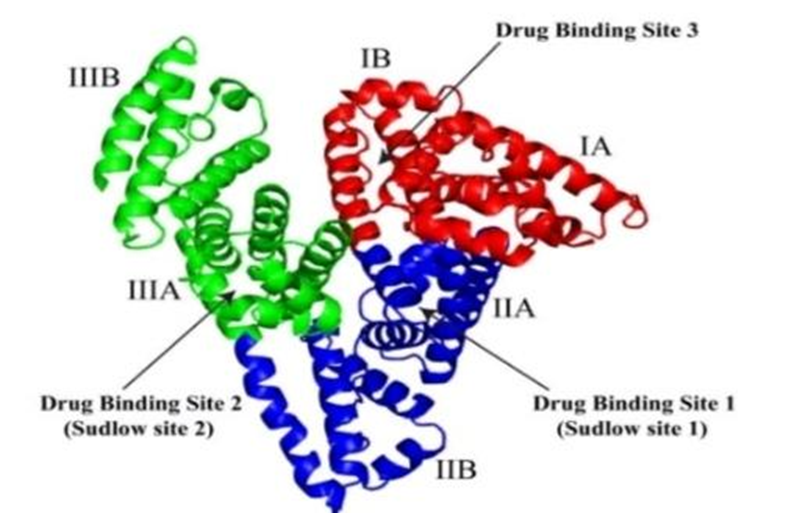
Fig. no 4 : Domain Organization of Human Serum Albumin Domain l - Red, Domain ll - Blue, Domain lll - Green.The 3-D Model Was Generated By pyMOL Using 1AO6 PDB File
1. Human Serum Albumin
Human serum albumin is made up of a single chain of 585 amino acids. Its secondary structure is quite flexible, consisting of 67% alpha helix and 17 disulfide bonds. There are also 6 turns that act as cross-linkers connecting the three similar domains.(10)
Human serum albumin is one of the most common and important proteins found in blood plasma. It is produced by liver cells, called hepatocytes, at a rate of 9 to 12 grams per day. The amount of albumin in the plasma typically ranges from 3.5 to 5 grams per deciliter. (11) Albumin is the protein that is most abundant in plasma. Although most of it is present in the bloodstream, up to 60% of it actually stays in the fluid around body tissues, known as interstitial fluid. Despite having a biological half-life of about 19 days, albumin only stays in the circulation for 16 to 18 hours.(12).
Albumin can move back and forth between the capillaries and the surrounding tissues, but it returns to the blood through the lymphatic system to help keep the level of proteins in the plasma steady. The liver makes most of the albumin, but if the body doesn't get enough nutrients, the liver can't make enough protein. Even though albumin can break down in different parts of the body, it mostly happens in the liver and kidneys. The amount of albumin in the blood depends on how much is made, how much is broken down, and how much moves between the blood vessels and the tissues. Albumin helps keep the blood pressure stable, feeds the tissues, and carries hormones, vitamins, medicines, and minerals like calcium and zinc throughout the body.(13)
The substances that bind to albumin can be grouped into two types: endogenous and exogenous. The endogenous type includes all the chemicals that are naturally present in the body, like bilirubin, fatty acids, certain ions, free radicals, vitamins, and hormones. The exogenous type refers to substances that come from outside the body, such as medications. Examples of these drugs include those used to lower blood sugar, reduce inflammation, fight infections, prevent blood clots, control seizures, treat heart and kidney conditions, and manage disorders of the central nervous system.(14)
Some examples of conditions that can influence albumin levels include hypoglycemic agents, anti-inflammatory drugs, antibiotics, anticoagulants, anti-seizure medications, treatments for heart and kidney issues, and drugs that affect the central nervous system.(15)

Fig. no 5 : Human Serum Albumin
2. Bovine Serum Albumin (BSA).
Because BSA and HSA are very similar in structure, they are often used as model proteins. BSA is a water-soluble spherical protein that makes up about 60% of all the protein found in animal serum. It has a specific hydrophobic region and is commonly used in studies looking at how albumin interacts with drugs. BSA has many functional groups, like carboxyl and amino groups, which make it very good at attaching to metal nanoparticles. It is often used to coat metal nanoparticles to improve their stability in water, make them more compatible with the body, and reduce their toxicity. This also makes it easier to modify the nanoparticles for use in medicine and other fields. However, one downside of BSA is that it can cause an immune response, which is less of a problem with HSA.(16)
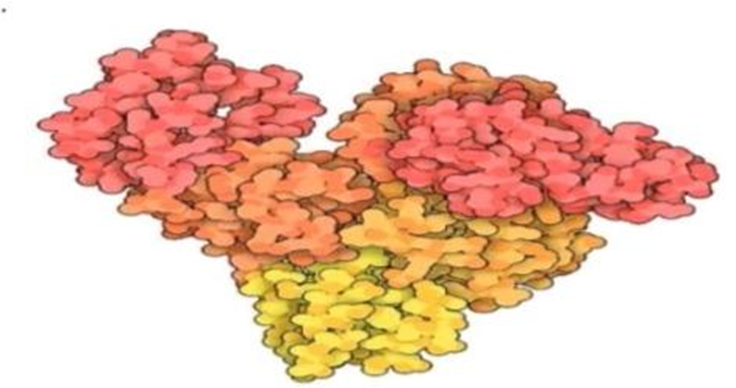
Fig. no 6 : Bovine Serum Albumin
3. Rat Serum Albumin (RSA)
The rat serum-derived RSA has a molecular weight of 64.3 kDa and an isoelectric point at pH 8.6, making its structure similar to other albumin types. However, there is less research available on the use of rat albumin protein compared to other albumin species.(17)
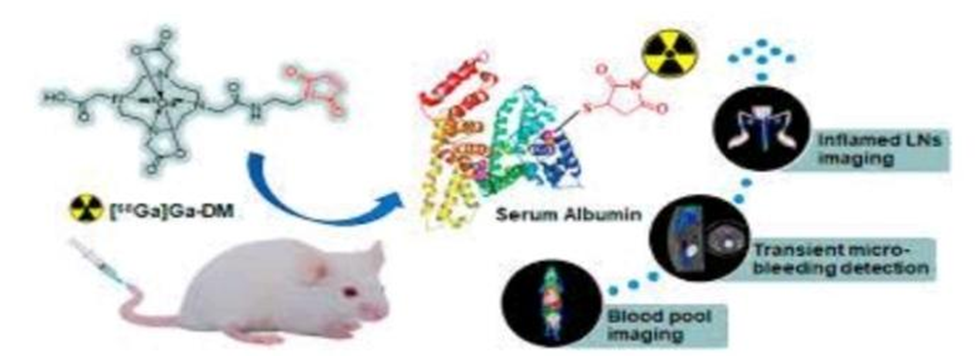
Fig. no 7 : Rat Serum Albumin
4. Ovalbumin (OVA)
The main protein found in egg white is OVA, which is a single molecule phosphoglycoprotein with a molecular weight of 45,000. Its weight ranges from 42 to 47 kDa, and its isoelectric point is between pH 4 and 5. It has a three-dimensional helical shape. The polypeptide chain consists of 365 amino acids and includes a reactive loop structure, which makes it much cheaper than OVA. Because of its ability to form emulsions, gels, and foams when combined with other proteins, it is also useful for various food-related applications. Due to its sensitivity to heat and pH, it is a good choice for drug delivery. Unlike mammalian systems, the immune system readily recognizes OVA, which makes it suitable for delivering antigens. OVA is also a type of serum albumin. An improvement was seen in the bond between poly(propyl-acrylic acid) (PPAA) and OVA. It was suggested that this could be used as a vaccine delivery method because of its ability to present antigens via MHC-1 and activate T cells, specifically those that express CD8.(18)

Fig. no 8 : Ovalbumin
Structure And Properties of Albumin :
Globular proteins known as albumin are composed of around 585 amino acids. It has a heart-like shape and consists of three separate domains, each with its own specific binding site.
These binding sites allow albumin to attach to a variety of different molecules, including:
Albumin's ability to interact with such a wide range of molecules is due to its unique structure and the presence of various functional groups on its surface.
These functional groups can form interactions like hydrophobic ones, ionic bonds, and hydrogen bonds with other molecules.(19)
Functions:
Human blood contains a protein called albumin, which is the most common one. Around 55% of all the protein in the body is found in the blood plasma. This versatile molecule, often referred to as "the workhorse of human blood," plays a crucial role in maintaining our health through various important functions.(20)
1. Keeping a Fluid Balance :
Think of albumin as a small sponge in your bloodstream.Because of its large size and negative charge, it attracts water molecules. This creates a colloid osmotic pressure that pulls fluid from the space between cells, called the interstitial space, back into the bloodstream. This helps keep your blood volume steady.
It also helps prevent edema, which is when fluid builds up in the tissues.Imagine albumin acting like a barrier that keeps the right amount of fluid inside the blood vessels, so it doesn’t leak out into the surrounding tissues.
2. Moving Molecules :
Albumin acts like a delivery system, carrying important substances throughout the body.
It has special pockets that act as binding sites, helping it carries a variety of substances, such as:
3. pH Buffering :
Our bodies need a stable pH level, which is slightly alkaline, to work properly. Albumin helps maintain this balance by acting like a buffer. When the pH becomes too low, albumin absorbs extra hydrogen ions and releases them when the pH is too high. This keeps the pH within a safe range, which is essential for enzyme function and overall cell activity.
4. Detoxifying Toxins :
Albumin acts like a bouncer in the bloodstream, binding and neutralizing harmful substances such as:
Preparation Method of Albumin :
Creating albumin-based nanoparticles can be done through different manufacturing approaches. These methods fall into two main groups: chemical methods, which use substances like ethanol, cottonseed oil, or beta-mercaptoethanol to help form the nanoparticles, and physical methods, which rely on factors such as heat or pressure to create the nanoparticles.(22)
1. Desolvation (Concervation)
In a solution made with albumin, a substance like ethanol or acetone is slowly added drop by drop while the mixture is constantly stirred until it becomes cloudy. (23) These substances work by gradually changing the three-dimensional structure of the albumin, causing it to separate into different phases and form small protein clusters. The solution splits into two parts—one mainly containing the solvent and the other mostly made of albumin, which forms tiny groupings. The final product's properties depend on several factors, including the pH level, the amount of protein used, the concentration of cross-linking agents, the amount of solvent used, the salt content, and how fast the mixture is stirred.(24)
2. Emulsification
During the emulsification process, a rough mixture called a crude emulsion is made by mixing an oil-based solution with a solution containing albumin, which is water-based, while continuously stirring. (25) To make the mixture smooth and consistent, a high-pressure homogenizer is used. After this, the nanoparticles can be made stable in one of two ways: either by using a chemical method that involves a cross-linking agent such as glutaraldehyde, or by heating the mixture to temperatures higher than 120 °C.65
3. Self-Assembly Method
Self-assembly is affected by the increase in albumin concentration, which leads to the formation of albumin nanoparticles. Using beta-mercaptoethanol to break disulfide bonds or adding a lipophilic molecule to lower the primary amine groups on the protein's surface both increase the protein's hydrophobic nature.(26)
4. Thermal Gelation
Thermal gelation, as shown, is caused by proteins when heated. After the proteins change shape and unfold, they start interacting with each other. These interactions include hydrogen bonds, electrostatic forces, hydrophobic forces, and disulfide bonds between sulfur groups. The way the final product behaves depends on factors like the pH level, how much protein is used, and the salt concentration in the solution. (27)
5 . Nanospray Drying
One of the main advantages of nanospray drying, a versatile technique often used to convert a liquid into a dry powder, is its wide range of applications (28). The key benefit of the nanospray drying method, which is commonly used to create a dry powder from a liquid, is its flexibility.
In this process, particles are formed and dried. The method involves a continuous and uninterrupted sequence of steps (29). It is characterized by the spraying of droplets from a liquid solution. The process includes several stages, such as feeding the solution, atomizing it into a spray, interacting the spray with air, drying the spray, and separating the dried product from the drying air (30).
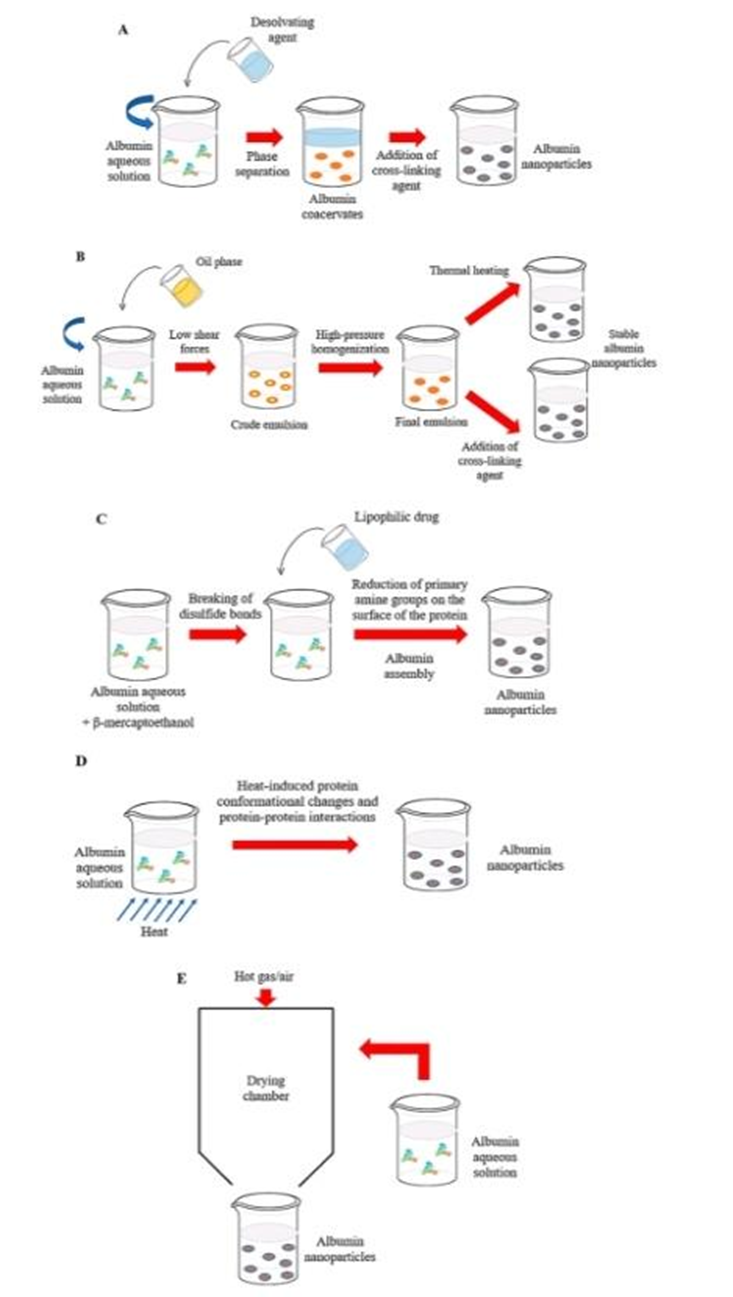
Fig. no 9 : Methods for Preparation of Albumin Nanoparticles A : Desolvation,B : Emulsification,C : Self - Assembly ,D : Thermal Gelation, E : Nanospray Drying
Nanodrug Delivery Application :
Nanodrug delivery systems have the ability to greatly change how we treat many different types of diseases, including cancer, infections, brain-related conditions, and heart diseases. Here are some nanodrugs that have been approved by the FDA:
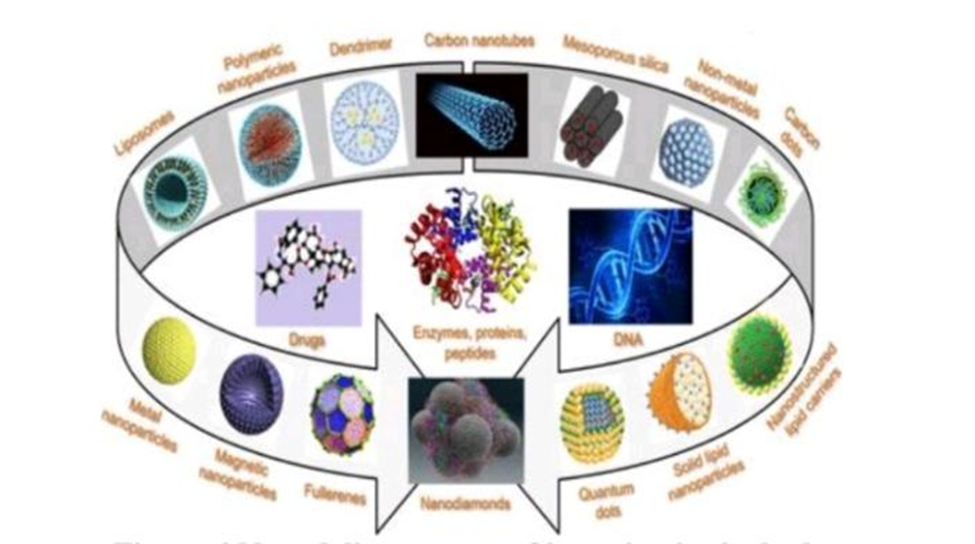
Fig. no 10 : Nanodelivery Types of Insertion in Body
Future of Nanodrug Delivery :
The field of nanodrug delivery is still in its early stages. Even though it's not fully developed yet, nanodrug delivery has the potential to change the way we treat diseases. Nanotechnology, which involves working with matter at the atomic and molecular level, could greatly improve how medications are delivered in the future (33) . As scientists keep developing more effective nanocarriers and targeting methods, nanodrug delivery is likely to become a key part of personalized medicine.(32)
1. Targeted Precision
Imagine drones as small as nanoparticles that can skillfully move through the intricate network of blood vessels. These tiny drones can deliver their medicine directly to unhealthy cells. Scientists can use special molecules called ligands to attach to the nanoparticles, helping them find and bind to specific receptors that are more common in unhealthy tissues. This approach helps protect healthy organs, makes the treatment more effective, and reduces unwanted side effects on other parts of the body.
2. Enhanced Solubility
Poor solubility makes it hard for many useful medicines to be absorbed by the body properly. The solution is nanotechnology.
By wrapping these medicines in nano-carriers, their solubility improves a lot. This allows them to get into the bloodstream and go to the right places in the body where they can work effectively.
3. Controlled Release
Soon, the days of needing repeated dosing might be over. Nanocarriers are made to slowly release their medicine over time, which helps keep the treatment effective for longer and makes taking medications easier. This controlled release also keeps drug levels in the body from getting too high, which reduces the risk of harmful side effects.(34)
4. Multifunction Magic
Nanoparticles can be transformed into flexible theranostic agents that do more than just deliver drugs. Imagine a single nanoparticle that can both diagnose and treat a condition at the same time (35) . These versatile tools can provide real-time information on how well a treatment is working by combining medicines with imaging tools, which allows for personalized adjustments and the best possible results.
5. Personalized pharmacies
One day, nanotechnology could make personalized medicine a reality. Scientists might design and produce customized nanoparticles that are tailored to a patient's specific disease by studying their unique genetic and cellular makeup. This tailored approach could completely change how we treat many different diseases.
Challenges And Beyond
Despite its huge promise, there are challenges that need to be overcome before nanomedicine can reach its full potential. Scientists are still working on making sure these technologies are safe for the body, improving how well they target specific cells, and controlling how drugs are released. For nanomedicine to be used more widely in clinics, it's also important to develop affordable and efficient ways to make these treatments. However, the ongoing research driven by nanotechnology's great potential could lead to a new era in healthcare. These tiny innovations offer a glimpse into a future where medical care is more precise, personalized, and effective, whether it's for managing long-term diseases or fighting difficult cancers.
CONCLUSION :
Nanomedicine is becoming more popular because it provides smart and efficient methods for delivering treatments for conditions like inflammation, cancer, and other diseases. Many scientists are drawn to albumin because it has a lot of potential as a drug delivery system. It is not toxic, doesn’t provoke an immune response, breaks down naturally in the body, and works well with the body’s systems. Since albumin is the most common protein in blood plasma, the body doesn’t see it as a foreign object and doesn’t reject it, which makes it very appealing. Instead of just giving medicine, nanomedicine is about creating a precise and controlled delivery system within the body. Picture tiny "maestros" the size of nanoparticles that can find specific targets, release their medication exactly when needed, and even offer real-time updates on how the treatment is working. Nanomedicine has the potential to lead to a new era of personalized medicine where each treatment is tailored to fit the unique needs of each patient.
REFERENCES



Vedant Chimote, Vidya Karhale, Amol Sawale, The Uniqueness of Albumin as A Carrier in Nanodrug Delivery, Int. J. of Pharm. Sci., 2025, Vol 3, Issue 9, 1662-1674. https://doi.org/10.5281/zenodo.17122322
 10.5281/zenodo.17122322
