
R. G. Sapkal College of Pharmacy, Anjaneri, Nashik
Ayurveda, the ancient science of life, offers a comprehensive approach to mental and physical health through herbal medicine, diet, and lifestyle regulation. This project explores the role of Ayurvedic herbs such as Ashwagandha, Brahmi, Jatamansi, and Tulsi in the management of stress and anxiety. The study integrates traditional Ayurvedic concepts with modern scientific perspectives to highlight their adaptogenic, antioxidant, and neuroprotective effects. The review emphasizes the mind body connection, the concept of dosha imbalance, and the importance of yoga and diet in maintaining mental equilibrium. The findings suggest that Ayurvedic herbs provide a safe, effective, and holistic strategy for managing stress-related disorders and enhancing overall well-being.
Origin and Evolution of Ayurveda
Ayurveda, often regarded as the “Science of Life,” is one of the oldest holistic healing systems in the world, originating in India more than five thousand years ago [1]. Its roots are deeply embedded in the ancient Vedic texts, including the Charaka Samhita and the Sushruta Samhita, which provide a comprehensive framework for understanding the human body, mind, and spirit. Ayurveda emerged as a result of careful observation of natural phenomena, human anatomy, and physiological functions. Early sages and seers devoted their lives to studying the interaction between the five basic elements ether, air, fire, water, and earth and how their combinations govern human health [3].
Over centuries, Ayurveda evolved from a spiritual and observational practice into a sophisticated system of medicine, encompassing diagnosis, treatment, lifestyle guidance, and herbal pharmacology. The knowledge was transmitted through oral tradition, as well as written manuscripts, allowing for the preservation and refinement of treatments. Even today, Ayurveda continues to influence healthcare practices worldwide due to its holistic and preventive approach [2].
Stress and anxiety are adaptive responses to external challenges but can become pathological when chronic. Prolonged stress disrupts homeostasis, contributing to cardiovascular, metabolic, and psychiatric disorders. Modern lifestyles characterized by fast pace, irregular sleep, and constant competition intensify these conditions.[13]
In Ayurveda, stress-related disorders are classified under Manasika Vikaras and are caused by an imbalance in Rajas and Tamas gunas, and aggravation of Vata dosha. Ayurvedic herbs known as Medhya Rasayanas are designed to rejuvenate the nervous system, promote tranquility, and enhance cognition [4].
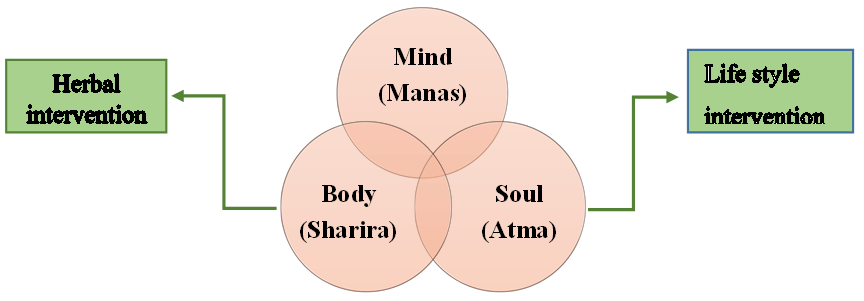
Figure 1. Schematic representation of the Ayurvedic approach to stress and anxiety management
Concept of Health and Disease in Ayurveda
In Ayurveda, health is defined not merely as the absence of disease but as a state of complete physical, mental, and spiritual well-being. The human body is viewed as a complex system where equilibrium between the three doshas Vata, Pitta, and Kaphais essential for maintaining balance. Vata governs movement and communication, Pitta controls metabolism and transformation, and Kapha provides structure and stability. Imbalance in any dosha can lead to physiological or psychological disorders.
Ayurveda emphasizes individualized healthcare, recognizing that each person has a unique constitution, or prakriti, which determines susceptibility to illnesses, stress response, and dietary needs. The approach to disease involves identifying doshic imbalances and applying remedies through herbal formulations, diet, lifestyle modifications, and spiritual practices. Ayurvedic diagnosis includes examining physical signs, pulse, tongue, eyes, and mental state, creating a holistic understanding of the individual rather than focusing solely on isolated symptoms [8].
Mind–Body Connection in Ayurveda
Ayurveda recognizes the inseparable connection between mind, body, and spirit. Mental health is considered as important as physical health, and stress is understood as a disturbance in this equilibrium. Thoughts, emotions, and sensory experiences directly influence doshic balance. Chronic stress can aggravate Vata, leading to anxiety and restlessness; increase Pitta, causing irritability and inflammation; or disturb Kapha, resulting in lethargy and depression. Techniques such as meditation, yoga, and pranayama are central to restoring harmony between mind and body. Herbal formulations are often combined with lifestyle practices to enhance mental clarity, emotional resilience, and overall well-being. Ayurveda teaches that mental clarity and emotional stability not only prevent disease but also enhance the body’s natural healing processes [9].
Modern Relevance and Global Recognition of Ayurveda
In contemporary times, Ayurveda has gained international recognition for its holistic and integrative approach to health. Modern research has validated many Ayurvedic herbs and therapies, demonstrating their efficacy in managing stress, anxiety, and chronic diseases. Globally, Ayurveda is used alongside conventional medicine, offering complementary strategies for mental and physical well-being.
The rise of lifestyle-related stress, anxiety disorders, and chronic illnesses has increased interest in Ayurveda. Its emphasis on individualized care, preventive strategies, and natural therapies resonates with modern healthcare demands. Ayurvedic wellness programs, herbal supplements, yoga, and meditation practices have been widely adopted in countries like the USA, UK, Germany, and Japan, highlighting its relevance beyond India [6].
Stress from an Ayurvedic and Psychological Perspective
Stress is a universal phenomenon and is recognized in Ayurveda as an imbalance in the doshas triggered by both internal and external factors. Adhyatmik stress originates from within, affecting thoughts and emotions. Adhidaivik stress arises from natural and environmental forces, whereas Adhibhautik stress stems from physical and material factors such as illness, financial strain, or injury.
Modern psychology aligns with Ayurveda in recognizing that chronic stress negatively impacts mental and physical health, contributing to anxiety, depression, and cardiovascular issues. Ayurvedic interventions aim to restore balance through herbal adaptogens, yoga, meditation, and lifestyle changes. Herbs such as Ashwagandha, Brahmi, Jatamansi, and Tulsi have been shown to modulate stress responses, improve cognitive function, and support emotional stability [3].
Lifestyle, Yoga, and Diet in Ayurvedic Health
Ayurveda emphasizes that lifestyle, diet, and daily routines play a critical role in maintaining health and reducing stress. Balanced nutrition according to one’s dosha helps prevent doshic aggravation and promotes optimal physiological function. For example, Vata types benefit from warm, nourishing foods, Pitta types from cooling and hydrating foods, and Kapha types from light, stimulating diets.
Yoga, meditation, and pranayama are incorporated to calm the mind, improve circulation, and enhance mental resilience.
Daily routines aligned with natural cycles (Dinacharaya)—such as waking early, mindful eating, and seasonal adjustments in activity and diet—are recommended to support physical and mental equilibrium.
Ayurvedic massage therapies, detoxification procedures like Panchakarma, and herbal supplements further strengthen the body’s ability to manage stress and maintain holistic health [17].
Origin and Evolution of Ayurveda
Ayurveda, the "Science of Life," is one of the oldest holistic medical systems, originating in India over 5000 years ago. Documented in Vedic texts such as Charaka Samhita and Sushruta Samhita, Ayurveda integrates physical, mental, and spiritual health. Over centuries, it evolved from spiritual practices to a comprehensive medicinal system, incorporating herbal pharmacology, diagnosis, and therapeutic procedures [1].
Historical Highlights
Concept of Health and Disease in Ayurveda Health in Ayurveda is a dynamic equilibrium of body, mind, and spirit. Disease arises from *dosha imbalances* (Vata, Pitta, Kapha). Each dosha governs specific physiological and psychological functions:
TABLE 1: - CONCEPT OF HEALTH AND DISEASE IN AYURVEDA
|
DOSHA |
ELEMENTS |
FUNCTION |
IMBALANCE EFFECT |
|
Vata |
Ether + Air |
Movement, Creativity, Nervous system |
Anxiety, Restlessness |
|
Pitta |
Fire + Water |
Digestion, Metabolism, Intellect |
Irritability, Inflammation |
|
Kapha |
Earth + Water |
Stability, Structure, Immunity |
Lethargy, Depression |
Mind Body Connection
Ayurveda emphasizes that mental health directly affects physical health. Stress disrupts dosha balance:
Herbal adaptogens and mind-body practices restore balance [14].
Modern Relevance and Global Recognition
Ayurveda is gaining international recognition for:
Research supports the efficacy of herbs like Ashwagandha, Brahmi, and Tulsi for mental well-being [8].
Stress from an Ayurvedic and Psychological Perspective
Types of stress in Ayurveda:
Comparison with modern psychology:
TABLE 2: -AYURVEDIC HERBS FOR STRESS AND ANXIETY MANAGEMENT
|
HERBS |
ACTIVE CONSTITUENTS |
MECHANISM |
|
Ashwagandha |
withanolides |
Adaptogen, Reduces cortisol |
|
Brahmi |
Bacosides |
Cognitive enhancer |
|
Jatamansi |
Valeranone |
Nervie toinc |
|
Tulsi |
Eugenol, Ocimum |
Adaptogen, antioxidant |
|
Shankhpushpi |
Alkaloids |
Nervie tonic |


Figure 2. Shankhpushpi Flower Figure 3. Tulsi
Integration with Modern Psychology
SUMMARY
Stress and anxiety have become common issues in modern life, contributing to various physical and psychological disorders. Synthetic drugs used to manage anxiety often cause side effects like sedation, dependency, and withdrawal symptoms. Ayurveda offers a safe, natural, and holistic approach through herbal adaptogens that balance body and mind.
Hence, this project aims to explore the scientific and traditional relevance of Ayurvedic herbs in stress management.
Objectives:
CONCLUSION
Ayurveda, the ancient Indian system of medicine, provides a holistic approach to health by integrating body, mind, and spirit. Originating over 5000 years ago, its principles are documented in classical texts like Charaka Samhita and Sushruta Samhita. Ayurveda emphasizes that health is a dynamic balance of the three doshas Vata, Pitta, and Kapha and that imbalances in these doshas lead to physical, mental, and emotional disorders, including stress and anxiety.
Stress is classified in Ayurveda into three types: Adhyatmik (internal), Adhidaivik (external/ environmental), and Adhibhautik (physical/ material). Chronic stress disrupts mental and physical health, affecting cognition, emotions, and overall well-being. Modern psychological research aligns with these concepts, confirming the importance of mind-body balance.
Ayurvedic interventions for stress management include herbal medicines, lifestyle modifications, yoga, meditation, and dietary practices tailored to individual dosha constitutions. Key herbs, such as Ashwagandha, Brahmi, Jatamansi, Tulsi, and Shankhpushpi, act as adaptogens, modulating the stress response, improving cognition, calming the mind, and promoting resilience. Therapies like Abhyanga massage and Panchakarma detoxification* further restore harmony and reduce physiological and psychological stress.
Integration of Ayurveda with modern psychology and preventive healthcare has gained global recognition, emphasizing personalized care, stress reduction, and holistic well-being. Research studies support the efficacy of Ayurvedic herbs and practices in reducing cortisol levels, alleviating anxiety, improving sleep, and enhancing mental resilience. In conclusion, Ayurveda offers a *time-tested, comprehensive approach* to managing stress and anxiety, combining herbal formulations, lifestyle interventions, mind-body practices, and preventive care. Its principles remain highly relevant in today’s modern world, providing sustainable strategies for mental health and overall wellness.
FUTURE PERSPECTIVE
REFERENCES


Shruti Vaze, Jagruti Patil, Role of Ayurvedic Herbs in Management of Stress and Anxiety, Int. J. of Pharm. Sci., 2026, Vol 4, Issue 1, 612-620. https://doi.org/10.5281/zenodo.18173486
 10.5281/zenodo.18173486
