View Article

Abstract

Sunscreens can be made from organic or inorganic compounds that either absorb or reflect UV radiation. Herbal ingredients such as Aloe vera and flavonoids are preferred because they are safe, non-toxic, non-irritating, and stable under sunlight.Regular use of sunscreen protects the skin from harmful ultraviolet (UV) radiation, which can cause sunburn, premature aging, and skin cancer. Herbal ingredients were selected for their natural antioxidant, anti-inflammatory, and UV-absorbing properties.The Review of this study was to develop a polyherbal sunscreen cream using natural oils and medicinal plant extracts. Regular use of sunscreen helps protect the skin from harmful ultraviolet (UV) rays and reduces the risk of skin cancer, sunburn, and premature aging. The present study focuses on the formulation and evaluation of a polyherbal sunscreen cream using natural ingredients with photoprotective properties. The aim was to develop a safe, effective, and skin-friendly herbal sunscreen using Aloe vera, tea tree oil, butterfly pea flower extract, rose water, and vitamin E. Regular use of sunscreen protects the skin from harmful ultraviolet (UV) radiation, which can cause sunburn, premature aging, and skin cancer. Herbal ingredients were selected for their natural antioxidant, anti-inflammatory, and UV-absorbing properties. The results showed that the polyherbal sunscreen cream had good spreadability and consistency, making it easy to apply. This study suggests that herbal ingredients such as Aloe vera and plant extracts can be effectively used to develop safe and natural sunscreen formulations.

Keywords

Sunscreen, UV radiation, Cosmetic care

Introduction

The skin is the largest organ of the human body and serves as a primary barrier against environmental factors, including ultraviolet (UV) radiation. The Prolonged exposure to UV rays, particularly UVA (320–400 nm) and UVB (290–320 nm), can cause various adverse effects such as erythema (sunburn), premature aging, pigmentation disorders, and skin cancer. Hence, the application of sunscreen products has become an essential part of skin protection and cosmetic care. Sunscreens act by absorbing, scattering, or reflecting UV radiation, thereby minimizing its penetration into the skin layers. Conventional sunscreens are composed mainly of synthetic organic and inorganic compounds. However, long-term use of such chemical agents has raised concerns regarding skin irritation, allergic reactions, phototoxicity, and environmental safety. Consequently, there is an increasing demand for herbal or natural sunscreen formulations that are safer, biocompatible, and eco- friendly.

Polyherbal formulations, which combine multiple plant extracts, are known to produce synergistic effects that enhance therapeutic efficacy. Many medicinal plants, such as Aloe vera, tea tree oil, butterfly pea flower, rose water, and vitamin E, contain flavonoids, phenolic compounds, and antioxidants that exhibit significant photoprotective properties. These can absorb UV radiation, neutralize free radicals, and prevent oxidative damage to skin cells. Conventional sunscreens often contain synthetic chemicals that may cause allergic reactions, irritation, or environmental harm. Therefore, there is a growing interest in developing herbal or polyherbal sunscreen formulations using natural ingredients that are safe, effective, and biodegradable. Polyherbal formulations combine multiple herbal extracts with complementary properties to enhance the overall sun protection effect. Herbs like Aloe vera, turmeric, green tea, cucumber, and sandalwood possess antioxidant, anti-inflammatory, and UV-protective properties, making them suitable for use in natural sunscreens.

CLASSIFICATION OF SUNSCREENS

Sunscreens are protective agents that help prevent damage to the skin caused by ultraviolet (UV) radiation from the sun. They can be classified in different ways based on their composition, mechanism of action, and the type of UV protection they provide.
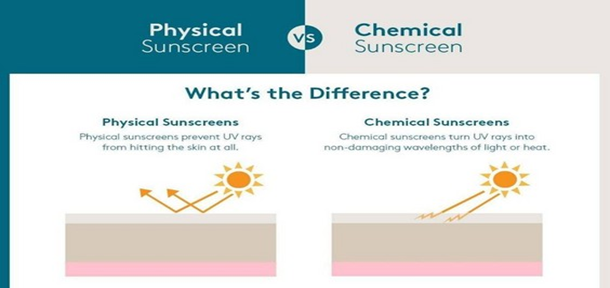
  1. Based on Mechanism of Action
    1. Physical (Inorganic) Sunscreens
  • Also known as sunblock agents.
  • They reflect and scatter UV radiation before it penetrates the  skin.
  • Usually contain mineral particles that act as physical barriers.
  • Provide protection against both UVA and UVB rays.
  • Common ingredients:
  • Zinc oxide (ZnO)
  • Titanium dioxide (TiO?)
  • Advantages: Non-irritating, photostable, and suitable for sensitive skin.
  • Disadvantages: May leave a white residue and have poor cosmetic appeal.
    1. Chemical (Organic) Sunscreens
  • These agents absorb UV radiation and convert it into harmless heat energy
  • Different compounds absorb at specific UV wavelengths (UVA or UVB).
  • Common ingredients:
  • Para-aminobenzoic acid (PABA)
  • Oxybenzone Octyl
  • Avobenzone
  • Advantages: Easy to apply, transparent, and cosmetically elegant.
  • Disadvantages: May cause skin irritation or allergic reactions in some users and can degrade upon sunlight exposure (photoinstability).
    1. Combination Sunscreens
  • Contain a mixture of physical and chemical agents to provide broad-spectrum protection and improved cosmetic acceptability.
  • Example: Formulations combining zinc oxide (physical) and avobenzone (chemical).

IMG 1:  Classification of Sunscreen

Based on Spectrum of Protection

Type of Radiation

Wavelength Range (nm)

Effect on Skin

Protection Type

UVA

320–400

Aging, wrinkles, pigmentation

Broad-spectrum or UVA filters

UVB

290-320

Sunburn, DNA damage

UVB filters

UVC

200-290

Absorbed by ozone layer

Not required

A broad-spectrum sunscreen provides protection against both UVA and UVB rays.

  1. Based on Ingredients Source
    1. Synthetic Sunscreens
  • Made from laboratory-synthesized organic and inorganic compounds.
  • Provide strong protection but may cause side effects with long-term use.
    1. Herbal (Natural) Sunscreens
  • Contain plant-based ingredients rich in flavonoids, phenols, and antioxidants that absorb UV radiation naturally.
  • Examples: Aloe vera, Green tea, Turmeric, Neem, Cucumber, Sandalwood, and Clitoria ternatea (Butterfly pea flower).
  • Safer, biodegradable, and environmentally friendly alternatives.
  1. Based on Formulation Type
  • Creams: Suitable for dry or normal skin.
  • Lotions: Lightweight and easy to spread.
  • Gels: Non-greasy, ideal for oily or acne-prone skin.
  • Sprays: Convenient for large-area application.
  • Sticks: Used for targeted protection (e.g., lips, nose).

SKIN RELATED PROBLEMS IN SUMMER AND THEIR PREVENTION

During the summer season, high temperatures and increased exposure to ultraviolet (UV) radiation can cause various skin problems. The combination of heat, humidity, sweating, and sunlight affects the skin’s natural balance, leading to both short-term and long-term damage. Understanding these issues and their preventive measures is important for maintaining healthy skin.[4]

  1. Sunburn
  • Cause: Prolonged exposure to UVB rays damages the outer layer of the skin, leading to redness, pain, and inflammation.
  • Symptoms: Redness, tenderness, peeling, and burning sensation.  
  • Prevention: Apply broad-spectrum sunscreen (SPF 30 or higher) before going outdoors.   Reapply sunscreen every 2–3 hours. Wear protective clothing, hats, and sunglasses.   Avoid direct sunlight between 10 AM to 4 PM.

2. Skin Tanning

  • Cause: Overproduction of melanin as a defense mechanism against UV rays.  
  • Symptoms: Darkening of the skin or uneven skin tone.
  • Prevention: Use sunscreen with both UVA and UVB protection. Apply aloe vera gel, cucumber extract, or lemon juice to help lighten tanned areas naturally.   Exfoliate the skin regularly.

3. Premature Skin Aging

  • Cause: Long-term UV exposure leading to breakdown of collagen and elastin fibers in the skin.
  • Symptoms: Wrinkles, fine lines, and sagging skin.
  • Prevention: Use sunscreens with antioxidants such as vitamin E and green tea extract. Maintain a balanced diet rich in vitamins and minerals. Avoid smoking and dehydration.

4. Skin Dehydration

  • Cause: Excess water loss from the skin due to heat exposure.
  • Symptoms: Dryness, dullness, tightness, and flaking of skin.
  • Prevention: Drink plenty of water and fluids. Apply moisturizers containing aloe vera or glycerin.   Avoid alcohol-based products.

INGREDIENTS & THEIR USES

Here’s a list of ingredients commonly used in the formulation and evaluation of a polyherbal sunscreen cream, including their scientific names, category, and function:

Polyherbal Sunscreen Cream — Ingredients List

Sr. No.

Ingredient Name

Scientific Name

Type / Category

Function in Formulation

1

Aloe vera gel

Aloe barbadensis Miller

Herbal active

Provides soothing, moisturizing, anti-inflammatory, and UV-protective effects; enhances SPF value

2

Tea tree oil

Melaleuca alternifolia

Herbal active / Essential oil

Antimicrobial, anti-inflammatory; reduces sunburn and skin irritation

3

Butterfly pea flower extract

Clitoria ternatea

Herbal active

Rich in anthocyanins & flavonoids; strong antioxidant & UV-absorbing properties

4

Rose water

Rosa damascena / R. centifolia

Herbal base / Aqueous phase

Cooling, soothing, toning effect; adds mild natural fragrance

5

Vitamin E (Tocopherol)

Antioxidant

Prevents oxidative damage; improves photostability of oils and active ingredients

6

Coconut oil

Cocos nucifera

Fixed oil / Emollient

Deep moisturizer; improves spreadability, softness, and texture

7

Olive oil

Olea europaea

Fixed oil / Emollient

Nourishes skin; provides antioxidant protection; improves cream consistency

8

Beeswax

Emulsifying / Thickening agent

Stabilizes cream; provides viscosity, smoothness, and structure

9

Stearic acid

Emulsifier / Consistency agent

Forms stable O/W emulsion; improves body and thickness of cream

10

Cetyl alcohol

Emollient / Thickener

Enhances smoothness and spreadability; gives velvety texture

11

Glycerin

Humectant

Attracts and retains moisture; prevents dryness

12

Methylparaben / Propylparaben

Preservative

Prevents microbial contamination; extends shelf life

13

Perfume / Natural fragrance

Additive

Provides pleasant aroma; enhances user acceptance

14

Distilled water

Solvent / Aqueous phase

Acts as vehicle for dissolving hydrophilic ingredients

15

Zinc oxide / Titanium dioxide (optional)

Physical sunscreen (Inorganic UV filter)

Reflects & scatters UV radiation; significantly boosts SPF

FORMULATION METHOD OF SUNSCREEN

The process of formulating a polyherbal sunscreen typically involves herbal extraction, preparing an oil-in-water (O/W) emulsion base, incorporating the extracts and other active ingredients into the emulsion, and finally, evaluating the product for safety, stability, and efficacy.

Step 1: Preparation of Herbal Extracts

  • Collection and preparation of plant material: Plant materials (e.g., green tea leaves, turmeric rhizomes) are collected, washed, shade-dried, and then pulverized into a coarse powder.
  • Extraction: The powdered material is macerated or refluxed with a suitable solvent (commonly ethanol or water) to extract the active phytochemicals.
  • Filtration and Concentration: The extract is filtered, and the solvent is removed (often under reduced pressure using a rotary evaporator) to obtain a concentrated residue or extract, which is then stored for later use.

Step 2: Preparation of the Emulsion Base

  • The most common method is the O/W emulsion method, which involves two separate phases:
  • Aqueous Phase: Water-soluble components like distilled water, glycerin, preservatives, and the polyherbal extracts are combined in a beaker and heated to a specific temperature, typically around 75°C (167°F).
  • Oil Phase: Oil-soluble components, including natural oils (e.g., coconut oil, almond oil, olive oil), emulsifying agents (e.g., stearic acid, cetyl alcohol, beeswax), and other lipophilic substances, are mixed together in a separate beaker and heated to the same temperature as the aqueous phase. Micronized zinc oxide (a natural mineral UV blocker) may also be gradually added to the oil phase with constant stirring to ensure uniform dispersion.

Step 3: Emulsification and Cooling

  • Mixing: The preheated aqueous phase is gradually added to the oil phase under continuous, high- speed stirring or homogenization.
  • Cooling: The mixture is continuously stirred until a homogeneous emulsion forms and it cools down to room temperature (around 25°C).
  • Addition of Final Actives and pH Adjustment: Once the temperature reaches around 40°C, temperature-sensitive ingredients like vitamin E or specific essential oils are added. The pH of the final product is adjusted to be skin-compatible (usually between 5.5 and 6.5) using an agent like triethanolamine (TEA) or sodium hydroxide solution.

Step 4: Packaging and Evaluation

  • Packaging: The finished polyherbal sunscreen is transferred into clean, opaque containers to protect it from light and prevent contamination.
  • Evaluation: The final product undergoes various quality control tests, including:   Physical appearance: Checking color, odor, consistency, and homogeneity.
  • pH measurement: Ensuring it is within the skin-compatible range.
  • Spreadability and viscosity: Assessing how easily the product applies to the skin.
  • Stability testing: Performing accelerated tests like centrifugation or thermal cycling to check for phase separation.
  • In vitro SPF determination: Calculating the Sun Protection Factor using spectrophotometric methods and specific equations (e.g., Mansur equation).
  • Safety testing: Conducting irritancy patch tests on the skin to ensure the product is safe for use.

A polyherbal sunscreen cream is formulated using an emulsification process that combines oil and aqueous phases :

  1. Prepare the Oil Phase: Combine lipophilic (oil-loving) ingredients like beeswax, cetostearyl alcohol, liquid paraffin, or specific oils in a beaker. Heat the mixture on a water bath until melted and homogenous.
  2. Aqueous Phase: In a separate container, mix hydrophilic (water-loving) ingredients such as distilled water, glycerin, and water-soluble components like preservatives. Heat this mixture on a water bath to a similar temperature as the oil phase (e.g., \(70-75^{\circ }C\)).
  3. Emulsify the mixture Slowly and gradually add the hot aqueous phase to the hot oil phase with constant stirring.Continue stirring until the mixture becomes a uniform and homogeneous emulsion, which will start to congeal as it cools to room temperature.
  4. Incorporate herbal extracts and finish Once the base has cooled, stir in the herbal extract(s) or other active ingredients, ensuring they are thoroughly mixed.Add final ingredients like perfume or coloring agents at this stage, if applicable.Pour the finished cream into an airtight container and allow it to condition for at least 24 hours before evaluation or use.

RESULTS

  1. Physical Appearance and Organoleptic Properties

The prepared polyherbal sunscreen cream appeared smooth, soft, and homogeneous with a light purple color attributed to the presence of butterfly pea flower extract. It had a pleasant rose fragrance and a non-greasy texture, indicating proper emulsification. No signs of phase separation, grittiness, or air entrapment were observed during storage, confirming the stability and good aesthetic quality of the formulation.

  1. Evaluation Parameters

Sr. No.

Parameter

Observation / Result

Inference

1

Color

Light purple

Due to presence of anthocyanins from butterfly pea flower

2

Odor

Pleasant rose-like

Characteristic aroma from rose water and essential oils

3

Texture

Smooth, non-greasy

Indicates good emulsification

4

pH

5.9 ± 0.2

Within skin’s natural range (4.5–6.5); suitable for topical use

5

Viscosity

28,500 ± 100 cP

Optimum

6

Spreadability

6.2 ± 0.3 g·cm/sec

Good spreadability ensures uniform film formation

7

Extrudability

Good

Easily extruded from tube with light pressure

8

Homogeneity

Excellent

Uniform

9

Stability

Stable (no change after 15 days)

No phase separation or color change observed

10

SPF value (in vitro, 290–320 nm)

10.21

Moderate UV protection (SPF 10–15 category)

  1. Sun Protection Factor (SPF) Determination

The SPF value was determined in vitro using UV–Visible spectrophotometry in the wavelength range of 290–320 nm. The absorbance of the formulation increased with concentration of Aloe vera gel extract.

The results showed that as the percentage of Aloe vera extract increased, the SPF value also increased due to higher concentrations of flavonoids and phenolic compounds.

Sr. No.

Concentration of Aloe vera Extract (%)

SPF Value (± SD)

1

5%

4.72 ± 0.15

2

10%

6.45 ± 0.20

3

15%

8.12 ± 0.18

4

20%

10.21 ± 0.22

CONCLUSION

The present study successfully formulated and evaluated a polyherbal sunscreen cream containing Aloe vera, tea tree oil, butterfly pea flower extract, rose water, and vitamin E. The developed formulation showed excellent homogeneity, appropriate pH, good spreadability, and physical stability, making it suitable for topical application. The formulation and evaluation of the polyherbal sunscreen cream demonstrated that natural ingredients can effectively provide protection against harmful UV radiation. The combination of herbal extracts such as Aloe vera, turmeric, and green tea enhanced the cream’s photoprotective, antioxidant, and skin-soothing properties. The developed formulation was stable, non-irritant, and environmentally friendly compared to conventional chemical sunscreens. The in-vitro SPF evaluation revealed that the cream containing 20% Aloe vera extract exhibited the highest SPF value of 10.21, which lies within the acceptable range for standard sunscreen products.

The photoprotective activity of the formulation was attributed to the synergistic effects of herbal constituents rich in flavonoids, phenolic compounds, and antioxidants that effectively absorb UV radiation and reduce oxidative stress. Overall, the findings indicate that the polyherbal sunscreen cream is a safe, natural, and effective alternative to synthetic sunscreens. It provides moderate UV protection and additional skin benefits such as moisturizing and antioxidant effects. Further studies involving in-vivo testing and long-term stability analysis are recommended to establish its clinical efficacy and commercial potential.

REFERENCES

  1. International Journal of Pharmaceutical Research and Applications (IJPRA) https://share.google/Nn2qwupk5ugwc75pq
  2. Formulation and evaluation of polyherbal sunscreen https://rjtcsonline.com/AbstractView.aspx? PID=2016-7-1-2
  3. Baki, G., & Alexander, K. S. (2015). Introduction to Cosmetic Formulation and Technology. John Wiley & Sons.
  4. A review on tailoring lignin derivatives for sunscreen formulation https://doi.org/10.1016/j.ijbiomac.2025.144871
  5. Formulation and evaluation of polyherbal sunscreen https://share.google/eOtUrexnvG9c1nDXs 6. Evaluation method of polyherbal sunscreen https://share.google/sPS8N5MSInjdpApel
  6. Chanchal, D., & Swarnlata, S. (2008). Novel approaches in herbal cosmetics. Journal of Cosmetic Dermatology, 7(2), 89–95.
  7. Dutra, E. A., et al. (2004). Determination of sunscreen SPF by UV-spectrophotometry. Brazilian Journal of Pharmaceutical Sciences, 40(3), 381–385
  8. Draelos, Z. D. (2010). Cosmetic Dermatology: Products and Procedures. Wiley- Blackwell. 10. Dwivedi, S., & Gupta, R. (2018). Evaluation of sun protection factor of herbal extracts. Pharmacognosy Journal, 10(1), 101–105.
  9. Gediya, S. K., et al. (2011). Herbal plants: Used as cosmetics. Phytochemistry and Pharmacology Journal, 3(1), 100–105.
  10. Gupta, A. K., & Verma, S. (2018). Natural sunscreen agents: A review. International Journal of Green Pharmacy, 12(1), S143–S150.
  11. Harborne, J. B. (1998). Phytochemical Methods: A Guide to Modern Techniques of Plant Analysis. Springer.
  12. Jain, R., et al. (2019). Formulation and evaluation of polyherbal sunscreen cream. International Journal of Pharmaceutical Sciences and Research, 10(5), 2378–2383.
  13. Kaushik, R., et al. (2017). Herbal cosmetics and their evaluation. World Journal of Pharmaceutical Research, 6(12), 344–358.
  14. Kaur, C. D., & Saraf, S. (2010). Photoprotective herbal extracts and their formulation.Pharmacognosy Reviews, 4(8), 1–11.
  15. Kumar, D., & Singh, R. (2020). Evaluation of SPF of herbal formulations. International Journal of Research in Pharmaceutical Sciences, 11(3), 4295–4301.
  16. Latha, M. S., et al. (2013). Sunscreening agents: A review. Journal of Clinical and Aesthetic Dermatology, 6(1), 16–26.
  17. Maithani, A., et al. (2018). Herbal photoprotective formulations: An overview. Journal of Natural Remedies, 18(3), 81–90.
  18. Mishra, A. K., et al. (2011). Evaluation of sunscreen activity of herbal formulation.
  19. Pharmacognosy Research, 3(1), 22–25.
  20. Mukherjee, P. K., et al. (2009). The sacred lotus (Nelumbo nucifera): A new resource for cosmetics. Pharmacognosy Reviews, 3(6), 348–353.
  21. Nayak, B. S., & Mohanty, S. (2021). Formulation and evaluation of natural sunscreen cream. Research Journal of Pharmacy and Technology, 14(5), 2651–2655.

Reference

  1. International Journal of Pharmaceutical Research and Applications (IJPRA) https://share.google/Nn2qwupk5ugwc75pq
  2. Formulation and evaluation of polyherbal sunscreen https://rjtcsonline.com/AbstractView.aspx? PID=2016-7-1-2
  3. Baki, G., & Alexander, K. S. (2015). Introduction to Cosmetic Formulation and Technology. John Wiley & Sons.
  4. A review on tailoring lignin derivatives for sunscreen formulation https://doi.org/10.1016/j.ijbiomac.2025.144871
  5. Formulation and evaluation of polyherbal sunscreen https://share.google/eOtUrexnvG9c1nDXs 6. Evaluation method of polyherbal sunscreen https://share.google/sPS8N5MSInjdpApel
  6. Chanchal, D., & Swarnlata, S. (2008). Novel approaches in herbal cosmetics. Journal of Cosmetic Dermatology, 7(2), 89–95.
  7. Dutra, E. A., et al. (2004). Determination of sunscreen SPF by UV-spectrophotometry. Brazilian Journal of Pharmaceutical Sciences, 40(3), 381–385
  8. Draelos, Z. D. (2010). Cosmetic Dermatology: Products and Procedures. Wiley- Blackwell. 10. Dwivedi, S., & Gupta, R. (2018). Evaluation of sun protection factor of herbal extracts. Pharmacognosy Journal, 10(1), 101–105.
  9. Gediya, S. K., et al. (2011). Herbal plants: Used as cosmetics. Phytochemistry and Pharmacology Journal, 3(1), 100–105.
  10. Gupta, A. K., & Verma, S. (2018). Natural sunscreen agents: A review. International Journal of Green Pharmacy, 12(1), S143–S150.
  11. Harborne, J. B. (1998). Phytochemical Methods: A Guide to Modern Techniques of Plant Analysis. Springer.
  12. Jain, R., et al. (2019). Formulation and evaluation of polyherbal sunscreen cream. International Journal of Pharmaceutical Sciences and Research, 10(5), 2378–2383.
  13. Kaushik, R., et al. (2017). Herbal cosmetics and their evaluation. World Journal of Pharmaceutical Research, 6(12), 344–358.
  14. Kaur, C. D., & Saraf, S. (2010). Photoprotective herbal extracts and their formulation.Pharmacognosy Reviews, 4(8), 1–11.
  15. Kumar, D., & Singh, R. (2020). Evaluation of SPF of herbal formulations. International Journal of Research in Pharmaceutical Sciences, 11(3), 4295–4301.
  16. Latha, M. S., et al. (2013). Sunscreening agents: A review. Journal of Clinical and Aesthetic Dermatology, 6(1), 16–26.
  17. Maithani, A., et al. (2018). Herbal photoprotective formulations: An overview. Journal of Natural Remedies, 18(3), 81–90.
  18. Mishra, A. K., et al. (2011). Evaluation of sunscreen activity of herbal formulation.
  19. Pharmacognosy Research, 3(1), 22–25.
  20. Mukherjee, P. K., et al. (2009). The sacred lotus (Nelumbo nucifera): A new resource for cosmetics. Pharmacognosy Reviews, 3(6), 348–353.
  21. Nayak, B. S., & Mohanty, S. (2021). Formulation and evaluation of natural sunscreen cream. Research Journal of Pharmacy and Technology, 14(5), 2651–2655.

Photo
Jyoti Padole
Corresponding author

Dnyansadhana College of Pharmacy, Parbhani 431401

Photo
Navnath More
Co-author

Dnyansadhana College of Pharmacy, Parbhani 431401

Photo
Geeta Dukare
Co-author

Dnyansadhana College of Pharmacy, Parbhani 431401

Photo
Dnyaneshwar Sopane
Co-author

Dnyansadhana College of Pharmacy, Parbhani 431401

Jyoti Padole, Navnath More, Geeta Dukare, Dnyaneshwar Sopane, Formulation and Evaluation of Herbal Sun Screen, Int. J. of Pharm. Sci., 2025, Vol 3, Issue 12, 1911-1919. https://doi.org/10.5281/zenodo.17885233

More related articles
Polycystic Ovary Syndrome: A Comprehensive Review ...
Archana B., Kiruthiga O. B., Mahalakshmi M., Arul Prakasam K. C.,...
A Review on Costus Igneus Plant...
Parag Wankhede, Dr. S. J. Dighade, S. A. Thombre, ...
Unlocking The Future: A Comprehensive Review of Dna as A Data Storage Medium...
Noopur Gaikwad, Kunishka Pardhi, Manish Kamble, Jagdish Baheti, ...
Diabetes and Its Treatment: A Review of Adverse Drug Reactions and Risk Manageme...
Anjali C S, Nasheetha Rushad C P, Nidha Fahma SM, Shakira VP, Shifa M , Dr. Kameswaran R, Dr. Siraj...
Related Articles
Brief Outline and Case Study of Ectopic Pregnancy ...
Pratiksha Sanjay Gadade , Arjun Shivaji Rathod , ...
Formulation And Evaluation of Herbal Mouthwash for Maintaining Freshness and Pro...
Ashay Lakade, Ajay Jadhav, Kedar Shete, Shubham Tikait, Dr. Swati Deshmukh, ...
The Pathogenesis, Diagnosis, Treatment and Future Prospectives in Pharmaceutical...
Sabafarin Shaikh, Prachi Akolkar, Manisha Ravate, Monika Gaikwad, Rohini A. Satdive, Renuka K. Sagne...
A Comprehensive Review On Herbal Plants Showing Anti Diabetic Activity...
Saurabh Dumbre, Gaurav Gawade, Swati Jadhav, Pravin Khamkar, ...
Polycystic Ovary Syndrome: A Comprehensive Review of Pathophysiology, Diagnosis,...
Archana B., Kiruthiga O. B., Mahalakshmi M., Arul Prakasam K. C., ...