G. P. Pharmacy College, Vaniyambadi Main Road, Mandalavadi, Jolarpettai, Tirupattur 635851
The development of effective drug delivery strategies has become a fundamental component of modern pharmaceutical research due to the limitations associated with conventional dosage forms, including poor bioavailability, non-specific distribution, rapid drug degradation, and reduced therapeutic efficacy. Novel Drug Delivery Systems (NDDS) have emerged as advanced technological approaches designed to overcome these limitations by improving drug targeting, optimizing pharmacokinetic behaviours, and enhancing patient compliance. The integration of nanotechnology and biomaterial engineering has significantly expanded the scope of NDDS, enabling the design of carrier systems capable of controlled and site-specific drug release. This review provides a comprehensive overview of the fundamental concepts, classification, and recent advancements in NDDS with particular emphasis on carrier-based systems such as liposomes, niosomes, nanoparticles, microspheres, and dendrimers. These delivery platforms offer several advantages including improved drug solubility, prolonged circulation time, enhanced therapeutic index, and reduced systemic toxicity. Recent research developments highlighting targeted drug delivery, stimuli-responsive carriers, and nanotechnology-based formulations are discussed in detail. Special attention is given to the application of NDDS in cancer therapy, where targeted delivery systems have demonstrated significant potential in improving treatment outcomes. Despite the remarkable progress in the field, several challenges remain, including formulation stability, large-scale manufacturing, regulatory considerations, and long-term safety evaluation. Emerging approaches involving artificial intelligence, personalized medicine, and advanced biomaterials are expected to further revolutionize the design and optimization of drug delivery platforms. Overall, NDDS represent a promising direction in pharmaceutical innovation and are expected to play a pivotal role in the future development of safe, efficient, and patient-centered therapeutic systems.
Novel Drug Delivery Systems (NDDS) have revolutionized pharmaceutical technology by improving the precision, efficiency, and control of therapeutic agent delivery. Traditional drug delivery approaches, such as conventional tablets, capsules, and injections, often face several limitations including poor bioavailability, non-specific distribution, rapid drug degradation, and undesirable systemic side effects. These limitations frequently reduce therapeutic effectiveness and may lead to suboptimal patient outcomes. In response to these challenges, researchers have increasingly focused on developing advanced drug delivery strategies that can enhance drug stability, improve pharmacokinetic performance, and achieve site-specific drug targeting¹.
Novel Drug Delivery Systems represent an innovative approach aimed at improving the therapeutic efficacy and safety profile of pharmaceutical formulations. These systems are designed to deliver drugs at a predetermined rate, maintain optimal drug concentrations within the therapeutic window, and minimize toxicity associated with conventional dosage forms. Advances in pharmaceutical technology, nanotechnology, and biomaterials science have played a critical role in the development of NDDS, allowing researchers to engineer drug carriers capable of precise targeting and controlled release of active pharmaceutical ingredients².
Modern drug delivery technologies incorporate a variety of advanced carrier systems such as nanoparticles, liposomes, dendrimers, niosomes, polymeric micelles, microspheres, and nanocapsules. These carriers offer numerous advantages including improved solubility of poorly water-soluble drugs, prolonged circulation time, enhanced permeability through biological barriers, and reduced systemic toxicity. Nanotechnology-based delivery platforms, in particular, have shown promising potential in enhancing therapeutic outcomes by enabling controlled drug release and improved drug accumulation at target sites³??.
Among the various NDDS approaches, nanoparticle-based drug delivery systems have received considerable attention due to their unique physicochemical properties and ability to interact effectively with biological systems. Nanoparticles can be engineered with specific surface modifications to enhance cellular uptake, extend circulation time, and facilitate targeted drug delivery to diseased tissues. Liposomal drug delivery systems have also emerged as highly effective carriers because of their biocompatibility, ability to encapsulate both hydrophilic and hydrophobic drugs, and potential to reduce drug toxicity while improving therapeutic efficiency???.
Targeted drug delivery has become a key objective in modern pharmaceutical research, particularly in the treatment of complex diseases such as cancer, neurological disorders, and chronic inflammatory conditions. Targeting strategies can be broadly categorized into passive targeting, active targeting, and stimuli-responsive delivery systems. Passive targeting relies on physiological characteristics such as the enhanced permeability and retention (EPR) effect observed in tumour tissues, whereas active targeting involves the functionalization of drug carriers with ligands or antibodies capable of selectively binding to specific cellular receptors. Stimuli-responsive or intelligent drug delivery systems are designed to release drugs in response to environmental triggers such as pH changes, temperature variations, enzymatic activity, or external stimuli including light and magnetic fields¹??¹².
Another important aspect of NDDS development involves the exploration of alternative routes of drug administration. In addition to conventional oral and parenteral routes, modern drug delivery technologies have expanded to include transdermal, pulmonary, nasal, ocular, and implantable delivery systems. These approaches provide several advantages such as improved patient compliance, avoidance of first-pass metabolism, and sustained drug release over extended periods. For instance, transdermal delivery systems offer a non-invasive method for systemic drug administration, while pulmonary drug delivery enables rapid drug absorption through the large surface area of the lungs¹³?¹?.
Recent technological advancements have further accelerated the development of intelligent drug delivery platforms that integrate nanotechnology with emerging technologies such as artificial intelligence, biosensors, and smart biomaterials. These next-generation delivery systems aim to provide real-time monitoring of drug release and therapeutic response, enabling personalized treatment strategies and improved disease management. Furthermore, the incorporation of biodegradable and biocompatible polymers has enhanced the safety and sustainability of modern drug delivery platforms¹??¹?.
Despite the remarkable progress achieved in the field of NDDS, several challenges remain that limit their widespread clinical application. Issues related to large-scale manufacturing, regulatory approval, long-term stability, and cost-effectiveness continue to hinder the commercialization of many advanced delivery technologies. Additionally, understanding the complex interactions between nanocarriers and biological systems remains essential to ensure both safety and therapeutic efficacy. Addressing these challenges requires continuous interdisciplinary collaboration among pharmaceutical scientists, biomedical engineers, clinicians, and regulatory authorities¹??²¹.
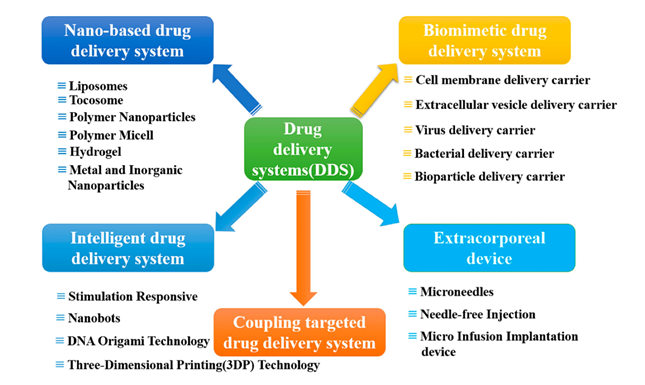
Figure 1: Schematic classification of Novel Drug Delivery Systems (NDDS) according to carrier type, delivery devices, targeting strategies, and routes of administration.
This review aims to provide a comprehensive overview of recent developments in Novel Drug Delivery Systems across multiple interdisciplinary domains. Particular emphasis is placed on carrier-based targeted delivery platforms, intelligent drug delivery technologies, and advanced drug delivery devices. Furthermore, the review discusses key technological challenges and highlights emerging research directions that may facilitate the successful clinical translation and broader application of next-generation drug delivery systems³????.
SIGNIFICANCE OF NOVEL DRUG DELIVERY SYSTEMS
Novel Drug Delivery Systems (NDDS) have become a fundamental component of modern pharmaceutical research due to their ability to enhance therapeutic efficiency and improve overall treatment outcomes. These advanced delivery technologies are designed to overcome many of the limitations associated with conventional dosage forms, such as poor bioavailability, rapid drug metabolism, and non-specific distribution within the body. By utilizing innovative carrier systems and controlled release mechanisms, NDDS enable the precise delivery of drugs to targeted tissues while maintaining optimal therapeutic concentrations over an extended period of time¹,².
One of the most important advantages of NDDS is their capacity to significantly improve the bioavailability of drugs, particularly those that exhibit poor aqueous solubility or limited permeability across biological membranes. Through the use of nanocarriers, liposomal systems, and polymer-based delivery platforms, drugs can be protected from premature degradation and transported efficiently to the desired site of action³??. In addition, these systems are capable of providing controlled and sustained drug release, which helps maintain consistent plasma drug levels and reduces fluctuations associated with conventional immediate-release formulations?.
Another significant benefit of NDDS lies in their ability to enhance the stability of therapeutic agents. Many drugs, especially peptides, proteins, and other biologically active molecules, are susceptible to enzymatic degradation and chemical instability. Advanced delivery systems such as nanoparticles, microspheres, and nanocapsules can encapsulate these molecules and protect them from unfavourable physiological conditions, thereby preserving their pharmacological activity and extending their therapeutic lifespan???.
Furthermore, NDDS contribute substantially to improved patient adherence and treatment convenience. By enabling sustained or targeted drug release, these systems often reduce the frequency of drug administration, which in turn enhances patient compliance and overall treatment effectiveness. Reduced dosing frequency is particularly beneficial in the management of chronic diseases, where long-term therapy is required¹?.
From an industrial and economic perspective, the implementation of novel drug delivery technologies can also increase the therapeutic and commercial value of pharmaceutical products. The development of innovative delivery platforms not only improves clinical performance but also extends product life cycles, enhances market competitiveness, and provides opportunities for reformulation of existing drugs with improved therapeutic profiles¹¹.
CLASSIFICATION OF NOVEL DRUG DELIVERY SYSTEMS
Novel Drug Delivery Systems (NDDS) can be categorized according to several criteria, including the nature of the carrier system, the type of delivery device utilized, targeting mechanisms, and the route of administration. Such classification facilitates the rational selection of an appropriate delivery platform based on the physicochemical properties of the drug molecule, therapeutic objectives, and the intended site of pharmacological action. By tailoring the delivery strategy to these parameters, NDDS can significantly improve therapeutic efficacy, reduce systemic toxicity, and enhance patient adherence to treatment regimens.
Table 1: Major advantages associated with various Novel Drug Delivery System approaches
|
Category |
Examples |
Benefits |
|
Carrier-based systems |
Liposomes, Niosomes |
Enhanced drug solubility, improved stability, and targeted delivery |
|
Device-based systems |
Microneedles, Implantable devices |
Minimally invasive administration and better patient adherence |
|
Target-oriented systems |
Ligand-modified carriers |
Improved selectivity with reduced off-target toxicity |
|
Route-specific systems |
Oral, pulmonary, ocular systems |
Site-specific drug delivery with optimized therapeutic performance |
CARRIER-BASED DRUG DELIVERY SYSTEMS
Carrier-mediated delivery platforms represent one of the most extensively investigated strategies within NDDS. These systems employ specialized carriers such as vesicles, nanoparticles, or polymeric matrices to transport therapeutic agents to specific biological targets. Carrier-based approaches not only enhance drug solubility and stability but also enable controlled release and improved pharmacokinetic performance, ultimately leading to superior therapeutic outcomes.
LIPOSOMES
Liposomes are spherical vesicular structures composed of phospholipid bilayers that enclose an aqueous core. Owing to their unique structural organization, these nanocarriers are capable of entrapping hydrophilic compounds within the internal aqueous compartment while simultaneously incorporating lipophilic molecules within the lipid bilayer. This dual encapsulation capability contributes to enhanced drug stability and reduces unintended distribution to non-target tissues³??.
Since their introduction, liposomal formulations have evolved considerably and have successfully progressed from experimental systems to clinically approved therapeutic products. Liposome-based drug delivery platforms have demonstrated significant clinical benefits, particularly in the management of cancer, infectious diseases, and vaccine development. Furthermore, lipid-based nanoparticles demonstrate improved tissue penetration and improved biodistribution characteristics. For example, resveratrol formulated as solid lipid nanoparticles demonstrated markedly increased uptake in brain tissue in experimental animal models, while also reducing systemic toxicity compared to conventional formulations?.
Liposomes continue to be among the most widely explored nanocarriers because of their favourable biological properties, including minimal toxicity, excellent biocompatibility, and biodegradability. In addition, the phospholipid bilayer provides protection to encapsulated drug molecules against enzymatic degradation and metabolic inactivation, thereby improving therapeutic stability and bioavailability?.
Despite these advantages, certain limitations still hinder the widespread application of liposomal systems. Issues such as relatively low drug-loading capacity, susceptibility to physical and chemical instability, and inconsistent accumulation at tumour sites remain important challenges?. Consequently, recent research in lipid-based drug delivery has focused on improving targeting capability and developing stimulus-responsive liposomal systems. Advanced liposomes capable of responding to external or internal stimuli - such as temperature changes, ultrasound exposure, or enzyme activity - are currently being explored to achieve precise, site-specific drug release and improved therapeutic efficiency?.
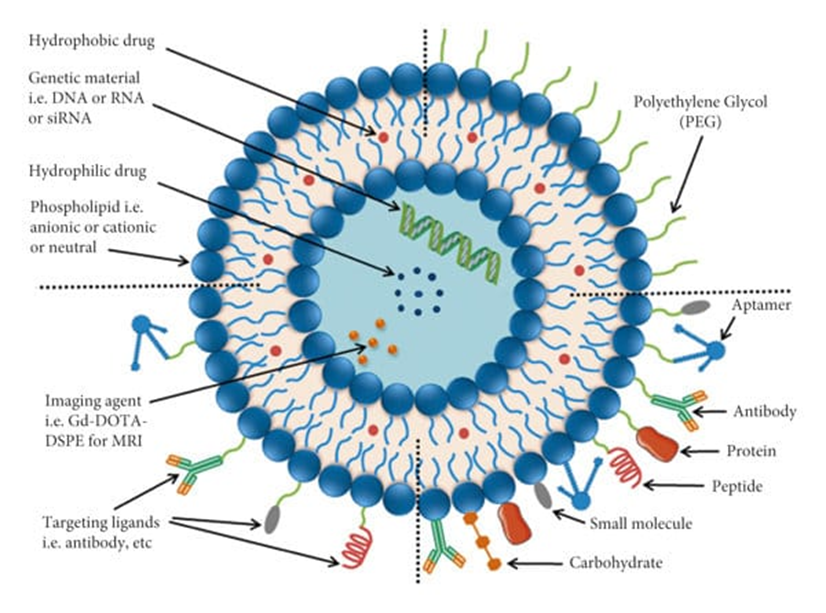
Figure 2: Schematic representation of a multifunctional PEGylated targeted liposome designed for drug and gene delivery.
The schematic highlights several strategies employed to enhance liposomal functionality. Conventional liposomes generally lack surface modifications and therefore exhibit relatively short circulation times in systemic circulation. In contrast, PEGylated liposomes incorporate polyethylene glycol chains on their surface, which significantly improves stability and prolongs circulation by reducing recognition by the reticuloendothelial system. Additionally, targeting ligands can be conjugated to the liposomal surface to enable selective interaction with specific cellular receptors. In certain advanced formulations, multiple ligands may be incorporated simultaneously to further improve targeting precision and delivery efficiency?.
NIOSOMES
Niosomes are nanoscale vesicular carriers composed primarily of non-ionic surfactants in combination with cholesterol or related sterols. These components self-assemble into bilayer vesicular structures capable of encapsulating both hydrophilic and lipophilic therapeutic agents. Structurally, niosomes resemble liposomes; however, the use of synthetic surfactants generally confers improved chemical stability and reduced cost of formulation.
Depending on the preparation method and surfactant composition, niosomes may be produced as uniflagellar vesicles containing a single bilayer or as multilamellar vesicles consisting of multiple concentric bilayers. The incorporation of cholesterol within the bilayer plays a critical role in enhancing membrane rigidity, improving structural stability, and increasing drug retention capacity. Due to their ability to accommodate a wide range of pharmaceutical agents, niosomes have been widely investigated as carriers for drugs, hormones, vaccines, and antigenic substances used in immunotherapy¹¹.
ADVANTAGES OF NIOSOMES
Niosomal vesicles offer several important advantages that contribute to their growing interest in pharmaceutical research and drug delivery applications:
RECENT ADVANCES IN NOVEL DRUG DELIVERY SYSTEMS
In recent years, significant progress in Novel Drug Delivery Systems (NDDS) has been driven largely by the integration of nanotechnology and advanced biomaterials. These developments aim to overcome the limitations associated with conventional drug therapy, such as poor solubility, low bioavailability, rapid systemic clearance, and non-specific drug distribution. Nanotechnology-based delivery platforms have enabled the design of sophisticated carrier systems capable of improving drug stability, enhancing tissue targeting, and optimizing therapeutic performance, particularly in the treatment of complex diseases such as cancer.
Various nanocarrier platforms—including nanoparticles, dendrimers, polymeric micelles, liposomes, polymer–drug conjugates, exosomes, and polymersomes—have been extensively investigated for their ability to improve drug delivery efficiency while reducing systemic toxicity and adverse effects¹?. These advanced systems offer controlled drug release, improved pharmacokinetics, and enhanced cellular uptake, thereby increasing therapeutic effectiveness.
Breast cancer represents the most frequently diagnosed malignancy among women worldwide and continues to be a major contributor to cancer-related mortality despite considerable progress in screening, diagnosis, and treatment. According to reports from the International Agency for Research on Cancer (IARC), millions of new cases are diagnosed annually across the globe. The disease typically arises from epithelial cells located within the terminal ductal lobular unit of the breast. Clinically, breast cancer is categorized into non-invasive and invasive forms. Non-invasive tumours remain confined within the basement membrane of the ductal or lobular structures, whereas invasive breast cancers penetrate surrounding tissues and possess the ability to metastasize to distant organs¹¹.
RECENT ADVANCES IN NIOSOMES
Recent innovations in niosomal drug delivery systems have primarily focused on improving vesicle stability, enhancing site-specific targeting, and achieving precise control over drug release kinetics. Advances in surface engineering techniques have enabled the modification of niosomes with targeting ligands such as peptides, antibodies, and other biomolecules. These modifications facilitate receptor-mediated uptake and improve drug accumulation at diseased tissues while minimizing unwanted systemic exposure.
In addition, the development of stimuli-responsive niosomes has attracted considerable interest. These advanced vesicles are capable of responding to specific environmental triggers such as pH variations, temperature changes, or enzymatic activity, enabling localized drug release at the target site.
The application of modern pharmaceutical design strategies, including Quality by Design (QbD) and Design of Experiments (DoE) methodologies, has further enhanced the development of niosomal formulations. These approaches allow systematic optimization of formulation parameters, thereby improving reproducibility, scalability, and drug bioavailability. Such developments highlight the increasing relevance of niosomes in contemporary drug delivery research¹².
Major recent developments include:
RECENT ADVANCES IN LIPOSOMES
Recent progress in liposomal drug delivery systems has largely centered on the development of long-circulating and targeted formulations designed to improve therapeutic selectivity. Nano-enabled liposomal carriers have become highly valuable in cancer therapy because they address several limitations associated with traditional chemotherapeutic regimens, including poor aqueous solubility, rapid systemic elimination, and lack of site-specific delivery.
Liposomes have received substantial research attention due to their excellent biocompatibility, reduced toxicity, high drug-loading capability, and ability to enhance drug bioavailability. Contemporary research is focused on developing stealth liposomes and actively targeted liposomal formulations that can evade immune clearance while selectively delivering drugs to tumour tissues.
PEGylated liposomes, for instance, exhibit prolonged circulation time by reducing recognition by the mononuclear phagocyte system. Similarly, ligand-targeted liposomes enable receptor-mediated drug delivery to specific tumour cells, thereby improving therapeutic efficacy and minimizing adverse effects¹³.
Notable advancements include:
RECENT ADVANCES IN NANOPARTICLES
Nanoparticle-based drug delivery systems have witnessed remarkable progress over the past decade, leading to the development of several clinically approved chemotherapeutic formulations for breast cancer and other malignancies. Numerous additional nanoparticle systems are currently undergoing clinical investigation for improved therapeutic performance¹?.
These platforms include drug-loaded nanoparticles, liposomal nanoparticles, and polymeric nanoparticle systems designed to improve drug solubility and targeted delivery. Polymeric nanoparticles are typically prepared using biocompatible and biodegradable polymers such as poly(lactic-co-glycolic acid) (PLGA), polyethylene glycol (PEG), polyvinyl alcohol, chitosan, and cellulose derivatives. Such polymers enable the fabrication of stable nanoparticles that can be easily modified on their surface to enhance targeting capability¹?.
Nanoparticles offer several advantages, including high drug-loading capacity, controlled and sustained drug release profiles, and scalability suitable for industrial production¹?. PLGA-based nanoparticles, in particular, have demonstrated the ability to inhibit P-glycoprotein efflux pumps, thereby helping to overcome multidrug resistance (MDR), which is a major challenge in cancer chemotherapy.
Furthermore, nanoparticle-mediated combination therapy allows simultaneous delivery of multiple therapeutic agents, thereby improving treatment outcomes and reducing the likelihood of resistance development. However, the in vivo performance of these systems is influenced by factors such as tumour heterogeneity, vascular permeability, and drug diffusion within tumour tissues. For this reason, patient-derived xenograft models are increasingly utilized in preclinical studies as they more closely mimic the native tumour microenvironment.
Key benefits include:
RECENT ADVANCES IN MICROSPHERES
Microsphere-based drug delivery systems have gained attention as advanced platforms capable of providing controlled, targeted, and sustained drug release. These spherical particles can encapsulate therapeutic agents within biodegradable polymer matrices, allowing gradual drug release over extended periods.
Biodegradable polymers such as polylactic acid (PLA) and poly(lactic-co-glycolic acid) (PLGA) are widely employed for the fabrication of microspheres. These polymers undergo controlled hydrolytic degradation, producing non-toxic metabolic by-products while maintaining sustained drug release profiles²?.
Microsphere formulations can be administered through multiple routes—including oral, injectable, and inhalational pathways—providing considerable formulation flexibility. In oncological applications, PLGA-based microspheres have demonstrated promising results in delivering chemotherapeutic agents locally at tumour sites, thereby reducing systemic toxicity and improving therapeutic safety and efficacy²¹.
Important advantages include:
RECENT ADVANCES IN DENDRIMERS
Small interfering RNA (siRNA) has emerged as a promising therapeutic modality in gene therapy due to its ability to selectively silence disease-associated genes. However, effective intracellular delivery of siRNA remains a major challenge because of its instability and poor cellular uptake.
Dendrimers are highly branched, nanoscale synthetic macromolecules that possess a well-defined three-dimensional architecture. Their unique structural characteristics provide multiple surface functional groups that enable high drug-loading capacity, efficient gene encapsulation, and controlled drug release.
Because of these properties, dendrimers have attracted significant attention as carriers for nucleic acid delivery, including RNA interference (RNAi) therapeutics. Recent studies have also demonstrated the ability of dendrimer-based nanocarriers to deliver CRISPR/Cas9 gene-editing components to specific target cells, thereby opening new possibilities for precision medicine and advanced gene therapy strategies²²,²³.
Recent developments include:
COMPARISON OF NOVEL DRUG DELIVERY SYSTEMS
Each Novel Drug Delivery System (NDDS) possesses unique advantages and limitations related to formulation complexity, targeting capability, toxicity profile, and manufacturing feasibility. The selection of an appropriate NDDS depends on multiple factors, including the physicochemical characteristics of the drug molecule, desired release kinetics, route of administration, and therapeutic objectives.
Table 2: Comparative overview of selected novel drug delivery systems
|
NDDS |
Composition |
Advantages |
Limitations |
Applications |
|
Liposomes |
Phospholipid bilayer vesicles |
Biocompatible, capable of encapsulating hydrophilic and lipophilic drugs, suitable for targeted delivery |
High production cost, possible physical instability |
Cancer therapy, vaccines, gene delivery |
|
Niosomes |
Non-ionic surfactant vesicles |
Chemically stable, cost-effective, capable of controlled drug release |
Limited drug loading for certain molecules |
Oral, transdermal, topical drug delivery |
|
Nanoparticles |
Polymeric or inorganic materials |
High drug loading capacity, sustained release, targeting potential |
Possible toxicity and complex formulation processes |
Cancer therapy, diagnostics |
|
Microspheres |
Biodegradable polymer matrices |
Prolonged drug release and reduced dosing frequency |
Initial burst drug release may occur |
Long-acting injectable formulations |
|
Dendrimers |
Highly branched polymeric macromolecules |
Precise size control and high encapsulation efficiency |
Potential toxicity at higher generations |
Targeted drug and gene delivery |
CHALLENGES AND LIMITATIONS OF NOVEL DRUG DELIVERY SYSTEMS (NDDS)
Despite the remarkable progress in the development of Novel Drug Delivery Systems (NDDS), several scientific, technical, regulatory, and economic challenges continue to limit their widespread clinical application. Although NDDS offers improved therapeutic efficacy, targeted drug delivery, and reduced adverse effects, the translation of these systems from laboratory research to commercial pharmaceutical products remains complex.
One of the primary limitations of NDDS is the complex formulation process. Many advanced drug delivery systems such as nanoparticles, liposomes, dendrimers, and polymeric micelles require sophisticated manufacturing techniques and specialized equipment. The reproducibility of these formulations at a large industrial scale is often difficult to achieve. Minor variations in production parameters may significantly influence particle size, drug loading efficiency, and release kinetics, which can ultimately affect therapeutic outcomes¹².
Another major challenge is stability and storage issues. Several nanocarriers and lipid-based delivery systems are prone to physical and chemical instability during storage. Factors such as temperature fluctuations, oxidation, hydrolysis, and aggregation may compromise the structural integrity of the delivery system. Consequently, maintaining long-term stability while preserving drug efficacy remains a significant hurdle in NDDS development³.
The toxicity and biocompatibility of novel carriers also pose important concerns. While many nanomaterials demonstrate promising drug delivery properties, their long-term safety profile in the human body is not always fully understood. Some nanoparticles may accumulate in vital organs such as the liver, spleen, or lungs, potentially leading to unintended toxicity. Therefore, comprehensive toxicological evaluations are required before clinical implementation?.
Regulatory approval represents another critical limitation. Regulatory agencies demand extensive preclinical and clinical data to ensure the safety, efficacy, and quality of novel delivery systems. The absence of standardized regulatory guidelines for many emerging nanotechnology-based drug delivery platforms often leads to delays in product approval and commercialization?.
Economic considerations further limit the adoption of NDDS technologies. The development and manufacturing costs of sophisticated drug delivery systems are significantly higher compared to conventional dosage forms. These high costs may restrict accessibility in developing countries and limit large-scale production?.
Table 3: Major Challenges Associated with Novel Drug Delivery Systems
|
Challenge |
Description |
Impact on Drug Development |
|
Complex formulation |
Advanced technologies required for preparation |
Difficulty in large-scale manufacturing |
|
Stability issues |
Susceptible to aggregation, oxidation, and degradation |
Reduced shelf life |
|
Toxicity concerns |
Possible accumulation of nanomaterials in organs |
Safety concerns |
|
Regulatory barriers |
Lack of universal regulatory framework |
Delayed approval |
|
High cost |
Expensive materials and production processes |
Limited commercial accessibility |
FUTURE PERSPECTIVES OF NOVEL DRUG DELIVERY SYSTEMS
The future of drug delivery research is strongly focused on the development of highly efficient, targeted, and patient-friendly therapeutic systems. Advances in biotechnology, nanotechnology, and pharmaceutical engineering are expected to significantly enhance the design and performance of NDDS.
One promising direction is the integration of nanotechnology in targeted drug delivery. Nanocarriers such as liposomes, polymeric nanoparticles, dendrimers, and solid lipid nanoparticles are capable of delivering drugs directly to specific tissues or diseased cells. This targeted approach can minimize systemic toxicity and maximize therapeutic effectiveness, particularly in the treatment of cancer and chronic diseases?.
Another emerging field is stimuli-responsive drug delivery systems, also known as smart drug delivery systems. These systems are designed to release drugs in response to specific physiological triggers such as pH changes, temperature variations, enzymatic activity, or external stimuli like light and magnetic fields. Such intelligent systems have the potential to significantly improve treatment precision and reduce adverse drug reactions?.
Personalized medicine is also expected to play a crucial role in the future development of NDDS. With advancements in genomics and pharmacogenomics, drug delivery systems can be tailored according to an individual's genetic profile and disease characteristics. This approach allows optimized therapeutic outcomes with minimal side effects?.
Furthermore, the use of biodegradable and biocompatible polymers is gaining considerable attention. These materials enable controlled drug release while minimizing toxicity and environmental impact. Natural polymers such as chitosan, alginate, and gelatine are increasingly being explored for safer and more sustainable drug delivery applications¹?.
In addition, artificial intelligence (AI) and machine learning technologies are beginning to influence drug delivery research. These computational tools can assist in predicting drug release patterns, optimizing formulation parameters, and accelerating drug discovery processes¹¹.
Table 4: Emerging Technologies in Future Drug Delivery Systems
|
Technology |
Key Feature |
Potential Application |
|
Nanotechnology-based carriers |
Targeted and controlled drug release |
Cancer therapy |
|
Stimuli-responsive systems |
Drug release triggered by physiological signals |
Smart therapeutics |
|
Personalized drug delivery |
Patient-specific therapy |
Precision medicine |
|
Biodegradable polymers |
Safe and eco-friendly materials |
Sustained drug delivery |
|
AI-assisted drug design |
Computational optimization of formulations |
Rapid drug development |
CONCLUSION
Novel Drug Delivery Systems represent a transformative advancement in modern pharmaceutical science. These systems have significantly improved the therapeutic performance of many drugs by enhancing bioavailability, enabling targeted delivery, and minimizing adverse effects. Technologies such as nanoparticles, liposomes, polymeric carriers, and controlled release systems have expanded the possibilities of effective treatment for various acute and chronic diseases.
However, despite the considerable advantages offered by NDDS, several challenges remain to be addressed. Issues related to formulation complexity, stability, toxicity, regulatory approval, and economic feasibility continue to limit the full potential of these technologies. Continuous research and innovation are essential to overcome these limitations and ensure the successful translation of novel delivery systems into clinical practice.
Future advancements in nanotechnology, biotechnology, artificial intelligence, and personalized medicine are expected to revolutionize drug delivery strategies. These developments will not only improve therapeutic efficiency but also enhance patient compliance and treatment outcomes. With sustained interdisciplinary research and improved regulatory frameworks, NDDS is anticipated to play a crucial role in shaping the future of pharmaceutical therapeutics.
REFERENCES

S. Yalisai Arasu, Recent Advances in Novel Drug Delivery Systems: Challenges and Future Perspectives, Int. J. of Pharm. Sci., 2026, Vol 4, Issue 3, 2853-2868. https://doi.org/10.5281/zenodo.19198972
 10.5281/zenodo.19198972