
Shri Laxmanrao Mankar Institute of Pharmacy Amgaon
Prodrugs are bio reversible, inactive drug derivatives, which have the ability to convert into a parent drug in the body. In the past, prodrugs were used as a last option; however, nowadays, prodrugs are considered already in the early stages of drug development. Optimal prodrug needs to have effective absorption, distribution, metabolism, and elimination (ADME) features to be chemically stable, to be selective towards the particular site in the body, and to have appropriate safety. Traditional prodrug approach aims to improve physicochemical/biopharmaceutical drug properties; modern prodrugs also include cellular and molecular parameters to accomplish desired drug effect and site-specificity. Here, we present recently investigated prodrugs, their pharmaceutical and clinical advantages, and challenges facing the overall prodrug development. Given examples illustrate that prodrugs can accomplish appropriate solubility, increase permeability, provide site-specific targeting (i.e., to organs, tissues, enzymes, or transporters), overcome rapid drug metabolism, decrease toxicity, or provide better patient compliance, all with the aim to provide optimal drug therapy and outcome. Overall, the prodrug approach is a powerful tool to decrease the time/costs of developing new drug entities and improve overall drug therapy
The term prodrug refers to a pharmacologically inactive compound that is converted to an active drug by a metabolic biotransformation which may occur prior, during and after absorption or at specific target sites within the body.1 The concept of “prodrug” was first introduced by Adrian Albert in 1958 to describe compounds that undergo biotransformation prior to eliciting their pharmacological effect i.e. "therapeutic agents that are inactive but can be transformed into one or more active metabolites." The prodrug design approach is also referred to as “Drug Latinisation”.Almost all the drugs possess undesirable physiochemical and biological properties such as poor bioavailability, incomplete absorption, adverse effects, first pass metabolism etc. The therapeutic efficacy of these drugs can be easily improved by eliminating the above discussed problems and these problems can be removed by using physical, chemical or biological means. The physical means include introduction of controlled release formulation such as sustained release, prolong release formulation etc. The biological approach is to alter the route of administration which may or may not be acceptable to patient. The third and the last approach is the chemical means which include introduction of prodrug which is best among physical and biological means.
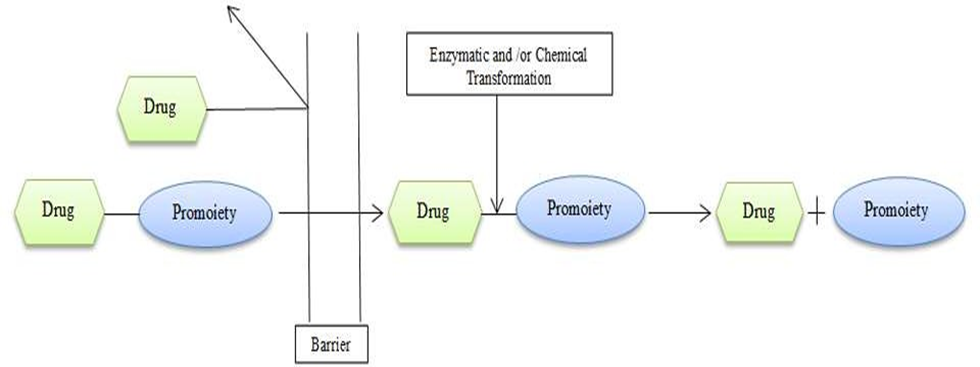
Fig: - Fate of Prodrug Approach
Prodrugs are bio reversible, inactive drug derivatives that can change into their active parent drug inside of a person's body. The prodrug strategy is used to get around biopharmaceutical, pharmacokinetic, or pharmacodynamics barriers, such as poor chemical stability, solubility restrictions, a lack of site-specificity, extensive drug metabolism passing through biological barriers, utilising endogenous metabolic pathways, toxicity, or compliance barriers (unacceptable taste/Odor), all in favour of optimal oral bioavailability and a resulting therapeutic effect.
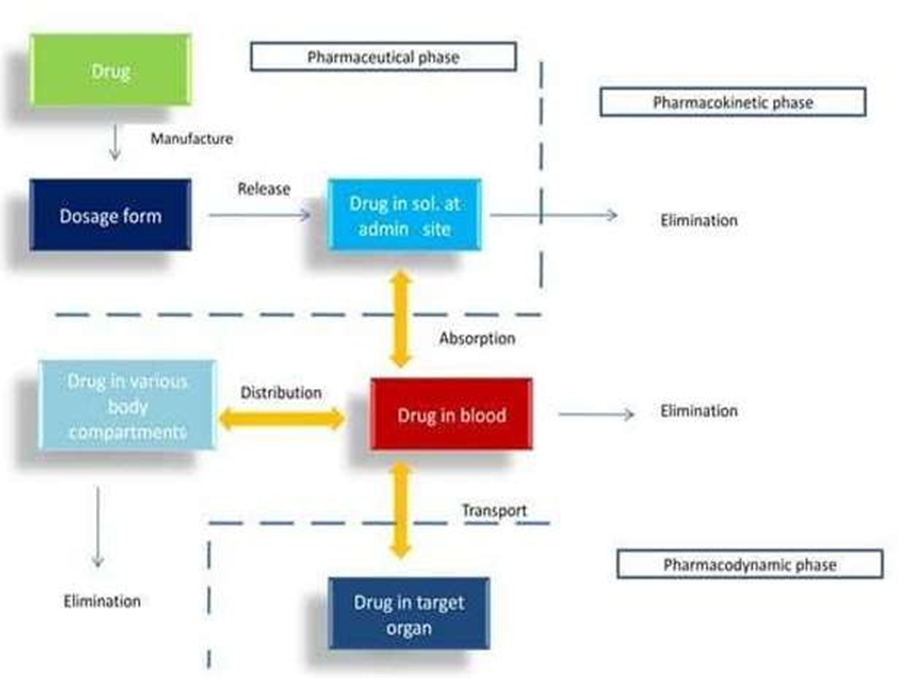
Fig: -Barriers to Therapeutic Utility of Drug
OBJECTIVES OF PRODRUG DESIGN: -
CLASSIFICATION OF PRODRUGS: -
Prodrugs can be categorized using a variety of different approaches. These might consist of those:
(1) based on therapeutic categories, such as prodrugs for cardiovascular disease, anti-cancer, antiviral, antibacterial, and nonsteroidal anti-inflammatory conditions.
(2) Depending on the types of chemical linkages or moiety/carriers that bind to the active substance, such as esoteric, glycoside, bipartite, and tripartite prodrugs, as well as enzymes that are driven by an antibody, gene, or virus.
(3) Based on functional categories and employing deliberate strategies to overcome limitations of the active drug; for instance, prodrugs to enhance site specificity, prodrugs to avoid high first-pass metabolism, prodrugs to enhance absorption, and prodrugs to lessen side effects.
A. Carrier – linked prodrugs.
B. Bio precursor prodrug.
(1) Carrier linked prodrug: -
It contains a group that can be easily removed enzymatically (such as ester) to reveal the true drugs. Ideally the groupremoved is pharmacologically inactive and nontoxic while the connecting bond must be labile for efficient activation in vivo. Carrier linked prodrug consists of the attachment of a carrier group to the active drug to alter its physicochemical properties.
Depending upon the nature of carrier used it can be classified as:
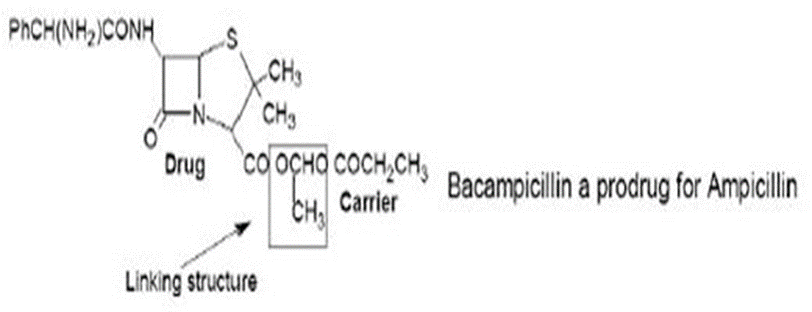
This prodrug consists of the active drug covalently linked to an inert carrier or transport moiety, generally ester or amide. Such prodrugs have greatly modified lipophilicity due to the attached carrier. The active drug is released by hydrolytic cleavage either chemically or enzymatically. The Prodrug and carrier released after in vivo enzymatical or non-enzymatical attack must be nontoxic.
b) Tripartite Prodrug: In this the drug moiety is not directly attached to the carrier moiety. First the drug moiety is attached with the linker and then this linker is attached with carrier.Theranogels: Idea and Design [13,14].
c) Macromolecular prodrugs: Where macromolecules like polysaccharides, dextran, cyclodextrins, proteins, peptides and polymers are used as carriers.
d) Site- specific prodrugs: Where a carrier acts as a transporter of the active drug to a specific targeted site.
e) Mutual prodrug: Where the carrier used is another biologically active drug instead of some inert molecule. A mutual prodrug consists of two pharmacologically active agents coupled together so that each act as a promoiety for the other agent and vice versa. The carrier selected may have the same biological action as that of the parent drug and thus might give synergistic action, or the carrier may have some additional biological action that is lacking in the parent drug, thus ensuring some additional benefit.
The carrier may also be a drug that might help to target the parent drug to a specific site or organ or cells or may improve site specificity of a drug. The carrier drug may be used to overcome some side effects of the parent drugs as well.
(2) Bio precursor/Metabolic precursor:
This approach does not include any carrier molecule. In this an inactive drug undergoing chemical modification to convert into a compound which itself is active drug or further metabolized into active form which have a desired therapeutic efficacy.The chemical reaction occurs in this process include oxidation or reduction. (e.g. amine to aldehyde to carboxylic acid).
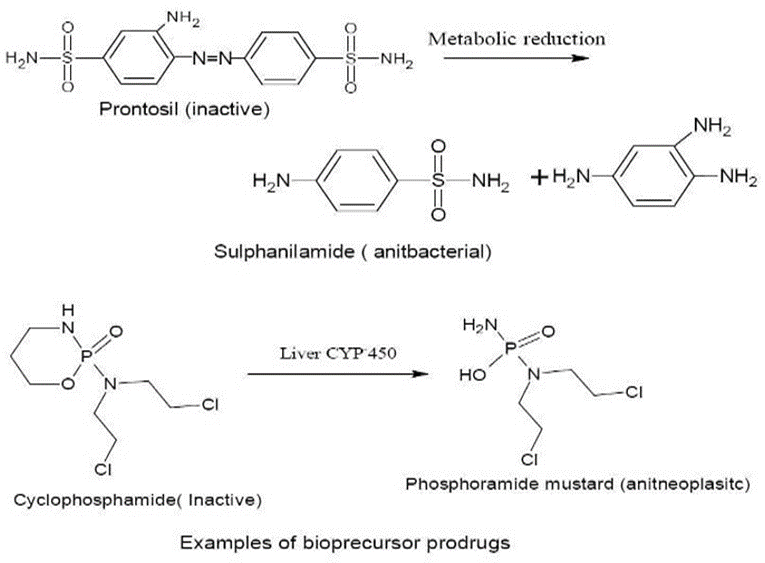
Prodrug Activation: - Prodrug design is the activation process that, in order to achieve the therapeutic goal, efficiently and characterized by releases the active parent drug from the prodrug. Prodrug activation can be based on chemical processes (such as oxide-reduction) or can occur through enzyme-mediated hydrolysis. Oxidoreductases, such as cytochrome P450, hydrolytic enzymes, such as carboxylesterases, phosphatases, and esterases, transferases, and lyases can all be used in prodrug activation.
|
Prodrug |
Chemical formula |
Therapeutic Uses |
|
Remdesivir |
C27H35N6O8P |
Coronavirus disease 2019 (COVID-19) in adults and adolescents with pneumonia requiring supplemental oxygen |
|
OBI-3424 |
C21H25N4O6P |
Relapsed/Refractory T- cell acute lymphoblastic leukaemia, hepatocellular carcinoma, and castrate-resistant prostate cancer |
|
Baloxavir marboxil |
C27H23F2N3O7S |
Influenza |
|
Selexipag |
C26H32N4O4S |
Pulmonary Arterial Hypertension |
|
Valacyclovir |
C13H20N6O4 |
Herpesvirus |
|
Gabapentin enalapril |
C16H27NO6 |
Restless leg syndrome, postherpetic neuralgia |
|
NUC-1031 |
C25H27F2N4O8P |
Advanced biliary tract cancer |
|
Tenofovir alafenamide |
C25H27F2N4O8P |
HIV/AIDS and chronic hepatitis |
FUNCTIONAL GROUPS AMENABLE TO PRODRUG DESIGN: -
Ideally, the design of an appropriate prodrug structure should be considered at the early stages of preclinical development, bearing in mind that prodrugs might alter the tissue distribution, efficacy and the toxicity of the parent drug. Several important factors should be carefully examined when designing a prodrug structure, including
Parent drug: - Which functional groups are amenable to chemical prodrug derivatization.
Promoiety: - This should ideally be safe and rapidly excreted from the body. The choice of promoiety should be considered with respect to the disease state, dose and the duration of therapy.
Parent and Prodrug: - The absorption, distribution, metabolism, excretion and pharmacokinetic properties need to be comprehensively understood. Some of the most common functional groups that are amenable to prodrug design include carboxylic, hydroxyl, amine, phosphate/phosphonate and carbonyl groups. Prodrugs typically produced via the modification of these groups include esters, carbonates, carbamates, amides, phosphates and oximes.
Prodrug Incorporated Drug Delivery: - The colloidal drug delivery system works as a controlled and sustained delivery by releasing the encapsulated drug while in circulation or after the recognition by cell, so it is necessary that the delivery system must contain maximum quantity of drug for optimum efficacy.
Liposome: - Liposomes consist of lipid bilayer in which between lipid bilayer intervening water molecules are present. The drug is incorporated into either aqueous compartment or in the lipid bilayer as the drug has its physicochemical property. The less hydrophobic drug exhibit low entrapment efficiency and making them more hydrophobic by derivative of fatty acids, improves the entrapment efficiency of delivery system e.g. the triamcinolone palmitate (prodrug) showed 85% entrapment efficiency as compared to triamcinolone acetonide which has 5% entrapment efficiency.
Lipoprotein: - Lipoprotein are endogenous transporter of lipids in the circulation, they are nonimmunogenic escapes recognition by reticuloendothelial system.Their structural components are Neo HDL particles consisting of nonpolar triglyceride core surrounded by phospholipids monolayer in which specific apoprotein are imbedded. Since apoprotein are necessary for the recognition of LDL so drug should be into the lipid moiety but most of the drug has not sufficient lipophilic so there is need to prepare lipophilic prodrug.
Emulsion: - The oil in water emulsion are used as sustained drug delivery, by passing targeted to macrophages and active targeting by ligand attachment, so in this case the lipophilicity of the drug is necessary to make as oil in water emulsion as sustained delivery system e.g. Esterified phenolic hydroxy derivative of etoposide is used as lipophilic prodrug which is soluble in lipid emulsion in which cholesteryl ester oil used as oil component.
Solid Lipid Nanoparticle: - Solid lipid nanoparticle consisted of high melting point triglyceride as the solid core phospholipids coating. Its advantage over the other system is use of natural lipid and incorporation of drug in triglyceride core which may be applicable for prolonged release.
Methods of Evaluation of Prodrugs: - The pharmacokinetics (ADME) of drug is greatly influenced by physicochemical properties such as solubility, lipophilicity, pH, surface area, molecular weight of molecule. Out of this pH, solubility and Lipophilicity are the key factors in determining in vivo behaviour of drugs.
Solubility Measurement: - The solubility measurement is carried out by placing an excess amount of mutual prodrug in separate vials containing different solvents like 10 ml deionized water, n-hexane, phosphate buffer of different pH etc and then stirring at 37oC for 24 hours. The solutions are centrifuged for 5 min at 900 RPM and the supernatant is filtered with cellulose acetate membrane filters. The mutual prodrug concentration in each filtrate is determined by suitable analytical technique like HPAE-PAD/UV spectroscopy/HPLC after the appropriate dilution.
Determination of Partition Coefficients: - The partition coefficient between water or buffer and n-octanol or cyclohexane is the most widely used measure of chemical compound lipophilicity. Lipophilicity is a major structural factor governing both pharmacokinetics and pharmacodynamics of drugs. The partition coefficient of a chemical compound provides ammonium ions. Because the pH of urine in the bladder is mildly acidic, methenamine is used as a urinary tractantiseptic. To prevent hydrolysis of this prodrug in the acidic environment of the stomach the tablets are enteric coated.
In vitro pH Hydrolysis study: - Hydrolysis studies are carried out in aqueous buffer so as to study whether the prodrug hydrolyses in an aqueous medium and to what extent or not, suggesting the fate of mutual prodrug in the system. The kinetics of hydrolysis is monitored by the increase of free drug concentration with time and the order of the reaction and half-life (t1/2) are calculated.
APPLICATIONS OF PRODRUGS: -
i. Anticancer Agents: - Chemotherapeutic agent Paclitaxel was attached to poly (hydroxyl ethyl aspartamide) via a succinic spacer arm by a two-step protocol: synthesis of 2′-O-succinyl paclitaxel; and synthesis of PHEA-2′-O- succinyl paclitaxel. Investigation carried out using murine myeloid cell line showed that the polymeric prodrug maintains partial pharmacological activity of paclitaxel. The conjugate disappeared from the bloodstreammuch more quickly as compared to both free drug and naked polymer.
ii. In GIT problem: Colon Targeting: - For e.g. sulphonamide which is formed by coupling of diazotized sulphanilamide pyridine with 5-amino salicylic acid. On oral administration intact sulphonamide reaches the colon. The azo reductase associated with colonic microflora convert sulfasalazine to its constituent’s entities, the active species 5ASA available for absorption in colon, while preclinic absorption responsible for side effects is reduced.
iii. Immunomodulators: - Leflunomide is a novel immunomodulatory agent which exhibits a strong anti-inflammatory action. It is potent therapeutic agent in autoimmune diseases, graft rejection, and tumour therapy. It is isoxazole derivative as a prodrug and is completely converted to its active metabolite which blocks the dihydroorotate dehydrogenase, a key enzyme of the pyrimidine de novo synthesis
iv. Anti-Tubercular Agents: - Ethambutol (EB), isoniazid (INH) and p-amino salicylic acid (PAS) are potent antitubercular agents having various side effects due to formation of toxic metabolites. Mutual prodrugs of EB with PAS (PE), PAS with PAS (PP) and INH with PAS (PI) were synthesized and characterized. In vitro hydrolysis studies in SGF and SIF reveal that these mutual prodrug conjugates do not hydrolyse appreciably and are absorbed unhydrolyzed. In vivo studies showed greater serum concentrations of EB, PAS and INH than their concentrations when given alone and isoniazid concentrations were greater except for PP. Mutual prodrugs PI and PE significantly eliminate the problem of fast metabolism, toxicity and local irritation and reduction of therapeutic doses.
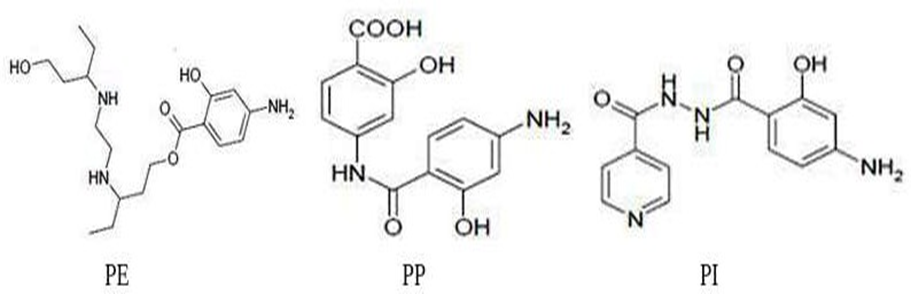
v. CNS Delivery: - PP The only prodrug that is used clinically for entering the brain predominantly through LAT1-mediated transport is L-dopa. The neurotransmitter dopamine is not able to cross the BBB due to its hydrophilic nature. However, the conversion of dopamine into its α-amino acid, L dopa, enables the brain to uptake dopamine via LAT1. L Dopa is decarboxylated into dopamine by L-amino acid decarboxylase in the brain tissue and also in the peripheral circulation. Although approximately 95% of L-dopa is metabolized to dopamine in the peripheral tissues, the percentage of remaining L-dopa has been therapeutically enough to apply this approach in clinic practice for more than 30 years.
vi. Ocular Delivery: - The drug pilocarpine was converted to its ester prodrug forms. Pilocarpic acid diester and monoester prodrug solution showed significant biological activity and longer duration of action than pilocarpine.
vii. For Treating Hypotension: - L-Threo-3,4-dihydroxyphenylserine (droxidopa) is a norepinephrine (NE) prodrug under development to treat orthostatic hypotension.
viii. Cholesterol-lowering Prodrug: - Simvastatin (SV) is a lactone prodrug which undergoes reversible metabolism. In the hydroxy acid form (SVA) it is a potent inhibitor of HMG-CoA reductase
ix. Antimicrobial Therapy: - Bacterial infections often create acidic microenvironments, which can be utilized for pH-responsive prodrug activation. For instance, pH-sensitive β-lactam antibiotics have been developed to enhance bacterial cell wall penetration.
x. Neurological Disorders: - The oxidative stress observed in neurodegenerative diseases such as Parkinson’s and Alzheimer’s can be exploited for redox-sensitive drug delivery. Prodrugs targeting ROS in the brain are being investigated for neuroprotection and disease-modifying therapy.
xi. Inflammatory Disorders: - Chronic inflammatory diseases, such as rheumatoid arthritis and inflammatory bowel disease, involve local acidification and oxidative stress, making them ideal targets for pH- and redox-responsive prodrugs. Methotrexate and corticosteroid prodrugs designed with acid-labile linkers have demonstrated improved efficacy in these conditions.
xii. Pharmaceutical Applications: -Pharmaceutical applications focus on improving a drug's physicochemical properties to enhance formulation and patient compliance. Prodrugs can mask unpleasant tastes or Odors by reducing the drug's solubility in saliva; for instance, Chloramphenicol palmitate is a tasteless prodrug of the bitter-tasting antibiotic. They also improve solubility for parenteral or ophthalmic use, as seenwith Postherniation, which is significantly more water-soluble than phenytoin and is used for emergency seizure management. Additionally, prodrugs can stabilize drugs that might otherwise degrade in the stomach's acidic environment or during storage.
xiii. Pharmacokinetic Applications: - Pharmacokinetic applications aim to optimize how the body absorbs and distributes a drug. Many prodrugs are designed to enhance oral bioavailability by increasing lipophilicity, allowing them to cross biological membranes more effectively. A prominent example is Valacyclovir, which achieves significantly higher intestinal absorption than its parent drug, acyclovir.
CHALLENGES IN PRODRUG DEVELOPMENT: -
Despite significant advancements, prodrug development still faces several challenges that hinder widespread adoption and success. These challenges range from pharmacokinetic unpredictability to regulatory hurdles, requiring multidisciplinary solutions
Advantages and Disadvantages of prodrugs
Advantages
Disadvantages
CONCLUSION: -
A prodrug represents a bioreversible derivative of an active drug, intentionally designed to be pharmacologically inactive upon administration but capable of undergoing enzymatic or chemical biotransformation in vivo to release the parent therapeutic agent. This approach overcomes key pharmaceutical challenges, including poor aqueous solubility, suboptimal bioavailability, gastrointestinal instability, unfavorable absorption profiles, or excessive toxicity, thereby enhancing the drug's pharmacokinetic (ADME) properties and targeted delivery to specific tissues. Prodrugs are classified into carrier- linked types, where a temporary carrier group (e.g., ester or amide) is cleaved post-absorption, and bioprecursor types, which involve metabolic rearrangement of the prodrug molecule itself; notable examples include enalapril (converted to enalaprilat for hypertension treatment) and codeine (metabolized to morphine for analgesia), comprising about 10% of marketed pharmaceuticals.
REFERENCES: -

Apurva K. Kapse*, R. T. Bhagat, Prodrug Concepts and it’s Applications in Pharmacy, Int. J. of Pharm. Sci., 2026, Vol 4, Issue 1, 3221-3232. https://doi.org/10.5281/zenodo.18397318
 10.5281/zenodo.18397318
