We use cookies to make sure that our website works properly, as well as some ‘optional’ cookies to personalise content and advertising, provide social media features and analyse how people use our site. Further information can be found in our Cookies policy
Numerous facets of lipstick manufacture have been covered in a sizable body of published literature. There isn't yet a published compilation of research on the manufacturing of lipsticks. The purpose of this review was to look at material regarding the history of lipsticks, the substances used to make them, with a particular emphasis on natural and chemical ingredients, the methods used to prepare the lipsticks, and the characteristics of the lipsticks. Web of Science, Scopus, PubMed, and Google Scholar were among the electronic databases that were searched in order to find Englishlanguage papers. All things considered, the data suggests that lipsticks are among the most popular cosmetics and have been around since antiquity.The results of this paper provide a summary of previous research that clarified the use of various constituent kinds in lipstick production methods. It emphasizes how crucial it is to make lipsticks with eco-friendly materials and technology to prevent possible negative effects like allergic reactions and skin irritation.
Keywords
Lipsticks; lipstick’s formulations; cosmetics; characterization of lipsticks; lipsticks methods of preparation..
Introduction
One of the most popular cosmetics is lipstick. Using lipstick can have positive social, psychological, and therapeutic effects [1]. Lipsticks color the lips and shield them from the outside world, enhancing a person's beauty and appeal. .Nonetheless, modern lip care products prioritize both aesthetic and, ideally, therapeutic benefits for customers' lips. As a result, medicated lipsticks with active medical substances began to appear on the market. The medicated Because lipsticks include an active medical substance, they may offer protection against bacterial infections.. This function complements lipsticks' current function of preventing lip cracking and chapping by providing moisture and emollient action [2].Herbs have been used more frequently lately in the manufacturing of cosmeceuticals for personal hygiene [3]. The current trend that encompasses both health and beauty care is herbal cosmetics, commonly referred to as natural cosmetics [4]. 5.The market is seeing an increase in demand for these goods because most consumers increasingly favor natural items over chemical ones [5].Natural cosmetics not only satisfy since they don't contain artificial chemicals and have comparatively less negative effects, but they also give the body nutrients and improve a person's health [6].Regular use of synthetic items including ingredients like lead, petrolatum, and phthalates may occasionally be detrimental to users. These products can lead to health issues like allergies, asthma, and cancer in addition to causing dry, chapped lips and lip irritations [7,8]. Eating and drinking while wearing lipstick or licking one's lips might exacerbate the issue. It is important to pay attention to dangerous substances like lead in lipsticks because of their neurotoxic nature and long-term exposure [9].In order to provide information on the history of lipsticks, the materials used in their creation (with a focus on natural and artificial substances), preparation techniques, and characterization, the current review's objective is to examine the data on lipsticks.[10]
HISTORY OF LIPSTICK
Around 3000 BC, men started adorning themselves with colors to draw in the animals they intended to hunt. In general, Raymond Reed, the founder of the US Society of Cosmetics, was the first to define the term "cosmeceuticals" in 1961.chemists.[11] Its root is the Greek word "kosmtikos," which translates to "decorating talent. Albert Kligman later used the term "cosmeceuticals" in 1984 to describe substances that have both therapeutic and cosmetic uses.[12]A wide variety of plants and herbs have been utilized to make cosmetics for aesthetic and environmental protection. Instead of harming the human body, the natural compounds included in cosmetics give it minerals and nutrition.Humans have been using lipsticks in particular for more than 500 years.[13]In ancient Mesopotamia, lipstick was initially found as a coarse piece of brick.The practice of lip coloring has been around since the prehistoric era.[14]In 1869, lipstick was initially sold in France as a cosmetic product derived from beeswax and animal fat.It was not until 1915 that lipstick became available in cylindrical metal tubes.Lipsticks are now a necessary item for a lot of customers.[15] A wide variety of colors and textures are available. This is evident from the fact that lipstick is marketed in hundreds of color variations to meet the growing demand.[16]
Advantage:
A mouth is truly defined by lipstick.
Keep your lips hydrated and protected.
Wearing lipsticks makes you appear well-groomed.
Applying lipstick makes your face appear thinner.
Even when eating, maintain the same lip.
protects your lips from changes in the weather. improves lip moisture.
Continue to moisturize your lips.
Disadvantage:
It does turn into a routine. It is difficult to get rid of. Errors are expensive. It may cause skin harm. You spend quite a bit of money on it. It could increase the sensitivity of the lip.[17] Lips might become darker if lipstick is worn constantly. Users might become accustomed to It conceals your natural lips. may lead to dry lips and skin conditions in that region.[18]A lot of lipsticks have ingredients that might cause the lips to dry out, which can result in flacking, cracking, and chapping.[19]
Ingredients of Lipstick
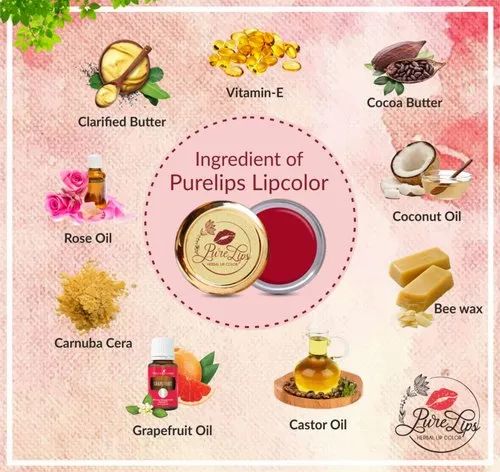
The ingredients used in lipsticks come from a variety of natural, synthetic, and hybrid sources.[20] In spite of this, the market offers both natural and synthetic lipstick ingredients. Lipsticks containing synthetic chemicals have the potential to cause severe side effects [21]. For instance, one of the most significant problems is the presence of lead in lipsticks and coloring additives.[22] Some people may experience adverse reactions to nickel and copper, two metals frequently found in cosmetics.[23] Herbal lipsticks frequently contain the following ingredients (Tables 1 and 2): castor oil, paraffin wax, beeswax, beet root juice, ripe fruit powder of shikakai, and lemon.oil, vanilla essence, and orange essence [24]. Previous research, however, suggests that there is a slight variation in the substances used to make lipsticks. A major component of lipstick manufacturing is the use of both natural and synthetic waxes.[25] The oil mixture must mix well with the waxes in order to produce an adequate film when the stick is placed to the lips [26]. The composition of the wax mixture is crucial. The best results are obtained by combining a variety of waxes with different melting points and adjusting the stick's final melting point by adding a suitable quantity of a high melting point wax.[27] Among the materials that undergo phase transition is paraffin wax. It is affordable, widely accessible, and has a large capacity for storing heat [28].In the first stage of making paraffin wax, solvent dewaxing vacuum distillates are followed by freezing and filtering to produce slack wax.[29] In this process, an industrial vacuum-rotary filter is used. Filtration is followed by fractionation, refinement, and separation of the slack wax from the residual solvent to produce white paraffin wax.[30] Therefore, the ability to produce fossil paraffin wax is closely linked to the manufacturing of lubricants and, more generally, the refining of crude oil [31]. Twenty healthy men and women participated in a four-week trial to examine the effects of the paraffin wax mask pack on their skin.[32] Therefore, it was determined that the paraffin wax mask pack would be very useful and valuable in the creation of skin care products and had positive effects on skin improvement .[33] Paraffin wax was employed as a hardening, stiffening, and glossing agent in lipsticks. To generate White mineral oils or liquid paraffin are also used to give a glossy appearance after application..[34,35] The two types of paraffin waxes—macrocrystalline and microcrystalline—have notable physical distinctions in a number of areas. In contrast to macrocrystalline wax, which is translucent, glossy, brittle, and slippery, microcrystalline wax is opaque, plastic, flexible, and sticky .[36] Because of its exceptional flexibility, viscosity, temperature endurance, and adhesive qualities, microcrystalline wax—which is made from heavy distillates—is utilized in many different industries, including metal casting, candles, cosmetics, and rubber compounds .[37] According to recent data, microcrystalline wax was used as a foundation and stiffening agent in the manufacturing of lipsticks. Shale and coal are used to make ozokerite wax [38].It aids in raising the stick's melting point . When applied, lipsticks with more than 10% ozokerite tend to crumble .[39] Ceresin wax, sometimes referred to as mineral wax, is a refined form of ozokerite made with sulfuric acid. Commercial products that blend pure ozokerite with various solid hydrocarbons to create waxes with different melting points are now referred to as ceresin wax.[40] In that it is used to raise a product's melting point, it is similar to ozokerite .
Beeswax: Also known as paraffin wax or carnauba The product's biological source is the honeycomb produced by honeybees and other bees.[41,42] The primary chemical components of the Apidae family are carbon (73.3°C), hydrogen (13.2°C), and oxygen (7.5°C). Uses: It provides a moisturizer that keeps your lips from drying out and cracking. Additionally, lip balm, lip gloss, and other products contain it.[43]
Coconut palm oil is another name for coconut oil. The oil extracted from the dried solid portion of the coconut's endosperm is its biological source. The palmaefamily Its chemical components include fatty acids, caprylic acid, capric acid, and others. Uses: It shields skin from ultraviolet radiation. It eased inflammation. It serves as a moisturizer.[44,45]
Olive oil: Another name for vegetable oil Biological source: It is a liquid fat made by pressing whole olives and removing the oil. Olives are a traditional tree crop in the Mediterranean Basin.[46] Family:oleceae Chemical constituents: It is composed mainly of triacylgycerol and contains small quantities of free fatty acid , glycerol, phosphatide, pigment and sterol.
Its uses include better hydration. its ability to soothe chapped and cracked lips. It provides SPF protection naturally. It maintains the moisture content of your lips. It utilized to revitalize the skin and eliminate dead skin from the lips.[47]
Linseed oil is another name for castor oil. It comes from the seeds of the castor bean and is a non-volatile fatty oil.[48] Fatty acids and neutral lipids make up the majority of its chemical composition.In the event that a solvent is used to dissolve bromo acid, the solution is first made and then put aside until it is needed. [49,50].
METHOD OF PREPARATION
If commercial color pastes are not utilized, castor oil can be used instead. The resulting color paste is run through a triple roller mill until it is smooth and devoid of grit and agglomerates.[51] After that, the color combination is combined with the base's constituents, which are all labeled and organized according to their melting points.[52] Until this mixture is flawlessly smooth, it is remilled. Lastly, the mass is gently agitated to prevent air entrapment after the scent has been introduced.[53] For large-scale production, an automatic ejection mold is the ideal option.Before the mass is poured into the mold, it is greased with either liquid paraffin or isopropyl myristate.[54] When the molds are cold, it's crucial to keep the coloring mass from settling. Stick removal is made easier by lubrication.[55] Lipsticks are often produced in tiny quantities. The following would be a typical production process:
The process vessel heats the oil to about 175 and 185 degrees Fahrenheit (80 and 85 degrees Celsius). Usually equipped with an anchor stirrer/scraper, the waxes are melted individually in a hemispherical jacketed vessel, sometimes referred to as a "kettle." To facilitate the procedure, some of the oil could be added to the kettle.[56]
The oil phase is supplemented with the wax phase.
The two phases are combined using a variety of mixers and dispersers.[57]
A triple roll mill, bead mill, or other typical mill is used to disperse the powdered pigment into a portion of the oil, creating a "pigment grind." The use of premicronized pigments is growing.[58]
These don't really need to be ground, but shearing might be necessary to break up any clumped particles.
Despite their higher price, ready-to-use liquid pigment dispersions are also frequently utilized.[59] Without any prior processing, these can be applied straight to the oils and waxes. • The oil/wax phase is combined with the ground pigment and stirred until a uniform result is obtained. Going through a colloid mill or something similar would be necessary for this. Before adding scents, preservatives, and other additives, the mixture is allowed to cool slightly.
Before being put into molds and allowed to cool to solidify, the final product is kept at a lower temperature.[60]
The sticks can be "flamed" to give the surface a shiny appearance.
EVALUATION OF HERBAL LIPSTICK
The formulations of herbal lipstick were tested using a number of characteristics, such as pH, skin irritation, melting and breaking points, and solubility tests, in order to maintain a uniform standard for the product.
Lipstick color: A physical examination was used to determine the lipstick's color.
pH: A digital pH meter was used to measure the herbal lipstick formulas' pH.
The formulations of herbal lipstick were tested using a number of characteristics, such as pH, skin irritation, melting and breaking points, and solubility tests, in order to maintain a uniform standard for the product.[61]
Skin irritation test: The substance was applied to the skin for ten minutes in order to accomplish this.
To find the melting point, place both ends of the lipstick into an open glass capillary tube. Next, enough lipstick was added to five capillary tubes, which are about 10 mm high and allow tubes to stand for the necessary amount of time and temperature in the capillary tube equipment. The melting point was then determined by measuring the temperature at which the lipsticks began to melt in the capillary tube. The procedures were repeated five times, and the average was calculated and presented.[62]
Determining the Breaking Point: The breaking point is used to calculate the strength of lipstick. One inch from the edge of the support, the lipstick was placed in a horizontal groove. The breaking point was determined by measuring the weight at which the lipstick broke after the weight was gradually increased by 10 grams over a 30-second period.
Surface anomalies: This was examined to identify any surface flaws, including fungus, mold contamination, and surface crystal formation.
Perfume stability: The herbal lipsticks' scent was evaluated after 30 days.
Determination of aging stability: The lipstick was placed in a hot air oven set at 40?C for an hour in order to evaluate its bleeding, surface crystallization, and ease of application. This was done to ensure that the results were accurate and consistent.
Solubility Test: The lipstick was dissolved in a variety of solvents to determine its solubility.[63]
CONCLUSION
Several natural substances and pigments were used to successfully create herbal lipsticks. the creation and assessment of herbal lipstick in an effort to reduce the negative effects caused by traditional synthetic lipsticks. It has been discovered that coloring pigments including turmeric, cocoa powder, raktachandan, and ratanjot are superior to synthetic ones, which may have various adverse effects. Although thorough clinical trials are necessary to determine formulation efficacy, it can be stated that lipsticks made with herbal substances have a better option for women and aim to reduce the adverse effects caused by the present synthetic ones.
REFERENCES
Draelos, Z. D. (2015). Cosmetics and Dermatologic Problems and Solutions (3rd ed.). CRC Press.
Butler, H. (Ed.). (2000). Poucher’s Perfumes, Cosmetics and Soaps (10th ed.). Kluwer Academic Publishers.
Barel, A. O., Paye, M., & Maibach, H. I. (2014). Handbook of Cosmetic Science and Technology (4th ed.). CRC Press.
Mitsui, T. (Ed.). (1997). New Cosmetic Science. Elsevier Science.
Dureja, H., Kaushik, D., & Gupta, M. (2005). Development of lipstick formulations using natural pigments. International Journal of Cosmetic Science, 27(2), 75–80.
Nash, R., Fieldman, G., Hussey, T., Leveque, J. L., & Pineau, P. (2006). Cosmetics: They influence more than Caucasian female facial attractiveness. Journal of Applied Social Psychology, 36(2), 493–504.
Barel, A. O., Paye, M., & Maibach, H. I. (2014). Handbook of Cosmetic Science and Technology (4th ed.). CRC Press.
Kapoor, V. P. (2005). Herbal cosmetics for skin and hair care. Natural Product Radiance, 4(4), 306–314.
Pandey, S., &Meshya, N. (2013). Herbal cosmetics: Current trends in industry. International Journal of Pharmaceutical Sciences Review and Research, 22(1), 150–155.
Kumar, S., & Singh, A. (2012). Natural and herbal cosmetics: Consumer awareness and market trends. International Journal of Pharmaceutical Sciences and Research, 3(11), 4260–4267.
Draelos, Z. D. (2018). Cosmeceuticals (3rd ed.). Elsevier. – Discusses the origin of the term “cosmeceutical,” including its popularization by Albert Kligman in 1984.
Kligman, A. M. (2000). Cosmeceuticals: A broad-spectrum category between cosmetics and pharmaceuticals. Cosmetic Dermatology, 13(2), 45–47. – Historical use and definition of cosmeceuticals.
Reed, R. (1961). Proceedings of the Society of Cosmetic Chemists. – Early documented use of the term “cosmeceutical” by Raymond Reed, founder of the Society of Cosmetic Chemists.
Barel, A. O., Paye, M., & Maibach, H. I. (2014). Handbook of Cosmetic Science and Technology (4th ed.). CRC Pre Historical development of cosmetics and lipstick formulation.
Sherrow, V. (2001). The Encyclopedia of Hair: A Cultural History. Greenwood Press.
Documents ancient Mesopotamian cosmetic practices including lip coloring.
Handbook of Cosmetic Science and Technology. Barel, A. O., Paye, M., & Maibach, HI. (2014). CRC Press. – Discusses emollients, moisturizers, protective waxes in lipsticks, and their role in hydration and barrier protection.
Cosmetics and Dermatologic Problems and Solutions. Draelos, Z. D. (2015). CRC Press.Covers benefits of cosmetic use, psychological effects, and dermatologic adversereactions including contact dermatitis.
Nash, R., Fieldman, G., Hussey, T., Lévêque, J. L., & Pineau, P. (2006). Cosmetics:
They influence more than Caucasian female facial attractiveness. Journal of Applied
Social Psychology, 36(2), 493–504. – Supports claims regarding improved
appearance, grooming perception, and social confidence.
Nohynek, G. J., Antignac, E., Re, T., & Toutain, H. (2010). Safety assessment of personal care products/cosmetics and their ingredients. Toxicology and Applied Pharmacology, 243(2), 239–259Discusses potential toxicity, ingredient safety concerns, and irritation risks.
Hepp, N. M., Mindak, W. R., & Cheng, J. (2009). Determination of total lead in lipstick. Journal of Cosmetic Science, 60(4), 405–414.
Hepp, N. M., Mindak, W. R., & Cheng, J. (2009). Determination of total lead in lipstick: Development and validation of a microwaveassisted digestion, inductively
coupled plasma–mass spectrometric method. Journal of Cosmetic Science, 60(4),405–414.Supports statements regarding lead contamination in lipsticks.
Sainio, E. L., Jolanki, R., Hakala, E., & Kanerva, L. (2000). Metals and arsenic in
eye shadows. Contact Dermatitis, 42(1), 5–10. – Discusses nickel and other metal contamination in cosmetics and allergic reactions.
U.S. Food and Drug Administration (FDA). (2023). Lead in Lipstick and Other Cosmetics. – Regulatory perspective on permissible levels of lead and safety concerns.
24. Handbook of Cosmetic Science and Technology. Barel, A. O., Paye, M., & Maibach, H. I. (2014). CRC Press. – Details lipstick formulation, wax–oil balance, film formation, melting point adjustment, and functional ingredients.
Harry's Cosmeticology. Wilkinson, J. B., & Moore, R. J. (2012). Chemical Publishing
Company.
Harry's Cosmeticology. Wilkinson, J. B., & Moore, R. J. (2012). Chemical Publishing
Company. – Comprehensive reference for lipstick formulation, wax percentages (10–
15%), melting point (65–85 °C), oils, pigments, preservatives, antioxidants,
surfactants, and manufacturing steps including tripleroll milling and molding.
Handbook of Cosmetic Science and Technology. Barel, A. O., Paye, M., & Maibach, H. I. (2014). CRC Press. – Details cosmetic raw materials (beeswax, carnauba, candelilla wax), oil phases, pigment dispersion, preservatives, antioxidants, and largescale manufacturing processes.
Poucher’s Perfumes, Cosmetics and Soaps. Butler, H. (2000). Kluwer Academic
Publishers. – Provides formulation science of lip products, wax–oil balance, fragrance
use, denatured alcohol, and stability considerations.
U.S. Food and Drug Administration (FDA). (2023). Color Additives Permitted for Use in Cosmetics; Cosmetics Safety & Fragrance Regulations. – Supports statements regarding color additives (titanium dioxide, lakes, carmine), fragrance definition, denatured alcohol use, and preservative regulations.
European Commission (2009). Regulation (EC) No 1223/2009 on Cosmetic Products.
Harry's Cosmeticology. Wilkinson, J. B., & Moore, R. J. (2012). Chemical Publishing
Company. – Standard reference for lipstick evaluation tests including melting point, breaking strength, surface defects, perfume stability, and manufacturing quality control.
Handbook of Cosmetic Science and Technology. Barel, A. O., Paye, M., & Maibach, H.I. (2014). CRC Press. – Describes physicochemical testing methods (pH, stability studies, irritation testing, oxidative stability, and aging studies).
U.S. Food and Drug Administration (FDA). (2023). Cosmetics – Product Testing and Safety. – Provides regulatory guidance on cosmetic safety evaluation, skin irritation
testing, and stability requirements.
Organisation for Economic Co-operation and Development (OECD). (2015). Test No.
404: Acute Dermal Irritation/Corrosion – Standard guideline supporting skin irritation
testing methodology.
Lohar, V., et al. (2018). Formulation and evaluation of herbal lipstick from natural pigments. International Journal of Pharmaceutical Sciences and Research, 9(9), 3793– 3799.
Draelos ZD. Cosmetics and skin care products: a historical perspective. Dermatol Clin. 2000;18(4):557–559.
Draelos ZD. Cosmetic Dermatology: Products and Procedures. Wiley-Blackwell; 2015.
Barel AO, Paye M, Maibach HI. Handbook of Cosmetic Science and Technology. 4th ed.
CRC Press; 2014.
Butler H. Poucher’s Perfumes, Cosmetics and Soaps. 10th ed. Springer; 2000.
Harry RG. Harry’s Cosmeticology. 8th ed. Chemical Publishing Co.; 2000.
Mitsui T. New Cosmetic Science. Elsevier; 1997.
Kligman AM. Cosmeceuticals: A broad-spectrum concept. Clin Dermatol.
1998;16(2):143–146.
Rowe RC et al. Handbook of Pharmaceutical Excipients. 7th ed. Pharmaceutical Press;
2012.
McMurry J. Organic Chemistry. Brooks/Cole; 2016.
Gunstone FD. Vegetable Oils in Food Technology. Blackwell; 2011.
Shah RN et al. Formulation and evaluation of herbal lipstick. Int J Pharm Sci Rev Res.
2010;3(2):56–58.
Baki G, Alexander KS. Introduction to Cosmetic Formulation and Technology. Wiley; 2015.
Reference
Draelos, Z. D. (2015). Cosmetics and Dermatologic Problems and Solutions (3rd ed.). CRC Press.
Butler, H. (Ed.). (2000). Poucher’s Perfumes, Cosmetics and Soaps (10th ed.). Kluwer Academic Publishers.
Barel, A. O., Paye, M., & Maibach, H. I. (2014). Handbook of Cosmetic Science and Technology (4th ed.). CRC Press.
Mitsui, T. (Ed.). (1997). New Cosmetic Science. Elsevier Science.
Dureja, H., Kaushik, D., & Gupta, M. (2005). Development of lipstick formulations using natural pigments. International Journal of Cosmetic Science, 27(2), 75–80.
Nash, R., Fieldman, G., Hussey, T., Leveque, J. L., & Pineau, P. (2006). Cosmetics: They influence more than Caucasian female facial attractiveness. Journal of Applied Social Psychology, 36(2), 493–504.
Barel, A. O., Paye, M., & Maibach, H. I. (2014). Handbook of Cosmetic Science and Technology (4th ed.). CRC Press.
Kapoor, V. P. (2005). Herbal cosmetics for skin and hair care. Natural Product Radiance, 4(4), 306–314.
Pandey, S., &Meshya, N. (2013). Herbal cosmetics: Current trends in industry. International Journal of Pharmaceutical Sciences Review and Research, 22(1), 150–155.
Kumar, S., & Singh, A. (2012). Natural and herbal cosmetics: Consumer awareness and market trends. International Journal of Pharmaceutical Sciences and Research, 3(11), 4260–4267.
Draelos, Z. D. (2018). Cosmeceuticals (3rd ed.). Elsevier. – Discusses the origin of the term “cosmeceutical,” including its popularization by Albert Kligman in 1984.
Kligman, A. M. (2000). Cosmeceuticals: A broad-spectrum category between cosmetics and pharmaceuticals. Cosmetic Dermatology, 13(2), 45–47. – Historical use and definition of cosmeceuticals.
Reed, R. (1961). Proceedings of the Society of Cosmetic Chemists. – Early documented use of the term “cosmeceutical” by Raymond Reed, founder of the Society of Cosmetic Chemists.
Barel, A. O., Paye, M., & Maibach, H. I. (2014). Handbook of Cosmetic Science and Technology (4th ed.). CRC Pre Historical development of cosmetics and lipstick formulation.
Sherrow, V. (2001). The Encyclopedia of Hair: A Cultural History. Greenwood Press.
Documents ancient Mesopotamian cosmetic practices including lip coloring.
Handbook of Cosmetic Science and Technology. Barel, A. O., Paye, M., & Maibach, HI. (2014). CRC Press. – Discusses emollients, moisturizers, protective waxes in lipsticks, and their role in hydration and barrier protection.
Cosmetics and Dermatologic Problems and Solutions. Draelos, Z. D. (2015). CRC Press.Covers benefits of cosmetic use, psychological effects, and dermatologic adversereactions including contact dermatitis.
Nash, R., Fieldman, G., Hussey, T., Lévêque, J. L., & Pineau, P. (2006). Cosmetics:
They influence more than Caucasian female facial attractiveness. Journal of Applied
Social Psychology, 36(2), 493–504. – Supports claims regarding improved
appearance, grooming perception, and social confidence.
Nohynek, G. J., Antignac, E., Re, T., & Toutain, H. (2010). Safety assessment of personal care products/cosmetics and their ingredients. Toxicology and Applied Pharmacology, 243(2), 239–259Discusses potential toxicity, ingredient safety concerns, and irritation risks.
Hepp, N. M., Mindak, W. R., & Cheng, J. (2009). Determination of total lead in lipstick. Journal of Cosmetic Science, 60(4), 405–414.
Hepp, N. M., Mindak, W. R., & Cheng, J. (2009). Determination of total lead in lipstick: Development and validation of a microwaveassisted digestion, inductively
coupled plasma–mass spectrometric method. Journal of Cosmetic Science, 60(4),405–414.Supports statements regarding lead contamination in lipsticks.
Sainio, E. L., Jolanki, R., Hakala, E., & Kanerva, L. (2000). Metals and arsenic in
eye shadows. Contact Dermatitis, 42(1), 5–10. – Discusses nickel and other metal contamination in cosmetics and allergic reactions.
U.S. Food and Drug Administration (FDA). (2023). Lead in Lipstick and Other Cosmetics. – Regulatory perspective on permissible levels of lead and safety concerns.
24. Handbook of Cosmetic Science and Technology. Barel, A. O., Paye, M., & Maibach, H. I. (2014). CRC Press. – Details lipstick formulation, wax–oil balance, film formation, melting point adjustment, and functional ingredients.
Harry's Cosmeticology. Wilkinson, J. B., & Moore, R. J. (2012). Chemical Publishing
Company.
Harry's Cosmeticology. Wilkinson, J. B., & Moore, R. J. (2012). Chemical Publishing
Company. – Comprehensive reference for lipstick formulation, wax percentages (10–
15%), melting point (65–85 °C), oils, pigments, preservatives, antioxidants,
surfactants, and manufacturing steps including tripleroll milling and molding.
Handbook of Cosmetic Science and Technology. Barel, A. O., Paye, M., & Maibach, H. I. (2014). CRC Press. – Details cosmetic raw materials (beeswax, carnauba, candelilla wax), oil phases, pigment dispersion, preservatives, antioxidants, and largescale manufacturing processes.
Poucher’s Perfumes, Cosmetics and Soaps. Butler, H. (2000). Kluwer Academic
Publishers. – Provides formulation science of lip products, wax–oil balance, fragrance
use, denatured alcohol, and stability considerations.
U.S. Food and Drug Administration (FDA). (2023). Color Additives Permitted for Use in Cosmetics; Cosmetics Safety & Fragrance Regulations. – Supports statements regarding color additives (titanium dioxide, lakes, carmine), fragrance definition, denatured alcohol use, and preservative regulations.
European Commission (2009). Regulation (EC) No 1223/2009 on Cosmetic Products.
Harry's Cosmeticology. Wilkinson, J. B., & Moore, R. J. (2012). Chemical Publishing
Company. – Standard reference for lipstick evaluation tests including melting point, breaking strength, surface defects, perfume stability, and manufacturing quality control.
Handbook of Cosmetic Science and Technology. Barel, A. O., Paye, M., & Maibach, H.I. (2014). CRC Press. – Describes physicochemical testing methods (pH, stability studies, irritation testing, oxidative stability, and aging studies).
U.S. Food and Drug Administration (FDA). (2023). Cosmetics – Product Testing and Safety. – Provides regulatory guidance on cosmetic safety evaluation, skin irritation
testing, and stability requirements.
Organisation for Economic Co-operation and Development (OECD). (2015). Test No.
404: Acute Dermal Irritation/Corrosion – Standard guideline supporting skin irritation
testing methodology.
Lohar, V., et al. (2018). Formulation and evaluation of herbal lipstick from natural pigments. International Journal of Pharmaceutical Sciences and Research, 9(9), 3793– 3799.
Draelos ZD. Cosmetics and skin care products: a historical perspective. Dermatol Clin. 2000;18(4):557–559.
Draelos ZD. Cosmetic Dermatology: Products and Procedures. Wiley-Blackwell; 2015.
Barel AO, Paye M, Maibach HI. Handbook of Cosmetic Science and Technology. 4th ed.
CRC Press; 2014.
Butler H. Poucher’s Perfumes, Cosmetics and Soaps. 10th ed. Springer; 2000.
Harry RG. Harry’s Cosmeticology. 8th ed. Chemical Publishing Co.; 2000.
Mitsui T. New Cosmetic Science. Elsevier; 1997.
Kligman AM. Cosmeceuticals: A broad-spectrum concept. Clin Dermatol.
1998;16(2):143–146.
Professor, IEC University Baddi, Himachal Pradesh – 174103
Ravi Kumar, Dr. Sunita Dhiman, Dr. Jyoti Gupta, Plant-Based Lipsticks in Cosmetic Science: Formulation Strategies And Quality Assessmen, Int. J. of Pharm. Sci., 2026, Vol 4, Issue 3, 258-266. https://doi.org/10.5281/zenodo.18860633


 10.5281/zenodo.18860633
