
Department of Pharmacology, St. Soldier Institute of Pharmacy, Lidhran Campus, Behind NIT(R.E.C.), Jalandhar-Amritsar bypass NH-1 jalandhar-144011, Punjab, India
Luffa acutangula (L.) Roxb., commonly known as ridge gourd, is an important member of the Cucurbitaceae family widely recognized for its nutritional and medicinal significance. This review provides a comprehensive and up-to-date synthesis of recent advances (2024–2026) in the botanical characteristics, phytochemical composition, pharmacological activities, and safety evaluation of L. acutangula. The plant is rich in diverse bioactive compounds, including flavonoids, phenolic acids, triterpenoids, saponins, and phytosterols, which collectively contribute to its broad therapeutic potential.Mechanistic studies indicate that these phytoconstituents exert biological effects through modulation of key molecular pathways such as Nrf2-mediated antioxidant defense, NF-?B-regulated inflammatory responses, and PI3K/Akt signaling involved in glucose metabolism. Experimental evidence from in vitro and in vivo studies demonstrates significant antioxidant, anti-inflammatory, antidiabetic, hepatoprotective, antihyperlipidemic, and antimicrobial activities. Toxicological evaluations suggest a favorable safety profile, with high LD?? values (>2000 mg/kg) and minimal adverse effects at therapeutic doses.Despite promising preclinical findings, the clinical translation of L. acutangula remains limited due to the lack of standardized extracts, insufficient molecular-level investigations, and absence of well-designed clinical trials. Future research should focus on bioactive compound isolation, mechanistic validation using advanced omics technologies, and development of novel drug delivery systems, including nanotechnology-based approaches. Overall, L. acutangula represents a promising candidate for the development of functional foods and plant-based therapeutics, warranting further investigation to establish its clinical efficacy and safety.
Natural products continue to play a pivotal role in modern drug discovery and development, particularly as the demand for safer, plant-derived therapeutic agents increases1. Within this context, the Cucurbitaceae family has attracted considerable attention due to its rich repository of bioactive compounds and diverse pharmacological activities. Among its members, Luffa acutangula (L.) Roxb., commonly known as ridge gourd, has emerged as a plant of significant nutritional and medicinal relevance. Native to tropical and subtropical regions, it is widely cultivated across South and Southeast Asia, as well as parts of Africa, where it is consumed as a vegetable and utilized in traditional medicine systems2,3.
Historically, L. acutangula has been integrated into traditional healing practices such as Ayurveda and folk medicine for the management of various ailments, including jaundice, diabetes, inflammatory disorders, gastrointestinal disturbances, and dermatological conditions4. Different plant parts—fruits, leaves, seeds, and roots—are employed either individually or in combination, reflecting a broad therapeutic spectrum. While these uses are deeply rooted in ethnomedicinal knowledge, recent scientific investigations have begun to systematically evaluate and validate these claims, thereby bridging the gap between traditional practices and evidence-based medicine5,6.
Phytochemical investigations conducted over the past few years have revealed that L. acutangula possesses a complex and diverse chemical composition. Advanced analytical techniques such as gas chromatography–mass spectrometry (GC–MS), liquid chromatography–mass spectrometry (LC–MS), and high-performance liquid chromatography (HPLC) have enabled the identification of numerous secondary metabolites, including flavonoids, phenolic acids, triterpenoids, saponins, alkaloids, and sterols. These compounds are widely recognized for their biological activities and are believed to underlie the therapeutic potential of the plant. For instance, phenolic compounds and flavonoids contribute significantly to antioxidant activity, while triterpenoids and saponins are associated with anti-inflammatory and metabolic regulatory effects5,7.
In addition to secondary metabolites, L. acutangula is also a valuable source of essential nutrients, including vitamins, minerals, dietary fiber, and amino acids. The fruit, in particular, is low in calories yet rich in micronutrients, making it suitable for incorporation into functional diets aimed at preventing chronic diseases. Recent nutritional analyses emphasize its potential role as a functional food that not only provides basic nourishment but also confers health benefits beyond conventional dietary value3. This dual role—nutritional and therapeutic—positions L. acutangula at the interface of food science and pharmacology8.
The growing body of pharmacological evidence further supports the medicinal significance of L. acutangula. Recent in vitro and in vivo studies have demonstrated a wide range of biological activities, including antioxidant, anti-inflammatory, antidiabetic, hepatoprotective, antihyperlipidemic, and antimicrobial effects. These activities are often attributed to the synergistic interactions of multiple phytoconstituents rather than a single active compound. For example, antioxidant activity is primarily linked to the presence of phenolic compounds that scavenge reactive oxygen species (ROS), thereby reducing oxidative stress—a key factor in the pathogenesis of chronic diseases. Similarly, antidiabetic effects are associated with the modulation of glucose metabolism, enhancement of insulin sensitivity, and inhibition of carbohydrate-digesting enzymes2,5.
Recent studies have also highlighted the influence of extraction methods and processing conditions on the phytochemical profile and bioactivity of L. acutangula. Solvent polarity, extraction techniques, and thermal processing can significantly affect the yield and stability of bioactive compounds. For instance, methanolic and ethyl acetate extracts have been reported to exhibit higher antioxidant and lipid-lowering activities compared to aqueous extracts. Moreover, thermal treatments can lead to either degradation or enhancement of certain phytochemicals, depending on the processing parameters9. These findings underscore the importance of optimizing extraction and processing conditions to maximize therapeutic efficacy.
Compared to other members of the Cucurbitaceae family, L. acutangula stands out due to its relatively diverse phytochemical composition and broad spectrum of pharmacological activities. While plants such as Momordica charantia and Cucurbita pepo have been extensively studied, L. acutangula remains relatively underexplored, particularly in terms of its molecular mechanisms of action and clinical applications. This presents an opportunity for further research aimed at isolating specific bioactive compounds, elucidating their mechanisms, and evaluating their safety and efficacy in human populations2,6.
Despite promising preclinical findings, several challenges hinder the translation of L. acutangula into mainstream therapeutic applications. These include the lack of standardized extraction protocols, limited clinical trials, and insufficient toxicological data. Additionally, variations in phytochemical composition due to geographical, environmental, and genetic factors complicate the reproducibility of results. Addressing these challenges requires a multidisciplinary approach that integrates phytochemistry, pharmacology, biotechnology, and clinical research.
In light of these considerations, the present review aims to provide a comprehensive and up-to-date overview of the phytochemical composition and pharmacological properties of Luffa acutangula, with a particular emphasis on recent advances reported between 2024 and 2026. By synthesizing current knowledge and identifying existing research gaps, this review seeks to contribute to the growing interest in plant-based therapeutics and to support future investigations into the development of novel drugs and functional foods derived from this promising plant species.
2. Botanical Description and Distribution
Luffa acutangula (L.) Roxb. belongs to the family Cucurbitaceae, a group of plants widely recognized for their economic and medicinal importance. Commonly known as ridge gourd or angled luffa, this species is a fast-growing, annual climbing vine characterized by elongated, ridged fruits and tendrilled stems that enable it to spread over supporting structures. Morphologically, the plant exhibits palmately lobed leaves, yellow unisexual flowers, and cylindrical fruits with distinct longitudinal ridges. The seeds are typically black, flattened, and embedded within a fibrous pulp that becomes more prominent upon maturation2,5.
The species is predominantly distributed across tropical and subtropical regions, with extensive cultivation in countries such as India, China, Indonesia, Thailand, and other parts of Southeast Asia. It is also grown in several African regions, where it adapts well to warm climates with moderate rainfall and well-drained soils. The widespread distribution of L. acutangula reflects its adaptability to diverse agro-climatic conditions and its importance as both a food crop and a medicinal resource 3,6.
Different parts of the plant are utilized for various purposes, highlighting its multifunctional value. The immature fruits are commonly consumed as a vegetable due to their nutritional content and mild flavor, while the leaves, seeds, and roots are traditionally used in herbal medicine. These plant parts have been associated with therapeutic applications in the management of metabolic disorders, liver conditions, and inflammatory diseases. Recent studies have emphasized that the bioactive compounds present in these tissues contribute significantly to their pharmacological properties5,7.
The plant thrives under tropical climatic conditions, requiring adequate sunlight, warm temperatures, and sufficient moisture for optimal growth. Its cultivation is relatively straightforward, which has contributed to its widespread use in both subsistence and commercial agriculture. Beyond its dietary role, L. acutangula is increasingly recognized for its potential in nutraceutical and pharmaceutical applications, driven by growing scientific evidence supporting its bioactivity2,3.
3. Taxonomy and Microscopic Anatomy
3.1 Taxonomic Classification
Luffa acutangula (L.) Roxb. is taxonomically classified within the Cucurbitaceae family, a large group of flowering plants known for their climbing habit and economically important fruits. Its systematic classification is as follows:
The genus Luffa comprises several species, among which L. acutangula and Luffa cylindrica are the most widely cultivated. Within the family, L. acutangula is distinguished by its characteristic ridged fruits, climbing growth habit, and specific floral morphology. Recent taxonomic studies within Cucurbitaceae have utilized molecular phylogenetic approaches, confirming the placement of Luffa species within a well-defined clade and highlighting their evolutionary relationships with other economically important genera2,6,7.
3.2 Microscopic Anatomy
Microscopic evaluation of L. acutangula provides valuable insights into its structural organization and supports pharmacognostic identification, which is essential for quality control in herbal drug development.
3.2.1 Leaf Anatomy
The leaf of L. acutangula typically exhibits a dorsiventral structure, with distinct upper (adaxial) and lower (abaxial) epidermal layers. The epidermis is composed of a single layer of compactly arranged cells covered by a thin cuticle. Stomata are predominantly present on the abaxial surface, indicating a hypostomatic leaf type, which is common among Cucurbitaceae members.
The mesophyll is differentiated into:
Vascular bundles are collateral and surrounded by parenchymatous sheath cells. The presence of trichomes (unicellular or multicellular hair-like structures) has also been reported, which may play a role in defense and transpiration regulation2,5.
3.2.2 Stem Anatomy
The stem shows typical features of a dicotyledonous climbing plant. In transverse section, it consists of:
The vascular bundles consist of:
A well-developed pith region occupies the central part of the stem. The presence of bicollateral vascular bundles is a key diagnostic anatomical feature for identifying members of this family 6,7.
3.2.3 Root Anatomy
The root exhibits a typical dicot root structure with:
The vascular system is radial, with alternating xylem and phloem strands. Secondary growth may occur due to the activity of vascular cambium, leading to increased girth. These features support efficient water and nutrient transport and contribute to the plant’s adaptability to various soil conditions2.
3.2.4 Fruit and Seed Anatomy
The fruit of L. acutangula shows a multilayered pericarp, consisting of:
The seeds are characterized by:
Microscopic studies reveal that the fibrous network in mature fruits is composed mainly of cellulose-rich vascular tissues, which contribute to its traditional use as a natural sponge. Additionally, seed tissues contain storage compounds such as proteins and lipids, which are relevant for both nutritional and pharmacological applications3,5.
3.3 Pharmacognostic Significance
The anatomical characteristics of L. acutangula, particularly the presence of bicollateral vascular bundles, trichomes, and distinct mesophyll organization, are important diagnostic markers. These features are widely used in pharmacognostic standardization to ensure the authenticity and quality of plant-derived raw materials. With increasing interest in herbal formulations, such microscopic parameters play a crucial role in preventing adulteration and ensuring reproducibility in phytopharmaceutical research6.
4. Phytochemistry of Luffa acutangula
4.1 Overview of Phytochemical Profile
Recent investigations into Luffa acutangula (L.) Roxb. reveal a chemically diverse profile comprising both primary and secondary metabolites that contribute to its nutritional and therapeutic properties. Advances in chromatographic and spectrometric techniques—such as GC–MS, LC–MS, and HPLC—have enabled the identification and characterization of numerous bioactive constituents distributed across different plant parts, including fruits, leaves, seeds, and roots. These studies highlight the presence of flavonoids, phenolic acids, triterpenoids, saponins, alkaloids, sterols, proteins, and essential fatty acids, each playing a role in the plant’s pharmacological activities2,5.
The phytochemical composition varies depending on factors such as plant maturity, geographical origin, and extraction methods. Notably, polar solvents such as methanol and ethanol have been shown to extract higher concentrations of phenolics and flavonoids, which are primarily responsible for antioxidant and anti-inflammatory activities7,10.
4.2 Major Phytochemical Classes
4.2.1 Flavonoids and Phenolic Compounds
Flavonoids and phenolic acids represent one of the most extensively studied groups in L. acutangula. These compounds are known for their strong antioxidant capacity and ability to modulate various biochemical pathways4.
Commonly reported compounds include:
These molecules act as free radical scavengers, reducing oxidative stress and preventing cellular damage. Recent studies emphasize their role in chronic disease prevention, particularly in metabolic and inflammatory disorders3,5.
4.2.2 Triterpenoids and Saponins
Triterpenoids and saponins are important contributors to the plant’s pharmacological effects, especially in anti-inflammatory and hepatoprotective activities.
Reported constituents include:
These compounds exhibit membrane-stabilizing, anti-inflammatory, and anticancer properties, often through modulation of signaling pathways such as NF-κB (Thomas & Arunachalam, 2025).
4.2.3 Alkaloids
Alkaloids are present in moderate quantities and contribute to various biological effects, including antimicrobial and analgesic activities. Though less extensively characterized than other phytochemicals, their presence adds to the pharmacological complexity of the plant (Bano et al., 2025).
4.2.4 Sterols and Lipids
Phytosterols and fatty acids identified in L. acutangula include:
These compounds are associated with cholesterol-lowering and cardioprotective effects, supporting the plant’s role in managing hyperlipidemia (Borecka & Kara?, 2025).
4.2.5 Proteins and Amino Acids
The plant is also a source of essential amino acids such as:
Additionally, compounds like pipecolic acid and phytin have been reported, which may play roles in metabolic regulation and antioxidant defense (Thomas & Arunachalam, 2025).
4.3 Phytochemical Distribution in Plant Parts
Table 1: Different plant parts exhibit distinct phytochemical profiles:
|
Plant Part |
Major Compounds Identified |
Key Activities |
|
Fruits |
Flavonoids, phenolics, vitamins |
Antioxidant, nutritional |
|
Leaves |
Saponins, alkaloids, phenolics |
Anti-inflammatory, lipid-lowering |
|
Seeds |
Fatty acids, proteins, sterols |
Nutritional, cardioprotective |
|
Roots |
Alkaloids, triterpenoids |
Antimicrobial, traditional uses |
This variation highlights the importance of selecting appropriate plant material for specific therapeutic applications (Madhumathi et al., 2026).
4.4 Representative Phytochemical Compounds11
Table 2: Key Phytochemicals Identified in Luffa acutangula
|
Compound Name |
Chemical Class |
Reported Activity |
Plant Part |
|
Quercetin |
Flavonoid |
Antioxidant, anti-inflammatory |
Leaves, fruits |
|
Kaempferol |
Flavonoid |
Anticancer, antioxidant |
Leaves |
|
Gallic acid |
Phenolic acid |
Free radical scavenger |
Fruits |
|
Caffeic acid |
Phenolic acid |
Anti-inflammatory |
Leaves |
|
Oleanolic acid |
Triterpenoid |
Hepatoprotective |
Roots, leaves |
|
Cucurbitacin |
Triterpenoid |
Anticancer |
Fruits |
|
β-sitosterol |
Sterol |
Hypolipidemic |
Seeds |
|
Linoleic acid |
Fatty acid |
Cardioprotective |
Seeds |
|
Pipecolic acid |
Amino acid derivative |
Metabolic regulation |
Fruits |
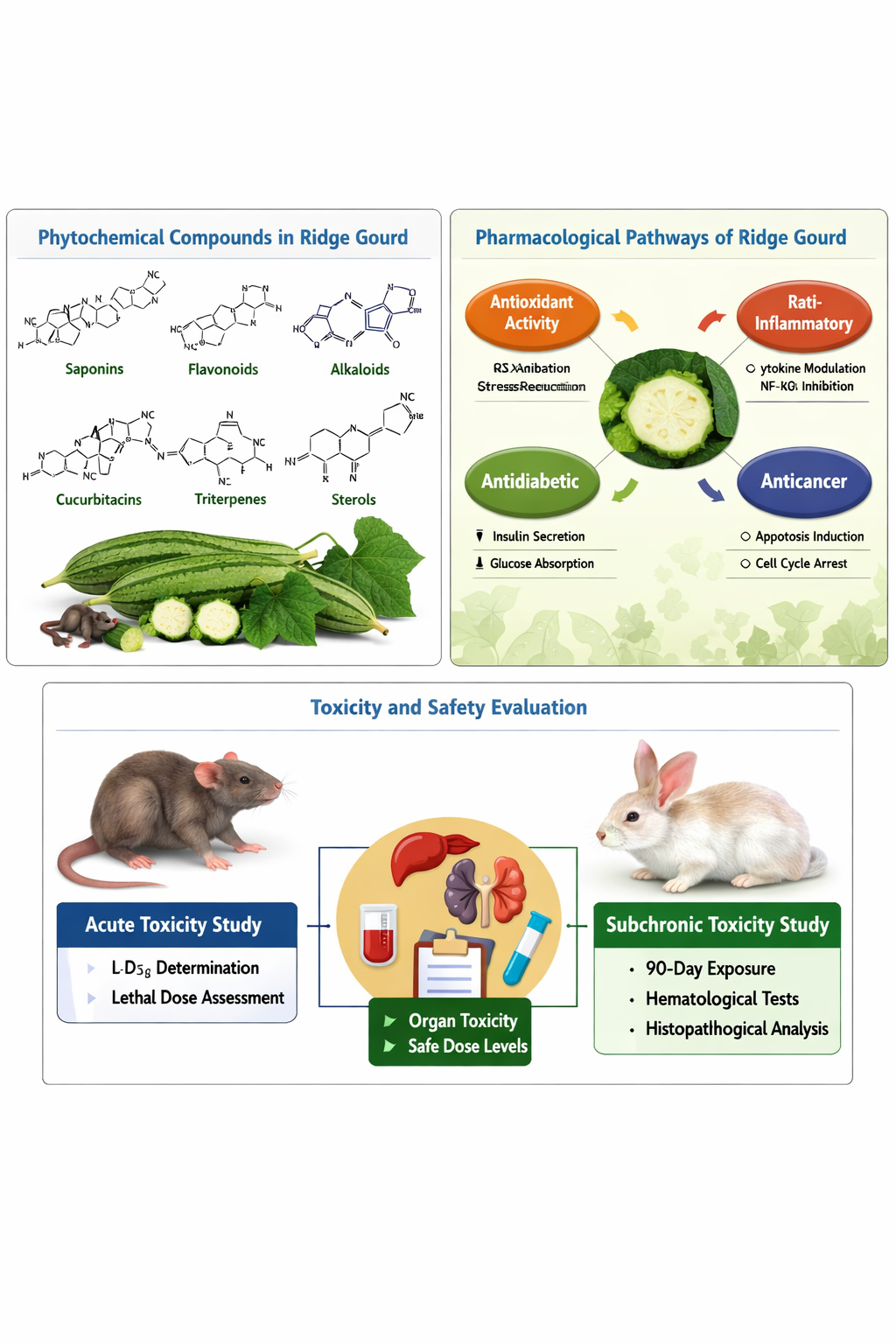
4.6 Influence of Extraction Techniques
Extraction methods significantly influence phytochemical yield and activity:
Recent work emphasizes bioactivity-guided fractionation as a key strategy for isolating potent compounds (Bano et al., 2025; Chithra et al., 2025).
5. Mechanism-Based Pharmacology of Luffa acutangula
5.1 Overview of Mechanistic Insights
The pharmacological effects of Luffa acutangula (L.) Roxb. are mediated through a network of biochemical and molecular pathways, largely driven by its diverse phytochemical composition. Rather than acting via a single target, the plant exhibits multi-target and synergistic mechanisms, which are typical of phytomedicines. Recent studies indicate that its bioactive constituents—particularly flavonoids, phenolics, and triterpenoids—modulate oxidative stress, inflammatory signaling, metabolic pathways, and cellular homeostasis12.
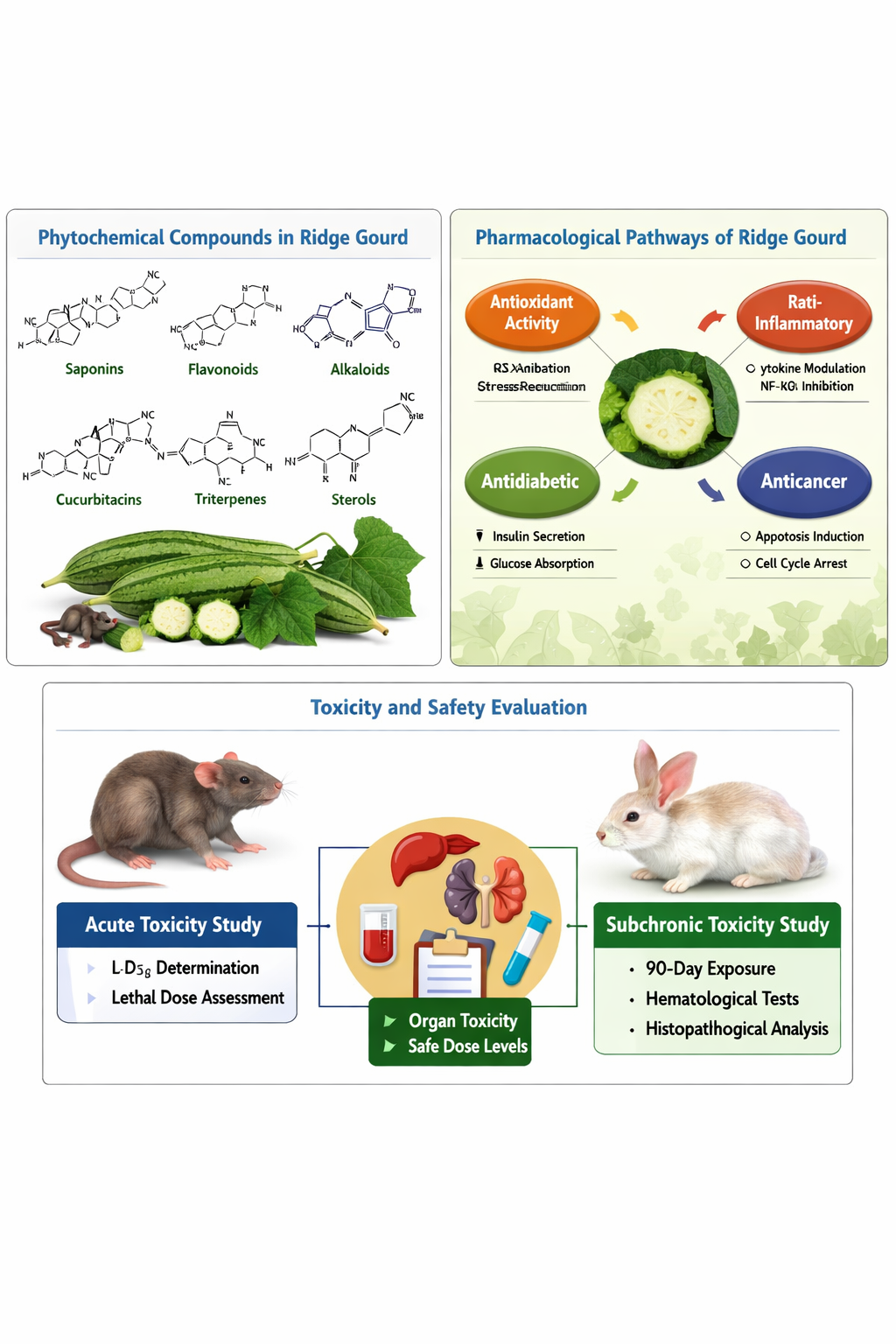
5.2 Antioxidant Mechanisms
Oxidative stress is a central factor in the development of chronic diseases, including diabetes, cardiovascular disorders, and cancer. Extracts of L. acutangula have demonstrated strong antioxidant activity through multiple mechanisms13:
Key Pathways:
Mechanistic Insight:
Phenolic compounds such as quercetin and gallic acid donate electrons to neutralize free radicals, thereby preventing lipid peroxidation and DNA damage. Additionally, these compounds may activate the Nrf2 (nuclear factor erythroid 2–related factor 2) pathway, leading to enhanced expression of antioxidant defense genes13,14.
5.3 Anti-inflammatory Mechanisms
Inflammation is closely linked to oxidative stress and is regulated by several signaling pathways. L. acutangula exhibits anti-inflammatory effects by modulating key mediators and transcription factors.
Key Pathways:
Mechanistic Insight:
Triterpenoids and flavonoids present in the plant suppress the activation of NF-κB, a central regulator of inflammation. This leads to reduced transcription of inflammatory genes and decreased production of mediators such as prostaglandins and nitric oxide. The combined antioxidant and anti-inflammatory effects create a protective environment against chronic inflammatory diseases15–17.
5.4 Antidiabetic Mechanisms
The antidiabetic activity of L. acutangula is supported by its ability to regulate glucose metabolism and improve insulin function.
Key Pathways:
Mechanistic Insight:
Flavonoids and saponins play a major role by delaying carbohydrate digestion and absorption, thereby reducing postprandial hyperglycemia. Additionally, these compounds may influence insulin signaling pathways, including PI3K/Akt signaling, improving glucose uptake in peripheral tissues. Antioxidant effects further protect pancreatic β-cells from oxidative damage18.
5.5 Hepatoprotective Mechanisms
Liver protection is another well-documented effect of L. acutangula, particularly against toxin-induced damage.
Key Pathways:
Mechanistic Insight:
Bioactive compounds reduce levels of liver enzymes such as ALT and AST, indicating improved liver function. The hepatoprotective effect is largely attributed to antioxidant activity and the ability to prevent lipid peroxidation in hepatic tissues. Triterpenoids may also contribute by enhancing cellular repair mechanisms19.
5.6 Antihyperlipidemic Mechanisms
L. acutangula has shown promising effects in lipid metabolism regulation.
Key Pathways:
Mechanistic Insight:
Phytosterols such as β-sitosterol compete with cholesterol absorption in the intestine, thereby reducing serum cholesterol levels. Additionally, antioxidant compounds prevent oxidative modification of lipids, which is a key step in atherosclerosis development.
5.7 Antimicrobial Mechanisms
The antimicrobial activity of L. acutangula is attributed to its ability to disrupt microbial integrity and function.
Key Mechanisms:
Mechanistic Insight:
Alkaloids, phenolics, and saponins contribute to antimicrobial effects by altering membrane permeability and inhibiting microbial growth. These properties make the plant a potential candidate for developing natural antimicrobial agents15.
5.8 Integrated Mechanistic Pathway
Simplified Mechanism Flow:
Phytochemicals (Flavonoids, Phenolics, Triterpenoids)
↓
Primary Targets:
↓
Signaling Pathways Modulated:
↓
Biological Outcomes:
6. Pharmacological Activities of Luffa acutangula
6.1 Overview
A growing body of experimental evidence supports the pharmacological potential of Luffa acutangula (L.) Roxb., validating many of its traditional medicinal uses. Recent in vitro and in vivo studies demonstrate that extracts derived from different parts of the plant exhibit a broad spectrum of biological activities, including antioxidant, anti-inflammatory, antidiabetic, hepatoprotective, antihyperlipidemic, and antimicrobial effects. These activities are largely attributed to the synergistic action of phytochemicals such as flavonoids, phenolics, saponins, and triterpenoids (Bano et al., 2025; Madhumathi et al., 2026).
6.2 Antioxidant Activity
Oxidative stress plays a central role in the pathogenesis of chronic diseases. Several studies have evaluated the antioxidant capacity of L. acutangula using standard assays such as DPPH, ABTS, and FRAP.
Table 3: Experimental Evidence
|
Study |
Extract/Part Used |
Method |
Key Findings |
|
Yadav & Yadav (2024) |
Fruit (thermal-treated) |
DPPH, FRAP |
Significant radical scavenging; activity influenced by heat processing |
|
Bano et al. (2025) |
Leaf (methanol extract) |
DPPH |
High antioxidant activity due to phenolic content |
|
Chithra et al. (2025) |
Whole plant |
ABTS |
Dose-dependent antioxidant response |
Interpretation
The antioxidant activity is strongly correlated with phenolic and flavonoid content. Methanolic extracts generally show higher activity, suggesting the importance of solvent selection in bioactive compound extraction.
6.3 Anti-inflammatory Activity
Inflammation is a key factor in many chronic conditions. L. acutangula extracts have demonstrated anti-inflammatory effects through inhibition of inflammatory mediators.
Table 4: Experimental Evidence
|
Study |
Model |
Extract Used |
Key Findings |
|
Bano et al. (2025) |
In vitro (enzyme inhibition) |
Leaf extract |
Inhibition of COX enzymes and nitric oxide production |
|
Thomas & Arunachalam (2025) |
In vivo |
Fruit extract |
Reduced inflammatory markers (TNF-α, IL-6) |
|
Madhumathi et al. (2026) |
Animal model |
Leaf extract |
Decreased edema and inflammatory response |
Interpretation
The anti-inflammatory effects are mediated through suppression of cytokines and inhibition of key enzymes such as COX and LOX, consistent with the presence of triterpenoids and flavonoids.
6.4 Antidiabetic Activity
The plant has been extensively studied for its role in glucose regulation and diabetes management.
Table 5: Experimental Evidence
|
Study |
Model |
Extract/Part |
Key Findings |
|
Madhumathi et al. (2026) |
Diabetic rats |
Fruit extract |
Significant reduction in blood glucose levels |
|
Bano et al. (2025) |
In vitro enzyme assay |
Leaf extract |
Inhibition of α-amylase and α-glucosidase |
|
Chithra et al. (2025) |
Animal model |
Methanol extract |
Improved insulin sensitivity |
Interpretation
The antidiabetic activity is associated with enzyme inhibition, improved insulin signaling, and antioxidant protection of pancreatic β-cells13.
6.5 Hepatoprotective Activity
Liver-protective effects of L. acutangula have been demonstrated in toxin-induced liver injury models.
Table 6: Experimental Evidence
|
Study |
Model |
Extract Used |
Key Findings |
|
Bano et al. (2025) |
CCl?-induced toxicity |
Leaf extract |
Reduced ALT, AST levels |
|
Madhumathi et al. (2026) |
Animal model |
Fruit extract |
Improved liver histology |
|
Thomas & Arunachalam (2025) |
Experimental study |
Whole plant extract |
Enhanced antioxidant defense in liver |
Interpretation
Hepatoprotective effects are mainly due to antioxidant properties and stabilization of hepatocyte membranes.
6.6 Antihyperlipidemic Activity
Recent studies highlight the lipid-lowering potential of L. acutangula.
Table 7: Experimental Evidence
|
Study |
Model |
Extract Used |
Key Findings |
|
Bano et al. (2025) |
Hyperlipidemic rats |
Ethyl acetate extract |
Decreased LDL, triglycerides; increased HDL |
|
Borecka & Kara? (2025) |
Review analysis |
Fruit |
Cardioprotective effects due to phytosterols |
Interpretation
The presence of phytosterols and antioxidants contributes to improved lipid metabolism and reduced cardiovascular risk.
6.7 Antimicrobial Activity
The antimicrobial properties of L. acutangula have been evaluated against various bacterial strains.
Table 8: Experimental Evidence
|
Study |
Microorganisms Tested |
Extract Used |
Key Findings |
|
Bano et al. (2025) |
E. coli, S. aureus |
Leaf extract |
Moderate antibacterial activity |
|
Thomas & Arunachalam (2025) |
Gram-positive & Gram-negative bacteria |
Fruit extract |
Growth inhibition observed |
Interpretation
The antimicrobial effects are attributed to alkaloids, saponins, and phenolic compounds that disrupt microbial cell membranes.
6.8 Other Pharmacological Activities
Additional biological activities reported include:
Although promising, these areas require further investigation to establish clinical relevance4.
7. Toxicity and Safety Evaluation of Luffa acutangula
7.1 Overview of Safety Profile
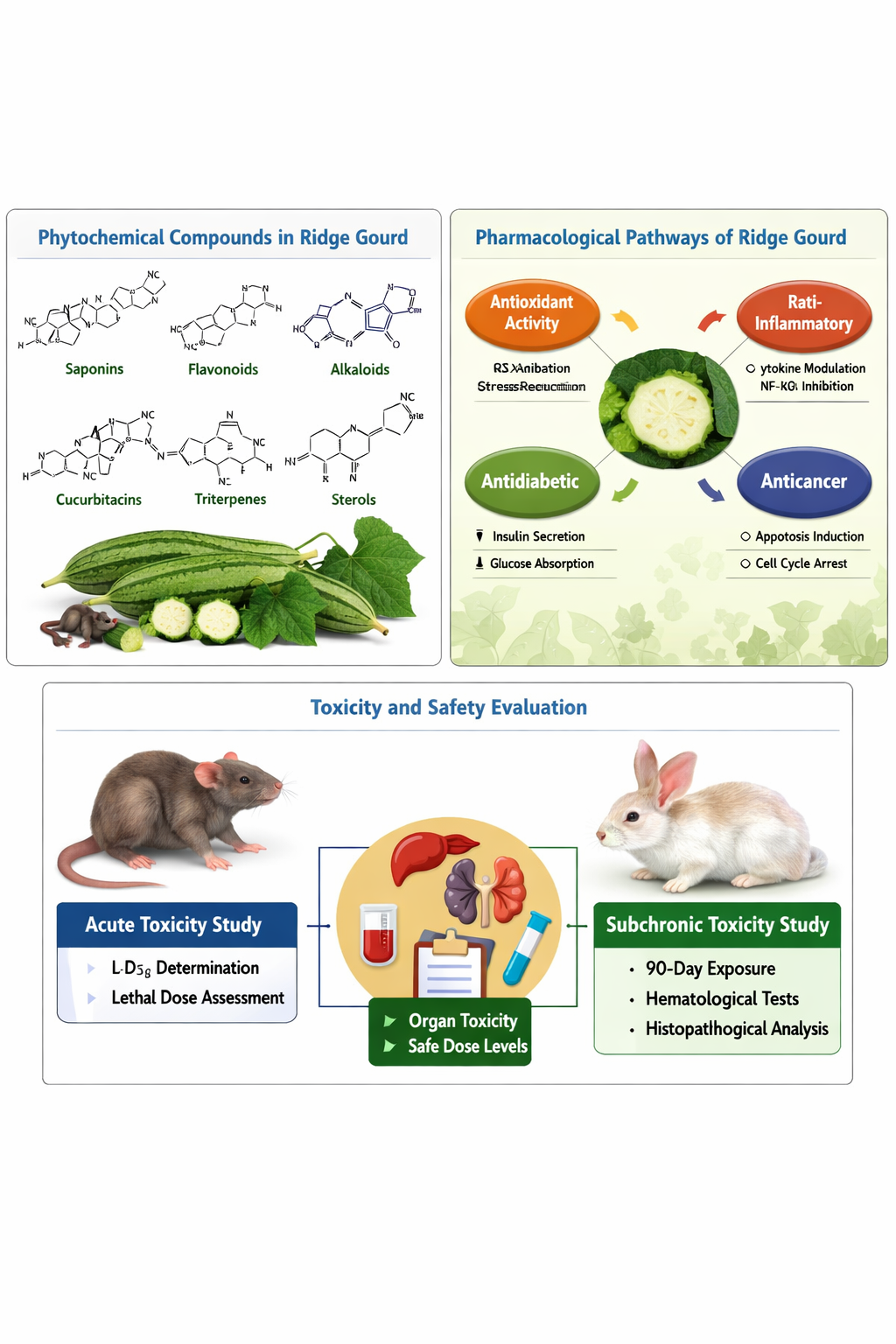
The safety evaluation of Luffa acutangula (L.) Roxb. is essential for its development as a nutraceutical or therapeutic agent. Although the plant is widely consumed as a vegetable and used in traditional medicine, scientific validation of its toxicity profile remains relatively limited. Available studies suggest that L. acutangula exhibits low acute toxicity, particularly when consumed in its natural dietary form. However, the safety profile may vary depending on factors such as plant part, extraction method, dosage, and duration of exposure (Bano et al., 2025; Madhumathi et al., 2026).
7.2 Acute Toxicity Studies
Acute toxicity studies are typically conducted to determine the median lethal dose (LD??), which provides an estimate of the dose required to cause mortality in 50% of experimental animals.
Table 9: Experimental Evidence
|
Study |
Extract/Part Used |
Model |
LD?? / Dose Range |
Observations |
|
Madhumathi et al. (2026) |
Fruit extract (aqueous) |
Rodents |
>2000 mg/kg (oral) |
No mortality; considered safe |
|
Bano et al. (2025) |
Leaf extract (methanol) |
Rats |
>2000 mg/kg |
No significant behavioral changes |
|
Thomas & Arunachalam (2025) |
Whole plant extract |
Animal model |
Not specified (high-dose tolerance) |
No acute toxicity reported |
Interpretation
According to OECD toxicity classification, substances with LD?? values greater than 2000 mg/kg are considered relatively non-toxic, suggesting that L. acutangula extracts are generally safe at lower doses.
7.3 Subacute and Chronic Toxicity
Subacute and chronic toxicity studies provide insights into the effects of repeated exposure over time.
Table 10: Experimental Evidence
|
Study |
Duration |
Dose |
Key Findings |
|
Bano et al. (2025) |
28 days |
200–500 mg/kg |
No significant changes in hematological or biochemical parameters |
|
Madhumathi et al. (2026) |
Subacute |
Moderate doses |
Normal liver and kidney function markers |
|
Borecka & Kara? (2025) |
Review data |
Dietary intake |
No adverse effects reported in humans |
Interpretation
Repeated administration of L. acutangula extracts at moderate doses does not appear to produce significant toxicity, indicating a favorable safety profile for short-term use. However, long-term safety data remain limited.
7.4 Organ-Specific Toxicity
Liver and Kidney Function
Histopathological Findings
These findings support the hepatoprotective rather than hepatotoxic nature of the plant at appropriate doses (Bano et al., 2025).
7.5 Cytotoxicity and Genotoxicity
Limited in vitro studies have evaluated cytotoxic effects:
However, these findings are preliminary and require further validation using standardized assays20.
7.6 Potential Toxic Constituents and Risks
While generally safe, certain considerations should be noted:
Variability in phytochemical composition due to environmental factors may also influence safety.
7.7 Human Safety and Dietary Use
As a commonly consumed vegetable, L. acutangula is considered safe for human consumption under normal dietary conditions. No significant adverse effects have been reported in populations where it is regularly included in the diet. Its use in traditional medicine further supports its safety, although standardized dosing guidelines are lacking (Borecka & Kara?, 2025).
7.8 Limitations and Research Gaps
Despite encouraging findings, several limitations remain:
Addressing these gaps is essential for advancing L. acutangula toward clinical and pharmaceutical applications.
8. Research Gaps and Future Perspectives
8.1 Overview
Although Luffa acutangula (L.) Roxb. has demonstrated considerable pharmacological potential in recent years, its transition from traditional use to evidence-based therapeutic application remains incomplete. Current research is largely confined to in vitro and in vivo preclinical studies, with limited translational and clinical validation. Addressing these gaps is critical to fully harness the plant’s medicinal value and integrate it into modern healthcare systems (Bano et al., 2025; Madhumathi et al., 2026).
8.2 Key Research Gaps
8.2.1 Lack of Clinical Trials
One of the most significant limitations in the current body of research is the absence of well-designed clinical trials. While experimental models have demonstrated promising antioxidant, antidiabetic, and hepatoprotective effects, there is insufficient evidence regarding:
Without clinical validation, the pharmacological potential of L. acutangula cannot be reliably translated into therapeutic applications. Future studies must prioritize randomized controlled trials (RCTs) to establish its clinical relevance.
8.2.2 Limited Standardization of Extracts
Another major challenge is the lack of standardized extraction protocols and formulations. Variations in:
lead to inconsistencies in phytochemical composition and biological activity. This variability makes it difficult to reproduce results across studies and hinders regulatory approval. Establishing standardized extraction methods and quality control parameters is essential for ensuring consistency and reliability (Chithra et al., 2025).
8.2.3 Need for Bioactive Compound Isolation
Although several classes of phytochemicals have been identified, specific bioactive compounds responsible for distinct pharmacological effects are not fully characterized. Most studies rely on crude extracts, which may mask the activity of individual constituents.
Future research should focus on:
Such efforts will facilitate target-based drug discovery and improve understanding of structure–activity relationships (Bano et al., 2025).
8.2.4 Insufficient Mechanistic and Molecular Studies
While general mechanisms such as antioxidant and anti-inflammatory pathways have been proposed, detailed molecular-level investigations remain limited. There is a need for:
Advanced approaches such as omics technologies and molecular docking studies can provide deeper insights into the mechanisms of action and help validate therapeutic claims (Thomas & Arunachalam, 2025).
8.3 Future Perspectives
8.3.1 Integration into Drug Development Pipelines
Given its diverse pharmacological activities, L. acutangula represents a promising candidate for natural product-based drug discovery. Future efforts should aim to:
Collaboration between phytochemists, pharmacologists, and pharmaceutical industries will be crucial for advancing this plant through the drug development pipeline.
8.3.2 Nanotechnology-Based Delivery Systems
One of the emerging strategies to enhance the therapeutic potential of plant-derived compounds is the use of nanotechnology-based delivery systems. Encapsulation of bioactive compounds into nanoparticles can:
Applying nanotechnology to L. acutangula-derived compounds could significantly enhance their clinical applicability and therapeutic efficiency (Borecka & Kara?, 2025).
8.3.3 Clinical Validation and Translational Research
To bridge the gap between laboratory findings and real-world applications, clinical validation is essential. Future research should focus on:
In addition, translational research approaches that integrate laboratory findings with clinical practice will be key to unlocking the full therapeutic potential of L. acutangula.
8.3.4 Functional Food and Nutraceutical Development
Given its nutritional and pharmacological properties, L. acutangula has strong potential as a functional food ingredient. Future studies can explore:
Such applications may offer preventive health benefits and contribute to the management of chronic diseases.
CONCLUSION
Luffa acutangula (L.) Roxb. has emerged as a scientifically relevant medicinal plant with substantial ethnopharmacological importance and growing experimental validation. The present review consolidates recent findings (2024–2026) on its botanical characteristics, phytochemical composition, pharmacological activities, and safety profile, highlighting its potential as a multi-functional therapeutic agent. The plant is rich in diverse bioactive compounds, including flavonoids, phenolics, triterpenoids, and sterols, which collectively contribute to its broad spectrum of biological activities.
Mechanistic studies indicate that L. acutangula exerts its pharmacological effects through modulation of key molecular pathways, particularly those associated with oxidative stress (Nrf2), inflammation (NF-κB), and metabolic regulation (PI3K/Akt). These multi-target interactions support its traditional use in managing conditions such as diabetes, liver disorders, and inflammatory diseases. Experimental evidence further confirms its antioxidant, anti-inflammatory, antidiabetic, hepatoprotective, and antihyperlipidemic properties, with relatively low toxicity observed in preclinical studies.
Despite these promising findings, the translation of L. acutangula into clinical and pharmaceutical applications remains limited. The absence of well-designed clinical trials, lack of standardized extract formulations, and insufficient molecular-level investigations represent major challenges. Addressing these limitations through multidisciplinary research approaches will be essential for advancing its therapeutic potential.
Future directions should focus on bioactive compound isolation, mechanistic validation using advanced omics technologies, and the development of innovative delivery systems such as nanocarriers. With continued research, L. acutangula holds significant promise as a source of novel drugs and functional food ingredients, contributing to the growing field of plant-based therapeutics and integrative medicine.
AUTHORS CONTRIBUTION
All authors made substantial contributions to conception and design, acquisition of data, or analysis and interpretation of data; took part in drafting the article or revising it critically for important intellectual content; agreed to submit to the current journal; gave final approval of the version to be published; and agree to be accountable for all aspects of the work. All the authors are eligible to be an author as per the international committee of medical journal editors (ICMJE) requirements/guidelines.
ACKNOWLEDGMENT
It’s our privilege to express profound sense of gratitude and cordial thanks to our respected chairman Mr. Anil Chopra, Vice Chairperson Ms. Sangeeta Chopra, St. Soldier Educational Society, Jalandhar for providing the necessary facilities to complete this work.
CONFLICTS OF INTEREST
No Conflict of interest
REFERENCES

Vandana Kumari, Dr. Ajeet Pal Singh and Dr. Amar Pal Singh, Phytochemistry and Mechanism-Based Pharmacological Potential of Luffa acutangula (L.) Roxb.: A Comprehensive Review, Int. J. of Pharm. Sci., 2026, Vol 4, Issue 4, 2484-2502, https://doi.org/10.5281/zenodo.19605821
 10.5281/zenodo.19605821
