
Department of Pharmacy Practice, Srinivas College of Pharmacy, Valachil, Mangalore-574143, Karnataka, India.
Lifestyle modifications, along with medications, play a prominent role in the management of type 2 diabetes mellitus. This study aimed to assess the awareness of lifestyle modifications for the management of type 2 diabetes mellitus. A cross-sectional observational survey was conducted online using a structured questionnaire designed to assess awareness regarding lifestyle modifications. A total of 63 participants (57.1?males and 42.9% males), participated in the study who were allocated to various age groups. Most participants (74.6%) were aware of the importance of lifestyle changes such as a balanced diet and regular exercise, while 4.8% lacked awareness and 20.6% were unsure. Around 50.8% of the total participants engaged in physical activities either every day (17.5%), 3-5 times a week (14.3%), or 1-2 times a week (19%), and the activities mainly included walking (54.67%). 30.2% of the total participants did not follow a balanced diet. A diabetes-specific meal plan was followed by 30.2% of participants, with 80% reporting it as effective. Awareness of risk factors was high, with 76.2% recognizing the impact of smoking and alcohol, and 58.7?knowledging stress as a risk factor. 96.8% of the participants were up to date with the importance of lifestyle modifications in managing diabetes, despite which a lesser percentage of participants followed it routinely. In summary, while awareness was high, adherence was limited. Health professionals should reinforce the importance of implementing lifestyle modifications and discuss the same with their patients having type 2 diabetes mellitus.
Lifestyle modifications refer to changes in one’s daily habits or behavior that can positively impact their overall well-being. These changes may include exercise or physical activity, dietary modifications, stress management, and other factors contributing to a healthy lifestyle. Factors such as obesity and an unhealthy diet greatly increase the risk of diabetes. This can be prevented by following suitable lifestyle modifications.[1] The most effective management of diabetes mellitus involves the combination of lifestyle modifications with pharmacological therapies to meet individualized glycemic goals.[2] Hence, this study aimed to determine the awareness regarding the importance of lifestyle modifications in type 2 diabetics taking hypoglycemic agents.
2.0 OBJECTIVE OF THE STUDY:
To assess the awareness regarding the importance of lifestyle modifications in individuals with T2DM taking hypoglycemic agents.
3.0 METHODOLOGY:
An online survey was conducted with the help of a questionnaire in order to collect data from the diabetic population taking hypoglycemic agents to assess their awareness regarding the importance of lifestyle modifications in T2DM. Articles were sourced from the NIH, the American Diabetes Association, and the European Journal of Nutrition. A questionnaire was then developed with reference to these relevant publications. The data collected from the survey was subsequently analyzed, evaluated, and interpreted.
Study Type: A cross-sectional observational study
Study Site: The study was an online survey that was conducted in the community.
Sample Size: Individuals willing to participate throughout the study period.
Study Duration: The study was conducted for a duration of one month from 14/3/23 to 14/4/23.
Inclusion Criteria: Patients having type 2 Diabetes Mellitus and currently on oral hypoglycemic agents, who are willing to participate and voluntarily enrolled in the study.
Exclusion Criteria: Non-diabetics, Individuals with type 1 diabetes mellitus, individuals on insulin
4.0 RESULT AND DISCUSSION:
Type 2 diabetes mellitus represents a significant health problem. Many studies have reported that lifestyle modifications alone or in combination with medications is the best method to improve glycemic control in type 2 diabetes mellitus. However, in clinical practice, lifestyle modifications are not implemented as an integral part of the management of type 2 diabetes mellitus. Therefore, this study was intended to explore the awareness of lifestyle modifications in the management of T2DM among diabetics on medications in the form of a structured questionnaire and the responses were recorded.
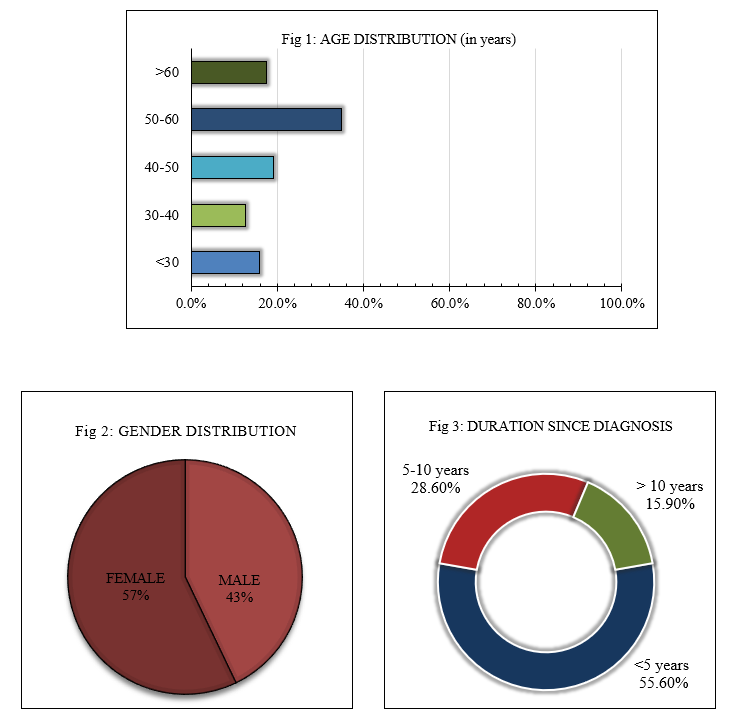
A total of 63 participants (57.1% females and 42.9% males), participated in the study belonging to the age category of <30 (15.9%), 30-40 (12.7%), 40-50 (19%) and >60 (17.5%) respectively. (table 1) They have been diagnosed with T2DM for <5 years (55.6%), 5-10 years (28.6%), and >10 years (15.9%) (see figure 1). Rise in disease incidence might be due to non-modifiable risk factors like age and family history. However, factors such as highly processed, calorie-dense diet and a sedentary lifestyle may also contribute. The high prevalence of T2DM may be attributed to rapid urbanization which has led to physical inactivity and the adoption of a more Western diet rich in fat. [3]
|
Table 1: Demographic details of participants(N=63) |
|
|
Characteristics |
Percentage |
|
Age
|
15.9% 12.7% 19.0% 34.9% 17.5% |
|
Gender
|
42.9% 57.1% |
|
Duration since diagnosis
|
55.6% 28.6% 15.9% |
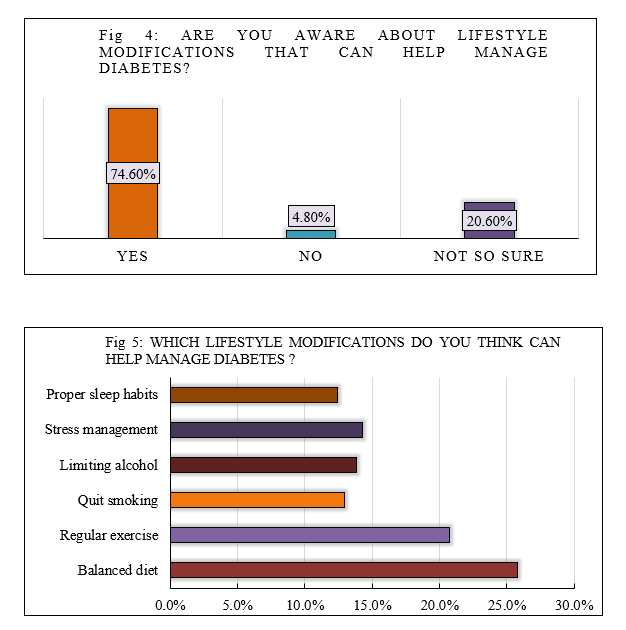
On analyzing awareness about lifestyle modifications 74.6% responded yes, 4.8% no, and 20.6% of the participants were not sure. The participants were further asked to select lifestyle modifications that help in the management of diabetes. A majority believed balanced diet (25.81%) and regular exercise (20.73%) to be ideal in diabetes management. Stress management (14.28%), proper sleep habits (12.45%), limit alcohol intake (13.82%) and quit smoking (12.91%) were also lifestyle modifications of choice (Table 2). Data suggests that awareness about lifestyle modifications was found to be less. Awareness towards social habits such as smoking and drinking alcohol play an important role in managing diabetes. (fig 2)
Impaired sleep quality disrupts adequate glycemic control regarded as cornerstone in diabetes mellitus management and also leads to many deleterious effects causing a profound impact on health-related quality of life. [4]
Poor sleep can be an important indicator of emotional stress. Emotional stress can easily affect different aspects of sleep, such as sleep initiation, sleep duration, and sleep quality. Conversely, sleeping problems may not only be a consequence of emotional stress but are often experienced as a significant source of stress. A systematic review and meta-analysis conducted by Cappuccio et al. to test whether habitual sleep disturbances were associated with a higher incidence of type 2 diabetes, it appeared that short duration of sleep (less than 5 to 6 hours per night), difficulty in initiating sleep, difficulty in maintaining sleep and long duration of sleep (more than 8-9 hours per night) increased the risk for type 2 diabetes.[5] Therefore proper sleep and stress management are also important factors in diabetes management.
|
Table 2 |
|
|
Characteristics |
Percentage |
|
Are you aware of lifestyle modifications that can help manage diabetes?
|
74.6% 4.8% 20.6%
|
|
Which lifestyle modifications do you think can help manage diabetes?
|
25.81% 20.73% 12.91% 13.82% 14.28% 12.45% |
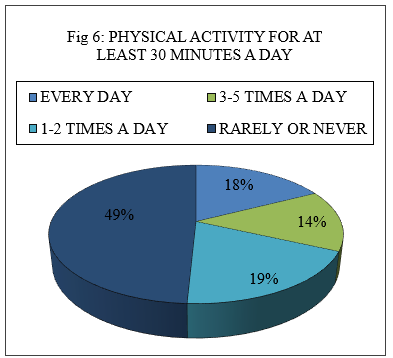
The participants engagement in physical activity was analyzed. Among them, 17.5% reported engaging in at least 30 minutes of physical activity daily, 14.3% exercised 3–5 times per week, and 19% engaged in physical activity 1–2 times per week. Meanwhile, 49.2% of participants reported rarely or never participating in physical activity. Among those performing physical activities, walking was the activity of choice for 54.67% of the physically active participants, followed by yoga (16.46%), jogging (6.86%), running (5.47%), cycling (4.16%) while 12.38% of them were engaged in other activities. (Table 3)
Physical activity helps glucose enter into body cells, which improves the functions of insulin and enhances glucose metabolism. It also decreases body weight and burns fat cells which resist insulin.[3] Aerobic exercises like walking, running, jogging, and cycling help improve glycemic control in people with diabetes.
The study revealed walking to be the activity of choice for most diabetic patients. Though it is effective in promoting weight loss and maintenance, and in improving glycemic control, adequate amounts of walking should be performed to obtain these effects. Diabetic patients should engage in a minimum of 30 min/day of physical activity.[6] The American Diabetes Association recommends at least 150 min/week of moderate-intensity aerobic physical activity and/or at least 90 min/week of vigorous aerobic exercise. The physical activity should be distributed over at least 3 days/week and with no more than 2 consecutive days without physical activity.[7]
A study conducted by Saha S et al. to check the effectiveness of yoga showed that fasting plasma glucose (FPG), and postprandial blood sugar (PPBS) levels came down significantly in the subjects performing yoga which included Surya namaskar (Sun salutation) and asanas (physical postures). Based on these results, it can be said that yoga is effective in controlling blood sugar levels.[8]
People with DM are advised to break the time they spend being sedentary with brief standing, walking or performing other light activities.[9]
|
Table 3: |
|
|
Characteristics |
Percentage |
|
How often do you engage in physical activity for at least 30 minutes a day?
|
17.5% 14.3% 19.0% 49.2% |
|
If yes, what kind of physical activities do you perform?
|
(50.8%) 54.67% 16.46% 6.86% 5.47% 4.16% 12.38% |

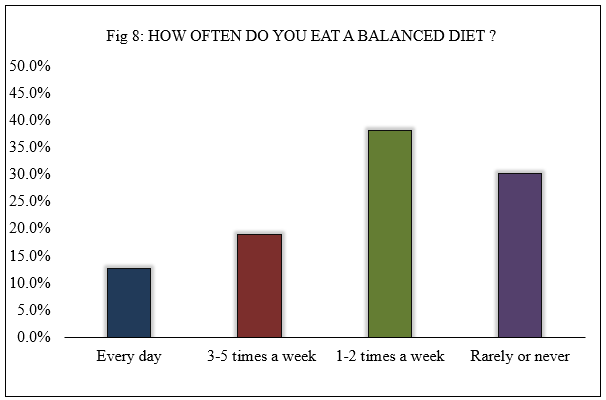
Analyzing their diet pattern 12.7% followed a balanced diet every day, 19% 3-5 times a week, 38.1% 1-2 times a week, and 30.2% of them rarely or never followed a balanced diet (Table 4). 30.2% of the participants follow a diabetes meal plan out of which 80% found it to be effective. (fig 4)
Research conducted in Navi Mumbai, Maharashtra, India to assess knowledge, attitude, and self-care activities among type-2 diabetic patients noted that diabetics who were regularly involved in self-care practices, particularly dietary management attained better glycemic control.[10] Diet focusing on diabetes management can help in achieving and maintaining glycemic goals among diabetics.
|
Table 4: |
|
|
Characteristics |
Percentage |
|
How often do you eat a balanced diet (including fruits, vegetables, whole grains, and lean protein)?
|
12.7% 19.0% 38.1% 30.2% |
|
Do you follow a diabetes meal plan or a specific diet that aims toward the management of diabetes?
|
30.2% 69.8% |
|
If yes, do you find it to be effective?
|
80% 20% |

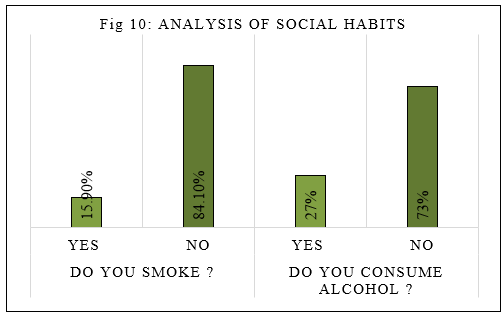
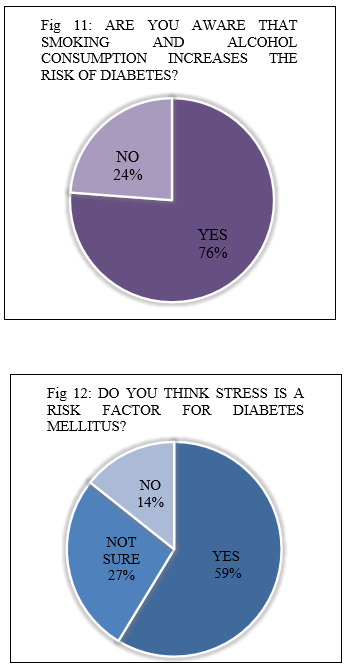
On observing the participants social habits, 84.1% of the participants were found to be non-smokers while the remaining 15.9% did smoke. 73% of the participants didn’t consume alcohol and 27% of them consumed alcohol. To assess awareness the participants were further asked whether they were aware that smoking and alcohol consumption increased the risk of diabetes to which 76.2% replied yes and 23.8% said no (fig 5). They were further asked whether they think stress is a risk factor for diabetes mellitus in response to which 58.7% agreed while 27% were not sure and 14.3% do not think stress is a risk factor for diabetes (Table 5).
Smoking increases the risk of macrovascular complications in patients with diabetes mellitus.[11] Regular consumption of even moderate amounts of alcohol (i.e., two to four drinks per day) interferes with diabetic blood sugar control and increases the risk of other comorbidities. Diabetics clearly should avoid heavy drinking (i.e., more than 10 to 12 drinks per day), because it can cause hypoglycemia, ketoacidosis, and hypertriglyceridemia.[12] Psychological stress is common in many physical illnesses and is increasingly recognized as a risk factor for disease onset and progression. [13]
Factors like social habits and stress are modifiable and can help prevent the progression and improve the management of diabetes.
|
Table 5: |
|
|
Characteristics |
Percentage |
|
Do you smoke?
|
15.9% 84.1% |
|
Do you consume alcohol?
|
27% 73% |
|
Are you aware that smoking and alcohol consumption increases the risk of diabetes?
|
76.2% 23.8% |
|
Do you think stress is a risk factor for diabetes mellitus?
|
58.7% 27.0% 14.3% |
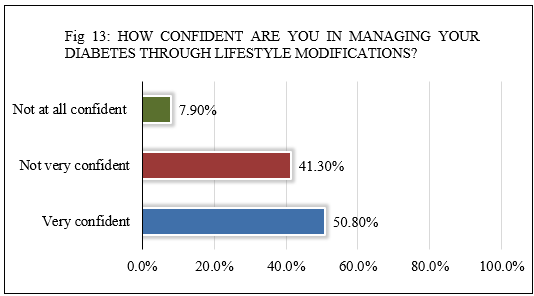
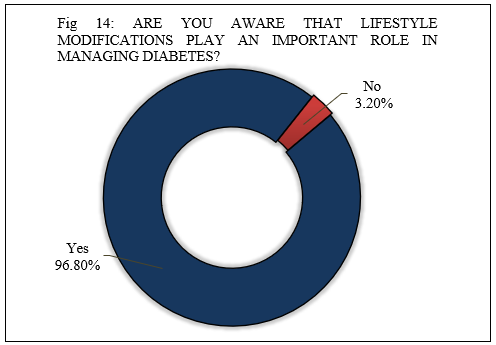
Participants were asked to rate their confidence in managing diabetes through lifestyle modifications. 50.8% of the participants were very confident, 41.3% were not very confident and 7.9% were not confident at all. (Table 6) At the end of the survey, the participants were asked whether they are aware that lifestyle modifications play an important role in the management of diabetes to which 96.8% of them strongly agreed while 3.2% of the participants were not aware. (fig 6)
Research suggests that lifestyle interventions significantly lowered glycosylated hemoglobin (HbA1c) levels compared to the usual care for patients with type 2 diabetes mellitus.[14] The current approach to diabetes management, which focuses solely on medications may not be effective in lowering blood glucose levels and is perhaps not sufficient by itself nor effective in reducing all-cause mortality among these patients. [15]
Despite the awareness, the adoption of lifestyle changes was not found to be significant in the study.
|
Table 6: |
|
|
Characteristics |
Percentage |
|
How confident are you in managing your diabetes through lifestyle modifications?
|
50.8% 41.3% 7.9% |
|
Are you aware that lifestyle modifications play an important role in managing diabetes?
|
96.8% 3.2% |
5.0 FUTURE PROSPECTIVES:
The findings of this study highlight the awareness and perceived importance of lifestyle modifications in the management of type 2 diabetes mellitus. However, despite this awareness, most participants did not actively adopt lifestyle interventions. Further research is needed to explore the factors contributing to the gap between awareness and actual practice of lifestyle modifications in the daily lives of individuals with diabetes.
6.0 CONCLUSION:
Diabetes mellitus is a complex chronic disease that requires an integral and multifaceted approach to ensure adequate control with minimal complications. Management of type 2 diabetes mellitus should involve a combination of medications and lifestyle interventions. The study showed that despite the awareness of the importance of lifestyle modifications, it was not practiced regularly.
Patients living with diabetes will have a better outcome of care if primary healthcare providers regularly and effectively advise them on lifestyle modifications and continue to emphasize their importance at every clinic visit. Health education, therefore, is an essential tool in the management of diabetes which will transform into better glycemic control in patients with type 2 diabetes, thus slowing the progression of the disease and preventing its complications.
ACKNOWLEDGEMENTS:
I would like to express my gratitude to my friends and research guide for their invaluable support and guidance throughout this research project.
REFERENCES


Carol Maria Pinto*, A. R. Shabaraya, Exploring Awareness of Lifestyle Modifications Among Diabetics, Int. J. of Pharm. Sci., 2025, Vol 3, Issue 11, 4838-4849 https://doi.org/10.5281/zenodo.17761857
 10.5281/zenodo.17761857
