
Shiva Trust's Godavari College of Pharmacy, Manori, Nashik – 422004, Maharashtra, India.
In the traditional medical system, Portulaca oleracea, a member of the Portulacaceae family, is a valuable source of novel bioactive compounds due to its numerous medicinal and pharmacological uses. Rich in vitamins, flavonoids, alkaloids, polysaccharides, terpenoids, sterols, proteins, minerals, and omega-3 fatty acids—particularly alpha-linolenic and gammalinolenic acids—it has also been dubbed the superfood of the future [1]. Numerous pharmacological properties, including antibacterial, antioxidant, antidiabetic, neuronal, antinociceptive, and anti-inflammatory properties, are present in Portulaca oleracea [2]. The interest in Portulaca oleracea in creating novel formulations with more therapeutic and financial potential is sparked by this review. Portulaca oleracea is one of the eight most prevalent plants in the world and may grow in a variety of settings, such as waste areas, cornfields, and flower beds [3]. It is mostly used in green salads and vegetables juices. "pharmacological effects." Antioxidant, cytoprotective, homogenising, antifungal, neuroprotective, antibacterial, hepatoprotective, bronchodilatory, anti-inflammatory, anticancer, and relaxing qualities are all present in purslane.
A common medicinal plant, purslane (Portulaca oleracea L.) is used as a traditional remedy for a variety of illnesses in addition to being utilised as an eating plant. In different places, it is referred to by several synonyms, including Purslane (USA and Australia), Andulam (Malaysia), Pourpier (France), and Pigweed (England) [1]. Given that the plant has a milky liquid, the name Portulaca is believed to be a combination of the Latin words "porto," which means "to carry," and "lac," which means "milk." Numerous phytochemicals, including fatty acids, terpenoids, polysaccharides, anthraquinone glycoside, cardiac glycoside, flavonoids, alkaloids, coumarins, and minerals, proteins, sterols, and vitamins. Antibacterial, antiulcerogenic, anti-inflammatory, antioxidant, wound-healing qualities, purgative, cardiac tonic, emollient, muscle relaxant, diuretic therapy, and osteoporosis and psoriasis are just a few of its numerous pharmacological effects [2]. The need for food will rise as a result of this demographic expansion. But unsustainable farming Conventional agricultural methods and practices will not be able to handle these issues. The issue is made worse by abiotic variables such temperature changes, precipitation, CO2 levels, and growing fertiliser prices, which result in decreased soil fertility and elevated salinity [3]. It is an annual herbaceous succulent plant that thrives in warm climates. In many Mediterranean and tropical Asian nations, it is widely consumed as herb and added to soups and salads. It has also been utilised as a traditional medicine in numerous nations [4]. The annual succulent Portulaca oleracea, which belongs to the Portulacaceae family, can grow up to 40 cm in height. There are currently about forty kinds grown. There is uncertainty over the species' status in the New World: Although it is often regarded as an alien weed, there is proof that the species was found in the sediments of Crawford Lake (Ontario) between 1430 and 89 AD, indicating that it arrived in North America during the pre-Columbian period2. In certain places and elsewhere, it has become naturalised. It's regarded as an invasive plant. It features primarily prostrate, smooth, reddish stems with alternate leaves grouped at the ends and joints of the stems. The golden flowers are up to 6 mm diameter and consist of five regular sections. The flowers can appear at any time of year, depending on the amount of rainfall [5].
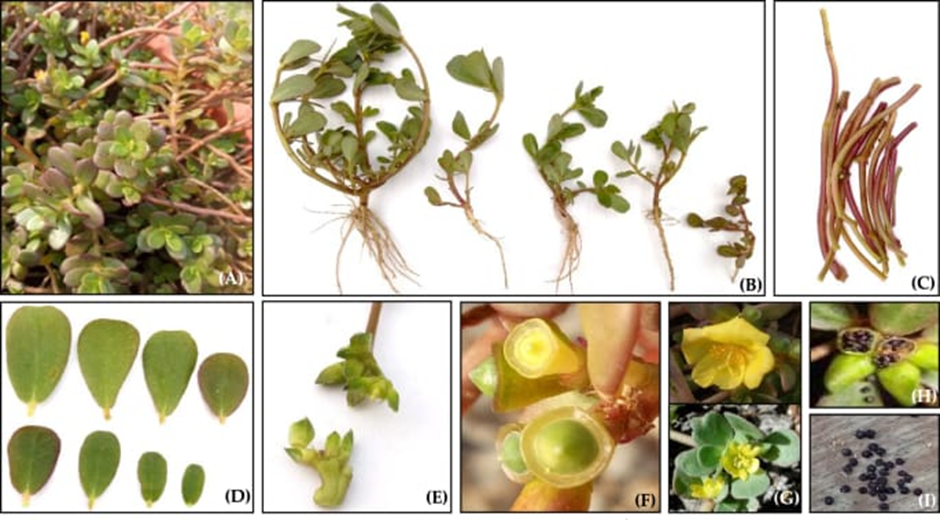
Figure – 1
Portulaca oleracea: Medicinal benefits
The World Health Organisation (WHO) acknowledges purslane (Portulaca oleracea L.) as one of the most commonly used therapeutic plants, known as the "Global Panacea". For thousands of years, P. oleracea L. has been utilised as a food and medicinal plant in many different cultures. Purslane is high in betacarotene, vitamin C, vitamin E, and antioxidants, and it has potent cellular regeneration properties. Additionally, it has a high concentration of omega-3 fatty acids which aid in wrinkle reduction. These compounds are all potent antioxidants that might help to enhance the appearance of the skin and possibly stop future ageing symptoms by lessening UV radiation damage. An important component of human nutrition is purslane. Enhancing circulation and promoting the process of cellular healing might lessen the visibility of wrinkles and scars.
Burns, headaches, and illnesses of the stomach, liver, intestines, cough, and respiratory system can be treated with it. arthritis. It has significant uses in herbal medicine as a diuretic, muscle relaxant, heart stimulant, laxative, and anti-inflammatory. Additionally, psoriasis and osteoporosis are treated with portulaca oleracea. The entire plant is regarded as antiphlogistic and antibacterial in Africa for bacillary diarrhoea, haemorrhoids, and dysentery.
Diabetes is also treated using it. Additionally, the seeds assist relieve thirst and are calming. Children are treated with the anthelmintic infusion made from this plant. The herb is used as a diuretic in Nigeria. Additionally, the leaves are administered locally to swellings for external usage [3].
Pharmacological properties of portulaca oleracea:
According to reports, Portulaca oleracea possesses a number of pharmacological properties that support both its medicinal efficacy and its significance as the meal that functions Throughout history, P. oleracea has been utilised for a variety of therapeutic applications [1].
Hyperglycemia, aberrant lipid and protein metabolism, and some long-term retinal consequences are the hallmarks of diabetes mellitus, a metabolic disease. nervous system, liver, and kidney. Purslane roots, leaves, and seeds have been suggested as a therapy for diabetes mellitus in Iranian traditional medicine in mice with type 2 diabetes mellitus, P. oleracea L. also improves lipid metabolism, glucose tolerance, and insulin sensitivity, indicating that Portulaca Insulin resistance is reduced by oleracea. In type 2 diabetic db/db mice, the aqueous extract of Portulaca oleracea also inhibits diabetic endothelium dysfunction, hyperglycemia, and diabetic vascular inflammation, indicating its preventive activity against diabetes and associated vascular problems [1]. An edible plant called portulaca oleracea is used as a traditional remedy for vascular issues associated with diabetes. P was administered to the diabetic mice. oleracea (300 mg/kg/day, p.o.) for 10 weeks, and P. oleracea treatment significantly reduced the diabetic mice's systolic blood pressure, blood glucose, plasma triglycerides, and plasma level of LDL cholesterol [5].
2. Antioxidant activity:
Antioxidants are essential compounds with the capacity to shield the organism from oxidative stress brought on by free radicals. According to science, purslane is a rich plant nutrient-dense source with strong antioxidant qualities.
The components of Portulaca oleracea, including gallotannins, omega-3 fatty acids, ascorbic acid, ????-tocopherols, kaempferol, quercetin, and apigenin, are responsible for the plant's antioxidant qualities . Purslane therapy of diabetic rats increased GSH and TAS levels because it decreased the formation of free radicals and strengthened antioxidant defences, according to Samarghandian et al [1]. Using 1, 1-diphenyl-2-picrylhydrazyl (DPPH), Kamal Uddin et al. documented the antioxidant activity of Portulaca oleracea across the various growth phases. Ascorbic acid concentration and ferric-reducing antioxidant power (FRAP) tests. As the plant grew older, the levels of Ca, Mg, K, Fe, and Zn rose. There was a negative correlation between calcium (Ca) and sodium (Na) and chloride (Cl). but had a positive correlation with zinc (Zn), iron (Fe), potassium (K), and magnesium (Mg). It was determined that Portulaca olerecea adult plants had more antioxidant activity and total phenol content than immature plants7[5]. Purslane betacyanins' ability to shield mice against D-galactose [D-gal]-induced neurotoxicity was evaluated. These findings imply that betacyanins' neuroprotective impact against D-gal-induced neurotoxicity may be due, at least in part, to an increase in antioxidant enzyme activity with a decrease in peroxidation of lipids.
Purslane's protective properties on human lymphocyte DNA damages were assessed using both ethanolic and aqueous extracts. These findings imply that P. oleracea's aqueous extract can shield human lymphocytes from oxidative DNA damage, most likely as a result of the extract's antioxidant components [4].
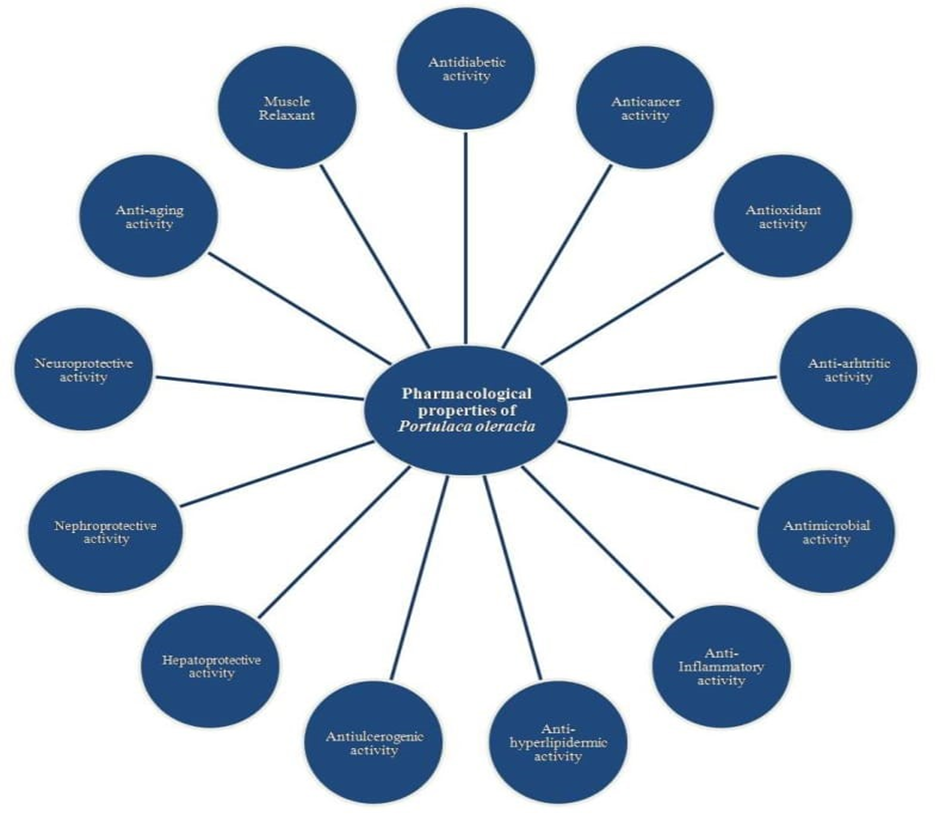
Figure – 2
3. Anticancer activity:
According to reports, Portulaca oleracea polysaccharides contain bioactivities like antioxidant, anticancer, and hypoglycemic and hypolipidemic effects. According to the authors, POP may considerably slow the development of transplantable sarcoma 180 and increase the animal's immunological responses, such as increase in the proportion of CD4+/CD8+ and white blood cells (WBC) and CD4+ T lymphocytes. Additionally, POP markedly corrected the levels of serum aspartate transaminase (AST), alanine transaminase (ALT), urea nitrogen (BUN), and creatinine in S180-bearing animals. Additionally, it was discovered that POL-P3b has the ability to suppress the proliferation of cervical cancer cells both in vitro and in vivo in a manner that is dependent on both concentration and time. pathways that caused DNA damage and apoptosis were linked to cell cycle arrest in the Sub-G1 phase. A distinct polysaccharide component (POP) from Portulaca oleracea was isolated by strong anti-tumor effects in an in vivo study [1].
4. Anti-arthritic activity:
Male wistar rats were used to test the petroleum-ether extract of Portulaca oleracea L. for anti-arthritic properties utilising the Fruends adjuvant arthritis model. Rats were given 0.05 ml of a 0.5(w/v) suspension of dead Mycobacterium tuberculosis in paraffin to cause arthritis. oil into the left hind limb, and the anti-arthritic properties of Portulaca olaracea L. sativa leaf ethanolic extracts were examined [1]. Anti-arthritic properties of petroleum-ether extract of Portulaca oleracea Linn. The Test extracts were administered at doses of 100, 200, and 300 mg/kg/p.o., and the normal dosage was 100 mg/kg of indomethacin. On the twenty-first day, a maximum of 77.82% inhibition was noted. Similarly, treatment with petroleum-ether extract similarly reduced the increase in paw diameter brought on by the administration of Fruends adjuvant; this effect was more noticeable at 300 mg/kg of Portulaca oleracea petroleum ether extract [5].
5. Anti-microbial activity:
Antimicrobials derived from plants offer a wide range of modern medical treatments. Plant-based antibacterials have a wide range of possible medical uses. Numerous studies have documented the P. oleracea's antioxidant and antibacterial properties. A hydroalcoholic extract of certain P. oleracea components has demonstrated antibacterial action against five harmful bacteria [1]. Using the agar diffusion method, Portulaca oleracea is effective against three fungus and five bacteria, including Staphylococcus aureus, Bacillus cereus, and klebisilla pneumonia. Such as Nerospora crassa and Aspergillus fumigates the greatest impact on bacteria such as Staphylococcus aureus, Klebisilla pneumonia, and Nerospora crassa was demonstrated using ethanolic crude extract. On the other hand, Nerospora crassa, Aspergillus niger, and Klebisilla pneumoniae were moderately affected by chloroform extract [5].
6. Anti-inflammatory activity:
Significant anti-inflammatory properties have been demonstrated by a 10% ethanolic extract of the aerial parts (dry leaves and stem) of the cultivar Portulaca oleracea L. subsp. sativa (Haw.) Celak and analgesic following topical and intraperitoneal treatment in contrast to the synthetic medication diclofenac sodium, which serves as the active control. Purslane extract's anti-inflammatory properties were assessed in a recent study using RAW 264.7 cells treated with lipopolysaccharide (LPS). According to reports, purslane extracts considerably decreased the expression levels of INOS and COX-2, as well as the dose-dependent LPS-induced production of NO [1]. Purslane [AP] aqueous extract's preventive efficacy against diabetic vascular problems was examined. When compared to untreated db/db mice, it was discovered that the insulin immunoreactivity of the pancreatic islets significantly increased in AP-treated db/db mice. When combined, AP reduces hyperglycemia and diabetic vascular disease. reduces inflammation and stops diabetic endothelial dysfunction, which is a precursor to diabetes and associated vascular consequences [4].
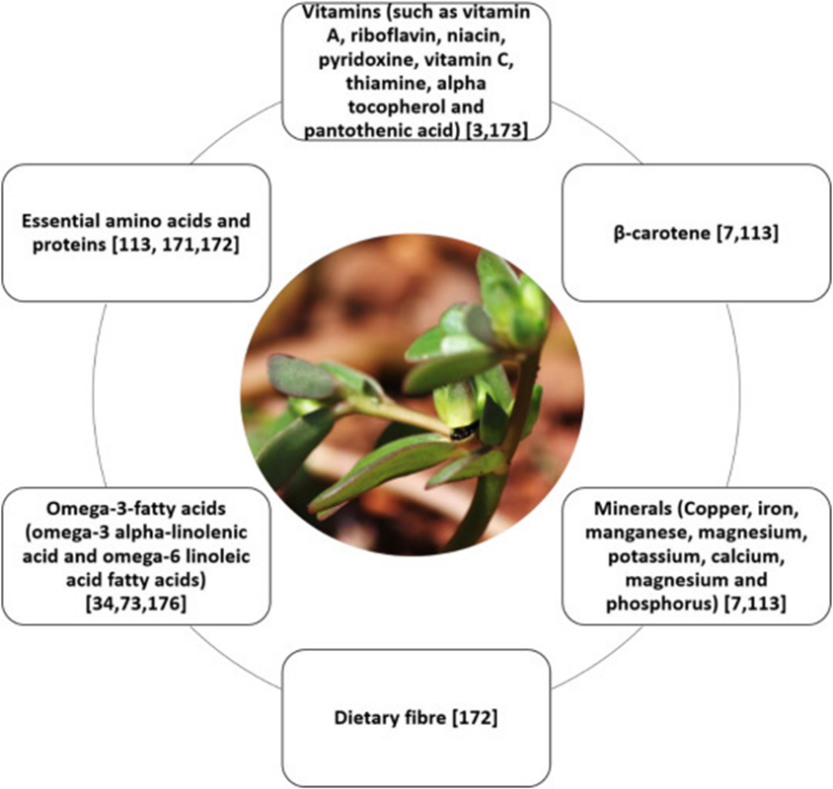
Figure – 3
7. Anti- hyperlipidemic activity:
The pathophysiology of diabetes mellitus and cardiovascular illnesses is significantly influenced by hyperlipidaemia. There are pharmacological medications (statins and fibrates) that have potential to decrease cholesterol. However, because of their negative side effects and high rate of medication dependence, patients turn to natural remedies rather than synthetic ones when they are unable to meet the needs for therapy. As a result, plant materials and their extracts gained popularity as safe treatments for hyperlipidaemia.The hypolipidemic impact of three Portulaca oleracea stems (POS) preparations was also documented by another researcher: stem infusion, stem powder (POS-powder), and Wister Albino rats given a hyperlipidemic diet were treated with (POS-infusion) and stem 70% ethanolic extract (Posethanolic 70%). Comparing POS preparations to hyperlipidemic control, the author found that they significantly improved elevated weight, feed intake, total cholesterol (TC), total lipids (TL), triglycerides (TG), low density lipoprotein cholesterol (LDL-C), very low density lipoprotein cholesterol (VLDL-C), and risk ratio [1]. Adult wistars treated with test extracts (200 and 400 mg/kg) demonstrated a substantial reduction in dexamethasone-induced hyperlipidaemia. rats for eight days. Biochemical parameters were assessed and compared with standard gemfibrozil, including total cholesterol, total triglycerides, phospholipids, high density lipoproteins (HDL), low density lipoproteins (LDL) cholesterol, very low density lipoprotein (VLDL) cholesterol, and atherogenic index values. [5]
8. Antiulcerogenic activity:
albino rats with ulcers caused by aspirin with pyloric ligation showed anti-ulcer action, which was ascribed to the flavonoids specifically, apigenin, myricetin, quercetin, kaempferol, and luteolin have been found in various plant components . The gastroprotective action of Portulaca oleracea was also supportwho reported that the aqueous and ethanolic extracts of the plant demonstrated a dose-dependent reduction in the severity of ulcers induced by HCl in mice. The results were found to be comparable to the effect observed with sucralfate 0.1 g/kg. [1] Because portulaca oleracea inhibits lipid peroxidation and significantly lowers superoxide, it protects the stomach mucosa from oxidative injury. dismutase, as well as an increase in catalase activity, and shown that Portulaca oleracea has strong gastroprotective properties, which may be brought on by gastric defence mechanisms.
9. Hepatoprotective activity:
Although its true effectiveness is still unknown, purslane (Portulaca oleracea L, Portulacaceae) has long been used in folk medicine to provide protection against liver damage. The hepatoprotective properties of purslane ethanol extract against the liver toxicity caused by carbon tetrachloride (CCl4) in rats was investigated. Alongside the observed shift in liver function markers, histopathological alterations also showed that purslane had protective effects against CCl4-induced damage in rat liver and demonstrates that purslane may be used therapeutically as a substitute for humans suffering from liver disorders [1]. Rats' hepatoprotective response to carbon tetrachloride-induced hepatotoxicity was examined using an aqueous extract of Purslane's [P. oleracea] aerial parts in conjunction with lycopene [4]. Aspartase transaminases (AST), alanine, and other liver function marker enzymes in the serum were used to assess the combination's hepatoprotective efficacy. Total bilirubin (T.B), total protein (T.P), total cholesterol (T.C), transaminases (ALT), alkaline phosphatases (ALK.P), pentobarbitone-induced sleeping time (PST), and liver histological investigations [5].
10. Neuroprotective activity:
In mouse models, the neuropharmacological effects of P. oleracea extracts have already been documented. Among the consequences were a decrease in locomotor activity, an increase in
the beginning time of mice's convulsions caused by pentylenetetrazole, the opioid-mediated anti-nociceptive, and muscle relaxant activity in rats. Portulaca oleracea can scavenge free radicals and counteract rotenone-induced neuronal apoptosis and dopamine complex-I inhibition and depletion in the rat striatum, suggesting that Portulaca oleracea could be a viable neuroprotective option against Parkinson's disease[1]. Pretreatment with POEE provided defence against these behavioural alterations.
Additionally, MeHg poisoning resulted in histological alterations in the cortex and cerebellum, which POEE therapy was found to normalise. According to the current findings, POEE protects against MeHg-induced neurotoxicity [4].
CONCLUSION:
It is quite evident from this review that Portulaca oleracea contains a number of phytoconstituents, which reveals its uses for various therapeutic purposes (5). In recent times, the use natural medicines have become more acceptable as they safe and has lesser side effects compared to synthetic medicines (2).
Despite promising preclinical findings, the majority of current data base are based on in vitro and animal studies, and well-designed clinical trials remain limited. Standardization of extract, identification of active compounds, and clarification of mechanisms of action are required to establish purslane as a scientifically validated medicinal resources. Furthermore, safety assessments and dosage optimization should be prioritized to support its integration into evidence-based medicine.
In summary, purslane represents a highly valuable medicinal plant with substantial pharmacological potential. With further research, it may serve as a cost-effective natural therapeutic agent for managing metabolic, inflammatory, infectious, and degenerative diseases. Continued scientific exploration will help bridge the gap between traditional use and modern clinical application.
REFERENCE




Dhanisha Bhosale, Prajwal Gosavi, Maithili Shevkar, Shruti Khanale, Pharmacological Properties of Purslane Plant, Int. J. of Pharm. Sci., 2025, Vol 3, Issue 11, 3908-3915. https://doi.org/10.5281/zenodo.17701028
 10.5281/zenodo.17701028
