
Mother Teresa Pharmacy College, Sathupally, Khammam, Telangana, India.
In Biphasic liquid dosage forms, the Ayurvedic suspensions, offer minimal adverse effects and have therapeutic action with the aid of natural ingredients in order to provide superiority to synthetic materials. Excipients play vital roles that may affect quality and administration characteristics by bringing in stability, efficacy, drug acceptability and compliance. Increasing uses of natural products in an Ayurvedic formulation are due to their nontoxicity, biocompatibility, biodegradability, economic status, and availability. Natural polymers, such as gums and mucilages, include Acacia, tragacanth, and starch, which perform multi productive tasks in the suspension as suspending agents, thickening agents, stabilizers, and emulsifying agents in order to prevent aggregation of the drug particles and ensure dispersion of particulate matter. Additional excipients, including honey and fruit extracts, enhance sweetness and flavor and thereby increase palatability and acceptability in patients, particularly for pediatric and geriatric applications. Traditional Ayurvedic formulations involve these natural excipients that might act as bioenhancers or "Yogavahi" and thereby improve the bioavailability and absorption of active ingredients. Even though natural excipients provide stability and effectiveness to the formulation, they may also introduce certain problems such as microbial contamination and variability due to environmental factors were tend to be seen often. This demands very careful processing and preservation methods for such excipients. Their therapeutic potential and multifunctional task significantly contributes to the effectiveness of Ayurvedic suspensions.
Ayurveda, the traditional Indian system of medicine, advocates a holistic approach toward health with natural remedies obtained from plant, animal, and mineral sources. Through the centuries, Ayurvedic pharmaceutics (Bhaishajya Kalpana) has laid down an array of dosage forms to ensure the stability, palatability, and therapeutic efficacy of medicinal formulations. Of these, suspensions-like preparations such as Avaleha, Asava–Arishta, and Kashaya assume great importance because of their capability to provide both soluble and insoluble phytoconstituents in bioavailable form.1 The excipients in any suspension play a critically important role in the physical stability, appearance, taste, and release profile of the active ingredients. Modern pharmaceutics may use various synthetic excipients, but Ayurveda traditionally uses natural ingredients as multifunctional excipients with added therapeutic value. Honey, ghee, jaggery, cardamom, cinnamon, turmeric, hibiscus and plant mucilage, starches, gums, and resins are some of the common natural suspending agents, stabilizers, sweeteners, or preservatives used in Ayurveda. And lemon juice, tamarind pulp were used as buffering agents in order to balance the Ph changes overtime. These ingredients contribute not only to the pharmaceutical properties of the formulation but also to its therapeutic potential with their antioxidant, immunomodulatory, and nutritive effects.2
There is a growing scientific interest in the investigation of natural excipients as biocompatible, safer, and environmentally friendly alternatives to synthetic additives. This trend reflects the increasing focus on green pharmacy and the use of raw materials from natural and renewable sources for the development of dosage forms. Knowledge of the functional and therapeutic roles of these natural excipients in Ayurvedic suspensions bridges traditional knowledge with modern pharmaceutics, thus supporting the development of standardized, stable, and patient-friendly herbal dosage forms.3 Therefore, this review outlines the diverse natural excipients applied in Ayurvedic suspensions, drawing on their pharmaceutical functions, physicochemical properties, antioxidant potential, and compatibility with active scientific validation of these traditional excipients toward their inclusion in modern herbal drug formulations.4
Advantages
Disadvantages
Ideal Properties
Across all types of excipients, the following properties are considered ideal for natural sources:

Examples of Ayurvedic Suspensions
1. Ashwagandha Suspension
2. Trikatu Suspension
3. Guduchi Suspension
4. Triphala Suspension
5. Shankhpushpi Suspension
6. Neem Suspension
7. Yashtimadhu Suspension
8. Gokshura Suspension
9. Arjuna Suspension
10. Turmeric Suspension
Classification of Excipients :

The suspending agents in Ayurvedic suspensions are natural additives mixed into the liquid formulations to prevent settling of active ingredients. They raise the viscosity of the liquid medium and form a film around the solid particles that prevents aggregation and caking of suspension, thus allowing uniform distribution and easy redispersion by shaking.13
Acacia gum : It was a dried gummy exudate obtained from the stems and branches of Senegalia senegal & Vachellia seyal, Belongs to Leguminosae family.
Tragacanth gum : It was obtained from the air-dried, gummy exudate of several species of Astragalus trees, primarily from the genus astragalus gummifier, etc.14
Agar: It was a gelatinous polysaccharide obtained from the cell walls of these seaweeds of Agarophytes as species, belongs to Rhodophyceae family.15


Acacia Tragacanth
The wetting agents in Ayurvedic suspensions are substances used to enhance the dispersion of solid herbal particles in a liquid medium by reducing surface tension, ensuring uniform dispersion, accurate dosing, and proper absorption.16
Lecithin : It functions as a natural emulsifier and stabilizing agent and provides wetting properties to the suspensions, helping to prevent the separation of the composition and ensuring a uniform product. It was obtained from soya beans, sunflower seeds and egg yolks.
Aloevera mucilage : It was a clear, jelly textured substance obtained from inner leaf of Aloe barbadensis miller of Asphodelaceae family.17


Lecithin Aloe vera
The primary pharmaceutical role is to mask the inherently bitter, acrid, or nauseous taste of some herbal ingredients and active pharmaceutical ingredients (APIs), making the medicine more acceptable, especially for pediatric and geriatric patients.18
Honey : Honey is produced by various species of honey bees, including Apis Melifera, Apis dorsata Apis florea and Apis indica, which belong to the Apidae family.
Stevia : It was a natural sweetener obtained from the plant Stevia rebaudiana , and it belongs to Asteraceae family.19
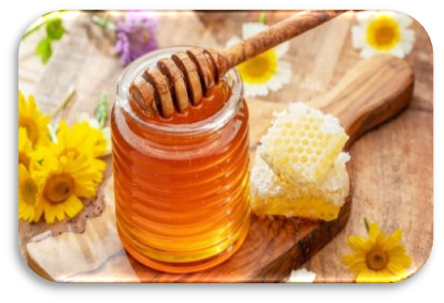

Honey Stevia
These are extensively used to mask the unpleasant taste and odor of medicinal ingredients, thus improving patient compliance and acceptability. These agents are vital for organoleptic (sensory) appeal, especially in liquid dosage forms that remain in contact with the taste buds for a longer time. 20
Cinnamon : the dried inner bark of the shoots from trees of the genus Cinnamomum primarily Cinnamomum zeylanicum, belongs to the Lauraceae Family.
Mint : it was the leaf and stems obtained from the plant genus Mentha, belongs to Lamiaceae family.
Rose : It was obtained from the plant Genus Rosa belongs to Rosaceae family.21
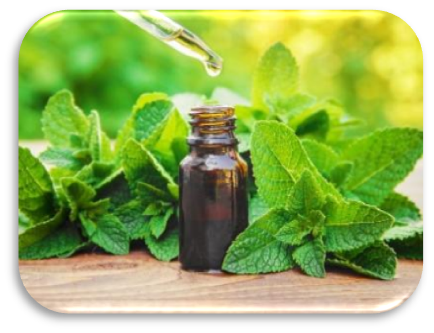

Mint Rose
5 . Preservatives :
Preservatives in Ayurvedic suspensions are primarily used to prevent microbial contamination, inhibit degradation, and significantly extend the product's shelf life. This ensures the medicine retains its intended potency, quality, and safety for the consumer throughout its period of time.22
Tulsi : Tulsi contains bioactive compounds like eugenol, carvacrol, and caryophyllene, which exhibit strong antibacterial, antiviral, and antifungal activity.(Ocimum Sanctum Linn).23
Neem : Neem contains numerous bioactive compounds, such as nimbin, nimbidin, azadirachtin, and nimbolide, which were used to produce antifungal and antibacterial activity.(Azadirachta Indica).24

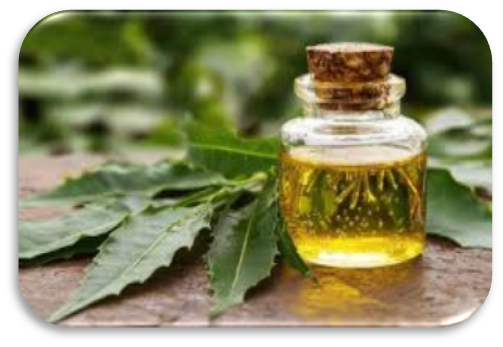
Tulsi Neem
6. Stabilizers / Flocculating Agents :
Stabilizers and flocculating agents are used to ensure the physical stability and consistent dosing of Ayurvedic suspensions by controlling particle behavior. They prevent the active herbal ingredients from settling into a compact, non-redispersible mass (caking). 25
Methi : It was primarily serves as a demulcent, thickening, and stabilizing agent obtained from dried seeds of the plant Trigonella foenum-graecum belongs to Fabeaceae family.
Gelatin : it was obtained from animal collagen, primarily from the skin, bones, and connective tissues of pigs and cattle after the treatment to remove the unwanted & toxic materials.26

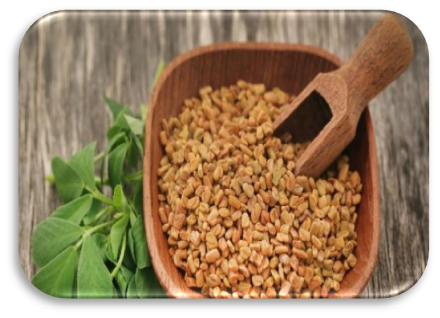
Gelatin Methi (Fenugreek)
7. Buffering Agents :
Buffering agents play a crucial role in stabilizing the pH of the formulation, which in turn ensures the chemical stability of the active ingredients, maintains their solubility, and enhances patient comfort by minimizing irritation.
It includes Aloe vera gel juice, triphala etc.27
Lemon Juice : It was the acidic juice obtained from the fruit of the tree Citrus limon , which belongs to the Rutaceae family.
Tamarind Pulp : It was the pulp extract of tamarind from Tamarindus indica L., a leguminous tree belonging to the Fabiaceae family.28
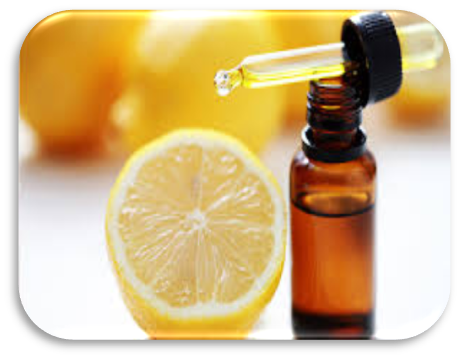

Lemon extract Tamarind pulp
8. Anti-Oxidants :
Antioxidants inhibit unstable molecules (free radicals) produced in the body, which can damage cells and lead to chronic diseases, aging, and inflammation. It also prevents the oxidation of pharmaceutical ayurvedic suspensions which leads to a longer shelf life.29
Amla : It was the fresh (or) dried fruit of the plant Phyllanthus emblica Linn /Emblica officinalis Gaertn, belongs to the Euphorbiaceae family.
Aswagandha : It is the dried root and stem bases of the plant Withania Somnifera (L.) Dunal, which belongs to the Solanaceae family.
Haritaki : It was The medicinal part of mature, dried fruit of the species of flowering evergreen tree Terminalia chebula Retz, belonging to the Combretaceae family.30

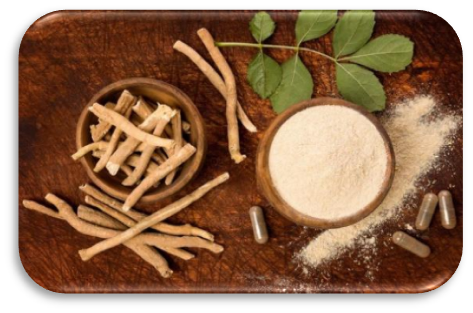
Amla Ashwagandha

Haritaki
CONCLUSION :
The use of natural excipients in Ayurvedic suspensions is not only consistent with the concept of complete health but also improves the efficacy, safety, and acceptability of the pharmaceutical formulation. The dependence on non-toxic and biodegradable materials from nature itself underlines a careful transition toward sustainable practices in the development of pharmaceuticals. While the benefits of such natural excipients are impressive, there is also a need to be realistic regarding their challenges, including susceptibility to microbial contamination and assurance of quality variation. Ongoing research and improvement in processing techniques will be part of dealing with these drawbacks and ensuring that the rich heritage of Ayurvedic medicine is preserved into the stringent demand of modern-day pharmaceutical standards. By linking the wisdom of traditional medicine with current scientific validation, we move into the future of herbal medicine, ensuring more accessibility and efficacy for a wide range of patients. Further research into the interplay between ancient wisdom and modern technology means that the potential for Ayurvedic suspensions containing natural excipients is unlimited.
REFERENCES



I. Devendar, P. Yugandhar, M. Sowjanya, Sk. Fathima, M. Sai Durga, Devani Rama Chakradhar, Natural Ingredients as Excipients in Ayurvedic Suspensions: A Comprehensive Review, Int. J. of Pharm. Sci., 2025, Vol 3, Issue 12, 2789-2798. https://doi.org/10.5281/zenodo.17967009
 10.5281/zenodo.17967009
