
Srinath College of Phamacy, Bajaj Nagar, Waluj, Chhatrapati Sambhajinagar, Maharashtra 431136, India
The oral administration of numerous therapeutic compounds is frequently hindered by their limited solubility in water, which results in poor and inconsistent bioavailability. Drugs belonging to Biopharmaceutical Classification System (BCS) Class II demonstrate good membrane permeability but inadequate solubility, making dissolution the key step controlling absorption. To address this limitation, several formulation strategies have been explored, among which nanocrystal technology has gained considerable attention as an efficient and straightforward approach for improving dissolution behavior and solubility. Drug nanocrystals, consisting of pure drug particles typically below 1 µm in size, provide a greatly increased surface area that enhances saturation solubility and accelerates dissolution. Consequently, nanocrystals contribute to better bioavailability, reduced dose variation, and facilitate diverse administration routes such as oral, parenteral, and topical delivery. This review summarizes the underlying principles, advantages, and preparation techniques of nanocrystals including top-down, bottom-up, and hybrid methods along with recent advancements in nanocrystal-based systems for enhancing the performance of poorly soluble drugs.
The development of highly effective pharmaceutical formulations is often hindered by the low solubility of drug molecules, which limits their dissolution and absorption within the gastrointestinal tract. According to the biopharmaceutical classification system (BCS), class II drugs are particularly affected by this issue, as they exhibit high membrane permeability but poor aqueous solubility. Consequently, their rate of absorption is controlled primarily by the dissolution rate, making solubility for oral bioavailability this are the rate-limiting step. The low solubility of these compounds reduces the concentration gradient between the intestinal lumen and blood vessels, resulting in poor and highly variable absorption profiles, which in turn lead to inconsistent therapeutic outcomes1. Over the past few decades, the pharmaceutical industry has faced an increasing prevalence of poorly soluble drug candidates, with reports indicating that more than 40% of newly developed chemical entities suffer from inadequate solubility in water2. This growing trend has intensified the need for innovative formulation strategies capable of improving solubility and bioavailability without altering the chemical structure of the active pharmaceutical ingredient.
Several conventional strategies have been explored to address this challenge, including salt formation, the use of co-solvents, complexation with cyclodextrins, and various solid-state modifications. Although these approaches have been useful in certain cases, they often present limitations such as chemical instability, limited applicability across drug classes, or manufacturing complexity. To overcome these challenges, nanocrystallization technology has emerged as a promising, straightforward, and highly efficient method to improve the dissolution rate, apparent saturation solubility, and ultimately the oral bioavailability of drugs with poor solubility. This method is especially beneficial for BCS Class II and, in some cases, Class IV drugs, where permeability is adequate, but dissolution remains the limiting factor3.
Drug nanocrystals (NCs) are pure solid drug particles with an average diameter of less than 1000 nm. Depending on the preparation technique, these particles may exist in a fully or partially amorphous state, although the term “nanocrystal” generally refers to their crystalline nature. Unlike other nanoparticle-based drug delivery systems that require polymers, lipids, or surfactants as carriers, nanocrystals are composed almost entirely of the active pharmaceutical ingredient (API) itself, with only small amounts of stabilizers used to prevent aggregation4,5. The nanoscale reduction in particle size dramatically increases the surface area-to-volume ratio, which, according to the Noyes–Whitney equation, accelerates the dissolution rate. This enhanced dissolution leads to a higher concentration of the drug in the gastrointestinal fluids, resulting in improved absorption and bioavailability. Moreover, nanocrystals can be formulated into various dosage forms, including tablets, capsules, powders, and suspensions, offering high versatility in drug delivery applications.
Nanocrystals offer several significant advantages, such as high drug loading capacity, improved physical stability, enhanced dissolution behaviour, and the potential for sustained or controlled release. Their small particle size also enables better adhesion to biological membranes, which can further improve intestinal uptake. Additionally, because nanocrystals are composed almost entirely of the drug substance, they minimize the need for additional excipients, reducing formulation complexity and toxicity concerns6. To produce these systems, two main manufacturing approaches are used: top-down and bottom-up. The top-down methods, such as wet media milling and high-pressure homogenization, involve mechanical size reduction of larger drug crystals, while bottom-up methods, including controlled precipitation, rely on crystallization from supersaturated solutions. Both methods yield drug particles below 1 μm that are stabilized using surfactants or polymers to prevent aggregation and maintain dispersion stability7,8.
The concept of drug nanocrystals emerged in the early 1990s, and the first commercial nanocrystal-based formulations reached the market in the early 2000s, validating the technique’s potential to improve the performance of hydrophobic drugs. Since then, nanocrystallization has become one of the most promising formulation technologies for overcoming solubility limitations in drug development. By effectively enhancing dissolution velocity, apparent solubility, and oral absorption, nanocrystals have proven to significantly improve bioavailability and therapeutic efficacy. Therefore, nanocrystal technology represents a transformative advancement in modern pharmaceutical formulation science, addressing one of the most persistent challenges in drug development—poor aqueous solubility7,8.
Properties :-
Advantages of nanocrystals:
Disadvantages of nanocrystals:
Factor affecting the solubility of drugs:
The fact that drug nano-crystals are tiny crystals indicates that they are crystalline nanoparticles6.
It is the process of reducing the average diameter of a solid particale . Drugs are micronized using milling processes such as colloid mills, jet mills, etc13.
It is a cutting-edge technique for producing pharmaceutical product with improved physicochemical aand mechanical qualities. to improve an API's properties by the method of grinding, slurry method, antisolvent addition etc14.
By changing the pH, medications that are insoluble in water can become soluble. The buffer's capacity and pH tolerance must be taken into account when applying this method for achieving solubility13.
Surfactants are amphiphillic molecules. A polar head and a nonpolar "tail" are two ways to represent a surfactant molecule.A surfactant's hydrophilic component may be positively charged, have both +ve and -ve charges, or be charge-free15.
It is the liquid system in that the drug particle present in nanometer range (less than 1000nm). This particles diaper in water with stabilizer and surfactant13.
Nanocrystals:
A flexible formulation technique, drug nanocrystals can be utilised to enhance the pharmacokinetic and pharmacodynamic characteristics of medications that are poorly soluble. Because of their intrinsic smaller particle size and wide surface area, as well as their simplicity of formulation and production scaling flexibility, NCs (nanocrystals) stand out among other nanoparticles and medicines4.
Methods of Preparation of Nanocrystals :
The beneficial physiological characteristics of nanocrystals are a major factor in their utilization in medication development. Because of its larger surface area, the nanocrystal's solubility and rate of penetration through the membrane barrier both increase with decreasing size. The stability of the nanocrystal can also be improved by applying additional changes, such a stabilizer, during formation. Smallest particles have a largest surface area than traditional drugs, which increases the rate of dissolution and, in turn, improves drug bioavailability2.
The adhesiveness of nanoparticles is one of its particular characteristics, which improves oral absorption. As a result, medication compositions prepared for oral delivery benefit greatly from nanocrystal technology. In comparison with other nanoparticle matrices, including polymer-based and lipid-based systems such as liposomes and nanoemulsions, drug nanocrystals offer several distinct advantages5.
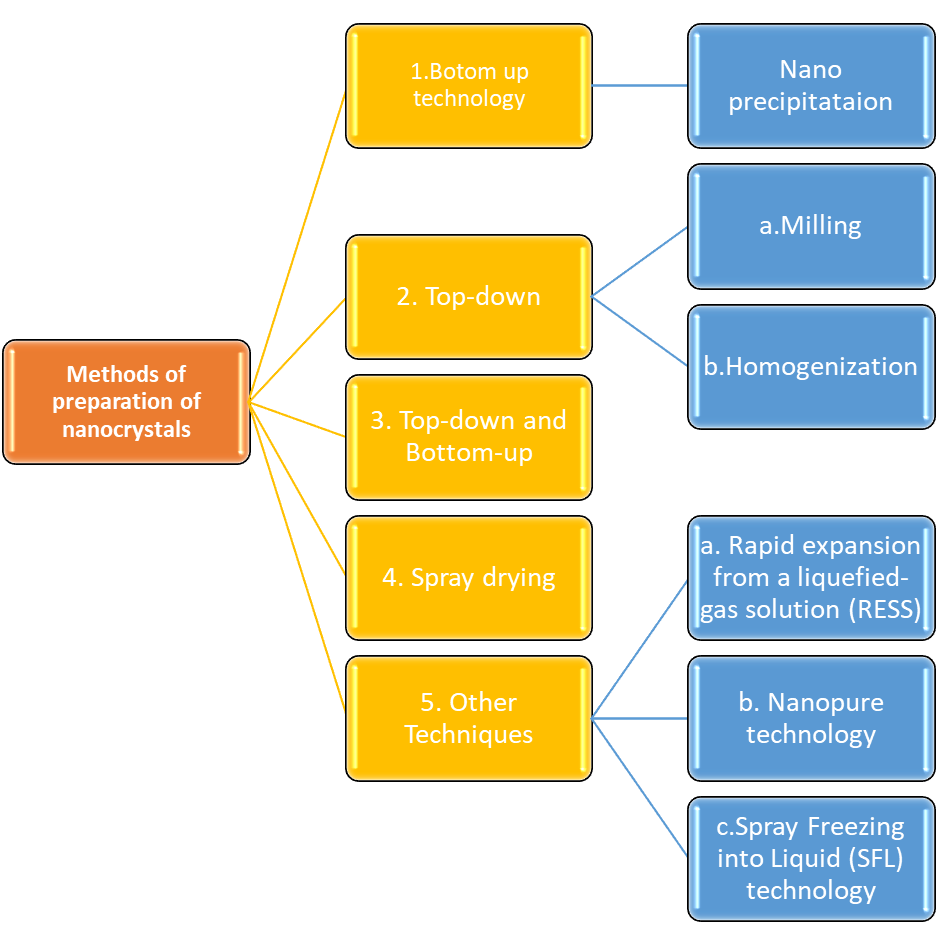
Figure 1. Method of Preparation of Nanocrystals
1. Bottom-up technology:
In this method firstly active ingredients is dissolve in organic solvent befor adding it to a nonsolvent that is soluble with the organic solvent. After that, the nanocrystals precipitate when stabilizers are present. The precipitation technique's primary benefits are its affordability and ease of use. This approach is very easy to scale up. It is important to note that achieving uniform nanocrystals through this process requires careful control of several parameters, such as temperature, solvent-to-nonsolvent ratio, drug concentration, viscosity, solvent selection, and the type of stabilizer used2.
In this process, it is very important to reduce the solvent level so that it remains safe in the final product. If too much solvent remains, it can be harmful to the product3.
Bottom-up procedures aggregation of the molecules in solution lead to the formation of particles that can have either crystalline or amorphous structures. bottom-up methods make it easier to change the surface functioning of nanoparticles and combine several active substances into a single nanocarrier. However, the requirement to exclude organic solvents raises production costs and is a basic drawback of many precipitation techniques. Especially for drugs that are poorly soluble in water and organic solvents, substantial quantities of solvent are required if. As a result, the pharmaceutical industry has not produced marketed medications using bottom-up methods4.
These methodology has several drawbacks, including the use of hazardous solvents, higher surfactant and stabilizer ratios, and particle formation overgrowth due to slightly elevated super saturation, which may also result in the production of an amorphous form6 .
Advantage :- This method's benefits include easier preparation, reduced expenses, and step-by-step preparation.
However, because organic solvents are necessary for the preparation procedure, its low repeatability makes scaling up challenging, and it is simple to leave the organic solvent behind16.
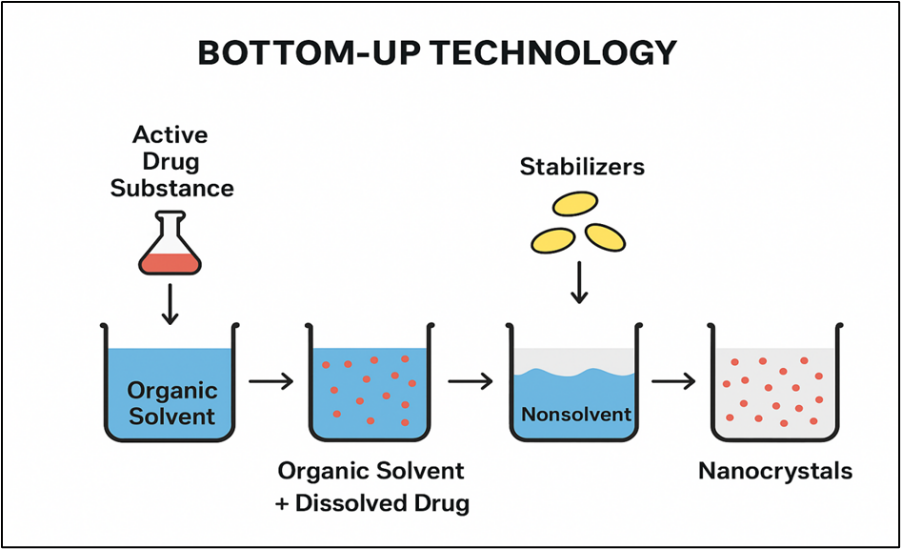
Figure 2. Bottom-Up Technology.
The precipitation technique was first applied in hydrosol technology, which was introduced by List and Sucker and later patented by Novartis (formerly Sandoz). In the nanoprecipitation process, nucleation occurs followed by the growth of crystalline or semi-crystalline drug particles, alongside the expansion of dissolved drug molecules. Typically, the drug is dissolved in an appropriate organic solvent such as acetone, tetrahydrofuran, or N-methyl-2-pyrrolidone3.
The precipitation technique's primary benefits are its affordability and ease of use. This approach is very easy to scale up. It should be remembered that in order to get homogeneous nanocrystals using this process, a number of parameters need to be regulated, including temperature, solvent/nonsolvent rate, drug concentration, viscosity, solvent type, and stabilizer2.
This procedure involves thoroughly dissolving the medication in a solvent. When a solvent solution is applied to a non-solvent, the medication precipitates. In order to manage the particle structure and stop the particles from growing to the micrometer size range, it is crucial to add stabilizers such surfactants and control influencing variables. Other bottom-up methods include limitations impinging liquid jet precipitation, high gravity-controlled precipitation technology, sonocrystallization, and multi-inlet vortex mixing4.
2. Top-down method :
When "top-down" technology is applied, several grinding and homogenization procedures are used as dispersion methods.
Several grinding and homogenization procedures are used as dispersion methods when "top-down" technology is applied. The breaking up of larger crystal particles into smaller pieces is caused by this process. The methods of high-pressure homogenization (Nanopure, IDD-P, Disso Cubes) or media milling (NanoCrystals) can be used to accomplish this technique5.(5)
"Topdown" technology is more effective than "bottom up" technology. It is called as "nanonization17.
The milling media moves and creates shear force, which helps to reduce the particle size. But nanocrystals are usually insoluble in the medium, so small pieces of the grinding material can break off due to erosion and mix into the drug product as contaminants. Identifying and controlling these process-related pollutants throughout manufacturing is one of the major challenges when producing nanocrystal-based product3.
In top-down methods, strong mechanical grinding or high-pressure collsions are used to make partical smaller. but these forces can slowly damage the equipment, and small pieces from the machine can mix into the product as contamination. Process factors such as stirrer speed, energy input, and bead size/material all affect the level of contamination. The amount of contamination can be decreased while utilizing the same bead material by accelerating the procedure and using smaller bead sizes. Another disadvantage of top-down approaches is their high energy usage, particularly when process periods are long. Currently use the milling process it reduce the energy consumption due to short periods4.
Currently, top-down technology is the primary method of researching and developing listed items (Liu et al., 2018). Top-down methods are easy to use and suitable for industrial production. But they need many cycles to get the right small size, and over time the particales can stick together, which reduces stability16.
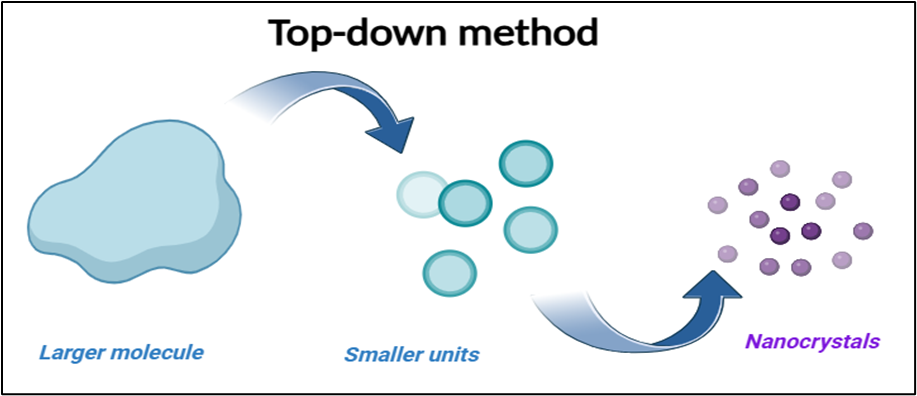
Figure 3. Top-Down Method.
This method is also called the “Milling Machine Process” or “Classic Nanocrystal Technology.” It uses ball mills or bead mills to reduce the particle size of the drug. Ball mills have been used since the early 20th century to produce very fine suspensions.
In this process, a milling medium is used - small pearls or balls made of materials like ceramics, cerium, yttrium-stabilized zirconium dioxide, stainless steel, glass, or polystyrene resin–coated beads. As these balls move, they grind the drug particles, breaking them down into nano-sized particles2,3.
In the grinding chamber, grinding media, water (as the dispersion medium), stabilizers, and the drug are added together.When the grinding media move fast inside the chamber, they create impact and shear forces.These forces break the drug particles into very small sizes.The milling process is carried out at specific controlled temperatures because too much heat can damage or degrade the drug17,18.
So temperature control helps keep the drug stable and ensures proper particle size6.
Most NC products are produced by wet ball milling (WBM), but this method has drawbacks, including low crystallinity, prolonged processing times, high energy consumption, and contamination from metal balls. Using polymeric beads can reduce contamination. Jet milling makes microparticles without organic solvents, works very fast, and helps avoid toxicity8.
In high-pressure homogenization, the drug is mixed with a surfactant solution. This mixture is then pushed through a very small hole using very high pressure (usually 1500–2000 bar, and it can go up to 4000 bar).the strong pressure breaks the drug particles into very small sizes3.
These methods are environment-friendly because no organic solvents are used even though high-pressure homogenization can lower crystallinity, the water helps keep the drug crystals stable.
HPH has two main forms:
In the piston-gap system, the drug mixture is forced through a very small opening under high pressure. In jet streaming, two fast-moving fluid streams collide inside a micro-fluidizer.
Piston-gap techniques include: PEG-based (Nano-pure®)and Non-aqueous systems (Disso-cubes®4.
This technique includes two types of homogenization depending on the medium used: aqueous homogenization (Dissocubes) – introduced by R.H. Müller in 1999 and Non-aqueous homogenization (Nanopure) – carried out using Nanopure technology.
High-pressure homogenization requires advanced equipment, uses high amounts of energy, and generates significant heat during the process because of this, some components may degrade, and the overall product yield can be lower than that obtained with wet milling6,8.
3. Combination Method:
Both methods are combined in a top-down and bottom-up approach. NanoEdge® is made using this combined technology. t is used for poorly water-soluble drugs, especially those with a high melting point and high octanol–water partition coefficient. the process uses homogenization, microprecipitation, and lipid emulsions2.
Nanoedge Technology: Is a hybrid method that first creates tiny drug particles through micro-precipitation and then uses heat annealing or high shear. During the high-shear step, the drug can be amorphous or crystalline. Using the right solvent and anti-solvent leads to the formation of nanocrystals. At this point, the particles may be fully crystalline, partly crystalline, or completely amorphous.
Nanopure XP Technology: It was developed in 2005 by Moshitzer and Lemke.It works by changing the raw material through an evaporation process and then applying high-pressure homogenization. Its major benefit is that it greatly reduces the number of homogenization cycles needed, even for very hard crystalline drugs3.
Using combination techniques helps get smaller particles, reduces machine clogging, and makes the whole top-down process fast4.
Combination techniques use methods like bead milling and HPH together to get smaller particles and avoid issues such as long grinding time, contamination, and drug degradation5.
A single method cannot give uniform and stable nanocrystals, so a pretreatment step followed by a high-energy process is used to achieve better stability and consistent particle size16.
4. Spray Drying :
Spray drying is a method used to produce nanocrystals as well as to dry liquid formulations and suspensions. In this process, the solution is atomized from the top of a conical or cylindrical chamber, creating fine droplets. These droplets move downward with a stream of hot air, which removes the moisture and converts them into small, spherical particles2.
Spray drying it is the single step process in that paste, slurry, suspension, emulsion or solution are possible to directly convert into powder form8.
For spraying of solution use the nebulizer. Nebulizer are convert the liquid in the small droplets. The peristaltic pump sends the solution through the inner tube at a fixed flow rate, while nitrogen or constant-pressure air is supplied through the outer tube. The nozzle controls the direction of the spray. after spraying, the droplets become very small. to improve particle size, flowability, and drying speed, the solution’s concentration, viscosity, temperature, and spray rate can be adjusted17.
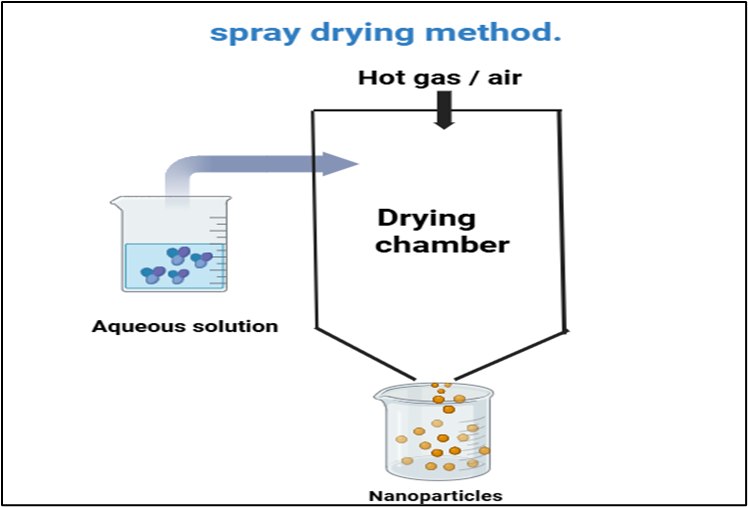
Figure 4. Spray Drying Method.
A. Supercritical Fluid Expansion Method:
This process is used for those compounds that are dissolved in supercritical fluid.
Firstly, the solute is completely dissolved in the supercritical fluid. Then this solution passes through the Nozzle with ultrasonic speed. “When the solution exits through the nozzle and the pressure suddenly drops, it quickly expands and forms small particles (nanoparticles)2.
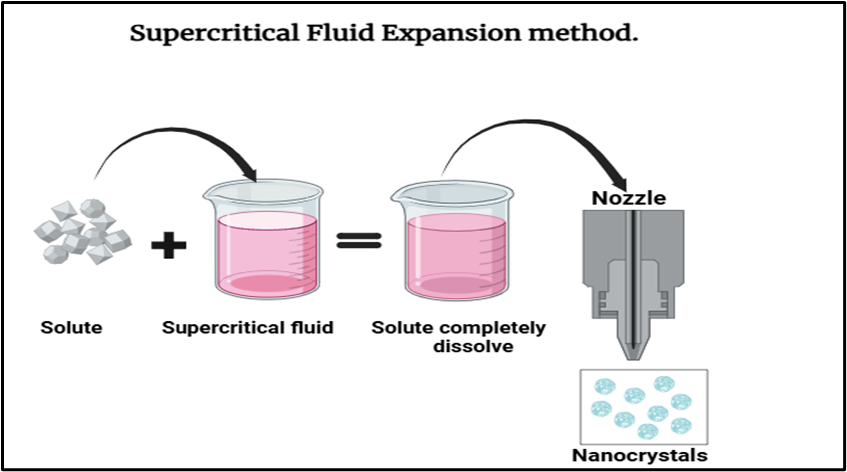
Figure 5. Supercritical Fluid Expansion method
B. High Gravity Antisolvent Precipitation Method:
High gravity antisolvent precipitation (HGAP). HGAP is formed by combining HGCP technology with the antisolvent precipitation process. The benefits of the HGCP are preserved, while the negative effects of the product's impurities are eliminated19.
C. Sonocrystallization :
Sonocrystallization is a new technique where ultrasound is used to reduce particle size.
It uses ultrasonic frequencies of 20 to 100 kHz, which help in the crystallization process.
Because of ultrasound:
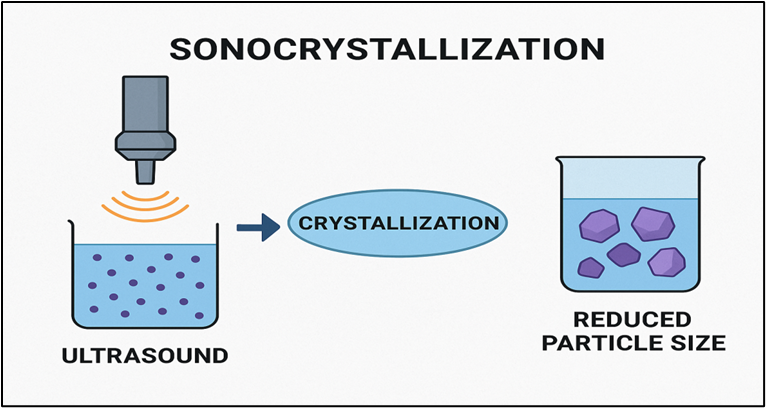
Figure 6. Sonocrystalization
D. Melt Emulsification:
Melt emulsification is the most commonly used method for preparing solid lipid nanoparticles.
First, the drug is mixed with a stabilizer in an aqueous solution. then this mixture is heated to a temperature above the drug’s melting point, which causes the drug to melt. After the drug melts, the hot mixture is rapidly mixed using a homogenizer, which forms an emulsion. When this emulsion is cooled, solid lipid nanoparticles are formed6.
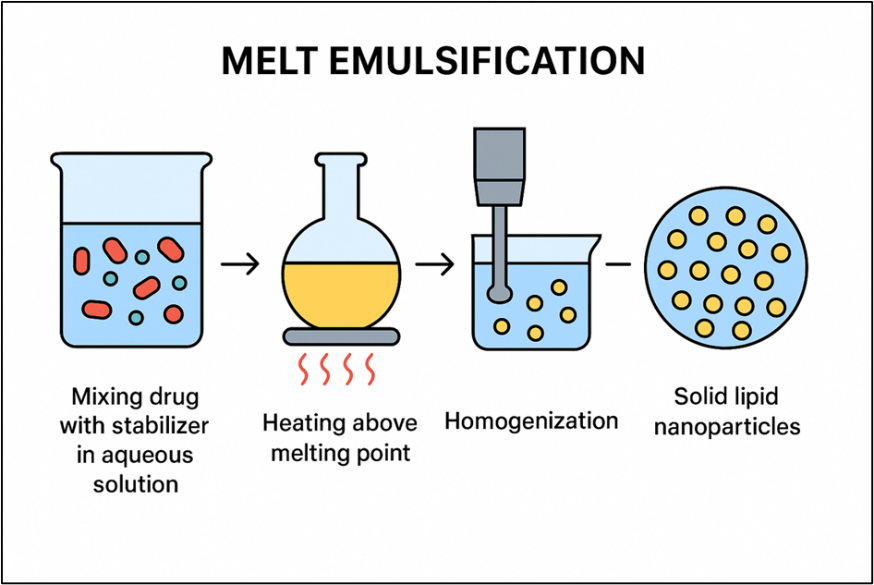
Figure 7. Melt Emulsification.
Nanocrystal stabilizier :
When we prepare nanocrystals, which are extremely small drug particles, some problems can occur. Because these particles are very tiny, the drug can be absorbed better in the body, but at the same time, they can stick together (aggregation) or merge to form bigger particles. This process is called Ostwald ripening. If this happens, the drug’s effectiveness decreases and the stability of the formulation is lost.
To prevent this, stabilizers are used. Stabilizers are special molecules that coat the surface of nanocrystals and prevent them from sticking together or growing larger. Using the right amount of stabilizer is very important because it also increases the drug’s bioavailability, meaning how well the drug is absorbed in the body.
For example, when the appropriate amount of Poloxamer 407 stabilizer was used with cryptotanshinone nanocrystals, the drug showed 2.87 times better effect than the coarse (regular) drug. This shows that stabilizers are not only important for particle stability but also help improve drug absorption16,20.
A variety of stabilizers are utilized to stabilize nanocrystals.
Examples:- Poloxamer, Polyvinyl Pyrrolidone (PVP), Polyvinyl alcohol (PVA), Amino acid derived co-polymers (albumin,leucine), Lecithin, HPMC.
Application of nanocrystal-based strategies in drug development :
1. Injectable drug delivery :
Drugs in the form of nanocrystals, called nanosuspensions, can be delivered directly into the body. This includes methods like injections into joints (intra-articular) or veins (intravenous). Using nanosuspensions improves the effectiveness of medications. For example, clofazimine nanosuspensions, an anti-leprosy drug with low water solubility, are more stable and effective compared to liposomal forms2.
2. Drug intake through oral administration :
Reducing the size of drug particles to the nanoscale increases their absorption when taken orally and enhances bioavailability. These nanosized drugs can be formulated as liquids or incorporated into tablets and capsules in the form of pellets17.
3. Ophthalmic drug delivery :
Administering drugs to the eye is difficult because of natural eye barriers. Topical administration, such as eye drops, is the most common and painless method for treating diseases of the front part of the eye. Nanocrystals help the medicine stay in the eye for a longer time, increasing its effectiveness. The solubility of the drug in tears plays an important role in determining its effectiveness20.
4. Pulmonary drug delivery :
The lungs have a rich blood supply, allowing drugs to enter the bloodstream quickly and efficiently. Nano-sized particles adhere to lung surfaces, prolonging contact time and improving absorption. Ultrasonic techniques can produce aqueous nanosuspensions for this purpose. Drugs with low solubility, such as budesonide or beclomethasone, can be effectively delivered for treating lung diseases3,5.
5. Targeted Drug Delivery :
Nanocrystals can be designed to deliver drugs directly to specific organs or tissues. They are especially useful in treating neurological conditions by providing effective drug concentrations in the brain. Certain infections, like cryptosporidiosis, can be treated using surface-modified nanosuspensions that adhere to mucosal surfaces. Similarly, lung infections such as pulmonary aspergillosis can be managed more effectively with nanosuspensions than with traditional formulations19.
6. Skin administration of drugs :
Nanocrystals improve drug solubility, which enhances penetration through the skin. Adding positively charged polymers helps the nanocrystals bind better to the negatively charged outer skin layer (stratum corneum). This creates a supersaturated formulation that increases drug absorption20.
Marketed formulation of nanocrystals :
|
Trade name with API |
Uses |
Applied technology |
Manufacturer |
Formulation |
|
Rapamune® (rapamycin) |
Immunosuppressive drug |
Ball milling |
Wyeth |
Tablet |
|
Emend® (Aprepitant) |
Used as a antiemitic |
Ball milling |
Merck
|
Capsule |
|
Tricor® (Fenofibrate) |
Hyperlipidimia |
Ball milling |
Abbott |
Tablet |
|
MegaceES® (Megestrol) |
Used as Anti-anorexic |
Ball milling |
Pharmaceutical companies |
Suspention |
|
Avinza®(Morphine sulfate) |
Anti-chronic pain |
Ball milling |
King Pharmaceutical |
Capsule |
|
Focalin® (Dexmethylphenidate hydrochloride) |
Used as Anti-psychotic |
Ball milling |
Novartis |
Capsule |
|
Zanaflex CapsulesTM (Tizanidine hydrochloride) |
Used as Muscle Relaxant |
Ball milling |
Acorda |
Capsule |
|
Triglide® (Fenofibrate) |
Hyperlipidemia |
HPH (Microfluidizer) |
Sciele pharma Inc. |
Tablet |
|
Ritalin®LA (Methylphenidate hydrochloride) |
Used as Anti-psychotic |
Ball milling |
Accorda |
Capsule |
|
Nucryst® (Silver) |
Prevent bacterial infection |
Reactive magnetron sputtering |
Nucryst pharmaceutical |
ACTi coat |
|
Gris-Peg® (Griseofulvin) |
Prevent Fungal infection |
Precipitation Method |
Novartis |
Tablet |
CONCLUSION :
Nanocrystal technology is an effective strategy for improving the solubility and bioavailability of drugs that have poor water solubility. By reducing drug particles to the nanometer scale, the surface area increases, which enhances the dissolution rate and allows the drug to be absorbed more efficiently. This results in a faster onset of action and better therapeutic outcomes.
Compared to other solubility-enhancing approaches, nanocrystals have several advantages. They allow high drug loading, have a simple formulation, can be produced on a large scale, and are suitable for various administration routes such as oral, parenteral, ocular, pulmonary, and topical delivery. These features make nanocrystals versatile for both systemic and local drug delivery.
Although challenges like particle aggregation, stability, and process optimization remain, advances in production techniques such as milling, high-pressure homogenization, and spray drying have made manufacturing more reliable and practical. Overall, nanocrystals play a key role in modern drug formulation by transforming poorly soluble drugs into effective and bioavailable therapeutics, opening new possibilities for improved patient treatment.
REFERENCES



Vaishnavi Shelke, Madhuri Narode, Pratiksha Pawar, Nanocrystals: For Solubility Enhancement of Hydrophobic Drug, Int. J. of Pharm. Sci., 2026, Vol 4, Issue 1, 1090-1104. https://doi.org/10.5281/zenodo.18213493
 10.5281/zenodo.18213493
